Tobi Lutke's Leadership Style at Shopify
Turn this article into takeaways for your work.


Each assistant summarizes the article only for you and suggests best practices for your work.
Key Facts: Tobias Lutke was born in 1980 in Koblenz, West Germany. He never finished a university degree. Instead he trained as a programmer through Germany's dual apprenticeship system, working as a Fachinformatiker apprentice at a Siemens subsidiary in his hometown after dropping out of school at 16, and has said the training taught him more about building software than a university track would have. He moved to Canada in 2003, and in September 2004 he co-founded the online snowboard shop Snowdevil with Scott Lake and Daniel Weinand. Unhappy with the e-commerce software available at the time, he built his own, and that platform launched under its own name, Shopify, in June 2006. Co-founder Scott Lake ran the business side until he left in 2008; Lutke was Shopify's CTO from September 2004 to April 2008, then became CEO in April 2008 when Lake left to start something else, a role he still holds. He has served on Shopify's board since the company's founding and has sat on Coinbase's board since January 2022. Shopify went public on the NYSE and TSX in May 2015. By the end of fiscal 2024, merchants had moved over $292 billion in gross merchandise volume through the platform in that year alone, crossing $1 trillion in cumulative GMV since founding, with roughly 8,100 employees worldwide as of December 31, 2024. As of September 2026, Lutke is still Shopify's CEO, and he still writes code.
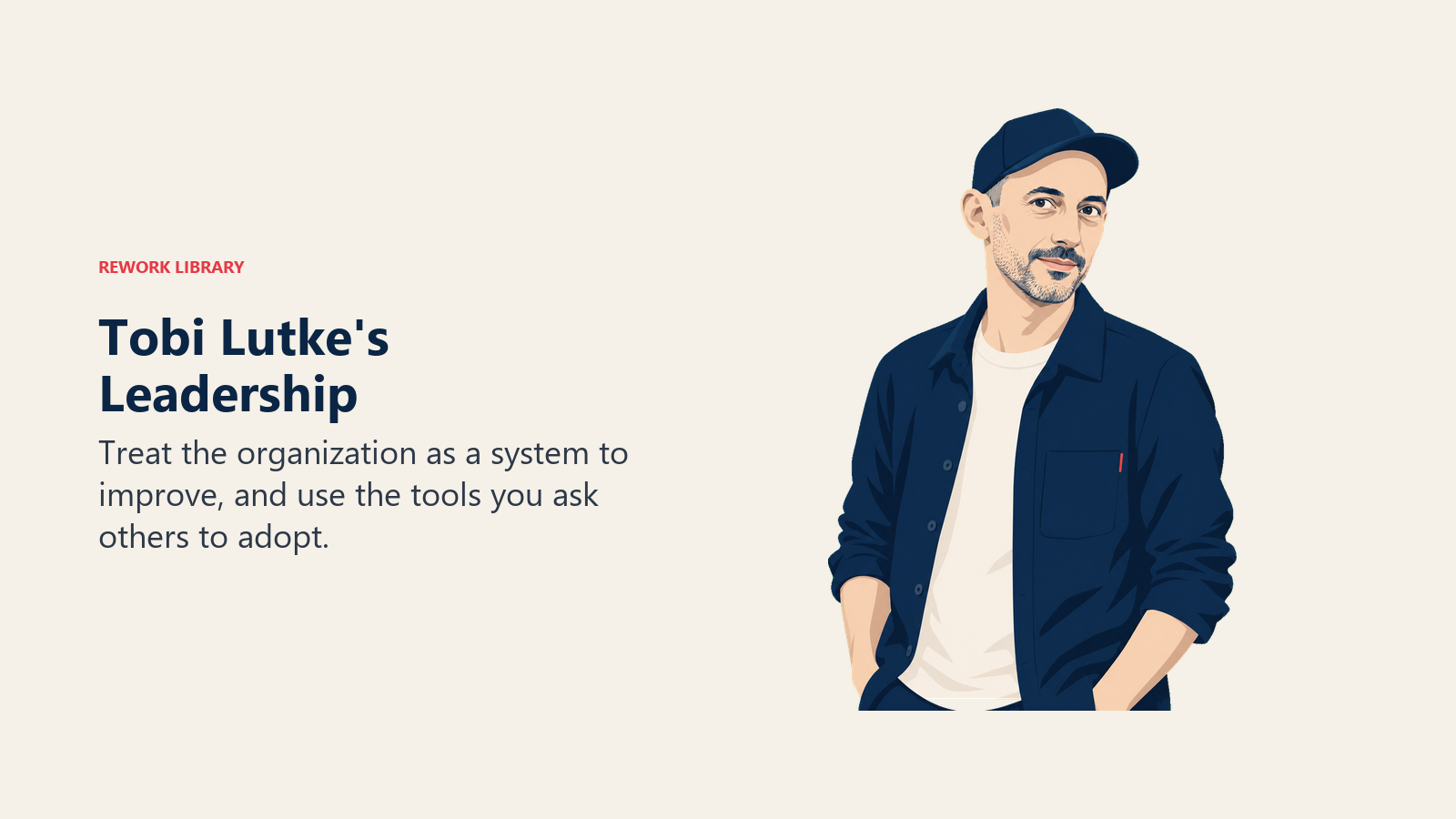
Tobi Lutke gets filed under "the CEO who still codes," a detail that shows up in nearly every profile of him and usually gets treated as color rather than substance. That undersells what it actually explains. Almost everything distinctive about how he runs Shopify traces back to the fact that he is, structurally, a programmer first and an executive second: he thinks in systems and tooling rather than in org charts, he ships things himself before he asks anyone else to, and he treats the company he built the way a programmer treats a large, aging codebase, as something you keep refactoring rather than something you finish. That framing explains the calendar purges, the blunt internal memos, the reflexive AI mandate, and even the four years he spent as a technical co-founder answering to someone else's CEO before he ever ran a company at all.
The closest comparison in this collection is not another Shopify-style founder but Stewart Butterfield, and the parallel is tighter than it first looks. Both men built globally significant workplace software out of Canada, Shopify from Ottawa and Slack from Vancouver, and both arrived there by way of a failed side project rather than a plan: Lutke was trying to sell snowboards online, Butterfield was trying to ship a video game. Where the two diverge is what happened after the pivot worked. Butterfield eventually walked away from operating entirely, telling reporters after his Slack departure that "these days my fantasies are about gardening." Lutke never left. Two decades after Snowdevil, he is still the one deciding which parts of the company get rewritten next.
The Refactoring Doctrine
The Refactoring Doctrine is Lutke's operating premise that an organization accumulates cruft the same way a codebase does, redundant process, stale metaphors, meetings that outlived their purpose, and that a leader's real job is periodically deleting and rewriting rather than endlessly layering on more. Most descriptions of "Tobi Lutke's management style" are really descriptions of things he removed: recurring meetings, a "family" framing he thought was actively harmful, office leases the company no longer needed. The doctrine traces directly to the apprenticeship. Comparing himself to a cofounder who chose the PhD track, he wrote plainly: "If I had gone to a University and studied to get a PhD like my Cofounder, I might JUST be getting out of school. Instead, at 32 years old and I have been paid to build complex software for almost half my life." That is a systems builder's argument, not a credentials argument: years spent shipping and getting code reviewed line by line taught him more than years spent studying would have, and he has run Shopify on the same premise ever since.
The doctrine shows up as a pattern, not a single decision. In August 2020, he told managers that "Shopify, like any other for-profit company, is not a family" and that the company was "a team, not a family," an old abstraction he judged to be actively misleading and swapped out for a more accurate one. In January 2023, Shopify's IT team deleted every recurring meeting series with three or more attendees company-wide in a single pass, the organizational equivalent of deleting dead code rather than documenting around it. In April 2025 he mandated that employees try AI reflexively before asking for headcount, effectively swapping in a faster runtime and expecting the rest of the org to recompile around it. None of these read as separate initiatives once you see the pattern. They are the same instinct, applied to whatever module of the company looked slowest that year.
What ties the doctrine together is that Lutke tends to ship the change on himself first. He was already known for personally reviewing code as CEO before he asked engineers to justify headcount against AI output, and he was already running the company through blunt, widely distributed memos before he asked managers to drop a comfortable metaphor. A refactor imposed from someone who has not touched the code themselves reads as an edict. A refactor from someone still in the codebase reads as a decision, even when the people affected by it disagree with it, which they often have.
Leadership Style Breakdown
| Style | Weight | How it showed up |
|---|---|---|
| Systems Architect | 40% | Treated organizational process as something to delete and rebuild rather than accumulate: the January 2023 calendar purge removing every recurring meeting with three or more people, the "digital by default" decision to end office centricity permanently, and the "team, not family" reframe of how Shopify described itself internally. |
| Reflexive Technologist | 35% | Adopted new tools on himself before mandating them company-wide. The April 2025 memo making "reflexive AI usage" a baseline expectation came from a CEO who never stopped writing code personally, and who helped popularize the term "context engineering" for how to feed an AI system the right information rather than the right prompt. |
| Accountable Forecaster | 25% | Owned bad bets in public rather than routing blame downward. Announcing the July 2022 layoffs, he wrote plainly that a bet on permanent pandemic-era e-commerce growth "didn't pay off" and that "placing this bet was my call to make and I got this wrong." |
The 40/35/25 split matters because the second style is what makes the first one land instead of reading as a hostile edict. A calendar purge or a culture memo from an executive who does not personally use the tools or write the code underneath the org invites cynicism. Lutke's changes tend to arrive from someone visibly still doing the work, which is a large part of why Shopify's staff, however unhappy some of them were about specific cuts, rarely accused him of prescribing something he had not tried himself. The forecaster role is smaller by weight but underwrites the other two: an org willing to be reshaped repeatedly needs to trust that when a reshaping goes wrong, the person who called it will say so.
Key Leadership Traits
| Trait | Rating | What it means in practice |
|---|---|---|
| Treating the org as refactorable | Exceptional | The January 2023 calendar purge and the "team, not family" reframe both read as a programmer deleting a stale abstraction rather than a manager negotiating a compromise. |
| Personally using what he mandates | Very High | He was already coding and already writing his own memos before asking staff to adopt AI reflexively or drop a comfortable metaphor, which is why the mandates tended to stick rather than get quietly ignored. |
| Written, blunt communication | Very High | The 2020 "not a family" memo and the 2022 layoffs memo both went out over his own name in plain language, without a communications layer softening the point. |
| Public ownership of bad calls | High | "Placing this bet was my call to make and I got this wrong" is a specific, attributable sentence, not a passive "mistakes were made." |
| Judgment when speaking beyond the company | Double-Edged | The same directness that makes his internal memos land well has, at least once, gone badly wrong in public. Covered in full below. |
The 3 Decisions That Defined Tobi Lutke as a Leader
Three moments show the pattern most clearly: how he chose to learn the craft in the first place, how he chose to become CEO, and how he chose to announce the biggest operational mandate of his tenure.
1. Choosing an Apprenticeship Over a University Degree (mid-1990s)
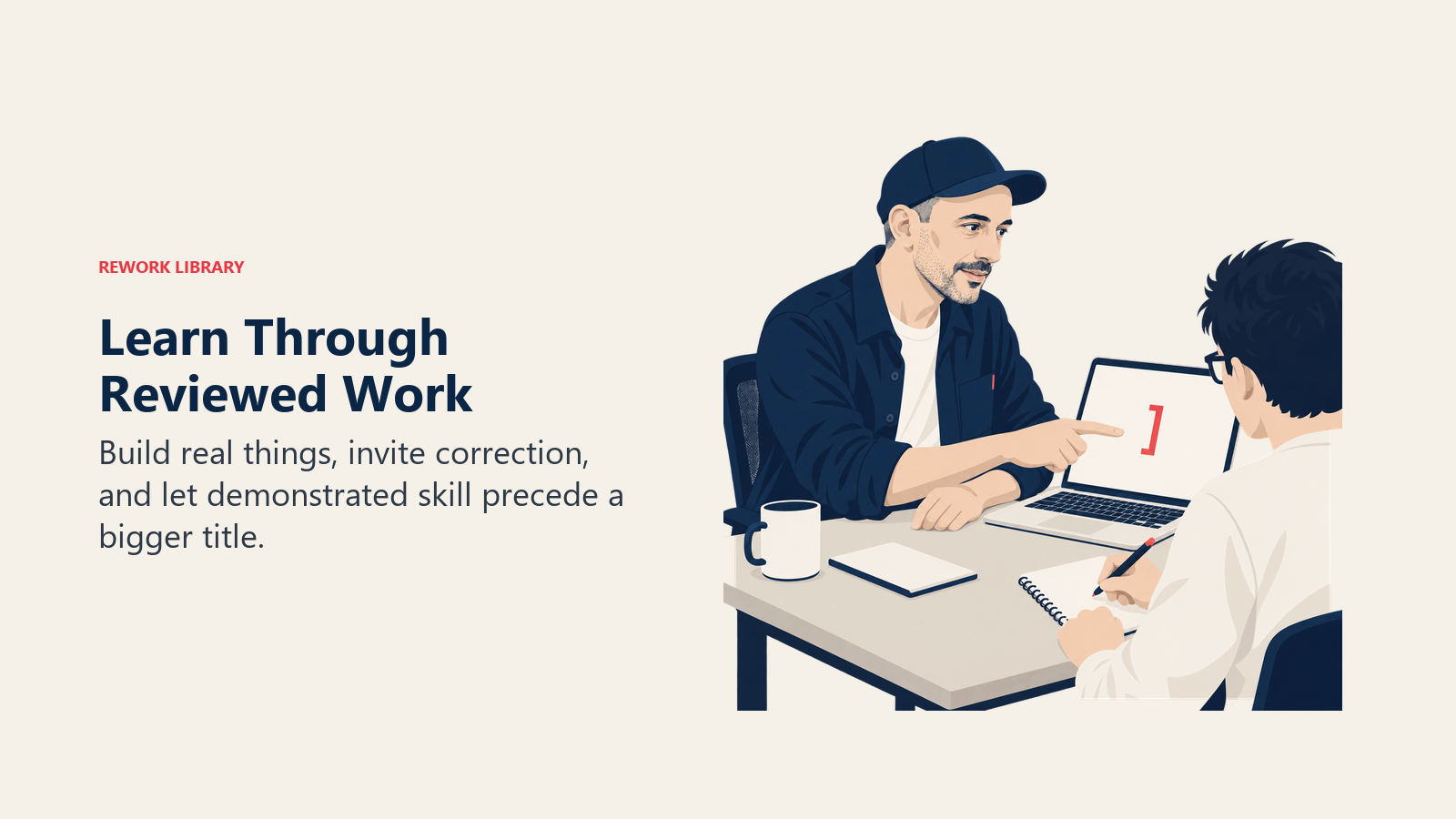
At 16, Lutke dropped out of school in Koblenz to enter Germany's dual vocational system, training as a Fachinformatiker, a certified programmer, through a Siemens subsidiary called BOG Koblenz. The arrangement paired hands-on placements (a rotation through the cafeteria, accounting, and inventory before he ever touched code) with software work under a mentor, plus vocational school on Fridays covering algorithms and hardware fundamentals. His own account of the year describes finding a printout of his code annotated with corrections most mornings, a constant, unglamorous feedback loop rather than a lecture hall.
That choice looks unremarkable from the outside, plenty of programmers are self-taught. What makes it load-bearing for his later leadership is what he concluded from it. His German credential carries no formal recognition in North America, making him, on paper, a high school dropout. He has been candid that this bothers him less than it might: by his own reckoning, by age 32 he had been paid to build software for nearly half his life, a head start he explicitly weighs against the cofounder who instead finished a PhD. That comparison, experience measured in years of shipped, reviewed code against experience measured in a credential, became the same lens he later applied to hiring and to his own claim on the CEO title: prove it by doing the work, not by holding the paper that says you can.
For you: the years you spend building something small and getting corrected on it daily are not a lesser path than the credentialed one, they are a different curriculum, and the person who spent theirs shipping tends to trust output over titles for the rest of their career.
2. Staying CTO While Someone Else Ran the Company, Then Taking Over in April 2008
Lutke did not start Shopify as its CEO. Co-founder Scott Lake ran the business side while Lutke held the CTO title from September 2004, focused entirely on building the product. That arrangement lasted nearly four years, an unusually long stretch for a technical cofounder to defer the top title, especially in a company he had effectively built from a side project of his own. It was not a symbolic split. Lake handled the business side; Lutke wrote the software.
The change came in April 2008, when Lake left to start a new venture and Lutke became CEO, a transition one account of the period describes as "a big shift for Tobi, who had never really been in a management position before and was primarily focused on just building great software." He leaned on angel investor John Phillips as a mentor through the change rather than pretending the shift from writing code to running a company was seamless. Within his first year as CEO, Shopify grew to ten employees, crossed $1 million in revenue, and reached cash flow positive, evidence that the technical instincts he'd spent four years sharpening as CTO translated once he had to apply them to the whole business rather than just the product.
What this shows: taking the top title the moment you can is not obviously better than waiting until the job actually needs your specific strengths. Lutke spent four years becoming the best-informed person in the building about what Shopify's software should do, and only then took responsibility for everything else the company did. The waiting was not reluctance. It was sequencing.
3. Publishing the AI Mandate Himself, Directly, Rather Than Through a Memo That Stayed Internal
In April 2025, Lutke posted an essay on X stating that "reflexive AI usage is now a baseline expectation at Shopify", telling teams they needed to show why a task could not be done with AI before requesting more headcount, and that AI competency would factor into performance and peer reviews. He did not route it through an internal-only channel and let it leak the way most CEO memos do. He published it under his own name, in public, the same instinct that shaped the 2020 "not a family" memo and the 2022 layoffs announcement: say the hard thing plainly, attach your name to it, and let the org and the outside world read the same version at the same time.
The timing put him in close company with another founder-CEO making a similar call. Weeks earlier, Sergey Brin told Gemini staff in a February 2025 memo that "60 hours a week is the sweet spot of productivity" and that low-effort work was actively demoralizing to everyone else. Both memos were founder-leaders using a very large public platform to tell their own staff, bluntly, that the terms of the job had changed. Lutke's version was narrower and more falsifiable, framed around a specific behavior (try AI first) rather than a specific number of hours, which is likely part of why it spread further and drew less immediate backlash than Brin's did.
What this shows: a mandate that comes from the person who will be personally judged against it, in public, under their own name, is a different kind of commitment than a policy quietly rolled out through HR. Lutke bet that being explicit and attributable about a demand this large would outperform a softer, anonymized version. The bet paid off in adoption. Whether it was fair to the people now expected to live under it daily is a separate question, one worth sitting with rather than skipping past.
What Tobi Lutke Would Do in Your Role
If you're a technical cofounder deferring the CEO title, Lutke's sequencing argues against grabbing the top job just because you can. He spent four years as CTO under someone else's CEO, using that time to become the most informed person in the building about what the product needed to be, and only took the business role when the person running it actually left. The deferral was not weakness. It let him take over already knowing exactly what he was running.
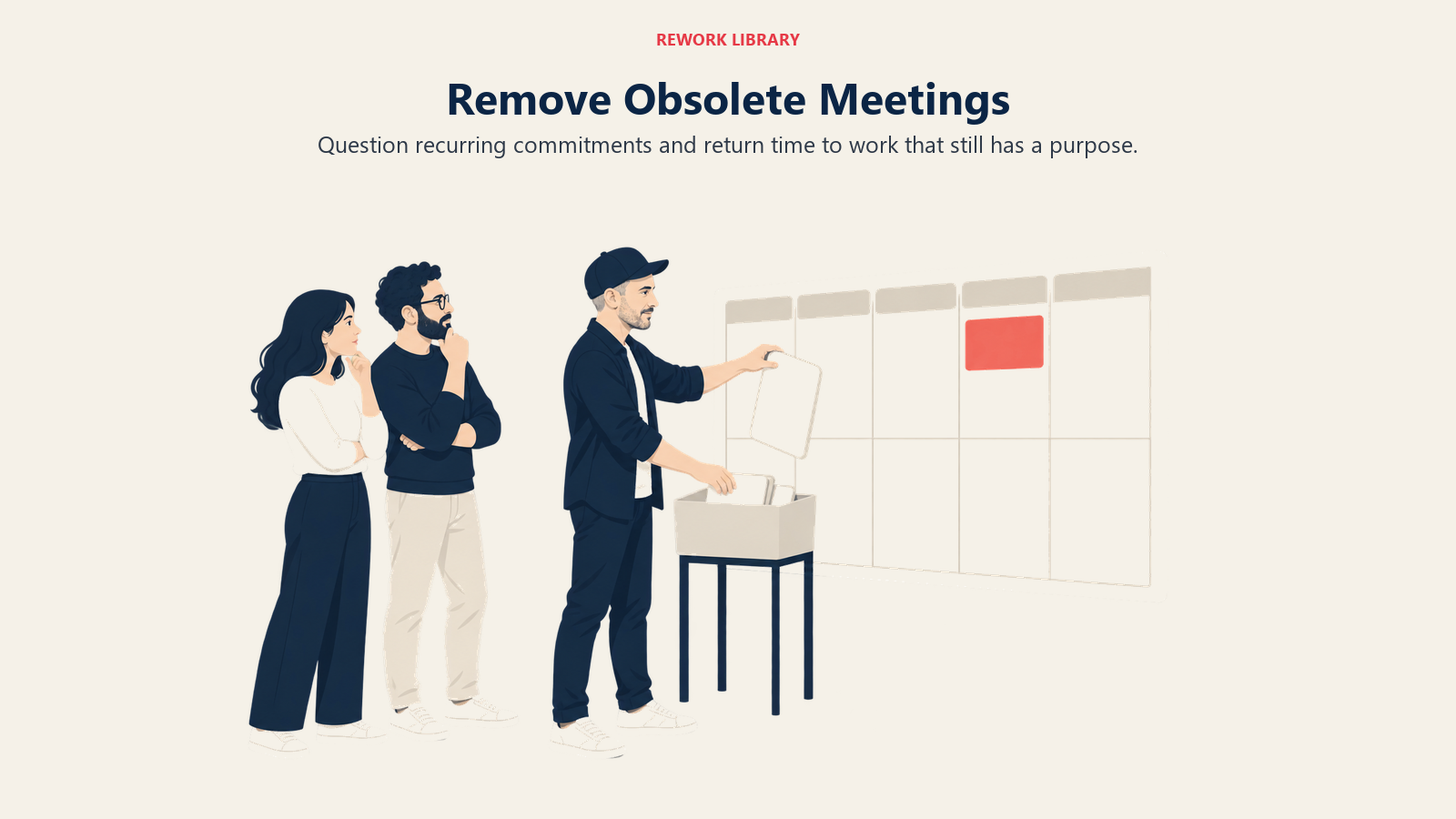
If you're a manager whose calendar is full of recurring meetings nobody remembers scheduling, his answer is subtraction, not optimization. As he put it about the instinct behind the January 2023 purge: "The best thing founders can do is subtraction. It's much easier to add things than to remove things. If you say yes to a thing, you actually say no to every other thing you could have done with that period of time." Don't audit the recurring meeting for relevance. Delete it and see who asks for it back.
If you're weighing a self-taught or apprenticeship-trained candidate against a more credentialed one, Lutke's own path is the case for output over paper: years spent building and getting corrected on real work, even without a recognized degree behind it, is verifiable experience a transcript cannot substitute for. Ask what they shipped, not what they studied.
| Situation you're facing | Lutke's likely move |
|---|---|
| A recurring meeting nobody can explain the purpose of | Delete it outright rather than trying to make it shorter or better run |
| A comfortable but inaccurate metaphor for how the team operates | Name the inaccuracy directly and replace it, even if it upsets people who liked the old framing |
| A new tool the team is reluctant to adopt | Use it yourself first, visibly, before asking anyone else to |
| A forecast that turned out to be badly wrong | State plainly that it was your call and that you got it wrong, rather than diffusing the blame |
| A candidate with real output but no traditional credential | Weight the shipped work over the transcript |
Notable Quotes & Lessons Beyond the Boardroom
On what the apprenticeship actually taught him, contrasted with the academic path: "Experience does" is how he starts the thought, elaborating that a university PhD track would have left his cofounder still finishing school at the age Lutke had already spent half his life getting paid to build software. It is the rare founder story where dropping out is presented not as a leap of faith but as a different, and in his telling more rigorous, form of training.
On the metaphor he thought was actively hurting the company, from the August 2020 memo to managers: "The dangers of 'family thinking' are that it becomes incredibly hard to let poor performers go." He was not the first executive to reach for that language. Reed Hastings had told Netflix staff more than a decade earlier, in the company's famous culture deck, "We're a team, not a family. We're like a pro sports team, not a kid's recreational team." Lutke's version arrived later and in a different industry, but it is the same underlying claim: a workplace that borrows family language usually can't make the personnel decisions a real business eventually has to make.
On owning the 2022 layoffs rather than hedging around them: "Ultimately, placing this bet was my call to make and I got this wrong." Plenty of CEOs frame layoffs around macro conditions alone. Lutke named the specific decision, the bet that pandemic-era e-commerce growth was permanent, and named himself as the one who made it.
Where This Style Breaks
The refactoring instinct that makes Lutke's changes feel decisive from the outside lands very differently on the people living inside them. Deleting 12,000 recurring meetings in a single afternoon and reinstating no-meeting Wednesdays reads as clean subtraction in a press writeup; for an employee who relied on one of those meetings to get a decision made or to feel looped in, it reads as disruption imposed without warning. The April 2025 AI memo carries the same asymmetry at a larger scale. "Reflexive AI usage is now a baseline expectation" is a five-minute decision for the person who writes it and an open-ended, ongoing adjustment for everyone required to prove, quarter after quarter, that a task genuinely could not have been done with AI before asking for help. A mandate is always easier to issue than to live under, and the gap between those two experiences is where a systems thinker's confidence can look, from below, like indifference.
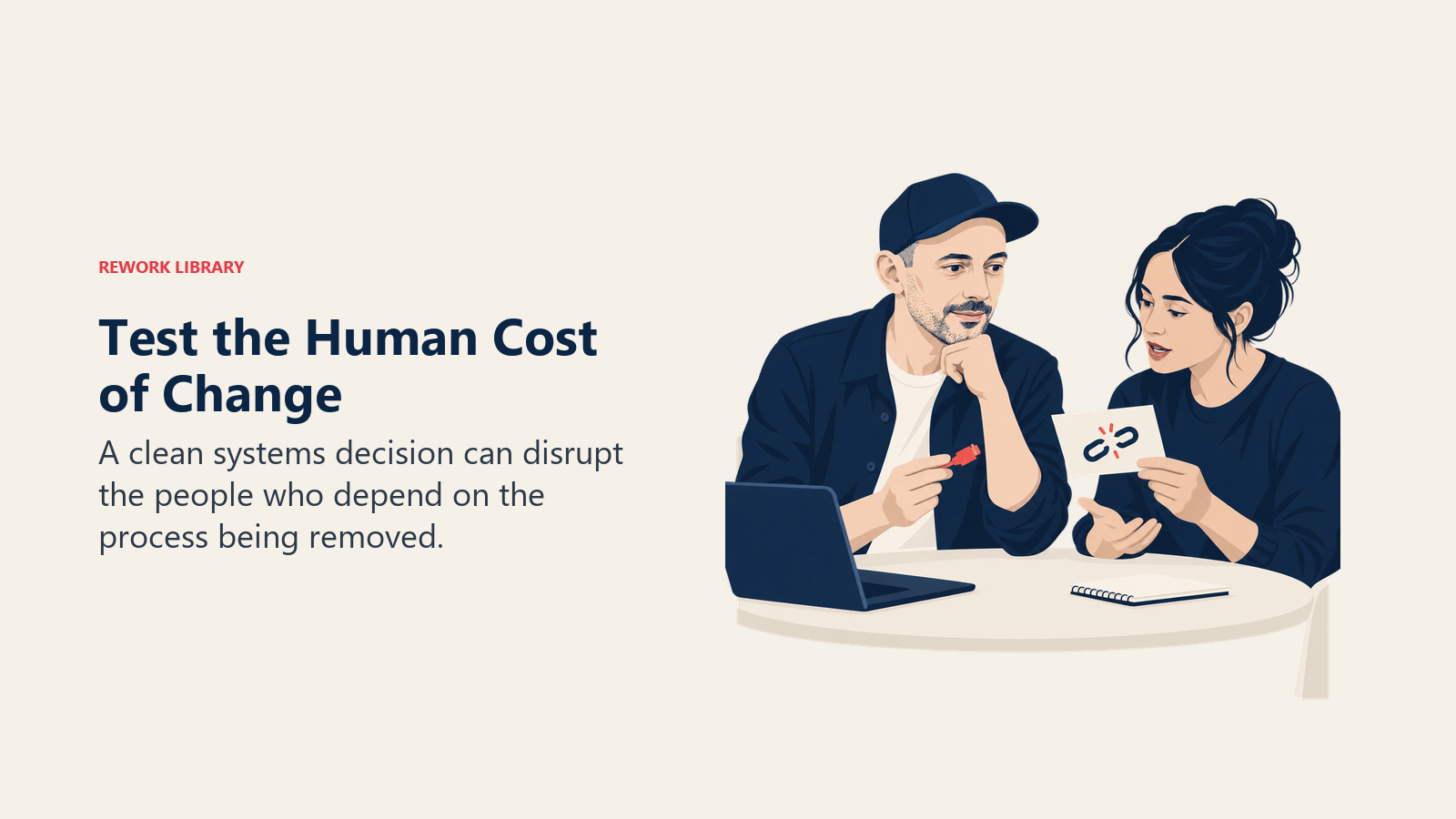
The 2022 layoffs are a second honest limitation, not of communication but of judgment. Lutke had bet that pandemic-driven e-commerce growth would "permanently leap ahead by 5 or even 10 years." It reverted instead, and Shopify cut roughly 10% of its workforce as a direct result. A leader who thinks in systems and forecasts is not thereby protected from forecasting badly. The clarity of "I got this wrong" is genuinely rare among CEOs and deserves credit as such, but it does not undo the fact that a confident systems read of the market was, in this case, simply incorrect, at real cost to the roughly 1,000 people who lost their jobs over it.
The clearest limit surfaced outside the company altogether. On Saturday, July 27, 2026, Lutke replied "Good system." on X to a post proposing weighted voting tied to income tax paid, ranging from zero votes for people who pay no income tax to five votes for people paying $500,000 or more, and went further regarding retirees drawing a pension, arguing that once someone is "a dependent," they should not vote. The reaction was strongly negative, and Shopify did not respond to a request for comment from CBC News by its publication deadline, with no walk-back on record. The reason it belongs in a leadership profile is narrow: a CEO with a very large public platform, running a company that depends on millions of small merchants, publicly endorsed removing the vote from people who don't pay income tax. That is a leadership-judgment event with a real constituency cost, and it sits uneasily next to a career otherwise built on being direct in ways that mostly served the people around him.
Learn More
- Sergey Brin Leadership Style: Coming Back to Run Gemini
- Stewart Butterfield Leadership Style: From Failed Games to Slack and Flickr
- Reed Hastings Leadership Style: Netflix's Culture of Freedom and Responsibility
- What is Context Engineering?
- Brian Chesky Leadership Style: Founder-Mode and Airbnb's Crisis Pivot
- Satya Nadella Leadership Style at Microsoft
- Drew Houston Leadership Style: 17 Years as Dropbox CEO
- Paul Graham's Leadership Lessons for Startups
Frequently Asked Questions about Tobi Lutke
Who is Tobi Lutke?
Tobias Lutke is a German-Canadian programmer and entrepreneur who co-founded the online snowboard shop Snowdevil in September 2004, then built the e-commerce software behind it into Shopify, which launched under its own name in June 2006. He served as Shopify's CTO from 2004 to 2008, then became CEO in April 2008, a role he still holds.
Did Tobi Lutke go to university?
No. He dropped out of school in Koblenz, Germany at 16 and trained as a programmer through Germany's dual apprenticeship system instead, working under a mentor at a Siemens subsidiary while attending vocational school. He has said the apprenticeship taught him more about building software than a university degree would have.
Was Tobi Lutke always Shopify's CEO?
No. Cofounder Scott Lake ran Shopify as CEO for the company's first four years while Lutke served as CTO, focused on the product. Lutke became CEO in April 2008 when Lake left to start a new venture.
What was Shopify's 2025 AI memo about?
In April 2025, Lutke published an essay on X stating that "reflexive AI usage is now a baseline expectation at Shopify," requiring teams to justify why a task couldn't be done with AI before requesting more headcount, and folding AI usage into performance and peer reviews.
What happened with Tobi Lutke and voting rights in July 2026?
On July 27, 2026, Lutke replied "Good system" on X to a proposal for weighted voting based on income tax paid, and separately argued that retirees drawing a pension should not vote. The reaction was strongly negative, and Shopify did not respond to a request for comment from CBC News by its deadline.
What is Tobi Lutke's leadership style called in this profile?
This profile calls it the Refactoring Doctrine: the premise that an organization accumulates unnecessary process the way a codebase accumulates cruft, and that a leader's job is to periodically delete and rebuild rather than keep adding on top of what already exists.

Co-Founder, Rework.com
On this page
- The Refactoring Doctrine
- Leadership Style Breakdown
- Key Leadership Traits
- The 3 Decisions That Defined Tobi Lutke as a Leader
- 1. Choosing an Apprenticeship Over a University Degree (mid-1990s)
- 2. Staying CTO While Someone Else Ran the Company, Then Taking Over in April 2008
- 3. Publishing the AI Mandate Himself, Directly, Rather Than Through a Memo That Stayed Internal
- What Tobi Lutke Would Do in Your Role
- Notable Quotes & Lessons Beyond the Boardroom
- Where This Style Breaks
- Learn More