Michael Bloomberg Leadership Style: The Terminal Mindset
Turn this article into takeaways for your work.


Each assistant summarizes the article only for you and suggests best practices for your work.
In 1981, Michael Bloomberg was 39 years old, fired from Salomon Brothers after the Phibro Corporation acquisition, and handed a $10 million equity payout. He'd spent 15 years there, risen to partner, and was pushed out in a restructuring he had no control over.
He didn't sue. He didn't shop his resume to Goldman or Morgan Stanley. He spent four years building a financial data terminal that his former colleagues at Wall Street firms could buy. Merrill Lynch became his anchor customer in 1982, providing both early revenue and a degree of credibility that let him sell to others.
Today Bloomberg LP has roughly 325,000 terminal subscribers paying approximately $25,000 per seat per year, generating an estimated $10-12 billion in annual revenue from what is essentially the same product category he envisioned in 1981. There's a whole leadership model buried in that trajectory, and most of it has nothing to do with the mayor's office.
Key Facts at a Glance
- Born: February 14, 1942 (Boston, Massachusetts)
- Founded Bloomberg L.P.: 1981, after a $10M Salomon Brothers severance following the Phibro acquisition
- Bloomberg Terminal: 325,000+ subscriptions at ~$25,000/seat/year (reported premium tier around $3.75M for multi-seat enterprise bundles)
- Bloomberg News: Launched 1990 to vertically integrate financial reporting into the terminal
- NYC Mayor: 3 terms, January 2002 – December 2013
- Net worth: Estimated $100B+ (among the world's top 20 wealthiest)
- Bloomberg Philanthropies: Over $17 billion donated across public health, climate, education, and the arts
- 2020 presidential campaign: Spent ~$1B, won American Samoa, suspended after Super Tuesday
The Terminal Doctrine
The Terminal Doctrine (Bloomberg Information Monopoly Model)
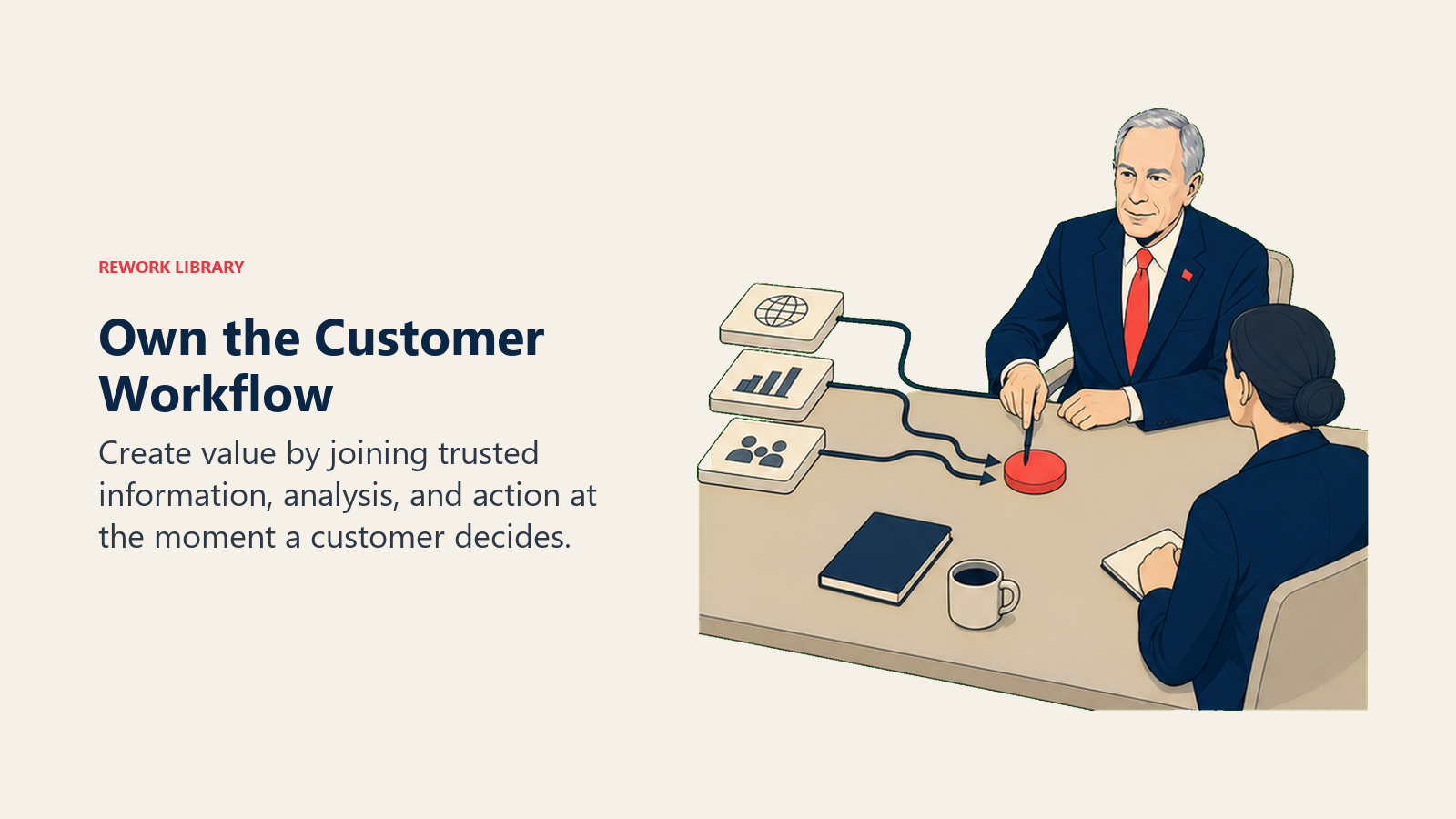
The Terminal Doctrine is a product strategy in which a vendor wins a professional market not by having the best features, but by embedding so deeply into daily workflows that switching costs exceed any plausible savings from a competitor. Value is delivered through consolidation, data, analytics, messaging, and news fused into one environment where users build customizations that make leaving expensive. The result is a near-monopoly protected by habit, muscle memory, and integration depth rather than by patent or exclusivity.
Leadership Style Breakdown
| Style | Weight | How it showed up |
|---|---|---|
| Product-Operator | 65% | Bloomberg built and ran an intensely product-focused company for decades. He sat at an open desk on the trading floor, not in a corner office. He'd visit client sites to understand how traders actually used the terminal. The "Bloomberg Way", an internal culture manual distributed to all employees, emphasized customer obsession, speed, and personal accountability at every level. He held himself to the same accessibility standard he held everyone else to. |
| Pragmatic Executive | 35% | Bloomberg's decision-making style was empirical rather than ideological. As NYC mayor, he backed policies based on outcome data rather than political affiliation, smoking bans, trans fat regulation, and gun control were driven by public health data, not party platform. He self-funded all three mayoral campaigns to eliminate donor obligations. That independence defined his public leadership, for better and worse. |
Key Leadership Traits
| Trait | Rating | What it means in practice |
|---|---|---|
| Product Stickiness Instinct | Exceptional | The Bloomberg Terminal's genius isn't the data. It's the workflow integration. Once a trader or analyst builds their Bloomberg functions, customizes their layout, and integrates their portfolio models into the system, migrating away costs weeks of productivity loss and significant switching risk. Bloomberg understood that the goal wasn't to build the best terminal, it was to build the terminal that nobody could afford to leave. That's a different design objective, and it shaped product decisions for 40 years. |
| Customer Proximity | Exceptional | Bloomberg's open floor plan wasn't aesthetic, it was operational. Sitting where employees and clients could reach him meant he was constantly exposed to ground-level product feedback. He's described walking the floor and stopping at desks to ask what wasn't working. Most CEOs lose that signal the moment they move into a closed office. Bloomberg architected his environment to prevent it. |
| Execution Over Strategy | Very High | Bloomberg LP didn't have elaborate strategic planning processes. The culture valued speed and delivery. When a client requested a feature, the turnaround expectation was days, not quarters. Bloomberg News was launched in 1990 not because it was in a long-term plan but because it made the terminal more valuable and Dow Jones kept raising wire service prices. That bias toward action and iteration over planning is consistent across his career. |
| Self-Funding Discipline | High | Bloomberg self-funded all three NYC mayoral campaigns, spending approximately $74 million in 2001, $85 million in 2005, and $108 million in 2009. That's $267 million across three races, without a single major donor with expectations to manage. The trade-off was total independence in policy decisions. The cost was the perception that the office was available only to billionaires. Both things are true. |
The 3 Decisions That Defined Bloomberg as a Leader
1. Taking the Salomon Severance and Betting It on Financial Data Instead of Returning to Banking
When Bloomberg left Salomon in 1981 with $10 million, the obvious move was another senior banking role. He had relationships, a track record, and a reputation on Wall Street. Going back into banking would have been comfortable, predictable, and probably lucrative.
Instead he identified a gap: Wall Street firms had access to massive amounts of market data but almost no good tools for analyzing it in real time. Bloomberg built a system that pulled bond prices, corporate data, and economic statistics into a terminal that could run analytics on them instantly. In 1982, Merrill Lynch paid Bloomberg $30 million for a 30% stake and committed to buying 22 terminals at $1,000 per month each. The Bloomberg Terminal has remained the dominant professional financial data platform for more than four decades.
What that decision shows about his leadership: Bloomberg saw the firing not as a setback but as the capital and freedom to solve a problem he'd watched from inside the industry for 15 years. He knew the users. He knew the pain. He just needed to not be an employee to fix it. If you're running a company today, ask whether your best product ideas are hiding in the frustrations your most experienced employees are too polite to say out loud.
2. Expanding from Terminals to News and Media
By the late 1980s, the Bloomberg Terminal was growing steadily. But it depended heavily on wire services, Dow Jones, Reuters, for financial news content. Those relationships were expensive and potentially restrictive. Bloomberg launched Bloomberg News in 1990 with a small editorial team to provide original financial reporting delivered through the terminal.
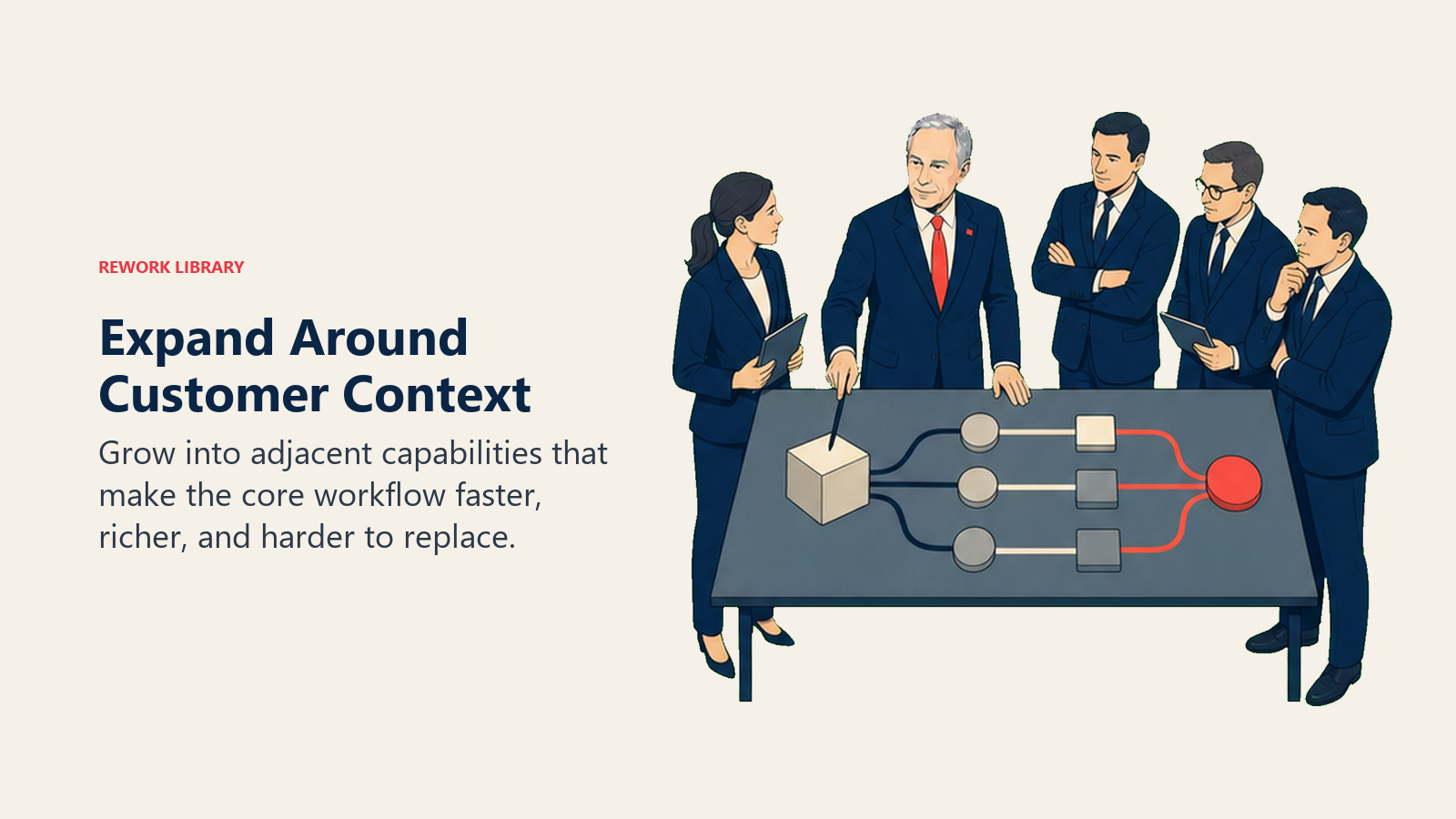
It was a vertical integration play disguised as a media company. Bloomberg News didn't need to be profitable on its own. It needed to make the terminal indispensable and reduce dependency on third-party content providers who could raise prices or withhold access. Bloomberg Businessweek followed in 2009 when Bloomberg acquired it from McGraw-Hill for reportedly $5 million (a steep discount from its peak value) during a period when print media was struggling.
The leadership principle: when a critical input to your core product is controlled by someone else, that's a strategic risk, not just a cost. Bloomberg eliminated that risk by becoming the content supplier himself. Ask which parts of your product's value chain are owned by third parties who could change terms, raise prices, or compete with you directly.
3. Running for NYC Mayor in 2001 and Self-Funding Completely
Bloomberg announced his mayoral candidacy in June 2001, three months before 9/11. The timing was coincidental but shaped everything that followed. He won the election partly on a competence argument, as a businessman who'd built a global company, he could manage a $40+ billion city budget better than career politicians.
He served three terms as NYC mayor from 2002 to 2013. His tenure included managing a $6 billion budget deficit inherited from the Giuliani administration, a smoking ban in bars and restaurants that became a national model, and a gun violence reduction strategy that was also entangled with the stop-and-frisk program that generated significant civil rights litigation and a federal court finding of unconstitutional racial discrimination in 2013.
The mayoral career illustrates a specific leadership dynamic: Bloomberg was exceptional when his skills (data-driven decision-making, operational execution, political independence) matched the problem. On fiscal management and public health policy, his record is largely positive. On civil liberties and the stop-and-frisk program, the outcome was worse and the accountability more complex. The lesson for operators isn't that public service is easy, it's that your strength as a data-driven executor doesn't automatically compensate for blind spots in your understanding of communities you're not part of.
What Bloomberg Would Do in Your Role
If you're a CEO, the terminal model's core lesson is about designing for retention, not acquisition. Bloomberg's go-to-market was not aggressive advertising or broad distribution. It was deep workflow integration with a small number of high-value users who would never leave once they'd invested time in the system. That approach requires patience with growth velocity but produces extraordinary unit economics. Ask whether your customer acquisition strategy is optimized for getting people in or for making it rational for them to stay.
If you're a COO, the open floor plan isn't just a culture choice, it's an information architecture decision. Bloomberg operated at his own open desk alongside his employees for decades. That physical proximity meant he received ground-level feedback without it having to travel up a management hierarchy where it would be filtered, softened, or lost. If you're managing operations from a closed office with weekly status reports, you're getting a version of reality that's been curated for you. Bloomberg's version was noisier and more accurate.
If you're a product leader, the Bloomberg News expansion is the playbook for vertical integration of content. If your product's value depends on data or content that you don't control, that's a risk worth quantifying. Bloomberg's answer was to become the content supplier. Your answer might be partnerships with exclusivity clauses, proprietary data collection, or first-party content generation. The specifics depend on your sector. The principle is the same: dependencies on third-party critical inputs are strategic vulnerabilities, not just vendor relationships.
If you're a sales or marketing leader, Bloomberg's self-funding approach to politics has a sales analog: remove the conflicts of interest that make your buyers distrust your recommendations. When Bloomberg didn't take donor money, he could make policy decisions based on data rather than obligation. When your sales process is structured to recommend the right solution for the customer rather than the highest-margin option, you close differently and retain differently. That's not charity, it's long-term yield optimization.
Applying the Terminal Doctrine with Rework
Bloomberg's edge came from two compounding habits: information density in a single pane of glass, and an operator-CEO who sat on the floor reading the same screens as his team. That's hard to replicate when your sales pipeline, project statuses, support tickets, and team conversations live in five different tools that only your ops lead knows how to stitch together. Rework consolidates CRM, sales pipeline, project execution, team chat, and cross-functional workflows into one workspace, so your executive dashboard shows the same reality your reps and PMs are operating inside, not a delayed export of it. Starting at $69/month billed yearly for the Sales Engine and $99/month billed yearly for the Project Engine, it lets smaller teams adopt the Bloomberg posture of a founder who can still see the floor. See rework.com/pricing.
Notable Quotes & Lessons Beyond the Boardroom
"I'm in charge of everything and responsible for nothing that goes wrong." Bloomberg said this as a joke, but it captured something true about how he managed accountability. He built cultures, at Bloomberg LP and at City Hall, where he was visibly present and approachable but where he also delegated execution authority clearly enough that accountability flowed to the person closest to the decision. That balance is hard to maintain.
"The customer is always right, except when they're wrong about what they need." This is from the internal Bloomberg Way manual. It's a useful reframe of customer obsession: listen carefully to customers, but distinguish between what they're asking for and what problem they're actually trying to solve. The first terminal customers asked for more data. Bloomberg gave them better analytics on the data they already had. That distinction drove the product.
The media empire Bloomberg built through vertical integration has parallels in entertainment. Bob Iger's Disney media empire followed a similar logic, control the content pipeline, own the distribution, and make the brand indispensable. And David Ogilvy's founder-era operator model predates both of them: Ogilvy built institutional authority through a combination of client obsession and written culture, which echoes Bloomberg's own internal manual approach. On the investor side, Warren Buffett's long-term capital patience represents the same investor-operator mindset Bloomberg used to stay independent, patient capital creates options that short-term operators never see.
Bloomberg's 2020 presidential campaign is worth noting as a leadership failure case study. He spent approximately $1 billion and won no states on Super Tuesday before suspending his campaign. The analysis of why is complex, late entry, debate performance, the stop-and-frisk record resurfacing. But the underlying dynamic is instructive: the skills that built a data empire and managed a $90 billion budget don't automatically transfer to grassroots political mobilization. Competence in one complex domain doesn't generalize as widely as accomplished operators tend to assume.
Where This Style Breaks
The terminal mindset, build stickiness, integrate deeply, make leaving expensive, works when you have a product that genuinely creates value worth that stickiness. Bloomberg's terminal created real analytical value for financial professionals. When the stickiness exceeds the actual value delivered, you get a company that extracts more from customers than it gives back, and eventually a disruption opportunity for someone willing to charge less and integrate more lightly.
Bloomberg has defended the terminal's 1980s-era UI for four decades. That's not stubbornness, it's recognition that switching costs protect the interface from competitive pressure in ways that a beautiful competitor interface couldn't overcome quickly. But it does mean the product accretes complexity rather than simplifying it, and users who didn't grow up on it find it deeply hostile.
The open floor plan model also breaks at organizational scale and geographic distribution. Bloomberg LP at 20,000 employees in dozens of countries doesn't work the same way it did at 200 people in one New York office. The founder-in-the-room feedback mechanism has limits, and companies that depend on it for quality control eventually discover that the mechanism stops scaling before the company does.
Frequently Asked Questions about Michael Bloomberg's Leadership
Who is Michael Bloomberg?
Michael Bloomberg (b. 1942) is the founder of Bloomberg L.P. a three-term mayor of New York City (2002–2013), and one of the world's wealthiest individuals with a net worth estimated above $100 billion. He built a financial data empire after being laid off from Salomon Brothers in 1981 and later became a major political and philanthropic figure.
How did Bloomberg build the Terminal business?
He used a $10 million severance from Salomon Brothers to build a financial data terminal that combined bond pricing, analytics, and market data in real time. Merrill Lynch became his anchor customer in 1982 with a $30 million investment for a 30% stake plus a commitment to buy 22 terminals. The terminal now has about 325,000 subscribers paying roughly $25,000 per seat annually, generating an estimated $10–12 billion in yearly revenue.
What did Bloomberg accomplish as NYC Mayor?
Over three terms he closed a $6 billion deficit inherited from the Giuliani administration, implemented a citywide smoking ban in bars and restaurants that became a national model, launched large-scale public health and anti-obesity initiatives, and oversaw NYC's post-9/11 rebuild and economic expansion. His tenure is also marked by controversy over the stop-and-frisk program, which a federal court ruled unconstitutional in 2013.
What is Bloomberg's management style?
Bloomberg operates as a product-operator rather than a distant executive. He worked from an open desk on the trading floor instead of a corner office, walked client sites to understand terminal usage, and distributed an internal culture manual called "The Bloomberg Way" emphasizing customer obsession, speed, and accountability. His decision-making is empirical and outcome-driven rather than ideological.
What is Bloomberg Philanthropies?
Bloomberg Philanthropies is Michael Bloomberg's giving organization, which has donated more than $17 billion across public health (including anti-smoking and obesity initiatives), climate and clean energy, education, government innovation, and the arts. It is one of the largest philanthropic operations in the world and funds work in over 700 cities globally.
What can founders learn from Michael Bloomberg?
Founders can learn to treat being pushed out as capital and freedom rather than setback, to design products around workflow integration and switching costs rather than feature parity, to vertically integrate critical inputs (as Bloomberg did by launching Bloomberg News in 1990), and to stay physically close to the product and customer long enough that ground-level signal still reaches the CEO without being filtered by layers of management.
Learn More

On this page
- Key Facts at a Glance
- The Terminal Doctrine
- The Terminal Doctrine (Bloomberg Information Monopoly Model)
- Leadership Style Breakdown
- Key Leadership Traits
- The 3 Decisions That Defined Bloomberg as a Leader
- 1. Taking the Salomon Severance and Betting It on Financial Data Instead of Returning to Banking
- 2. Expanding from Terminals to News and Media
- 3. Running for NYC Mayor in 2001 and Self-Funding Completely
- What Bloomberg Would Do in Your Role
- Applying the Terminal Doctrine with Rework
- Notable Quotes & Lessons Beyond the Boardroom
- Where This Style Breaks
- Learn More