Jack Ma Leadership Style: Scrappy Origin, $300B Empire, and What Happens When the CCP Disagrees
Turn this article into takeaways for your work.


Each assistant summarizes the article only for you and suggests best practices for your work.
Key Facts: Jack Ma
- Born: 1964, Hangzhou, China
- Pre-founder career: English teacher earning roughly $15/month
- Early rejections: Failed college entrance exam twice, turned down by KFC (23 of 24 applicants hired, he was the one), rejected by Harvard 10 times
- Alibaba founded: 1999, in his Hangzhou apartment with 17 co-founders
- IPO: September 2014 on NYSE, raised $25B, the largest IPO in history at that time
- Peak net worth: Roughly $60B
- Ant Group IPO: Suspended November 2020, three days before a $37B offering that would have been the largest ever
- Public disappearance: Largely out of public view from late 2020 through early 2023
The Ma Entrepreneurial Resilience Model
A founder operating system built on three ordered commitments, customers first, employees second, shareholders third, where conviction and storytelling compensate for capital gaps, and adjacent problems (trust, payments, logistics) are solved in-house rather than waited on. The model compounds through belief-driven recruiting and ecosystem build-out, and it breaks when political and regulatory risk is underweighted in the name of mission.
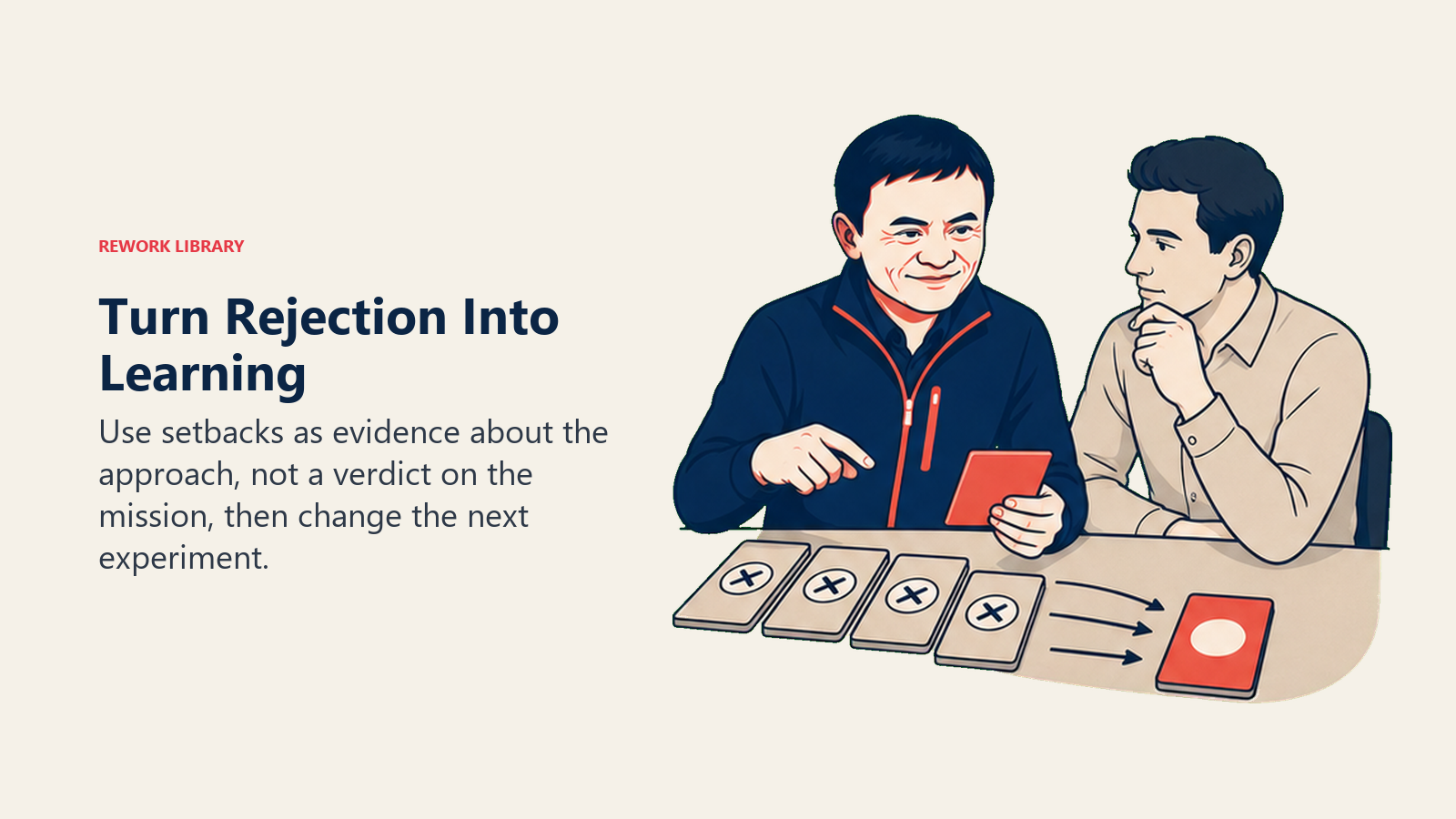
Most leadership profiles skip the rejection count. Jack Ma's is worth knowing. He failed his college entrance exam twice. When KFC opened in his city and hired 23 of 24 applicants, he was the one they turned down. He applied to Harvard 10 times and got rejected every time. His $15-a-month English teacher salary didn't pay for a lot of conviction, but he had it anyway.
In 1999, Jack Ma gathered 17 people in his Hangzhou apartment and sold them on an idea: Chinese small businesses deserved access to global buyers. That pitch became Alibaba. By 2014, its IPO raised $25B on the NYSE, the largest in history at that point. The group eventually hit a $500B+ peak valuation. The e-commerce parallels to Jeff Bezos scaling Amazon from a garage are direct, both built global marketplace empires by relentlessly prioritizing the small seller and the budget buyer over institutional interests.
Then in October 2020, Ma gave one speech at the Bund Summit criticizing China's state banking system. Three days before Ant Group's $37B IPO, the biggest ever planned, regulators pulled it. Ma largely disappeared from public view for roughly two years. That arc, from rejected English teacher to regulatory fugitive, is the actual case study.
Leadership Style Breakdown
| Style | Weight | How it showed up |
|---|---|---|
| Charismatic Evangelist | 60% | Ma built Alibaba through belief, not capital. He recruited engineers, partners, and early buyers on narrative alone. His public speeches attracted talent that no salary could have. He positioned himself as the champion of small business owners against large institutions, and made that identity stick. |
| Scrappy Operator | 40% | When eBay entered China in 2003, Ma didn't match their budget. He made Taobao listings free and introduced Alipay as an escrow service that removed buyer risk. He out-maneuvered a better-funded competitor by solving customer problems eBay wouldn't touch. By 2007, eBay had effectively exited China. |
The 60/40 split explains why Alibaba won. The charisma opened doors and attracted believers. The operator instinct kept the company alive when bigger rivals came in with more money. Ma didn't lead primarily through systems, he led through story, and then backed that story with smart product decisions.
Key Leadership Traits
| Trait | Rating | What it means in practice |
|---|---|---|
| Storytelling and talent magnetism | Exceptional | Ma could make a room of skeptics believe. He didn't have an engineering background, a design sensibility, or institutional credibility. What he had was a vision of what Chinese commerce could become, and the ability to make others see it. That's why 17 people quit their jobs and joined him in an apartment. |
| Ecosystem thinking | Very High | Ma didn't think in products. He built interconnected systems: the marketplace needed payments, so he built Alipay. Payments needed credit scoring, so he built that too. Logistics needed coordination, so he built Cainiao. Every gap in the ecosystem became a new business unit. |
| Customer obsession over competitor focus | High | "Customers first, employees second, shareholders third" wasn't just a quote. When eBay was burning cash on marketing, Ma was fixing buyer-seller trust with Alipay. He focused on what Chinese buyers were afraid of, not what eBay was doing. The result was a product that fit the market better. |
| Political risk blindspot | Medium | Ma's biggest strategic failures all trace back to underestimating how the CCP views private financial power. The 2020 Bund Summit speech, the Ant Group IPO plan, the scale of Alipay's data, none of these were processed through a serious political risk lens. |
The 3 Decisions That Defined Jack Ma as a Leader
1. Choosing Customers Over Investors During the 2000 Dot-Com Crash
When the dot-com bubble burst, most of Alibaba's competitors shifted to paid listings to preserve revenue. Ma kept the platform free. Investors pushed back. The logic was simple on paper: you need revenue to survive.
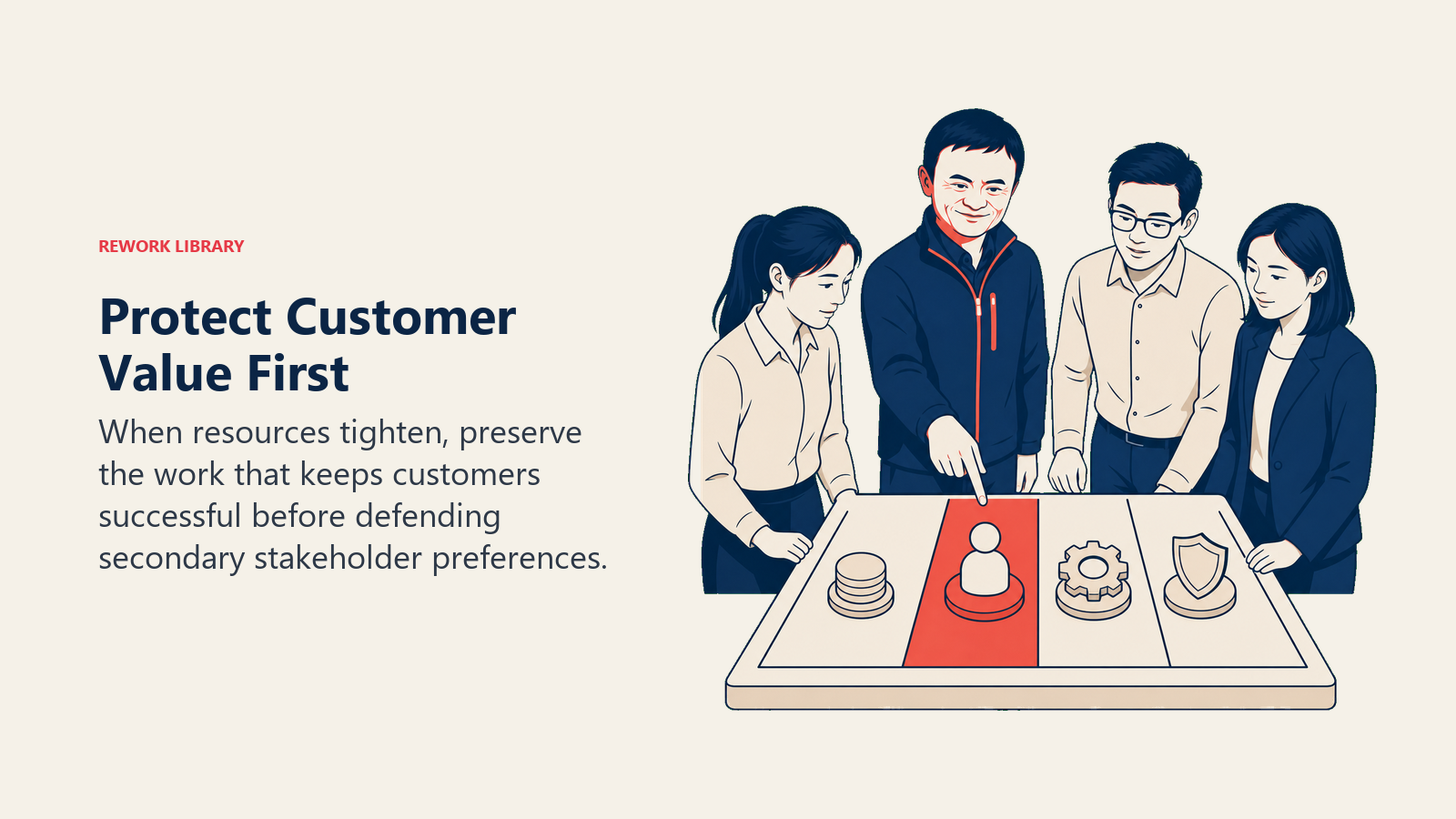
Ma held the line. He believed the only way to beat better-funded rivals was to accumulate more users faster, and you don't do that by charging people when they're scared. That decision cost short-term revenue but compounded the user base at a rate that paid off enormously once the market stabilized.
For you today: the hardest thing during a downturn is resisting the pressure to extract value from customers instead of creating it. The leaders who came out of 2008 and 2020 strongest were often the ones who doubled down on customer value while others tightened. Ma figured that out in 2000. Indra Nooyi managed a similar tension at PepsiCo, balancing short-term shareholder pressure against long-term customer investment across a global consumer brand at a scale most operators never face.
2. Launching Alipay Without a License
In 2004, Alipay launched without a formal payments license from Chinese regulators. Ma knew it. He did it anyway because the alternative, waiting for a regulatory framework that didn't yet exist, meant letting eBay win the trust problem first.
It was a calculated regulatory bet. And it worked, eventually. Alipay grew into the infrastructure layer for Chinese digital payments. The license came later. By then, the network effects were unassailable.
That decision created something Ma didn't fully intend: a financial services empire large enough to threaten the state banking system. That's the lesson regulators drew from it in 2020. The product that saved Alibaba in 2004 became the liability that cost Ant Group $37B sixteen years later.
3. The Bund Summit Speech, October 2020
Three days before Ant Group's $37B IPO, which would have been the largest in history, Ma took the stage at the Bund Summit and publicly criticized China's state banks as "pawnshops" and accused regulators of stifling innovation. He compared the global financial system to an old men's club.
The IPO was suspended. Ant Group was forced into a restructuring that valued it far below the IPO price. Ma vanished from public appearances for about two years. When he resurfaced, it was overseas. By 2023, successor Daniel Zhang had also been ousted as Alibaba reorganized into six separate units, a structure that would have been unthinkable under Ma.
The leadership lesson isn't that Ma was wrong about the banking system. It's that conviction without political calibration is a risk management failure. He knew the environment. He spoke anyway. Whatever the motivation, the outcome cost Alibaba and Ant shareholders hundreds of billions in paper value.
What Jack Ma Would Do in Your Role
If you're a CEO, the Ma move is to get clear on your narrative before you have the numbers to justify it. Alibaba didn't win on capital. It won on a belief system: that small businesses deserved the same access to global markets as large corporations. If your leadership communication sounds like a financial model, you're leaving a recruiting and partnership advantage on the table. People join missions, not spreadsheets.
If you're a COO or operations leader, the lesson from Alipay is to solve adjacent problems before they become fatal. When trust was the barrier to Chinese e-commerce, Ma didn't wait for someone else to build the payment rails. He built them. Where's the adjacent friction in your customer journey that your competitors haven't touched yet? That's probably your next operational priority.
If you're a product leader, study how Taobao beat eBay. eBay had brand recognition, capital, and a proven model. Taobao had free listings and an escrow service that solved buyer anxiety in a low-trust market. The feature set wasn't better. The product fit was. Before your next competitive review, ask which trust problems your product doesn't solve that your market cares about most.
If you're in sales or marketing, Ma's "customers first" ranking is worth internalizing. Shareholders came third in his stated priority order, and he meant it operationally. Keeping Alibaba free during the dot-com crash wasn't a marketing strategy, it was a customer-commitment signal. If your sales pitch is primarily about your product's features rather than your customer's actual problem, you're not leading with the right thing.
Rework Analysis: Operationalizing Order-of-Priority Leadership
Ma's "customers first, employees second, shareholders third" doctrine works on a slide. It breaks inside most companies because each function secretly optimizes for a different rank. Sales pushes shareholder metrics (bookings), support carries the customer load alone, and people ops owns employee sentiment in isolation. The hierarchy collapses into three parallel scoreboards.
Rework is built to hold the order intact across teams. The Sales Engine (from $69/month billed yearly) keeps customer signals, renewals at risk, unresolved tickets, shipping delays, visible inside the same pipeline sales reps use to chase quota, so customer rank-one doesn't get buried under revenue rank-three. The Process Engine (from $99/month billed yearly) ties employee workload and cross-team handoffs to the same customer records, so "employees second" shows up as protected capacity rather than a culture poster. One system, one priority order, enforced in the workflow instead of the town hall.
Notable Quotes & Lessons Beyond the Boardroom
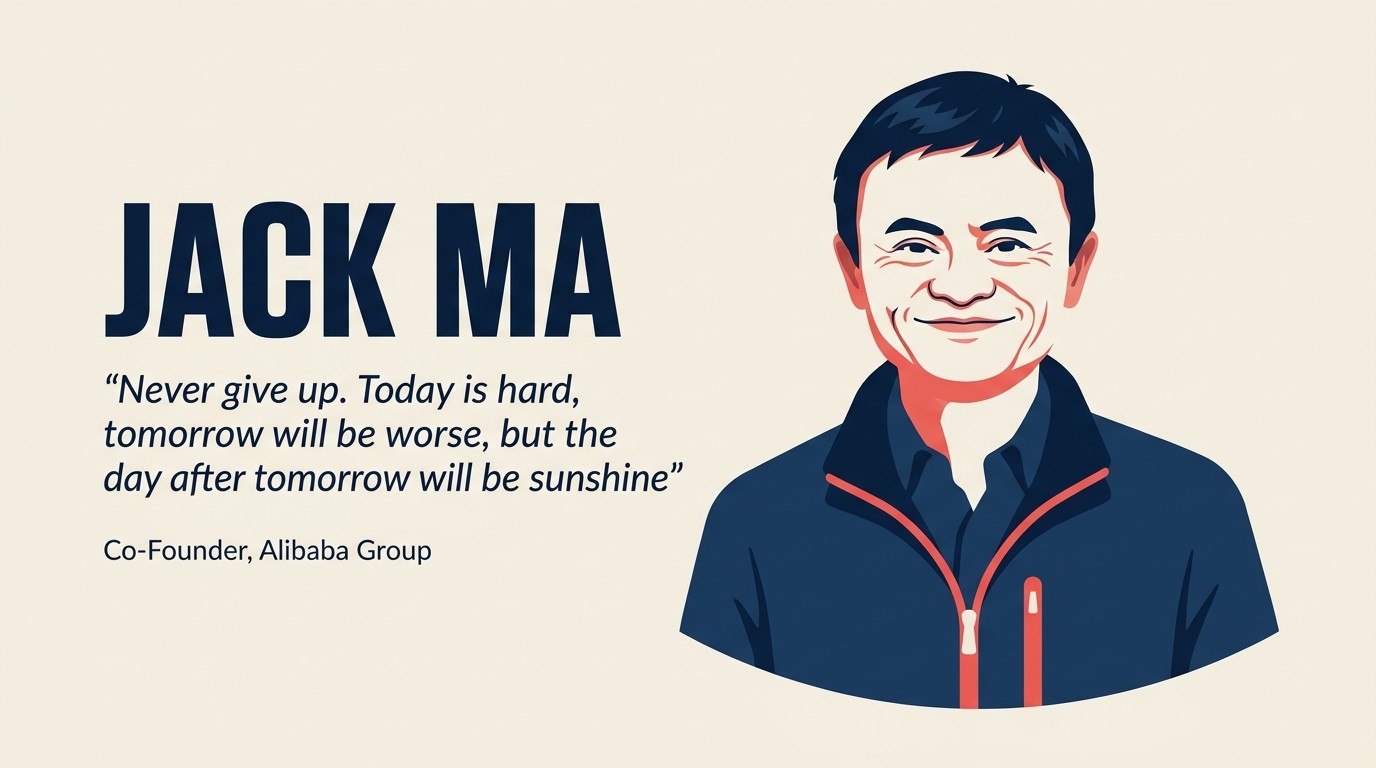
"Customers first, employees second, shareholders third." Ma repeated this for twenty years. It wasn't a feel-good statement. It was an operating instruction. When shareholders pushed him to monetize faster, he pointed to this hierarchy. When regulators wanted data access to Alipay's customer base, he pushed back, until he couldn't.
"I never thought about failure. I think all the opportunities lie in the places where others dare not go." That reads like motivational content, but it describes something specific about how he made decisions. The free-listings call during the crash. The Alipay launch without a license. He consistently went where institutional risk aversion created vacuums.
The harder lesson from Ma's career is that charisma-driven leadership creates a different kind of succession problem. When the voice of the company is also its primary brand, and that voice disappears, whether by choice or regulatory pressure, the company doesn't just lose a CEO. It loses its story. That's a structural vulnerability every founder-led company should take seriously before it's relevant. Chris Voss's negotiation principles around never being the only person with leverage apply directly here, Voss's negotiation framework is worth reading alongside Ma's story as a counterweight to conviction-only decision-making.
Where This Style Breaks
Ma's charisma built Alibaba. But it also made the company's culture and identity inseparable from one person. When he stepped back in 2019 and fully exited in 2020, there was no second narrator. Daniel Zhang was a competent operator who lasted until 2023 before being replaced during Alibaba's restructuring. The post-Ma era exposed how dependent the company's internal compass was on Ma's voice.
The second failure is more costly: the Ant Group IPO cancellation. Ma's October 2020 speech wasn't a slip, it was a pattern of underestimating political risk that had been building for years. The result was a $37B offering pulled three days before launch, hundreds of billions in paper losses, and a two-year disappearance from public life. Conviction is valuable. Conviction without a political risk function is expensive.
Want to go deeper on what makes this leadership style work, and when it doesn't?
- Founder-Led Companies: When to Transition from Founder to CEO
- Ecosystem Strategy: How Platform Companies Build Competitive Moats
- Jensen Huang Leadership Style: The 30-Year Founder Bet That Became the AI Era

On this page
- Key Facts: Jack Ma
- The Ma Entrepreneurial Resilience Model
- Leadership Style Breakdown
- Key Leadership Traits
- The 3 Decisions That Defined Jack Ma as a Leader
- 1. Choosing Customers Over Investors During the 2000 Dot-Com Crash
- 2. Launching Alipay Without a License
- 3. The Bund Summit Speech, October 2020
- What Jack Ma Would Do in Your Role
- Rework Analysis: Operationalizing Order-of-Priority Leadership
- Notable Quotes & Lessons Beyond the Boardroom
- Where This Style Breaks