Larry Ellison's Leadership Style at Oracle
Turn this article into takeaways for your work.


Each assistant summarizes the article only for you and suggests best practices for your work.
Larry Ellison's leadership style is one of the most studied, debated, and imitated in the history of enterprise software. He built Oracle from a two-person consultancy into one of the most valuable software companies on Earth by combining technical conviction, relentless competitive aggression, and a willingness to make bets that most executives would consider reckless.
He is not a comfortable leader. He's an effective one. And understanding the difference tells you a lot about what it actually takes to compete in markets where the stakes are high and the technology changes fast.
Who is Larry Ellison?
Lawrence Joseph Ellison co-founded Oracle Corporation in 1977, originally naming it Software Development Laboratories, alongside Bob Miner and Ed Oates. The company's early product was a relational database management system built to a specification first described by IBM researcher Edgar Codd. Ellison saw the commercial potential of relational databases before IBM had commercialized its own research, and Oracle shipped a product before IBM did.
He led Oracle as CEO for 37 years, building the company from a startup into a global enterprise software empire spanning databases, cloud infrastructure, enterprise resource planning, and healthcare technology. In 2014, Ellison stepped down as CEO and became executive chairman and chief technology officer, a role that kept him deeply involved in Oracle's product direction even after handing day-to-day management to Safra Catz and Mark Hurd.
Oracle has acquired more than 100 companies under Ellison's watch, including PeopleSoft, Siebel Systems, Sun Microsystems, and Cerner. These weren't purely financial plays. Each acquisition was designed to either eliminate a competitor, absorb a technology stack, or expand Oracle's footprint deeper into enterprise IT.
Key Facts
- Oracle was co-founded in 1977 as Software Development Laboratories, renamed Oracle Corporation in 1982 after its flagship database product
- Ellison stepped down as CEO in September 2014 after 37 years and took on the role of executive chairman and CTO, a position he still holds
- Oracle's market capitalization crossed $300 billion in 2023 as its cloud infrastructure business accelerated
Larry Ellison's leadership style
Larry Ellison's leadership style blends visionary leadership, autocratic leadership, and charismatic leadership in a way that is almost impossible to separate cleanly. The vision drives the long bets. The autocratic structure enforces the pace and precision required to execute them. The charisma holds the organization together and attracts the talent willing to work inside such an intense environment.
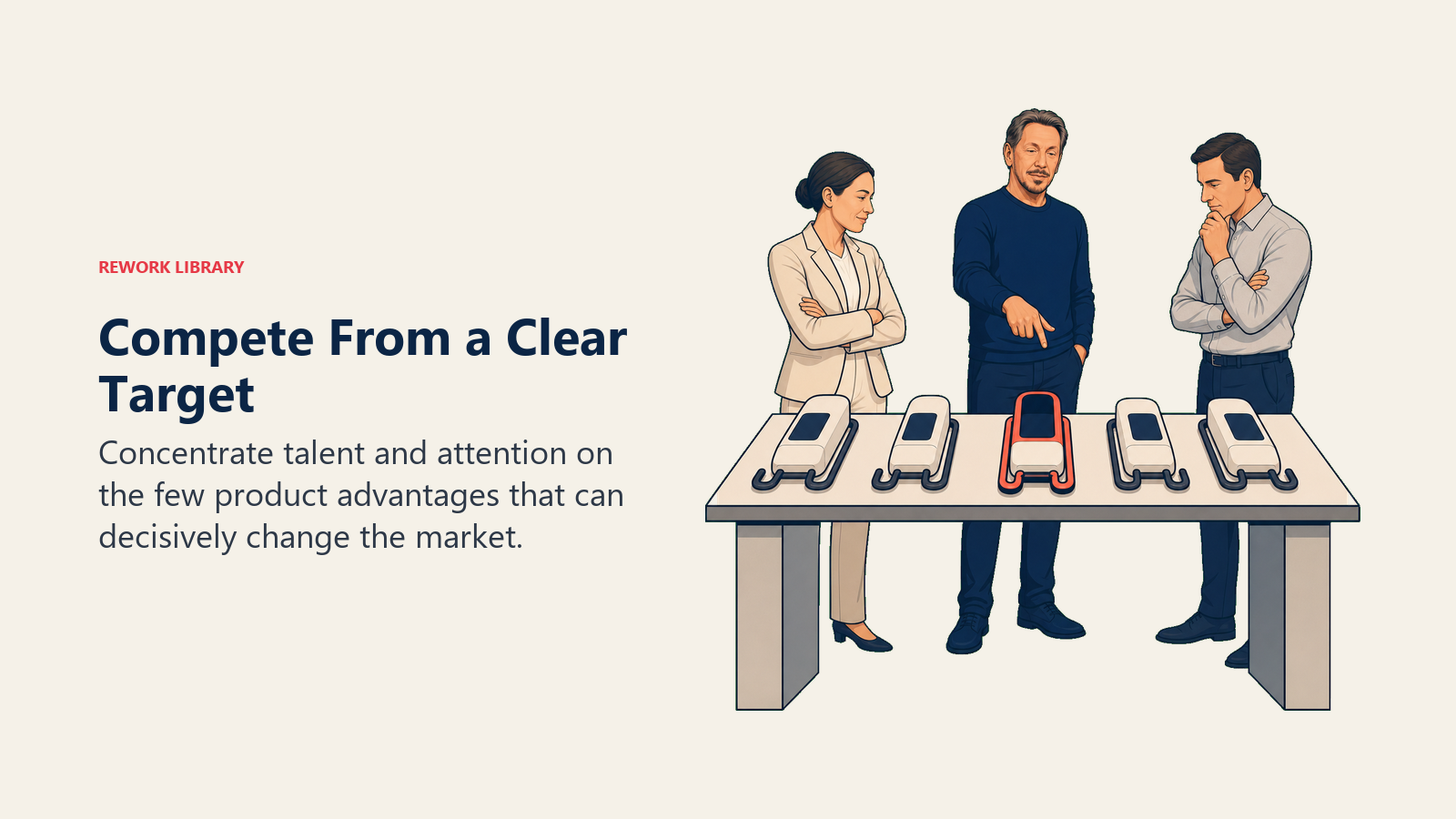
The visionary dimension is the most underrated part of Ellison's profile. He saw the database as the central organizing technology of enterprise computing decades before "data strategy" became a board-level conversation. He saw the shift from on-premise software to cloud infrastructure early enough that Oracle Cloud, launched in 2016, positioned the company as a credible third option alongside Amazon Web Services and Microsoft Azure. He saw healthcare data as Oracle's next category-defining move, which drove the $28 billion acquisition of Cerner in 2022.
The autocratic dimension is what gets more attention, because it's more visible. Ellison is known for making unilateral decisions on product direction, publicly criticizing competitors by name, and running Oracle with a flat tolerance for performance that falls short of his expectations. He doesn't build consensus. He sets direction and expects execution.
The charismatic dimension is what makes the autocratic approach survivable inside Oracle. Ellison is a gifted communicator. He makes technical arguments feel urgent and simple. He talks about competitive battles in ways that make engineers feel like they're part of something consequential. And he has the credibility of someone who has been right about large bets often enough that his conviction carries real weight with the people around him.
These three styles reinforce each other. But they also create real costs, which are worth examining honestly.
Key leadership principles
Make big bets and commit fully. Ellison doesn't hedge technology bets. When Oracle moved into cloud infrastructure, he made the investment at a scale that signaled the company wasn't treating cloud as a supplement to its existing business. When he decided to acquire Sun Microsystems for $7.4 billion in 2009, most analysts thought it was a mistake because Sun's hardware business was declining. Ellison's bet was on Java and Solaris as strategic assets. He was partially right: Java became the center of a decade-long legal dispute with Google that validated its strategic value, even if the hardware gamble was harder.
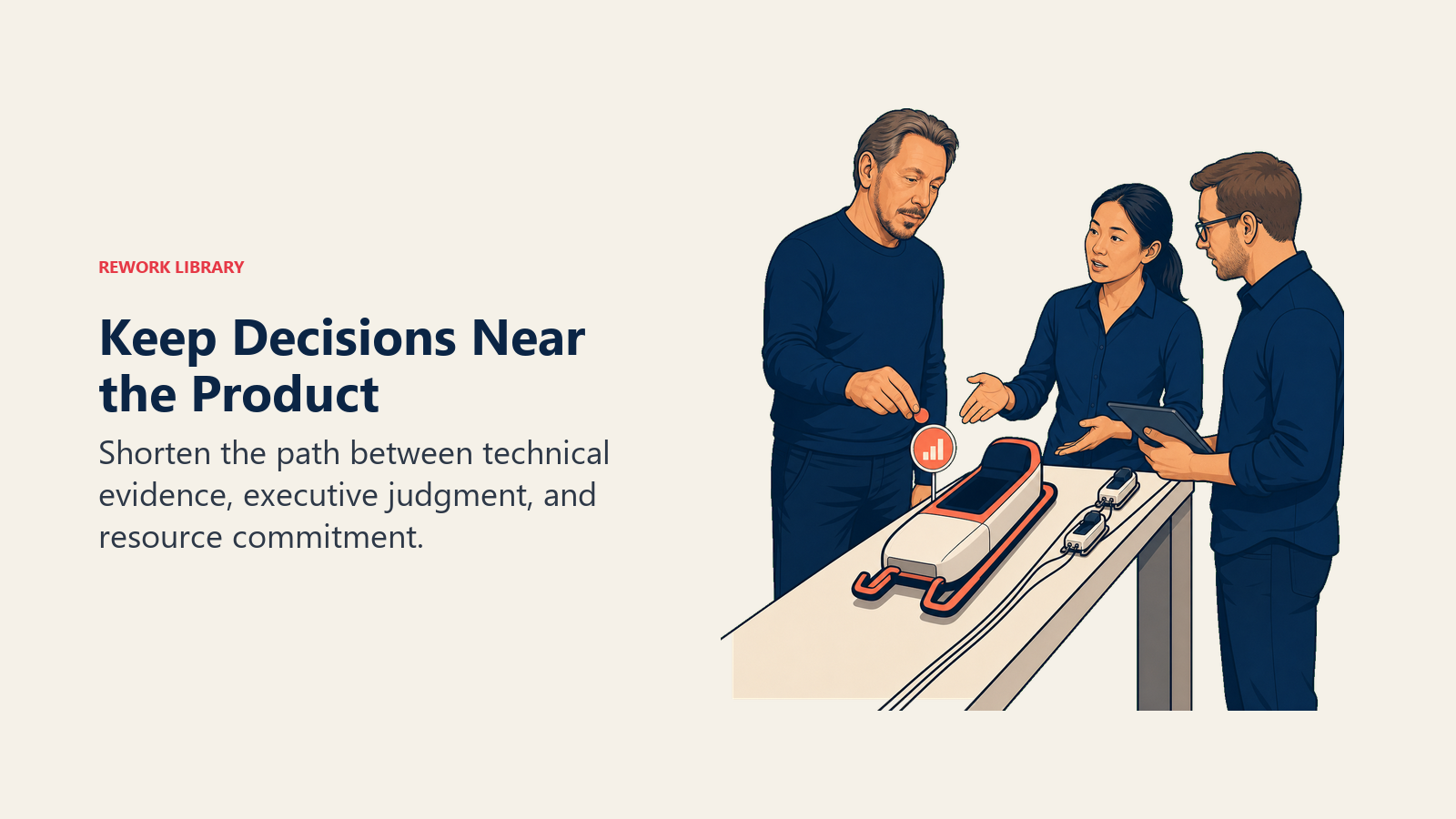
Treat competition as war. Ellison has never been coy about this framing. He has publicly compared himself to Genghis Khan and described competitive dynamics in terms that most executives prefer to keep internal. His famous description of a competitor's strategy as "a threat to our business" came from the same place as his willingness to price aggressively, buy out competitors, and run products at a loss to defend market position. For Ellison, competition isn't a market process to be managed. It's an adversarial contest to be won.
Hold deep technical conviction. Ellison is not a pure general manager. He is a product and technology executive who understands databases, cloud architecture, and enterprise software at a level of detail that most CEOs of comparable companies don't. That technical depth gives him the credibility to override engineering decisions, challenge product roadmaps, and spot architectural weaknesses in competitor offerings. It also gives him the confidence to make technology bets that purely financially oriented leaders wouldn't make.
Grow through acquisition. Oracle's acquisition strategy is one of the most consistent in enterprise software history. The pattern: identify a market that Oracle's existing customers already spend money in, acquire the leading or second-leading vendor, integrate the product into Oracle's platform, and use Oracle's distribution to cross-sell. PeopleSoft, Siebel, BEA Systems, Eloqua, Responsys, Cerner. Each followed a version of this logic.
Set standards others consider unreachable. Ellison's performance expectations have driven turnover, frustration, and a culture that not everyone thrives in. They've also driven some of the most ambitious product and infrastructure work in enterprise software. The Oracle Exadata database machine, designed to run Oracle's database software on purpose-built hardware, was widely dismissed when it launched. It became one of Oracle's most successful product lines.
Build platforms, not products. Oracle's strategy has always been to make switching away from its products increasingly expensive over time. The database is the foundation. The ERP system runs on the database. The cloud runs both. The more deeply a customer integrates Oracle's stack, the higher the organizational cost of choosing a competitor. Ellison understood this flywheel logic before "platform strategy" was a common framework.
Strengths and trade-offs of Ellison's leadership
| Trait | Upside | Risk |
|---|---|---|
| Competitive intensity | Drives Oracle to win market share aggressively, build war chests for large acquisitions, and respond to competitor moves faster than slower-moving incumbents | Leads to legal conflicts, public feuds, and cultural dynamics where internal politics can mirror external competition |
| Technical conviction | Allows Ellison to evaluate technology bets from first principles rather than analyst consensus, resulting in early moves into database, cloud, and healthcare | Can lead to sustained commitment to architecture decisions even when the market signals a need to change |
| Autocratic decisiveness | Cuts through organizational friction and enables Oracle to move at speed on large strategic decisions, including acquisitions | Creates dependency on Ellison's judgment and produces environments where dissent is structurally discouraged |
| Charismatic communication | Recruits and retains technically talented people who want to work on consequential problems with a visible leader who has a track record | When the charisma is used to override legitimate concerns, it becomes a mechanism for suppressing important feedback |
| Long-term orientation | Oracle's 40-plus year competitive position reflects Ellison's willingness to invest in strategic positions that take years to pay off | Short-term financial performance can suffer when large bets (like early cloud infrastructure spending) don't immediately generate returns |
| Acquisition-led growth | Rapidly expanded Oracle's addressable market and eliminated competitors who might otherwise have eroded Oracle's core business | Integration of acquired companies is notoriously difficult, and some Oracle acquisitions have seen significant talent and product quality decline post-close |
Ellison's reputation as abrasive is not just a media narrative. Former executives have described Oracle's internal culture as intensely political, with performance reviews that feel more like competitive audits than development conversations. The company has faced criticism for how it handles employee departures, customer contracts, and pricing negotiation tactics. These aren't incidental to the leadership style. They're expressions of it.
Lessons for today's leaders
The question for most executives isn't whether to replicate Ellison's personality. It's which elements of his operating logic are worth extracting and applying in their own context.
| Situation | What Ellison's approach suggests |
|---|---|
| You're entering a market with established incumbents | Don't try to win on their terms. Identify the structural weakness in how they deliver value (delivery model, pricing, integration complexity) and design your go-to-market around that gap. Oracle exploited IBM's failure to commercialize its own database research. |
| You need to make a large acquisition decision | The question isn't the current revenue multiple. It's what strategic position the asset gives you in five years. Evaluate acquisitions on what they block, not just what they add. |
| Your organization is slow to execute on a clear strategic bet | Decisiveness has a compounding return. Every month an organization debates a decision that has already been made in principle is a month a competitor is building the product. Ellison's autocratic mode is most defensible when the decision is genuinely time-sensitive. |
| Your technical credibility with your team is low | Invest in it. Leaders who can speak fluently about the technology their company builds earn a different kind of respect from their engineering organizations than leaders who speak only in business outcomes. That credibility gives you more room to make bold calls. |
| You're in a market where the competitive dynamics feel zero-sum | Treat them that way in your planning, even if you treat competitors respectfully in public. Know what your competitors are building, where they're vulnerable, and what it would take to displace them. Ellison's competitive intelligence operation at Oracle was famously thorough. |
Ellison's approach to building competitive advantage is worth studying even for leaders who want nothing to do with the more aggressive elements of his style. His core logic, that a software company should make itself progressively harder to displace by expanding the number of workflows dependent on its infrastructure, is as valid today as it was when he articulated it in the 1980s.
What Ellison's legacy actually tells us
Larry Ellison built one of the most durable technology companies of the past 50 years using a playbook that is genuinely difficult to copy and genuinely worth understanding. The competitive intensity, the platform logic, the technical conviction, the willingness to make large acquisitions and hold them through difficult integrations: these aren't personality quirks. They're a coherent theory of how to compete in enterprise software markets where switching costs are high and category leadership compounds over time.
The leaders who learn most from Ellison's career aren't the ones trying to replicate his style. They're the ones who extract the structural logic and ask which elements of it apply to their own market, their own organization, and their own willingness to commit. That's what autocratic leadership at its best actually enables: not control for its own sake, but the ability to execute on a vision faster than a consensus-driven process ever could.
