Sergey Brin's Leadership Style and Principles
Turn this article into takeaways for your work.


Each assistant summarizes the article only for you and suggests best practices for your work.
Key Facts: Sergey Brin (born August 21, 1973, in Moscow) emigrated to the United States with his family in 1979 at age six, leaving the Soviet Union after antisemitic policy blocked his father, a mathematician, from graduate study. He earned a bachelor's degree in mathematics and computer science from the University of Maryland in 1993, then entered Stanford's computer science PhD program, where he met Larry Page and co-authored The Anatomy of a Large-Scale Hypertextual Web Search Engine, the 1998 paper describing PageRank. He left the program to co-found Google, incorporated on September 4, 1998. He served as Google's President from 1998 to 2001 and President of Technology from 2001 to 2011, when Larry Page became CEO and Brin's public role narrowed to "strategic projects, in particular working on new products," the era that produced Google X and Google Glass. He became President of Alphabet in 2015 and stepped down in December 2019, when Sundar Pichai became sole CEO. He remains an Alphabet director and Executive Committee member with no operating title. After ChatGPT's late-2022 release he returned to hands-on work on Gemini, and by early 2025 he was recommending Gemini staff work 60 hours a week in the office. By August 2026 his own colleagues were describing him as "incredibly hands-on" inside the AI division, an involvement he holds no title to justify.
Most leadership profiles of Sergey Brin stop at the same place: co-founded Google, ran Google X, stepped down as Alphabet's president in December 2019, and went off to build airships and study physics. That version was accurate for about three years. It stopped being accurate once ChatGPT shipped in late 2022 and Brin, by his own account, started feeling like he was "spiraling" outside the company he'd co-founded. Sergey Brin's leadership style, examined honestly in September 2026, is largely a study of an unretirement, and treating it as anything else is the exact defect this kind of research is supposed to catch.
Larry Page's leadership and Eric Schmidt's leadership already cover the shared ground: the 1998 founding, the 2001 decision to bring in a professional CEO, the 2011 reorganization, the 2015 creation of Alphabet, and the joint December 2019 exit. This profile skips all of that except where it's needed to explain what came next, because what came next is the part that's genuinely Brin's alone: a founder who spent a decade as the company's technical and moral conscience rather than its operator, who personally strapped on a product and jumped out of the sky to sell it, who made the call that cost Google its Chinese search market on principle, and who came back from retirement to the least titled job available at the company he built.
The Strategic Projects Doctrine
The Strategic Projects Doctrine is Brin's operating premise that his authority should track the hardest unsolved problem he's personally working on, not the title on his door. Google gave the doctrine its own language in January 2011, when Larry Page agreed to become CEO and Eric Schmidt moved to executive chairman. In that same announcement, Google said Brin would devote his energy to "strategic projects, in particular working on new products," with his title reverting to the plain "co-founder" he'd carried since the earliest days. Page and Schmidt each walked into 2011 with more formal authority than before. Brin walked into 2011 with less, and used the resulting freedom to go build things.
Those "new products" became Google X (later just X), the moonshot lab that produced Waymo, Loon, and Google Glass. Brin didn't run X's daily operations. That job belonged to Astro Teller, X's "Captain of Moonshots." What Brin did instead was pick the bet he cared about most and front it personally, in public, at the moment of highest reputational exposure, which is exactly the move a strategic-projects mandate is supposed to enable and a fixed operating title usually forbids.
The doctrine survived the one stretch where Brin did carry serious formal authority: President of Alphabet from 2015 to December 2019. When he and Page stepped down together, their letter said Alphabet and Google "no longer need two CEOs and a President," handing full authority to Sundar Pichai. That could have been the last chapter. Instead, after ChatGPT's release sharpened the AI race in late 2022, Brin came back to a job that fits the doctrine better than anything he'd held before: no title at all, just a desk and a technical problem he'd decided mattered more than his own retirement. A leader whose 2011 mandate was literally "strategic projects" and whose 2022 return carries no title whatsoever isn't running on an org chart. He's running on where he decides to point his own attention next.
Leadership Style Breakdown
| Style | Weight | How it showed up |
|---|---|---|
| Technical Operator | 40% | Returned to Gemini in 2022 to do hands-on technical work, not to advise from a distance. By 2025 he was recommending 60-hour weeks and daily office attendance for the team he'd rejoined, and by August 2026 DeepMind engineers described him as "incredibly hands-on" in an org he has no formal authority over. |
| Moonshot Frontman | 35% | Ran the "strategic projects" era that became Google X, and personally wore Google Glass into its highest-visibility public moment: the 2012 I/O skydiving demo. He put his own credibility, not an employee's, on the line for the bet. |
| Values-Driven Conscience | 25% | Drove Google's January 2010 decision to stop censoring search results in China, a call widely tied to his own Soviet childhood, and directed a large share of his personal philanthropy toward Parkinson's research after learning he carries the disease-linked LRRK2 mutation his mother also carries. |
That 40/35/25 split is lopsided toward doing the work over talking about it, which is the opposite of how most well-known tech leaders in this collection distribute their time. Eric Schmidt's leadership ran mostly on external representation, dealing with regulators and the press so the founders didn't have to. Brin's split barely has a public-facing lane at all. Even his highest-profile public moment, the Glass skydive, was in service of a product decision, not a communications strategy. The values-driven quarter is smaller by weight but it's the one that shows up in his biggest single decision (China) and his biggest personal cause (Parkinson's funding), which suggests it's less a percentage of his calendar and more a filter the other two styles run through.
Key Leadership Traits
| Trait | Rating | What it means in practice |
|---|---|---|
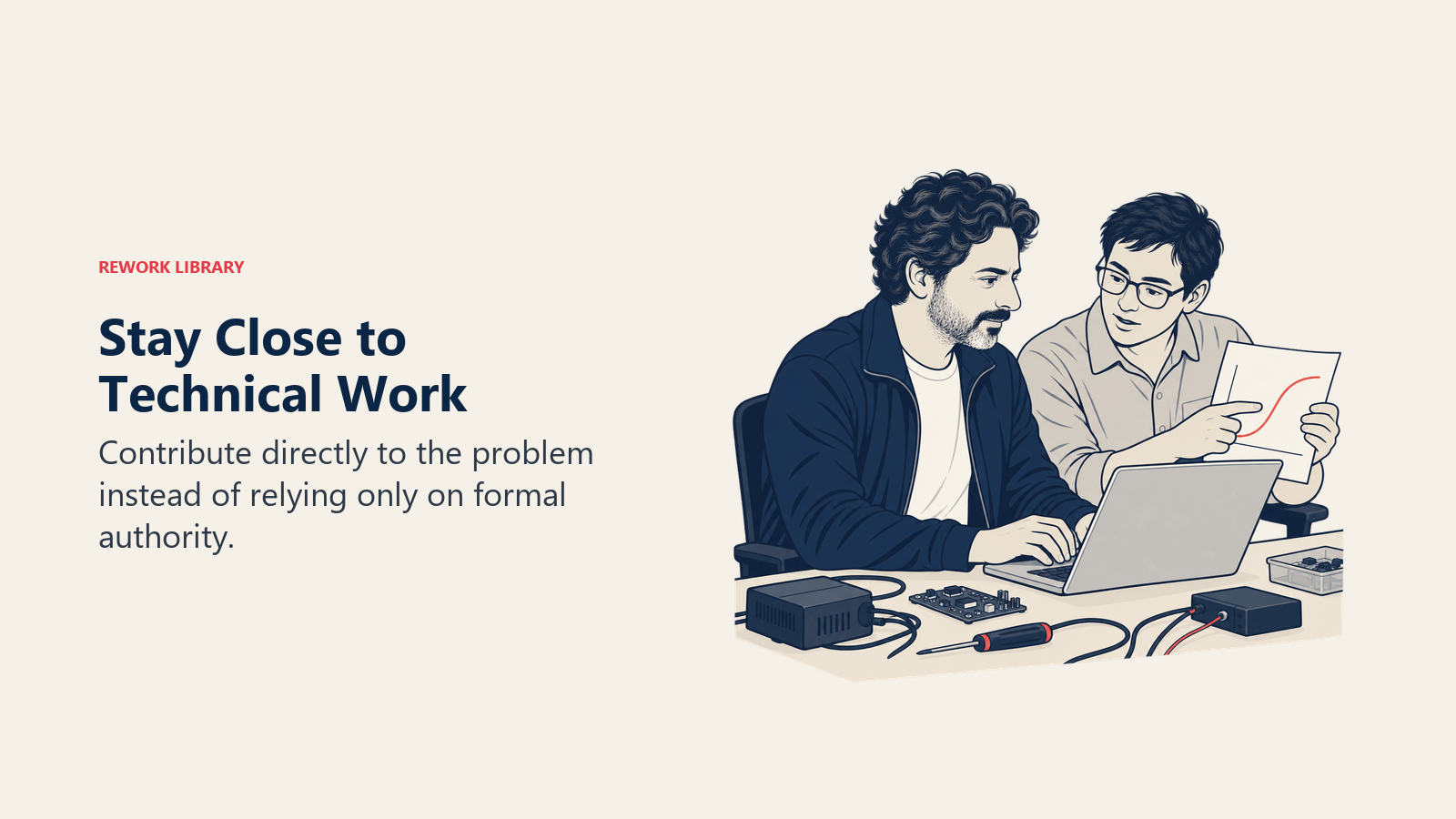
| Willingness to return to hands-on work without a title | Exceptional | Came back to Google after ChatGPT's 2022 release with no executive title, working three to four days a week on Gemini and telling a Stanford audience in December 2025 that staying retired "would've been a big mistake." |
| Personal risk-bearing | Very High | Rather than assign the highest-visibility product demo of his career to a spokesperson, he put the headset on himself and jumped into it live, the same product that would fail publicly within three years. |
| Values-driven decisiveness under commercial pressure | High | Pushed Google to stop censoring Chinese search results in January 2010, giving up meaningful revenue and market access in China on a principle he traced directly to growing up under Soviet rule. |
| Comfort operating without formal authority | Very High | Carried the plain title "co-founder" from 2011 through 2015 while running the company's highest-risk bets, then returned in 2022 to no title whatsoever, a pattern almost no other executive in this collection repeats twice. |
| Broad organizational communication | Medium | Writes direct memos to the specific team he's working with, like the February 2025 note to Gemini staff, rather than company-wide addresses. Effective for the room he's in, largely invisible to everyone else at Alphabet. |
The 3 Decisions That Defined Sergey Brin as a Leader
Three moments carry the arc: building instead of licensing what he and Page discovered at Stanford, fronting the moonshot bet that failed in public, and choosing, after walking away, to come back.
1. Building Google Instead of Licensing PageRank (1996 to 1998)
Brin and Page's insight, that a hyperlink pointing to a page functions as an implicit vote for its importance, was academic research before it was a company. They published it as The Anatomy of a Large-Scale Hypertextual Web Search Engine in 1998, describing a prototype that had already indexed more than 24 million pages using Stanford's own network. Publishing the method openly, rather than keeping the ranking formula proprietary from day one, is itself a choice: it invited scrutiny and imitation in exchange for the credibility of a peer-reviewed description of how the thing actually worked.
The harder choice came next. In early 1999, with Google still running on university servers, Brin and Page approached Excite CEO George Bell about selling the company outright for under $1 million. Bell turned them down, and a follow-up offer of $750,000, negotiated down by Excite investor Vinod Khosla, was rejected too. Five months later, Kleiner Perkins and Sequoia Capital put $25 million into the company instead. Brin didn't walk away from that rejection discouraged. He and Page had already decided the algorithm was worth more as a company they controlled than as a technology license sold to someone else's product, and Excite's refusal to buy simply confirmed they'd have to prove it themselves.
For you: the instinct to sell a hard-won insight the moment someone offers real money for it is strong, especially when the offer comes from an established player who could scale it faster than you can. Brin and Page had already priced their own work at under $1 million and still walked away when even that got rejected, betting the insight was worth building around rather than cashing out on. That bet only pays off if you're right about the underlying idea being bigger than the buyer thinks it is.
2. Fronting Google X and Google Glass Through Its Public Failure (2011 to 2015)
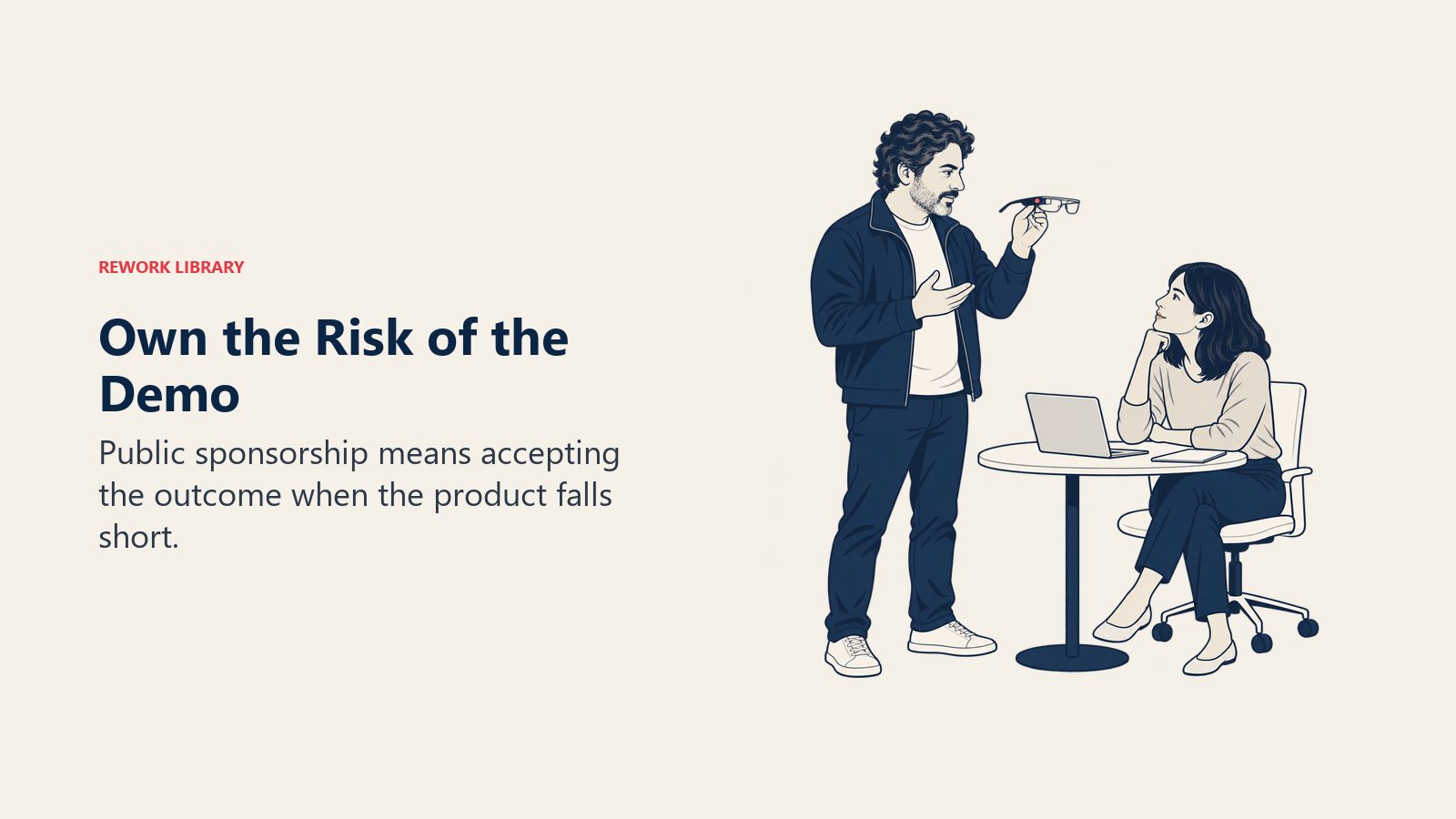
When Brin's role narrowed to "strategic projects" in 2011, he used it to build what became Google X, funding bets specifically because they were too uncertain for the core Search and Ads business to justify. Google Glass was the bet Brin chose to front personally. At Google I/O in June 2012, four skydivers wearing Glass jumped from a blimp over San Francisco, streamed the descent live to the Moscone Center, then handed off to bikers and rappellers who carried the feed the rest of the way onto the stage where Brin was standing. Brin then previewed the device himself, telling the crowd, "Being able to share what you're seeing is amazing," and describing Glass's design goal as staying "close to your senses, not block them."
The demo worked. The product didn't. Google ended the consumer Explorer program in January 2015, moving what remained of Glass out of X entirely and into a unit run by Nest founder Tony Fadell, an unambiguous signal that the moonshot lab had failed to turn the bet into a product X could keep. Brin never distanced himself from the failure the way an executive who'd only greenlit the budget might have. He'd worn the device on stage. The public record of the bet and the public record of the person backing it were the same image.
That's the real cost of the Strategic Projects Doctrine, and it's worth sitting with before admiring it: when you personally front a bet instead of delegating the public face of it, you also personally absorb the failure when it doesn't work. Brin's other moonshots, Waymo especially, paid off enormously. Glass didn't, and because he'd chosen to be the one skydiving into the demo, he couldn't hand the failure to someone else's résumé either.
3. Stepping Down in December 2019, Then Returning With No Title After 2022
On December 3, 2019, Brin and Page announced they were stepping down as Alphabet's president and CEO, writing that the company "no longer need two CEOs and a President" and handing full authority to Sundar Pichai. Brin later described what he expected retirement to look like: studying physics in cafés. That plan collapsed almost immediately, first because COVID closed the cafés, then because, in his own words at a Stanford event in December 2025, he found himself "spiraling" and "kind of not being sharp."
He came back. By 2023 he was showing up at the office three to four days a week, working hands-on on what became Gemini, with no executive title at all, not "co-founder," not "director," nothing. In February 2025 he wrote directly to Gemini staff that "60 hours a week is the sweet spot of productivity," recommending the team be in the office "at least every weekday." Four years on, DeepMind engineers still described him as "incredibly hands-on, working hard on stuff and being involved". Looking back at Stanford, he said plainly: "If I'd stayed retired, I think that would've been a big mistake."
For you: a clean exit and a genuine change of mind are not in conflict, and pretending a leader's 2019 letter is the final word on their involvement underrates how much can change once the problem they walked away from gets more urgent than the one they retired into. Brin didn't come back to reclaim a title. He came back because the work itself, not the authority attached to it, was what he'd actually missed.
What Sergey Brin Would Do in Your Role
If you're a technical founder sitting on an insight you could license away, Brin's Excite story is the test worth running: would you still turn down a buyer at the price you'd have accepted six months ago, because you've become convinced the idea is bigger than what's on the table? Brin and Page priced Google at under $1 million and walked when even that was rejected. The lesson isn't "never sell." It's that the decision should track your own conviction about the idea's ceiling, not the size of the check in front of you.
If you're a leader asked to front a high-risk bet in public, Brin's Glass demo is the honest version of what that costs. He didn't send an engineer or a product marketer to sell Glass to the world. He put it on himself, jumped into the highest-visibility moment his company had that year, and then wore the failure just as personally three years later when the Explorer program shut down. If you're going to be the face of the bet when it works, plan on being the face of it when it doesn't.
If you're an executive who's stepped away from an operating role, sit with what Brin actually said about his own retirement: he expected quiet and physics, and instead found himself "spiraling" within a few years. A clean handoff, documented in a public letter with your successor's name in it, is not a permanent verdict on how you'll feel about the work later. Deciding to come back is not a failure of your original decision to leave. It's new information.
| Situation you're facing | Brin's likely move |
|---|---|
| You've built something valuable and someone offers to buy it below what you think it's worth | Turn it down and keep building, if you're genuinely convinced the ceiling is higher than the offer |
| You need a risky bet to get taken seriously inside your own company | Front it personally and publicly rather than delegating the visible part to someone junior |
| The bet you fronted just failed in public | Let the failure land on you rather than routing it to whoever built it, since you're the one who chose to be visible |
| You retired cleanly and it isn't sitting right | Go back to the actual work, not the old title, and let the org chart catch up later if it needs to |
| You see the team you rejoined falling behind faster-moving competitors | Show up in person and say so directly, repeatedly, rather than routing the pressure through a memo alone |
Notable Quotes & Lessons Beyond the Boardroom
On why he came back after retiring in 2019, Brin told a Stanford audience in December 2025 that stepping away had left him "spiraling" and "kind of not being sharp," adding what functions as the cleanest one-line summary of his own leadership arc: "If I'd stayed retired, I think that would've been a big mistake." It's a rare thing for a founder to say about their own exit letter in public, and it's worth taking at face value rather than reading as false modesty.
On the China decision, Brin was direct that his own history was the reason he pushed it, telling reporters that growing up under Soviet rule "has definitely shaped my views, and some of my company's views," and that living in America had given him "many basic freedoms that my parents did not... the ability to pursue my interests in school and university... and ultimately the ability to pursue my own enterprise." Google's own blog post announcing the change was blunter about the mechanics: the company said it had "decided we are no longer willing to continue censoring our results on Google.cn," a sentence that cost Google meaningful revenue in the world's largest internet market.
On Glass, the line that aged best wasn't a boast about the technology. It was Brin's stated goal for the design itself: he wanted a device "close to your senses, not block them," at a moment when most coverage focused on the skydiving stunt rather than the intent behind it. The stunt got the headlines. The design philosophy is the part that actually mattered, and it's also the part the product never fully delivered on before it was pulled from the market.
Where This Style Breaks
Glass is the obvious place to start, and it deserves to be named plainly rather than folded into a broader "moonshots don't always work" shrug. Brin didn't just fund Glass. He personally staged its highest-visibility public moment, a skydiving demo watched around the world, and less than three years later Google shut down the consumer program and moved what remained to a different team. The Strategic Projects Doctrine says a leader should personally front the bet that matters most. It doesn't say the bet will pay off, and Glass is the clearest evidence in Brin's own record that fronting a failure in public is exactly as costly as fronting a success.
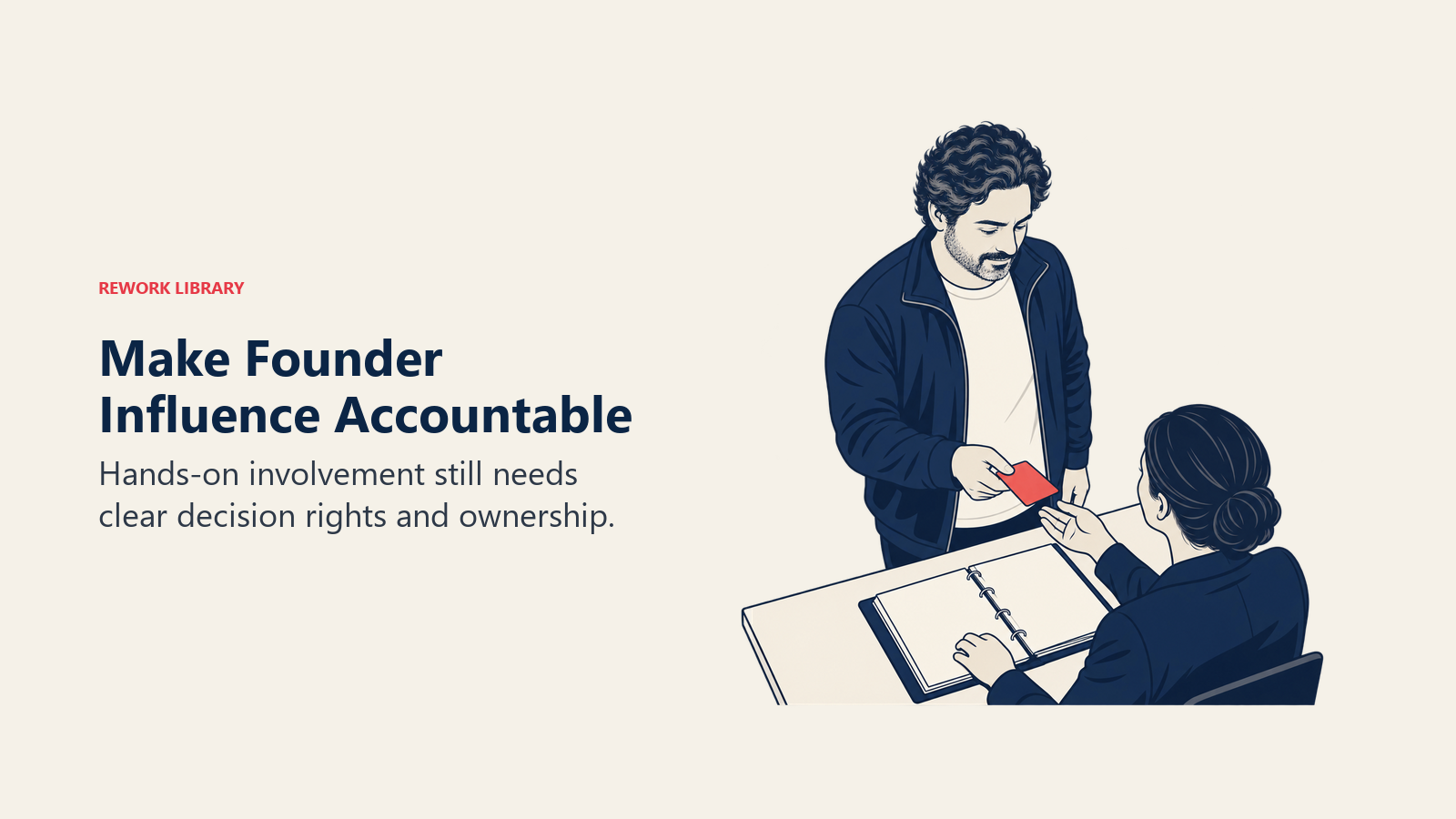
The deeper problem is structural rather than product-specific. Brin sits on Alphabet's board and its Executive Committee with no operating title, no formal reporting line to Sundar Pichai, and no job description that says what he is or isn't allowed to direct. And yet he is reported to have addressed hundreds of staff at an April 2026 town hall pressing DeepMind to move faster, and DeepMind engineers describe him as "incredibly hands-on", in the same stretch that Alphabet reorganized its AI leadership in August 2026, moving Demis Hassabis to Chief Scientist and installing Koray Kavukcuoglu as Google DeepMind's CEO reporting directly to Pichai. Nobody has to explain Brin's influence to a board he already sits on, and nobody outside the company gets to hold him accountable for how he uses it, because he holds no title that comes with accountability attached. A founder with super-voting shares and a board seat can shape an organization indefinitely without ever occupying a position the company's own governance structure is built to check. That's not a compliment dressed up as a critique. It's a real gap in how a company this size is supposed to be governed.
The February 2025 memo telling Gemini staff that 60 hours a week is "the sweet spot of productivity" reads differently depending on who's reading it. For Brin, a billionaire who spent three years deciding retirement didn't suit him and chose to come back on his own terms, a 60-hour week is a preference he's free to act on or abandon. For the Gemini engineer being measured against that number by a manager who read the same memo, it isn't optional at all. Tobi Lutke made a structurally similar move at Shopify two months later, telling staff in April 2025 that reflexive AI usage was now a baseline expectation and folding AI use into performance and peer reviews. Two founder-leaders, the same year, both using authority nobody elected them to hold to redefine what a normal week of work looks like for people who never got a vote in the decision. The founder can always retire again. The employee measured against the new baseline cannot.
Learn More
- Larry Page's Leadership Style at Google
- Eric Schmidt Leadership Style: Adult Supervision and Scaling Google
- Tobi Lutke's Leadership Style at Shopify
- Sundar Pichai Leadership Style at Google
- John Doerr's Leadership Style and OKR Legacy
- Demis Hassabis Leadership Style at Google DeepMind
- Susan Wojcicki's Leadership Style at YouTube
- Jensen Huang's Leadership Style at NVIDIA
Frequently Asked Questions about Sergey Brin
Who is Sergey Brin?
Sergey Brin (born August 21, 1973, in Moscow) co-founded Google with Larry Page in 1998 after they met as PhD students at Stanford and developed the PageRank algorithm. He held the titles President, President of Technology, and later President of Alphabet before stepping down from executive roles in December 2019. He remains an Alphabet board member and returned to hands-on technical work on Gemini after 2022.
Is Sergey Brin still involved with Google?
Yes. Although he holds no executive title, Brin returned to Google after ChatGPT's late-2022 release to work directly on Gemini, reportedly in the office three to four days a week. He remains a member of Alphabet's board and its Executive Committee, and as of an April 2026 town hall was still personally pushing Google's AI division to move faster.
Why did Sergey Brin step down from Alphabet in 2019?
On December 3, 2019, Brin and Larry Page announced they were stepping down as Alphabet's president and CEO, writing that the company "no longer need two CEOs and a President" now that it had matured. Sundar Pichai became sole CEO of both Google and Alphabet. Brin has since said he expected a quiet retirement studying physics, but found himself unfulfilled and returned to hands-on work within a few years.
What was Sergey Brin's role in Google Glass?
Brin personally led the "strategic projects" work that became Google X, the moonshot lab that built Glass, and fronted the product's highest-profile public moment: a live skydiving demo at Google I/O in June 2012. Google ended Glass's consumer Explorer program in January 2015 after it failed to find a mainstream market, moving what remained to a different team led by Tony Fadell.
Why did Sergey Brin push Google to stop censoring search results in China?
In January 2010, Google announced it would no longer censor search results on Google.cn following a cyberattack traced to China. Brin was widely reported as the driving force behind the decision, and he has connected his views directly to his own childhood in the Soviet Union, saying the experience "definitely shaped" his views on totalitarianism and censorship.
What can leaders learn from Sergey Brin's leadership style?
Three things stand out. First, an insight is sometimes worth more built into a company you control than sold to whoever offers the first check, but only if your conviction about its ceiling is actually correct. Second, personally fronting a high-risk bet means personally absorbing the failure if it doesn't work, not just the credit if it does. Third, stepping away from an organization cleanly doesn't have to be permanent if the work itself, not the title attached to it, turns out to be what you actually miss.

Co-Founder, Rework.com
On this page
- The Strategic Projects Doctrine
- Leadership Style Breakdown
- Key Leadership Traits
- The 3 Decisions That Defined Sergey Brin as a Leader
- 1. Building Google Instead of Licensing PageRank (1996 to 1998)
- 2. Fronting Google X and Google Glass Through Its Public Failure (2011 to 2015)
- 3. Stepping Down in December 2019, Then Returning With No Title After 2022
- What Sergey Brin Would Do in Your Role
- Notable Quotes & Lessons Beyond the Boardroom
- Where This Style Breaks
- Learn More