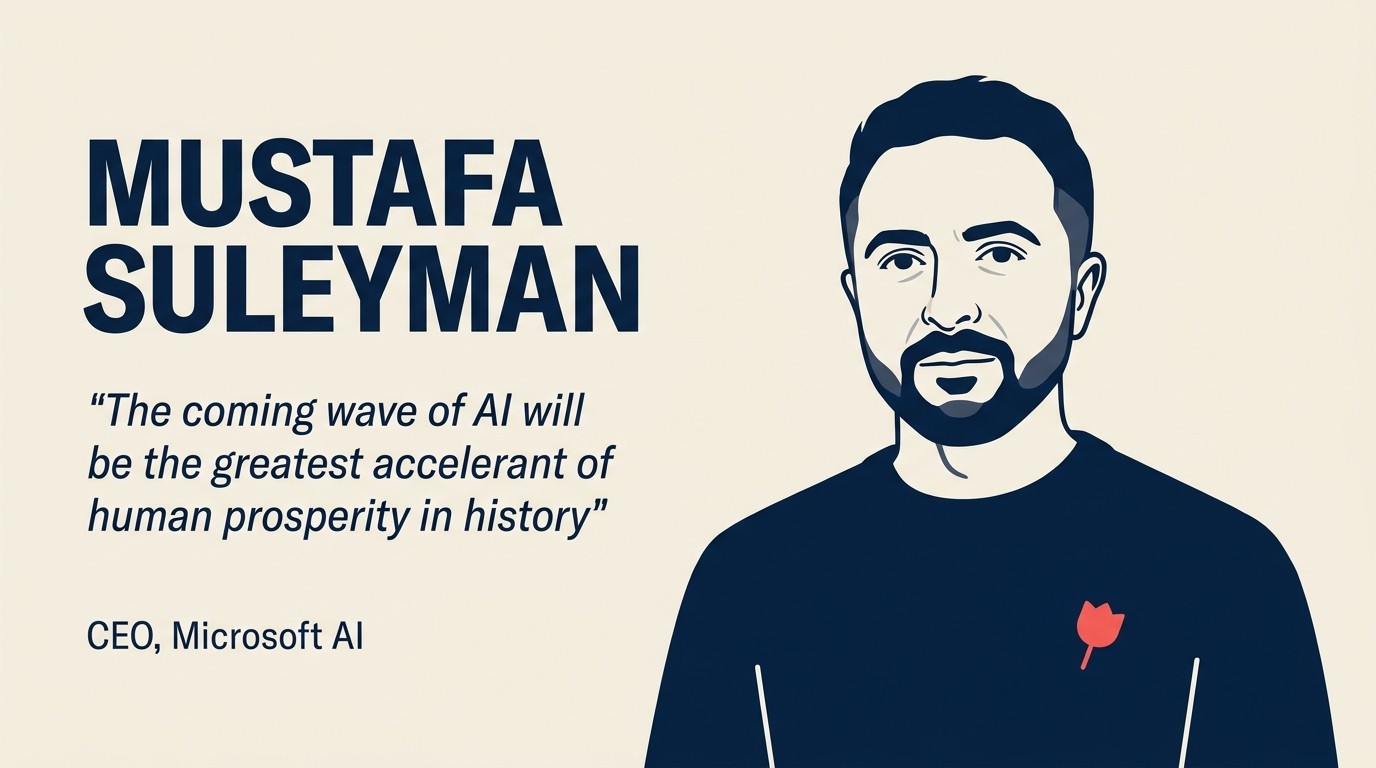
Mustafa Suleyman Leadership Style: From DeepMind Ethics to Microsoft AI CEO
Turn this article into takeaways for your work.


Each assistant summarizes the article only for you and suggests best practices for your work.
Key Facts: Mustafa Suleyman (b. 1984, London) co-founded DeepMind in 2010 with Demis Hassabis and Shane Legg after a London School of Economics drop-out and an early career running Muslim Youth Helpline and advising on conflict resolution. He led applied AI and ethics at DeepMind through Google's 2014 acquisition, served as VP of AI Product and AI Policy at Google from 2019 to 2022, then co-founded Inflection AI in 2022 with Reid Hoffman and Karén Simonyan, raising over $1.3B and launching the Pi chatbot. Since March 2024 he has been CEO of Microsoft AI, overseeing Copilot, Bing, and Edge. His 2023 book "The Coming Wave" (co-authored with Michael Bhaskar) became a Sunday Times bestseller on AI and synthetic biology risk.
The Coming Wave Doctrine
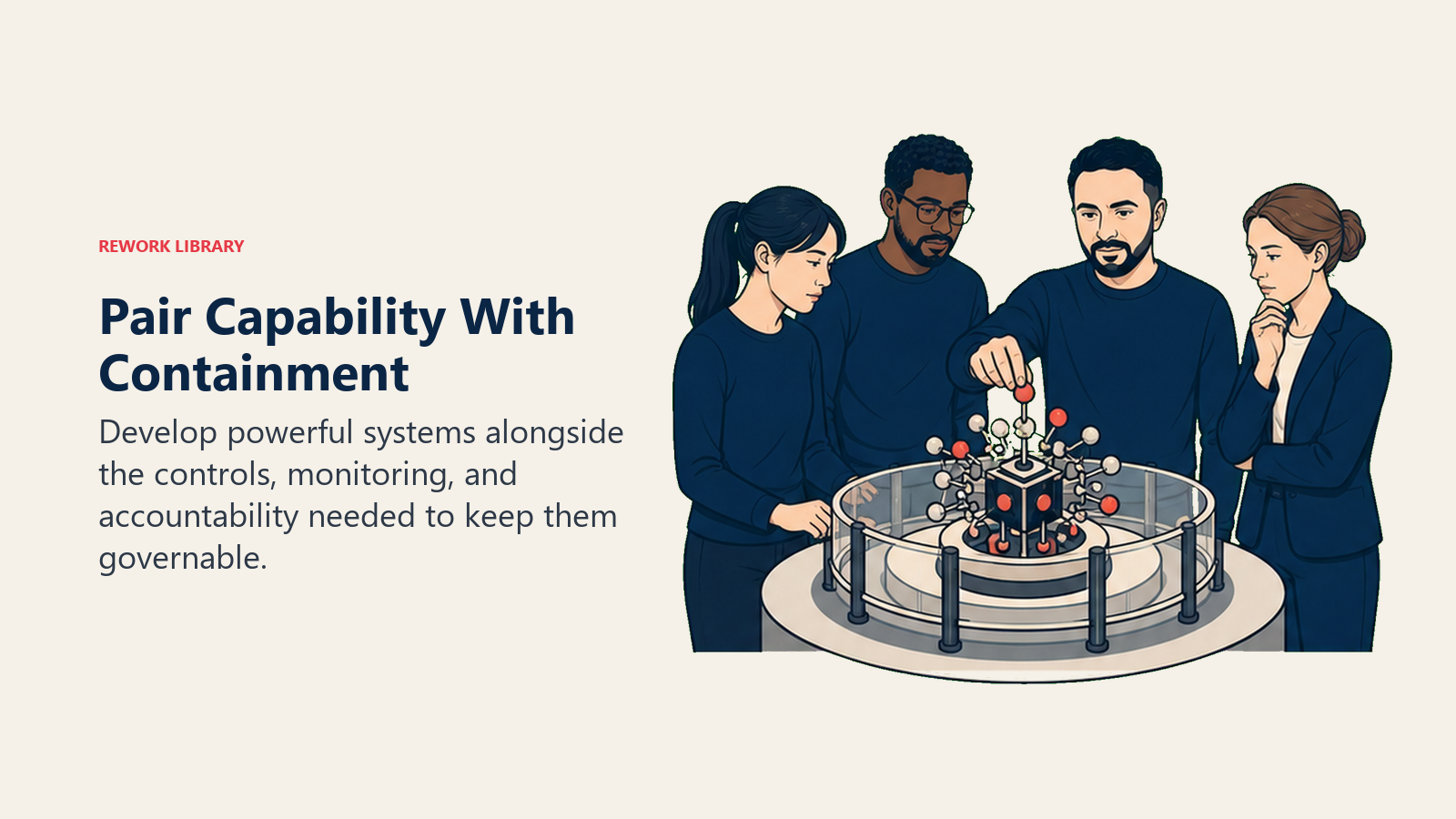
A containment framework arguing that exponentially powerful technologies, especially AI and synthetic biology, cannot be uninvented, so leaders must actively shape their proliferation through ten concurrent levers: technical safety, audits, choke points, critics, revenue-linked responsibility, alliances, regulation, culture, movements, and coherent governance. The doctrine rejects both techno-optimism and prohibition as inadequate; the only credible stance is active containment while continuing to build.
Mustafa Suleyman dropped out of Oxford at 19. At 26, he co-founded DeepMind with Demis Hassabis and Shane Legg on an explicit thesis: build AI responsibly or don't build it at all. By the time Google acquired DeepMind in 2014 for roughly $500M, he was running the applied AI and ethics arms of one of the most consequential research labs on earth. Then he left, under difficult circumstances, and did it again with Inflection AI, raising $1.3B and launching a consumer AI chatbot. Then Microsoft effectively acquired Inflection's team and assets in a $650M deal in March 2024, and Suleyman became CEO of Microsoft AI.
Three career arcs in 14 years. Each one carried more institutional weight and more public scrutiny than the last.
Most leadership profiles focus on a single defining moment. Suleyman's story is about repeated reinvention at high speed, and what it costs when you move that fast through institutions that are still figuring out what they're doing.
Leadership Style Breakdown
| Style | Weight | How it showed up |
|---|---|---|
| Mission-Driven Builder | 60% | Suleyman built DeepMind with a specific ethical charter: AI should benefit humanity, and the people building it should be accountable for the consequences. That wasn't a branding decision. He ran the ethics committee, pushed for safety reviews before product launches, and co-authored public frameworks for responsible AI development years before the rest of the industry was using the word "alignment." At Inflection, the same instinct drove the Pi chatbot's design, a personal AI built around emotional intelligence rather than raw capability. The 60% mission weight is why his name keeps appearing at the center of AI governance debates, not just product launches. |
| Institutional Operator | 40% | The 40% is harder to see from the outside, but it's what enabled the 60%. Suleyman is not a researcher. He's not writing papers or building models. He's the person who figures out how a research organization survives inside a $1.7T company, how a startup raises $1.3B on a consumer AI bet before anyone knows if consumer AI will work, and how to turn a founder exit into a C-suite position at one of the world's largest technology companies. That's institutional navigation, and it's genuinely difficult to do three times. |
The combination produces a leader who can speak credibly about AI risk to a Senate committee in the morning and close a $650M deal by afternoon. That range is unusual, and it's what made the Microsoft move possible.
Key Leadership Traits
| Trait | Rating | What it means in practice |
|---|---|---|
| Comfort with AI's societal weight | Very High | Suleyman published "The Coming Wave" in 2023, co-authored with Michael Bhaskar, arguing that AI and synthetic biology together represent the most consequential risk humanity has faced since nuclear weapons. He wrote the book as an active AI builder, not a retired academic or an outside critic. That willingness to stand in the most uncomfortable position in the debate (I'm building the thing I'm warning you about) is rare, and it gives him a credibility with regulators and policymakers that most AI CEOs can't match. |
| Consumer product intuition | High | Pi was a real product bet. Most enterprise AI companies have ignored consumer because the unit economics are hard. Suleyman went the other direction: build a chatbot that feels like a thoughtful companion, not a search engine with a chat interface. Pi's design reflected genuine user-experience thinking about emotional tone, conversation pacing, and appropriate limits. The commercial traction never fully materialized before the Microsoft deal, but the product instincts behind it were sound and directly applicable to Copilot's evolution. |
| Speed of reinvention across institutional contexts | High | Going from DeepMind co-founder to Google employee to Inflection founder to Microsoft AI CEO in 14 years requires an unusual ability to reset. Each transition required Suleyman to rebuild credibility in a new context, with a new set of stakeholders, under a different institutional logic. The DeepMind exit under a conduct investigation made the Inflection founding harder. The Inflection commercial struggles made the Microsoft deal more urgent. He moved through each one without losing the mission thread. |
| Public intellectual voice | High | "The Coming Wave" reached audiences that most AI company books don't. Suleyman appeared on major broadcast programs, testified to legislators, and wrote op-eds that treated readers as capable of understanding technical and ethical nuance simultaneously. That public voice is a competitive asset in the current regulatory environment, being the AI executive who takes risk seriously, on the record, before being asked, earns institutional credibility that's hard to buy later. |
The 3 Decisions That Defined Suleyman
1. Co-founding DeepMind on the Safety-First AGI Thesis (2010)
In 2010, founding an AI company explicitly around the goal of artificial general intelligence was eccentric. Founding it with an embedded safety mandate was more unusual still.
Suleyman came to DeepMind not as a computer scientist but as someone who had worked in mental health support services and had thought seriously about the social consequences of powerful technology. He studied philosophy at Oxford before dropping out. That background shaped DeepMind's founding thesis in a specific way: the ethics committee and the research program were coequal from the start. Safety wasn't a compliance checkbox bolted on after the fact.
This mattered operationally. When Google acquired DeepMind in 2014, the acquisition terms included provisions protecting the lab's research independence, including a commitment to not use DeepMind's research for weapons. Suleyman was central to negotiating those protections.
The long-term consequence: DeepMind's reputation for responsible AI development became a competitive advantage in talent acquisition. Researchers who cared about both capability and consequences went to DeepMind in part because of the ethical framing Suleyman helped establish. That's a direct return on the 2010 founding decision.
For operators, the lesson is about what gets embedded at founding versus what gets bolted on later. Organizations that build values into their structure from day one, in hiring criteria, in decision rights, in what they'll say no to, enforce those values more cheaply and credibly than organizations that try to retrofit them after scale.
2. Leaving Google and Founding Inflection AI (2022)
Suleyman left DeepMind in 2019 under circumstances that have never been fully disclosed. Reports indicated an internal conduct review. He moved to Google Ventures in an advisory capacity before departing entirely. Whatever the specifics, the DeepMind exit was not clean.
Founding Inflection in 2022, alongside Reid Hoffman and researcher Karén Simonyan, was a deliberate act of restarting on your own terms. The peer comparison is instructive: Dario Amodei, who left OpenAI in 2021 to found Anthropic, made essentially the same move, exit a larger institution on ethical grounds, raise capital, and build on your own terms. Both founders were betting that the safety-vs-speed debate would eventually require its own independent lab. The bet was specific: consumer AI was coming, and the first company to build a product that felt genuinely personal would have a durable advantage.
The $1.3B raise in 2023 validated the thesis at the fundraising level. The product, Pi, launched with a distinct voice: warm, careful, non-manipulative by design. Suleyman was explicit about the design choices in interviews, explaining why Pi wouldn't optimize for engagement at the expense of user wellbeing.
But the commercial model never crystallized. Inflection ran out of time before it found a scalable revenue engine. That's a real failure. The Microsoft deal in 2024 was, by most readings, a structured exit, not a triumph.
The leadership lesson here is about the difference between a correct thesis and a successful business. Suleyman was right about consumer AI's importance. But being right about a market doesn't automatically translate to winning it. Timing, execution, and capital efficiency all matter independently of whether the strategic vision is accurate.
3. Taking the Microsoft AI CEO Role (2024)
In March 2024, Microsoft announced it had licensed Inflection's technology and hired Suleyman along with key members of his team. The deal was valued at approximately $650M. Suleyman became CEO of Microsoft AI, with oversight of Copilot, Bing, and Microsoft's consumer AI portfolio.
The move is interesting for a few reasons.
First, it's not a typical acquisition integration role. Suleyman wasn't hired to wind down Inflection inside Microsoft. He was handed a significant product portfolio, Copilot has over 600 million Windows users in its addressable base, and given a mandate to build.
Second, the Microsoft AI CEO title sits alongside OpenAI in a genuinely unusual organizational arrangement. Microsoft has a multi-billion-dollar stake in OpenAI and is simultaneously building its own AI capability under Suleyman. The internal strategic logic of those two bets running in parallel is complex, and it's Satya Nadella who holds both in tension above him, a pairing that defines Suleyman's operating context as much as any product mandate. Suleyman's role requires navigating that complexity at the executive level without a clear org chart resolution.
Third, the speed of the transition, from Inflection CEO to Microsoft AI CEO in weeks, is a signature Suleyman move. He doesn't take long pauses between acts. Whether that reflects confidence or necessity, the pattern is consistent across all three career phases.
What Suleyman Would Do in Your Role
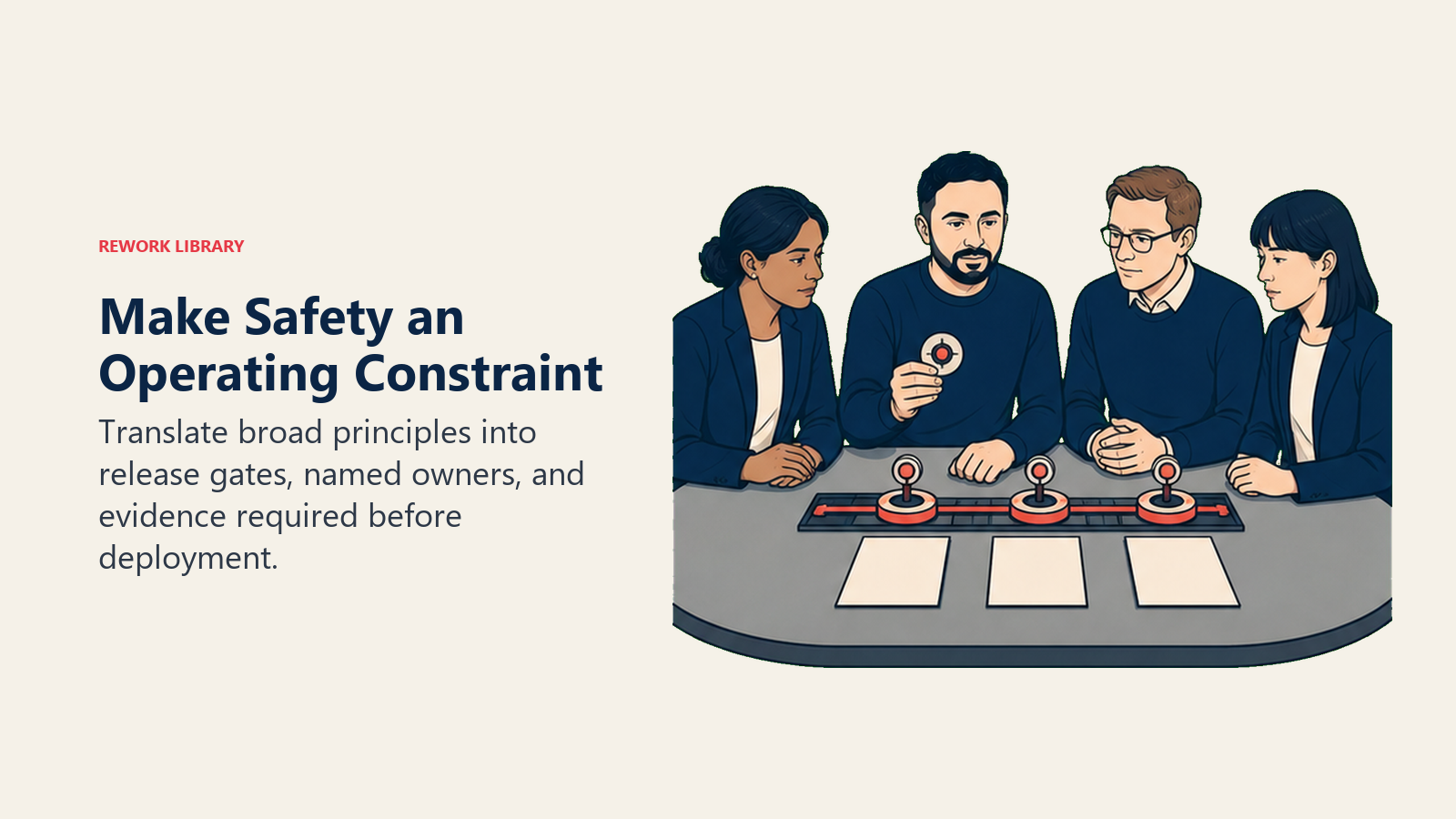
If you're a CEO, Suleyman's most transferable lesson is about ethical framing as a strategic asset rather than a cost center. He embedded safety into DeepMind's structure before it was commercially necessary and before regulators required it. That early investment gave him credibility and negotiating leverage at every subsequent stage. If your organization is operating in a domain where public trust matters, healthcare, finance, AI, data, building an ethics infrastructure before you need it is significantly cheaper than building it under regulatory or reputational pressure. The question isn't whether to build it. It's whether you want to do it on your own terms or someone else's.
If you're a COO, the Inflection-to-Microsoft transition is a case study in structuring an exit that preserves team integrity. The deal retained Suleyman and key researchers together, they didn't scatter to separate acquirers or leave the industry. That required structuring the negotiation to protect the team, not just the IP or the cap table. If you're navigating a company sale or merger, the people architecture of the deal, who stays together, who reports to whom, what operating independence is preserved, matters at least as much as the financial terms.
If you're in product, Pi's design philosophy is worth studying. Suleyman made explicit product choices that sacrificed engagement optimization in favor of user wellbeing: Pi wouldn't create artificial urgency, wouldn't exploit emotional vulnerability, wouldn't present itself as a substitute for human relationships. Those choices narrowed the TAM in some directions while creating genuine differentiation in others. If you're building a product in a category where the dominant players are optimizing for engagement at any cost, the non-exploitative design space is real. It requires intentional choices, and it pays off mostly in trust and retention rather than in day-one acquisition metrics.
If you're in sales or marketing, Suleyman's "The Coming Wave" is a model for content that builds institutional credibility at scale. He wrote a book that argued against naive AI optimism while he was actively building AI products. That apparent contradiction was the point: the book demonstrated that he'd thought through the risks more carefully than most, which made him a more credible voice on the opportunity. If your organization operates in a market where buyers are skeptical or cautious, producing content that engages the strongest version of their concerns, not the straw-man version, is a more durable trust-building strategy than producing case studies that only show wins.
Rework Analysis
Suleyman's three-arc career, research lab, consumer startup, enterprise platform, maps directly to the operating problem most teams now face: how do you adopt AI fast enough to stay competitive while building the review, audit, and accountability structures that keep you out of trouble? His pattern is to embed governance at founding rather than retrofit it, and to move teams through transitions without losing the mission thread. Rework is built for that exact workflow. Our CRM and work management platform runs on an AI-first architecture where every automation, lead routing, task creation, pipeline forecasts, is logged, auditable, and tied to a named owner. Teams running AI-assisted sales and operations on Rework get the speed Suleyman optimizes for and the containment-layer visibility his doctrine requires. See Rework pricing: the Sales Engine from $69/month and the Process Engine from $99/month, billed yearly.
Notable Quotes & Lessons Beyond the Boardroom
In "The Coming Wave," Suleyman writes: "Containment, the effort to limit AI's proliferation while preserving its benefits, is the defining challenge of our time. I don't know if it's possible. I do know it's necessary." The framing matters. He's not claiming certainty. He's naming the stakes and acknowledging the difficulty simultaneously. That's a different rhetorical mode than the techno-optimism most AI leaders default to, and it's more honest about the actual situation.
He's also said in public interviews: "I think the most important skill for anyone building powerful technology is the ability to hold two things simultaneously, genuine excitement about what you're creating and genuine fear about what it could do. The moment you lose either one, you start making worse decisions." That dual-consciousness model is hard to maintain at the pace he's moved through his career. It's also, arguably, the reason he keeps getting hired to lead institutions that are navigating that exact tension.
The leadership lesson from both: credibility in high-stakes, high-ambiguity domains comes from demonstrating that you've thought harder about the risks than the person you're talking to. Not from dismissing the risks. Not from catastrophizing them. From engaging with them precisely.
Where This Style Breaks
The ethics-first framing that defines Suleyman's public identity created real operational friction at DeepMind, an internal conduct review ended his tenure there, and the details have never been made public. That gap between the public ethics stance and whatever happened internally is a genuine unresolved question about his leadership.
The Inflection transition was fast enough to leave investors and staff in a difficult position. The speed of institutional pivots that's a strength in Suleyman's reinvention model is a cost in stakeholder trust. People who joined Inflection on a 5-year horizon found themselves in a Microsoft integration within 18 months. Mission-driven messaging attracts mission-driven people, and moving faster than the mission requires is a specific breach of that implicit contract.
His scope at Microsoft AI remains genuinely unclear relative to the OpenAI partnership. Working under that ambiguity may suit his operating style. For most organizations, that level of strategic ambiguity at the C-suite level is a source of paralysis rather than creative tension.
Frequently Asked Questions about Mustafa Suleyman's Leadership
Who is Mustafa Suleyman?
Mustafa Suleyman (b. 1984) is a British entrepreneur who co-founded DeepMind in 2010, co-founded Inflection AI in 2022, and has served as CEO of Microsoft AI since March 2024. He also wrote the 2023 bestseller "The Coming Wave" on AI and synthetic biology risk.
How did DeepMind start?
DeepMind was founded in London in 2010 by Demis Hassabis, Shane Legg, and Mustafa Suleyman with an explicit thesis that AI should be built responsibly or not at all. Google acquired it in 2014 for roughly $500M, and the deal preserved research independence and a commitment against military use, protections Suleyman helped negotiate.
Why did Suleyman leave DeepMind?
Suleyman stepped back from DeepMind in 2019 following reports of an internal conduct review. He moved into an advisory role at Google Ventures, then became VP of AI Product and AI Policy at Google from 2019 to 2022 before leaving to found Inflection AI. The specific details of the review were never publicly disclosed.
What is Inflection AI and why did it pivot?
Inflection AI was the consumer AI company Suleyman co-founded in 2022 with Reid Hoffman and Karén Simonyan. It raised more than $1.3B and launched Pi, a personal chatbot designed for emotional intelligence over engagement optimization. In March 2024, Microsoft licensed Inflection's technology and hired Suleyman with key staff in a $650M deal, effectively ending Inflection as an independent consumer product company.
What is 'The Coming Wave' about?
"The Coming Wave" (2023), co-authored with Michael Bhaskar, argues that AI and synthetic biology represent the most consequential technology wave since nuclear weapons. The book introduces Suleyman's containment doctrine, ten concurrent levers across technical safety, regulation, audits, and culture, as the only credible path between naive techno-optimism and unworkable prohibition.
What can AI founders learn from Suleyman?
Three things. Embed ethics and safety into the founding structure, not as a later compliance layer. Be willing to reinvent across institutional contexts (research lab, startup, enterprise) without losing the mission thread. And build public credibility by engaging the strongest version of the critics' argument rather than dismissing it, that's what made Suleyman a credible voice with regulators while remaining an active builder.
Learn More
- Demis Hassabis Leadership Style: Long Bets, Deep Research
- Sam Altman Leadership Style: How OpenAI's CEO Navigated the Most Consequential Technology Bet of the Decade
- Jeff Dean Leadership Style: The Engineer Who Scaled Google's Brain
- AI Governance for Executives: What Boards Need to Understand
- Building an AI-First Culture

On this page
- The Coming Wave Doctrine
- Leadership Style Breakdown
- Key Leadership Traits
- The 3 Decisions That Defined Suleyman
- 1. Co-founding DeepMind on the Safety-First AGI Thesis (2010)
- 2. Leaving Google and Founding Inflection AI (2022)
- 3. Taking the Microsoft AI CEO Role (2024)
- What Suleyman Would Do in Your Role
- Rework Analysis
- Notable Quotes & Lessons Beyond the Boardroom
- Where This Style Breaks
- Learn More