Clement Delangue Leadership Style: Open-Source AI, Hugging Face's $4.5B Platform, and the Neutral-Infrastructure Thesis
Turn this article into takeaways for your work.


Each assistant summarizes the article only for you and suggests best practices for your work.
Key Facts
- Co-founded Hugging Face in 2016 with Julien Chaumond and Thomas Wolf, originally as a chatbot app for teenagers.
- Pivoted in 2018 from consumer chatbot to open-source machine learning platform, the "GitHub of AI."
- $4.5 billion valuation reached in August 2023 following a Series D round of $235 million.
- 500,000+ models hosted on the Hugging Face model hub, plus 100,000+ datasets and thousands of interactive Spaces demos.
- Strategic investors include Google, Amazon, Nvidia, Salesforce, and Intel, several of whom are simultaneously competitors and users.
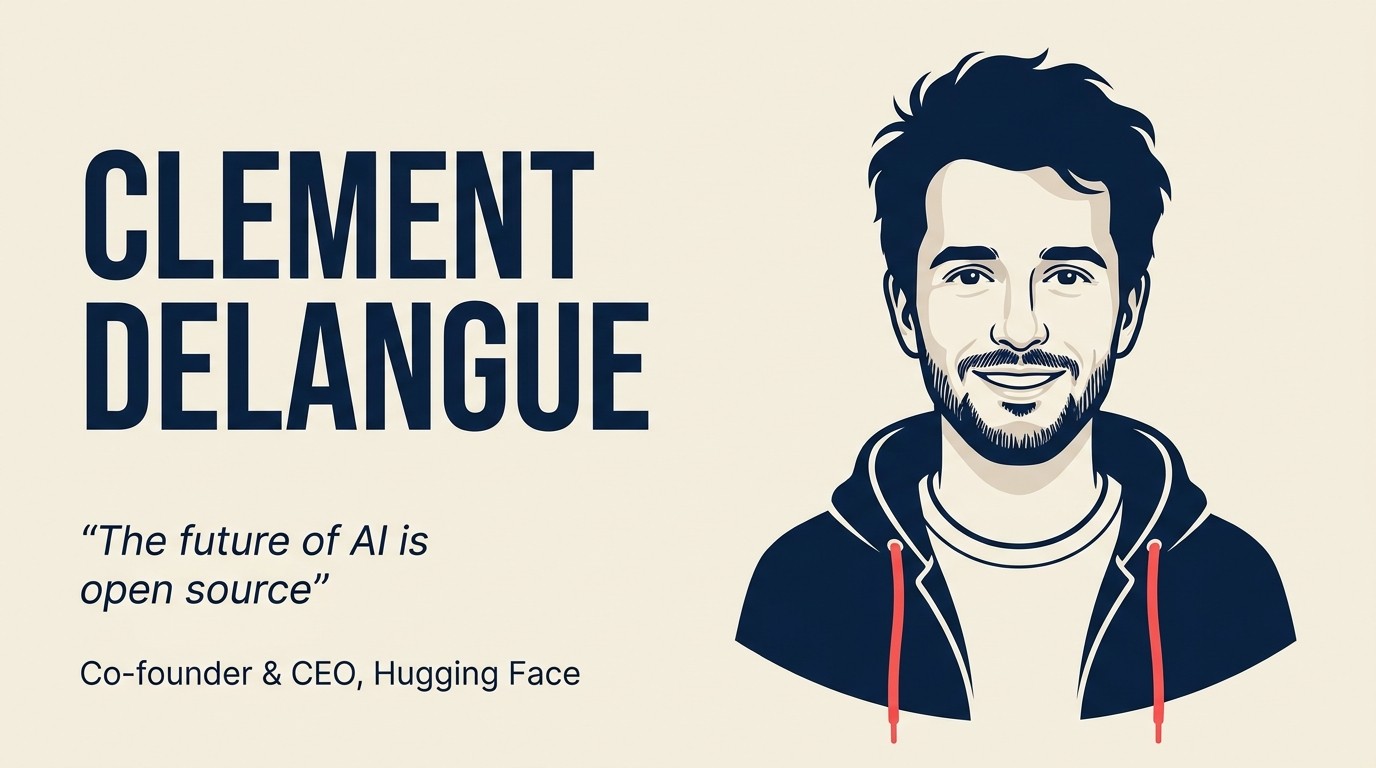
Clement Delangue co-founded Hugging Face in 2016 as a chatbot for teenagers. Two years later, he pivoted the company into an open-source machine learning platform, a GitHub for AI models. That decision looks obvious now. At the time, every well-funded AI lab was racing to build the best closed model, keep it proprietary, and charge for API access.
Delangue bet on openness instead: make the tools free, build the community, and own the infrastructure layer that everyone, including OpenAI's competitors, would need to use. By 2023, Hugging Face had a valuation of roughly $4.5 billion, having hosted over 1 million models. Investors included Google, Amazon, Nvidia, Salesforce, and Intel, notable that several of these are also competitors and users simultaneously.
The company hasn't launched a flagship consumer product. It hasn't won a headline benchmark. What it's done is become the place where the AI ecosystem builds, shares, and deploys. If you're thinking about AI strategy for your company, Delangue's platform model is the alternative thesis to the closed-API approach most vendors are selling you.
Leadership Style Breakdown
| Style | Weight | How it showed up |
|---|---|---|
| Community-Platform Builder | 60% | Delangue's primary leverage is the developer community, not product features or proprietary research. The Hugging Face model hub grew because the ML research community adopted it as the default place to publish and share models. That adoption was earned, not manufactured, by releasing the Transformers library as open source in 2018, making it genuinely useful, and maintaining a contribution culture that treated external researchers as first-class participants. The platform grew because the community grew, not the other way around. |
| Contrarian Infrastructure Strategist | 40% | Delangue's strategic bet was that the AI market needed an infrastructure layer that didn't compete with its users. That's a specific contrarian claim: every other major AI company was vertically integrating toward the most powerful frontier model. Delangue held the position that the platform enabling the ecosystem was more durable than any single frontier lab, and that this required genuine neutrality, not hosting only preferred models, not building a competing frontier model, not prioritizing investors' models over community contributions. |
That split matters because it explains why Hugging Face is hard to replicate. The platform moat isn't the technology, it's the community trust that the technology earned. Amazon or Google could build a comparable hosting infrastructure. They can't replicate the developer community that chose Hugging Face because it was neutral.
Key Leadership Traits
| Trait | Rating | What it means in practice |
|---|---|---|
| Strategic patience on business model | Very High | Hugging Face was free and community-focused for years before commercial products existed. Delangue didn't rush to monetize the platform before the community was large enough that enterprise products would have credibility. The business model (enterprise subscriptions, hosted inference, fine-tuning services) came after the platform had already become the default hub. Monetizing before that would have fractured the community and undermined the platform's appeal. |
| Community-first product thinking | Exceptional | Every significant product decision at Hugging Face was filtered through how it affected the developer community. The Spaces feature (for hosting ML demos), the Datasets hub, the model cards standard, these were built for the community's workflows, not for enterprise buyers. The enterprise products are extensions of infrastructure the community already trusted and used. That sequence is the opposite of most enterprise software companies, which build for enterprise and then try to build community after. |
| Conviction to hold a contrarian thesis under competitive pressure | Very High | As OpenAI, Anthropic, Google DeepMind, and Meta all scaled their closed or semi-closed AI programs, the pressure to build a competing frontier model intensified. Delangue has consistently held that Hugging Face's value comes from neutrality and openness, not from having the best model. Holding that position while watching competitors raise hundreds of millions for model development required genuine conviction rather than competitive anxiety. |
| Ability to attract and retain open-source talent | High | Open-source communities fracture quickly when commercial interests become visible. Hugging Face has maintained strong community participation and external contributor relationships for years, which requires careful management of the tension between the company's commercial interests and the community's expectation of genuine neutrality. Retaining Thomas Wolf and Julien Chaumond as co-founders and keeping key research contributions community-visible rather than proprietary has been part of managing that tension. |
The Open-Source AI Doctrine (The Hugging Face Model)
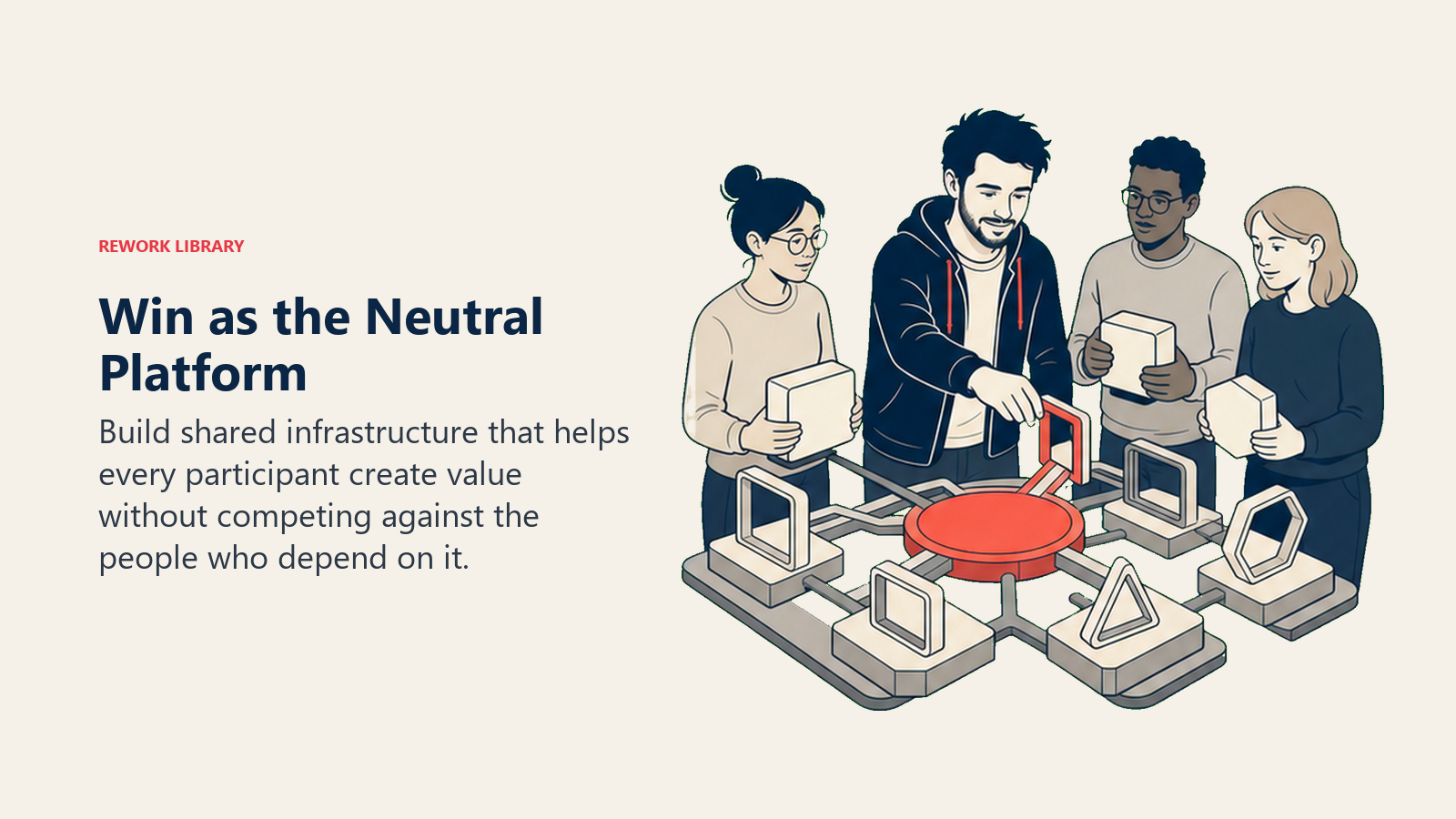
The Open-Source AI Doctrine is Delangue's strategic thesis that the most defensible position in an AI market dominated by vertically integrated labs is neutral infrastructure, build the open platform that every model provider, enterprise, and researcher must use, and refuse to compete with your own users. Under this doctrine, openness is not a marketing posture but an architectural commitment: the library, the model hub, and the governance policies are designed so that community trust compounds faster than any closed competitor can replicate. The Hugging Face Model trades the upside of owning a frontier model for the durability of owning the distribution layer beneath all of them.
The 3 Decisions That Defined Clement Delangue as a Leader
Pivoting From Chatbot to Open-Source ML Platform in 2018
The original Hugging Face was a consumer chatbot for teenagers. It had traction but no clear path to becoming a large business. The more interesting opportunity Delangue saw was in the developer community building the tools underneath these products, specifically, the researchers and engineers working with transformer-based language models who had no central place to share their work.
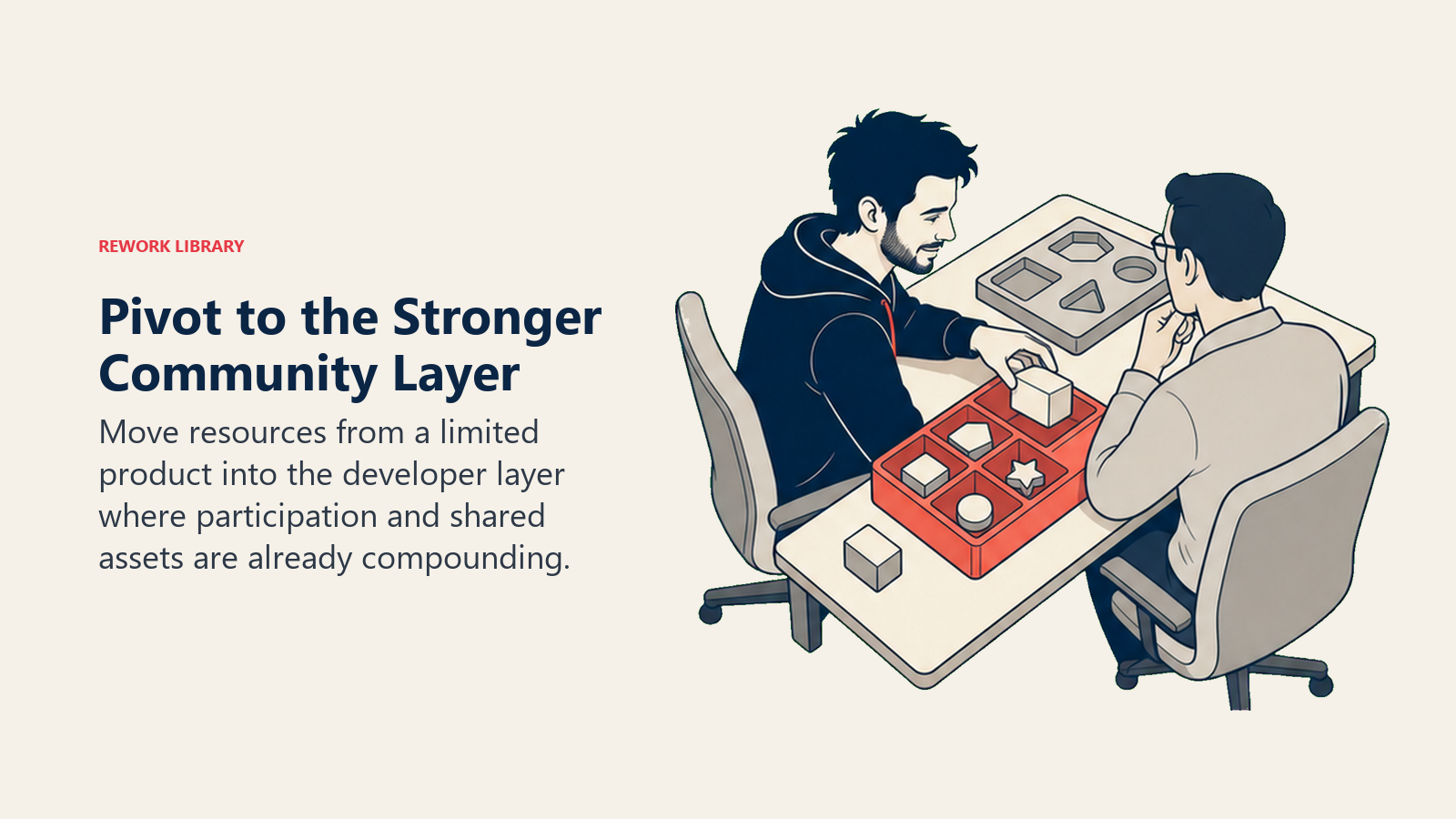
Releasing the Transformers library as open source in 2018 was the pivot. This was a Python library for state-of-the-art NLP models, BERT, GPT-2, and their successors, that became the standard toolkit for ML researchers almost immediately. Before founding Hugging Face, Delangue had co-founded Moodstocks, a Paris-based image recognition startup that Google acquired in 2016, giving him early experience building ML infrastructure and navigating a major tech acquisition. The library was genuinely useful, well-documented, and actively maintained. Researchers adopted it because it reduced the friction of working with new model architectures, not because Hugging Face marketed it.
The cost of the pivot was clarity: it wasn't obvious for years what the business model was. You can't charge for open-source software directly. But Delangue was reading a different signal than most investors would have: the community was growing, the library downloads were accelerating, and the platform was becoming load-bearing infrastructure for the AI research ecosystem. The business model could follow from the community if the community was large enough.
By the time Hugging Face launched its enterprise products and model hub in earnest, it already had the most active ML community on the internet. That's not a distribution advantage you can buy. It's one you have to earn in the years before you need it.
Becoming the Default Home for Open-Source AI
The model hub, Hugging Face's library of publicly shared, downloadable AI models, is now the primary distribution layer for open-source AI. When Meta released LLaMA, Stability AI released their image models, or any research lab published a fine-tuned variant of a public model, they published it on Hugging Face. By 2023, the platform hosted over 500,000 models, 100,000+ datasets, and thousands of interactive demos through the Spaces feature.
The first-mover advantage in platform hosting compounds differently than in product features. When you build a better feature, competitors can copy it quickly. When you become the place where the community publishes their work, the community's accumulated presence becomes a self-reinforcing advantage. Researchers want their models discoverable where other researchers look for models. Enterprise buyers want access to community-trained variants that are only hosted in one place.
Delangue made several decisions that reinforced this network effect: model cards (standardized documentation for every hosted model), a strong governance policy on harmful models, and active investment in community tools like Spaces before they generated revenue. These weren't product features in the traditional sense. They were community infrastructure investments that made the platform more valuable for everyone who used it.
Holding the Neutral-Platform Thesis
The neutral-platform thesis is Delangue's most deliberate strategic choice, and it's also the most contested one internally at Hugging Face. The argument is that the AI ecosystem needs an infrastructure player that doesn't compete with its users, that building Hugging Face's moat on neutrality is both more defensible and more genuinely useful than trying to build the best model.
This positioning directly counter-programs against every vertically integrated AI lab. Sam Altman at OpenAI builds the best model and charges for API access. Dario Amodei at Anthropic builds Claude and sells enterprise access primarily on safety and reliability grounds. Google builds Gemini and integrates it across its products. All of them are simultaneously potential Hugging Face users and competitors in specific applications. Yann LeCun, Meta's Chief AI Scientist and the most prominent academic voice for open-source AI, has made public arguments that closely align with Delangue's neutrality thesis, the two represent the open-source side of an ongoing debate about whether closed frontier labs or open platforms will define the AI era.
Delangue's bet is that neutrality is a durable moat because it's a genuine commitment, not just a feature. Amazon Web Services is a close analog: AWS makes money hosting applications that compete with Amazon's retail business, and the ecosystem trusts it enough to use it anyway. Hugging Face is making the same bet for the AI model layer: that being the reliable, neutral, well-maintained infrastructure for the whole ecosystem is more defensible than being one more model provider.
The test of that thesis is whether Hugging Face can maintain genuine neutrality as its commercial interests grow. So far, the company has hosted models from competing labs, maintained open governance policies, and resisted the temptation to build a proprietary frontier model for the credibility signal it would send. Whether that restraint continues as revenue pressure increases is the question.
What Clement Delangue Would Do in Your Role
If you're a CEO, Delangue's model asks you to think about your category positioning before your product positioning. Hugging Face didn't win by having the best AI model, it won by becoming the necessary infrastructure for the people who build AI models. Is there an infrastructure layer in your category that nobody owns yet? An aggregator role or platform position that's more defensible than being one of several competing products? The neutral-platform thesis is worth considering as a strategic alternative to the standard direct-competition model.
If you're a COO, the operational question is about community investment before commercial return. Delangue spent roughly two years building platform infrastructure that generated no direct revenue, library downloads, model hub hosting, community tools, before the enterprise business had meaningful traction. That's an investment in trust that you can't shortcut. If you're trying to build platform leverage in a category, the sequence matters: earn the community first, monetize it second. Reversing the sequence destroys the thing you were trying to build.
If you're a product leader, the Hugging Face development model is an alternative to traditional enterprise product development. Instead of building for enterprise buyers and hoping developers adopt what you sell, Delangue built for developers first and let enterprise demand follow from developer adoption. That bottom-up model requires different product metrics than top-down enterprise software: community engagement, external contributions, library downloads, model uploads. If your product team is only measuring ARR and pipeline, you're probably not running the bottom-up model correctly.
If you're in sales or marketing, the most applicable Delangue insight is about credibility sequencing. Hugging Face's enterprise sales conversations are easier because the company already has the developers' trust. Your marketing can claim anything, but trust is built through consistent contribution to your community before you ask for revenue. What are you publishing, sharing, or open-sourcing that gives your target market a reason to trust you before they talk to sales?
How Rework Applies the Open-First Playbook
Delangue's doctrine says the durable advantage in a crowded category is extensibility and community leverage, not feature lock-in, and that's the posture Rework takes for scaling SaaS teams. Instead of forcing a closed, single-vendor stack, Rework's CRM and work operations engines (the Sales Engine from $69/month and the Process and Project Engines from $99/month, billed yearly) are built to plug into the tools sales, marketing, and operations teams already trust, with open APIs, webhooks, and shared data models across CRM, lead management, chat, and cross-team workflows. That matters when you're scaling: the bottleneck stops being "does the vendor have this feature" and becomes "can we compose the stack our way." Like Hugging Face's bet that neutral infrastructure outlasts proprietary frontiers, Rework's bet is that an extensible, interoperable operations layer delivers faster time-to-value on the full stack than any walled-garden suite, especially for teams that outgrow point tools but aren't ready to rip-and-replace everything at once.
Notable Quotes & Lessons Beyond the Boardroom
Delangue has argued publicly that open-source AI is safer than closed AI, not because open-source developers are more responsible, but because distributed development means more eyes on the code, more scrutiny of harmful outputs, and less single-point-of-failure concentration. This is a genuine philosophical position, not just marketing. It puts him at direct odds with the safety arguments made by some closed-model advocates who argue that open-sourcing powerful models makes them easier to misuse.
His stance on competition with OpenAI and Google is characteristically pragmatic: they're customers and partners, not only adversaries. Both Google and Nvidia are investors in Hugging Face. Both OpenAI and Anthropic have models hosted on the platform. Delangue doesn't treat competition as binary, which is consistent with the neutral-platform thesis, if you're genuinely neutral, your competitors are also your customers, and that's a feature rather than a contradiction.
The Hugging Face community model also tells you something about how technical ecosystems build durable moats. The platform's value isn't the technology stack. It's the accumulated community behavior: the models uploaded, the datasets contributed, the papers published alongside model releases, the community standards built by thousands of contributors over years. You can copy the infrastructure. You can't copy the history.
Where This Style Breaks
The neutral-platform thesis works when the platform is genuinely neutral, but as Hugging Face launches enterprise products, fine-tuning services, and inference infrastructure, the tension between "platform for everyone" and "revenue-generating business" increases. Open-source communities fracture when commercial interests become visible. The model also depends on the assumption that foundation model performance will plateau enough that open-source alternatives remain competitive with closed frontier models. If GPT-5 or its successors create a capability gap that open-source can't close, the neutral-infrastructure play becomes less compelling for enterprise buyers who need state-of-the-art outputs. And Hugging Face faces growing infrastructure competition from AWS, GCP, and Azure, which can offer model hosting at a loss to drive cloud consumption. Neutrality is a real moat, but it's not an unassailable one.
Frequently Asked Questions about Clément Delangue's Leadership
Who is Clément Delangue?
Clément Delangue is the co-founder and CEO of Hugging Face, the open-source AI platform he started in 2016 with Julien Chaumond and Thomas Wolf. Before Hugging Face, he co-founded Moodstocks, a Paris-based image recognition startup acquired by Google in 2016.
What is Hugging Face?
Hugging Face is an open-source machine learning platform often called "the GitHub of AI." It hosts over 500,000 models, 100,000+ datasets, and thousands of interactive demos (Spaces), and it reached a $4.5 billion valuation in August 2023 after a $235 million Series D round.
Why did Hugging Face pivot from chatbots?
The original teenage chatbot had user traction but no clear path to a large business. Delangue saw a bigger opportunity in the tools underneath AI products, the Transformers library he open-sourced in 2018 for BERT, GPT-2 and similar models became the default toolkit for ML researchers, so the company pivoted to serve the developer community instead.
What is Delangue's vision for open-source AI?
Delangue argues that open-source AI is both more useful and safer than closed AI, distributed development means more eyes on the code, more scrutiny of harmful outputs, and less concentration risk. He positions Hugging Face as neutral infrastructure for the whole ecosystem rather than a competing frontier lab.
How does Hugging Face compete with proprietary AI labs?
It doesn't compete on model performance. Hugging Face hosts models from OpenAI, Anthropic, Meta, Google, and every major open-source lab, and treats them as customers and partners rather than only adversaries. The moat is community trust and distribution, not a proprietary frontier model, closer to the AWS playbook than to OpenAI's.
What can founders learn from Clément Delangue?
Three things: category positioning can matter more than product positioning (own the infrastructure layer, not just a product slot); community investment must precede monetization, Hugging Face ran free for years before commercial products had credibility; and a contrarian thesis only works if you hold it under competitive pressure, including when peers raise hundreds of millions to do the opposite.
For related reading, see Sam Altman Leadership Style, Alexandr Wang Leadership Style, Jensen Huang Leadership Style, Marc Benioff Leadership Style, and Steve Jobs Leadership Style.

On this page
- Leadership Style Breakdown
- Key Leadership Traits
- The Open-Source AI Doctrine (The Hugging Face Model)
- The 3 Decisions That Defined Clement Delangue as a Leader
- Pivoting From Chatbot to Open-Source ML Platform in 2018
- Becoming the Default Home for Open-Source AI
- Holding the Neutral-Platform Thesis
- What Clement Delangue Would Do in Your Role
- How Rework Applies the Open-First Playbook
- Notable Quotes & Lessons Beyond the Boardroom
- Where This Style Breaks