Mary Kay Ash's Leadership Style and Principles
Turn this article into takeaways for your work.


Each assistant summarizes the article only for you and suggests best practices for your work.
Mary Kay Ash founded a cosmetics company at 45 years old with $5,000 in savings, a rented Dallas storefront, and a conviction that the right way to lead was to genuinely care about the people doing the work. Her mary kay ash leadership style wasn't a framework she read in a book. It grew out of twenty-five years in direct sales where she watched managers take credit for her work and overlook her ideas because she was a woman.
She flipped that experience into a management philosophy. Praise openly. Recognize often. Put faith and family ahead of work. Treat every person as if they're wearing an invisible sign that says "make me feel important." The result was Mary Kay Inc., one of the largest direct-sales beauty companies in the world.
Who Was Mary Kay Ash?
Mary Kay Ash (1918-2001) was born in Hot Wells, Texas, and spent decades building a sales career at companies where advancement required you to be male. In 1963, frustrated by the ceiling she kept hitting, she retired to write a book about the management she wished she'd experienced. Midway through the project she realized the book was actually a business plan.
She launched Mary Kay Cosmetics in Dallas on September 13, 1963, with nine independent beauty consultants and a product line built around a skin-care formula she'd acquired from a tanner who had noticed his hands aged more slowly than his face. Within her first year she had exceeded her original projections. By the time she stepped back from day-to-day operations in 1987, Mary Kay Inc. had grown to over 200,000 independent beauty consultants and $613 million in annual sales.
Key Facts:
- Mary Kay Cosmetics was founded September 13, 1963, in Dallas, Texas (Mary Kay Inc., company history)
- The pink Cadillac recognition program launched in 1969 when Ash gave five top consultants the use of a pink Cadillac (Mary Kay Inc., corporate timeline)
- Her autobiography, Mary Kay, was published in 1981 and remained a bestseller in business and self-help categories for years
Mary Kay Ash's Leadership Style
Ash operated from three overlapping leadership frameworks: servant leadership, transformational leadership, and a form of participative leadership that gave consultants real ownership over their own businesses.
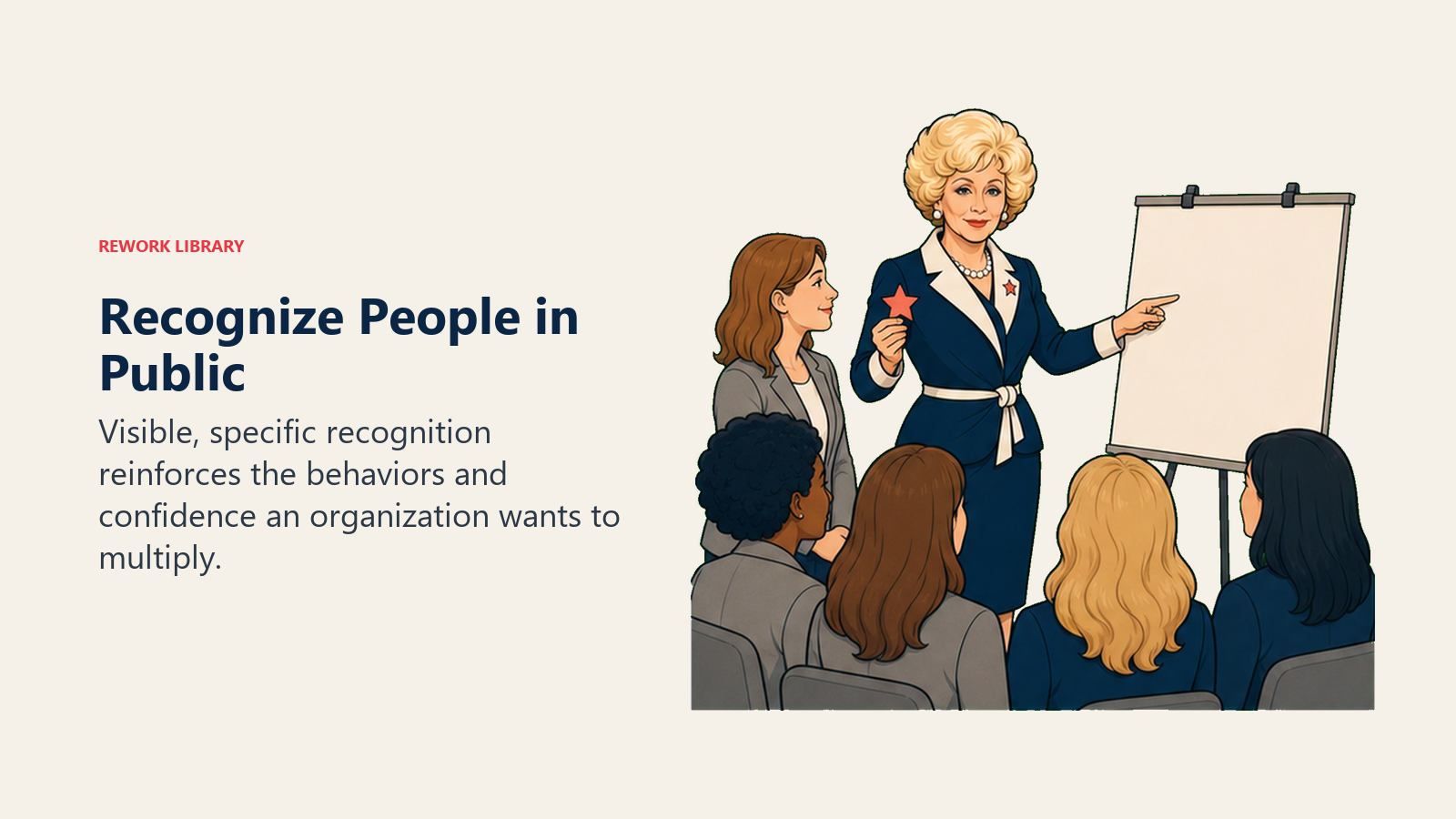
The servant dimension was foundational. She structured the company so that corporate staff existed to support the independent sales force, not the other way around. Her famous "upside-down pyramid" put the beauty consultants at the top and executives at the bottom. Every internal decision ran through a single test: does this help the consultant succeed?
The transformational element showed up in how she framed the company's mission. She wasn't selling lipstick. She was offering women a path to financial independence at a time when most corporate doors were closed to them. Consultants weren't employees chasing a commission. They were building their own businesses under a supportive umbrella. That reframing attracted women who were motivated by something larger than a product catalog.
Her participative approach was visible in how she handled feedback. She regularly polled her sales force about new products, policies, and marketing directions. She genuinely believed the people closest to the customer knew things the boardroom didn't, and she built channels to pull that information up rather than push decisions down.
The phrase she returned to most often was "praise people to success." She believed public recognition was more powerful than money as a motivator, and she built the company's incentive structure around that belief. Car awards, jewelry, titles, and stage recognition at the company's annual Seminar were designed to make top performers feel seen in ways they'd never experienced in a conventional job.
She organized her life priorities in a fixed order: faith first, family second, career third. She told every consultant to do the same. This wasn't lip service. She turned down speaking engagements that conflicted with family commitments and wrote about the principle explicitly in both of her books. She thought most companies had the order backwards and paid for it in burnout, turnover, and disengaged people.
Key Leadership Principles
The Golden Rule as an operating system. Ash asked one question before every management decision: how would I want to be treated in this situation? She applied it to compensation structures, conflict resolution, recognition, and the physical design of her company's culture. It sounds simple. The discipline required to actually run a large organization by it is considerable.
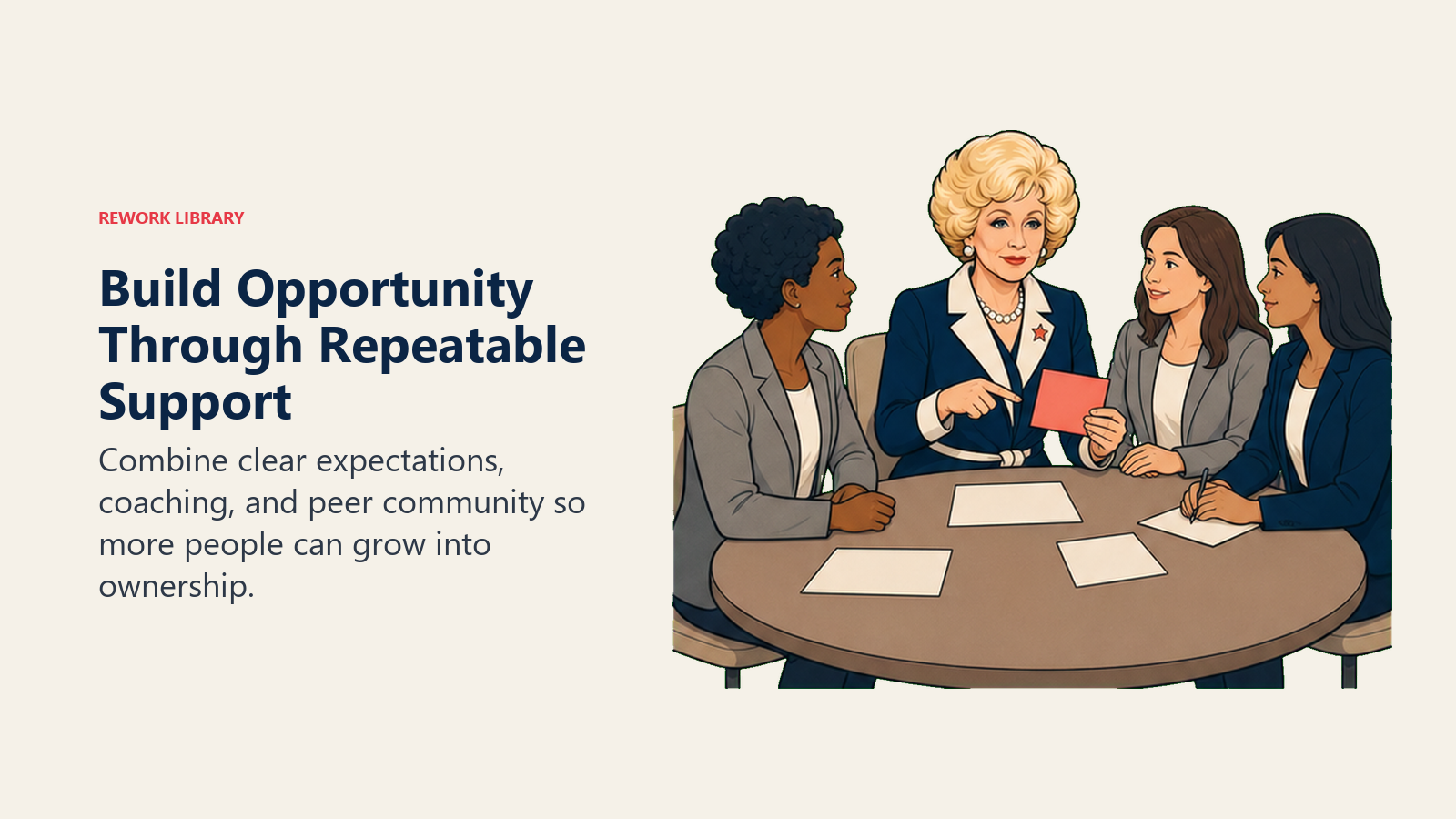
Public recognition over private reward. She understood that people want to be seen, not just paid. Ash institutionalized recognition at a scale most companies never attempt. The annual Seminar in Dallas filled convention halls with tens of thousands of consultants watching their peers receive awards on stage. The pink Cadillac program created a visible, public signal of achievement that consultants could drive through their neighborhoods. The recognition system wasn't decoration. It was the retention mechanism.
Open communication up and down. Ash made herself accessible to consultants at a level unusual for a CEO. She answered correspondence personally, attended regional events, and maintained an open-door policy even as the company scaled. She believed that managers who became unreachable became irrelevant to the people they were supposed to lead.
Financial independence as the product. The cosmetics were the vehicle. The actual product Ash was selling was the ability for women to earn on their own terms. She shaped every aspect of the business model, from the flexible scheduling to the no-inventory-floor-model, around removing the friction that kept women from earning. The compensation structure was designed so that building a team created leverage without requiring someone to leave the sales role they were good at.
Leading by example without exception. Ash didn't ask consultants to do things she wouldn't do herself. She had run her own skin-care parties, carried her own product cases, and built her own customer base before she had a company. When she talked about the work, she talked from experience. That credibility mattered because the sales force could tell the difference between a founder who had done the job and one who hadn't.
Encouragement as a daily practice. She wrote notes. She made calls. She remembered names and details about people's lives. This wasn't a performance. It was a practice she maintained deliberately because she believed encouragement was a resource leaders had in unlimited supply and almost never deployed enough.
Mary Kay's Principles in Practice
| Principle | What it looked like | Lesson for leaders |
|---|---|---|
| Praise people to success | Stage recognition at annual Seminar, pink Cadillac awards, Queen of Sales titles for top earners | Recognition structures signal what the organization actually values. Design them intentionally or employees will read the absence as indifference. |
| The Golden Rule as management standard | Conflict resolution by asking "how would I want this handled?" rather than applying rigid policy | Rules create floors. The Golden Rule creates ceilings. Both are necessary. |
| Faith, family, career order | Turning down engagements that conflicted with family; modeling the priority structure she asked consultants to adopt | Leaders who model the priorities they preach earn credibility with people who live by the same ones. |
| Upside-down pyramid | Corporate staff measured on how well they served the sales force, not on internal metrics | Structure shapes behavior. If the org chart puts support staff above the revenue generators, support staff will act accordingly. |
| Financial independence as the mission | Business model built for women without fixed schedules, with team-building income that scaled without ceiling | Align the business model with the actual aspiration of your target recruit. Compensation that matches ambition retains; compensation that caps it loses people. |
| Open communication | Personal responses to consultant letters, regular regional attendance, accessible even at scale | Accessibility is a choice. Leaders who remain reachable as organizations grow invest time that returns in loyalty and market intelligence. |
Lessons for Today's Leaders
Ash built her company before management theory had words like "psychological safety" or "intrinsic motivation." But her instincts were correct, and they hold up.
Recognition is not a soft metric. Ash treated recognition as core infrastructure, not an HR program. Companies that treat it as optional see the results in their engagement and attrition numbers. The question isn't whether to recognize people. It's whether to do it thoughtfully or accidentally.
Priority clarity is a competitive advantage. Ash's faith-family-career ordering gave consultants a framework for making decisions without escalating every conflict. Clear organizational values do the same thing for employees. When people know what the company cares about in what order, they make better decisions faster.
Your best market intelligence sits in your front line. Ash polled her sales force because they talked to customers every day. Any leader who doesn't have a working channel from the front line to strategy is making decisions with incomplete data. Building that channel is a structural choice, not a culture initiative.
The mission has to mean something. People will sell cosmetics for commission. They'll build businesses for a cause. Ash's consultants were motivated by what the income made possible in their lives, not by the product itself. The most effective leaders connect daily work to something that matters beyond the transaction.
Consistency is the foundation of trust. Ash operated by the same principles in 1975 as she did in 1990. The people who worked within her orbit knew what to expect. Predictability in values isn't rigidity. It's the basis on which people decide whether to commit to an organization or leave it.
For leaders interested in the frameworks behind Ash's approach, the servant leadership model provides a structured entry point. Her use of vision and inspiration connects closely to transformational leadership research. And the charismatic leadership literature captures how she built personal loyalty at scale across a decentralized organization.
Leaders from Oprah Winfrey to Indra Nooyi have operated from similar people-first premises. What distinguishes Ash is the structural rigor with which she embedded those premises into the business model itself, rather than treating them as cultural niceties layered on top of it.
Frequently Asked Questions about Mary Kay Ash's Leadership Style and Principles
What was Mary Kay Ash's leadership style?
Ash practiced a combination of servant leadership, transformational leadership, and participative leadership. She organized the company so corporate staff supported the sales force rather than directing it, framed the mission around women's financial independence rather than cosmetics sales, and gave consultants direct input into company decisions. Her signature method was public recognition: she believed praise was more powerful than pay as a sustained motivator.
What is the Golden Rule in Mary Kay's leadership?
Ash applied the Golden Rule as a literal management test: before making any decision about how to treat a consultant, policy, or conflict, she asked how she would want to be treated in the same situation. She expected managers to apply the same test. It shaped compensation design, conflict resolution, communication practices, and the physical structure of the company's recognition culture.
What were Mary Kay Ash's three priorities?
She ordered her priorities as faith first, family second, and career third. She asked every consultant and employee to adopt the same order, and she modeled it herself by declining engagements that conflicted with family commitments. She believed most corporate cultures had the order reversed and that burnout and disengagement were predictable results.
Why did Mary Kay Ash start her own company?
Ash spent decades in corporate sales roles where she was passed over for promotions given to men she had trained. The final incident involved a man being promoted above her at twice her salary. She retired in 1963 intending to write a book about the management she wished she'd had, realized the book was actually a business plan, and launched Mary Kay Cosmetics that same year.
What made the pink Cadillac program effective?
The program began in 1969 when Ash gave five top-performing consultants use of a pink Cadillac. The car worked as a recognition tool for three reasons. First, it was visible: consultants drove it through their communities, creating a public signal of achievement that a cash bonus couldn't replicate. Second, it was specific: everyone in the organization knew exactly what performance level it represented. Third, it was aspirational: seeing a pink Cadillac in a neighbor's driveway was a more concrete motivator than an abstract sales target.
Mary Kay Ash didn't invent recognition-based leadership. But she built one of the most complete and durable implementations of it in business history. Her company is still privately held, still run on the principles she established, and still one of the top direct-sales operations in the world. The lesson for today's leaders isn't that pink Cadillacs are the answer. It's that designing the organization to make people feel genuinely seen is not a soft strategy. For Ash, it was the whole strategy, and it worked for six decades and counting. Leaders who want to understand the Howard Schultz approach to culture-as-strategy will find Ash a useful parallel: different industry, same fundamental conviction that how you treat people is the business model.
