Brian Chesky Leadership Style: Founder-Mode, Designer Lens, and the COVID Near-Death Pivot
Turn this article into takeaways for your work.


Each assistant summarizes the article only for you and suggests best practices for your work.
Brian Chesky's leadership style is best described as founder mode paired with a designer's product taste: he stays directly involved in the few decisions where his judgment is irreplaceable rather than delegating to professional managers. That approach steered Airbnb from an 80% revenue collapse in March 2020 to a $100B+ IPO nine months later.
Key Facts About Brian Chesky
- Co-founded Airbnb in 2008 with Joe Gebbia and Nathan Blecharczyk, starting with air mattresses rented to conference attendees in their San Francisco apartment.
- Rhode Island School of Design (RISD) background, trained as an industrial designer, not an engineer or MBA, making him one of the few design-native founders running a public tech company.
- Pandemic pivot, May 2020, cut 1,900 employees (25% of staff) via Zoom, raised $2B in emergency debt at 10%+ interest, and wrote a public layoff letter that became a management-school case study.
- IPO December 2020, Airbnb went public at $68/share, closed day one at $144, hitting a market cap higher than Marriott and Hilton combined just nine months after near-collapse.
- "Founder Mode" essay by Paul Graham, September 2024, based on a talk Chesky gave, the essay challenged the conventional wisdom that founders should delegate to professional managers and step back.
- 150M+ users across 220+ countries as of 2024, with Chesky personally leading the 2022 app redesign that simplified a bloated post-COVID product.
- Returned to product-focused leadership after experimenting with traditional delegation models and concluding publicly: "Every time I was told to delegate and do less, the company got worse."
The Founder Mode Doctrine
The Founder Mode Doctrine is Chesky's operating principle that founders should stay directly involved in the handful of decisions where their judgment creates irreplaceable value (product taste, company communication, strategic direction) rather than delegating them to a professional management layer. It rejects the standard "hire good people and get out of the way" playbook as a failure mode that produces mediocre products and bureaucratic organizations. Founder mode isn't micromanagement; it's the discipline of choosing what only you should own, and owning it deeply even at scale.
In March 2020, Airbnb's revenue dropped 80% in 8 weeks. Not 8 months. 8 weeks. Bookings that had been made months in advance canceled in a wave as COVID lockdowns spread globally. The company had been planning an IPO. Instead, Chesky cut 1,900 employees, 25% of the company, via Zoom, raised $2 billion in emergency debt at interest rates above 10%, and wrote a public layoff letter that HBS professors would later assign in management courses.
Nine months later, Airbnb went public at $68 a share. The stock hit $165 on the first trading day. The market cap was higher than Marriott and Hilton combined.
That sequence, near-death to $47 billion in nine months, is the clearest demonstration of what founder-mode leadership actually looks like when it's tested at scale. Chesky didn't hire a crisis consultant. He didn't hand off to a professional manager. He got more hands-on, not less. For operators at any stage, that arc has things in it worth understanding carefully. Steve Jobs ran a similar founder-mode comeback at Apple, the parallels in product taste, direct involvement, and narrative clarity are striking. Melanie Perkins built Canva on a comparable consumer-product founder conviction, staying deeply involved in design decisions long past the point when most founders step back.
Leadership Style Breakdown
| Style | Weight | How it showed up |
|---|---|---|
| Founder-Mode | 65% | Stays directly involved in product decisions, company communication, and strategic direction rather than delegating to a professional management layer. Personally reviewed Airbnb's app redesign with a small team. Wrote the COVID layoff letter himself. Publicly articulated a product philosophy in 2024 that explicitly pushed back on the "delegate to professional managers" playbook. |
| Design-Driven | 35% | RISD-trained industrial designer who thinks about products in terms of experience coherence, not feature lists. Applied design judgment to everything from the Airbnb homepage to host communication templates to the company's emergency debt term sheet communication. Believes the aesthetic and emotional quality of a product is a business variable, not a nicety. |
The 65/35 split reflects how Chesky thinks about his own role. The founder-mode orientation, staying close to the work, maintaining direct involvement in things that matter most, is the dominant frame. The design lens informs what he pays attention to within that frame. He's not involved in everything because he's a control freak. He's involved in the things where his judgment creates differentiated value. That's a meaningful distinction, though the line between the two can get blurry at scale.
Key Leadership Traits
| Trait | Rating | What it means in practice |
|---|---|---|
| Obsessive product taste | Exceptional | Chesky personally worked with a small team to redesign Airbnb's core app experience. He's described reviewing individual screens in detail, killing features that added friction, and insisting on a coherence of experience that only comes when the person with final authority actually cares about the product deeply. This is unusual at $10B+ company scale. |
| Transparent communication | Very High | The COVID layoff letter set a standard that became a reference point for the industry. It told employees exactly what was happening, why, what they'd receive, and what Chesky personally felt about it. He's also been unusually candid in public about product failures, strategic mistakes, and the limits of his own management model. |
| Crisis composure | High | The March 2020 period required making decisions with incomplete information under extreme pressure. Chesky didn't freeze. He moved through the layoff decision, the emergency debt raise, and the IPO timeline compression with visible resolve. People who worked through that period describe him as more present and more decisive than usual, not less. |
| Founder over-involvement at scale | Medium | This is the trait that cuts both ways. The same hands-on intensity that produces coherent product decisions also creates organizational bottlenecks. Airbnb has struggled to develop strong #2 leaders with genuine independent operating authority. That's a structural risk for any company where the founder can't or won't delegate the right things. |
The 3 Decisions That Defined Brian Chesky as a Leader
1. Staying in an Airbnb Every Night for Years to Understand the Product from Both Sides
Before Airbnb was worth anything, Chesky and co-founder Joe Gebbia, both graduates of the Rhode Island School of Design, were renting air mattresses on their apartment floor to conference attendees who couldn't find hotel rooms. The product knowledge they got from that period, what guests actually needed, where hosts got nervous, what made a space feel safe, became the design foundation for everything that followed.
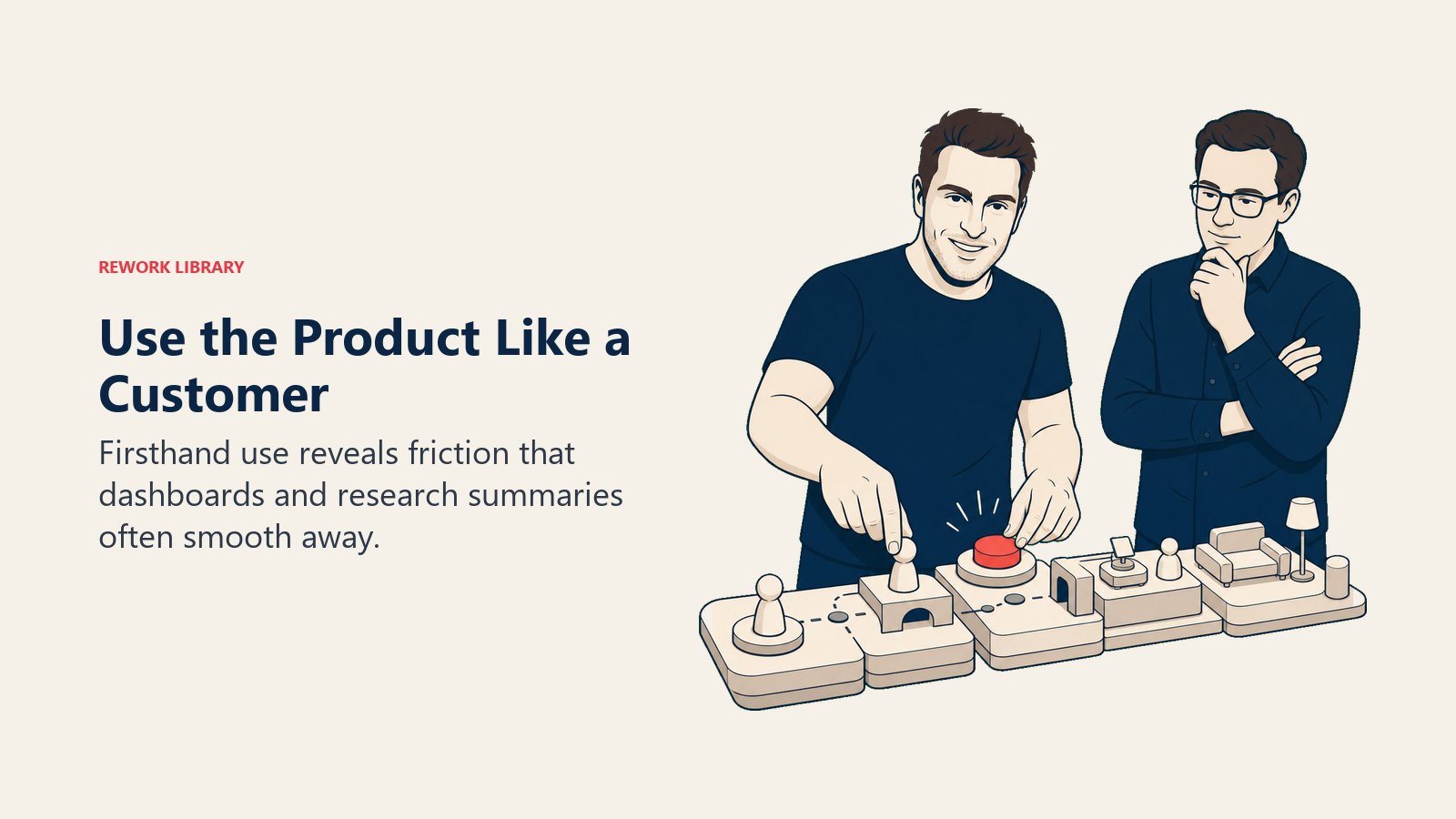
But what's less discussed is that Chesky continued doing versions of this deliberately as the company grew. He's documented living in Airbnbs for extended periods, traveling as both a guest and a host, and using that firsthand experience as a calibration tool for product decisions. In a 2023 interview, he described staying in Airbnbs continuously for years as a way to stay connected to the actual product rather than the abstract data about it.
This isn't a branding story. It's a product discipline. Most CEOs at Chesky's stage of company build their product intuition from dashboards, NPS scores, and customer research decks. Chesky builds his from using the product the way customers use it. That's a different quality of signal.
The leadership lesson: at what point did you stop using your own product the way your customers use it? And what decisions are you making based on abstracted data that firsthand experience would correct?
2. The COVID Layoff Letter, What It Said, How It Was Structured, Why It Spread
On May 5, 2020, Chesky sent a letter to Airbnb employees announcing 1,900 layoffs. It spread virally within hours, not because of what it said about the business, but because of how it treated the people being let go.
The letter explained the financial context clearly: Airbnb had expected to spend 2020 on IPO preparation. Instead, revenue was tracking at less than half of 2019. The cuts were necessary to preserve the company. No euphemisms, no "restructuring for future growth" language.
But the operational commitments in that letter were what made it different. Departing employees received their 2020 equity vesting. The company extended healthcare coverage. An alumni talent directory was created and shared publicly with investors and potential employers. Departing employees kept their company laptops. Chesky personally apologized for the outcome and stated clearly that the company would do everything possible to help people land well.
The letter's closing line has been quoted repeatedly in management writing: "I have a deep feeling of love for all of you. Our mission is not merely about travel. When we started Airbnb, our original tagline was, 'Travel like a human.' The human part has always been more important."
You can read that as PR. The people who received it mostly didn't. The reason it spread is that it was specific, honest, and operationally backed. Chesky didn't just express care in language, he put money and process behind it. That's what separated it from every other layoff memo that week.
3. Re-Simplifying Airbnb's Product After Post-COVID Overexpansion Bloated the Experience
After COVID, Airbnb expanded aggressively into new categories. Long-term stays, experiences, services, and other additions layered onto the core product. By 2022, the app had accumulated enough complexity that the core user task, find a place, book it, stay there, had gotten harder to complete without confusion.
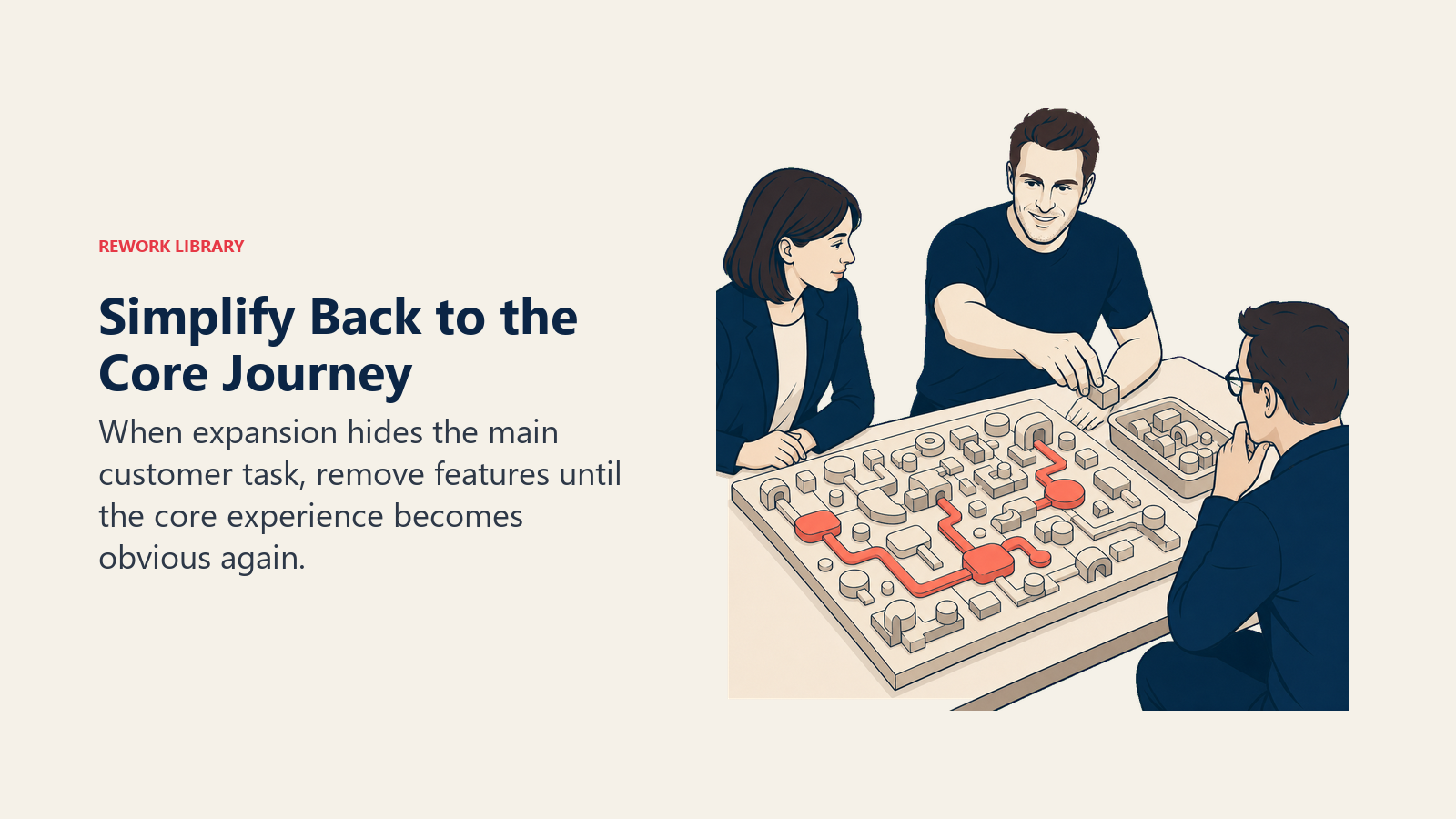
Chesky pulled together a small team to redesign the app. He personally participated in detailed product reviews, going screen by screen through the booking flow. The 2022 redesign launched with a dramatically simplified interface, a new "Rooms" category that emphasized the original home-sharing concept, and a categorized discovery system that made browsing easier without requiring a destination search.
The redesign also included a policy shift: Airbnb introduced a total price display requirement, showing guests the final price including cleaning fees before booking rather than revealing them at checkout. This was a genuine product improvement that also addressed one of the most persistent guest complaints.
What this decision shows about Chesky's leadership: he's willing to reverse expansion decisions when the product quality argument is strong enough. That requires acknowledging that a previous direction was wrong, which is organizationally difficult when the people who drove that direction are still in the company. He did it anyway because the product thesis was clear.
What Brian Chesky Would Do in Your Role
If you're a CEO running a 50-200 person company, the most Chesky-like discipline is what he calls "founder mode", staying directly connected to the two or three things that determine whether your product is excellent or mediocre. That's not micromanagement. It's choosing where your judgment creates irreplaceable value and staying in those decisions rather than delegating them to people with less context. What are the three product or customer experience decisions at your company that only you should make?
If you're a COO or operations leader, the COVID period is your reference for crisis decision velocity. Chesky moved from revenue collapse to layoff decision to public communication to debt raise in a matter of weeks, not months. What slows crisis response in most companies is the number of people who need to be in the room before a decision can move. His model kept the decision set small and moved fast. When your next crisis arrives, who actually needs to be in the room?
If you're a product leader, the app redesign story is the lesson. Chesky simplified by going through the experience himself, screen by screen, and removing everything that added friction without adding value. That's a process you can run. Take your three most important customer flows and walk through them personally, as a customer, today. Write down every moment of friction. That list is your product backlog.
If you're a sales or marketing leader, the COVID layoff letter has a direct lesson for how you communicate difficult news to customers, partners, or prospects. The elements that made it land: specificity over vagueness, operational commitments over emotional language, acknowledgment of what went wrong before explanation of what comes next. The next time you're writing a difficult customer communication, check whether you're hiding behind language or being specific enough that the reader knows exactly what's happening.
The Rework Lens: Founder-Driven Product and Crisis Response
Chesky's playbook rewards teams small enough for the founder to stay close to the product and decisive enough to move in days, not quarters. The 2022 app redesign worked because a tight group walked the experience screen by screen and cut anything that didn't earn its place. The May 2020 layoff decision moved from revenue collapse to public letter in weeks because the decision set was deliberately small.
Rework is built for that operating model. Lean product teams get a unified workspace where CRM, project management, and internal chat share one surface, so the founder reviewing a booking flow sees the same customer data, support threads, and sprint status without switching tools. In a crisis, that consolidation is what compresses decision time: finance, ops, and product look at one pane, not seven. Rework pricing starts at $99/month billed yearly for the Project Engine and $69/month billed yearly for the Sales Engine, each with 5 seats included, letting a 50-person company afford the full stack before it needs a professional management layer.
Notable Quotes and Lessons Beyond the Boardroom
In September 2024, Chesky appeared at an event where Paul Graham published an essay called "Founder Mode," based partly on observations from the talk. The central argument: the conventional wisdom that successful founders should bring in professional managers and step back from day-to-day decisions is frequently wrong. Founders who stay deeply involved in the work often build better companies than those who follow the "hire good people and get out of the way" playbook. Mark Zuckerberg's founder persistence at Meta is probably the most direct peer comparison, another founder who resisted the delegate-everything model through multiple near-death cycles. Patrick Collison at Stripe and Drew Houston building Dropbox both demonstrate the same founder-durability thesis: staying deeply embedded in product decisions produces a quality of output that professional-manager CEOs rarely match.
Chesky said: "Every time I was told to delegate and do less, the company got worse. Every time I went back and did more, the company got better." That's a specific, blunt claim that's grounded in his actual experience running Airbnb through multiple growth phases.
The essay and the underlying idea generated significant pushback from experienced operators who argued that founder-mode doesn't scale, that what works for a 200-person company produces bottlenecks at 2,000. That debate is ongoing and genuinely unresolved. But Chesky's point isn't that founders should do everything. It's that founders should stay close to the things that determine whether the product is excellent. That's a narrower and more defensible claim.
On the redesign: "I wanted to get back to what we were. The best product is often the original product, simplified."
Where This Style Breaks
Founder-mode leadership produces excellent outcomes when the founder's judgment is genuinely better than their delegates' and when the organization is small enough that the founder's bandwidth isn't a bottleneck. The opposite bet, where Richard Branson treats bold delegation as the growth engine, scales better but depends on hiring people you can fully trust to run a business without you. Both conditions become harder to maintain as a company scales past a few thousand people.
Airbnb's track record of developing independent senior leaders is weak. The company has churned through COOs and heads of product faster than comparable companies at similar scale. That's not coincidental. When the founder stays tightly involved in key decisions, the people below them don't develop the autonomous decision-making muscle that succession and organizational resilience require. For a framework on building that depth, the post-sale management and customer retention thinking around keeping stakeholders engaged applies equally to internal leadership development.
The regulatory battles Airbnb faces globally (bans or heavy restrictions in New York, Barcelona, Paris, and other cities) also reflect a company that moved fast on market expansion without building the political and community relations infrastructure to sustain it. Those fights are partly structural to the industry, but they're also partly the result of a product-first culture that underweighted the stakeholder management work that accompanies operating at city scale. Chesky has invested more in this since 2022, but the pattern of moving fast and absorbing regulatory friction afterward is built into the company's DNA.
Frequently Asked Questions about Brian Chesky's Leadership
Who is Brian Chesky?
Brian Chesky is the co-founder and CEO of Airbnb, which he started in 2008 with Joe Gebbia and Nathan Blecharczyk. He trained as an industrial designer at the Rhode Island School of Design (RISD) and led Airbnb from renting air mattresses to a $100B+ IPO in December 2020.
How did Chesky save Airbnb during the pandemic?
In May 2020, Chesky cut 25% of Airbnb's staff (1,900 employees), raised $2 billion in emergency debt at 10%+ interest, and compressed the IPO timeline rather than abandoning it. He wrote the layoff letter personally, backed it with operational commitments (equity vesting, healthcare, an alumni talent directory), and moved the company from 80% revenue collapse to a public offering in nine months.
What is 'Founder Mode' per Brian Chesky?
Founder Mode is the idea, popularized by Paul Graham's 2024 essay based on a Chesky talk, that founders should stay directly involved in key product and strategic decisions rather than delegating to a professional management layer. Chesky's version: "Every time I was told to delegate and do less, the company got worse. Every time I went back and did more, the company got better."
What is Chesky's approach to product?
Chesky applies a design-native lens, screen-by-screen review, experience coherence over feature count, and personal use of the product. He led Airbnb's 2022 redesign by walking the booking flow himself, cutting friction, and reintroducing a simplified "Rooms" category to return to the company's original home-sharing concept.
What is the 100-people-love principle?
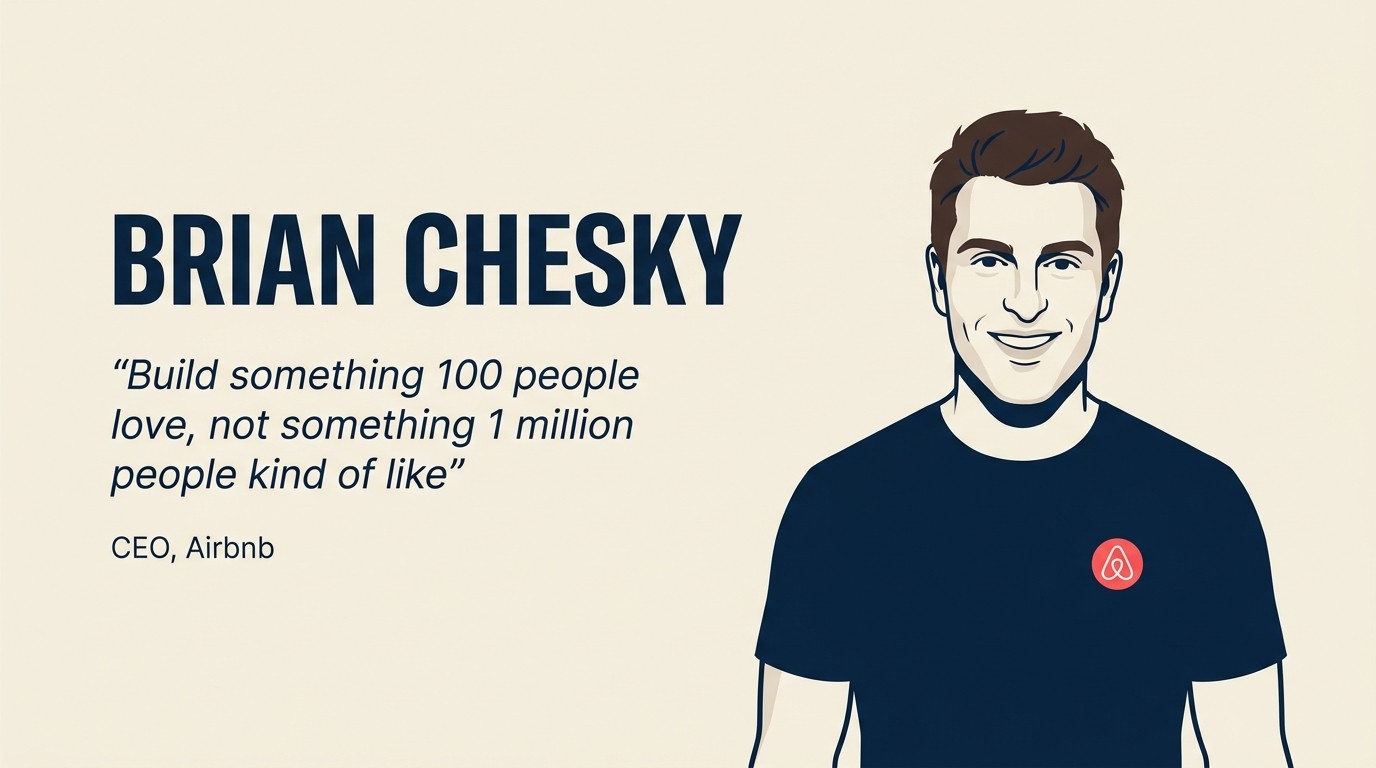
Early in Airbnb's life, Paul Graham advised Chesky that it's better to have 100 people who love your product than a million who like it. Chesky has repeatedly credited this principle as the foundation of Airbnb's early growth, they flew to New York to meet hosts in person, shot professional photos of listings, and obsessed over a small user base until the product was genuinely great before scaling.
What can founders learn from Brian Chesky?
Three lessons: stay close to the product by using it the way customers do, communicate difficult news with specificity and operational backing rather than corporate euphemism, and be willing to reverse expansion decisions when product quality demands simplification. The underlying discipline is choosing the handful of decisions where your judgment is irreplaceable and staying in them.
Learn More
If this profile shaped how you're thinking about leadership, these articles go deeper on the underlying ideas:

On this page
- Key Facts About Brian Chesky
- The Founder Mode Doctrine
- Leadership Style Breakdown
- Key Leadership Traits
- The 3 Decisions That Defined Brian Chesky as a Leader
- 1. Staying in an Airbnb Every Night for Years to Understand the Product from Both Sides
- 2. The COVID Layoff Letter, What It Said, How It Was Structured, Why It Spread
- 3. Re-Simplifying Airbnb's Product After Post-COVID Overexpansion Bloated the Experience
- What Brian Chesky Would Do in Your Role
- The Rework Lens: Founder-Driven Product and Crisis Response
- Notable Quotes and Lessons Beyond the Boardroom
- Where This Style Breaks
- Learn More