Ann Handley Leadership Style: Write Better, Market Smarter
Turn this article into takeaways for your work.


Each assistant summarizes the article only for you and suggests best practices for your work.
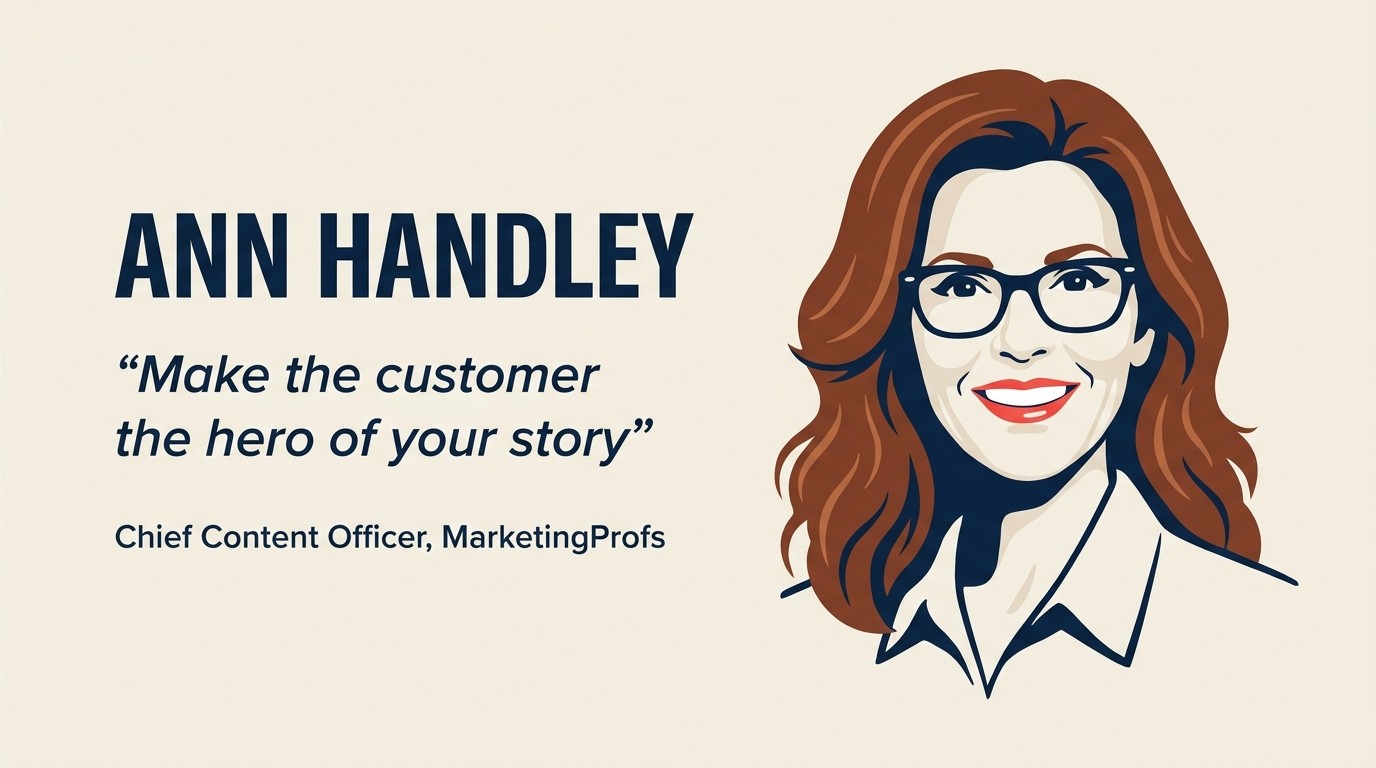
Key Facts: Ann Handley is Chief Content Officer at MarketingProfs, which she helped build into one of the largest B2B marketing training organizations in the world. She is the Wall Street Journal bestselling author of Everybody Writes (2014, with a substantially revised second edition in 2022) and co-author of Content Rules (2011, with C.C. Chapman). Forbes named her one of the most influential women in B2B marketing, and her personal newsletter, Total ANNARCHY, reaches 50,000+ subscribers with a distinct editorial voice that has become a reference point for the industry.
The Writing-First Doctrine (The Total ANNARCHY Principle)
The quality of your marketing is a lagging indicator of the quality of your writing, and the quality of your writing is a lagging indicator of how seriously your organization treats the reader's time. Marketing teams that outsource writing craft to templates, AI shortcuts, or committee review end up with content that is technically published but functionally invisible. The Writing-First Doctrine says the voice on the page is the product, and it deserves the same discipline you would apply to code or finance.
Ann Handley co-founded MarketingProfs in 2000 and has served as its Chief Content Officer for more than two decades. In 2014 she published Everybody Writes, which spent 10 weeks on the Wall Street Journal bestseller list, not because it introduced a new tactic, but because it gave marketers a framework for doing the one thing most of them were actively avoiding: writing with intention and craft.
The central argument is blunt. If you publish content, you're a writer. And writers have a responsibility not to waste readers' time. That premise reshaped how thousands of B2B marketing teams thought about content quality versus content volume. The second edition, published in 2022, updated the thesis for AI-assisted writing, SEO shifts, and newsletters, but the core conviction didn't change. You can't automate your way to a distinct voice.
Her newsletter, Total Annarchy, goes out to 50,000+ subscribers and proves the doctrine with every send. She doesn't just teach clarity. She practices it. Where Seth Godin built a permission-marketing doctrine around brevity and frequency, Handley built hers around depth and craft, both are voice-first lineages that treat the reader's attention as something earned, not bought. And where Joe Pulizzi industrialized content marketing into a discipline with metrics and frameworks, Handley kept the writer at the center of the enterprise.
Leadership Style Breakdown
| Style | Weight | How it showed up |
|---|---|---|
| Writing-Quality Evangelist | 60% | Handley's public output, two books, a weekly newsletter, hundreds of keynotes at conferences including Content Marketing World and MarketingProfs B2B Forum, has been a single sustained argument: most B2B content is bad because it's written for the brand, not the reader. She didn't argue this abstractly. She showed up with frameworks, specific rewrites, and before/after examples. Her "pathological empathy" concept asks writers to subordinate everything they want to say to what the reader actually needs to hear. That's not a platitude. It's a practice that requires structural changes to how most marketing teams build content briefs and review copy. |
| Practical Standards Setter | 40% | Handley didn't just philosophize about good writing. She built MarketingProfs into a training operation that ran live workshops, online courses, and certifications for marketing teams. She turned voice advice into teachable systems: editorial calendars anchored to a "bigger, bigger idea," writing rituals that treat the first draft as a thinking tool, and org-level editorial standards that move quality from individual skill to team practice. Research from the Content Marketing Institute consistently shows that documented content strategy is the single biggest differentiator between high-performing and low-performing B2B content teams, exactly the institutional argument Handley has been making for two decades. Her approach assumed that writing quality is learnable, not innate, and that assumption made her doctrine scalable. |
That combination is rarer than it sounds. Most content evangelists talk about writing quality without giving teams a mechanism to achieve it at scale. Handley connected the conviction to the curriculum.
Key Leadership Traits
| Trait | Rating | What it means in practice |
|---|---|---|
| Obsession with clarity over cleverness | Exceptional | Handley consistently pushed against the B2B instinct to sound impressive. Most corporate writing tries to project authority through complexity, long sentences, passive voice, jargon that insiders use with each other. Her editing lens went in the opposite direction: cut the throat-clearing, kill the preamble, get to the point your reader came for. That's a harder editorial standard to hold in organizations where multiple stakeholders want to see their priorities reflected in every piece. She made the case that clarity is the most respectful thing you can do for a reader's time. |
| Belief that B2B writing can be human | Very High | One of Handley's most repeated arguments is that B2B buyers are people before they're buyers, and that writing to them as if they're only a job title produces copy that's technically correct and humanly useless. She pointed to brands like Mailchimp, Basecamp, and Buffer as proof that personality and warmth work in B2B contexts. Her own newsletter voice, conversational, opinionated, occasionally self-deprecating, is a live demonstration that the "professional = impersonal" equation is wrong. |
| Long-game brand building through consistent voice | High | Handley published Total Annarchy for years before most marketers took newsletters seriously as a channel. Her consistency, same voice, same cadence, real editorial point of view in every issue, built an audience that trusts her specifically, not just MarketingProfs as a brand. That's a lesson about the difference between an audience and a subscriber list. Subscribers come from an opt-in form. An audience comes from a thousand issues of showing up and saying something worth reading. |
| Teaching through doing (practitioner-first credibility) | High | Handley's advice has weight because she doesn't just write about writing. She publishes a newsletter, runs a content operation, keynotes at the industry's largest events, and has edited thousands of pieces across her career. When she says "write a terrible first draft and fix it later," she's not reciting advice from a textbook. She's describing her own process. That practitioner credibility is the reason her frameworks land differently than generic content strategy advice. |
The 3 Frameworks That Defined Ann Handley
1. Pathological Empathy
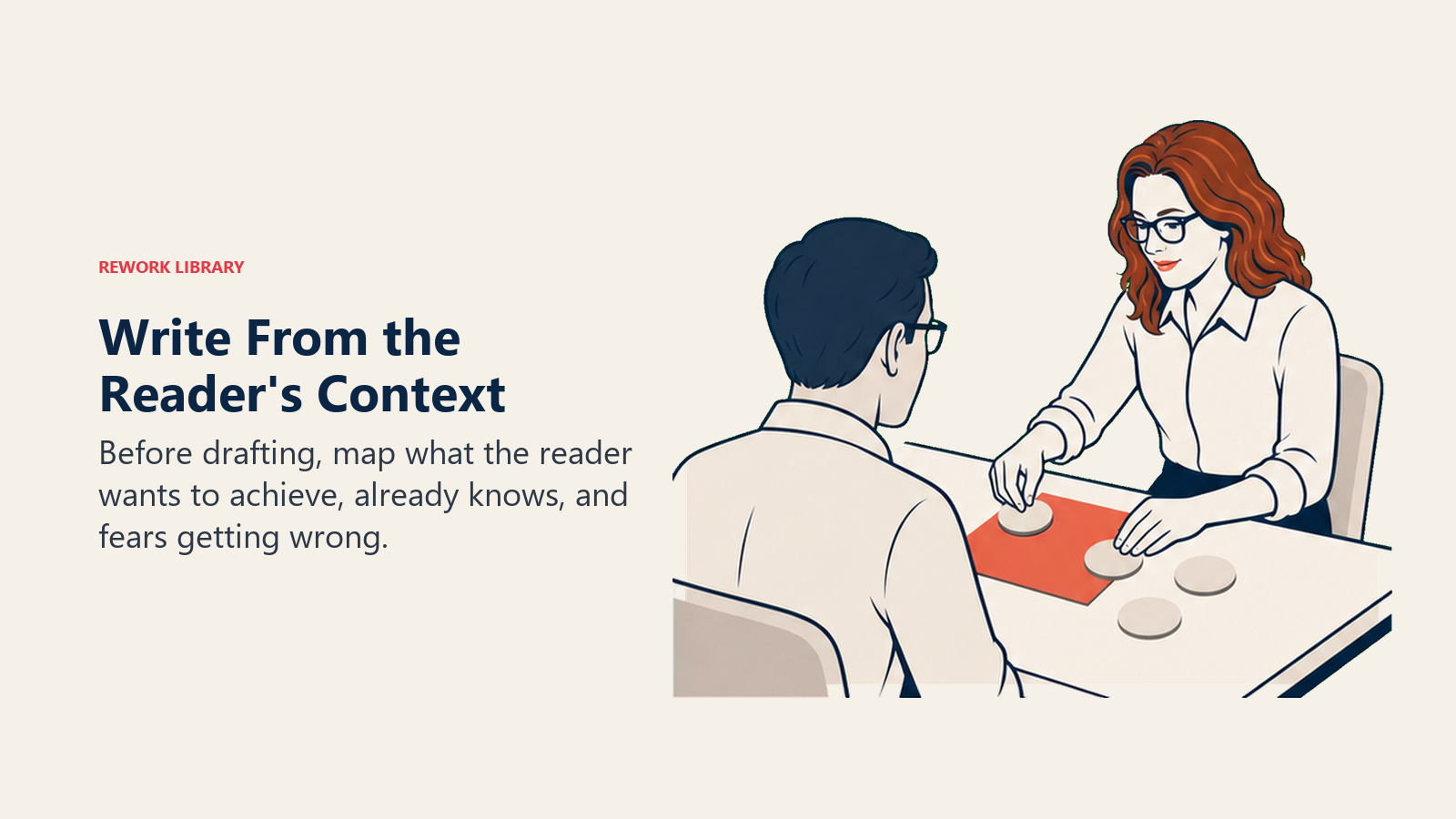
Handley coined the phrase "pathological empathy" to describe the mental stance a writer needs before drafting a single word. The idea is simple in description and hard in execution: before you write anything, you need to obsess over what your reader is actually trying to accomplish, what they already know, what they're afraid of, and what specific answer they came looking for.
Most marketing content fails this test. It starts with what the brand wants to announce, a product update, a new feature, a campaign, and works backward to find an angle the reader might care about. Handley argued that sequence is backward. You start with the reader's question, and then figure out how your brand's knowledge can answer it honestly.
The practical implication isn't just a drafting exercise. It changes the brief. A content brief built on pathological empathy asks: "What does our reader need to know to make a better decision?" A conventional brief asks: "What do we want to say about our product?" Those produce different articles, different headlines, and different reader experiences.
For operators, this maps to how you run customer interviews, onboarding calls, and support conversations. Every interaction where a customer explains what they actually wanted, not what you assumed they wanted, is raw material for pathological empathy. Handley would say the best content teams are the ones most connected to the real language customers use when they have a problem.
2. The Bigger, Bigger Idea
Before you write a word, Handley argued, you need to anchor your content to a single overarching narrative that can run for years. She called this the "bigger, bigger idea", a concept that goes beyond the specific post or campaign and gives your entire content operation a reason to exist.

It's not a theme. It's a position. Mailchimp's bigger, bigger idea for years was "small business owners deserve the same marketing tools as big brands." Every piece of content they published connected back to that premise. HubSpot's was "there's a better way to grow, and it's inbound." When you have that organizing idea, editorial decisions become easier. You're not asking "is this a good blog post?" You're asking "does this advance the premise we've committed to?"
Without it, content operations drift. You publish what's trending, what competitors are writing about, what someone in a meeting thought would be interesting. You end up with a content library that's technically competent and strategically incoherent.
For leaders building content programs from scratch, the bigger, bigger idea question is worth spending a day on before writing a single brief. What is the single conviction your company has about how your category should work? What do you believe is true that most of your industry hasn't admitted yet? That's the starting point.
3. Writing as a Team Sport
Handley's most underappreciated argument is that writing quality is an organizational problem, not an individual talent problem. Most companies treat content quality as a hiring question: find someone who can write well and let them handle it. Handley argued that approach produces one good writer and a content operation that breaks the moment that person leaves.
Her alternative was to treat writing as a shared practice with shared standards. That means publishing an editorial style guide that goes beyond AP style to define voice, tone, and what the brand genuinely sounds like. It means running writing workshops for non-writers who contribute to the content operation. It means building review processes that protect the voice rather than dilute it through layers of committee editing.
The Everybody Writes title is a literal description of her thesis. In any company that publishes content, blog posts, email sequences, sales decks, social media, product copy, everyone is a writer whether they've accepted the label or not. The question is whether you treat that distributed authorship as a risk to manage or a capability to develop.
For marketing leaders, this framework reframes the content quality problem. You can't fix bad organizational writing by editing individual pieces. You fix it by changing how the organization thinks about writing as a professional skill worth investing in.
What Ann Handley Would Do in Your Role
If you're a CEO, Handley's first observation would be about your company's editorial identity. Does your brand have a genuine point of view, something it believes that isn't true of every competitor in your category? Most company voices are interchangeable because they're built from the same competitive-analysis exercise: look at what competitors say, say something similar but slightly differentiated, add the company's name. Handley would push you to find the conviction your company actually has and build every piece of external communication around it. Not your brand values. Your actual argument about how the world should work.
If you're a COO, the Handley insight for you is about the writing infrastructure behind your content operation. Who owns the style guide? Who reviews content before it goes out, and what are they actually reviewing for? Most content review processes optimize for accuracy and legal compliance. They strip out personality in the process. If your content sounds bland, the problem isn't your writers, it's your review process. Handley would audit the approval workflow and find where the voice is getting killed.
If you're a product leader, Handley's most relevant contribution is her insistence that product copy is content too. Your onboarding emails, your in-product tooltips, your error messages, they're all writing, and they all create an impression of whether your company treats users as intelligent adults or as people to be herded. The same editorial principles that make a blog post readable make a product experience feel human. It's the same discipline applied to a different surface.
If you're in sales or marketing, Handley's pathological empathy framework applies most directly to how you build your content briefs. Before writing anything, a nurture email, a landing page, a sales enablement deck, spend 20 minutes writing out your reader's actual question in their words, not yours. Then ask: does the piece we're about to create actually answer that question? Most content misses because it's answering a question the team cared about, not one the reader was asking.
How Handley's Doctrine Applies to B2B SaaS at Rework
In B2B SaaS, content quality is not a branding concern, it is a conversion concern. Buyers self-educate through dozens of touchpoints before ever talking to sales, and the editorial rigor of what they read is what decides whether your category expertise feels earned or generic. Teams that treat their blog as a publishing calendar lose to teams that treat it as a product surface. Voice, structure, and the willingness to take a real position become the difference between content that ranks and content that converts.
Rework's content library is built on that assumption. Every article in the Leadership Legends series, the Lead Management guides, and the operator-facing frameworks is written to a single reader question, reviewed for clarity before it is reviewed for SEO, and committed to a point of view rather than a survey of opinions. The editorial discipline is the product argument: if the writing respects your time, the software probably will too. Handley's doctrine maps almost one-to-one onto how a modern SaaS company earns the right to be considered.
Notable Quotes and Lessons Beyond the Boardroom
"Write to one person" is advice Handley returns to across both books and in nearly every keynote she's given. The instinct for most corporate writers is to write for an abstract audience, "our target demographic" or "enterprise buyers", which produces copy that sounds like it's talking to no one in particular. Her prescription is to picture a single specific person and write to that person directly. The specificity of a real imagined reader forces clarity in a way that demographic profiles don't.
From Everybody Writes: "Your number-one job as a writer is not to write. It's to convey ideas with the utmost clarity." That inversion matters. Writers who think their job is to write produce copy that shows off the writing. Writers who think their job is to convey ideas produce copy that serves the reader. The difference in output is significant, and Handley spent two decades making that case to an industry that kept confusing sophistication of expression with effectiveness of communication.
The broader lesson from her career is about the compounding return of consistent public output. She's been publishing the same conviction, write better, be more human, respect the reader, for 25 years. It's the same long-game logic Gary Vaynerchuk applied to social video and Rand Fishkin applied to SEO education, show up consistently, build the audience before you need it, and let trust compound. The message hasn't changed dramatically. The audience has grown steadily. Total Annarchy's 50,000+ subscribers didn't appear after a viral post. They accumulated because she showed up every week with something worth reading, and never let the consistency drift into formula.
Where This Style Breaks
Handley's writing-first doctrine assumes your audience reads, which is increasingly a fragile assumption. Short-form video and voice search have shifted B2B discovery away from long-form text in ways she's acknowledged in the second edition but hasn't fully reckoned with. Her quality-over-volume stance is also expensive at scale, when you're publishing across 6 languages and 12 content types, editorial craft becomes a throughput bottleneck. And her B2C-friendly voice advice doesn't always survive contact with regulated industries where legal review strips out the human tone before anything goes live. The principles are sound. The execution model needs translation for teams operating at volume, in regulated categories, or in channels where text isn't the primary format.
Frequently Asked Questions about Ann Handley's Content Philosophy
Who is Ann Handley?
Ann Handley is the Chief Content Officer at MarketingProfs and the Wall Street Journal bestselling author of Everybody Writes (2014, revised 2022) and co-author of Content Rules (2011). Forbes has named her one of the most influential women in B2B marketing, and she is widely regarded as a foundational voice in the content marketing discipline.
What does 'everybody writes' mean in marketing?
It means that in any company publishing content, from blog posts and email campaigns to support tickets and product copy, every employee who touches words is effectively a writer. Handley argues that organizations can't treat writing quality as one person's job; they must build shared editorial standards, style guides, and training so the whole team writes with intention.
What is Handley's approach to B2B content?
Handley's approach is reader-first and craft-first. She insists B2B buyers are people before they are job titles, so the content should be human, opinionated, and clear rather than jargon-heavy or committee-written. She pairs that conviction with practical tools, editorial calendars anchored to a "bigger, bigger idea," documented style guides, and briefs built on what she calls pathological empathy for the reader.
What is Total ANNARCHY?
Total ANNARCHY is Ann Handley's personal newsletter, sent roughly every other Sunday to more than 50,000 subscribers. It is a live demonstration of her doctrine: conversational voice, a clear point of view, and consistent cadence over many years, showing how a single editorial voice can build a durable audience without paid acquisition.
What books has Ann Handley written?
Handley is the author of Everybody Writes: Your Go-To Guide to Creating Ridiculously Good Content (2014), which spent 10 weeks on the Wall Street Journal bestseller list, and a significantly revised second edition in 2022 that addresses AI-assisted writing, newsletters, and SEO shifts. She is also co-author with C.C. Chapman of Content Rules (2011), one of the earliest practical handbooks on modern content marketing.
What can modern CMOs learn from Handley?
Modern CMOs can learn that content quality is an organizational capability, not a hiring problem. Handley's doctrine is that voice, clarity, and editorial point of view compound over years when consistently practiced, and that most "blank" brand voices are caused by review processes, not bad writers. CMOs who document a style guide, protect voice through approval workflows, and commit to a bigger, bigger idea build audiences that competitors can't easily replicate.
For related reading, see David Ogilvy Leadership Style, Seth Godin Leadership Style, Rand Fishkin Leadership Style, Brian Halligan Leadership Style, and Philip Kotler Leadership Style.

On this page
- The Writing-First Doctrine (The Total ANNARCHY Principle)
- Leadership Style Breakdown
- Key Leadership Traits
- The 3 Frameworks That Defined Ann Handley
- 1. Pathological Empathy
- 2. The Bigger, Bigger Idea
- 3. Writing as a Team Sport
- What Ann Handley Would Do in Your Role
- How Handley's Doctrine Applies to B2B SaaS at Rework
- Notable Quotes and Lessons Beyond the Boardroom
- Where This Style Breaks