Reid Hoffman Leadership Style: Blitzscaling, Network Effects, and Investing at the Edge
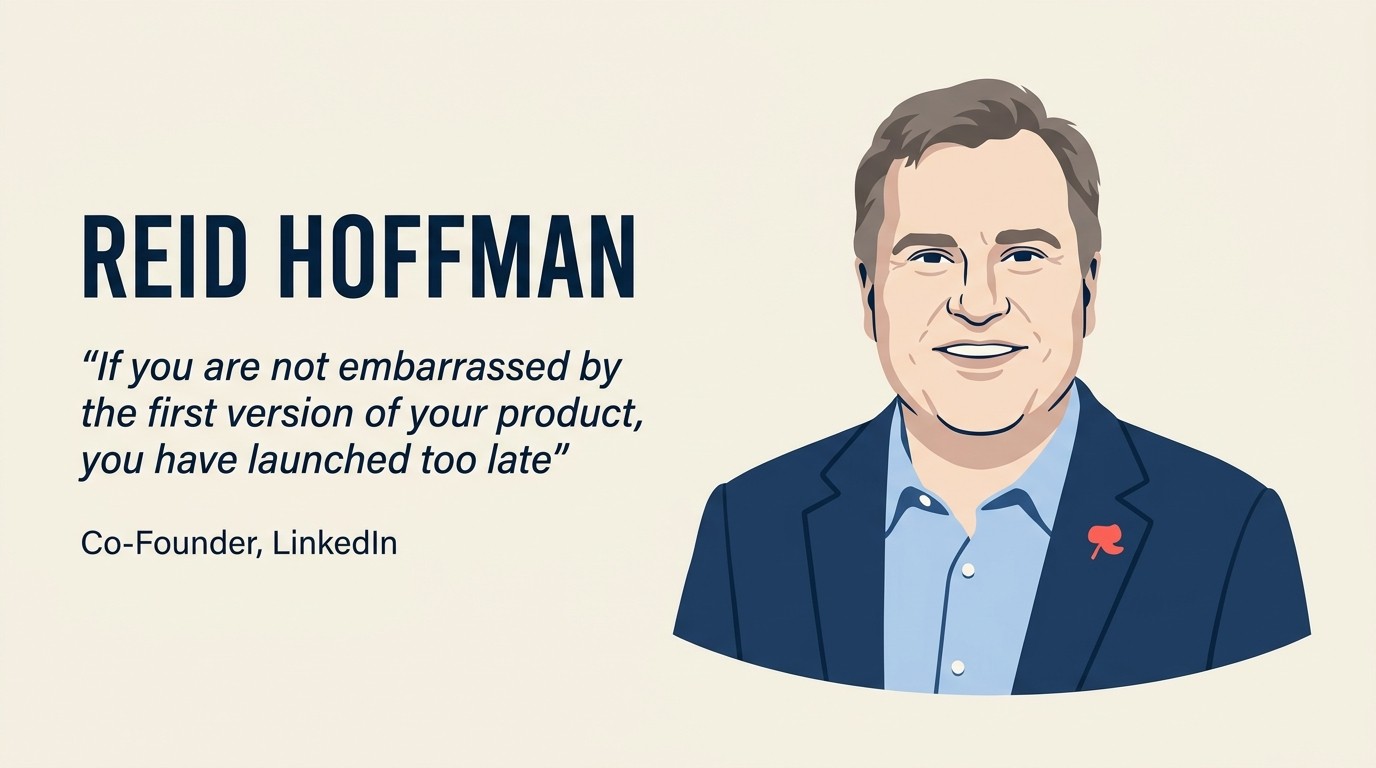
Turn this article into takeaways for your work.


Each assistant summarizes the article only for you and suggests best practices for your work.
Key Facts
Reid Hoffman (born August 5, 1967) co-founded LinkedIn in 2002 and sold it to Microsoft for $26.2 billion in 2016. A member of the PayPal Mafia (VP Business Development through the eBay acquisition), he joined Greylock Partners in 2009 and has since co-founded Inflection AI (2022) and Manas AI (2024). He co-authored "The Alliance" (2014) and "Blitzscaling" (2018), hosts the "Masters of Scale" podcast with 100M+ downloads, and holds an MPhil in philosophy from Oxford (Marshall Scholar).
The Hoffman Network Effects Model
A strategic doctrine holding that in winner-take-most markets, speed of network density is the only variable that matters, because each new node increases value for every existing node, and competitors who pause to optimize unit economics structurally cannot catch up. The model pairs blitzscaling (accepting temporary capital inefficiency to win market position) with "managed recklessness", deliberately choosing which operational messes are strategic bets on speed versus which are structural flaws that must be fixed before scale compounds them.

Reid Hoffman sold LinkedIn to Microsoft for $26.2 billion in 2016. He'd been a partner at Greylock for four years by then, running early checks on Airbnb, Facebook, and dozens of others. The framework he's best known for, Blitzscaling, is either the most important growth strategy of the past 20 years or a recipe for burning cash until you win a market by attrition. Both can be true.
What makes Hoffman worth studying is that he's operated on both sides of the table: as the founder building the network, and as the investor writing the check. He was VP of Business Development at PayPal when eBay acquired it for $1.5 billion, part of a founding cohort that also produced Elon Musk, Peter Thiel, and Max Levchin. He co-founded LinkedIn in 2002, took it public in 2011 at a $4.25 billion valuation, and watched it grow into the world's dominant professional network before negotiating its sale to Microsoft. His investor pattern overlaps with peers like Sam Altman on AI-era platform bets, Reed Hastings on culture-at-scale, Daniel Ek on startup operations, and Patrick Collison on payments infrastructure, each a different node in the same compounding network.
Operators who've only seen one side of that equation will find the other half useful. Hoffman thinks in networks first and organizations second. That lens shapes everything he builds, funds, and writes.
Leadership Style Breakdown
| Style | Weight | How it showed up |
|---|---|---|
| Systems Thinker | 55% | Hoffman consistently frames problems as network dynamics rather than individual decisions. LinkedIn wasn't built as a job board, it was built as a professional identity layer where value compounded as more nodes joined. His investment thesis at Greylock centers on businesses where each new user makes the product more valuable for existing users. His "Blitzscaling" framework is itself a systems argument: in certain market structures, speed is the only variable that matters, and efficiency is a secondary concern until the market position is secured. |
| Network Builder | 45% | The PayPal Mafia isn't just a historical anecdote. It's a case study in how Hoffman thinks about talent density and network effects in human capital. He's remained in close contact with former PayPal colleagues for 25 years, many of whom co-invest, co-found, or collaborate with him. His investment in Inflection AI brought together a team from DeepMind and OpenAI. He doesn't just build products with network effects, he builds personal and professional networks that compound the same way. |
The 55/45 split matters because most founders are one or the other. They're either operationally-focused systems thinkers who see networks as a growth channel, or relationship-first networkers who use systems to track their contacts. Hoffman runs both in parallel. That's why LinkedIn became the infrastructure for professional identity rather than just another social platform, and it's why his investor pattern-recognition has been unusually durable.
Key Leadership Traits
| Trait | Rating | What it means in practice |
|---|---|---|
| Network-first thinking | Exceptional | Every major decision Hoffman has made can be traced back to a network-effects thesis. LinkedIn's value proposition wasn't to the individual user, it was to the network as a whole. The product got better with each new member, which created a defensibility that pure-feature competitors couldn't replicate. His book "The Start-Up of You" applies the same logic to career development: your professional value is partly a function of your network's quality and reach, not just your individual skills. |
| Long-term pattern recognition | Very High | Hoffman recognized that professional identity would migrate online before most people were using the internet for more than email. He saw AI as a generational platform shift in 2020, well before the ChatGPT moment made it obvious. His early investment in Inflection AI (2022) and close relationship with Microsoft's AI leadership reflect a pattern he's applied consistently: identify the next infrastructure layer early, build or back into it, and let the compounding work. |
| Willingness to prioritize growth over efficiency | High | Blitzscaling as a framework explicitly argues that in winner-take-most markets, efficiency is not just a secondary priority, it's actively dangerous. Companies that pause to optimize unit economics while a competitor is growing 30% per month lose the market. Hoffman has been willing to apply this to his own ventures: LinkedIn ran at a loss for years before finding its business model. He treats temporary inefficiency as a strategic cost, not a management failure. |
| Intellectual generosity | High | Hoffman has been unusually open about his frameworks, mistakes, and reasoning. He publishes his investment memos. He co-authored two books that share the mental models behind his career. His podcast "Masters of Scale" gives away the playbook for scaling companies, to an audience that includes founders who are competing with Greylock portfolio companies. That openness is strategic: it builds the kind of network gravity that makes him the first call for exceptional founders, which compounds his deal flow. |
The 3 Decisions That Defined Reid Hoffman as a Leader
1. Building LinkedIn as a Professional Identity Layer, Not a Job Board
When LinkedIn launched in 2002, the obvious product category was recruitment technology. Monster.com had $1.3 billion in revenue. LinkedIn could have aimed squarely at that market.
Hoffman didn't. He positioned LinkedIn as a professional identity layer, a place where your career history, skills, and professional relationships lived permanently, regardless of your current employer. The job-posting feature came later. The network infrastructure came first.
That positioning decision is why the $26.2 billion acquisition made sense to Microsoft. Microsoft wasn't buying a recruitment platform. It was buying the authentication layer for professional identity on the internet. Every LinkedIn profile is a verified professional record. Every connection is a relationship graph. The data asset Microsoft acquired isn't the job listings, it's 700 million professional profiles and the connections between them.
The distinction between a job board and a professional identity layer is also what let LinkedIn win against well-funded competitors. Job boards have switching costs defined by active job seekers. Professional identity networks have switching costs defined by everyone's career history and contacts. Once your professional graph lived on LinkedIn, leaving meant leaving your network behind. Competitors who built better job-search features found that feature quality wasn't the moat.
For you: the lesson is about which problem you're actually solving and which asset you're actually building. A job board builds a database of listings. A professional identity network builds a social graph. The database has low switching costs. The graph has very high ones. When you're deciding what to build, ask yourself what the long-term asset is, not just what the immediate product does. Hoffman's positioning bet took years to pay off. LinkedIn wasn't profitable until 2006, four years after founding. The defensibility it created is what made the 14-year journey worth it.
2. Co-Authoring "Blitzscaling" as a Framework
Hoffman co-authored "Blitzscaling" with Chris Yeh in 2018. By then, the behavior it described had been observable in Silicon Valley for 15 years. What Hoffman did was name it, explain when it applies, and publish the logic for operators who couldn't intuit it from watching Uber burn $1 billion per quarter.
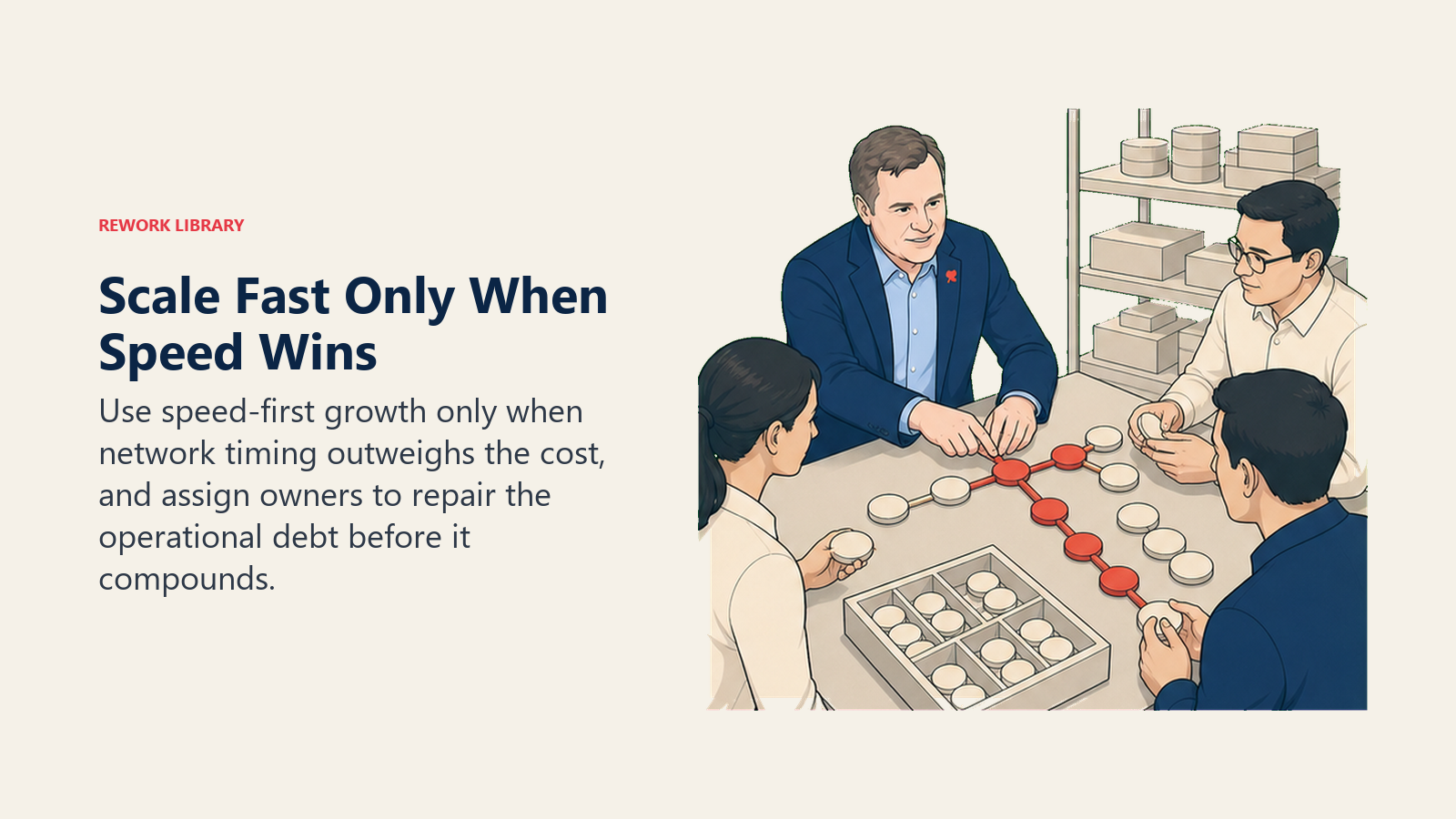
The framework's core argument is narrow: in winner-take-most markets, the cost of being second is often permanent. If Uber wins 65% market share in ride-sharing before Lyft achieves scale, Lyft may be structurally unable to catch up, not because its product is worse, but because network density in each city determines wait times, and wait times determine retention. In that market structure, spending $500 million to acquire drivers faster than Lyft is rational even if the unit economics are terrible. You're not buying customers. You're buying market position.
What most operators misread about Blitzscaling is that it's a conditional framework, not a universal one. Hoffman is explicit that Blitzscaling only makes sense when three conditions are true: the market is winner-take-most, you have sufficient capital to sustain the inefficiency, and the market opportunity is large enough to justify the risk. WeWork failed partly because its market (office real estate) wasn't winner-take-most, multiple players can coexist in physical real estate in a way they can't in ride-sharing or social networking. The framework was applied without checking the preconditions.
Hoffman has been candid about this. He's said in multiple interviews that Blitzscaling is "not always right" and that applying it in the wrong market is worse than not knowing the framework at all. That intellectual honesty is part of why the framework has remained credible even after several high-profile Blitzscaling failures.
For you: before applying Blitzscaling logic to your company, answer one question honestly. Is your market actually winner-take-most? If two or three companies can profitably coexist in your market long-term, you're not in a Blitzscaling situation. You're in a market where unit economics matter more than speed, and trading efficiency for growth will cost you more than it returns.
3. Backing Inflection AI and Advising Microsoft Simultaneously
In 2022, Hoffman co-founded Inflection AI with Mustafa Suleyman (formerly of DeepMind) and Karen Simonyan. Inflection built Pi, a conversational AI assistant focused on emotional intelligence and supportive dialogue. The company raised over $1.3 billion. In 2024, Microsoft hired Suleyman and much of the Inflection team to lead its consumer AI products, and Inflection was restructured.
Hoffman simultaneously sits on Microsoft's board. He was a Biden donor and has been publicly vocal about AI safety and governance. That combination, co-founding an AI startup, advising a major AI investor, and advocating for AI policy, puts him in a position of overlapping interests that's unusual even by Silicon Valley standards.
What it reveals about Hoffman's leadership model is specific: he believes the AI transition is important enough that being at multiple points in the ecosystem simultaneously is worth the complexity. He's not choosing between founder, investor, and policy advocate. He's operating as all three at once, betting that his integrated view generates better decisions at each position than a siloed one would.
The Inflection outcome is worth studying without a clean verdict. Pi didn't win the consumer AI market. But the team Hoffman helped build ended up inside Microsoft, which is one of the two or three companies most likely to shape what AI infrastructure looks like over the next decade. Whether that outcome was planned is less important than the pattern: Hoffman consistently builds or backs toward platform position, not just product success.
For you: the AI era is creating the same network-effects opportunities that the internet created in the late 1990s. Hoffman's bet isn't on any specific AI product, it's on being embedded in the infrastructure layer early enough that when the dust settles, he's a necessary node in the network. If you're thinking about AI adoption in your business, the question isn't just which tool to use. It's where you want to sit in the AI value chain when the market structure becomes clearer.
What Reid Hoffman Would Do in Your Role
If you're a CEO running a 50-500 person company, the most Hoffman-like question to ask yourself is whether your business has genuine network effects or just good retention. Those aren't the same thing. A product with low churn might just have high switching costs. A product with network effects gets more valuable as it grows. If you have the latter, Hoffman would argue you're chronically underinvesting in growth, because each new user compounds the value you're delivering to existing ones. If you don't have network effects, he'd push you to find them or accept that you're in a business where unit economics matter more than speed.
If you're a COO or operations leader, the Blitzscaling framework has a specific operational implication: there are moments when adding process too early costs you market position. Hoffman watched PayPal grow from launch to $1.5 billion acquisition in under four years. That speed required accepting operational mess that would be unacceptable at a mature company. The COO question is knowing which messes are strategic (we're buying speed) versus which are structural (we've built something we'll have to rebuild). Hoffman would distinguish those clearly and protect the speed-buying messes while fixing the structural ones.
If you're a product leader, Hoffman's LinkedIn positioning story is the most applicable reference. He didn't build the most feature-rich product in his category. He built the product that owned the most valuable node in the network. When you're deciding what to prioritize on your roadmap, ask what the long-term network asset is versus what the short-term feature win is. Features can be copied. Network position usually can't.
If you're in sales or marketing, Hoffman's "intellectual generosity" trait is directly applicable to B2B content strategy. His Masters of Scale podcast gives away real playbooks to an audience that includes potential Greylock LPs, portfolio founder referrals, and talent. The openness isn't naive, it's a network-building mechanism. If you're holding your best insights back from content marketing because you don't want to educate competitors, you're probably underestimating how much trust those insights build with the buyers who matter more than your competitors do.
Applying Hoffman's Model Through Rework
Hoffman's network-effect doctrine requires teams that can scale faster than their operational debt compounds, which is exactly where most blitzscaling attempts break. You hire ahead of process, accept mess as a strategic cost, and then discover the "mess" was actually the thing choking your CRM pipeline, your handoffs, and your lead response time. Rework is built for that moment. The Sales Engine (from $69/month billed yearly) handles pipeline velocity while the Process Engine (from $99/month billed yearly) keeps cross-functional execution legible as headcount doubles. The stack is one system, not CRM plus project management plus chat plus HR stitched together, so new team members can plug in within a week rather than after a four-to-eight-week partner implementation. For operators applying Hoffman's "managed recklessness" lens, Rework is the infrastructure that lets you absorb the strategic messes while killing the structural ones before they calcify. Speed with a floor.
Notable Quotes and Lessons Beyond the Boardroom
Hoffman's most cited line is probably: "An entrepreneur is someone who will jump off a cliff and assemble an airplane on the way down." It's the right tone for his philosophy, not reckless, but comfortable with a degree of incompleteness that most institutional leaders find intolerable. The assembly is the point. You can't design the airplane fully before you jump because you don't know what the wind conditions are.
On AI, he's been more specific than most tech leaders. He's argued publicly, including in a Harvard Business Review essay on AI and leadership, that AI is the most transformative platform shift since the internet, not because of any single model, but because it changes the economics of knowledge work in a way that compounds across every industry. He's also said that the leaders who will benefit most aren't the ones who adopt AI tools first, but the ones who redesign their organizations around AI's new capability set rather than layering it on top of existing processes.
His "permanent beta" philosophy from "The Start-Up of You" applies directly to how operators should think about their own professional development. The book argues you should treat your career as a startup: always iterating, always collecting signal about what's working, and never assuming a current position is permanent. The leaders Hoffman respects most are the ones who've changed their minds publicly and often, not because they're inconsistent, but because the world keeps changing and they're paying attention.
His Greylock thesis reinforces this: he writes checks primarily into businesses where network effects create a structural moat. But he's also acknowledged in post-mortems that the thesis failed when applied to markets he misread as winner-take-most. Convoy, the freight marketplace he backed, shut down in 2023 after raising over $900 million. The market turned out to be more fragmented than the thesis assumed. Hoffman has been candid about this in a way that most investors aren't.
Where This Style Breaks
Blitzscaling assumes you're in a winner-take-most market with abundant capital and a large enough market to absorb the cost of inefficiency. In markets where two or three players can coexist profitably, sacrificing unit economics for speed destroys value permanently. The framework is also capital-intensive by design: it was developed in an era of near-zero interest rates and abundant venture funding. In a tighter capital environment, the runway required to Blitzscale may not exist.
Hoffman's network-effects lens can also lead to overfitting. Not every product category has meaningful network effects, and mistaking high retention for a network moat can produce a strategy that underinvests in the unit economics that actually sustain the business. His frameworks are powerful, but they require honest market analysis before application, not after.
Frequently Asked Questions about Reid Hoffman's Leadership
Who is Reid Hoffman?
Reid Hoffman is a Silicon Valley entrepreneur and investor best known for co-founding LinkedIn in 2002 and selling it to Microsoft for $26.2 billion in 2016. He was a member of the PayPal Mafia as VP of Business Development, has been a partner at Greylock since 2009, co-founded Inflection AI in 2022 and Manas AI in 2024, and sits on the Microsoft board.
What is blitzscaling?
Blitzscaling is the framework Hoffman codified with Chris Yeh in their 2018 book of the same name. It argues that in winner-take-most markets, like ride-sharing or social networking, speed of scale beats operational efficiency, and companies should accept temporary capital inefficiency to secure market position before competitors can. The framework only applies when the market is winner-take-most, capital is sufficient, and the opportunity is large enough to justify the risk.
How did LinkedIn reach $26B?
LinkedIn reached its $26.2 billion Microsoft acquisition price by positioning itself as a professional identity layer rather than a job board. Hoffman's positioning decision created high switching costs tied to every user's career history and professional graph, not just active job listings. By 2016, LinkedIn had over 400 million members, and Microsoft bought the authentication layer for professional identity on the internet, not a recruitment platform.
What is 'The Alliance' about?
"The Alliance" (2014), co-authored by Hoffman, Ben Casnocha, and Chris Yeh, reframes the employer-employee relationship as a series of mutual "tours of duty" rather than lifetime employment or at-will disposability. Each tour is a defined mission with explicit goals, timelines, and outcomes for both sides. The book argues this honesty produces higher trust, better referrals, and a stronger alumni network than the fiction of permanent loyalty.
What is Masters of Scale?
Masters of Scale is Hoffman's business podcast launched in 2017, now with over 100 million downloads. Each episode centers on a counterintuitive theory of scale, often illustrated through long-form interviews with founders like Brian Chesky, Mark Zuckerberg, and Sara Blakely. The show is an extension of Hoffman's "intellectual generosity" trait: giving away playbooks in public builds network gravity that compounds his deal flow at Greylock.
What can founders learn from Reid Hoffman?
Founders can learn three durable lessons from Hoffman. First, think in networks before organizations, what social graph or data asset are you actually building. Second, know whether your market is winner-take-most before blitzscaling; applying the framework in the wrong market destroys more value than it creates. Third, intellectual generosity is a network-building mechanism, not a giveaway, sharing frameworks openly builds the trust that produces better founders, talent, and capital access over decades.

On this page
- Key Facts
- The Hoffman Network Effects Model
- Leadership Style Breakdown
- Key Leadership Traits
- The 3 Decisions That Defined Reid Hoffman as a Leader
- 1. Building LinkedIn as a Professional Identity Layer, Not a Job Board
- 2. Co-Authoring "Blitzscaling" as a Framework
- 3. Backing Inflection AI and Advising Microsoft Simultaneously
- What Reid Hoffman Would Do in Your Role
- Applying Hoffman's Model Through Rework
- Notable Quotes and Lessons Beyond the Boardroom
- Where This Style Breaks