Marty Cagan Leadership Style: Empowered Product Teams, Discovery, and the SVPG Framework
Turn this article into takeaways for your work.


Each assistant summarizes the article only for you and suggests best practices for your work.
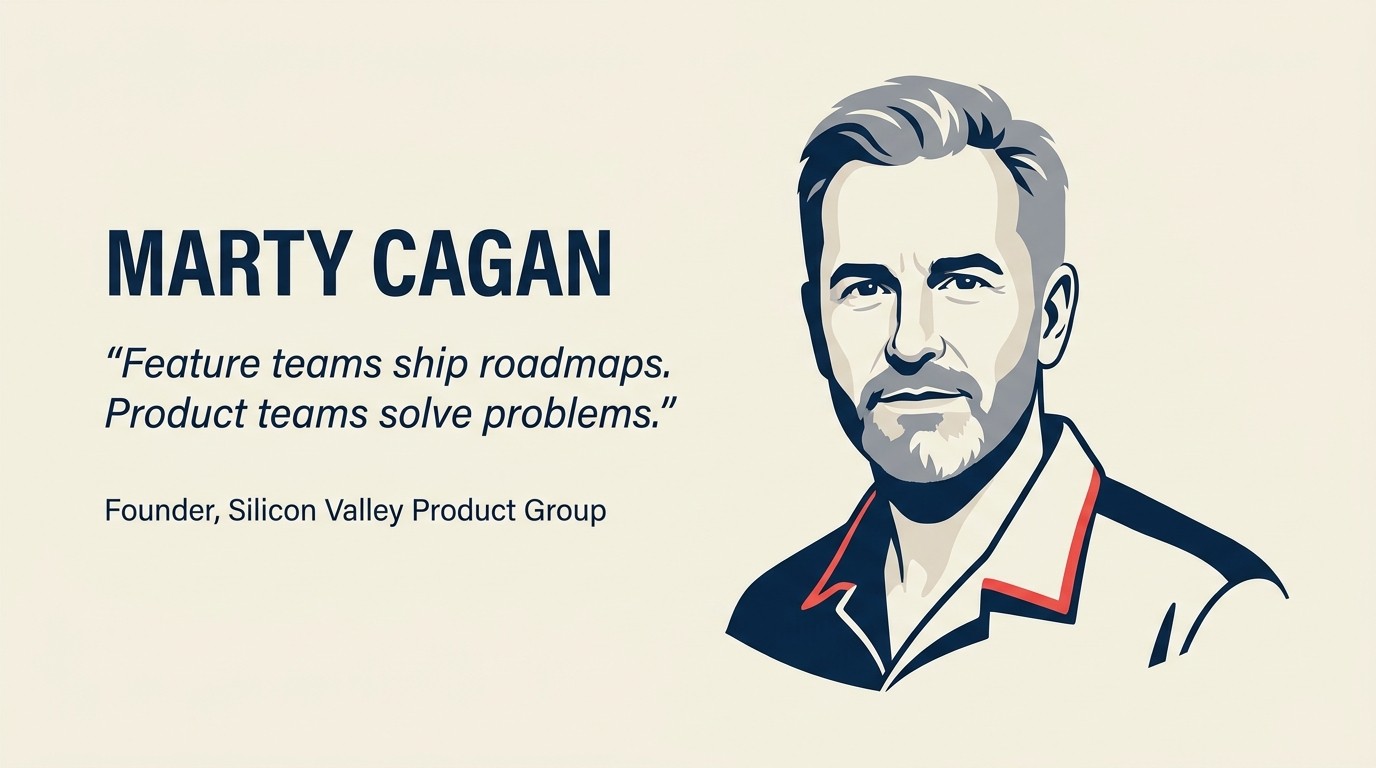
Marty Cagan spent 20 years inside companies like HP, Netscape, and eBay building products. Then in 2001 he founded Silicon Valley Product Group and spent the next two decades telling companies that almost everything they were doing, roadmaps full of features, product owners turning requirements into tickets, quarterly planning cycles that treated product like a project, was wrong.
He's not polite about it.
Key Facts
- Founder: Silicon Valley Product Group (SVPG), founded 2001, the industry's most influential product coaching firm.
- Operator background: 20+ years before SVPG, including VP of Products at eBay (1999-2001) and senior product roles at Hewlett-Packard (HP), Netscape, and AOL.
- Signature books: "INSPIRED: How to Create Tech Products Customers Love" (2008, revised 2017, widely called the product management industry bible), "EMPOWERED: Ordinary People, Extraordinary Products" (2020, co-authored with Chris Jones), and "TRANSFORMED: Moving to the Product Operating Model" (2024).
- Coaching reach: SVPG has advised product leadership at Netflix, Adobe, Uber, and hundreds of growth-stage and enterprise technology companies.
- Core vocabulary: Popularized the terms "empowered product teams," "feature factory," "product trio," and "dual-track agile", now the default language of modern product management.
The Empowered Product Team Doctrine
The Empowered Product Team Doctrine (also called the Cagan INSPIRED Model) holds that durable product companies are built around cross-functional teams of product managers, designers, and engineers who are given hard customer problems to solve rather than feature lists to ship. Empowerment requires two conditions: senior-caliber talent on every team and executive leadership that measures outcomes, not output. Without both, the model degrades into a feature factory wearing modern product vocabulary.
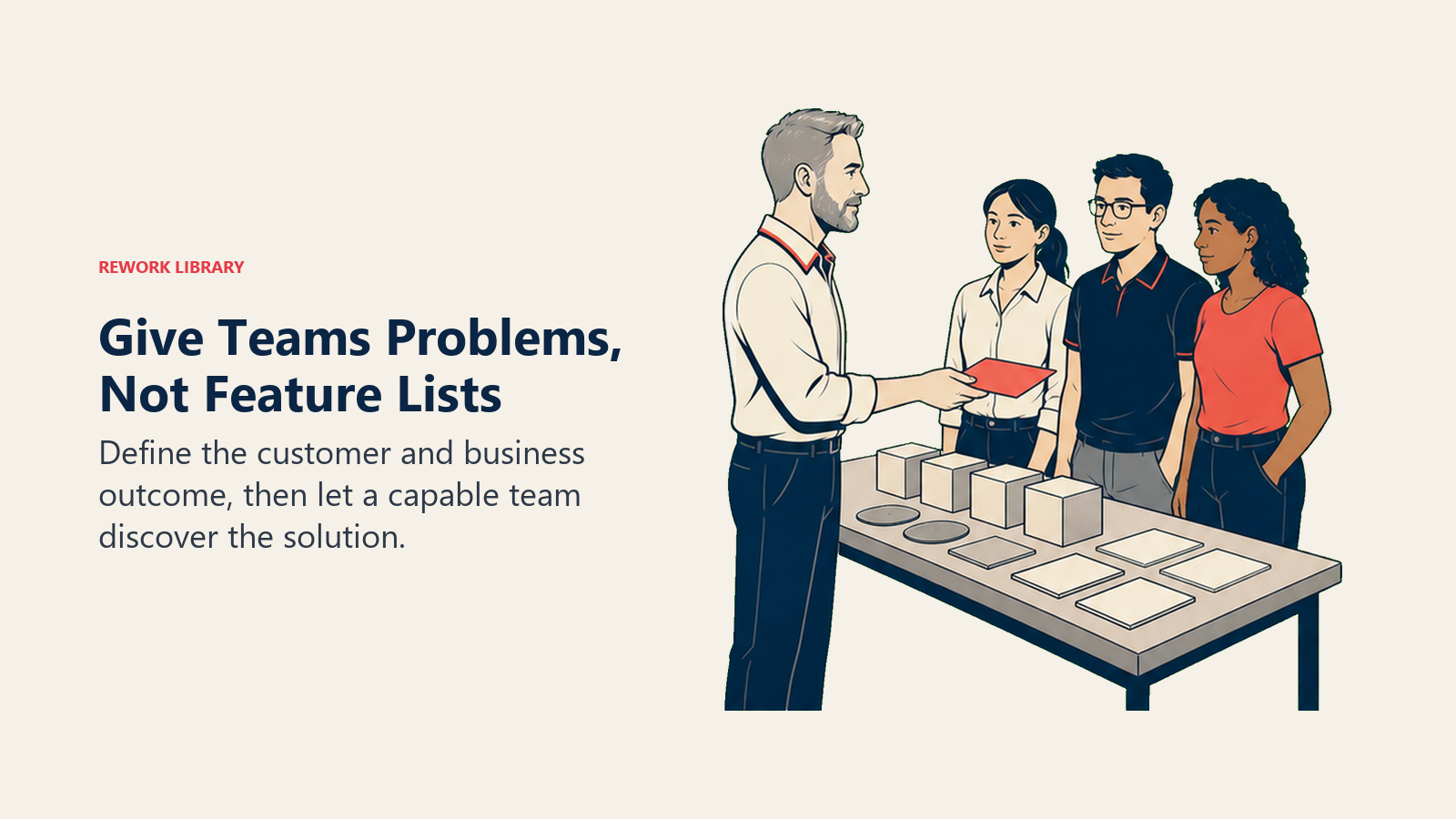
"INSPIRED" is the most recommended product book in Silicon Valley not because it's gentle but because it names the failure modes clearly. Cagan calls most enterprise product organizations "feature factories", teams that ship what they're told, measure velocity, and never ask whether the output is solving a real problem. That diagnosis is uncomfortable because it's accurate for the majority of product teams operating today.
If you're running a company where engineering ships what the roadmap says and nobody asks whether it's the right thing to build, Cagan's framework is the direct intervention you need.
Leadership Style Breakdown
| Style | Weight | How it showed up |
|---|---|---|
| Systems-Level Product Critic | 55% | Cagan's primary contribution is diagnostic. He spent 20 years as an operator across waterfall, early agile, and the transition to modern product management, 8 years at HP, roughly 4 at Netscape and AOL during the browser wars, and 5 years as VP Product at eBay during the dot-com peak and its aftermath. That experience gave him a pattern library of organizational failure modes that most product frameworks ignore. His books and SVPG writing don't pitch a methodology. They identify the structural reasons why most product organizations produce mediocre outcomes and what the alternatives actually require. |
| Practitioner Coach | 45% | Cagan and his SVPG partners, including Jon Moore, Pete Schlampp, and others, coach growth-stage and enterprise product organizations directly. This isn't academic. SVPG works hands-on with companies to diagnose gaps, coach product managers, and help CEOs understand what "empowered product teams" actually requires from them. The coaching context is where Cagan's frameworks get tested against real organizational resistance, and his writing reflects that. He doesn't describe an ideal state; he describes the specific work required to move from where most companies are to where they need to be. |
That split matters because it explains why Cagan's frameworks are simultaneously the most cited and the most often misapplied in product management. The systems thinking is clear. The coaching required to install it is hard. Companies read "INSPIRED," agree with the diagnosis, and then try to execute empowered teams without doing the underlying work on talent, trust, and executive alignment. The results confirm Cagan's point about feature factories without actually escaping them.
Key Leadership Traits
| Trait | Rating | What it means in practice |
|---|---|---|
| Uncompromising on empowered-team principles | Exceptional | Cagan consistently refuses to soften his framework to make it more palatable to organizations that aren't ready for it. When SVPG coaching reveals that a company's PMs are essentially project managers and the engineers don't have space to solve problems, he names that clearly rather than positioning incremental improvements as success. For companies where product quality directly drives valuation or competitive position, that bluntness is exactly what's needed from a coach. |
| Deep practitioner credibility | Very High | Cagan's authority comes from having done the work, not from having studied it. He was VP Product at eBay for 5 years, running product across one of the most complex marketplace platforms of the early internet era. He was at Netscape during the browser war with Internet Explorer, one of the highest-stakes competitive product environments in tech history. When he describes how product-market fit works in a high-growth company, he's drawing from direct experience, which gives his coaching a specificity that academic frameworks can't match. |
| Ability to diagnose organizational failure modes | High | Cagan's most useful skill is identifying the root cause of product underperformance, whether it's weak PM talent, lack of discovery capacity, roadmap theater imposed by sales, or executive distrust of product judgment. Most organizations can't self-diagnose because the symptoms look like execution problems when they're actually structural. His books function as a diagnostic manual. The "feature factory" concept alone is worth the read because it gives you a single term for a failure mode that most product organizations are living in. Harvard Business Review's research on product team autonomy reinforces the same structural argument from the academic side. |
| Willingness to challenge both leadership and process | High | Cagan doesn't only criticize product teams. He's explicit that most product failures are failures of leadership: executives who dictate solutions, sales organizations that own the roadmap, and CEOs who haven't built the trust relationship with product that empowered teams require. The "EMPOWERED" book (2020, co-authored with Chris Jones) is largely addressed to heads of product and CPOs, not PMs, because Cagan believes the accountability for product culture sits at the leadership level. Marc Benioff is one of the few enterprise CEOs who publicly operationalized this, building Salesforce's product culture around empowered teams and V2MOM alignment at the same time Cagan was developing the vocabulary for it. |
The 3 Decisions That Defined Marty Cagan as a Leader
1. Founding SVPG in 2001 Instead of Continuing as an Operator
Cagan left eBay in 2001 and founded Silicon Valley Product Group rather than taking another VP Product role. That was a bet with a thesis behind it: companies didn't need more product leaders who would go replicate the same patterns from inside. They needed an external coaching model built by practitioners who could see the failure modes that internal teams couldn't.
The timing was significant. 2001 was the post-dot-com crash. The first generation of internet product companies had imploded. The second generation, Google, Amazon, early Facebook, was just beginning. Cagan had watched product development at scale through the browser war, the AOL-Netscape merger, and the eBay marketplace build. He had a specific view of what separated the product organizations that worked from the ones that didn't.
SVPG started as a writing and speaking platform. Cagan published product management thinking on the SVPG blog years before "INSPIRED" was a book. That writing built an audience of PMs who were hungry for practitioner-based guidance that wasn't certification-course theory. When "INSPIRED" came out in 2008, it had a pre-built readership.
The coaching firm model let Cagan stay close to real organizational problems without being inside one organization. After 25 years, SVPG has advised hundreds of companies. That's a breadth of exposure that no single operator role could provide, and it's why Cagan's pattern recognition about product failure is more reliable than most.
2. Writing "INSPIRED", Two Editions, Different Audiences
The first edition of "INSPIRED" came out in 2008. It was a practical guide to product management aimed at PMs who had no template for how their work should actually operate. In 2008, there was almost no serious practitioner writing on product management. Cagan filled a gap.
The second edition in 2017 is a different book. It's not just updated, it's reframed. By 2017, Cagan had coached enough post-product-market-fit companies to understand that the failure mode had shifted. The problem wasn't that PMs didn't know the fundamentals. The problem was that most product organizations had adopted the vocabulary of modern product management (agile, sprints, roadmaps, user stories) without changing the underlying culture. They were still feature factories with better process theater.
The second edition introduced empowered product teams explicitly, defined the product trio (PM + designer + engineer working as a co-equal discovery team), and made the dual-track agile model central. Dual-track agile runs discovery, figuring out what to build and whether it'll work, in parallel with delivery, instead of treating them as sequential phases. The distinction eliminates the single biggest failure mode Cagan had observed: roadmaps full of features that had never been validated as solutions to real problems.
"INSPIRED" is used as curriculum at Google, Microsoft, and hundreds of growth-stage companies. Its reach beyond SVPG's direct coaching base is the reason Cagan's vocabulary, feature factory, empowered teams, product trio, became the dominant language of serious product management.
3. Developing the Empowered-Product-Teams Thesis
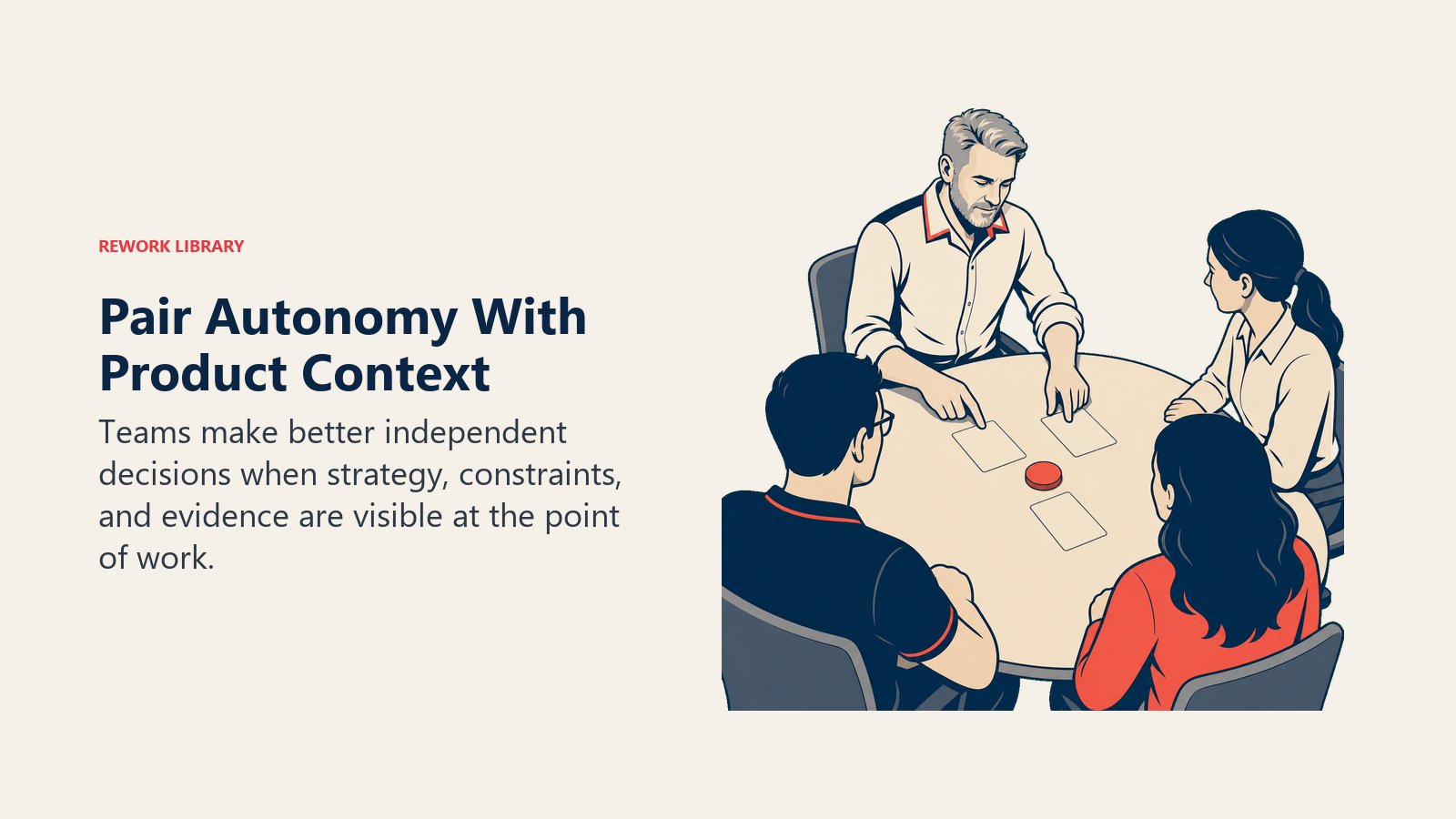
The product trio concept is deceptively simple: the PM, designer, and engineer work together on discovery, not sequentially. The PM doesn't hand requirements to design, who hands specs to engineering. All three are involved in understanding the problem and shaping the solution from the beginning.
This directly conflicts with how most agile and scrum implementations actually work. In practice, most "agile" organizations have PMs writing user stories, designers producing mockups, and engineers implementing. The PM is the intermediary who filters customer input through a prioritization process and produces a backlog. The engineer's job is to execute that backlog with quality.
Cagan's argument is that this model produces exactly the wrong incentives: PMs optimize for throughput (clearing the backlog), designers optimize for visual quality of individual features, and engineers optimize for technical execution. Nobody is accountable for whether the product is solving the right problem.
The product trio model puts joint accountability for outcomes on all three roles. It requires engineers who are interested in the problem, not just the implementation. It requires designers who can engage with business constraints, not just user experience. And it requires PMs who can lead through influence rather than authority.
That's a hard organizational change. It requires hiring for different skills than most companies currently hire for, and it requires changing how those three roles are evaluated. Cagan acknowledges this, which is why "EMPOWERED" (2020) is focused on the leadership layer: you can't install product trios from the bottom up.
What Marty Cagan Would Do in Your Role
If you're a CEO, Cagan's most direct question for you is about trust. Have you given your product leadership team genuine authority over what to build, or do you review the roadmap and change it based on gut instinct or the last customer call? Most CEOs believe they're giving their product teams autonomy while actually exercising significant roadmap control. Cagan's point is that you can have one or the other: you can manage the roadmap, or you can hold product leadership accountable for outcomes. Trying to do both creates a feature factory with a mission statement about empowerment.
If you're a COO, the operational question is about discovery capacity. Does your product organization have a structured process for validating assumptions before committing engineering resources? Most companies don't. They move from idea to sprint planning without a disciplined step in between. Dual-track agile means running discovery continuously, not in batch research sprints. If your product cycle looks like: write requirements, design, build, release, measure disappointment, you're missing the discovery track and Cagan's dual-track model is the specific fix.
If you're a product leader, the most important Cagan diagnostic to run is this: what percentage of your engineers can tell you, without looking at a ticket, what customer problem they're solving with their current work? If fewer than 80% can answer that question, you're running a feature factory. The fix isn't a communication program. It's restructuring how discovery happens, getting engineers into customer conversations, involving them in problem framing before solution design begins, and measuring the team on outcomes rather than throughput.
If you're in sales or marketing, Cagan's framework creates a specific tension you need to understand. Empowered product teams are supposed to make bets based on product judgment, not sales commitments. That directly conflicts with the common practice of selling features that haven't been built yet, or letting the largest customer dictate the roadmap. Cagan isn't saying ignore sales input, he's saying the product organization needs to evaluate that input against the broader customer base and make a product bet, not a promise. If your sales team owns the product roadmap, you're building a professional services business, not a product company.
How Rework Supports the Empowered-Teams Operating Model
Cagan's diagnosis is that feature factories persist because their operating surface, roadmaps, tickets, Jira boards, rewards throughput, not outcomes. The switch to empowered product teams requires shifting the day-to-day artifacts that teams actually work in. That's where Rework's Work Operations platform fits: discovery boards that track assumptions and experiments alongside delivery tickets, outcome-based team dashboards that tie engineering work to the customer problem it's solving, and cross-functional spaces where the PM, designer, and engineer share a single source of truth instead of handing artifacts across tools.
For product leaders installing the Cagan model, the hardest cultural shift is making discovery visible. Most organizations have no place to track "here's what we assumed, here's how we tested it, here's what we learned." Rework gives product trios that shared workspace, structured enough to make discovery a first-class practice, flexible enough to avoid turning it into another stage-gate process. The tool doesn't install empowerment. But it removes the excuse that the operating system is forcing feature-factory behavior.
Notable Quotes and Lessons Beyond the Boardroom
Cagan is specific about what a product manager is not. He argues against the "CEO of the product" description because it obscures the actual job: "The product manager's job is to work closely with the engineering team to discover and deliver a product that is both valued by customers and viable for the business." That's a very different accountability than strategy ownership. The full articulation of this distinction is developed in the SVPG article archive, where Cagan has published hundreds of practitioner-focused essays since 2001.
His distinction between "feature teams" and "product teams" is worth having on the wall: feature teams are given solutions to build; product teams are given problems to solve. Most organizations call their teams product teams and operate them as feature teams. The gap between those two is the gap between a product organization that creates competitive advantage and one that executes against a list.
His most uncomfortable observation is that most companies do product "in name only." They have PMs with product manager titles who spend their time writing tickets and managing delivery. They have agile ceremonies and quarterly roadmap reviews. And they have a sustained failure to create products that customers actually want. Cagan's point is that the vocabulary of modern product management has spread much faster than the underlying capability it describes.
Where This Style Breaks
Cagan's empowered-product-teams model assumes you have strong, senior product managers who can operate with genuine autonomy and make high-quality bets. Most early-stage and mid-stage companies don't have that talent base. The framework's advice is correct, but it can create paralysis when the realistic starting point is a team of three junior PMs who've never run discovery.
The model also requires executive trust in product judgment that takes years to build. In organizations where sales or enterprise customers drive the roadmap directly, empowered-team principles create political conflict that the framework identifies but doesn't fully resolve. Cagan acknowledges that installing his model from the bottom up is nearly impossible. But "get executive buy-in first" isn't always actionable advice.
And Cagan is no longer operating. His frameworks were stress-tested at HP, Netscape, and eBay, which were pre-mobile, pre-cloud enterprises. The specific dynamics of modern B2B SaaS, marketplace businesses, or consumer mobile products introduce wrinkles his work covers imperfectly. Shreyas Doshi provides the most useful extension here, his LNO framework and product-thinker distinction are built from Stripe and Twitter experience that post-dates Cagan's operator years. And Steve Jobs remains the clearest historical proof that Cagan's core thesis holds: the most consequential product decisions came from a leader who refused to separate product intuition from organizational authority.
Frequently Asked Questions about Marty Cagan's Product Philosophy
Who is Marty Cagan?
Marty Cagan is the founder of Silicon Valley Product Group (SVPG), a product coaching firm he started in 2001. Before SVPG he spent 20+ years as an operator, including VP of Products at eBay and senior product roles at HP, Netscape, and AOL. He is the author of "INSPIRED," "EMPOWERED," and "TRANSFORMED," widely considered the most influential books in modern product management.
What is INSPIRED about?
"INSPIRED: How to Create Tech Products Customers Love" (2008, revised 2017) is a practitioner's guide to how modern product organizations actually work. The revised edition formalizes empowered product teams, the product trio, and dual-track agile. It is used as onboarding and training material at Google, Microsoft, Netflix, Adobe, and hundreds of growth-stage technology companies.
What are empowered product teams?
Empowered product teams are cross-functional teams, product manager, designer, and engineers, who are given customer problems to solve rather than features to build. They own both discovery and delivery, are accountable for outcomes, and are trusted by executives to make product bets based on evidence. The model requires senior talent and genuine leadership trust; Cagan argues it cannot be installed bottom-up.
What is a 'feature team' vs product team per Cagan?
A feature team is given solutions to build and measured on output (features shipped, velocity, roadmap completion). A product team is given problems to solve and measured on outcomes (business and customer results). Most organizations call their teams product teams while operating them as feature teams, the gap between the two is the core diagnostic in Cagan's work.
What is the SVPG framework?
Silicon Valley Product Group's framework centers on four pillars: empowered product teams (cross-functional ownership of outcomes), the product trio (PM + designer + engineer as co-equals in discovery), dual-track agile (continuous discovery running in parallel with delivery), and product leadership as a coaching function (heads of product develop PMs, not manage tickets). Together these define what SVPG calls the "product operating model."
What can product leaders learn from Marty Cagan?
Three core lessons: first, most product failures are structural failures of leadership and trust, not PM execution; second, discovery is a discipline that must be resourced and made visible, not a research sprint before delivery; third, the vocabulary of modern product management has spread much faster than the underlying capability, adopting agile ceremonies without changing culture produces feature factories with better process theater.
For related reading on product leadership and discovery practice, see Teresa Torres Leadership Style, Shreyas Doshi Leadership Style, and Building High-Performance Product Teams.

On this page
- Key Facts
- The Empowered Product Team Doctrine
- Leadership Style Breakdown
- Key Leadership Traits
- The 3 Decisions That Defined Marty Cagan as a Leader
- 1. Founding SVPG in 2001 Instead of Continuing as an Operator
- 2. Writing "INSPIRED", Two Editions, Different Audiences
- 3. Developing the Empowered-Product-Teams Thesis
- What Marty Cagan Would Do in Your Role
- How Rework Supports the Empowered-Teams Operating Model
- Notable Quotes and Lessons Beyond the Boardroom
- Where This Style Breaks