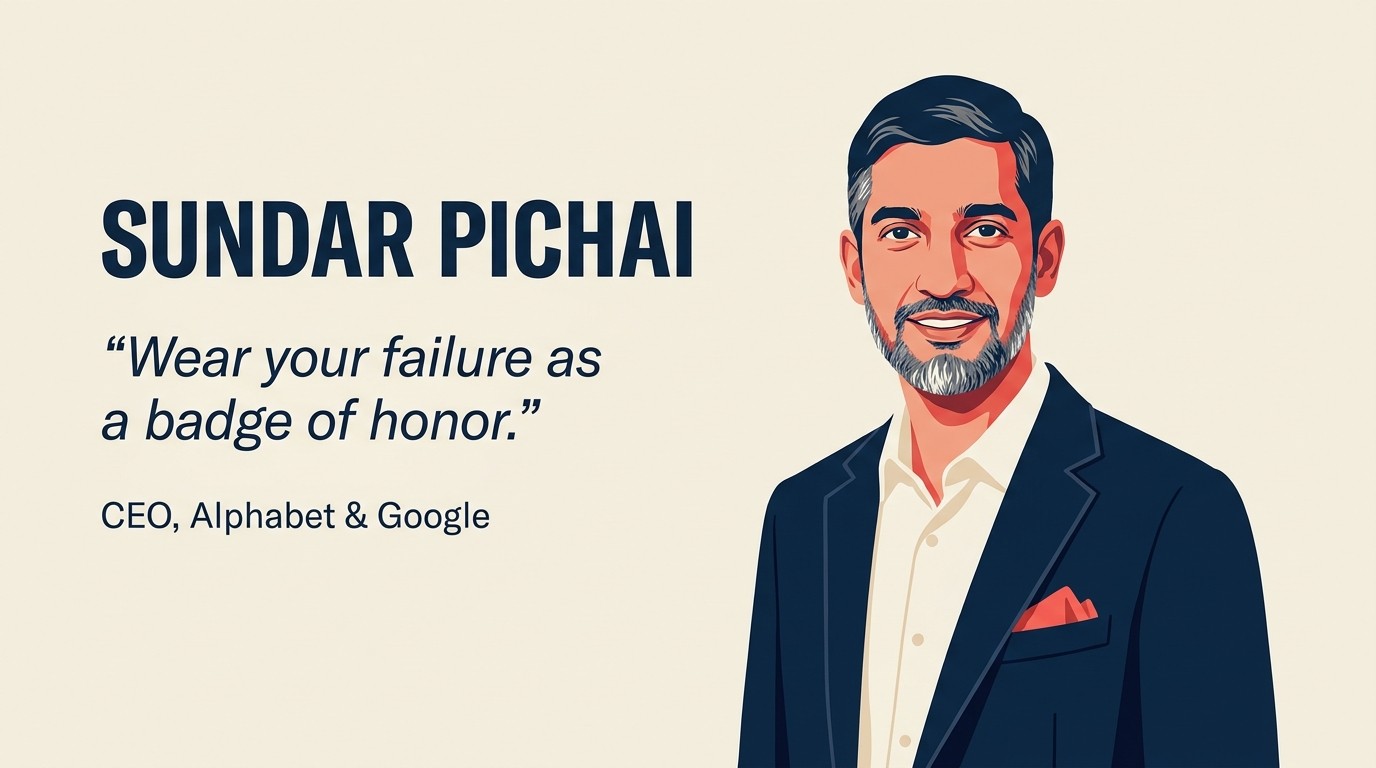
Sundar Pichai Leadership Style: The Quiet Engineer Who Runs the World's Attention Machine
Turn this article into takeaways for your work.


Each assistant summarizes the article only for you and suggests best practices for your work.
Key Facts: Sundar Pichai (born 1972, Madurai, Tamil Nadu, India) has been Google CEO since August 2015 and Alphabet CEO since December 2019. Before the CEO role, he led Chrome (launched 2008) and Android (2013), the two platforms that shaped mobile and web for a decade. Under his watch, Google's annual revenue grew from roughly $75B in 2015 to $307B in 2023. He holds an MS in Materials Science from Stanford and an MBA from Wharton, and worked at Applied Materials and McKinsey before joining Google in 2004. In 2023, he rebranded Bard into Gemini and merged Google Brain with DeepMind to anchor the company's AI response.
The Pichai Platform Operator Model
A leadership approach where the CEO wins authority by building foundational platforms (Chrome, Android) rather than by founder status, then governs a trillion-dollar portfolio through consensus and coordination instead of command. It trades raw speed for durable internal alignment, a model that works at infrastructure scale but strains under fast-moving competitive shocks.
Sundar Pichai didn't found Google. He joined in 2004 as a product manager working on a toolbar. What he did over the next decade was more interesting than founding: he made himself indispensable by building the things that mattered most, without the title to demand it.
Chrome launched in 2008 against an entrenched Internet Explorer and Firefox ecosystem. It was a direct threat to Microsoft and a political landmine inside Google, where the browser competed with existing partnerships. Pichai pushed it through. Chrome became the dominant browser globally. Then he took over Android. Then Google's core products. Then, in December 2019, all of Alphabet.
Now he manages 180,000+ employees, a company with $307 billion in annual revenue (2023), an AI arms race against OpenAI and Anthropic, and quarterly earnings that move global markets. He does this mostly without raising his voice, publicly humiliating anyone, or making the news for reasons unrelated to the business.
That quiet competence is both his biggest asset and the thing that gets him criticized most. The contrast with Sam Altman's public-first AI leadership style is instructive, where Pichai builds consensus internally, Altman shapes the narrative externally. Here's how to read it.
Leadership Style Breakdown
| Style | Weight | How it showed up |
|---|---|---|
| Consensus Builder | 60% | Builds alignment across large, skeptical internal audiences before moving. Navigated the Chrome browser pitch through Larry Page's skepticism and internal political resistance. Manages Alphabet's autonomous business units (Waymo, DeepMind, Verily) through coordination rather than command. |
| Platform Thinker | 40% | Consistently thinks in platform layers, not product features. Chrome wasn't a browser, it was the foundation for web apps. Android wasn't a phone OS, it was a distribution platform. His instinct is to ask what the infrastructure layer is before building the surface layer. |
The 60/40 split is important to understand correctly. Pichai isn't consensus-obsessed because he avoids conflict. He builds consensus because he's operating in a company where the most important people, the senior engineers who actually build the systems, won't follow directives they didn't participate in forming. That's the Google culture constraint, and he's worked with it effectively for 20 years. The weakness shows up when the situation requires ignoring internal consensus in favor of speed.
Key Leadership Traits
| Trait | Rating | What it means in practice |
|---|---|---|
| Technical depth | Exceptional | Pichai can sit in an engineering review and ask specific questions about architecture tradeoffs. He doesn't need to be the smartest person in the room, but he's credible enough that engineers take him seriously. That credibility is how he got Chrome approved against internal resistance, he could defend the technical thesis. |
| Organizational diplomacy | Very High | Managing the relationship between Google's core products and Alphabet's autonomous bets (Waymo, DeepMind, GV) requires permanent diplomacy across fiefdoms with different cultures and incentive structures. Pichai does this without regular public drama, which is operationally impressive at that scale. |
| Long-arc platform vision | High | The Chrome-to-Android-to-cloud-to-AI progression shows a consistent thesis about where computing platforms are going. He's been right about the major transitions often enough that his instinct for platform inflection points is credible, even when individual bets (Bard's January 2023 demo) misfire. |
| Speed under competitive pressure | Medium | This is the honest weakness. When ChatGPT launched in November 2022 and triggered an internal "code red" at Google, the response, rushing Bard to a public demo in February 2023, where it answered a factual question incorrectly and the stock dropped $100B in a day, showed the limits of a deliberation-heavy culture in a fast-moving competitive moment. |
The 3 Decisions That Defined Sundar Pichai as a Leader
1. Building Chrome as a Direct Threat to Internet Explorer, and Pitching It Internally to Skeptical Googlers
In 2006, when Pichai's team was developing what would become Chrome, Google had existing browser partnerships with Firefox that generated hundreds of millions in revenue. Building a competing browser risked those partnerships, invited competitive retaliation from Microsoft, and required Google to invest in an entirely new technology layer that wasn't its core business.
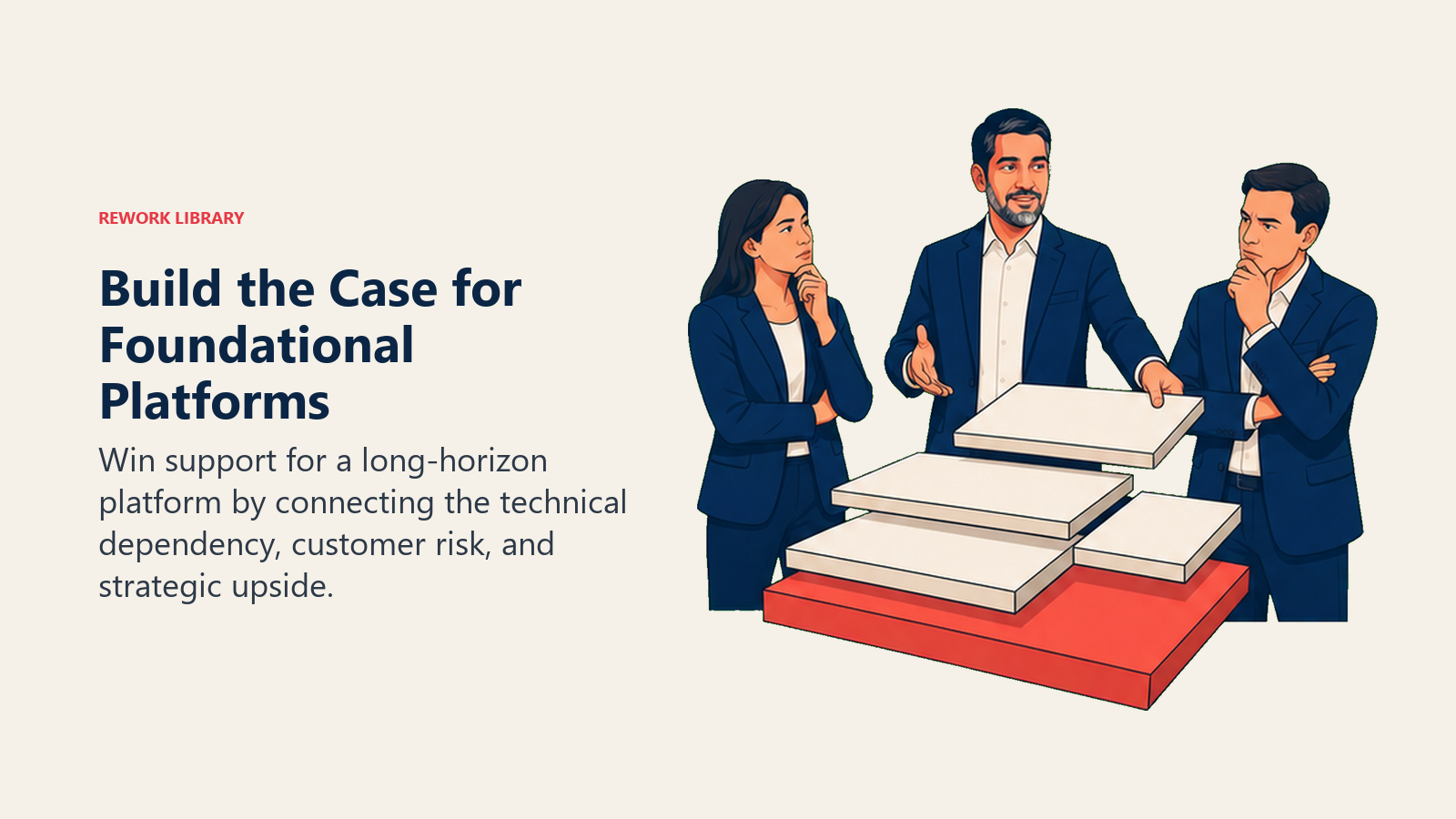
The internal resistance was real. Senior people at Google questioned why the company should build a browser at all. Pichai's approach wasn't to force it through with authority, he didn't have enough. He built a technical and strategic case that the browser was the critical bottleneck for web app performance. If Google's products were going to matter, the container they ran in had to be fast, stable, and under Google's influence.
Chrome launched in September 2008. It reached 1 billion active users in 2016 and currently holds roughly 65% of global browser market share. The Firefox partnership survived in modified form.
What this shows: Pichai won internal political fights by making the technical argument so strong that disagreement became untenable. That's a replicable approach. If you're pushing something controversial inside your organization, the question isn't how to win politically, it's whether your case is strong enough that the opposition runs out of ground to stand on.
2. Restructuring Google Under Alphabet Holding Company (2015)
In August 2015, Larry Page and Sergey Brin announced they were creating Alphabet, a new holding company that would sit above Google. Pichai became CEO of Google Inc. the core search, ads, YouTube, and Android business. Page became CEO of Alphabet, overseeing the "Other Bets": Waymo, Verily, DeepMind, Fiber, and others.
The restructuring had a specific logic. Google's core business was generating enormous cash flows but also creating governance complexity as it tried to run autonomous R&D bets (self-driving cars, life sciences, broadband access) alongside the advertising engine. The Alphabet structure separated those incentive systems.
Pichai's role in this was to run the business that actually produced the money while Page focused on longer-horizon bets. And then in December 2019, when Page and Brin stepped back, Pichai became CEO of Alphabet itself, inheriting the structure he'd been operating inside. Andy Jassy ran a similar playbook at Amazon Web Services before stepping up to the full CEO role, the pattern of internal operators inheriting founder-built companies is worth studying as a model.
The honest read on this: the "Other Bets" category at Alphabet has collectively lost tens of billions of dollars over the past decade and remains unprofitable as a group, though Waymo is now generating its first commercial revenues. The restructuring created cleaner governance without fully solving the underlying question of whether Alphabet's moonshots justify their cost. Pichai inherited that unresolved tension.
3. Google's AI Pivot in 2023 After ChatGPT Triggered a "Code Red"
When OpenAI released ChatGPT in November 2022, the internal reaction at Google was serious enough that executives reportedly described it as a "code red" moment. Google had been doing AI research longer than OpenAI existed, DeepMind and Google Brain had produced foundational work in large language models, including the transformer architecture that ChatGPT was built on.
But having the research wasn't the same as having a product. Google's response was Bard, rushed to a public demo in February 2023. The demo included a factual error about the James Webb Space Telescope. The stock dropped roughly $100 billion in market cap in a single day.
What followed was a genuine course correction. Pichai merged Google Brain and DeepMind, reorganized AI leadership, and pushed toward Gemini 1.5 and Gemini 2. Google's AI Search Overviews launched in 2024. By late 2024, the perception gap between Google's AI capabilities and OpenAI's had narrowed significantly, even if the narrative damage from the Bard launch persisted.
The leadership lesson here is uncomfortable but real: Pichai's consensus-building culture delayed the first public AI response past the optimal moment. The research was there. The organizational readiness wasn't. That's a specific failure mode that affects any large organization led by deliberation rather than speed. Understanding it helps you recognize when your own culture's strengths are about to become liabilities.
What Sundar Pichai Would Do in Your Role
If you're a CEO running a 50-200 person company, the Chrome model is directly applicable. Pichai won internal support for Chrome by making the strategic case so complete that opposition became hard to sustain. Before your next difficult internal initiative, ask: is my case actually airtight, or am I relying on authority to push it through? Authority wins battles. Airtight cases build alignment that survives your tenure.
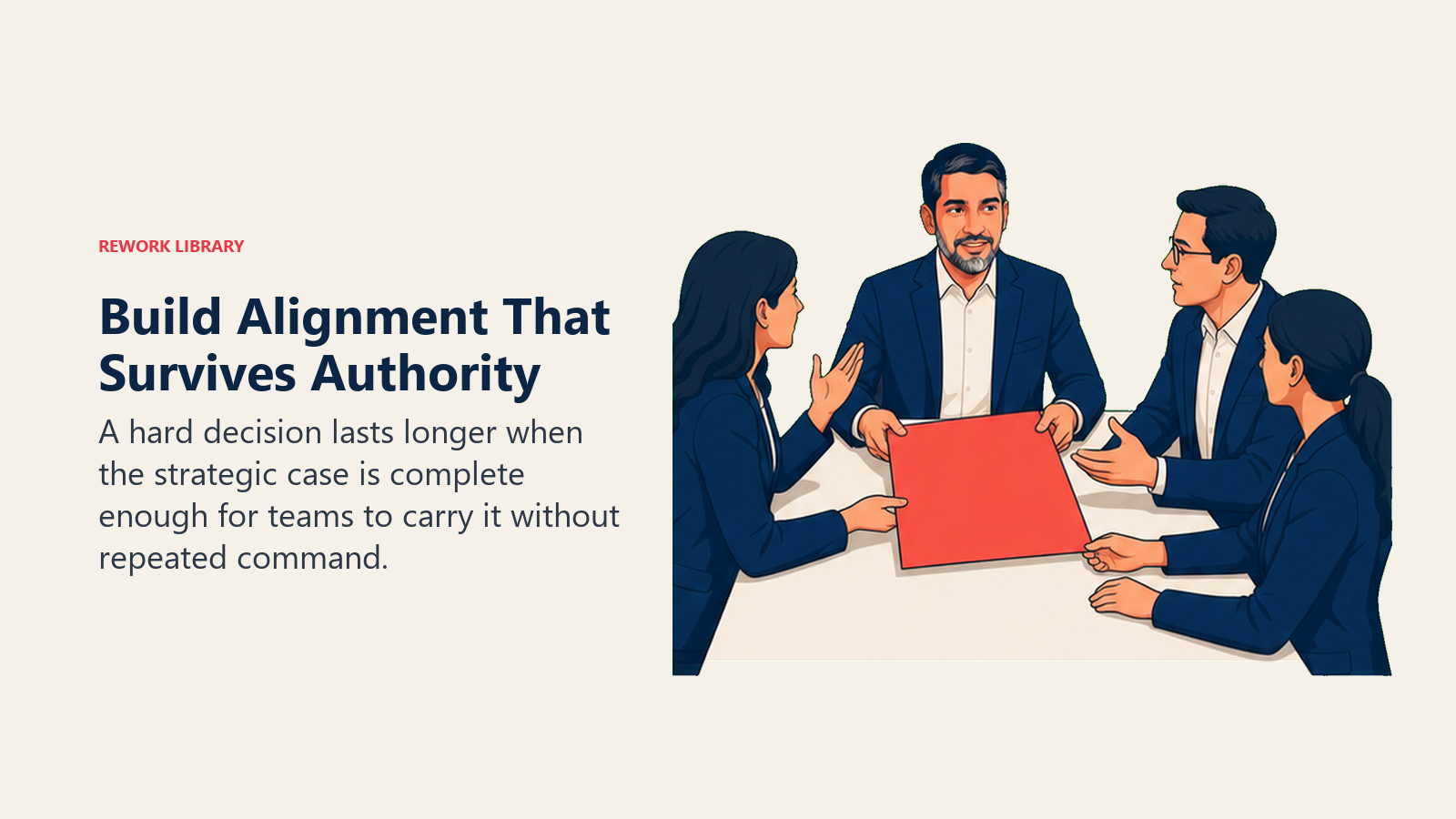
If you're a COO or operations leader, look at Pichai's platform infrastructure instinct. He consistently asks what the layer below the product is. For your operations, the equivalent is asking what the process infrastructure is below your current execution. Most operational problems at scale are infrastructure problems that got papered over at smaller scale. Where are you running on improvisation instead of system?
If you're a product leader, the Android lesson is worth studying. Taking over Android in 2013 meant inheriting a product that was already huge (1 billion activations by 2014) with a massive developer ecosystem. Pichai's contribution was maintaining the platform's openness while pushing the hardware OEM relationships toward better baseline quality. The lesson: knowing what not to change in a working system is as important as knowing what to fix.
If you're a sales or marketing leader, the Bard mistake is your cautionary tale. Speed to market with something half-ready can cost you more in perception than the delay would have. When a competitor launches and your instinct is to respond publicly before you're ready, think about the $100B stock drop. A polished response two months later often outperforms a rushed response this week.
Pichai's Platform Playbook Through a Rework Lens
Pichai operates at a scale most leaders never see: 180,000 people, seven product surfaces that each serve a billion users, and autonomous business units that each run like their own company. His consensus-at-scale model is built for that environment, where the cost of a misaligned directive compounds across tens of thousands of engineers, and where platform decisions (Chrome, Android, Gemini) need a decade of coherent investment to pay off. Most teams don't have that problem. What you do have is the same underlying mechanic in miniature: getting a 10, 50, or 200-person organization aligned on a hard call without turning every decision into a committee. That's where Rework helps. Shared pipelines, visible task ownership, and cross-team project views replace the meetings Pichai uses to build consensus at Google, so your team gets alignment at human speed, not trillion-dollar-company speed.
Notable Quotes and Lessons Beyond the Boardroom
Pichai's public communication style is notably careful, which makes his candid moments more valuable. On the Bard launch, he's acknowledged it moved too fast relative to quality. On AI risk more broadly, he's been consistent: "AI is one of the most profound things we're working on as humanity. It's more profound than fire or electricity." That's not a throwaway line, it's a signal about how he's prioritizing the AI investment internally.
On management, he's said: "I think it's really important to have empathy. I lead by trying to understand people's problems first." This is consistent with how he actually operates. His reputation inside Google, even among people who've criticized the speed of AI response, is that he listens carefully and remembers what people told him.
His promotion from Google product manager to Alphabet CEO over 15 years represents one of the most studied internal career arcs in tech. The pattern: take high-visibility, cross-functional problems, build credibility with the people who actually build things, and expand scope incrementally. No dramatic moves. No public positioning. Just consistent execution on the next most important thing. Tim Cook followed a nearly identical arc at Apple, Cook's operator-to-CEO transition is the closest parallel to Pichai's trajectory in the industry.
Where This Style Breaks
Pichai's consensus-first approach is genuinely effective inside a $300B+ revenue company with 180,000 employees where the wrong fast move costs billions and the culture requires buy-in to ship anything. It breaks in two specific situations.
When a competitor moves faster than the deliberation cycle allows, you get the Bard problem: the research was ready, the product wasn't, and the culture's strengths became a liability in real-time. Satya Nadella's cloud pivot at Microsoft shows how a large-company CEO can reorient a deliberation-heavy culture toward speed when competitive pressure demands it, a lesson Pichai has been working through since 2023. And when a company needs to kill something significant, a product, a division, an initiative that has internal champions, consensus leadership makes the kill shot very hard to deliver cleanly. Google's "Other Bets" portfolio is full of projects that have been slowly winding down for years without a clean decision point. That's what institutional consensus looks like when it's time to stop something.
Frequently Asked Questions about Sundar Pichai's Leadership
Who is Sundar Pichai?
Sundar Pichai (born 1972 in Madurai, Tamil Nadu) is the CEO of Google since August 2015 and CEO of Alphabet since December 2019. He joined Google in 2004 as a product manager and led Chrome and Android before becoming CEO. He holds an MS in Materials Science from Stanford and an MBA from Wharton, with prior experience at Applied Materials and McKinsey.
How did Pichai become Google CEO?
Pichai rose through Google by leading high-visibility, cross-functional projects. He pushed Chrome to market in 2008 against internal resistance, then took over Android in 2013, and then Google's core products. In August 2015, when Larry Page and Sergey Brin created Alphabet as a holding company, Pichai became CEO of Google. In December 2019, Page and Brin stepped back and he became CEO of Alphabet as well.
How has Pichai grown Alphabet's revenue?
Under Pichai, Google's annual revenue grew from roughly $75 billion in 2015 to $307 billion in 2023, more than four times in eight years. Growth came from search advertising, YouTube, Google Cloud, and Android's distribution dominance, rather than from a single new business line.
How is Google responding to the AI shift under Pichai?
After ChatGPT launched in November 2022, Pichai declared an internal "code red" and rushed Bard to a public demo in February 2023, which made a factual error and cost roughly $100 billion in market cap in one day. He then merged Google Brain and DeepMind, rebranded Bard as Gemini, and pushed Gemini 1.5 and Gemini 2 to production. AI Overviews launched in Search in 2024.
What is Pichai's leadership style?
Pichai is a consensus-first platform operator. He builds internal alignment before moving, thinks in platform layers rather than single products, and leads through credibility with engineers rather than charisma or public positioning. The style is effective at trillion-dollar scale but slow under competitive shocks, as the Bard launch showed.
What can executives learn from Sundar Pichai?
Three transferable lessons: win internal political fights by making the technical case airtight rather than leaning on authority; think in platforms (what's the layer below the product?) before thinking in features; and recognize when your culture's strengths, like deliberation, are about to become liabilities in a fast-moving competitive moment.
Learn More
If this profile shaped how you're thinking about leadership, these articles go deeper on the underlying ideas:
- Platform Thinking: How to Build Products That Become Infrastructure
- Managing at Scale: Leadership Lessons from 10,000+ Person Organizations
- AI Strategy for Business Leaders: What CEOs Need to Understand Now

On this page
- The Pichai Platform Operator Model
- Leadership Style Breakdown
- Key Leadership Traits
- The 3 Decisions That Defined Sundar Pichai as a Leader
- 1. Building Chrome as a Direct Threat to Internet Explorer, and Pitching It Internally to Skeptical Googlers
- 2. Restructuring Google Under Alphabet Holding Company (2015)
- 3. Google's AI Pivot in 2023 After ChatGPT Triggered a "Code Red"
- What Sundar Pichai Would Do in Your Role
- Pichai's Platform Playbook Through a Rework Lens
- Notable Quotes and Lessons Beyond the Boardroom
- Where This Style Breaks
- Learn More