Keith Rabois Leadership Style: The Operator Who Bets on Contrarian Theses
Turn this article into takeaways for your work.


Each assistant summarizes the article only for you and suggests best practices for your work.
Key Facts: Keith Rabois is a member of the "PayPal Mafia" with executive roles at PayPal, LinkedIn, Slide, Square (COO, 2010–2013), and Opendoor (co-founder, executive chairman). He served as a partner at Khosla Ventures and as general partner at Founders Fund (2019–2024, backing Affirm and Ramp), then returned to Khosla. He later founded OpenStore, an e-commerce rollup for Shopify merchants. A Stanford Law graduate, Rabois is known as a contrarian investor and operator who publicly challenges consensus views on hiring, management, and markets.
Keith Rabois has been at the operating table of more $1B+ companies than almost anyone in Silicon Valley. PayPal COO. Square COO. Slide COO. Opendoor co-founder and executive chairman. Partner at Khosla Ventures (twice) and Founders Fund, where he led early investments in Affirm and Ramp.
He's not a founder-visionary. He's the person founders call when they need someone who can build the org, install the management layer, and tell them what's broken about their company with blunt precision. In the PayPal Mafia generation, that role put him alongside Reid Hoffman, another PayPal alum who moved between operating and investing, though Hoffman's approach ran on network-building where Rabois's runs on blunt internal pressure. His reputation runs equally on operational results and on intellectual honesty that often doesn't soften for an audience.
What makes Rabois worth studying is the combination: a COO who thinks like an investor and an investor who thinks like an operator. He moves between the two modes not as career pivots but as an integrated practice. And the frameworks he's articulated publicly (editing versus writing, barbell hiring, transparent investment thesis) are among the most practically useful operator concepts to come out of the PayPal Mafia generation.
This profile looks at what he actually built, how the model works, and where it fails.
Leadership Style Breakdown
| Style | Weight | How it showed up |
|---|---|---|
| Contrarian Operator | 55% | Rabois has a distinctive operational philosophy: most startup problems aren't execution problems, they're hiring and management problems. That means the intervention for a struggling company usually isn't a new strategy or a process redesign, it's replacing the wrong people in key roles with the right ones. He's said publicly that he'd rather have 10 exceptional people producing outsized results than 50 average ones producing mediocre output. That view is common in theory and rare in practice, because hiring decisions involve social costs that most leadership teams prefer to avoid. Rabois doesn't prefer to avoid them. |
| Talent Density Maximizer | 45% | Across PayPal, Square, and his VC investments, the constant pattern is deliberate concentration of exceptional people rather than headcount growth. He's consistently argued that the performance gap between exceptional and average hires is enormous and that the cost of a bad hire compounds through the organization, bad hires make poor decisions, create management overhead, lower the hiring bar for the next round, and repel the exceptional people who don't want to work in a diluted environment. This isn't an abstract philosophy for Rabois, he applies it to his own team selections and has passed on companies he otherwise liked because of concerns about the founding team's caliber. |
The 55/45 split matters because Rabois's contrarian instincts and his talent obsession are related. Contrarian theses require exceptional people to execute. Average teams produce average outcomes even with differentiated ideas. His operator playbook and his investor thesis are the same model applied at different stages.
Key Leadership Traits
| Trait | Rating | What it means in practice |
|---|---|---|
| Willingness to say publicly what others only say privately | Exceptional | Rabois posts on X (formerly Twitter) at a volume and specificity that most COOs and VCs avoid, views on immigration policy, housing reform, tech regulation, VC dynamics, and which companies he thinks are well or poorly run. That public posture generates controversy and deal flow simultaneously. It's a transparency strategy that only works if you're willing to own the reputational surface area. He is. But most operators can't afford the exposure, and some of what he's said has generated sustained criticism that follows him across career moves. |
| Obsession with hiring density over headcount | Exceptional | Rabois has articulated this in multiple forum talks and interviews: the job of a COO is not to scale headcount, it's to maintain quality density as the org grows. He argues that most startups fail not because they ran out of money or faced a bad market but because they diluted their team quality as they scaled. Every mediocre hire lowers the standard for the next hire, lowers the quality of decisions, and makes it harder to keep exceptional people engaged. His practical implication: slow the hiring bar down before you slow the hiring pace down. |
| Pattern recognition across PayPal/Square/Opendoor | Very High | Having operated at COO level through three major scaling situations, PayPal's 2000-2002 growth period, Square's pre-IPO build, and Opendoor's launch and expansion, Rabois has a comparative framework for what early-stage operational breakdowns look like. He knows what it looks like when a company is over-managed, under-structured, or building the wrong management layer at the wrong time. That pattern recognition is the core of his value as both an operator and an investor. |
| Belief that most operational problems are management problems | High | This is the most practically useful and most uncomfortable part of his framework. When something is going wrong in an organization, shipping velocity is slow, quality is declining, customer satisfaction is dropping, the conventional response is to diagnose the process and fix it. Rabois's response is to ask whether the right person is running that function. Often the answer is no, and the process problem disappears when you change the person. That's hard to hear and harder to act on. But it's frequently correct. |
The Barrels vs. Ammunition Doctrine (The Rabois Talent Model)
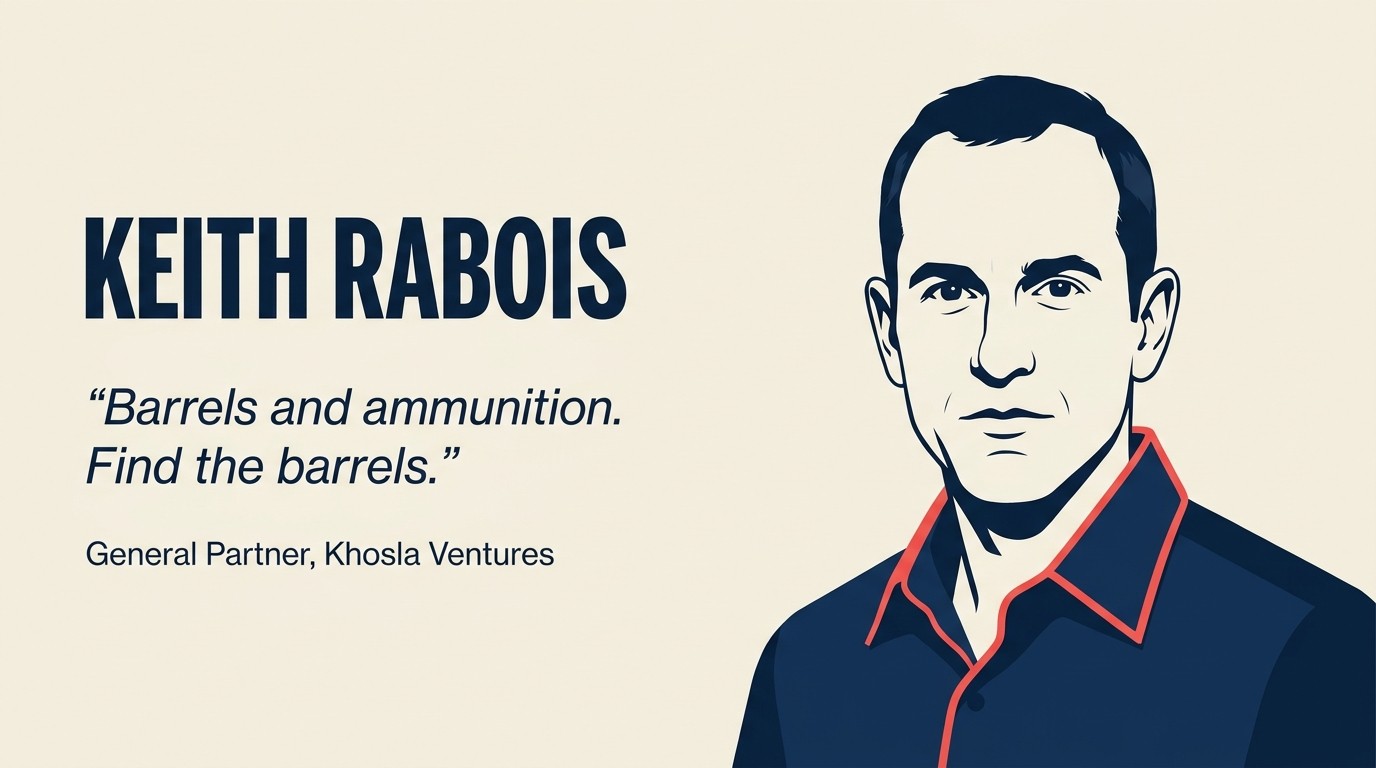
Rabois divides every employee into two categories: "ammunition" (people who execute tasks well but need direction) and "barrels" (people who can independently identify what needs to be done, assemble the people to do it, and ship the outcome end-to-end). The doctrine holds that a company's growth is capped by the number of barrels it has, not by headcount, you can always hire more ammunition, but barrels are rare and disproportionately responsible for breakthrough work. The practical mandate: identify barrels early, give them authority faster than the org chart suggests, and never waste them on ammunition work.

The 3 Frameworks That Defined Keith Rabois
1. Editing vs. Writing
The editing-not-writing framework is Rabois's most cited contribution to COO theory. The concept: the job of an operator in a founder-led company is not to generate the organization's output. It's to improve the output that the organization is already generating.
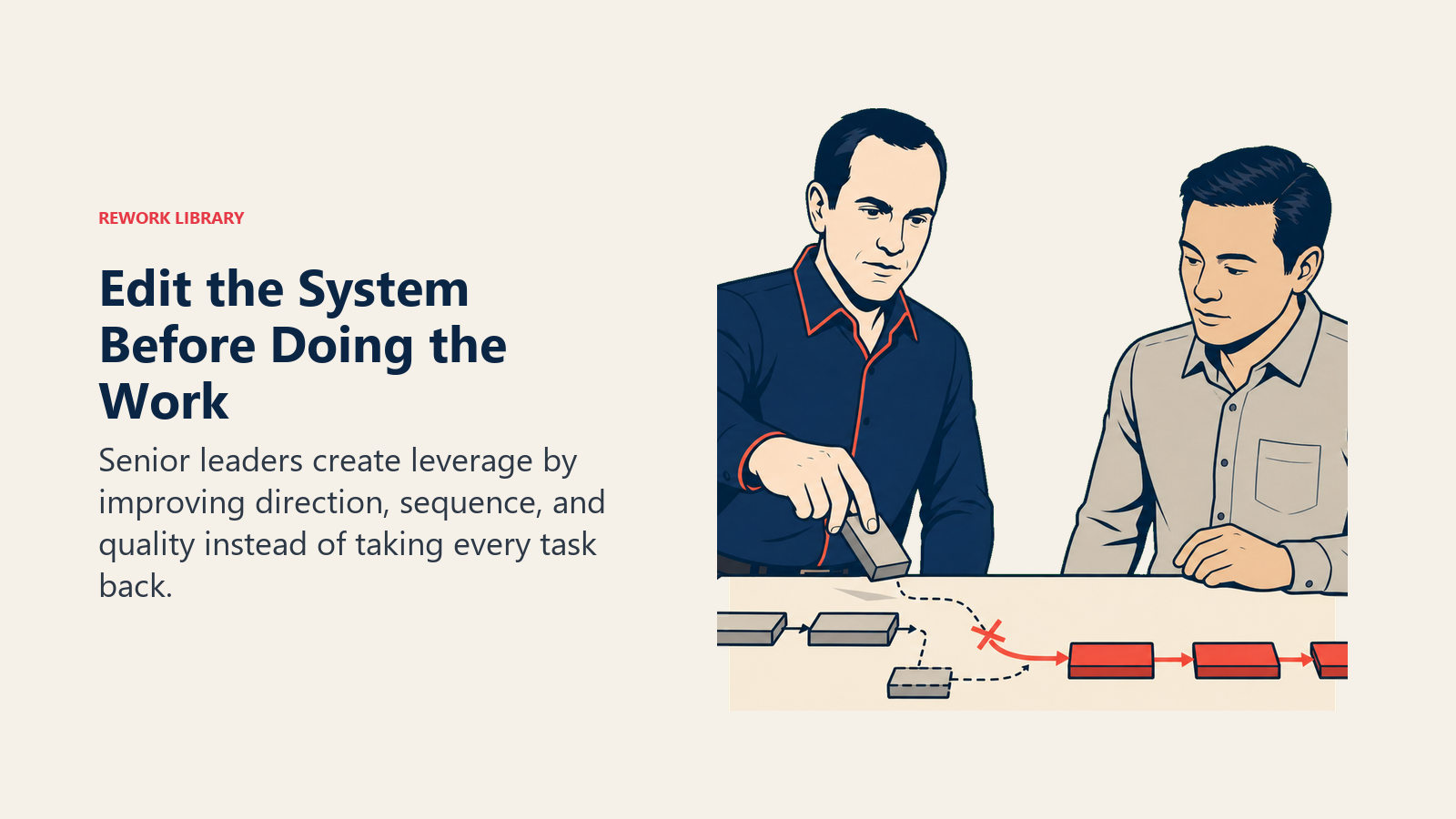
A writer generates content from scratch. An editor takes drafts and makes them better: sharpening the argument, cutting what doesn't work, ensuring the logic is sound, and improving the quality of what's there. The editor doesn't replace the writer; the editor's value is proportional to the quality of writing being produced.
Translated to organizational management: your job as a COO or senior operator is to find people who can write, people who can generate high-quality decisions, strategy, product direction, and cultural signals, and then edit their work to be better. Not to generate those things yourself. If you're writing rather than editing, you're doing the wrong job and have probably hired the wrong people.
The framework has a corollary: you can only edit well if you can distinguish good writing from bad writing. An editor who can't identify quality can't improve quality. That means the COO role requires genuine domain expertise. You have to be good enough at what your teams do to know when their work is excellent and when it isn't. This is why Rabois is skeptical of generic "professional COOs" who move across industries based on process skills alone. Domain fluency is prerequisite to editing.
In practice, editing looks like: sitting in on a product review and redirecting the strategic framing without taking over the product decisions. Reviewing a hiring slate and raising the bar without doing the recruiting. Reading a strategy memo and asking the questions that expose the gaps without writing the strategy yourself. The edits compound over time, raising the quality of the organization's thinking without creating a single-point dependency on the operator's personal judgment.
2. Barbell Hiring
Rabois's hiring philosophy runs on what he calls a barbell: exceptional people in critical roles at both ends, with as thin a middle layer as possible. He's argued in multiple forums that most scaling companies make the mistake of building a broad middle: competent, reliable managers who execute reasonably but don't produce the kind of work that creates competitive advantage.
The practical implication is that Rabois would rather have 3 exceptional people in a function than 8 average ones. The exceptional 3 produce more, make better decisions, and attract the next round of exceptional hires. The 8 average ones create management overhead, require more direction, produce more noise in the operational signal, and lower the hiring bar for whoever joins the team next.
This is controversial because it implies a willingness to run understaffed in the short term, to leave roles unfilled rather than fill them with B-players who slow things down. Most operators find that position untenable under growth pressure. Rabois's response is that short-term understaffing is less damaging than long-term dilution of team quality. The headcount pressure feels urgent. The talent density problem compounds silently.
At Square, this philosophy showed up in how Rabois approached building the COO function. He didn't build a large operations team. He built a small, very good one, and insisted on high standards for every addition. At Khosla and Founders Fund, it showed up in investment selectivity: he backed fewer companies more deeply rather than spreading attention across a large portfolio of bets.
The limit of barbell hiring is that "exceptional" is hard to define consistently across functions and career stages, and the model works best in early-stage environments where roles are clear and founders can calibrate quality directly. In large organizations with hundreds of functions, the definition of exceptional varies too much to apply a single standard.
3. The Transparent Investor Thesis
Rabois's public persona on X is an extension of an investment philosophy: he publishes his views on companies, founders, markets, and ideas as a form of intellectual transparency that functions as both thought leadership and deal sourcing. If you want to understand what Rabois thinks is worth building, you can read his posts and form a view. That transparency means founders who share his thesis find him; founders who don't, self-select out.
This is unusual in venture capital, where most partners maintain careful opacity about investment theses, portfolio company views, and market opinions. The conventional logic is that public controversy reduces deal flow and creates portfolio company complications. Rabois's bet is the reverse: that intellectual transparency attracts founders who are themselves willing to hold and defend contrarian views, which is a selection filter for the kind of founder he wants to back.
The thesis has produced demonstrable results. Affirm (backed at Khosla) was a contrarian fintech bet when consumer BNPL wasn't an established category. Ramp (backed at Founders Fund) was a corporate card thesis when the market appeared saturated by Brex and others. His SV peer set on the payments-and-fintech frontier includes Patrick Collison, who built Stripe as a founder-operator rather than the operator-investor model Rabois runs, and Brian Armstrong, whose crypto-era Coinbase required a similar willingness to bet on infrastructure plays that the mainstream dismissed as speculative. On the pure-VC side, Sam Altman represents the contrarian-thesis tradition from the YC angle: back what looks wrong to most people, hold the conviction longer than comfortable. Both became major companies. Rabois was early and public about both.
The risks are real: public contrarian views generate controversy that follows him and, sometimes, his portfolio companies. His commentary on immigration policy, housing, and technology regulation has made him a polarizing figure in ways that affect how his portfolio companies are received in some markets. The transparency strategy creates advantages in deal sourcing and disadvantages in institutional relationships.
What Keith Rabois Would Do in Your Role
If you're a CEO, Rabois's first question for you is about the management layer you've built. Walk through your top 10 direct and indirect reports. For each one, can you say they're exceptional at their job (not good, not solid, not reliable, but exceptional)? Be honest. If the honest answer is "most of them are pretty good but not exceptional," his view is that you've built an org that's capped at pretty-good outcomes. You may need to make changes in roles that feel stable and functional but aren't producing the output you actually need. That's a hard conversation to have with yourself before you can have it with your team.
If you're a COO, the editing framework is worth stress-testing against your actual daily work. Write down the last 5 significant decisions or outputs you personally produced in the past two weeks. For each one: were you editing someone else's work, or were you writing from scratch? If most of them are writing rather than editing, you've either hired people who can't write without you (a talent density problem) or you've built a role for yourself that scales with your personal capacity rather than with your team's. Both are organizational problems disguised as productivity.
If you're a product leader, Rabois's pattern-recognition framework is useful for diagnosing your roadmap velocity. When your team is consistently shipping slower than it should, or when quality is declining despite reasonable headcount, before you reach for a process fix, ask the management question: is the right person leading this function? Not whether they're a good person or a valued colleague. Whether they're exceptional at this specific role at this specific moment. The process fix is faster and less socially costly. It's also frequently the wrong fix.
If you're in sales or marketing, the barbell model suggests thinking carefully about the composition of your revenue-generating team. A smaller group of exceptional enterprise reps producing large, strategic deals often outperforms a larger group of average reps running high-volume transactional cycles, not because enterprise is always the right model, but because talent density in sales produces disproportionate results at the top of the barbell. Look at your top 20% of performers and ask what would happen if you concentrated resources, territories, and support on them rather than distributing evenly. The distribution model feels fair; the concentration model produces better outcomes.
The Rework Analysis
Rabois's model depends on one hard operational capability: spotting the 10x operators (the "barrels") inside an organization and removing friction between them and the work. That only happens when leadership has real visibility into who's shipping what, who's editing vs. writing, and where talent density is thinning. Without that signal, contrarian hiring becomes a gut call made in a vacuum.
Rework is built for exactly this layer, unified pipeline, work, and team visibility for high-velocity orgs that refuse to drown barrels in status-meeting overhead. Rework's Sales Engine starts at $69/month and its Process Engine at $99/month, billed yearly with 5 seats included, so an operator running a Rabois-style lean team can instrument output quality across functions without deploying a four-tool stack. The point isn't the tooling, it's that talent-density decisions get sharper when the output data is honest.
Notable Quotes & Lessons Beyond the Boardroom
"A COO's job is to be an editor, not a writer." Rabois said this in a Stanford lecture that's been widely circulated, and it's the single clearest articulation of the COO role he's produced. The line works because it captures both what the job is and what it isn't. Most operators who hear it recognize that they spend too much time writing.
"If you think your job is to build a big team, you've already failed." He's made this argument in multiple contexts, and it's the most direct version of his talent density thesis. Headcount is a metric that flatters operators who aren't generating results. It looks like progress, creates the feeling of building something, and defers the reckoning about whether the team is actually producing. Rabois's view is that the metric that matters is output quality, and that headcount growth beyond what's required to produce that output is organizational debt.
The honest account of Rabois's career includes the rotations (operator to investor to operator to investor) that make his career less legible than a straight-line leadership trajectory. The Opendoor story in particular: co-founded in 2014, took the company public via SPAC in 2020 at roughly $4.8B, watched the stock collapse ~90% during the 2022 rate spike as the iBuying model faced an existential stress test. His thesis was right about the direction of the market and wrong about the macro timing. That's a useful reminder that pattern recognition from PayPal and Square doesn't transfer automatically to a market as macro-sensitive as residential real estate. The barbell hiring model works in tech; it doesn't insulate you from interest rate movements.
Where This Style Breaks
Rabois's barbell-hiring model works in early-stage environments with clear roles and strong founders who can calibrate quality directly. It gets harder in large organizations where "exceptional" is hard to define consistently across hundreds of functions and career levels. His contrarian public commentary has generated both substantial deal flow and sustained controversy. Not every operator can afford the reputational surface area, and some of his political commentary has created complications that extend beyond his own career. His multiple rotations between operating and investing roles raise questions about sustained institutional commitment that founders considering him as a board member or exec need to think through. And Opendoor's near-collapse during the 2022 rate spike showed that even experienced operators with strong thesis conviction can underestimate macro risk when the thesis is compelling enough to override caution.
Frequently Asked Questions about Keith Rabois's Leadership
Who is Keith Rabois?
Keith Rabois is a Silicon Valley operator and investor, a member of the "PayPal Mafia," former COO at Square (2010–2013), exec at PayPal, LinkedIn, and Slide, co-founder of Opendoor, founder of OpenStore, and partner at both Khosla Ventures and Founders Fund. He is a Stanford Law graduate known for contrarian views on hiring, management, and markets.
What is the 'barrels vs ammunition' framework?
It's Rabois's talent model that divides employees into "barrels" (people who can independently identify problems, organize resources, and ship outcomes end-to-end) and "ammunition" (strong executors who need direction). His argument is that company growth is capped by the number of barrels, not by headcount, so identifying and empowering barrels early is the highest-leverage thing a leader can do.
What is Rabois's PayPal Mafia connection?
Rabois worked at PayPal in the early 2000s alongside Peter Thiel, Reid Hoffman, Elon Musk, Max Levchin, and David Sacks. That group, later dubbed the "PayPal Mafia," went on to found or lead companies including LinkedIn, YouTube, Tesla, SpaceX, Palantir, Yelp, and Yammer. Rabois's operator career has been closely interwoven with this network ever since.
What is Rabois's contrarian hiring approach?
Rabois argues that 3 exceptional people outperform 8 average ones, and that most operators fail by over-hiring the middle of the talent curve. He advocates running deliberately understaffed rather than diluting team quality, because every mediocre hire lowers the bar for future hires and drives away exceptional people who won't tolerate a diluted environment.
What is OpenStore?
OpenStore is a company Rabois co-founded in 2021 that acquires and operates direct-to-consumer Shopify merchants at scale. The thesis is that fragmented e-commerce brands benefit from centralized operations, data science, and capital allocation, applying a rollup model to the long tail of Shopify.
What can startup founders learn from Keith Rabois?
Three things: first, that most "process problems" are actually management problems disguised, the fix is often the person, not the workflow. Second, that your job as a senior operator is editing, not writing, you should be improving the output of exceptional people, not generating output yourself. Third, that talent density is a compounding asset; every hire either raises or lowers the ceiling of the org, and there's no neutral hire.
For related reading, see Reid Hoffman Leadership Style, Sam Altman Leadership Style, Patrick Collison Leadership Style, Brian Armstrong Leadership Style, and Gwynne Shotwell Leadership Style.

On this page
- Leadership Style Breakdown
- Key Leadership Traits
- The Barrels vs. Ammunition Doctrine (The Rabois Talent Model)
- The 3 Frameworks That Defined Keith Rabois
- 1. Editing vs. Writing
- 2. Barbell Hiring
- 3. The Transparent Investor Thesis
- What Keith Rabois Would Do in Your Role
- The Rework Analysis
- Notable Quotes & Lessons Beyond the Boardroom
- Where This Style Breaks