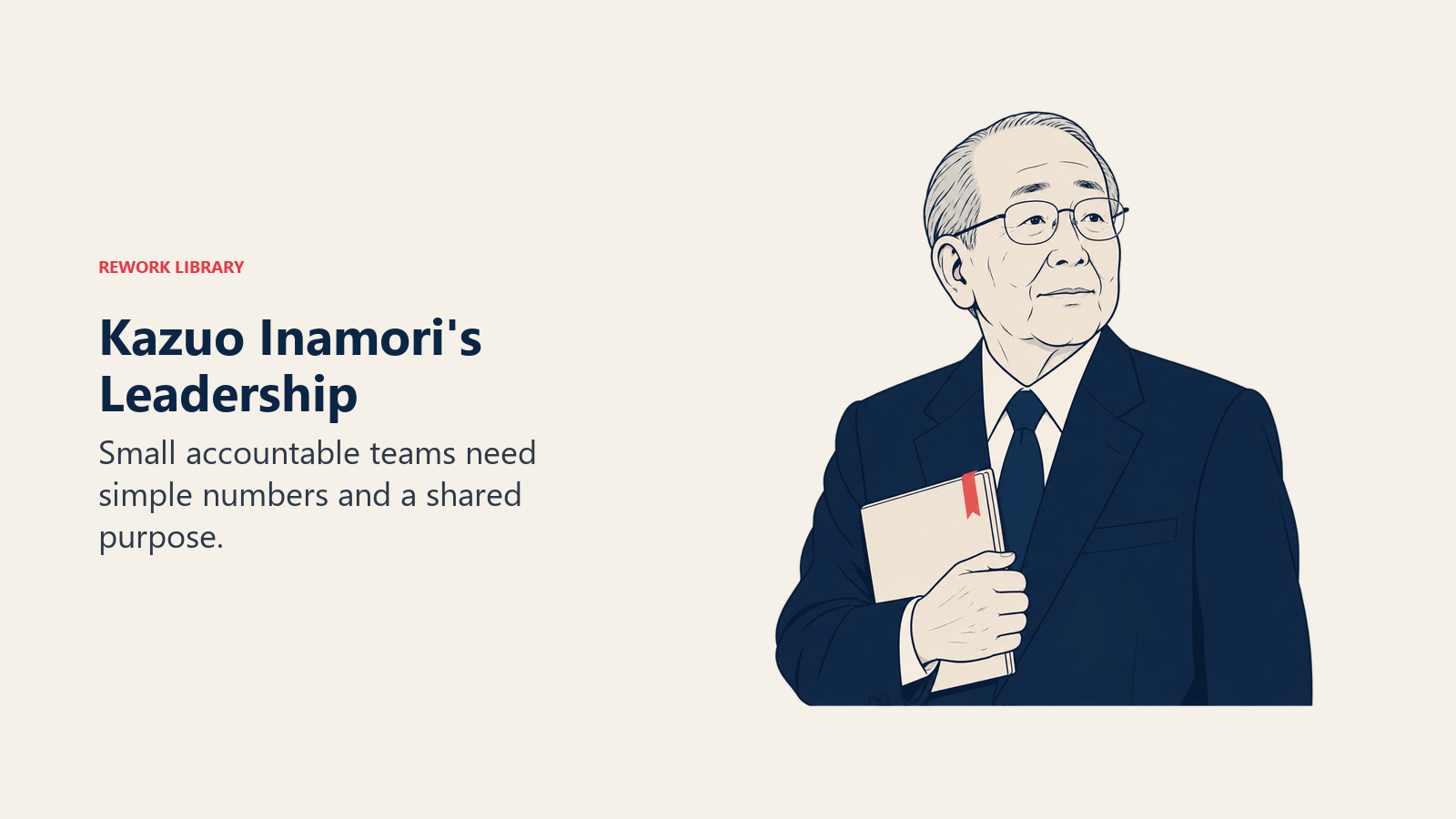
Kazuo Inamori's Leadership: Amoeba Management
Turn this article into takeaways for your work.


Each assistant summarizes the article only for you and suggests best practices for your work.
Key Facts: Kazuo Inamori (born January 30, 1932, in Kagoshima City, on Japan's southern island of Kyushu) graduated from Kagoshima University in 1955 with a degree in applied chemistry, then joined Shofu Industries, a Kyoto insulator manufacturer, where a dispute with management pushed him to resign in 1958. In April 1959 he founded Kyoto Ceramic Co., Ltd., now Kyocera, with a 3-million-yen investment from acquaintances, serving as its president, then chairman, until 1997. A labor dispute on April 29, 1961, when eleven young employees submitted a written demand for guaranteed raises and threatened to quit together, pushed him to define the company's purpose in writing for the first time, a statement he formally published as the first volume of the Kyocera Philosophy in 1967. In 1984 he founded DDI, later merged into KDDI, to compete against NTT's telecom monopoly, the same year he established the Inamori Foundation and its Kyoto Prize, and between 1983 and 2019 he taught roughly 15,000 business owners worldwide through his Seiwajuku management school. He was ordained a lay priest in the Rinzai Zen tradition at Enpuku-ji temple in September 1997. On February 1, 2010, at age 78 and with no airline experience, he became chairman of Japan Airlines without pay after the carrier's January 2010 bankruptcy filing; JAL reported an operating profit of 188.4 billion yen (about $2.35 billion) in the fiscal year following the completion of its restructuring and relisted on the Tokyo Stock Exchange on September 19, 2012. He died at his home in Kyoto on August 24, 2022, at age 90. His book Amoeba Management: The Dynamic Management System for Rapid Market Response was published in English in 2012.
The Household Budget Doctrine
The Household Budget Doctrine is Inamori's operating premise that employees behave like owners only when they can see, in numbers simple enough to check without an accountant, whether their own piece of the company made money or lost it that month. He built the entire mechanism of amoeba management around that one requirement. Shrink a company into units small enough that a single leader and a handful of people can read the whole picture. Hand every unit an internal customer and an internal supplier so it has a market price for what it makes and a market price for what it buys. Score it with a report he designed to be "as easy to understand as a household budget." The doctrine is not really about accounting technique. It is about refusing to let ordinary employees experience the business only through someone else's summary of it, and he applied that same refusal three separate times, in ceramics, in telecom, and in aviation.
Inamori is usually introduced through the philosophy rather than the mechanism: the Zen ordination, the nightly self-examination, the 78 sayings distilled into the Kyocera Philosophy. All of it is true, and none of it is why his three companies are worth studying as a matter of leadership craft. What he actually built, three separate times, was the same operating system: split the organization small enough that hiding a bad number becomes almost physically impossible, then let that visibility do the disciplining work a manager's authority usually has to do instead.
That is a different kind of studying than the philosophy chapter usually gets. Taiichi Ohno built the Toyota Production System around making a defect impossible to hide on the factory floor. W. Edwards Deming argued that workers needed the same statistical picture their managers had, not a filtered version of it. Inamori built a business version of the same instinct, a system where a bad decision shows up in this month's numbers instead of next year's audit, sized it for sales floors and service teams as much as production lines, and then exported it into two industries, telecom and aviation, he had never worked in.
The clearer parallel is to Konosuke Matsushita, whose 1965 lecture on the "Dam Approach to Management" left a lasting mark on the younger Inamori, and whose own company ran on an equally explicit moral code. Soichiro Honda, another postwar Japanese founder-engineer, built his code around engineering risk-taking rather than accounting transparency. What Inamori did differently from both of them was write his code down as an actual published document, then build a measurement system whose entire purpose was making that code checkable in real, monthly numbers rather than trusted on faith.
An amoeba unit is usually small, sometimes fewer than ten people, built around one natural boundary: a single production process, a single sales team, a single customer account. Each is treated as an independent profit-and-loss center that can buy and sell with other amoebas inside the company, so the unit that finishes a part pays an internal price to the unit that made the part before it, and every unit's leader can see whether the price it is charging, or paying, leaves it in the black. The unit's own scorecard is hourly efficiency, value added divided by hours worked, posted monthly with the discipline a household applies to its own budget rather than waiting for a quarterly close. The system's later academic study put the design goal directly: each amoeba unit is expected to operate independently and to develop its own ways of working with other amoebas to achieve profitable growth.
Leadership Style Breakdown
| Style | Weight | How it showed up |
|---|---|---|
| Structural Decentralizer | 45% | Split Kyocera, then DDI, then JAL into small internal-market units small enough for one leader to read the whole profit-and-loss statement, scored by an hourly-efficiency report built to be as legible as a household budget. |
| Moral-Code-First Philosopher | 35% | Treated the 1961 labor dispute as proof a company needs a stated purpose before it needs a strategy, codified that purpose as the Kyocera Philosophy in 1967, was ordained a Rinzai Zen priest in 1997, and ran a management school that taught roughly 15,000 owners the same code. |
| Unpaid Industry Outsider | 20% | Took the DDI telecom venture and the JAL chairmanship into industries where he had zero operating experience, the second time for no salary at age 78, betting the operating system he already trusted would transfer even though the market would not. |
The 45/35/20 split matters because the second trait is what kept the first one from becoming ruthless. A system that scores every unit on its own profit and loss can turn a company into a set of competing fiefdoms if nothing else counsels cooperation. Inamori spent years building the moral code first, in writing, specifically so the accounting system would not have to do that job alone.
Key Leadership Traits
| Trait | Rating | What it means in practice |
|---|---|---|
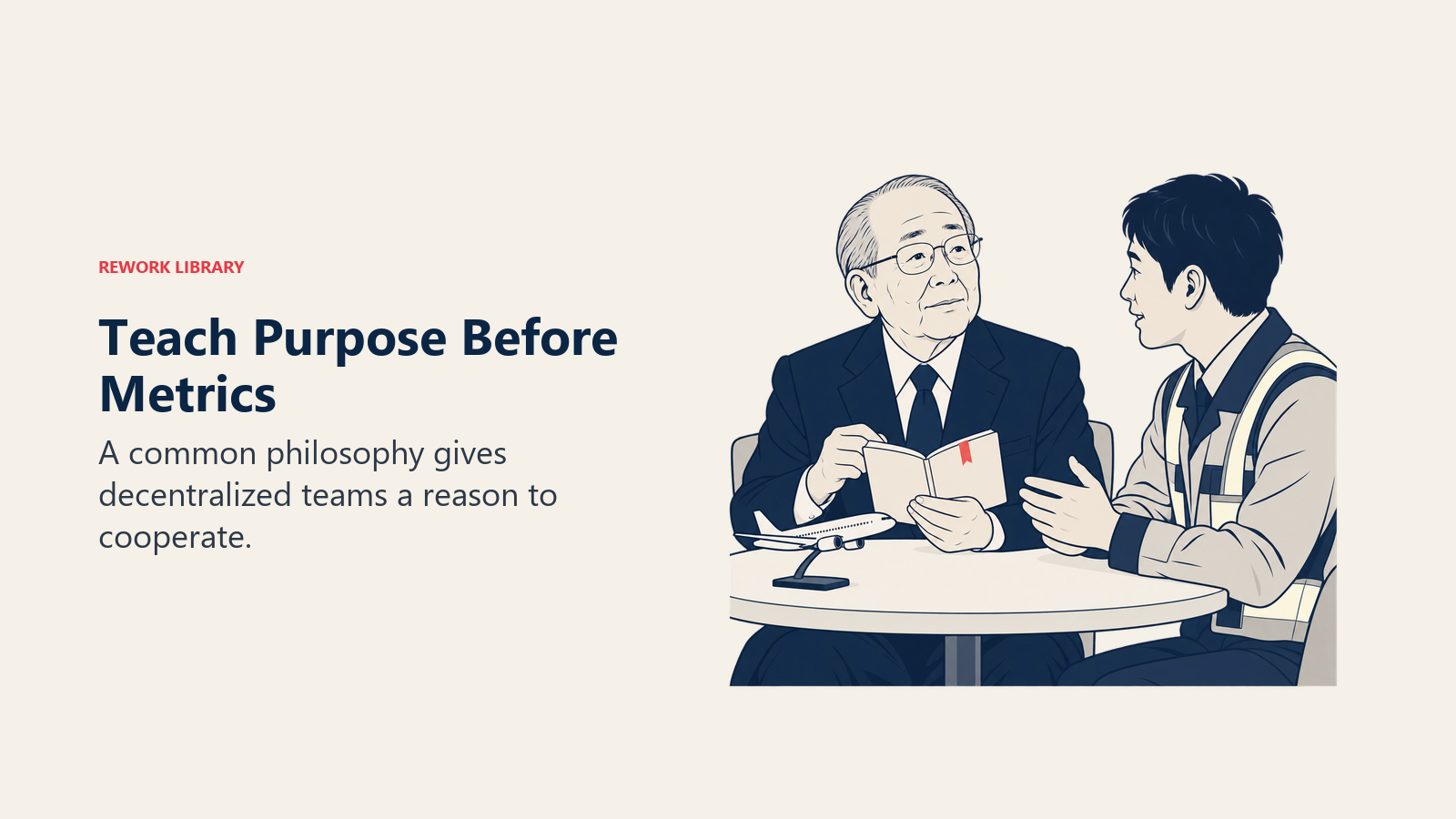
| Insistence that philosophy precede mechanism | Very High | He would not roll amoeba accounting into JAL until employees had absorbed a JAL Philosophy built directly from Kyocera's own code, on the theory that a scoring system handed to people without a shared purpose turns into internal warfare rather than internal accountability. |
| Willingness to enter industries with zero operating experience | Very High | Founded a telecom carrier against NTT's monopoly and later chaired a bankrupt airline, arguing in both cases that the operating system he already knew mattered more than domain expertise he did not have. |
| Nightly self-examination before large commitments | High | Before committing Kyocera to DDI, he questioned himself every night with one specific test, is the motive good and is there no self-interest, and treated a clean answer as the real precondition for the deal, not the business case. |
| Tolerance for unpaid, self-effacing leadership | Strong | Took the JAL chairmanship without salary at 78, on the stated belief that his own example, not a directive, was what would move employees to change how they worked. |
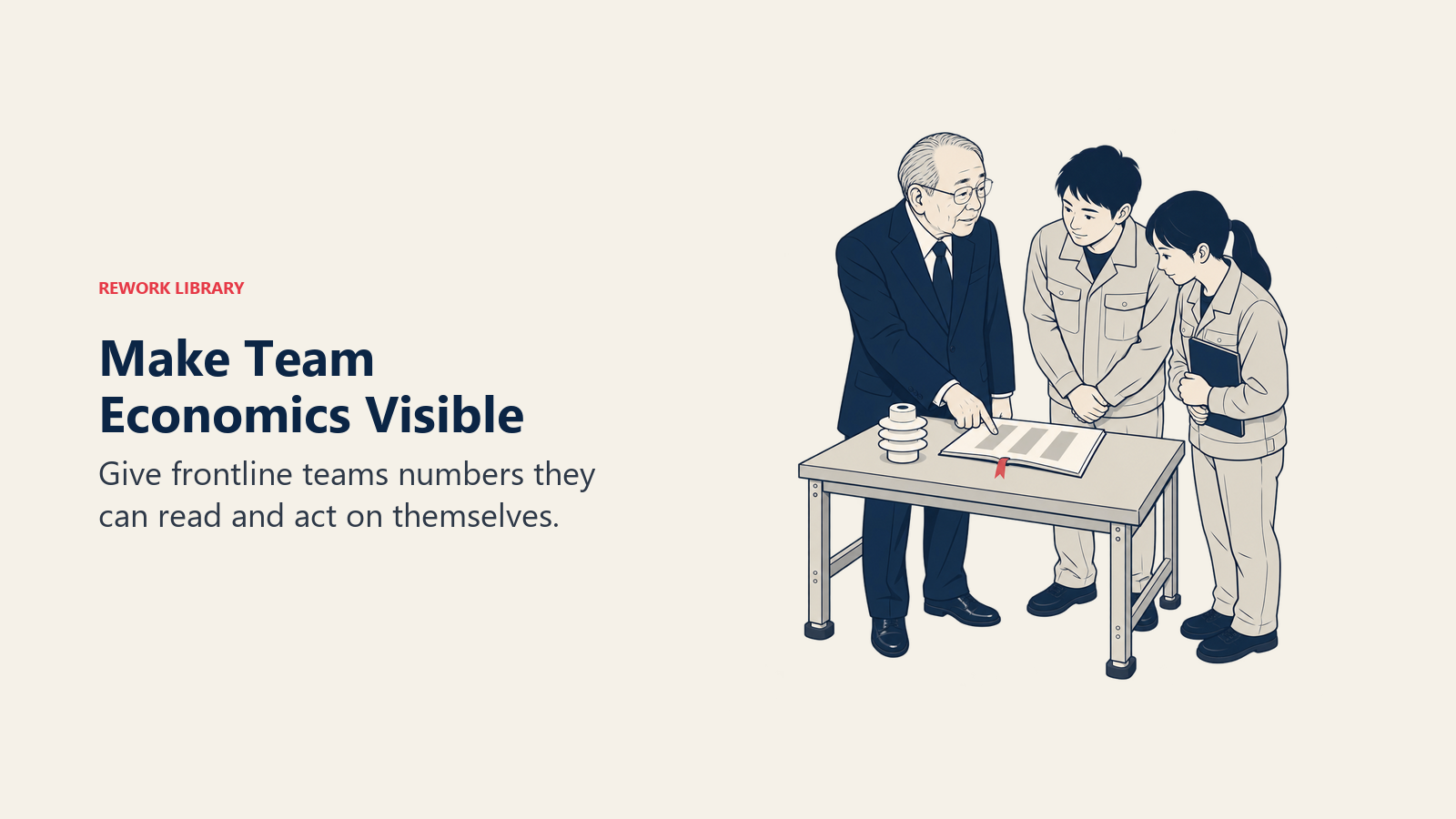
| Radical financial transparency down to individual units | Very High | Built the Hourly Efficiency report specifically so a shop-floor employee, not just a finance department, could read whether their own unit was profitable that month. |
The 3 Decisions That Defined Kazuo Inamori as a Leader
1. Founding Kyoto Ceramic After Leaving Shofu (1959)
By 1958, Inamori was a young ceramics engineer at Shofu Industries in Kyoto, developing insulator materials, and increasingly at odds with management over the direction of his research. He resigned rather than compromise on it. In April 1959, backed by a 3-million-yen investment from acquaintances, he and a group of colleagues founded Kyoto Ceramic Co., Ltd., what would become Kyocera, with an order to prove that specialty ceramics belonged in the emerging electronics industry.
The company found early oxygen through a customer relationship rather than a breakthrough invention, and that early stability mattered less than what happened two years later. On April 29, 1961, eleven young employees who had joined the company the previous year submitted a written demand for guaranteed raises and bonuses, threatening to quit as a group if refused. Inamori could not offer the guarantee they wanted. "This is a new company so I can't make any promises about the future," he told them. "However, I will make sure that it benefits you." Negotiations ran three days, moving eventually to Inamori's own home, before the group's leader relented. The dispute forced Inamori to answer a question he had not settled before founding the company: what is a company actually for? His conclusion, that corporate management must protect the livelihoods of employees and their families and aim for the well-being of all, became Kyocera's stated management rationale and, in 1967, its published philosophy.
For you: the founding decision that defines a company is rarely the first one. Inamori's founding act was leaving Shofu and raising three million yen. The decision that actually shaped how Kyocera would be run for the next six decades came two years later, forced on him by employees who did not accept a founder's authority as a substitute for a stated purpose.
2. Founding DDI to Compete Against NTT's Monopoly (1984)
By the early 1980s, Kyocera was a large, diversified electronics company, and Japan's deregulation of telecommunications opened a narrow window for new carriers to challenge NTT's decades-old monopoly on long-distance calls. Inamori had no telecom experience and no obvious business reason to enter, beyond a long-standing frustration that Japanese long-distance rates were, in his own view, unjustifiably high. Before committing Kyocera's capital and reputation to the venture, he applied the same ritual he used before every major decision, asking himself every night whether his motive was virtuous or whether it was selfish, on the reasoning that a decision built on genuine public benefit, not personal or corporate gain, was the only kind worth staking the company on.
DDI, short for Daini Denden, launched into that market at a structural disadvantage. Its two rivals were backed by the national railway and highway networks and could string cable along track and roadside easements they already controlled. DDI had neither, so it built wireless microwave relay stations across mountaintops between Tokyo and Osaka instead of laying cable, the slower and harder way to build a network, and the one left to the company that started last. The bet worked. DDI went on to lead its rivals in both sales and profit, and in October 2000 it merged into KDDI, which remains Japan's second-largest telecom carrier.
For you: a self-interest test only works if you are willing to walk away from a genuinely attractive opportunity when it fails the test. Inamori's nightly question was not a marketing line for a monopoly-challenging venture. It was a real filter applied before capital was committed, in a market he had never operated in, where the case for entering was mostly moral rather than a numbers exercise he could run in advance.
3. Taking the JAL Chairmanship Unpaid at 78 With No Airline Experience (2010)
Japan Airlines filed for bankruptcy protection in January 2010, carrying the largest corporate debt load of any Japanese company since the end of World War II. At the Japanese government's request, Inamori agreed to become JAL's chairman, taking the role on February 1, 2010, at age 78, with no prior experience running an airline, and without pay. He later said he took the job to prevent JAL's failure from damaging the wider Japanese economy, protect employee jobs, and preserve fair competition in the industry, not because he had particular airline expertise to bring.
What he actually brought was the same two things he had built at Kyocera decades earlier: a stated philosophy and an accounting system built to make that philosophy checkable. JAL employees went through training built around a JAL Philosophy derived directly from the Kyocera Philosophy, before amoeba-style divisional accounting was rolled out across the airline's routes and operations, so pilots, ground crews, and route planners could see, for the first time, which parts of the business were actually making money. The turnaround that followed was fast by airline-industry standards. JAL reported an operating profit of 188.4 billion yen, about $2.35 billion, in the fiscal year following the completion of its restructuring, and the airline relisted on the Tokyo Stock Exchange on September 19, 2012, roughly two years and eight months after the bankruptcy filing.
The parallel worth drawing is to Alan Mulally at Ford, another outsider, Mulally came from Boeing rather than the auto industry, brought in to run an industrial company in genuine danger of failing, who also built his turnaround around a single shared operating rhythm rather than personally directing every decision. Lou Gerstner at IBM took the opposite approach from both of them, arriving with strong opinions about strategy and pushing them through the organization directly. Inamori's method sat closer to Mulally's: build the system, train people to use it honestly, and let the system do work a hands-on turnaround executive usually does personally.
For you: when you are recruited into a crisis outside your own domain, the asset you bring is rarely expertise in that domain. It is a working method you already trust, one you are willing to install whole rather than improvise a version of. Inamori did not learn to run an airline. He installed the same operating system that had already worked twice, in ceramics and in telecom, and trusted the airline's own people to run it once they could see the numbers for themselves.
What Kazuo Inamori Would Do in Your Role
If you're a CEO whose frontline employees cannot see whether their own work is profitable, Inamori's answer was not a dashboard project or a new KPI. It was structural: shrink the accounting unit until a single team can read its own numbers monthly, and attach a real internal price to what one team buys from another. Ask whether your organization's numbers live several layers of reporting away from the people whose daily decisions actually move them.
If you're being asked to lead something outside your own domain, in a crisis, the JAL story is a case for trusting a system, not personal expertise, to do the work. Inamori did not pretend to understand aviation. He installed the same philosophy-plus-accounting system that had already worked twice and let people who did understand aviation run it honestly.
If you're weighing a large, values-driven commitment against a purely commercial one, Inamori's nightly self-examination before DDI is worth taking literally rather than as inspirational language. He asked a specific, answerable question, not whether the opportunity was good, but whether his own motive was free of self-interest, and treated a shaky answer as reason enough to walk away.
| Situation you're facing | Inamori's likely move |
|---|---|
| Employees cannot tell whether their own unit is making money | Shrink the accounting unit until its results fit on one page a non-accountant can read monthly |
| You are recruited to fix a crisis outside your own industry | Bring a trusted operating system, not borrowed domain expertise, and let the organization's own people run it |
| A profitable-looking move might really be self-interest in disguise | Apply a specific, honest test before committing capital, and be willing to walk away from a clean answer |
| A new measurement system is producing infighting between teams | Reintroduce the shared philosophy first; a scoring system without a shared purpose turns collaboration into turf war |
| You inherit a company built on a founder's personal moral code | Codify the code in writing rather than leaving it dependent on the founder's continued presence |
Notable Quotes & Lessons Beyond the Boardroom
On what a company is actually for, forced by the 1961 dispute that made him answer the question for the first time, Inamori later summarized his conclusion plainly: corporate management must protect the livelihoods of employees and their families, and aim for the well-being of all. In the moment of that same negotiation, pressed by employees who did not trust a young company's promises, he told them bluntly: "If you feel cheated by my sloppy management, go ahead and stab me to death."
On testing his own motives before a major commitment, he described the discipline he applied before founding DDI as asking himself, night after night, whether his motive was virtuous or whether it was selfish.
On the influence that shaped his own management thinking, Kyocera's own chronology of his life records that in 1965, at age 33, he was deeply inspired by Konosuke Matsushita's "Dam Approach to Management," the idea that a business, like a river, needs reserves built up in good times to survive the times it cannot control. He carried a version of that same instinct into amoeba management decades later: an insistence on current, honest numbers over optimistic projections, and on units that could absorb a bad month rather than units run at their limit.
Where This Style Breaks
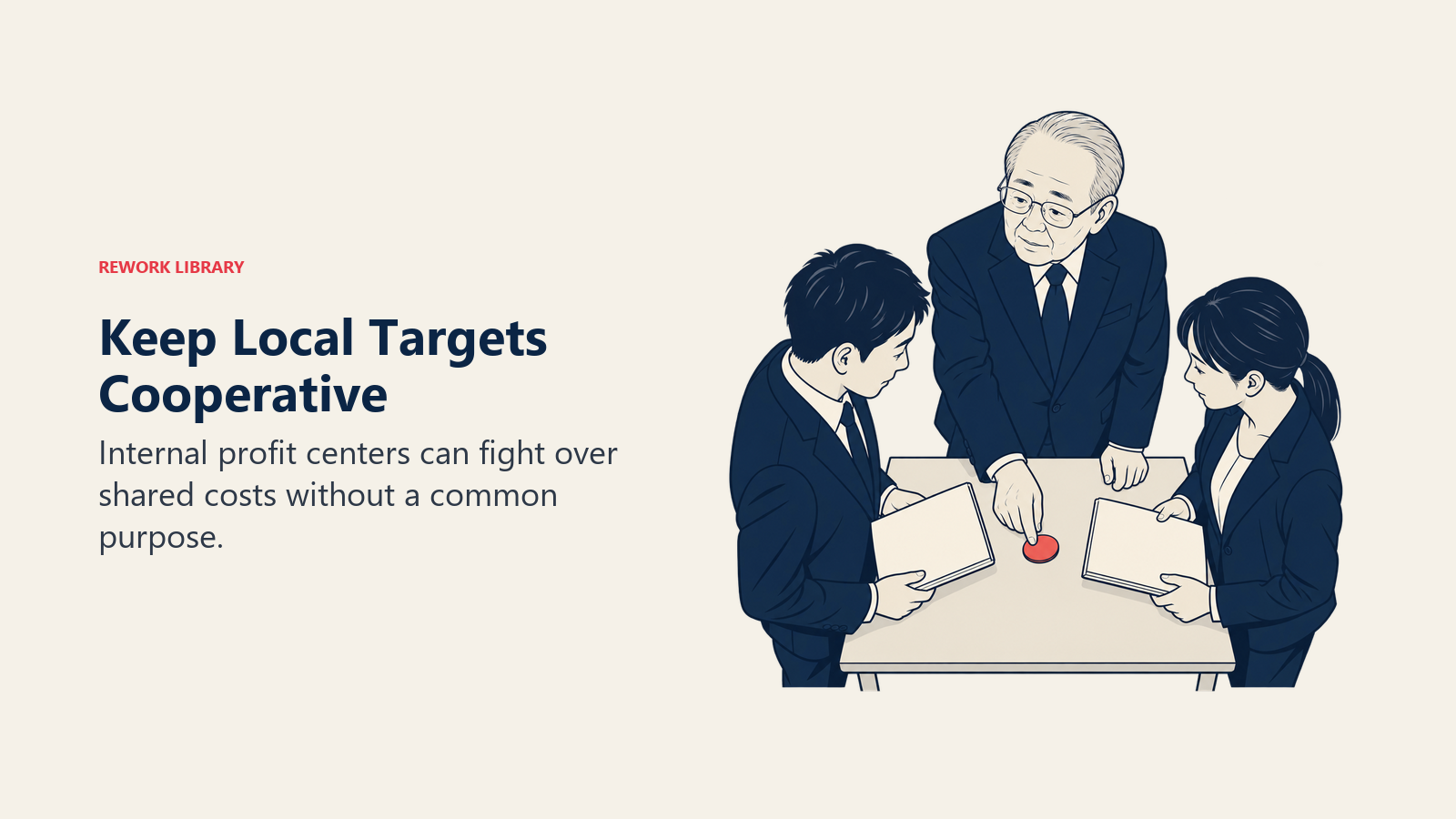
Amoeba management has a well-documented failure mode, and it is not really about accounting mechanics. Academic study of the system found, plainly, that companies which adopt the accounting without adopting the underlying Kyocera Philosophy generally fail to get the results Kyocera got, because the system depends on units choosing collective benefit over local profit in exactly the moments an internal market gives them a reason not to. Splitting a company into small profit centers creates every incentive for a unit to protect its own numbers, and the philosophy is the only thing that reliably keeps that instinct in check.
The system is also genuinely heavy to run. As an organization grows past roughly a thousand employees, allocating shared and indirect costs across dozens or hundreds of amoebas gets harder to do fairly, and the negotiated transfer prices meant to mimic a real market start producing disputes between units instead of discipline, the same transfer-pricing and internal-competition problems researchers studying the system have documented. A system built to make bad numbers visible can, if the surrounding culture is wrong, just as easily make units fight over which department absorbs a shared cost.
JAL is the honest complication even within Inamori's own record. The turnaround worked, decisively and fast by industry standards, but it worked inside a company Inamori did not build from scratch and could not run forever. He was 78 when he took the job and stepped back from day-to-day leadership within a few years. The model depends on the philosophy training and the accounting discipline outliving the person who introduced them, at Kyocera across six decades, and at JAL over a shorter, more recent stretch that is harder to judge from this distance. A doctrine built on visible, honest numbers is only as durable as the culture's willingness to keep looking at them once the person who insisted on it is gone.
Learn More
- Konosuke Matsushita Leadership Style: The God of Management and the 250-Year Plan
- Soichiro Honda Leadership Style: Failure, Speed, and the Fujisawa Partnership
- Taiichi Ohno Leadership Style: The Toyota System's Architect
- W. Edwards Deming Leadership Style: Quality as a System
- Akio Toyoda Leadership Style: Heritage, Crisis, and the Hybrid Stand
- Lou Gerstner Leadership Style: The IBM Turnaround That Kept It Whole
- Alan Mulally Leadership Style: One Ford and the Working Together Method
- Turnaround Leadership: How Executives Lead a Failing Organization Back
Frequently Asked Questions about Kazuo Inamori
Who was Kazuo Inamori?
Kazuo Inamori (January 30, 1932 to August 24, 2022) was a Japanese entrepreneur who founded Kyocera in 1959 and DDI, later part of KDDI, in 1984, and who later served as unpaid chairman of Japan Airlines from 2010 through its restructuring and 2012 relisting. He is best known for creating amoeba management, a system of dividing organizations into small, self-accounting units, and for codifying the Kyocera Philosophy, the moral code the system was built to support.
What is amoeba management?
Amoeba management divides a company into small, autonomous units, often fewer than ten people, each treated as an independent profit-and-loss center that buys and sells with other units inside the same company. Each unit tracks its performance through an Hourly Efficiency report, a simplified accounting tool measuring value added per hour worked, designed to be as easy to read as a household budget.
Did amoeba management work at Japan Airlines?
Yes, by the numbers. JAL, which filed for bankruptcy in January 2010 carrying the largest corporate debt load in postwar Japanese history, reported an operating profit of 188.4 billion yen in the fiscal year following the completion of its restructuring and relisted on the Tokyo Stock Exchange on September 19, 2012, under Inamori's unpaid chairmanship.
Why did Inamori take the JAL chairmanship without pay?
He was 78 years old with no airline experience when the Japanese government asked him to help, and he later said his goal was preventing JAL's collapse from damaging the wider economy, protecting employee jobs, and preserving fair competition, not personal gain. Taking no salary was part of the method itself: he believed his own example, not a directive, was what would move employees to change how they worked.
What is the Kyocera Philosophy?
The Kyocera Philosophy is the moral code Inamori formally published in 1967, stating that a company exists to provide for the material and intellectual growth of its own employees and, through that, to contribute to society. It grew directly out of the 1961 labor dispute in which young employees threatened to quit over job security, which forced Inamori to define the company's purpose in writing for the first time.
Where does amoeba management typically fail?
Research on the system has found that companies which adopt the accounting mechanics without the underlying philosophy generally do not get the results Kyocera got, because splitting a company into small profit centers creates a real incentive for units to protect their own numbers at the whole company's expense. The system also becomes administratively heavy past roughly a thousand employees, when allocating shared costs and negotiating internal transfer prices across many units gets harder to do without disputes.

Co-Founder, Rework.com
On this page
- The Household Budget Doctrine
- Leadership Style Breakdown
- Key Leadership Traits
- The 3 Decisions That Defined Kazuo Inamori as a Leader
- 1. Founding Kyoto Ceramic After Leaving Shofu (1959)
- 2. Founding DDI to Compete Against NTT's Monopoly (1984)
- 3. Taking the JAL Chairmanship Unpaid at 78 With No Airline Experience (2010)
- What Kazuo Inamori Would Do in Your Role
- Notable Quotes & Lessons Beyond the Boardroom
- Where This Style Breaks
- Learn More