Jack Dorsey Leadership Style: Dual CEO, Radical Simplicity, and the Bitcoin Bet
Turn this article into takeaways for your work.


Each assistant summarizes the article only for you and suggests best practices for your work.
Key Facts: Jack Dorsey (born November 19, 1976, St. Louis, Missouri) co-founded Twitter in 2006 and served as CEO twice, from 2007 to 2008 and again from 2015 to 2021. He founded Square in 2009 (renamed Block in 2021) and remains its CEO. Under his leadership, Twitter expanded the original 140-character limit to 280 characters in 2017 and launched threaded tweets. He is a vocal Bitcoin advocate, famously walks roughly 5 miles to work, runs no-laptop meetings, and embraces a minimalist personal aesthetic. He funded Bluesky, the decentralized social protocol that spun out of Twitter, and continues to bankroll open-source Bitcoin development through Spiral and TBD.
The Dorsey Minimalist Model
The Dorsey Minimalist Model is a leadership doctrine of radical simplicity, treating every added feature, team, metric, or meeting as a tax on what already exists. It structures organizations and calendars around ruthless subtraction, thematic focus days, and constraints that force clarity. The goal is not less ambition but a smaller, sharper surface through which ambition compounds.
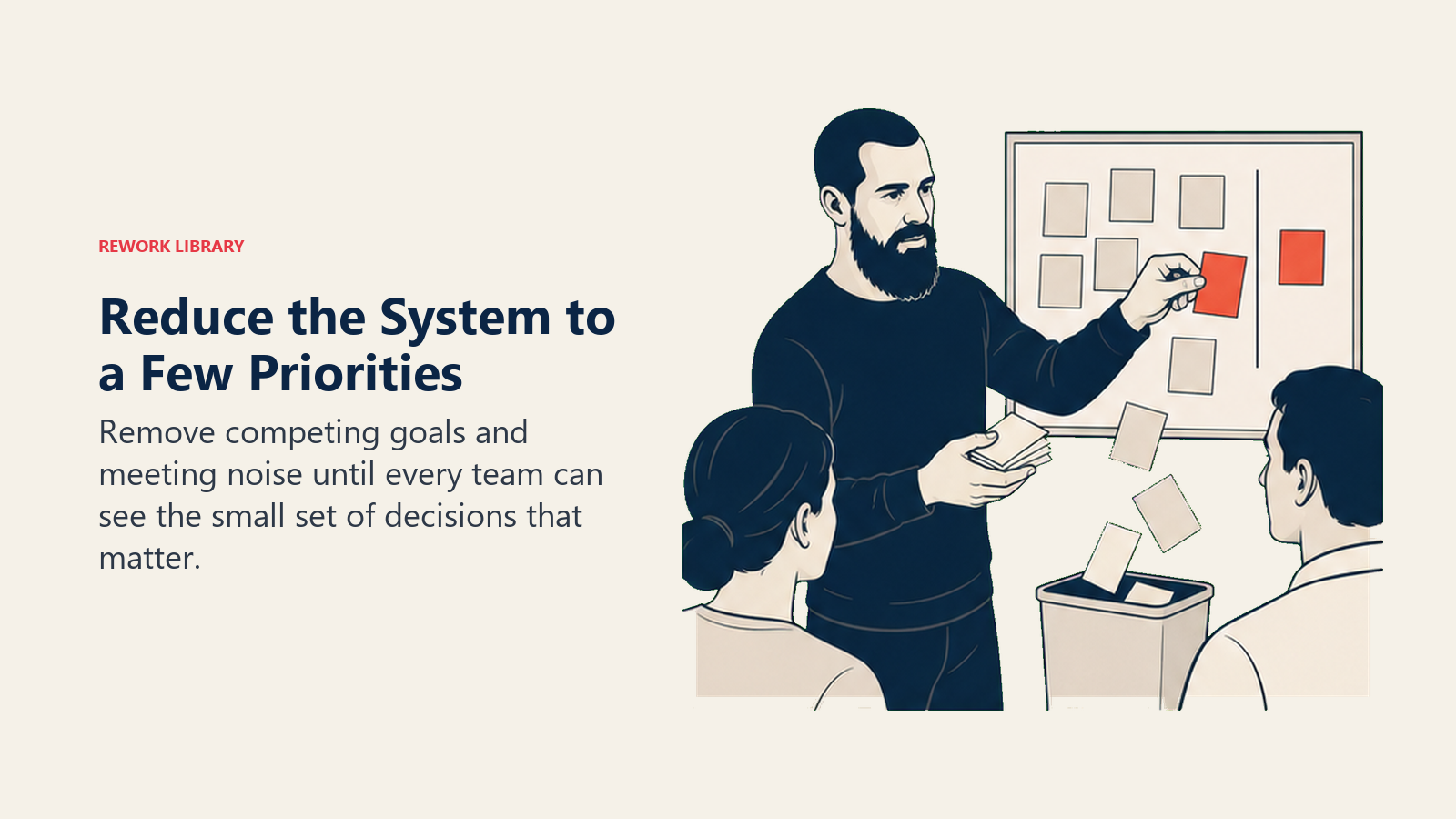
Jack Dorsey was fired from the company he co-founded, came back a decade later to save it, ran two public companies simultaneously for six years, then walked away from both to bet his career on Bitcoin. That resume looks chaotic on paper. In practice, it's a case study in a very specific leadership philosophy: radical simplicity as a competitive weapon.
Dorsey built Twitter around a 140-character limit when the internet was moving toward infinite scroll. He built Square around a single plugged-into-your-phone card reader when fintech was building complex enterprise systems. Mark Zuckerberg took the opposite approach, add every feature, acquire every threat, expand every surface, and built a larger company from it. The two models are worth comparing directly. He structured his calendar around walking 5 miles to work and holding no-laptop meetings when the rest of Silicon Valley was celebrating always-on productivity. Every decision traces back to the same thesis: strip everything to the essential, and the essential compounds.
Operators obsessed with adding features, headcount, and complexity can learn something from the person who built two $10B+ companies by doing the opposite. But this profile is also honest about where that philosophy breaks, because radical simplicity is a genuinely difficult leadership approach to scale past a few thousand people.
Leadership Style Breakdown
| Style | Weight | How it showed up |
|---|---|---|
| Minimalist Operator | 60% | Dorsey's default move in any organization is subtraction. When he returned to Twitter in 2015, his first week included cutting 8% of staff, not as a cost move but as a clarity move. He killed the daily active user metric and replaced it with monetizable daily actives (mDAU) because he wanted a number that reflected actual business value, not vanity. He structured his calendar so each weekday had a single focus theme: Monday management, Tuesday product, Wednesday marketing, Thursday partnerships, Friday culture. The calendar structure was itself a simplicity argument, one thing, done well, each day. |
| Mission-Driven Visionary | 40% | Dorsey has a consistent long-horizon frame that surfaces across all three of his major projects. Twitter was meant to be a public square for global conversation. Square was meant to democratize commerce for small businesses. Block and Bitcoin are meant to be the financial infrastructure for economic freedom outside the banking system. The vision is always civilizational, bigger than the product, bigger than the company. That frame attracts missionaries and creates organizational patience for slow bets, but it can also create products that feel more ideological than practical. |
The 60/40 split reflects that Dorsey's day-to-day operating style is minimalism, he shows up in the work through reduction, focus, and structural simplicity. The visionary frame is real and consequential, but it operates more at the strategic level than in how he actually runs teams and meetings.
Key Leadership Traits
| Trait | Rating | What it means in practice |
|---|---|---|
| Obsession with simplicity | Exceptional | Dorsey treats complexity as a signal of unclear thinking, not of thoroughness. The 140-character limit wasn't a technical constraint, it was a philosophical position about what Twitter was for. Square's original product was a single hardware device and a single software screen. When he returned to Twitter, one of his first moves was to kill dozens of internal products that had accumulated without clear purpose. Dorsey's version of "first principles" is: if you can't explain what this does in one sentence, it shouldn't exist. |
| Comfort with controversy | Very High | Being fired from Twitter in 2008, returning as interim CEO in 2015, running two public companies simultaneously, publishing his views on Bitcoin maximalism while CEO of a public company, walking away from Twitter before Elon Musk bought it, Dorsey has made unconventional choices at every stage and accepted the public scrutiny that followed. He doesn't optimize for approval. That comfort with controversy is a leadership asset when it produces clear, principled decisions. It's a liability when it reads as indifference to the consequences others bear. |
| Long-horizon thinking | High | The Bitcoin bet started in 2019 when Dorsey declared it the "native currency of the internet." He renamed Square to Block in 2021, built the TBD open-source Bitcoin project, funded Spiral, and has consistently behaved as though the multi-decade thesis about Bitcoin is more important than any near-term stock price signal. That kind of long-horizon commitment is rare in public company CEOs and it creates genuine organizational clarity, people at Block know what they're building toward. |
| Reluctance to delegate authority | Medium | Dorsey's dual-CEO years at Twitter and Square drew persistent criticism from Twitter's board, investors, and employees. The consensus was that Twitter needed a full-time CEO, not a part-time one with another public company. The deeper issue wasn't time, it was that Dorsey's minimalism-as-philosophy created a product organization that didn't have strong #2 leaders empowered to make decisions in his absence. Simplicity at the top can create a vacuum just below it. |
The 3 Decisions That Defined Jack Dorsey as a Leader
1. Returning to Twitter in 2015 and Cutting 8% of Staff in the First Week
In June 2015, Jack Dorsey returned to Twitter as interim CEO. The company was struggling: user growth had stalled, the product had accumulated years of complexity without clear direction, and morale was poor after a series of CEO changes. Dick Costolo had resigned. The board was looking for stability.
Dorsey's first major move was to cut 8% of Twitter's workforce, approximately 336 people, within days of taking the role. Most new CEOs spend their first months listening, building relationships, and avoiding the perception of disruption. Dorsey cut instead.
His public framing was explicit: this wasn't about cost reduction. It was about organizational focus. Twitter had built teams around products and initiatives that no longer aligned with what the company needed to be. Cutting them wasn't punishing the people in those roles, it was removing the organizational diffusion that made the remaining work harder. He called it a "structural reset."
The decision carries two lessons. First, that clarity moves can look brutal and still be the right call. The 336 people who lost jobs at Twitter in 2015 were real humans with real consequences. That's true. Also true: organizations that accumulate unclear priorities become progressively harder to lead, and clearing that ambiguity often requires a personnel move that sends a signal no memo can send.
Second, that first-week decisions define what a leader actually believes versus what they say. Dorsey's return could have started with a listening tour, a 100-day plan, a restructuring announcement. He started with subtraction. That was the clearest possible statement of his operating philosophy.
2. Running Two Public Companies Simultaneously and What It Revealed About Calendar Structure
From October 2015 to November 2021, Jack Dorsey was simultaneously CEO of Twitter and CEO of Square. Two publicly traded companies. Two boards. Two sets of investors. Two executive teams expecting his full attention.
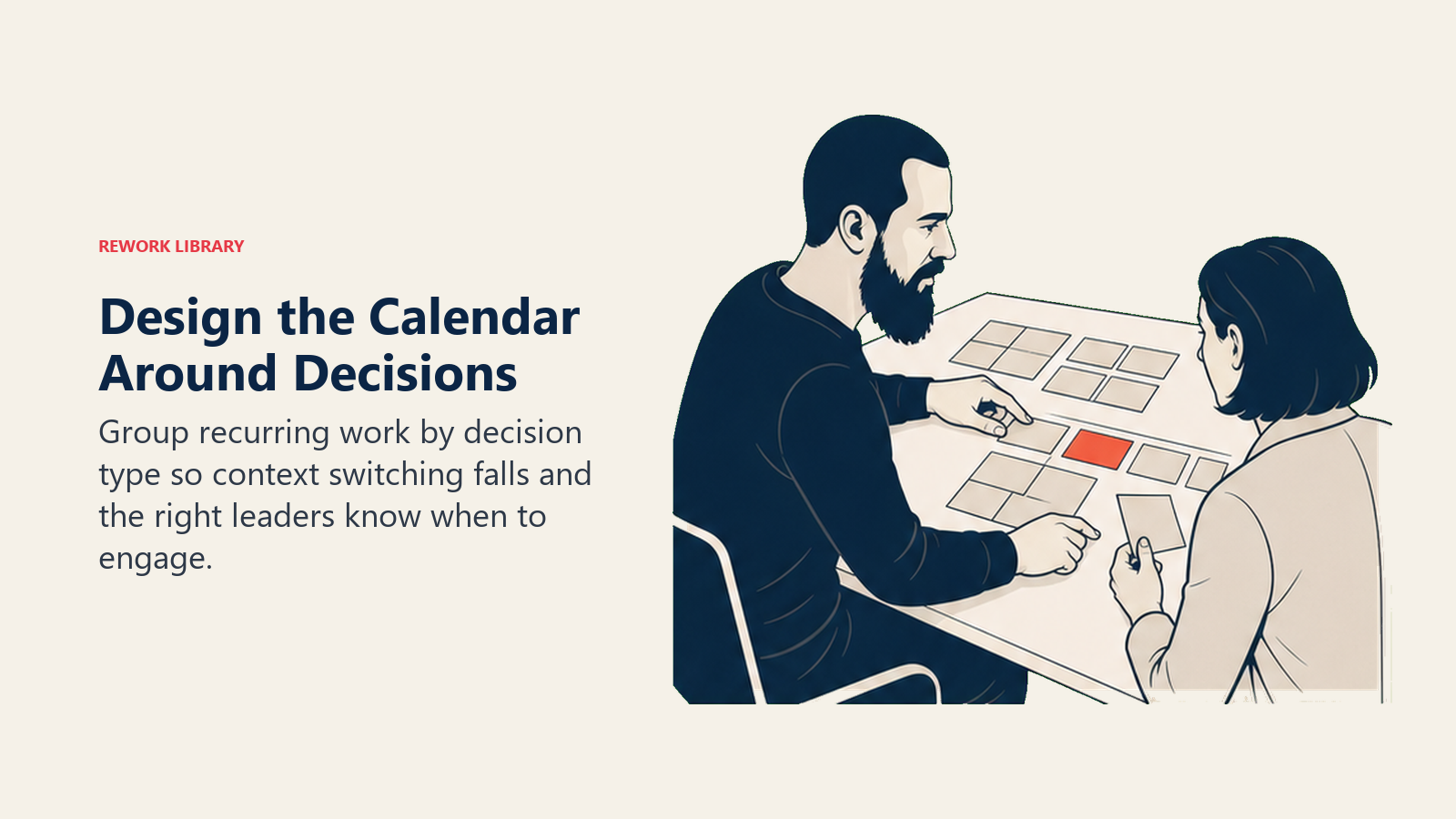
He managed it with a rigidly structured calendar. Mondays were for management meetings, both companies, back to back. Tuesdays were product days. Wednesdays were marketing. Thursdays were partnerships and external relationships. Fridays were culture and reflection. He walked approximately 5 miles to the office daily. He held no-laptop meetings where possible.
This structure wasn't universally admired. Twitter's board and investors complained for years that the company needed a full-time CEO. The product stagnation under Dorsey's dual tenure was real, Twitter went years without major feature changes that users had been requesting. The criticism is valid.
But the calendar structure itself is worth studying independently of whether you think dual-CEO was a good idea. Dorsey's answer to "how do you manage two companies" wasn't "work harder" or "hire more chiefs of staff." It was to reduce decision-making surface by creating predictable thematic focus. Monday is the only day management issues exist. If a management issue comes up on Thursday, it waits for Monday. That's a forcing function for batching decisions rather than responding to them reactively.
For leaders running multiple obligations simultaneously, not necessarily two public companies, but a complex portfolio of priorities, the structural logic applies. Time-boxing by theme rather than by urgency changes what you're optimizing for. Urgency pulls you toward whatever's loudest. Theme pulls you toward what the calendar says matters today.
3. Stepping Down From Twitter in 2021 and Doubling Down on Block and Bitcoin
In November 2021, Dorsey announced he was stepping down as CEO of Twitter. He named Parag Agrawal as his successor. The timing was surprising, Twitter's stock was near highs, the company had made several significant product bets, and Dorsey had only been full-time for six years. He left by choice, while things were relatively good.
He was explicit about why. In a public letter, he wrote that Twitter should be "founder-led" but that the best thing he could do was trust Agrawal and step back. He acknowledged that founder-led companies work differently and expressed conviction that Twitter would be better without a founder at the helm trying to maintain his original vision over the organization's evolved needs.
That self-awareness is unusual. Most founders who step down from companies they built either do so under pressure or frame it as a positive transition while privately resisting it. Dorsey genuinely seemed to believe that his presence was a constraint on Twitter's evolution, not just a transition talking point.
What he stepped into was Block, the renamed Square, and an increasingly public commitment to Bitcoin as long-term infrastructure for open financial systems. TBD, the open-source Bitcoin development project. Spiral, the Bitcoin-focused grants program. Brian Armstrong was building toward the same long-term thesis from the exchange side, both founders betting the next decade on open financial infrastructure, approaching it from opposite ends of the stack. The public Bitcoin maximalism that made some Block investors uncomfortable. These weren't hedged bets. They were concentrated commitments.
For operators, the decision matters because it's a clear example of a founder choosing mission depth over platform scale. Twitter was arguably the more influential platform globally. Block and Bitcoin were a smaller, more constrained mission. Dorsey chose depth over breadth, and accepted the public narrative about Twitter's subsequent fate under Musk as the cost of that choice.
What Jack Dorsey Would Do in Your Role
If you're a CEO running a company that's accumulated too much, the Dorsey move is to audit your organizational surface before you audit your strategy. What teams, products, or initiatives exist because of historical momentum rather than current alignment? The 2015 Twitter cut was a clarity move. The equivalent for your company might not be a layoff, it might be killing three internal projects that are consuming engineering time without clear return, or consolidating two teams that have overlapping scope. Subtraction is a leadership act. Most CEOs do it reactively. Dorsey does it structurally.
If you're a COO or operations leader, the calendar structure from the dual-CEO years is directly transferable. You probably don't run two public companies, but you do run a complex portfolio of obligations. The question the Dorsey calendar asks is: are you organizing your week around urgency or around intentional focus? If every day is an emergency response, you're making decisions reactively. Pick one theme per day, protect it, and batch everything else to its designated slot.
If you're a product leader, the 140-character limit and the single-screen Square interface are the same lesson: constraints produce clarity. When you're designing a product feature, the best version often isn't the most complete version, it's the version with the minimum viable surface area that accomplishes the user's actual goal. Dorsey's product instinct is to ask "what can we remove?" not "what can we add?" Run that question against your current roadmap. What's on it because someone asked for it versus because it makes the core experience measurably better?
If you're in sales or marketing, the Bitcoin maximalism story has a specific lesson about conviction-based positioning. Dorsey didn't hedge his public position on Bitcoin. He said it was the native currency of the internet, that it was more important than any specific company, and that he'd bet his post-Twitter career on it. That kind of unhedged conviction creates a brand position that's very difficult for competitors to copy, because most executives can't sustain that level of public commitment to an idea that might be wrong. When you have a genuine conviction about where your market is going, being explicit about it publicly creates a positioning advantage that vague messaging never achieves.
How Rework Fits the Dorsey Playbook
Dorsey's dual-CEO years proved that product minimalism and async operating modes only scale when the underlying ops stack stops fragmenting attention. Twitter and Square each ran on separate tools, rituals, and metrics, and the seams showed. A unified operating layer would have absorbed more of that coordination tax. Rework is built for exactly that pattern: one workspace where CRM, lead management, team chat, and cross-functional projects share the same surface, starting at $69/month billed yearly for the Sales Engine and $99/month billed yearly for the Project Engine, each with 5 seats included. Instead of bolting together six SaaS products and reconciling their dashboards, operators get a single source of truth they can time-box by theme the way Dorsey time-boxed his weeks. For founders running multiple bets, the value is structural simplicity, fewer tools, fewer handoffs, fewer places for clarity to leak. It's the stack a minimalist would actually choose.
Notable Quotes and Lessons Beyond the Boardroom
Dorsey's public persona is unusually consistent with his operating philosophy. He fasts regularly, practices meditation, and has spoken about extending silence as a way to reduce cognitive noise. These aren't just lifestyle choices, they're the personal equivalent of the organizational simplicity philosophy. Same principle, different domain.
On Twitter under Musk: Dorsey has been careful but not silent. He publicly supported Elon Musk's acquisition in 2022, then later expressed concerns about Twitter's direction, then partially distanced himself. His view of Twitter under Musk is consistent with his earlier stated position: he believes in open public conversation infrastructure and is uncertain whether the current ownership is producing it. He helped fund Bluesky as a decentralized alternative, then publicly criticized Bluesky when it began implementing content moderation policies he disagreed with. That willingness to criticize something he funded is consistent with the principle-over-loyalty frame.
He's said: "The biggest problem with Twitter is Twitter itself, it shouldn't be a company. It should be a protocol, like the internet." That's a statement that's easy to dismiss as idealism. But it accurately describes what Dorsey thinks about platform governance: centralized ownership of public conversation infrastructure creates problems that can't be solved with better management. The structural problem requires a structural solution.
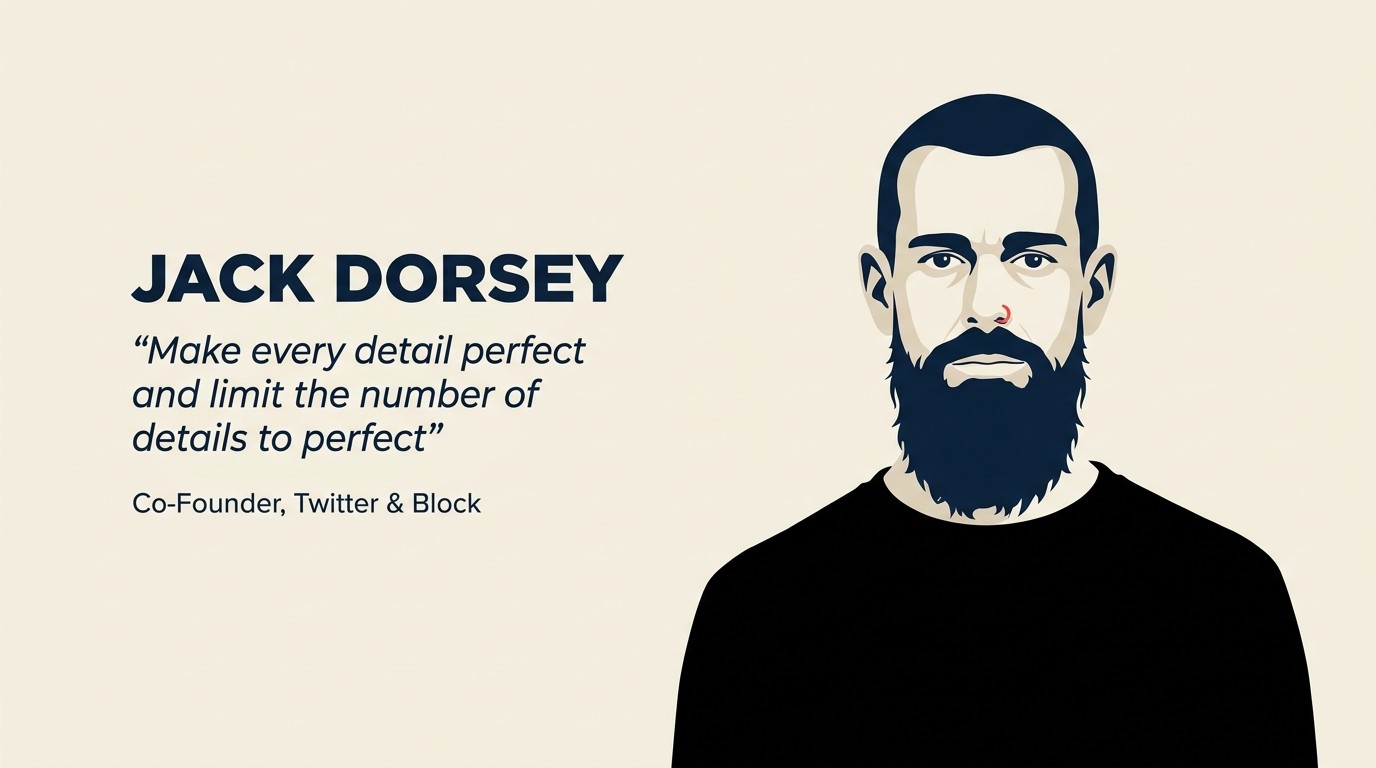
On simplicity: "Every additional thing you add is a tax on everything that already exists." That framing, complexity as taxation, is the clearest articulation of why his leadership consistently trends toward removal over addition.
Where This Style Breaks
Radical simplicity as a leadership philosophy works at the product level and at the personal level. It scales less cleanly when you have 5,000 employees and a trust-and-safety crisis that requires decisions, not silence.
Twitter's years under Dorsey produced a product that users found simultaneously essential and stagnant. The 140-character limit became 280, but the core product experience changed less than users wanted over a six-year period. Dorsey's minimalism, which produced the original design clarity that made Twitter powerful, also created a product team that moved slowly in a competitive environment that didn't reward patience.
His dual-CEO structure, viewed charitably, was a bold experiment in structured attention management. Viewed less charitably, it was a founder who didn't fully trust either organization enough to hand it to someone else and didn't fully commit his attention to either company. Brian Chesky faced a version of this question during Airbnb's COVID crisis, when forced to choose, he went all-in on product and ran it founder-mode with full attention. The board at Twitter eventually forced the issue. That outcome doesn't invalidate the experiment, but it does suggest that radical simplicity as a personal operating model doesn't automatically solve the organizational accountability problems that complexity creates.
Frequently Asked Questions about Jack Dorsey's Leadership
Who is Jack Dorsey?
Jack Dorsey (born 1976 in St. Louis, Missouri) is an American technology entrepreneur who co-founded Twitter in 2006 and founded Square (now Block) in 2009. He served as Twitter CEO twice, from 2007 to 2008 and from 2015 to 2021, and remains CEO of Block. He is also a well-known Bitcoin advocate and funder of the decentralized social protocol Bluesky.
How did Dorsey run Twitter and Square simultaneously?
From October 2015 to November 2021, Dorsey structured his calendar around thematic focus days, Monday for management, Tuesday for product, Wednesday for marketing, Thursday for partnerships, Friday for culture, and applied the same template to both companies. He walked roughly 5 miles to the office, held no-laptop meetings, and batched decisions rather than responding to them reactively. Twitter's board and investors criticized the arrangement for years, citing product stagnation.
Why did Dorsey leave Twitter in 2021?
Dorsey announced his resignation in November 2021, naming Parag Agrawal as his successor. In his public letter, he argued that founder-led companies work differently but that Twitter would be better served without its original founder trying to preserve the early vision over the company's evolved needs. He chose to leave while the stock was near highs and redirected his full attention to Block and Bitcoin.
What is Jack Dorsey's Bitcoin philosophy?
Dorsey has called Bitcoin "the native currency of the internet" and treats it as long-term infrastructure for open financial systems that operate outside traditional banking. In 2021, he renamed Square to Block to reflect the broader mission, funded the open-source Bitcoin development project TBD, and backs Spiral, a Bitcoin-focused grants program. He is publicly a Bitcoin maximalist rather than a general crypto advocate.
What is Bluesky and Dorsey's role?
Bluesky is a decentralized social networking protocol that began as a research initiative Dorsey funded while CEO of Twitter in 2019. It later spun out as an independent company and launched a public app. Dorsey sat on its board and bankrolled early development, but publicly criticized Bluesky after it began implementing content moderation policies he disagreed with, consistent with his view that public conversation infrastructure should be a protocol, not a company.
What can founders learn from Jack Dorsey?
The most transferable lessons are subtraction as a leadership act (audit organizational surface before strategy), time-boxing by theme rather than urgency, and using constraints to force product clarity, the 140-character limit and single-screen Square reader are the same design instinct. The cautionary lesson is that radical simplicity at the top can create a power vacuum below it, which is why Twitter struggled with empowered #2 leaders during his dual-CEO years.
Learn More

On this page
- The Dorsey Minimalist Model
- Leadership Style Breakdown
- Key Leadership Traits
- The 3 Decisions That Defined Jack Dorsey as a Leader
- 1. Returning to Twitter in 2015 and Cutting 8% of Staff in the First Week
- 2. Running Two Public Companies Simultaneously and What It Revealed About Calendar Structure
- 3. Stepping Down From Twitter in 2021 and Doubling Down on Block and Bitcoin
- What Jack Dorsey Would Do in Your Role
- How Rework Fits the Dorsey Playbook
- Notable Quotes and Lessons Beyond the Boardroom
- Where This Style Breaks
- Learn More