Chat & Messaging for Dealerships: Converting Digital Conversations into Showroom Appointments - 2026 Guide
Turn this article into takeaways for your work.


Each assistant summarizes the article only for you and suggests best practices for your work.
Dealerships lose 40-60% of website visitors who would engage if real-time communication was available. Think about that. Nearly half of your traffic is ready to ask questions, check availability, or schedule appointments, but they're gone because you make them fill out forms and wait hours for responses. McKinsey research measured about 900 individual touchpoints during the car-buying journey across websites, digital advertising, and CRM systems, with all digital touchpoints needing to be connected as customers expect it all to work seamlessly. Understanding the automotive customer journey shows why immediate response matters.
Average website session time is under 3 minutes. Customers don't have patience. They don't want to wait. They're comparison shopping across five dealerships simultaneously, and the first one to respond with helpful information wins. Cox Automotive reports that 84% of shoppers who lean into AI-powered online tools report high satisfaction, demonstrating the value of immediate, intelligent digital assistance.
Chat and messaging create the immediate response that modern shoppers demand. But implementation isn't as simple as adding a chat widget to your website. You need the right technology, proper staffing, effective training, and clear processes, or you'll create a terrible experience that actually hurts conversion.
Done right, chat and messaging become your highest-ROI lead generation channels. Done wrong, they frustrate customers and waste your team's time. J.D. Power research indicates that only 50% of mass market new-vehicle shoppers find manufacturer websites more organized and modern than other sites, creating an opportunity for dealers to differentiate through superior chat and messaging experiences.
Chat & Messaging Landscape
The terminology gets confusing, so let's clarify what we're talking about.
Live chat means real humans responding in real-time through a website chat widget. Customer types a message, your team member responds within seconds. This is the gold standard for engagement but requires dedicated staff.
AI chatbots use automation and artificial intelligence to respond to common questions without human intervention. They can handle basic inquiries like "What are your hours?" or "Do you have any red Honda CR-Vs in stock?" but struggle with complex questions or objections.
Hybrid models combine both, chatbots handle initial qualification and simple questions, then hand off to live agents when the conversation gets complex or the customer is ready to make an appointment.
SMS text messaging platforms let customers text your dealership using business phone numbers. Conversations happen via text instead of website chat. Many customers prefer this because they can continue the conversation later without staying on your website.
Facebook Messenger and social messaging meet customers where they already are. Some dealers get significant engagement through Facebook Messenger, Instagram DMs, or other social platforms. The challenge is integrating these with your CRM and tracking leads properly.
WhatsApp and emerging platforms are gaining traction, especially with younger demographics and international customers. WhatsApp is huge in many markets and offers rich media sharing (photos, videos, documents).
Video chat and virtual showroom tools let sales consultants conduct vehicle walkarounds via video call. This became popular during COVID and remains effective for customers who want personal attention without visiting the showroom. Learn more about virtual showroom experience.
The most effective dealerships use multiple channels. Website chat for browsing customers. SMS for follow-up and appointment reminders. Facebook Messenger for social media leads. The key is unifying all conversations in one platform so nothing falls through the cracks.
Implementation Strategy
Technology is easy. The hard part is staffing, training, and process design.
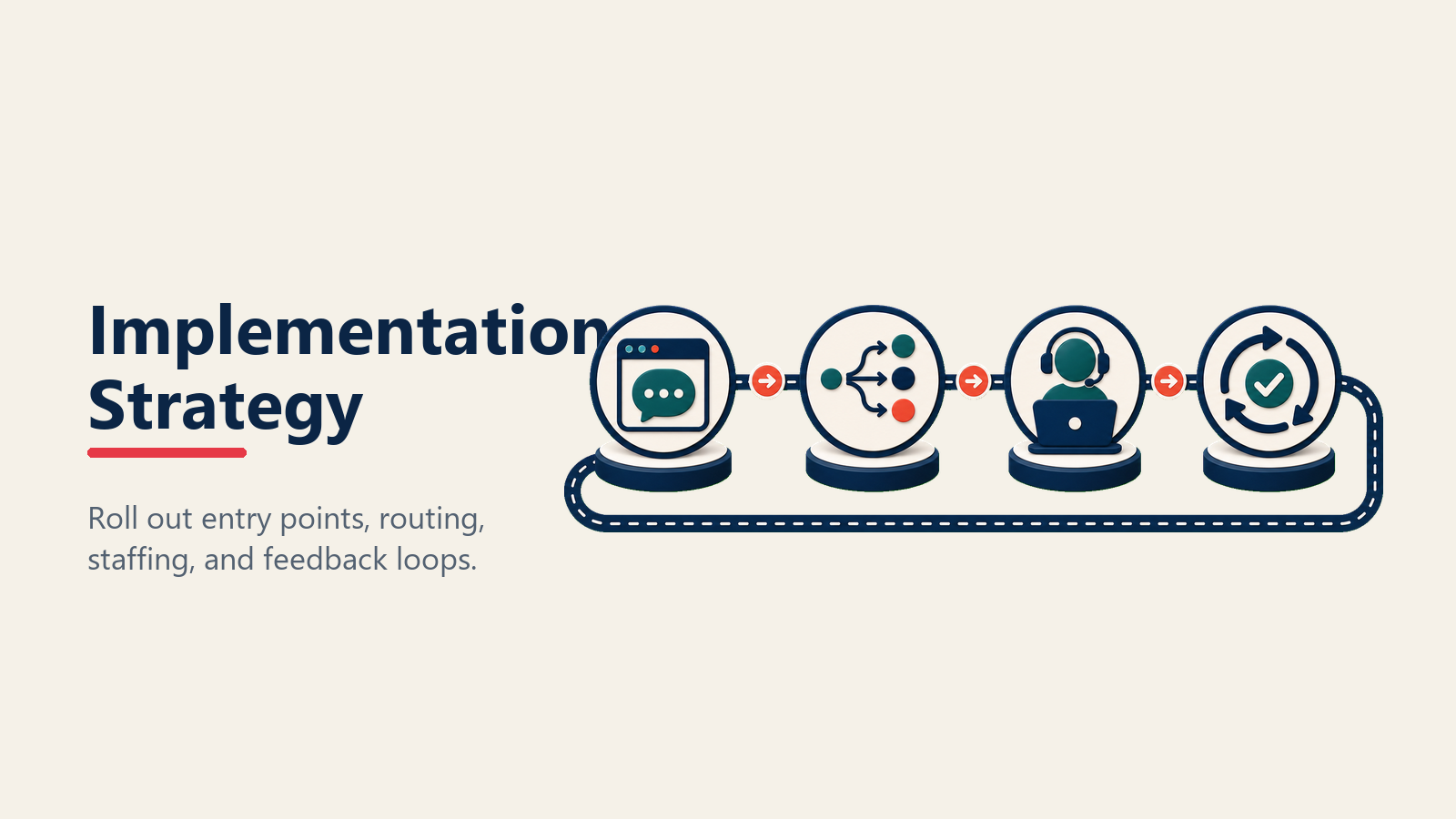
Staffing models vary based on size, budget, and volume:
BDC-managed chat works well for larger dealers with dedicated internet departments. BDC agents handle chat alongside phone and email leads. They're trained specifically on internet customer engagement.
Sales floor chat rotations work for smaller dealers who can't justify full-time BDC staff. Sales consultants take turns monitoring chat during shifts. This can work but often fails when the showroom gets busy and chat goes ignored.
Outsourced chat services provide 24/7 coverage at lower cost than hiring full-time staff. Quality varies dramatically, some outsourced services are excellent, others are terrible. Test thoroughly before committing. Strong BDC operations provide better control.
Hours of coverage is a critical decision. 24/7 coverage captures after-hours traffic but requires either outsourcing or chatbots. Business hours only (8am-7pm) is simpler to manage but misses evening and weekend browsers. Most dealers start with business hours plus Saturday, then expand based on results.
Response time standards make or break chat effectiveness. Under 60 seconds is the goal. Under 30 seconds is excellent. Over 2 minutes and you'll lose customers. They'll close the chat and move on. Apply lead response time optimization principles.
Escalation protocols define when chat agents should transfer to phone, video, or in-person appointments. Simple questions stay in chat. Complex negotiations or detailed vehicle discussions move to phone. Final purchase decisions often benefit from showroom visits.
Lead routing and assignment ensures every chat conversation gets assigned to a salesperson for follow-up. Even if the chat doesn't immediately convert to an appointment, the lead needs to be worked like any other prospect. Implement comprehensive automotive lead management.
Technology Selection
Choosing the right platform involves more than just features and price. Integration is critical.
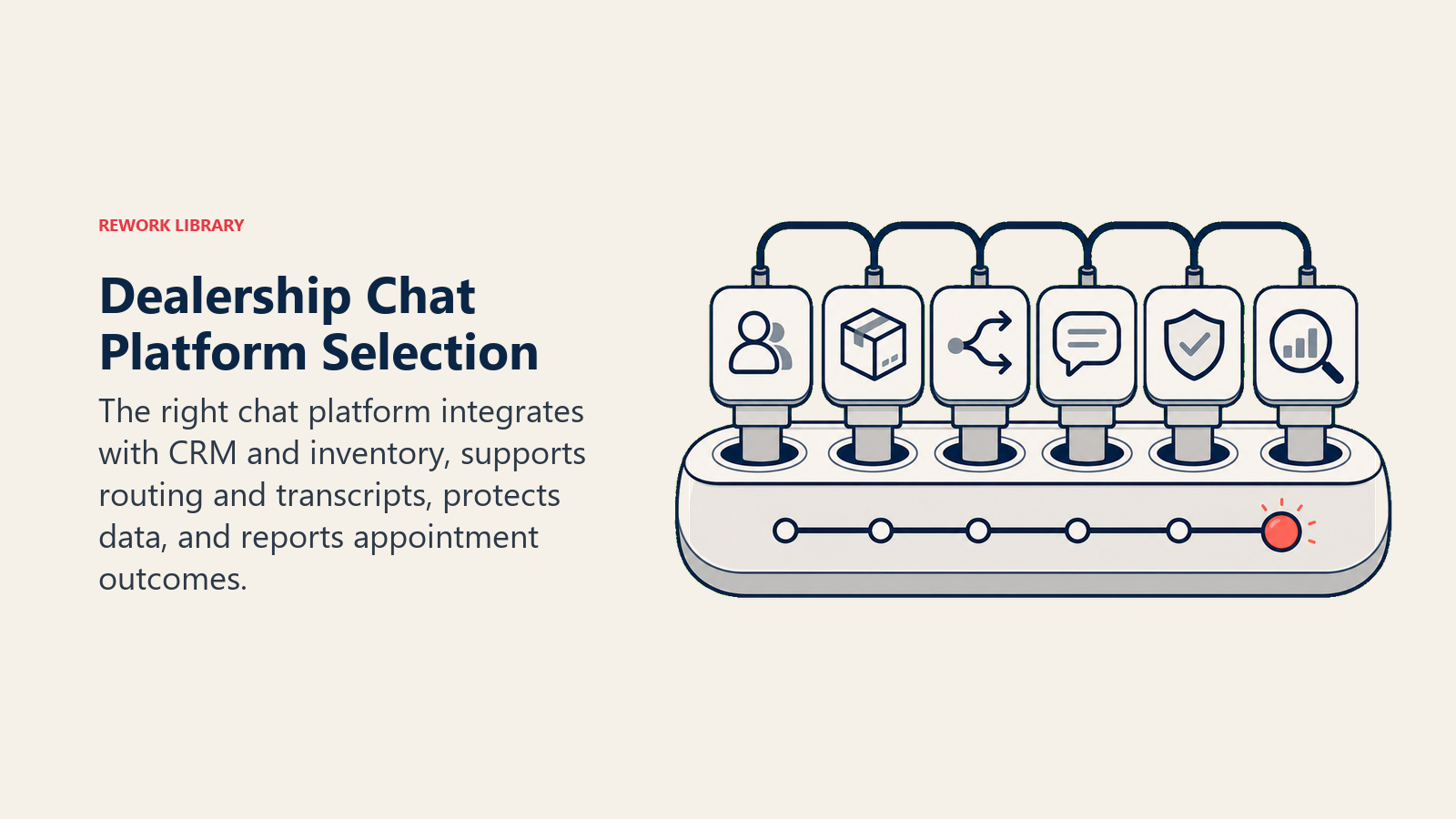
CRM integration requirements top the list. Every chat conversation should automatically create a lead in your CRM with the full conversation history. If your team has to manually copy-paste chat transcripts into the CRM, they won't do it consistently.
DMS connectivity for inventory lets chat agents see real-time inventory availability, pricing, and vehicle details without leaving the chat platform. This speeds responses and improves accuracy. Proper DMS integration is essential.
Mobile responsiveness is non-negotiable. 60-70% of your website traffic comes from mobile devices. Your chat widget needs to work perfectly on phones and tablets without covering content or creating usability issues.
Multi-channel unification means one platform that handles website chat, SMS, Facebook Messenger, and other channels. Your team sees all conversations in one dashboard instead of juggling multiple apps.
Analytics and reporting capabilities should show chat volume by hour and day, response times, conversion rates, common questions, and agent performance. Without good data, you can't improve.
Popular platforms for automotive include:
- Gubagoo (now part of Solera) - Strong DMS integration, built specifically for auto dealers
- Podium - Excellent for SMS and Google review collection, good chat features
- Conversica - AI-powered conversations with human handoff
- Foureyes - Focused on attribution and ROI tracking alongside chat
Budget $300-1,500/month depending on features, volume, and number of users.
Conversation Management
The difference between chat that converts and chat that wastes time is conversation management.
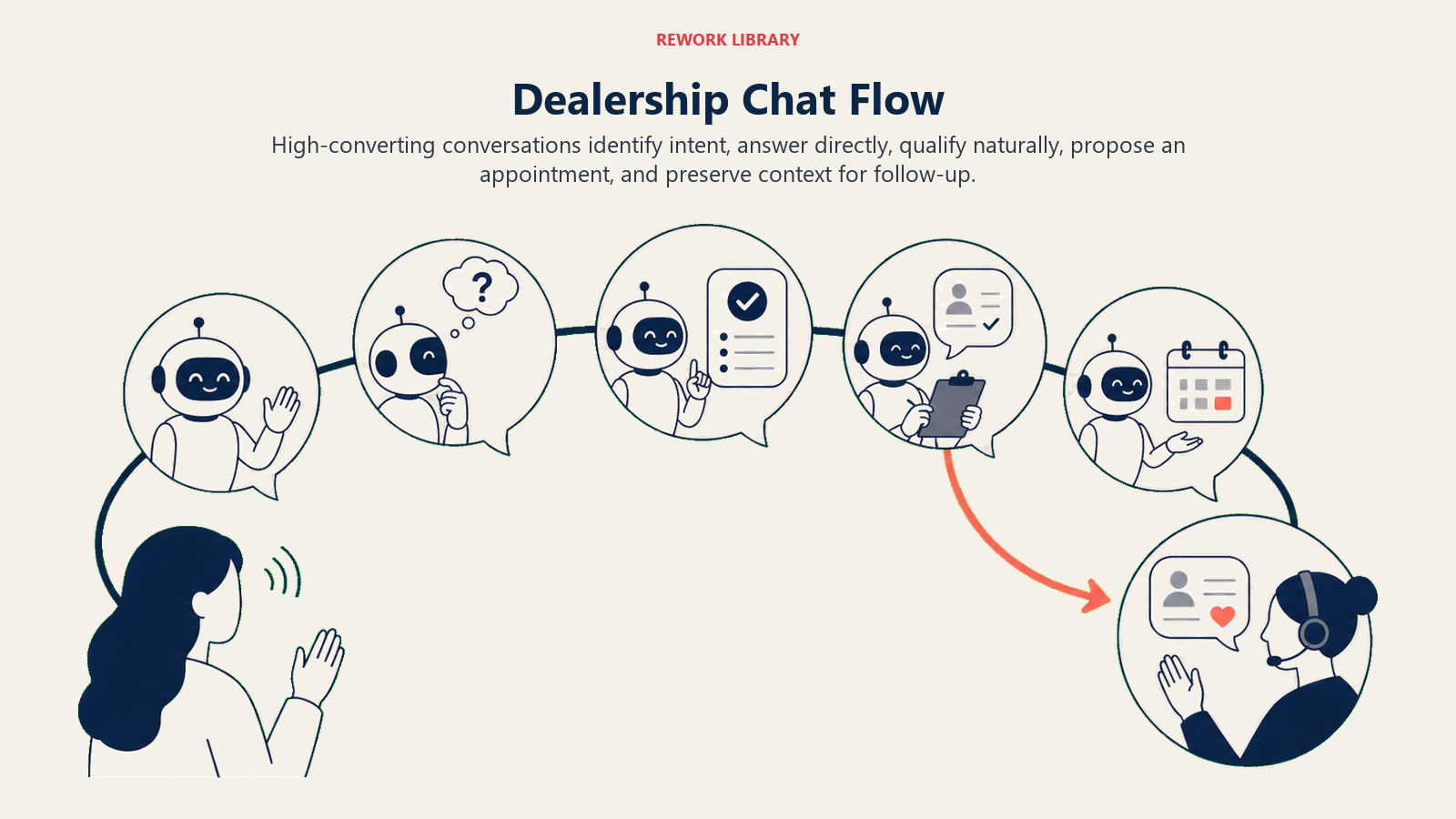
Opening messages and greeting scripts set the tone. Avoid generic "How can I help you?" Try "Hi! Are you looking for something specific today, or just browsing our inventory?" This identifies intent immediately.
Qualification questions should feel natural, not like an interrogation. "What brings you in today?" "Are you looking for new or used?" "Do you have a trade?" Ask one question at a time. Let the conversation flow.
Appointment setting techniques are the goal of every chat interaction. Don't just answer questions and let customers disappear. Move toward concrete next steps: "When would you like to see this vehicle? I can check our schedule now." Apply proven appointment setting best practices.
Pricing and payment handling requires judgment. Simple pricing questions can be answered in chat: "Yes, this vehicle is priced at $28,995." Complex negotiations about trades, financing, and discounts should move to phone or in-person: "Let me connect you with a sales consultant who can work up exact numbers based on your trade and credit."
Trade-in value discussions follow similar logic. Provide ranges or estimates in chat: "Based on what you've told me, your trade is likely worth $12,000-14,000. To get an exact number, let's schedule a time for you to bring it in." Don't give firm appraisals without seeing the vehicle. Follow proper trade-in appraisal process.
Transitioning to phone or video should be smooth, not forced. "This is getting detailed. Mind if I call you real quick to walk through the options?" or "Want to jump on a video call so I can show you the vehicle?"
The best chat conversations feel helpful, not pushy. Answer questions. Provide value. Build trust. Then guide toward the next step.
AI and Automation
AI chatbots have improved dramatically, but they're not magic. Use them strategically.
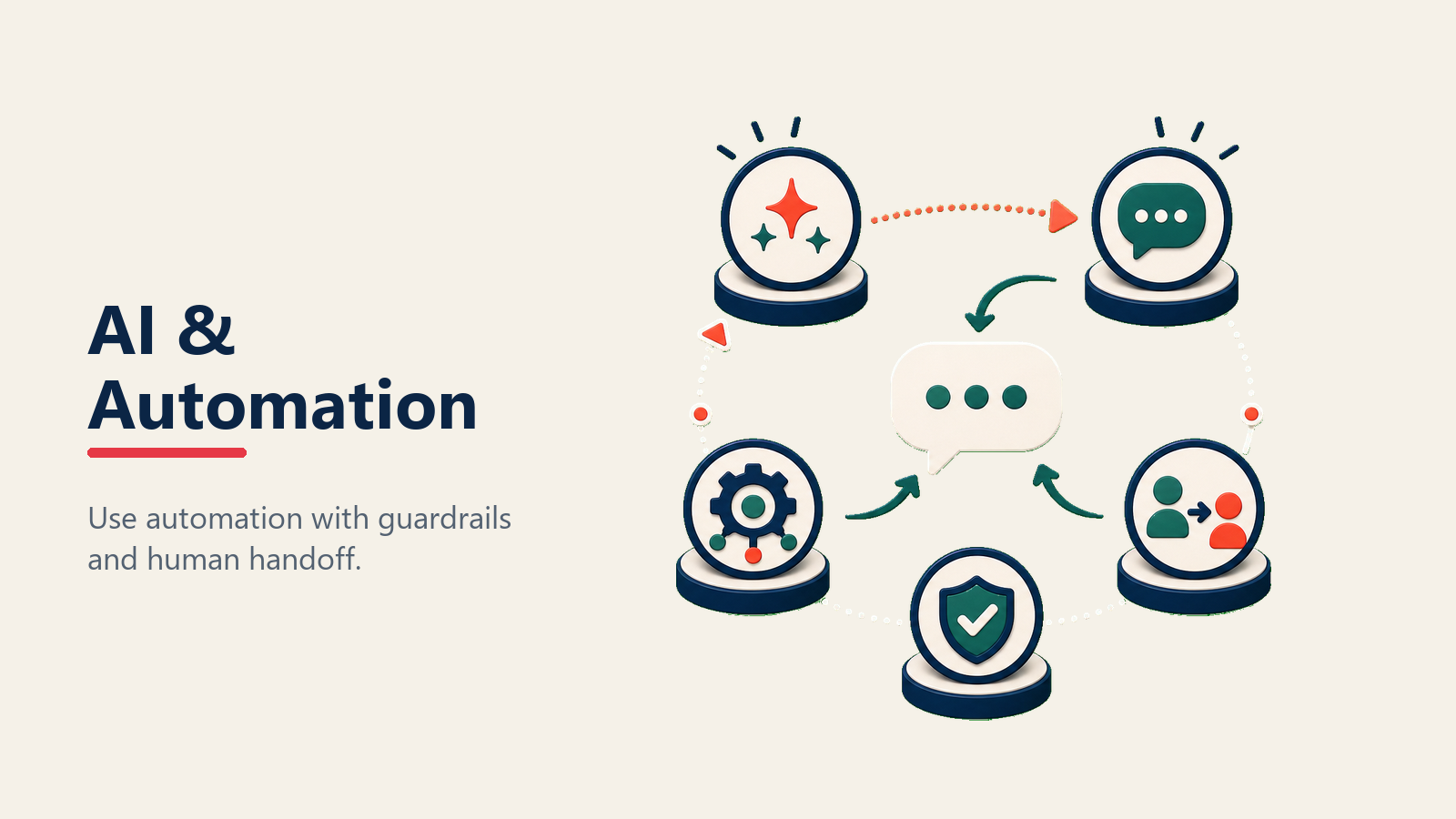
When to use chatbots vs live agents depends on the interaction:
Chatbots excel at:
- Answering simple, repetitive questions (hours, location, service costs)
- Qualifying leads with structured questions
- Providing instant responses when humans aren't available
- Handling multiple conversations simultaneously
Live agents excel at:
- Building relationships and trust
- Handling objections and concerns
- Negotiating and closing
- Providing personalized recommendations
- Dealing with frustrated or confused customers
Intent detection and qualification is where modern AI shines. Good chatbots can recognize whether someone wants to buy, needs service, is asking about hours, or has a complaint. They route accordingly.
After-hours automation strategies capture leads when your team isn't working. Use chatbots to collect name, phone, and basic questions, then promise human follow-up during business hours. "Thanks! We'll have someone reach out first thing tomorrow morning."
Lead capture forms and fallbacks activate when chatbots can't answer or customers request human contact. "I'm not sure about that. Let me get you to someone who can help. Can I get your name and phone number?"
Natural language processing capabilities determine how well chatbots understand variations in questions. "What time do you open?" "When are you available?" "Are you open Sundays?" All mean the same thing. Good NLP recognizes this.
The biggest mistake is deploying chatbots that frustrate customers because they can't handle normal questions. Test extensively before going live. Have employees and friends try to break it. Fix the failures.
Performance Metrics
Track these metrics monthly to understand chat effectiveness and identify improvement opportunities:
Chat-to-appointment conversion rates are the key metric. Industry average is 15-25% for live chat, 8-15% for chatbots. If you're below 10%, you've got script or training issues.
Response time tracking shows how quickly your team engages. Break down by time of day to identify coverage gaps. If response times spike during lunch or weekend afternoons, you need better scheduling.
Engagement rate by traffic source reveals which marketing channels generate the highest-intent chat visitors. Paid search traffic might convert at 30% while organic traffic converts at 18%. Use this to optimize ad spend and improve internet close rate metrics.
SMS open and reply rates for text messaging campaigns. SMS typically sees 90%+ open rates within 3 minutes and 25-35% reply rates. Way better than email. Use it for appointment reminders, follow-ups, and time-sensitive offers.
Cost per appointment via chat calculates total chat platform cost plus staff time divided by appointments generated. Compare this to your cost per appointment from other channels (phone, walk-in, third-party leads).
Most dealers find chat generates appointments at 30-50% lower cost than third-party leads while producing higher close rates.
Team Training & Best Practices
Chat requires different skills than phone or face-to-face communication. Train accordingly.
Multi-tasking multiple conversations is standard in chat. Agents often handle 3-5 simultaneous chats. This requires focus and organization. Use canned responses for common questions to maintain speed.
Tone and professionalism in text matters more than you'd think. Short responses can feel rude. Overly formal language feels robotic. Aim for friendly and professional: "Happy to help! Let me pull up our inventory."
Emoji and informal language guidelines depend on your brand and market. Some dealers encourage emojis to create warmth and personality. Others prefer straight business communication. Define your standards clearly.
Handling difficult customers via text is challenging because you can't use tone of voice. Stay calm, use empathy statements ("I understand your frustration"), offer solutions, and escalate to phone when needed.
Compliance and legal considerations include FTC regulations on advertising, TCPA rules for text messaging, and state-specific requirements. Get consent before sending marketing texts. Keep records of all conversations. Train staff on what they can and can't promise.
Role-play training works well for chat. Create scenarios (price shopper, trade-in question, appointment request, angry customer) and practice responses. Review actual chat transcripts weekly to identify coaching opportunities.
Moving Forward
Chat and messaging aren't optional anymore. They're baseline expectations for modern dealership websites. The question is whether you'll do it well or poorly.
Start with one channel. Get website chat right before expanding to SMS, Facebook Messenger, or other platforms. Build competence and confidence, then scale.
Measure everything. Track response times, conversion rates, customer satisfaction. Use data to improve scripts, training, and processes.
And remember that chat is a lead generation tool, not a replacement for skilled salespeople. The goal is to capture interest, provide immediate value, and move customers toward appointments. Your sales team still closes the deal.
For creating the website foundation that drives chat engagement, see Dealership Website Optimization and Vehicle Detail Page Optimization. For integrating chat into your broader digital retail strategy, explore Automotive Digital Retailing. For managing chat-generated leads effectively, review Automotive Lead Management, Lead Response Time Optimization, and Appointment Setting Best Practices. For training your BDC team to handle chat, see BDC Operations Setup.