Subscription & Mobility Services: New Revenue Models for Automotive Dealerships - 2026 Guide
Turn this article into takeaways for your work.


Each assistant summarizes the article only for you and suggests best practices for your work.
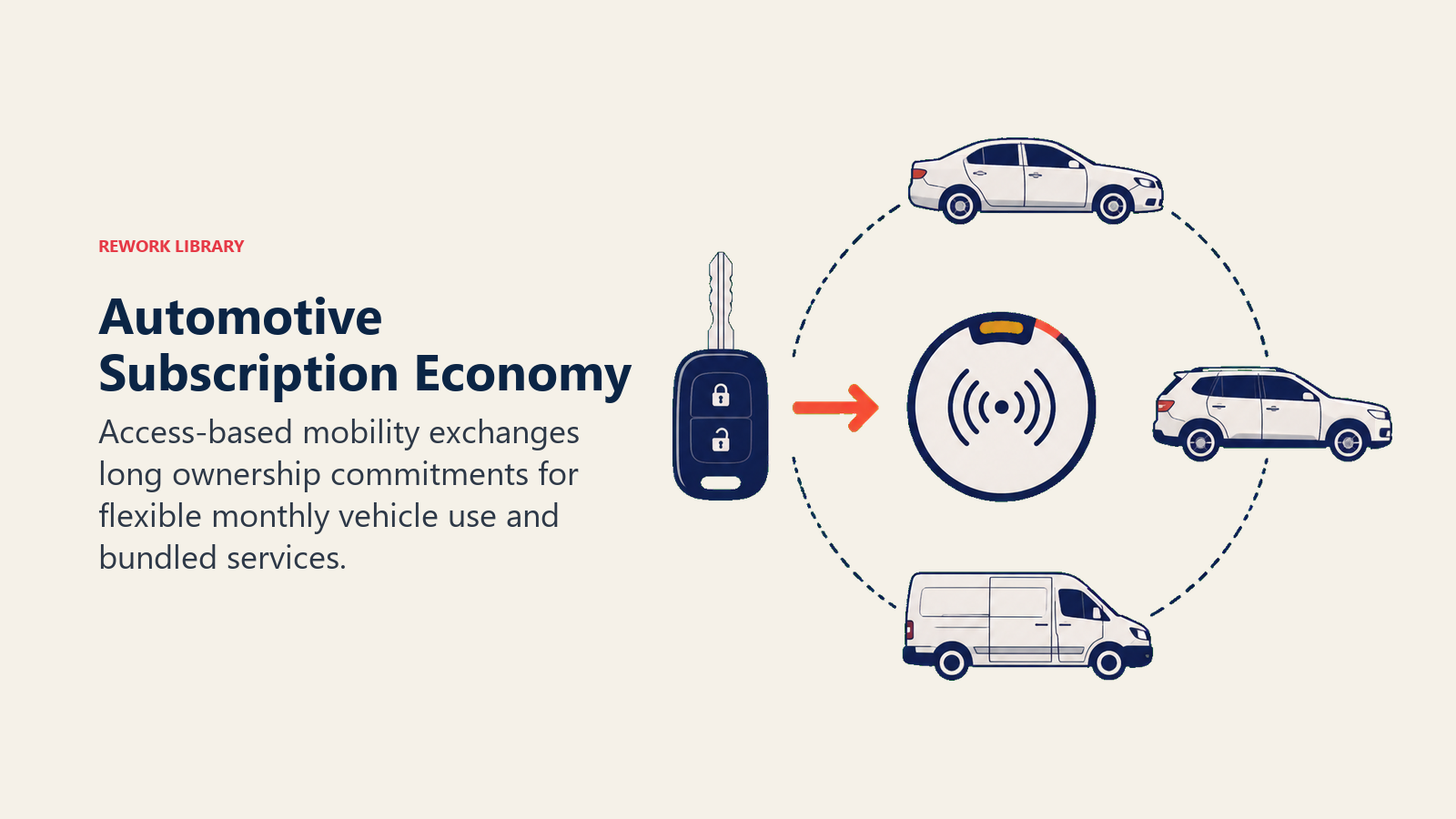
Automotive subscription and mobility services are access-based ways for dealers to earn recurring revenue without selling the vehicle outright. A subscription bundles a car, insurance, and maintenance into one flexible monthly fee, while mobility services span car sharing, ride-share supply, and corporate transportation. Together they let dealers capture customers who prefer access over ownership and build income beyond the traditional sale, finance, and service model.
Traditional dealership economics rely on vehicle sales, F&I, and service. That model worked for decades. But consumer preferences are shifting from ownership to access, and subscription services are creating profit centers that some dealers capture while others watch competitors take share.
The subscription economy changed how people buy software, watch entertainment, and even wear clothes. Automotive is next. Dealers who build these capabilities now will have infrastructure in place when demand accelerates. Those who wait will scramble to catch up.
The Subscription Economy in Automotive
Consumer preference is shifting from ownership to access across categories. Younger buyers especially value flexibility over commitment. They don't want 72-month loans tying them to one vehicle. They want options. OEM subscription programs have validated the market. Care by Volvo offers all-inclusive monthly payments covering insurance, maintenance, and the ability to swap vehicles. Porsche Drive lets enthusiasts rotate through different models. Book by Cadillac tested multi-vehicle access before pausing to refine the model. The global vehicle subscription market was valued at $6.69 billion in 2024 and is projected to reach $80.29 billion by 2033, growing at a CAGR of 31.8% as consumer preferences shift toward access-based mobility.
Third-party platforms like Clutch and Flexdrive operate independent of OEMs, giving dealers another path to participation. These platforms handle technology and billing while dealers provide vehicles and service.
Subscription differs from traditional lease in important ways. Leases lock customers into specific vehicles for 24-36 months with mileage limits and wear-and-tear penalties. Subscriptions offer month-to-month flexibility, often include insurance and maintenance, and sometimes allow vehicle swaps. The premium price reflects that flexibility.
Target customers for subscription include people in life transitions (new job, new city, divorce), those who want to try vehicles before committing to purchase, corporate employees needing temporary transportation, and buyers who simply prefer flexibility to ownership based on their customer journey.
Vehicle Subscription Program Models
Dealers have multiple subscription structures to consider. According to market research, the OEM segment dominated the market with approximately 56% share in 2024, while the multi-brand segment captured 60% of market share, indicating strong demand for both single-brand and flexible multi-vehicle programs. Single-vehicle monthly subscription is the simplest model. Customer pays a monthly fee for one vehicle, typically including insurance and maintenance. No down payment. Cancel with 30 days notice. Pricing runs $500-1,500 monthly depending on vehicle class. Multi-vehicle swap programs let subscribers switch vehicles periodically, monthly, weekly, or on-demand. A customer might drive an SUV for a family trip, swap to a sedan for commuting, then take a convertible for a weekend getaway. This model requires more inventory and logistics but commands premium pricing.
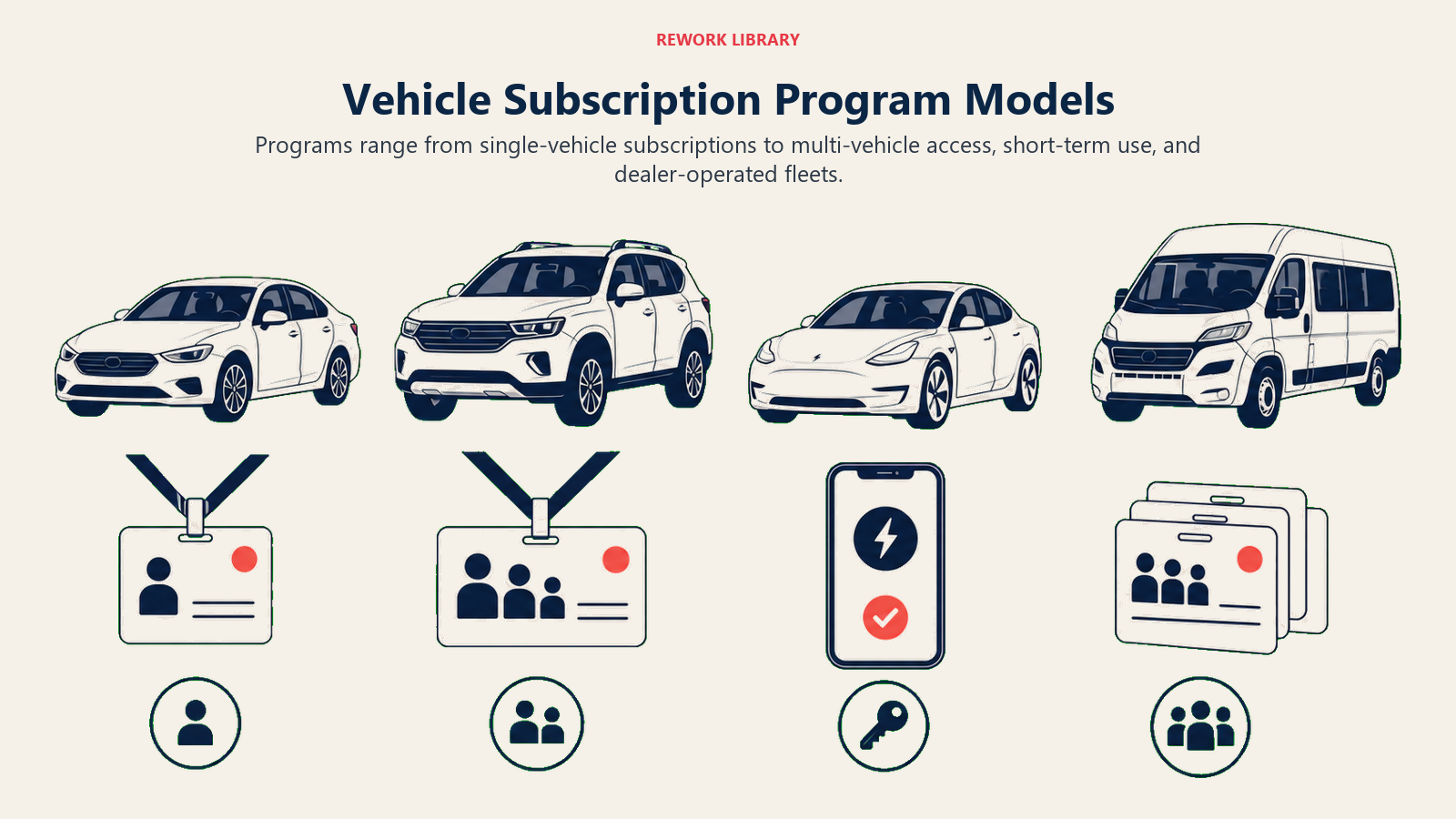
Multi-vehicle swap programs let subscribers switch vehicles periodically (monthly, weekly, or on-demand). A customer might drive an SUV for a family trip, swap to a sedan for commuting, then take a convertible for a weekend getaway. This model requires more inventory and logistics but commands premium pricing.
Mileage-based pricing adjusts monthly cost based on driving patterns. Light drivers pay less. Heavy drivers pay more. This aligns cost with vehicle depreciation and makes subscriptions accessible to budget-conscious customers.
All-inclusive pricing bundles everything (vehicle, insurance, maintenance, roadside assistance) into one monthly payment. Customers love the simplicity. À la carte pricing lets customers add only what they need, lowering base prices but complicating administration.
New vehicle subscriptions command higher prices and attract customers wanting the latest features. Used vehicle subscriptions open the market to price-sensitive subscribers and let dealers monetize trade-ins differently.
Program Economics and Profitability
Making subscription profitable requires careful financial management. Vehicle acquisition determines your cost basis. Buying vehicles specifically for subscription differs from retail inventory management. Consider off-lease acquisitions, OEM fleet programs, or vehicles from your trade-in pipeline. Lower acquisition cost improves margins. Depreciation and residual value drive profitability. Subscription vehicles accumulate miles faster than typical retail vehicles. Model depreciation carefully. Popular vehicles with strong residual values work better than vehicles that depreciate quickly.
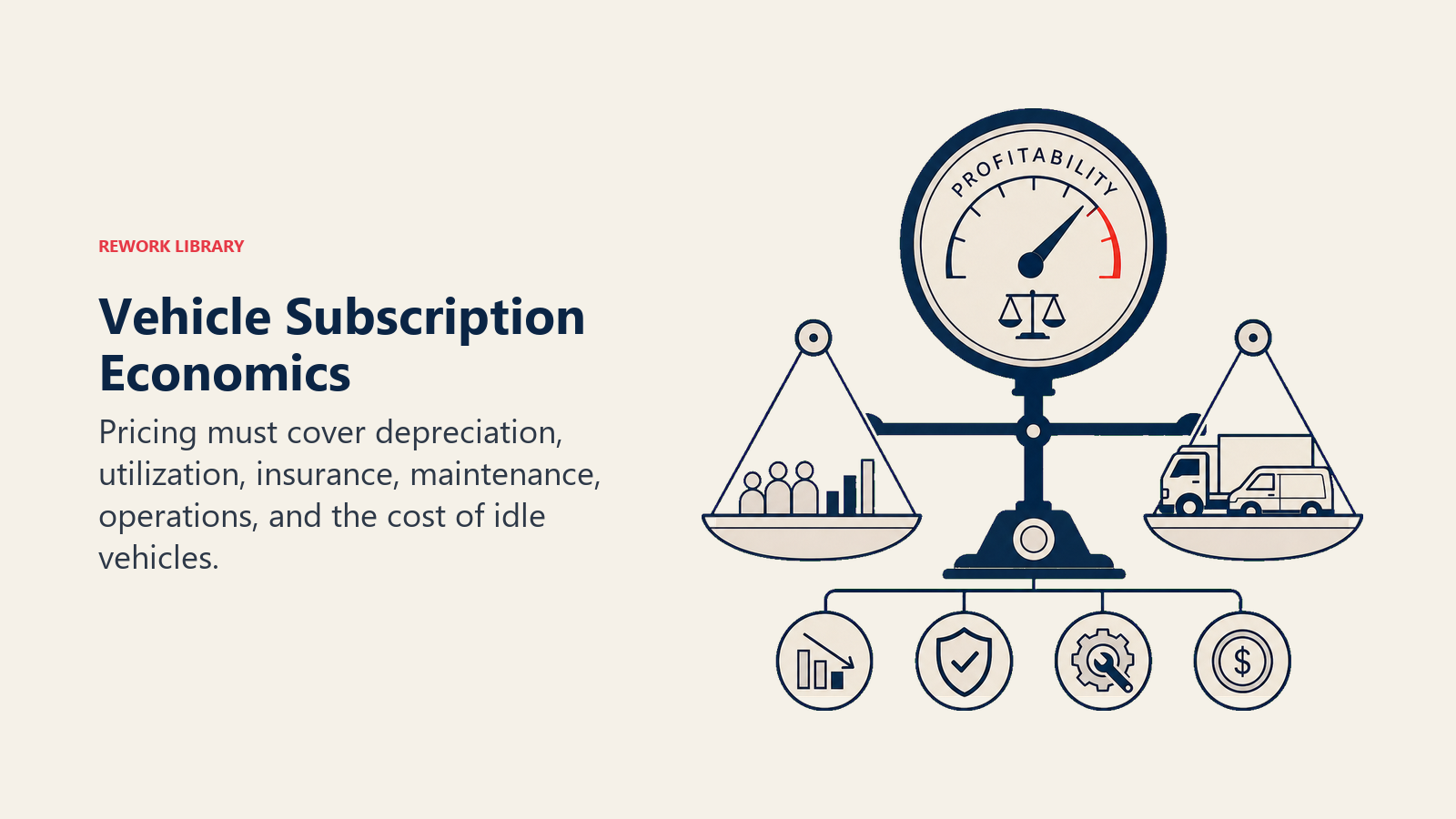
Insurance represents a significant cost. Commercial policies covering multiple drivers and subscriber liability run 2-3x typical personal insurance. Partner with insurers who specialize in subscription and mobility programs to optimize costs.
Maintenance and administrative overhead add up. Subscription vehicles need more frequent service due to higher miles and multiple drivers. Budget for detailing between subscribers, administrative staff to manage the program, and technology platform fees.
Price for profitability by working backwards from target margin. If a vehicle costs $35,000, depreciates $12,000 annually, and you want 15% margin, you need $14,000+ in annual subscription revenue after expenses. That's roughly $1,200 monthly before insurance and maintenance.
Break-even analysis should account for vehicle utilization. If vehicles sit unsubscribed 30% of the time, you need higher monthly rates during subscribed periods. Target 85%+ utilization for program viability.
Implementation Requirements
Building subscription infrastructure requires investment in systems and processes. Technology platforms manage the customer experience. Solutions like Clutch, Flexdrive, or purpose-built dealer platforms handle online enrollment, payment processing, vehicle assignment, swap scheduling, and customer communication. Budget $200-500 monthly per vehicle for platform fees.
Allocate inventory specifically for subscription. Don't try to share inventory between retail and subscription, because it creates conflicts. Dedicate 10-20 vehicles to start, scaling based on demand. Choose vehicles with broad appeal: mid-size SUVs, luxury sedans, and popular crossovers through effective inventory turn optimization.
Insurance and liability structures need legal review. Establish clear subscriber agreements covering damage responsibility, geographic restrictions, and prohibited uses. Work with insurance brokers experienced in commercial mobility coverage.
Customer onboarding processes should be frictionless. Digital enrollment, identity verification, driving record checks, and payment setup should happen in 15 minutes online. Vehicle pickup should be quick with minimal paperwork, since that's the point of subscription.
Billing and payment management requires reliable systems. Subscriptions mean recurring charges, failed payment handling, and mid-month adjustments. Don't underestimate the complexity of subscription billing.
Marketing Subscription Services
Finding subscribers requires different approaches than selling vehicles. Target customers who value flexibility. Recent college graduates, people relocating for work, divorced individuals rebuilding their lives, and corporate travelers all need flexible transportation. Digital advertising targeting life-transition moments performs well.
Position against traditional ownership by emphasizing freedom. "Drive what you want, when you want, without commitment" resonates better than feature-by-feature comparisons. Subscription is a lifestyle choice, not just a transaction type.
Digital marketing works better than traditional advertising for subscription. Social media, search advertising, and content marketing reach the digitally-native audience most interested in subscription models. Traditional TV and radio reach buyers who prefer ownership.
Corporate and fleet subscription opportunities provide steady revenue. Companies need temporary vehicles for visiting employees, project teams, or executives between permanent assignments. One corporate relationship might mean 5-10 consistent subscribers through lead generation.
Referral and loyalty programs leverage satisfied subscribers. Offer monthly credits for referrals. Create tiers with perks for long-term subscribers. Build community among subscribers through events or exclusive access.
Mobility-as-a-Service Opportunities
Beyond subscriptions, dealers can participate in broader mobility services. Cox Automotive's mobility solutions group has been helping dealers prepare for these emerging opportunities, including EV ecosystems and new mobility business models that complement traditional dealership revenue streams. Dealership-operated car sharing lets community members rent your vehicles by the hour or day. Platforms like Turo facilitate peer-to-peer sharing, but dealers can operate their own programs with better control. This works especially well in urban markets where not everyone needs full-time vehicle access.
Partnership with ride-sharing services creates opportunities. Uber and Lyft drivers need vehicles. Dealers can provide them through lease-to-own programs, subscription arrangements, or traditional rental leveraging dealership revenue streams. Some dealers dedicate fleet managers to this segment.
Last-mile delivery and logistics services leverage your vehicle inventory for commercial purposes. Local businesses need delivery vehicles. Dealers can provide them with driver services or just vehicles. This was a growth area during pandemic-era demand and continues in e-commerce-driven markets.
Corporate mobility solutions package transportation for businesses. Instead of company cars, provide mobility budgets that employees use for subscription, rental, or ride-sharing. Dealers become mobility managers rather than just vehicle sellers.
Connected Car Services
Modern vehicles generate valuable data and enable new services. Telematics and usage-based insurance partnerships let insurers price coverage based on actual driving behavior. Dealers can facilitate these connections, earning referral fees or preferred rates for their customers.
In-vehicle commerce is emerging. Vehicles can order coffee, pay for parking, purchase fuel. Dealers may eventually participate in these ecosystems as service providers or referral partners through data analytics.
Predictive maintenance and service scheduling use vehicle data to optimize service timing. Connected vehicles know when components need attention before failures occur. Dealers with connected car capabilities can proactively schedule service, improving customer retention and shop utilization.
Connected car feature subscriptions are growing. Heated seats, advanced driver assistance, and performance upgrades are increasingly software-enabled and subscription-priced. Dealers may participate in selling and supporting these subscriptions.
Risk Management and Challenges
Subscription and mobility services carry risks traditional retail doesn't. Vehicle damage and customer liability require clear policies. Who pays when a subscriber damages a vehicle? What's the deductible? How do you handle disputes? Define these upfront and enforce consistently through proper CRM implementation. Fraud prevention matters when vehicles leave your lot with strangers. Verify identities thoroughly. Check driving records. Require credit cards (not debit) for damage deposits. Monitor vehicle locations and usage patterns for anomalies.
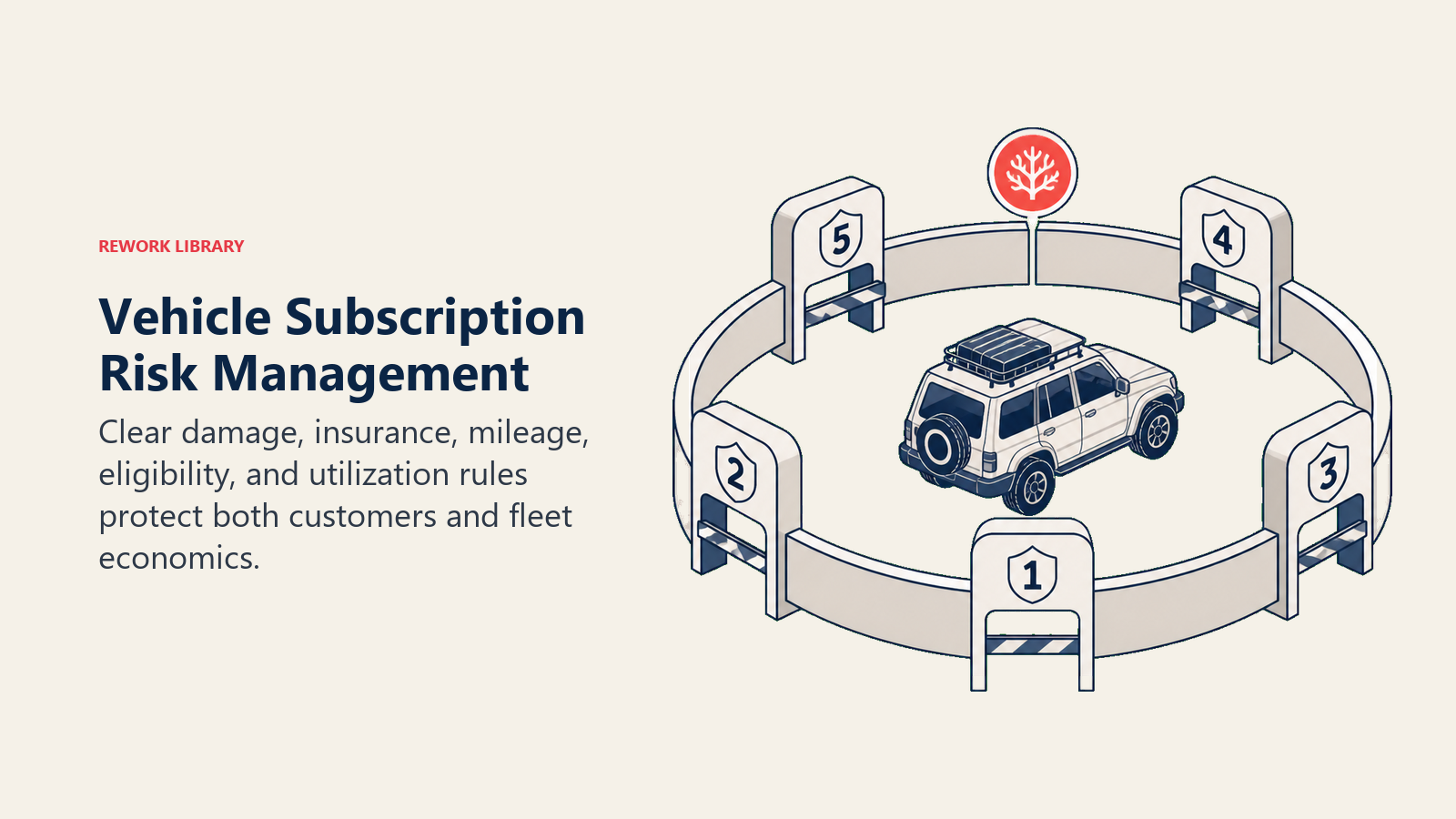
Regulatory and compliance considerations vary by state. Some states regulate subscription services differently than traditional sales or leases. Consult attorneys familiar with your state's automotive and transportation regulations.
Brand reputation depends on customer experience. One bad subscriber experience shared on social media can damage your program's reputation. Invest in customer success resources that resolve issues quickly.
Plan exit strategies before launching. If your subscription program isn't profitable after 18 months, how do you wind it down? Can subscription vehicles return to retail inventory? What happens to active subscribers? Having exit plans doesn't mean expecting failure. It means responsible business planning.
The shift from ownership to access isn't happening overnight, but it is happening. Dealers who build subscription and mobility capabilities now will be ready when consumer demand accelerates. Those who dismiss these models as niche will find themselves playing catch-up as the market evolves.
Frequently Asked Questions about Automotive Subscription & Mobility Services Explained
What are automotive subscription and mobility services?
They are access-based offerings where customers pay for use of a vehicle rather than buying it. A subscription bundles a car, insurance, and maintenance into a flexible monthly fee, and mobility services extend that to car sharing, ride-share vehicle supply, and corporate transportation programs.
How is a vehicle subscription different from a lease?
A lease locks a customer into one vehicle for 24-36 months with mileage limits and wear penalties. A subscription is month-to-month, usually includes insurance and maintenance, and sometimes allows vehicle swaps. The higher price reflects that added flexibility.
How much do car subscriptions cost?
Single-vehicle subscriptions typically run $500-$1,500 a month depending on vehicle class, with no down payment and 30-day cancellation. Multi-vehicle swap programs and all-inclusive bundles command a premium because they require more inventory and logistics.
Are subscription programs profitable for dealers?
They can be, but only with disciplined economics. Profitability depends on low vehicle acquisition cost, careful depreciation modeling, and high utilization. Most programs target 85% or higher vehicle utilization and price each subscription to recover depreciation, insurance, and maintenance plus margin.

Senior Implementation Consultant