Vehicle Delivery Experience - Turn Customers Into Advocates - 2026 Guide
Turn this article into takeaways for your work.


Each assistant summarizes the article only for you and suggests best practices for your work.
Customers remember vehicle delivery more vividly than any other dealership interaction. The test drive blurs with others. Negotiation details fade. But delivery stays sharp, whether it was rushed and confusing or celebratory and thorough.
Dealers with formal delivery processes score 15-25 points higher on SSI (Sales Satisfaction Index) and receive 3× more online reviews than competitors who rush through delivery. The difference isn't subtle gestures or minor touches. It's treating delivery as a relationship-building opportunity instead of final transaction. J.D. Power's 2025 U.S. Sales Satisfaction Index Study confirms that delivery process is the most important factor in overall customer satisfaction, ranking as the top influence among six key factors measured in buyer satisfaction.
Yet most deliveries follow the same pattern: quick vehicle walk-around, hasty feature demonstrations, paperwork handoff, and "call if you have questions." Customers leave excited about their new vehicle but confused about features, uncertain about maintenance, and disconnected from the dealership. This undermines the entire automotive sales process.
Top-performing dealers approach delivery differently. They schedule dedicated appointments, prepare meticulously, demonstrate features comprehensively, introduce service teams, and create memorable experiences that customers share with friends and post online through effective online review management.
Pre-Delivery Preparation
Exceptional delivery experiences start before customers arrive. Preparation separates professional deliveries from rushed handoffs.
Vehicle inspection and detail standards ensure customers receive vehicles in perfect condition. Every vehicle should get full inspection 24 hours before delivery, checking for transport damage, verifying all features function properly, confirming accessories are installed, and ensuring cleanliness meets standards.
Detail every vehicle like you're delivering to your most demanding customer. Clean exterior and interior thoroughly. Remove protective plastics. Verify floor mats are in place. Check that owner's manuals and all documentation are in glove box.
Walk around the vehicle yourself before delivery. Would you be proud handing this vehicle to your mother? If not, it's not ready.
Personalization touches make delivery feel special. Simple gestures create disproportionate impact:
- Welcome card signed by sales team
- Full tank of gas (not 3/4 tank)
- Floor mats personalized with customer name or initials
- Air freshener in customer's preferred scent
- Gift for customer's child if mentioned during sales process
These touches cost little but communicate significant customer value.
Delivery appointment scheduling and confirmation prevents the rushed delivery experience most customers receive. Don't deliver vehicles when customers pick up cars between appointments or squeeze in during lunch breaks.
Schedule 45-60 minute delivery appointments. Confirm appointments 24 hours in advance via text and email. Remind customers to bring driver's license, proof of insurance, and any trade-in keys if applicable.
Set expectations: "Your delivery appointment will take about an hour. We'll walk through every feature, answer all your questions, and make sure you're completely comfortable with your new vehicle."
Gathering customer questions in advance allows preparation. During delivery confirmation, ask: "What features are you most excited to learn about? Are there any specific questions we should be ready to answer?"
This helps delivery specialists prepare demonstrations and gather information. If a customer asks about towing capacity, you can have that information ready instead of looking it up during delivery.
The Delivery Appointment Structure
Delivery should feel like celebration, not paperwork completion. Structure the appointment to create positive emotions and thorough education.
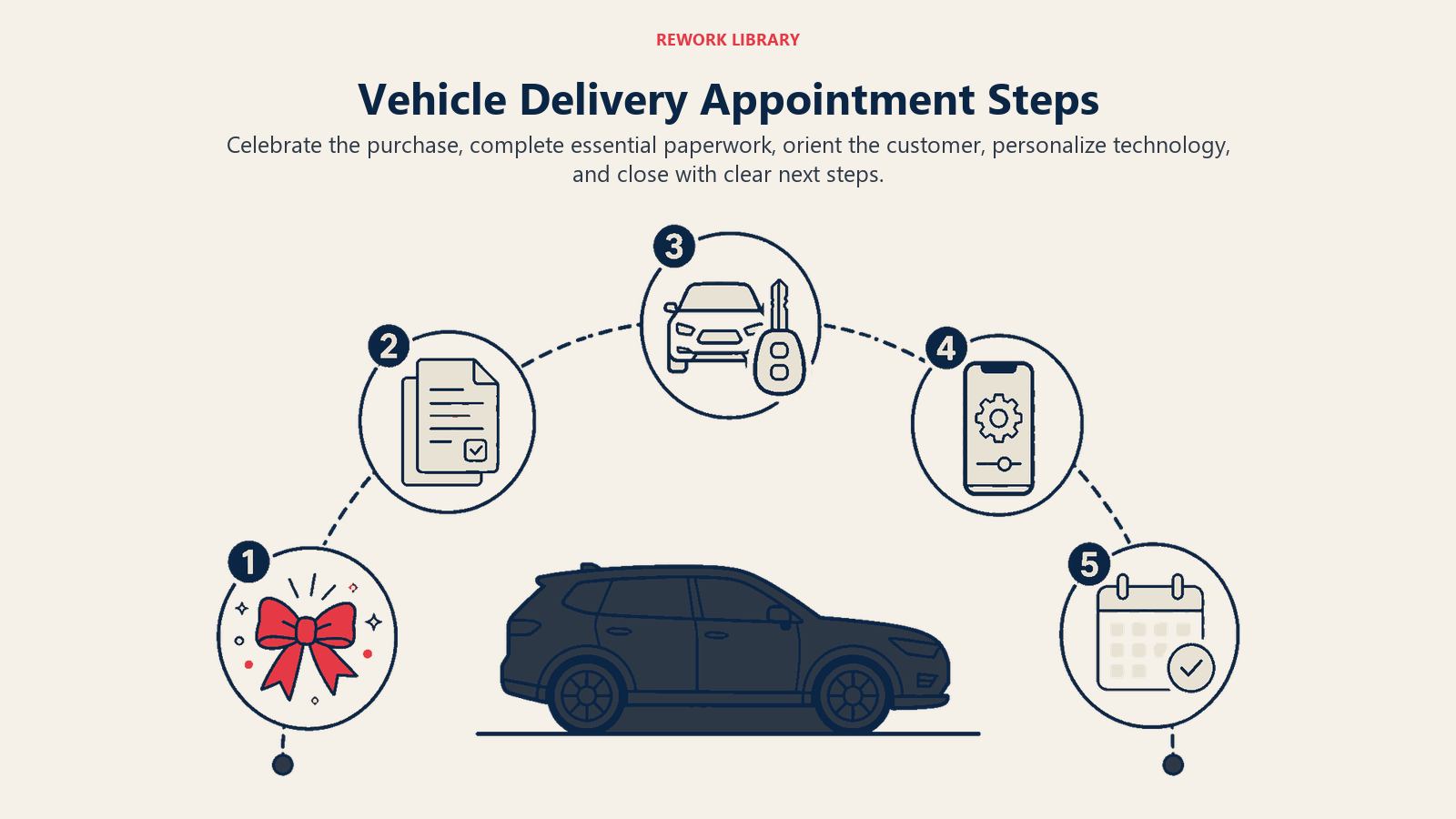
Celebrate the moment before diving into features. Congratulate customers on their purchase. Take photos of them with their new vehicle. Many customers share these photos on social media, free marketing for your dealership.
Create a designated delivery area that's clean, well-lit, and away from service drive noise. Some dealers use ribbons or bows on delivered vehicles. Others have delivery flags or balloons. These theatrical touches might seem over the top, but customers love them.
Complete vehicle walk-around and feature demonstration ensures customers understand what they bought. Walk around the exterior explaining features:
- How to open/close fuel door and where fuel cap is stored
- Tire pressure monitoring system and where to check pressure
- How to access spare tire or tire repair kit
- Exterior lighting features and controls
- Proper key fob usage for locks and remote start
Then move to interior features systematically:
- Seat adjustments, memory settings, lumbar support
- Climate control operation and zone controls
- Audio system basics and source selection
- Storage compartments and convenience features
- Proper mirror adjustment and blind spot monitoring
Don't rush. Let customers try features themselves. Adjust seats. Change climate settings. Play with audio controls. Physical practice builds confidence.
Technology pairing often causes post-delivery frustration. Many customers can't connect phones properly and give up. Take time to pair phones to Bluetooth, set up Apple CarPlay or Android Auto, and demonstrate how they work.
Download your brand's mobile app to their phone during delivery. Complete registration and walk through key app features, remote start, vehicle status, maintenance reminders, roadside assistance.
Show customers how to program home address in navigation. Demonstrate voice command basics. These technologies confuse customers more than mechanical features.
Safety feature explanation prevents misuse and builds confidence. Many customers don't understand how blind spot monitoring, lane keeping assist, adaptive cruise control, and automatic emergency braking work.
Explain when these systems activate, what alerts they provide, and what limitations they have. Emphasize these are driver aids, not replacements for attention.
Take time with backup cameras and parking sensors. Show customers how to use camera guidelines properly and what different sensor tones indicate.
Scheduled maintenance plan review transitions customers to service department. Pull up maintenance schedule in owner's manual or mobile app. Explain what services are needed and when using maintenance menu pricing transparency.
If customers purchased maintenance plans, explain coverage details. If they didn't, explain service department benefits and competitive pricing through your fixed operations overview.
Schedule the first maintenance appointment before customers leave. Don't wait for them to call in 3,000 miles. Pre-scheduling through service appointment scheduling ensures they return to your dealership instead of going elsewhere.
Technology & Feature Orientation
Modern vehicles have more technology than many customers' computers. Thorough technology orientation prevents frustration and support calls.
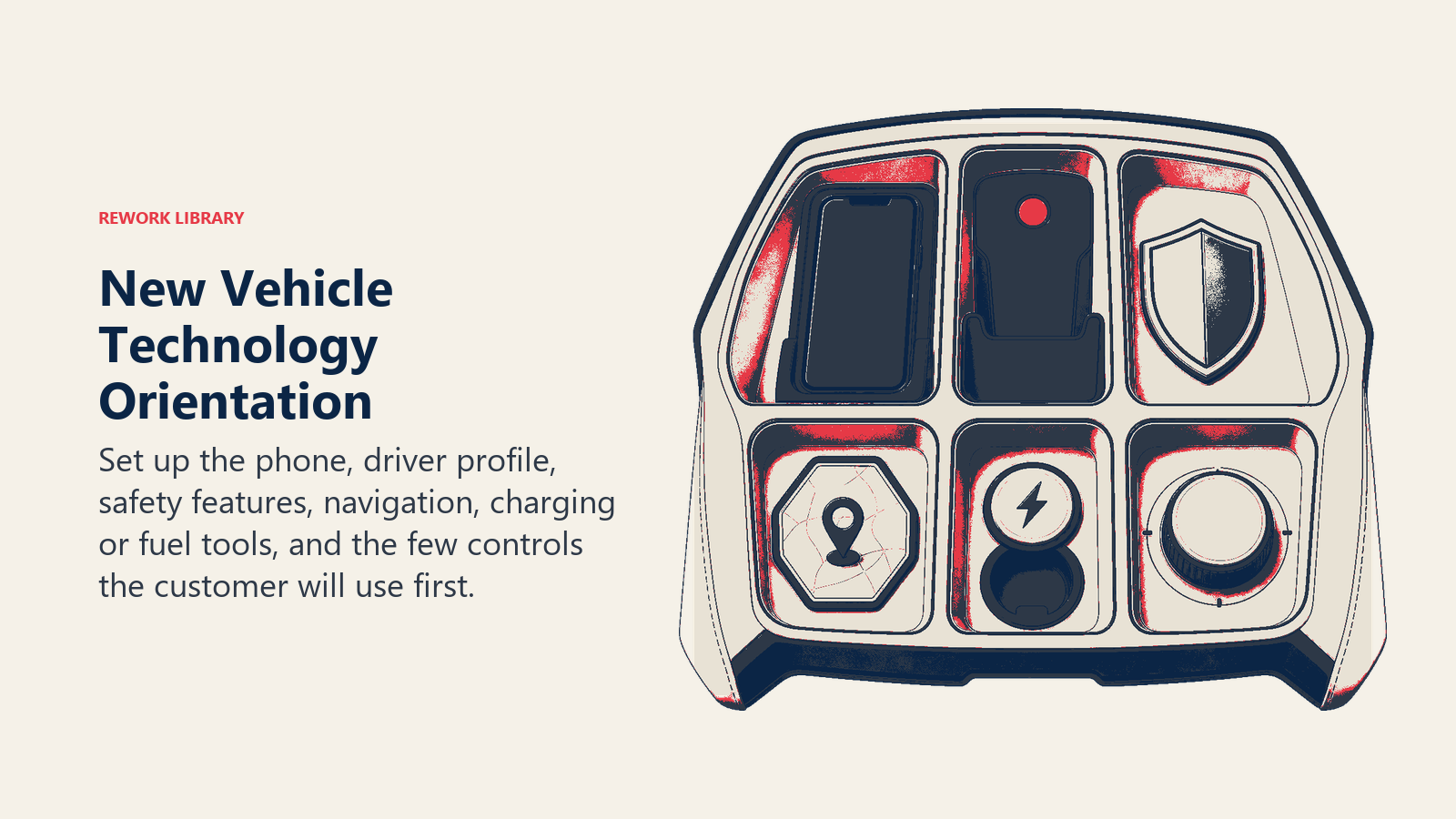
Infotainment system setup and personalization should happen during delivery, not after customers drive home. Walk through system menus explaining each section. Set up audio presets for radio stations they mention.
Demonstrate how to save favorite destinations in navigation. Show how to adjust display brightness and interface settings. Connect phone contacts so hands-free calling works properly.
Many customers never learn these features because initial setup is confusing. Helping during delivery ensures they actually use technology they paid for.
Mobile app installation and registration creates ongoing engagement channel. But customers won't download apps on their own. Do it together during delivery.
Create account, verify registration, and walk through key app features. Show remote start, door lock/unlock, vehicle locate, and maintenance scheduling. Demonstrate how to check fuel level and tire pressure from the app.
Voice command demonstrations help customers use hands-free features. Explain activation phrases. Demonstrate making calls, changing audio sources, entering navigation destinations, and adjusting climate controls via voice.
Let customers try voice commands themselves. Common commands often fail due to improper phrasing. Practice helps build confidence.
Navigation and connected services activation ensures systems work when customers need them. Verify navigation has current maps. Confirm connected services trials are activated.
Explain what happens when trial periods end, which features stop working and what subscriptions cost. This prevents surprise when features they were using suddenly require payment.
Driver assistance feature tutorials prevent misunderstanding and misuse. Many customers don't understand when adaptive cruise control will brake or how lane keeping assist works.
If possible, demonstrate features in vehicle. Show how blind spot monitoring alerts appear. Activate lane departure warnings. Let customers experience how systems work.
Explain limitations clearly. These systems don't work in all conditions. They're not self-driving features. Customers need realistic understanding of capabilities.
Service & Maintenance Introduction
Delivery is your best opportunity to establish service retention. Don't waste it.
Service team introduction and facility tour creates personal connection. Walk customers to service drive. Introduce them to service manager or advisor who will handle their account.
Show them where to enter for service. Explain how to check in. Walk through customer waiting area highlighting amenities, WiFi, coffee, work stations.
This personal introduction makes customers comfortable returning for service. They're not entering unfamiliar territory, they know where to go and who will help them.
First maintenance appointment scheduling should happen during delivery. Check customer's expected mileage at first service interval. Schedule appointment for appropriate date.
Don't suggest they'll call later. Schedule it now. They can always reschedule. But pre-scheduling dramatically improves the likelihood they return to your dealership instead of going to quick-lube shops or other dealers.
OEM maintenance plan explanation ensures customers understand coverage if they purchased plans. Review what services are included, mileage/time limitations, and any restrictions.
If they didn't purchase maintenance plans, explain service department competitive pricing and benefits of dealer service, trained technicians, OEM parts, warranty protection.
Service department contact information should be saved in customers' phones before they leave. Add service department number to their contacts. Show them how to access online service scheduling through website or mobile app.
Give them service manager's business card. Explain that if they have any service questions or concerns, they should contact that person directly.
Online service scheduling demonstration makes future appointments easier. Pull up service scheduler on their phone. Walk through process of booking appointments. Show them how to select services, choose dates and times, and receive confirmations.
Customers who know how to schedule online are more likely to maintain regular service intervals. Reducing friction increases retention.
Post-Delivery Follow-Up
Delivery doesn't end when customers drive away. Systematic follow-up ensures satisfaction and addresses issues before they damage relationships.
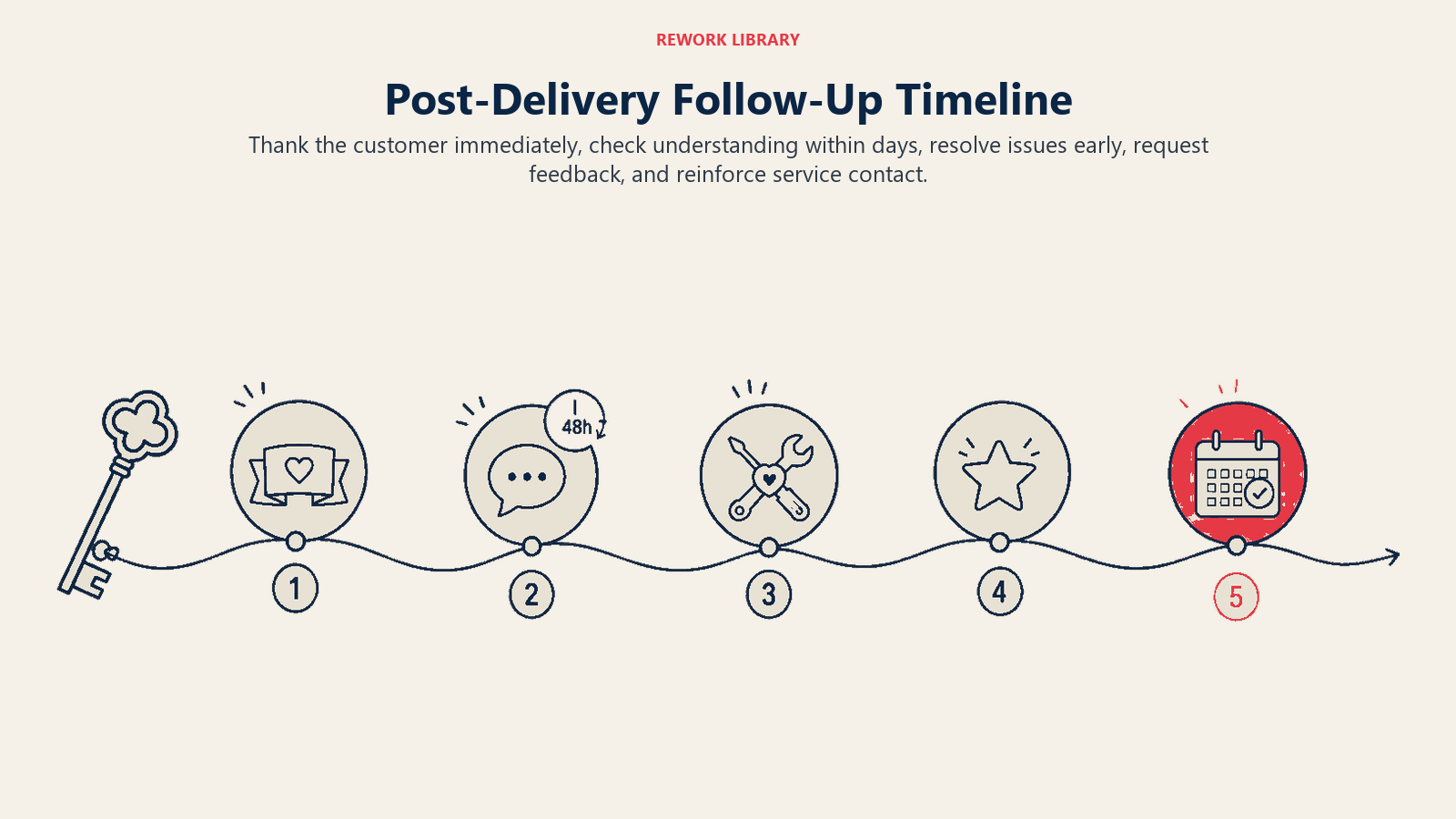
Same-day thank you message should arrive within hours of delivery. A personalized text from the salesperson: "Congratulations again on your new [vehicle]! It was a pleasure working with you. Please don't hesitate to reach out if you have any questions."
Simple gesture, significant impact. Customers appreciate acknowledgment.
3-day check-in call/text catches early issues. "Hi [Customer], it's [Salesperson] from [Dealership]. Just wanted to check in after a few days with your new [vehicle]. Do you have any questions about features or anything we can help with?"
Many customers have questions after driving for a few days. This proactive contact shows you care and prevents small confusion from becoming frustration.
7-day feature reminder videos reinforce delivery education. Send short video links explaining commonly forgotten features: "Here's a quick refresher on setting up your garage door opener" or "Here's how to use remote start from your key fob."
These videos answer common questions and demonstrate ongoing support. J.D. Power research found that nearly one-fourth (22%) of buyers want follow-up explanation of vehicle features a few weeks after delivery, yet more than half (53%) never receive any such follow-up, presenting a key opportunity for dealers to improve the delivery experience and drive satisfaction scores.
30-day satisfaction survey measures delivery quality and overall experience. Keep it brief, 5-7 questions maximum. Focus on delivery experience, vehicle satisfaction, and likelihood to recommend. Track responses through automotive customer experience metrics.
Follow up personally on any negative feedback. Resolve issues immediately before they become negative reviews using CSI score improvement strategies.
Review request timing and approach should come 7-10 days post-delivery. This timing allows customers enough experience to write meaningful reviews while excitement remains high.
Make requesting reviews easy. Send direct links to Google, dealer.com, and DealerRater. Personalize requests: "We'd really appreciate if you'd share your experience. Your feedback helps other customers and helps us improve."
Delivery Experience Metrics
Measure delivery performance to drive continuous improvement:
Delivery appointment show rate should exceed 90%. Lower rates indicate scheduling problems or inadequate confirmation processes.
Time spent in delivery process should average 45-60 minutes for most vehicles. Shorter suggests rushed delivery. Longer indicates process inefficiency.
SSI correlation to delivery quality shows direct relationship. Track SSI scores for salespeople or dealerships with formal delivery processes versus informal ones. The gap typically ranges from 15-25 points.
Review generation rate post-delivery measures how many customers post reviews within 30 days of delivery. Top performers generate reviews from 40-50% of customers through systematic review management requesting processes.
Service retention from delivery customers tracks how many customers return for first service at your dealership. Target should exceed 70%. Lower rates suggest delivery failed to establish service customer retention relationship.
Implementation Roadmap
Start by documenting your current delivery process. What happens today? How long does it take? What's included or skipped?
Create delivery checklist covering all required elements, vehicle preparation, feature demonstration, technology setup, service introduction, and follow-up schedule.
Designate delivery coordinator role. This person ensures vehicles are prepared, delivery appointments scheduled, and process followed consistently. In smaller dealerships, this might be a sales manager responsibility. Larger dealers need dedicated coordinators.
Train all salespeople on delivery standards. Conduct practice deliveries with role-playing. Record and review delivery appointments to identify improvement opportunities through sales consultant performance reviews.
Implement follow-up automation through your automotive CRM implementation. Set triggers for same-day thank you, 3-day check-in, 7-day videos, and 30-day survey. Automation ensures consistent execution integrated with post-sale follow-up process.
Measure and refine based on results. Are SSI scores improving? Review generation increasing? Service retention climbing? Use data to identify what works and what needs adjustment.
Vehicle delivery represents your last chance to create exceptional first impression. Customers who receive thorough, professional deliveries leave as advocates, eager to refer friends, post positive reviews, and return for all service needs. Those who receive rushed, incomplete deliveries leave as transaction completions, unlikely to engage beyond minimum required contact.
The choice isn't about adding hours to delivery. It's about investing 45-60 minutes to create lifetime customers instead of one-time sales.