Showroom Traffic Conversion: Maximizing Sales from Walk-In and Appointment Traffic
Turn this article into takeaways for your work.


Each assistant summarizes the article only for you and suggests best practices for your work.
Showroom traffic has declined 40% over the past decade. Customer traffic hit record lows in Q4 2025, with in-person traffic reaching all-time lows according to Cox Automotive's Dealer Sentiment Index. That's the bad news. The good news? Quality has never been higher.
Today's showroom visitors aren't tire kickers browsing on Saturday afternoons. They're pre-researched buyers who've already spent 14+ hours online, narrowed their choices to 2-3 vehicles, and often have appointments scheduled. 43% of recent car buyers used an omnichannel approach combining online and in-person shopping. When handled properly, these visitors convert at 25-35% rates compared to 12-18% with traditional approaches.
But here's the problem: most dealerships still treat modern showroom traffic like it's 2010. They pounce on walk-ins with aggressive greetings, rush appointment customers through generic processes, and lose 50-70% of visitors who were actually ready to buy.
The gap between mediocre and excellent showroom conversion isn't talent, it's systems. Let's fix yours.
The Modern Showroom Traffic Landscape
The profile of showroom traffic has fundamentally changed. A decade ago, the typical Saturday would bring 40-60 walk-ins, mostly casual browsers checking out vehicles they'd seen in commercials. Today, that same Saturday brings 15-25 visitors, but 60-70% have appointments and serious buying intent. The average buyer now visits only 1.4 dealerships before buying, compared to 4.5 dealerships a decade ago. This shift reflects broader consumer behavior. People don't waste time visiting dealerships anymore. They complete the entire research phase online, reading reviews, comparing specs, watching videos, checking pricing. By the time they show up in person, they're usually in the final decision phase.
Appointment traffic now represents 55-70% of total showroom volume at progressive dealerships. These visitors scheduled time specifically to see vehicles they've already researched. They often know more about the product than the salespeople greeting them.
Walk-in traffic, while reduced, is often higher quality too. The days of "just looking" browsers are mostly over. Modern walk-ins typically fall into categories: existing service customers exploring trade-ins, referrals from satisfied owners, buyers who live nearby and want to see local inventory, or shoppers who struck out at competing dealerships.
Be-back and repeat visitors are increasingly common. Buyers visit 2-3 dealerships before purchasing, and return visits to their top choice for final confirmations or detail clarification. Tracking and recognizing these return visitors dramatically improves conversion.
Digital influence on showroom behavior is massive. Visitors arrive with pricing screenshots, competitive quotes, research printouts, and specific questions. They expect consultants to be familiar with their online activity and previous communications.
The quality versus quantity shift requires different staffing and training approaches. You need fewer salespeople than you did a decade ago, but they need to be significantly better.
Traffic Tracking & Management: Visibility Creates Accountability
You can't improve what you don't measure. Effective showroom conversion starts with rigorous traffic tracking that captures every visitor, documents every interaction, and analyzes every lost opportunity. Up system design establishes fairness and accountability. Whether you use traditional rotation, appointment-based assignment, or territory systems, the structure should be transparent and consistently enforced. Modern dealerships increasingly move away from pure rotation toward systems that reward appointment-setting and customer-handling quality.
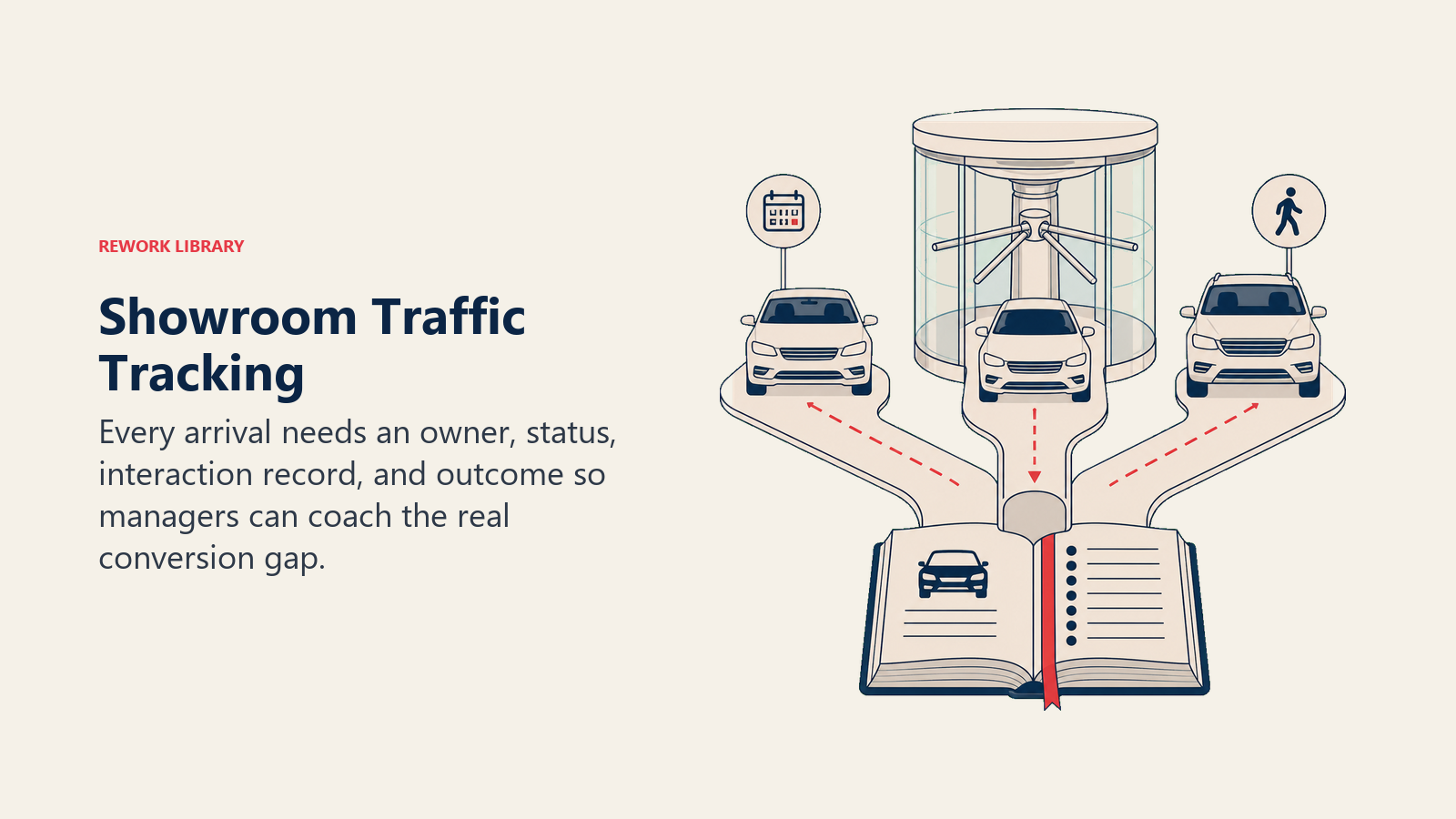
Digital check-in systems replace manual log sheets at progressive dealerships. Visitors check in via iPad at reception, automatically logging arrival time, purpose of visit, salesperson assignment, and customer information. This data feeds real-time dashboards showing floor traffic, consultant availability, and current customer status.
Customer tracking throughout the visit provides visibility into showroom activity. Simple status boards show which customers are in discovery, test drive, negotiation, or F&I. Managers can see at a glance where deals stand and where intervention might help.
Lost customer analysis is where most dealerships fail. When visitors leave without buying, most dealerships just move on. Top performers require immediate documentation: reason for leaving, objections raised, competitive shopping plans, follow-up schedule, and likelihood of return. This intelligence is gold for improving processes.
Peak traffic time staffing ensures adequate coverage during busy periods. Analyze traffic patterns by day and hour, then staff accordingly. If Saturday 10 AM to 2 PM accounts for 35% of weekly traffic, you better have your best team on the floor during those hours.
Manager involvement protocols define when and how managers engage with showroom traffic. Some dealerships have managers greet all appointment customers. Others reserve manager involvement for stalled deals or specific situations. Either way, the protocol should be clear and consistent.
Greeting & Engagement: The First Two Minutes
The traditional automotive greeting, "Welcome to [dealership], how can I help you today?", has a 78% negative response rate. Customers either brush it off with "just looking" or feel immediately defensive. Modern meet and greet techniques start with natural conversation, not sales pitches. Comment on the weather, acknowledge if they look familiar, observe something about them or their current vehicle in a friendly way. The goal is human connection before business conversation.
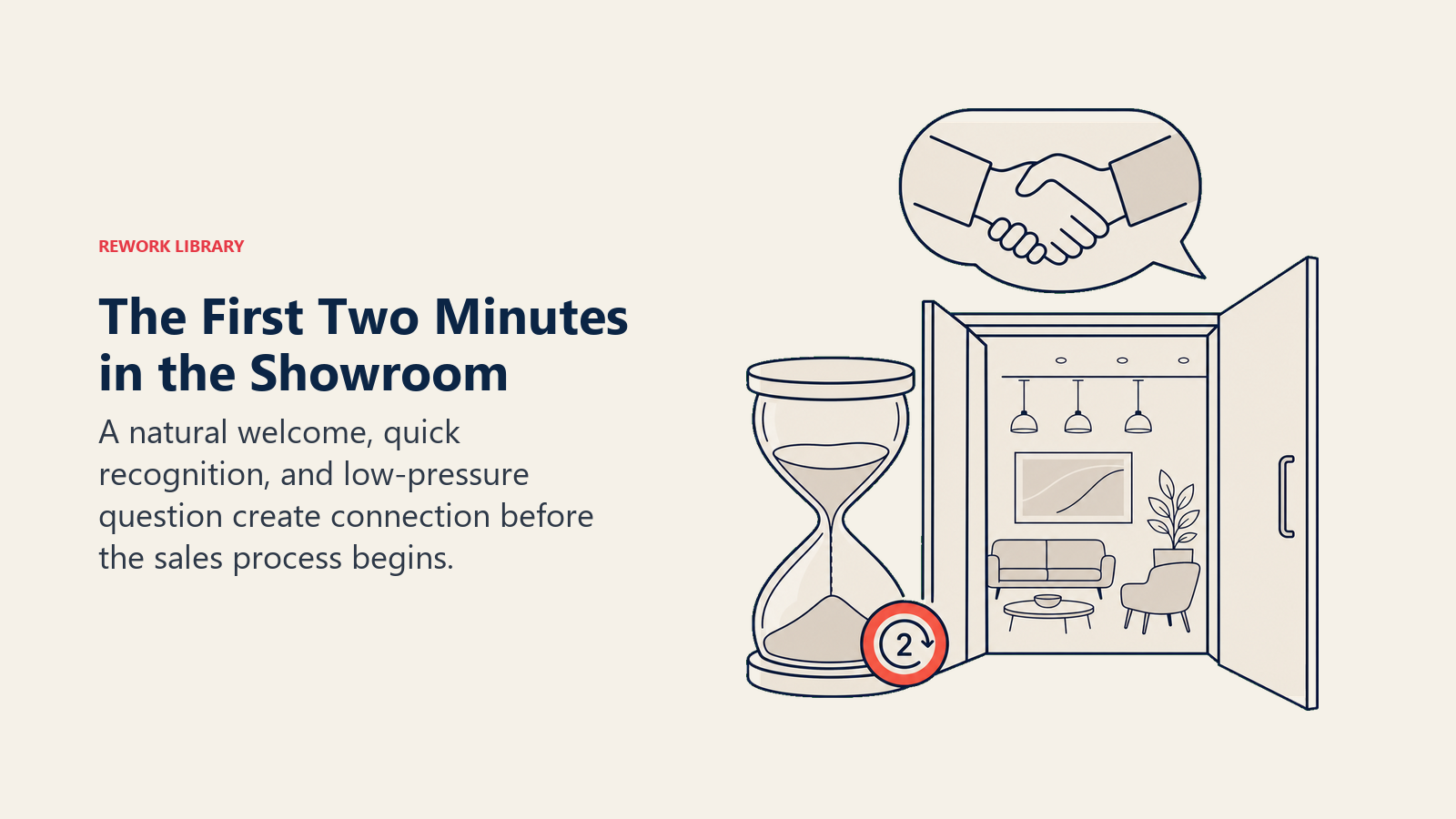
Appointment visitor reception should be VIP-caliber. If someone scheduled time to visit, greet them by name at the entrance, thank them for making an appointment, confirm which vehicle they're there to see, and walk them to that vehicle immediately. This takes preparation, but it shows respect for their time and sets a professional tone.
Building rapport in the first two minutes determines whether customers stay guarded or open up. Listen more than you talk. Ask questions that show genuine interest, not just qualification grilling. Find common ground quickly, shared experiences, local knowledge, mutual acquaintances.
Qualifying without interrogating means weaving discovery into natural conversation rather than running through a checklist of invasive questions. You'll learn more by paying attention to what customers volunteer than by demanding information they're not ready to share.
Showroom tours work for walk-ins who seem unfocused. Give a brief facility tour, "Let me show you where we keep the [category they mentioned], plus I'll point out our service department and customer lounge." This creates structure and gives you a few minutes to build rapport while walking.
Creating a comfortable environment means reading energy and matching it. If customers seem rushed, be efficient. If they're relaxed and chatty, slow down and enjoy the conversation. If they brought kids, acknowledge the kids. Small things create big impressions.
Appointment Traffic Optimization: They Did Their Part, Now Do Yours
Appointment customers have already invested effort into scheduling time at your dealership. The conversion rate should be 50%+ for appointments. If you're below 35%, your process is broken. Pre-arrival preparation is non-negotiable for appointments. Before the customer arrives: pull the vehicle to a prominent location, clean and gas it, print build sheets and comparison materials, review customer's digital footprint, prepare trade-in research, and brief the assigned consultant.
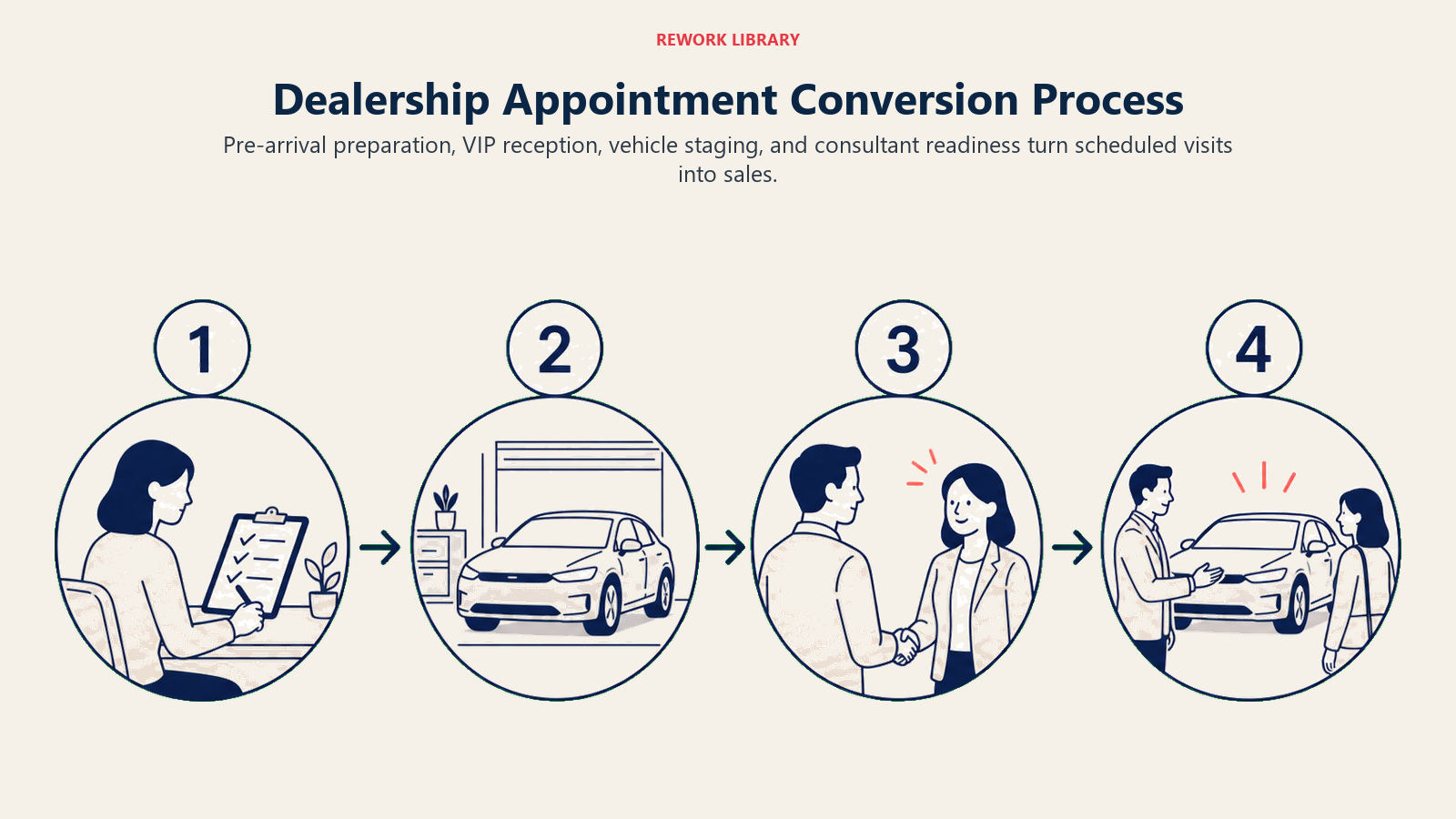
Vehicle staging and merchandising makes appointments feel special. Put window cards on the vehicle with the customer's name, have it parked in a VIP spot, ensure it's detailed and presentable. These touches cost nothing but create significant impact.
Sales consultant pre-assignment eliminates the awkward "who's taking this up" moment. Appointment customers should be greeted by name by the consultant they'll work with, not shuffled around or lost in rotation confusion.
Trade appraisal coordination means having a manager or appraiser ready when appointment customers arrive with trades. Don't make them wait 45 minutes for someone to look at their vehicle. Coordinate timing so appraisals happen smoothly during the visit.
F&I advance scheduling applies to same-day delivery situations. If an appointment customer is highly qualified and knows what they want, coordinate with F&I to have capacity available. Nothing kills deals like telling ready buyers they have to come back tomorrow to finalize.
VIP treatment protocols elevate the appointment experience. Offer beverages, ensure comfortable waiting areas, provide WiFi and charging stations, give facility tours, introduce them to service advisors if relevant. Treat appointments like the valuable leads they are.
Walk-In Traffic Conversion: Reading Intent and Creating Engagement
Walk-ins require different handling than appointments. You don't know their timeline, motivation, or readiness. Your job is to qualify quickly while building enough rapport to earn the right to present vehicles. "Just looking" objection handling starts with acknowledging it rather than fighting it. "No problem, lots of people stop by to browse. I'm [name]. While you're looking around, can I ask what brought you in today?" This feels collaborative rather than pushy.
Quick needs assessment happens through conversation, not interrogation. Ask where they're at in their process, what they're driving now, and what prompted them to stop by. Listen to what they volunteer rather than demanding comprehensive information.
Inventory match process shows value quickly. "Based on what you just mentioned, we actually have a few vehicles that might fit perfectly. Want me to point them out while you're here?" This positions you as helpful rather than salesy.
Trial close and commitment building happens in small steps. "Want to sit in it?" "Should I grab keys for a quick drive?" "Have you thought about what monthly payment works for your budget?" Each small yes builds momentum toward larger commitments.
Same-day sale opportunities exist more often than consultants realize. Some walk-ins are ready to buy today if the vehicle, price, and terms align. Look for urgency signals: lease ending soon, vehicle problems, specific timeline pressures. When you spot them, move efficiently.
Follow-up capture for non-buyers is mandatory. If someone isn't buying today, get their contact information and permission to follow up. Offer something valuable, personalized comparisons, financing pre-qualification, first look at incoming inventory. Give them a reason to stay connected.
Service Drive Sales Opportunities: Mining Gold in the Service Lane
Your service department sees more traffic in a day than your sales floor sees in a week. Most of those customers own aging vehicles and have equity positions that make them candidates for new purchases. Service-to-sales handoff process requires coordination between service advisors and the BDC or sales team. When vehicles come in for service, flag owners with vehicles 4+ years old or 60,000+ miles, especially if repair costs are mounting. These are warm leads for replacement.
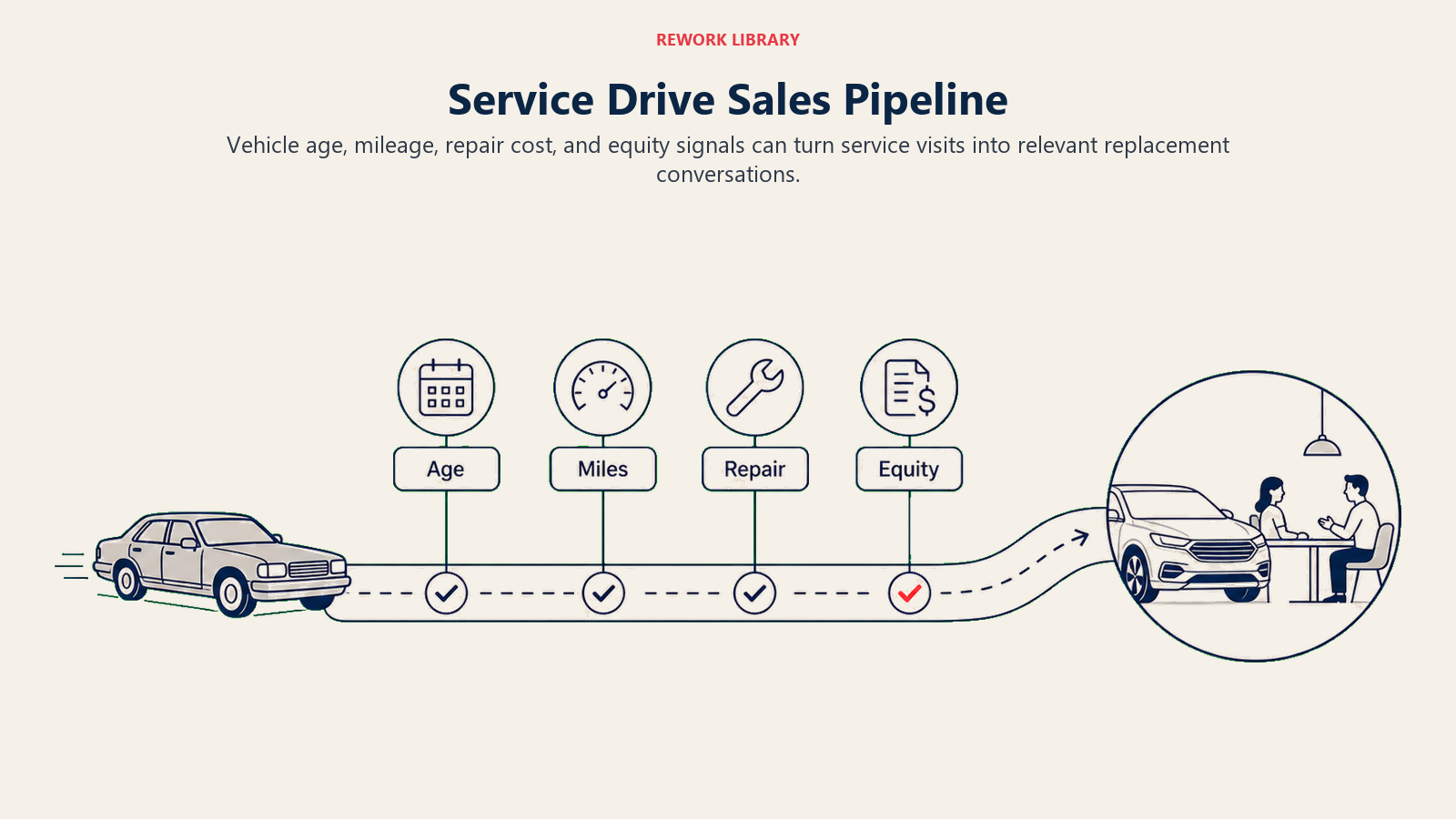
Equity mining while in for service means running trade valuations on every service customer and identifying those with positive equity or leases ending soon. A simple note, "We noticed you have about $4,000 in equity. If you've thought about upgrading, we have some interesting options", opens conversations.
Waiting area engagement provides natural touchpoints. If salespeople or BDC agents spend time in service waiting areas with iPads, they can casually offer to show customers what's new, provide valuations on current vehicles, or answer questions about upcoming models.
Service advisor partnership is critical. Service advisors who bring sales opportunities into the conversation, "By the way, if this repair cost has you thinking about replacing rather than fixing, I can have someone show you what's available", create warm introductions that convert at 25%+ rates.
Trade evaluation offers work especially well when repairs exceed $1,500. "I know this repair is frustrating. Want me to get you a trade-in evaluation to compare fix versus replace?" This positions your dealership as solution-oriented, not just repair-focused.
Non-intrusive introduction techniques respect that service customers came for service, not sales. Have BDC agents introduce themselves briefly, offer business cards, and let customers know they're available if questions come up about new vehicles. Low pressure, high availability.
Lost Customer Recovery: Learning from Every Exit
Every customer who leaves your showroom without buying represents either a future opportunity or a lesson about what you're doing wrong. Track them all. Departure tracking and logging should capture basic data: customer name, contact info, vehicles shown, reason for leaving, competitive shopping plans, timeline, and likelihood of return. This takes 60 seconds per customer but provides invaluable intelligence.
Same-day follow-up requirements keep you top-of-mind. When customers leave, follow up within 4 hours via their preferred communication channel (phone, text, email). Thank them for visiting, address any lingering questions, and confirm next steps or future contact.
Reason for leaving documentation reveals patterns. If 40% of lost customers cite price concerns, you have a pricing or value communication problem. If 30% leave to shop competitors, you have a differentiation problem. Data shows where to focus improvements.
Be-back customer nurturing recognizes that many customers need to visit multiple dealerships before deciding. Rather than viewing be-backs as lost opportunities, nurture them actively. Send personalized follow-ups, offer new information, make it easy for them to return when ready.
Competitive shopping intelligence gathered from lost customers helps you understand what competitors are offering and how customers perceive your dealership versus alternatives. Ask directly: "Where else are you planning to shop? What are you comparing us against?"
Win-back campaign triggers activate for customers who visited but didn't buy. These campaigns typically run for 30-90 days with periodic value-driven touches: new inventory alerts, pricing updates, trade-in value changes, financing options, or simply checking in on their decision process.
Measuring and Improving Showroom Conversion
Tracking the right metrics reveals opportunities:
Core Metrics:
- Total showroom traffic (appointments + walk-ins)
- Appointment show rate (appointments kept ÷ appointments set)
- Showroom closing rate (sales ÷ traffic)
- Appointment closing rate (sales ÷ appointments kept)
- Walk-in closing rate (sales ÷ walk-ins)
- Demo/test drive rate (drives ÷ traffic)
- Drive-to-sale conversion (sales ÷ drives)
Benchmark Targets (2026):
- Appointment show rate: 70-80%
- Appointment closing rate: 40-55%
- Walk-in closing rate: 12-20%
- Overall showroom closing: 25-35%
- Demo rate: 60-75%
- Drive-to-sale: 50-65%
If you're below these benchmarks, you have conversion opportunity. If you're at or above them, you're performing well but can still find incremental gains through testing and refinement.
The dealerships winning at showroom conversion aren't relying on aggressive tactics or high-pressure closes. They're creating systems that respect modern buyer behavior, track every opportunity, and continuously refine based on data analytics.
Your showroom traffic may be half what it was a decade ago. But that traffic is twice as valuable. Treat it that way.

Senior Implementation Consultant
On this page
- The Modern Showroom Traffic Landscape
- Traffic Tracking & Management: Visibility Creates Accountability
- Greeting & Engagement: The First Two Minutes
- Appointment Traffic Optimization: They Did Their Part, Now Do Yours
- Walk-In Traffic Conversion: Reading Intent and Creating Engagement
- Service Drive Sales Opportunities: Mining Gold in the Service Lane
- Lost Customer Recovery: Learning from Every Exit
- Measuring and Improving Showroom Conversion