Sales Consultant Performance Management: Building a High-Performing Sales Team
Turn this article into takeaways for your work.


Each assistant summarizes the article only for you and suggests best practices for your work.
Look at your sales team's performance from last month. Your top consultant probably sold 18-22 units. Your bottom consultant sold 6-8. That 12-15 unit gap represents $30,000-50,000 in monthly gross profit difference between your best and worst performers.
Multiply that gap across a team of 8-10 consultants over a year, and you're looking at $500,000 to $1,000,000 in profit opportunity. Most dealers accept this variance as inevitable, "Some people are natural salespeople, others aren't."
Leading dealers take a different approach. They build systematic performance management frameworks that recruit better, develop faster, measure consistently, and coach effectively. They move average performers toward top-tier levels through process, training, accountability, and data.
The gap between top and bottom performers still exists in high-performing dealerships. But it's 8-10 units instead of 15, and the bottom performers are producing what average performers deliver elsewhere.
Defining Sales Performance
You can't manage what you don't measure. Clear performance definitions start with the right metrics.
Unit sales volume by new, used, and total remains the foundation. How many vehicles did each consultant sell? Track new separately from used because they require different skills and produce different margins. Total units measure overall productivity and earning potential.
Gross profit, front-end, back-end, and total, separates valuable consultants from those who just churn volume. A consultant who sells 15 units at $1,200 average gross delivers $18,000 in profit. One who sells 12 units at $2,500 average gross delivers $30,000. The lower-volume, higher-margin performer is more valuable, but unit-only metrics hide that.
Conversion metrics at each funnel stage identify specific skill gaps. Appointment-to-show conversion reveals phone skills and appointment quality. Show-to-sold conversion measures demonstration and closing abilities. Lead-to-sold conversion captures the full process. A consultant who converts shows at 18% needs closing training. One who converts appointments to shows at 40% needs better phone qualification or follow-up.
Customer satisfaction scores (CSI) measure customer experience and predict future problems. A consultant with 95% CSI and strong sales numbers is a star. One with 75% CSI and strong sales is a ticking time bomb, you'll face manufacturer penalties, poor reviews, and long-term reputation damage. In the 2024 edition of J.D. Power's Sales Satisfaction Index Study, when 9-10 key performance indicators are met during the sales experience, satisfaction averages 917, but when only 7-8 KPIs are met, satisfaction drops to 827, a 90-point decline. Track CSI by consultant monthly and address issues before they compound.
Activity metrics, calls, emails, appointments set, predict future results. Sales are a lagging indicator of past activity. Activity is a leading indicator of future sales. If a consultant's outbound call volume drops from 40 weekly to 20, you'll see sales drop two weeks later. Monitor activity to spot problems early.
Process compliance with CRM usage, test drives, and trade appraisals ensures consistency. Top performers follow the process. Struggling performers skip steps, don't log activities in CRM, avoid test drives that create objections, and fail to appraise trades early. Measure compliance to these critical behaviors and hold everyone accountable.
The Sales Consultant Scorecard
Individual scorecards make performance transparent and create competitive accountability.
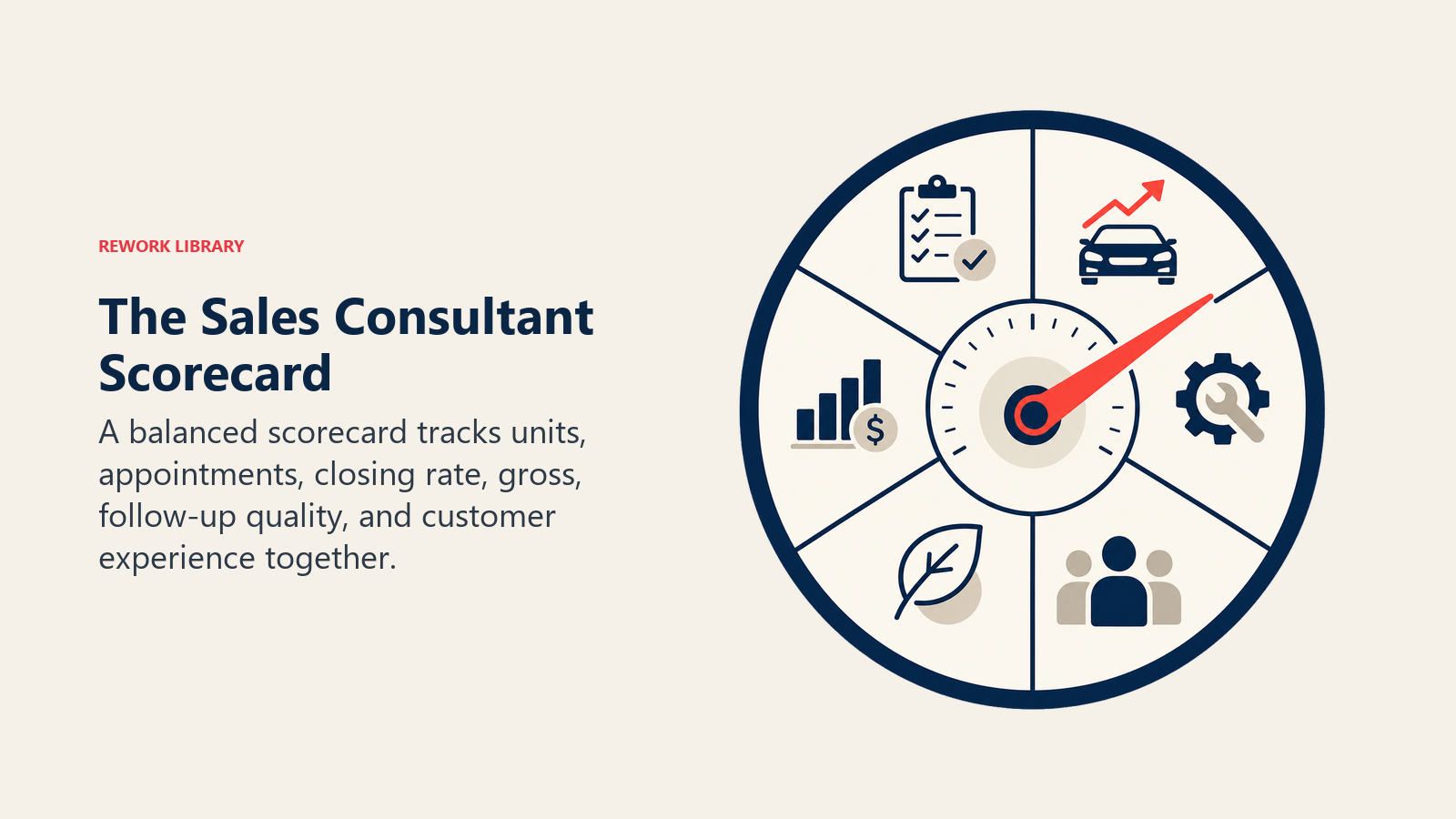
Monthly unit goals by new and used should be specific, achievable, and based on lead flow and market conditions. If your store averages 10 consultants and 100 monthly sales, that's 10 units per person. But account for lead distribution, experience levels, and seasonality. New consultants might target 6-8 units. Veterans should target 12-15.
Gross profit targets and averages align consultant behavior with dealership profitability. Set minimum acceptable average gross, maybe $1,800 per unit total. Track each consultant's actual average. Publicly recognize those exceeding targets. Coach those consistently below.
Activity benchmarks establish minimum daily and weekly standards. Many stores start from targets like 40-50 outbound calls and 15-20 appointments set per week, plus 8-12 customer interactions a day. Set your standards based on lead volume and market, then measure compliance. Consultants who hit activity benchmarks almost always hit sales goals.
Conversion rate expectations at each funnel stage create clear targets. If your dealership averages 25% closing rate (shows to sold), that's your baseline. Top performers should hit 30-35%. New consultants might start at 15-20% and work up. Track individual rates monthly and compare to team averages.
Customer retention and referral metrics measure long-term value creation. How many of each consultant's customers return for service? How many refer friends? How many buy their next vehicle from the same consultant? These metrics separate consultants who build careers from those who churn customers.
Ranking and percentile within the team creates healthy competition. Post rankings publicly by units sold, gross profit delivered, and composite scores. Top performers thrive on recognition. Middle performers see the gap and work to close it. Bottom performers either improve or self-select out.
Recruiting High-Performers
Your performance management starts before the first day of employment. Hiring the right people is half the battle.
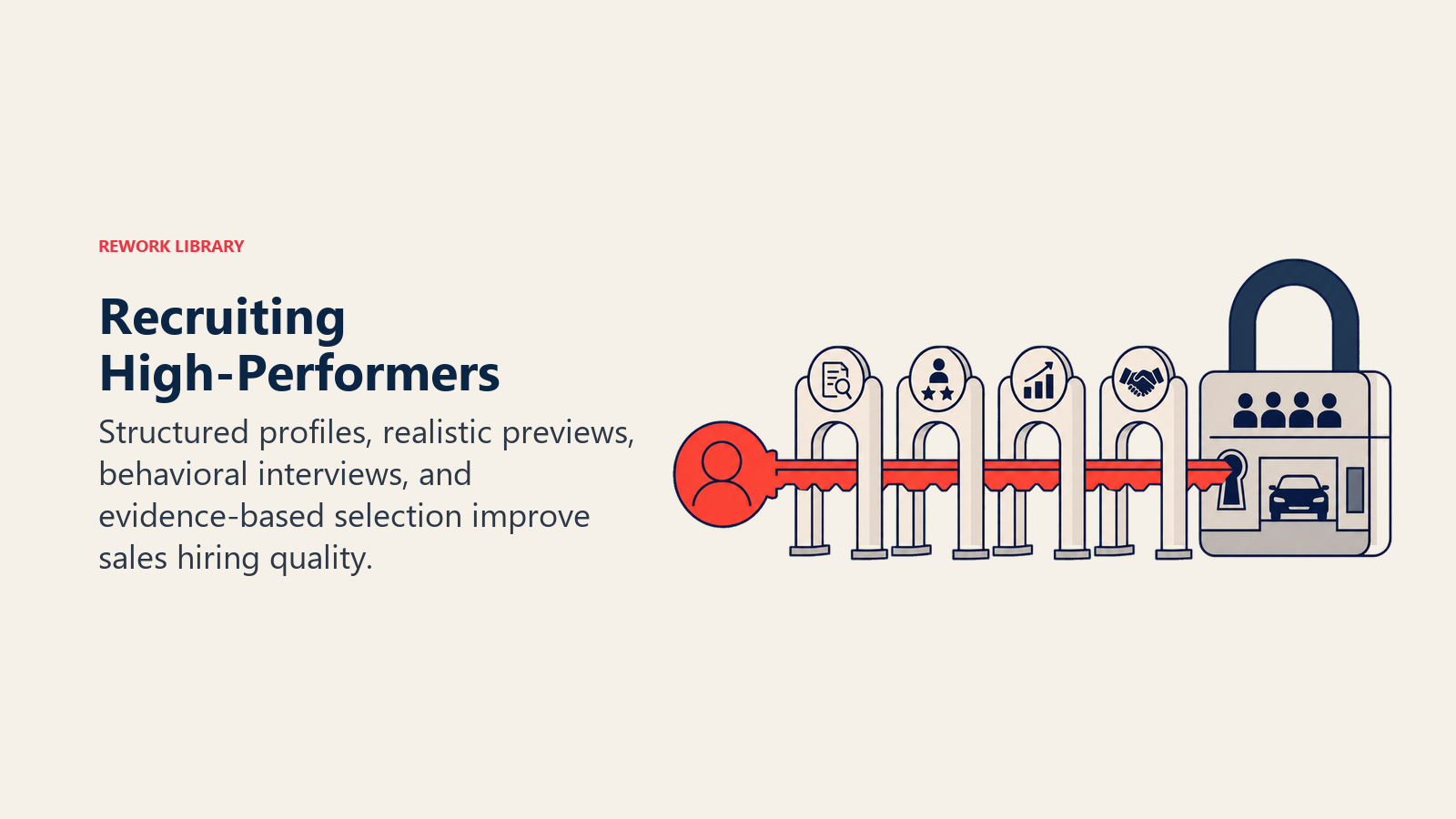
The sales experience versus trainability trade-off is the first decision. Experienced automotive sales consultants know the process, require less training, and produce faster. But they bring bad habits from previous dealers, may resist your processes, and expect higher pay. Inexperienced candidates with the right attitude and aptitude take longer to develop but can be molded to your culture and processes. Most dealers need a mix.
Behavioral interviewing and assessment tools beat traditional interviews. Don't ask "Are you good with customers?" Ask "Tell me about a time a customer was upset with you. What happened? How did you handle it? What was the outcome?" Past behavior predicts future behavior. Use tools like DISC assessments, Predictive Index, or Caliper to evaluate natural tendencies and cultural fit.
Background checks and reference validation prevent costly hiring mistakes. Verify employment history, gaps and job-hopping indicate instability. Call previous managers and ask specific questions: "Would you rehire them? What were their strengths? Weaknesses? Why did they leave?" Criminal background checks are standard, but also check driving records since consultants drive inventory.
Realistic job preview and expectations setting reduce early turnover. Don't oversell the opportunity. Be honest about the earning ramp, the work schedule (nights and weekends), the rejection inherent in sales, and the learning curve. People who accept realistic job previews stay longer and perform better than those who feel deceived.
Onboarding process and initial training set the foundation. The first 30 days determine long-term success. Structured onboarding includes product training, process training, CRM training, shadowing top performers, role-playing scenarios, and gradual responsibility increases. Don't throw new hires on the floor unprepared and hope they figure it out.
Sales Training and Development
Initial training gets people started. Continuous development creates sustained high performance.
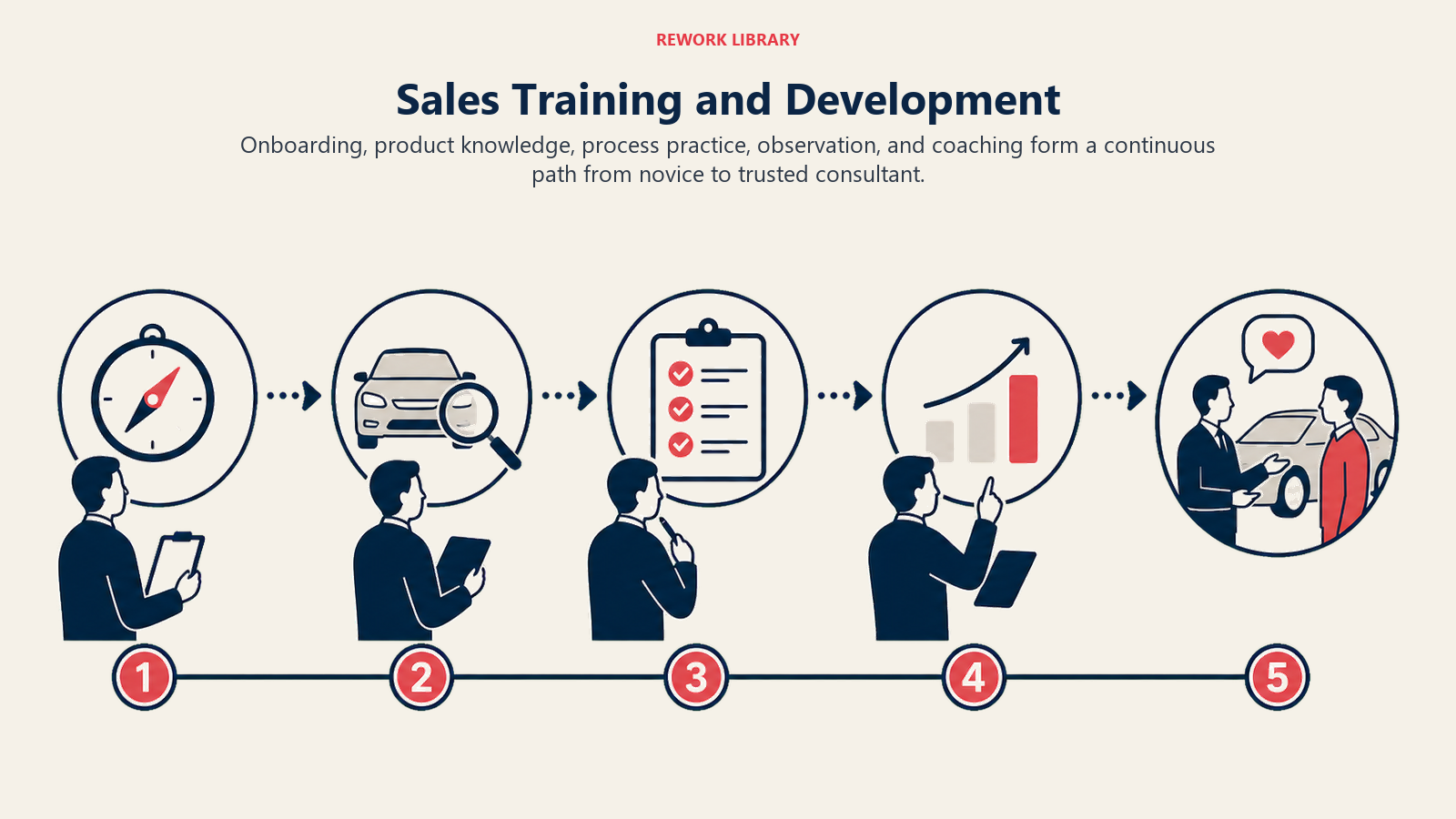
Initial product and process training in the first 30 days covers basics: vehicle features and benefits, trim levels and packages, financing options, dealership policies, CRM system usage, and the steps of your sales process. New consultants should shadow experienced performers for a week before taking their first up.
Sales process mastery through the steps of the sale creates consistency. Meet and greet, needs assessment, vehicle selection, test drive, trade appraisal, negotiation, and closing. Each step has specific objectives and tactics. Train consultants on all steps. Don't assume they know, bad habits from previous dealers or natural instincts often work against effectiveness.
Objection handling and closing techniques require practice and role-playing. Customers object to price, trade value, monthly payment, timing, and features. Consultants need prepared responses that address concerns without being pushy. Practice doesn't make perfect; perfect practice makes perfect. Record role-plays, critique them, and repeat until responses are smooth and natural.
Trade-in negotiation and appraisal skills directly impact gross profit. Train consultants on how to appraise trades accurately, present values confidently, handle objections to trade offers, and when to walk away from over-allowance requests. This training pays for itself in preserved gross profit on the first few trades.
CRM and technology proficiency ensures leads don't fall through cracks. Consultants must log every customer interaction, set follow-up tasks, track lead sources, and update deal status. CRM compliance creates accountability and enables managers to coach based on data instead of guesses.
Ongoing skill development and role-playing combat skill degradation. Sales skills are perishable. Without regular practice, consultants develop lazy habits. Weekly role-playing sessions on common scenarios (price objections, trade value disputes, closing hesitant buyers) keep skills sharp.
Daily and Weekly Management
Training develops skills. Daily management ensures those skills get applied consistently.
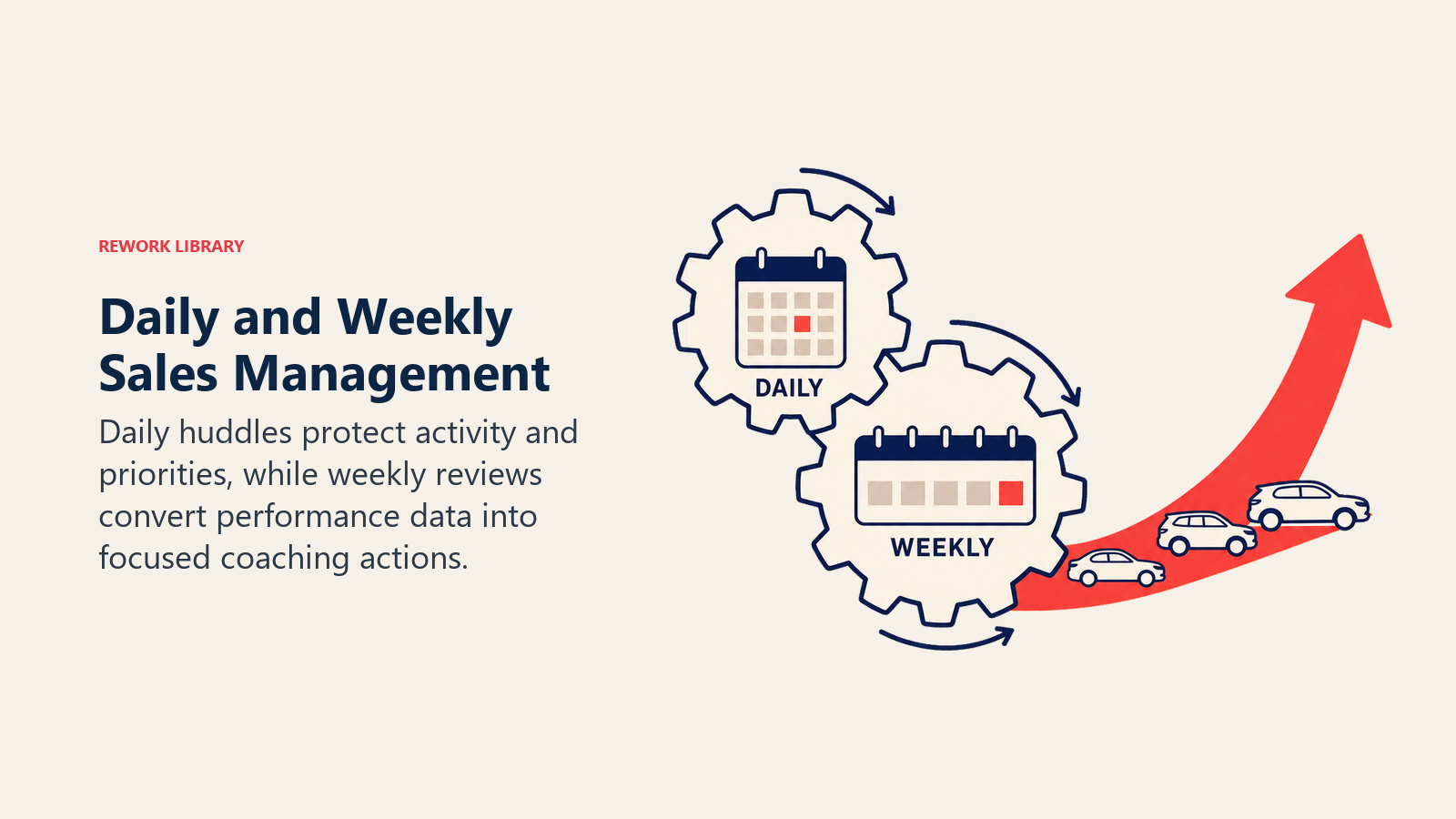
Morning sales meetings and goal-setting create focus and energy. Start every day at 8:00 AM with a 10-minute meeting: review yesterday's results, celebrate wins, address challenges, preview today's appointments and leads, and set daily goals. This ritual creates team cohesion and competitive energy.
Real-time floor management and observation allows coaching in the moment. Sales managers should observe consultants with customers, watch test drives, listen to phone calls, and review deal structures. Feedback given in the moment sticks far better than a critique of something that happened yesterday.
Deal review and approval process maintains margin and teaches pricing discipline. Every deal below minimum acceptable gross requires sales manager approval. This forces consultants to negotiate harder before involving management. It also creates teaching moments: "Why did you offer this trade allowance? What's the book value? Could you have held firmer?"
Weekly one-on-one coaching sessions with each consultant drive individual improvement. Thirty minutes per person per week reviewing their scorecard: units sold, gross delivered, conversion rates, activity levels, and CSI. Identify one specific improvement focus for next week. Track whether they implemented last week's coaching.
Performance feedback, positive and corrective, should be specific and timely. Don't say "Good job this week." Say "You closed 4 out of 9 shows this week for a 44% closing rate, which puts you in the top 3 on the team. Keep doing what you're doing on closing." Don't say "You need to improve." Say "Your show rate is 55% compared to the team average of 68%. Let's review your appointment confirmation process and tighten it up."
Skill gap identification and training plans connect performance data to development. When data shows a consultant struggling with closing rate, create a targeted training plan: role-play closing scenarios three times this week, shadow your top closer on their next two deliveries, and complete the online closing course. Follow up on completion and measure improvement.
Compensation Structures
How you pay people determines how they behave. Compensation structures must align individual incentives with dealership profitability.
Salary versus commission versus hybrid models each have trade-offs. Pure commission attracts aggressive salespeople and aligns pay directly with performance, but creates income volatility that some consultants struggle with. Salary provides stability but removes performance motivation. Hybrid models, base salary plus commission, balance security with performance incentives and work well for most dealers.
Unit-based versus gross-based commission plans drive different behaviors. Pay per unit sold and consultants maximize volume, often destroying margin to close deals. Pay per dollar of gross profit and consultants protect margin, potentially walking away from reasonable deals. The best structures combine both: minimum unit commission plus bonuses for gross profit above thresholds.
Volume bonuses and tiered structures create momentum. Pay $500 per unit on units 1-8, $600 per unit on units 9-12, and $700 per unit on 13+. This tiering motivates consultants to push for additional sales late in the month. The incremental cost of higher per-unit commission is more than offset by the additional sales.
CSI bonuses and quality incentives prevent customer experience degradation. Add a $500-1,000 monthly bonus for maintaining 90%+ CSI scores. This makes consultants think twice before cutting corners or pressuring customers in ways that generate sales but destroy satisfaction.
Team versus individual competition balance depends on your culture. Pure individual competition creates stars but can create toxicity (stealing ups, withholding information, refusing to help). Team-based components (bonuses when the store hits goals) create collaboration. Most dealers benefit from primarily individual pay with modest team components.
New hire ramp-up pay plans reduce early turnover. New consultants can't produce at full levels immediately. They're learning products, processes, and building customer relationships. A draw against future commissions or higher base salary for the first 90 days prevents financial panic that causes them to quit or cut corners.
Using Data for Coaching
Gut-feel coaching is subjective and often wrong. Data-driven coaching is objective and targets real issues.
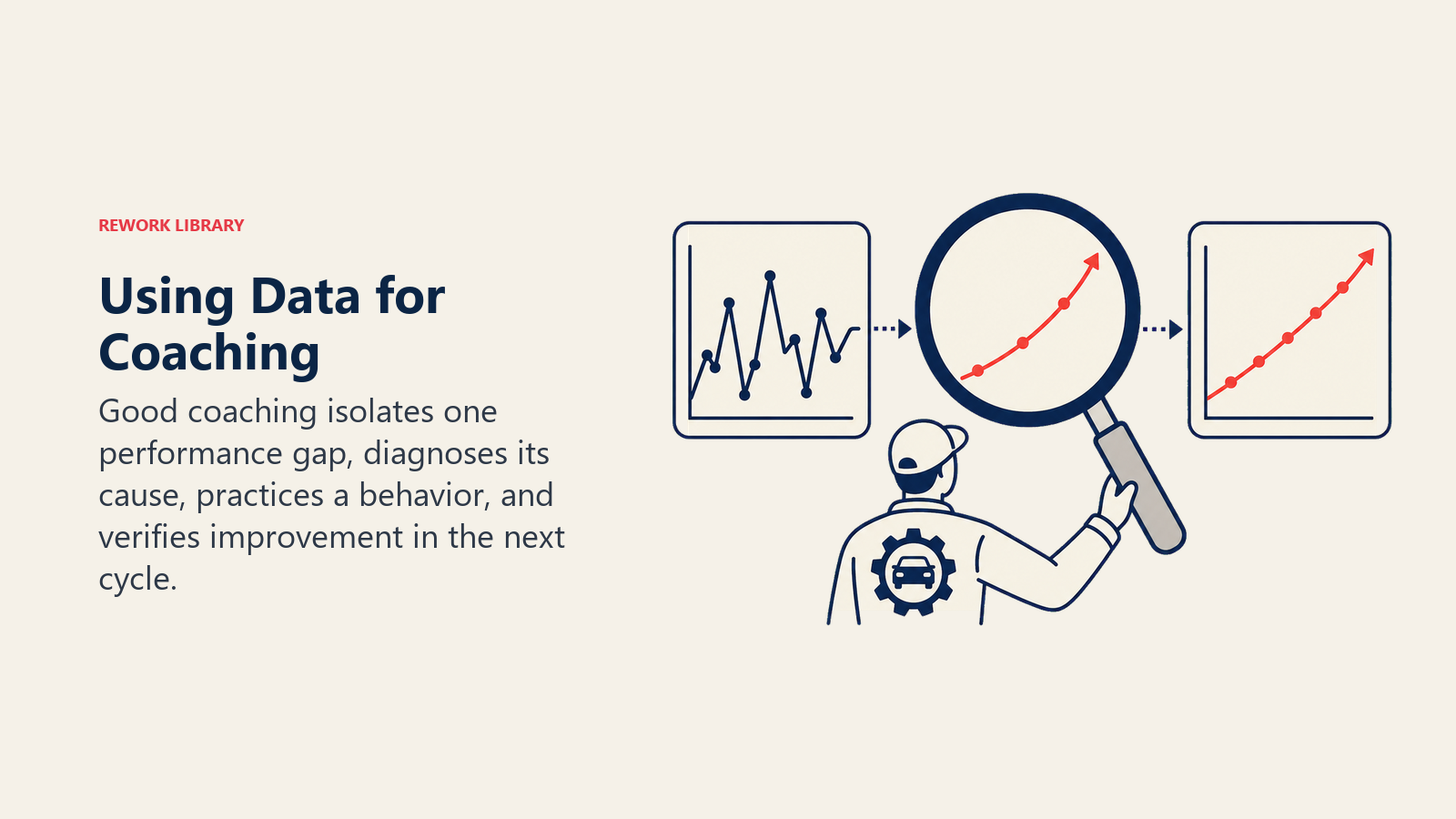
CRM activity reports showing calls, emails, and tasks completed reveal work ethic and process compliance. If a consultant logs 12 calls weekly versus the team average of 45, you've found the problem. If they set 3 appointments versus team average of 12, their phone skills need work. Data makes problems obvious.
Sales funnel conversion analysis identifies exactly where consultants struggle. One consultant might set plenty of appointments but have poor show rate (phone skills need work, or appointment quality is low). Another might have good show rate but poor closing (needs demonstration or closing training). The data tells you precisely where to coach.
Won versus lost deal post-mortems teach from real examples. When a consultant loses a deal, review it together: What was their credit score? What vehicle were they interested in? What did we offer? What did they say when they left? Where did the deal go? This analysis often reveals patterns: lost deals to price, to trade value, to product availability, etc. Address the pattern.
Gross profit trends and deal structure patterns reveal pricing and negotiation issues. A consultant who consistently delivers $900 gross per deal has a negotiation problem. One who delivers $3,200 on new vehicles but $1,400 on used has a used car confidence problem. Spot the patterns and coach specifically.
Customer feedback and CSI comments provide qualitative insights numbers miss. Read comments from customer surveys. Look for themes: "Felt pressured." "Consultant was extremely helpful." "Price negotiation was frustrating." Share positive feedback publicly to reinforce good behaviors. Address negative feedback privately and specifically.
Comparative performance versus team averages creates objective standards. Don't tell a consultant they need to improve closing rate without context. Tell them "You're closing at 19% and the team averages 26%. That gap represents 2-3 additional sales monthly. Let's work on closing skills to get you to team average."
Managing Underperformance
Not everyone succeeds despite good training and coaching. Address underperformance quickly and directly.
Early warning signs of performance decline include: declining sales trend over multiple months, poor attitude or attendance, customer complaints, CRM compliance drops, decreased activity levels, or conflicts with team members. Don't wait until quarterly reviews. Address issues immediately when patterns emerge.
The performance improvement plan (PIP) process creates clear expectations and timelines. Document specific performance gaps: "Your unit sales have declined from 11 to 7 over three months. Your closing rate is 16% versus team average of 25%. Your CRM compliance is 45%." Set specific improvement targets and timelines: "Achieve 9 units and 22% closing rate over next 60 days." Provide support and resources. Track progress weekly.
Skill deficiency versus effort versus fit diagnosis determines intervention approach. Skill deficiency gets training and coaching. Effort problems get accountability and possibly disciplinary action. Fit problems (wrong personality for sales, wrong dealership culture, wrong brand) might require exit regardless of effort.
Different approaches for different problems: coaching and training for skill gaps, accountability and consequences for effort issues, and honest conversations about cultural fit when someone's heart isn't in it. Don't waste months trying to coach effort when the person doesn't want to be there.
Documentation and legal compliance protect the dealership. Document all coaching sessions, PIPs, warnings, and policy violations. Follow your handbook and employment law requirements. Consult HR or legal counsel before terminating. Proper documentation prevents wrongful termination claims.
When to make the tough decision to exit is often obvious to everyone except the person making the decision. If someone's been on a PIP for 90 days with no improvement, it's time. If they violate policy repeatedly, it's time. If they poison team culture, it's time. Quick exits of wrong fits are kinder than prolonged mediocrity.
Retaining Top Performers
Recruiting and developing talent is expensive. Retention of proven performers is cost-effective and critical.
Career path and advancement opportunities keep ambitious people engaged. Not everyone wants to manage, but everyone wants growth. Create levels within sales consultant roles (junior, senior, master) with increasing pay and responsibility. Offer paths to finance, sales management, internet sales, or other departments for those interested.
Recognition and reward programs cost little but mean a lot. Salesperson of the month parking spot, bell ringing for each sale, public recognition in meetings, President's Club trip for top performers, and handwritten thank-you notes from the GM all create emotional connection and status.
Competitive compensation and benefits are table stakes. If your top performers can make 20% more at the dealer down the street, some will leave. Survey competitive comp packages regularly. Adjust pay plans to remain competitive. Don't lose stars over $500 monthly pay differences.
Professional development investment shows you care about their growth. Send top performers to training conferences. Pay for certifications. Provide one-on-one coaching or mentoring. These investments pay back through improved performance and increased loyalty.
Creating positive culture and environment affects retention more than many dealers realize. Toxic cultures, internal politics, unfair treatment, and poor leadership drive good people away despite good pay. Build culture through transparent communication, fair policies, recognition, and holding everyone (including managers) accountable to standards.
Exit interview insights and retention strategies improve over time. When good performers leave, conduct honest exit interviews. Why did they leave? What could you have done differently? Look for patterns across multiple exits and address systemic issues.
Building a Performance Culture
The best sales teams share characteristics: clear expectations, consistent measurement, regular coaching, fair compensation, competitive accountability, and recognition of excellence.
Consultants know exactly what's expected because scorecards and goals are transparent. They receive consistent feedback because managers review data weekly and coach regularly. They're paid fairly because comp plans align individual success with dealership profitability.
They compete because performance is visible, but they collaborate because team success creates shared rewards. And they stay because the culture recognizes and develops talent.
Building this culture doesn't happen accidentally. It requires systematic performance management: recruiting right, training thoroughly, measuring consistently, coaching specifically, compensating fairly, and addressing underperformance quickly.
The gap between your best and worst performers will always exist. But systematic performance management narrows that gap significantly, moving mediocre performers to average, average performers to good, and good performers to great.
That improvement translates directly to your bottom line through higher unit sales, better gross profit, improved customer satisfaction, and reduced recruiting and training costs.
Start with measurement. Implement scorecards. Make performance visible. Coach from data. The improvement will follow. For specific skill development, see Automotive Sales Process, Negotiation & Closing Techniques, and Phone Skills for Automotive. Track performance through your Dealership KPI Dashboard and integrate with Automotive CRM Implementation for systematic data capture. For profitability analysis, see Gross Profit Optimization and Cost Per Sale Analysis.

Senior Implementation Consultant