Internet Lead Close Rate Optimization: Metrics and Strategies That Matter - 2026 Guide
Turn this article into takeaways for your work.


Each assistant summarizes the article only for you and suggests best practices for your work.
Automotive sales response is how fast and how persistently a dealership replies to an internet lead, and it is the single biggest lever on close rate. Dealers who respond within 5 minutes are 9 times more likely to reach the customer than those who wait 30 minutes. Pair that speed with 8 to 12 follow-up touches and disciplined funnel tracking to convert more of your lead spend.
Most dealers spend $50,000 or more each month on internet leads. Ask them what their close rate is, and you'll get blank stares or wild guesses. Without proper measurement, you're flying blind, unable to optimize spend, improve conversion, or justify your budget to ownership.
Internet lead close rate isn't just a vanity metric. It's the foundation for understanding which marketing dollars work and which ones waste money. And the gap between dealers who track it properly and those who don't shows up in profitability.
Understanding Internet Lead Close Rate
The formula looks simple: sold units divided by total leads. But that simplicity hides complexity. A dealer averaging 12% close rate might have organic website leads converting at 25% and third-party leads at 8%. Treating all leads the same masks what's really happening.
Industry benchmarks vary widely because lead quality varies with lead source. According to NADA benchmarking data, third-party leads from Autotrader or Cars.com typically close between 8-12%. Organic website leads, people who found your dealership directly, convert at 15-25%. And leads from your database or email marketing can hit 30%+ because they're already familiar with you.
But close rate alone doesn't tell the whole story. A lead source closing at 8% might deliver $3,000 average gross per sale. Another closing at 15% might deliver $1,500 gross. You need both metrics to make smart decisions.
Lead quality matters more than volume. Five high-intent leads from your website beat fifty low-quality third-party leads every time. The best dealers measure close rate alongside cost per sale and gross profit per unit.
The Internet Lead Funnel
Most dealers look at top-of-funnel (leads received) and bottom-of-funnel (units sold). The magic happens in between. Break your funnel into stages and you'll find where leads leak out.
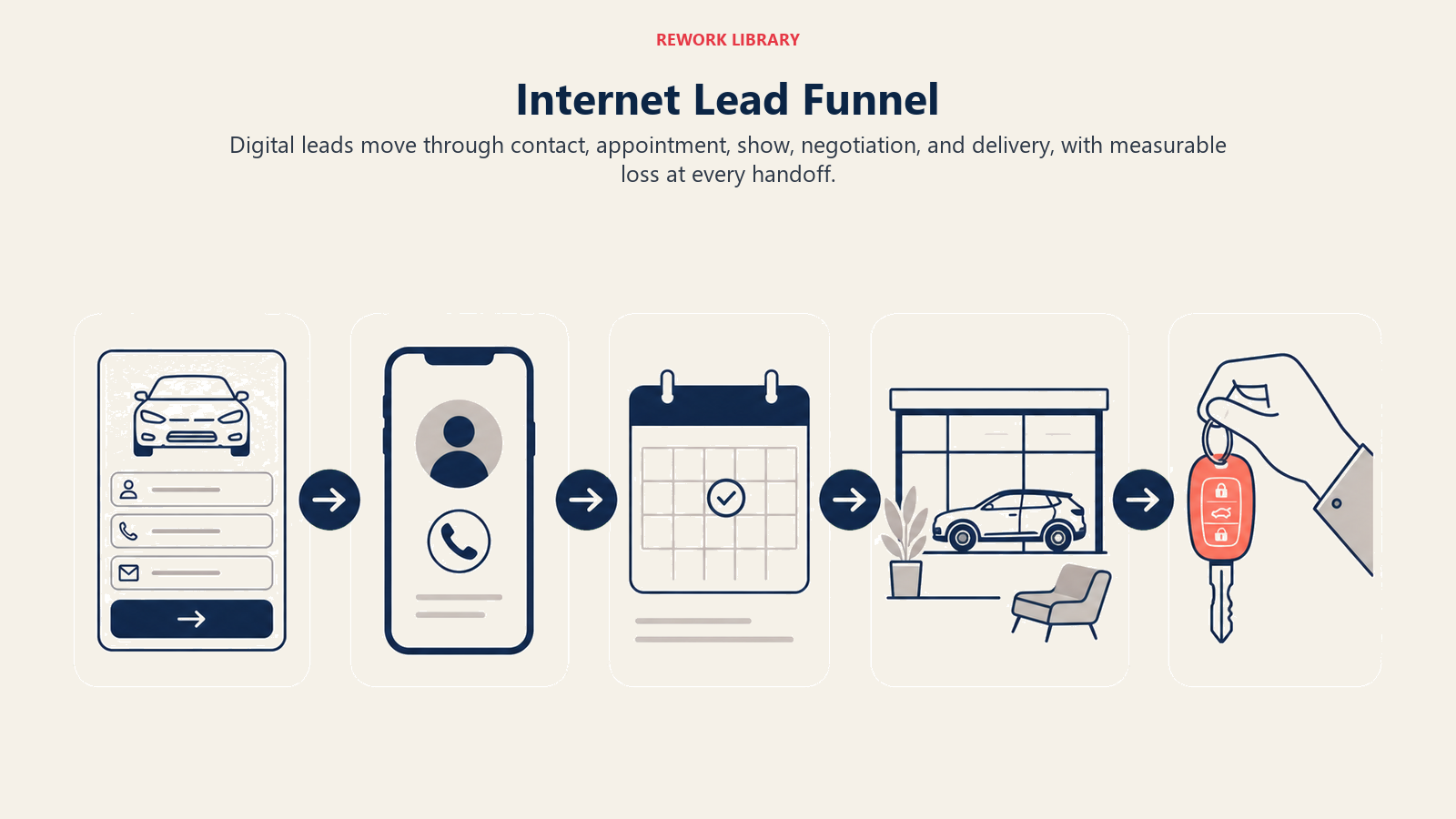
Start with lead received to contacted. Speed to lead matters here, responding within five minutes can double your contact rate compared to waiting an hour. Top BDCs hit 85%+ contact rates. Average ones struggle to reach 60%.
Contacted to appointment scheduled reveals phone skills and value proposition. Are your BDC agents getting 40% set rates or 15%? That gap represents millions in revenue. Record calls, listen for patterns, and coach to improve.
Appointment scheduled to showed separates professionals from amateurs. A 60% show rate means four out of ten appointments ghost you. Top performers hit 75-80% by confirming multiple times, using text reminders, and creating urgency.
Showed to test drive measures engagement and rapport building. If customers arrive but don't drive the vehicle, you're not uncovering needs or building desire. Target 90%+ demo rates.
Test drive to negotiation shows whether you're moving buyers forward. Strong consultants transition 80%+ from demo to numbers. Weak ones let customers leave to "think about it."
Negotiation to sold reveals closing ability and pricing strategy. Dealers converting 70%+ of negotiations maintain momentum and handle objections effectively.
Analyze each stage independently. A 15% overall close rate might mask a problem: 70% contact rate × 35% set rate × 60% show rate × 90% demo rate × 85% negotiation rate × 75% close rate from negotiation. Fix the 60% show rate to 75% and your overall close rate jumps to 18.75%, a 25% improvement without spending an extra dollar on leads.
Tracking Internet Leads Properly
Bad data produces bad decisions. Most CRM systems can track internet leads properly, but only if you set them up right and enforce discipline.
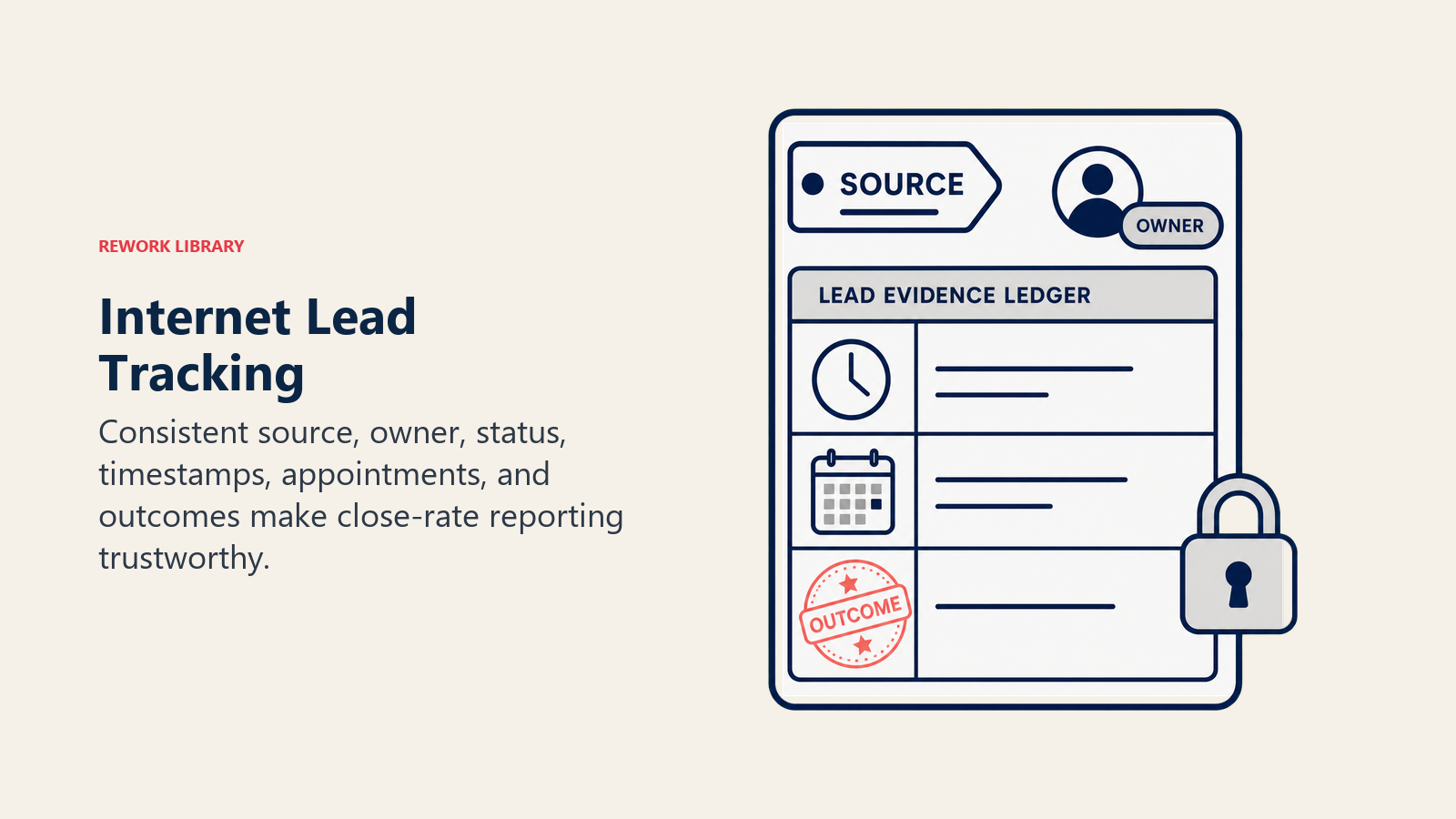
Lead source attribution starts at the top. Tag every lead with its origin: organic website, Google paid search, Facebook ad, Autotrader, Cars.com. Use UTM parameters on all digital advertising so your CRM knows where traffic came from.
Duplicate lead handling needs clear rules. Someone submits a form on Monday, calls Tuesday, and emails Wednesday. That's one lead, not three. Your CRM should merge duplicates automatically or flag them for manual review.
Disposition coding separates winning dealers from losing ones. "Lost" isn't a useful disposition. Lost to competitor, lost to price, lost to credit, not in market now, bought elsewhere, these tell you why and where to improve.
Track lost sale reasons religiously. After a month, you'll see patterns. Losing 30% to price might mean your pricing strategy needs work. Losing 40% because they bought elsewhere before you called means speed to lead is killing you.
Follow-up activity logging shows effort and persistence. How many calls, emails, and texts did each lead receive? Top performers make 8-12 contact attempts over 30 days. Average dealers make 3-4 and wonder why close rates stay low.
Timeline and aging reports identify stale leads and gaps in follow-up. A lead sitting 72 hours without contact is probably lost. Weekly aging reports keep your BDC accountable and identify bottlenecks.
Close Rate by Lead Source
Not all lead sources perform equally. Organic website leads close at the highest rates because visitors actively sought you out. They typed your dealership name, they're local, they're motivated. Protect and grow this source.
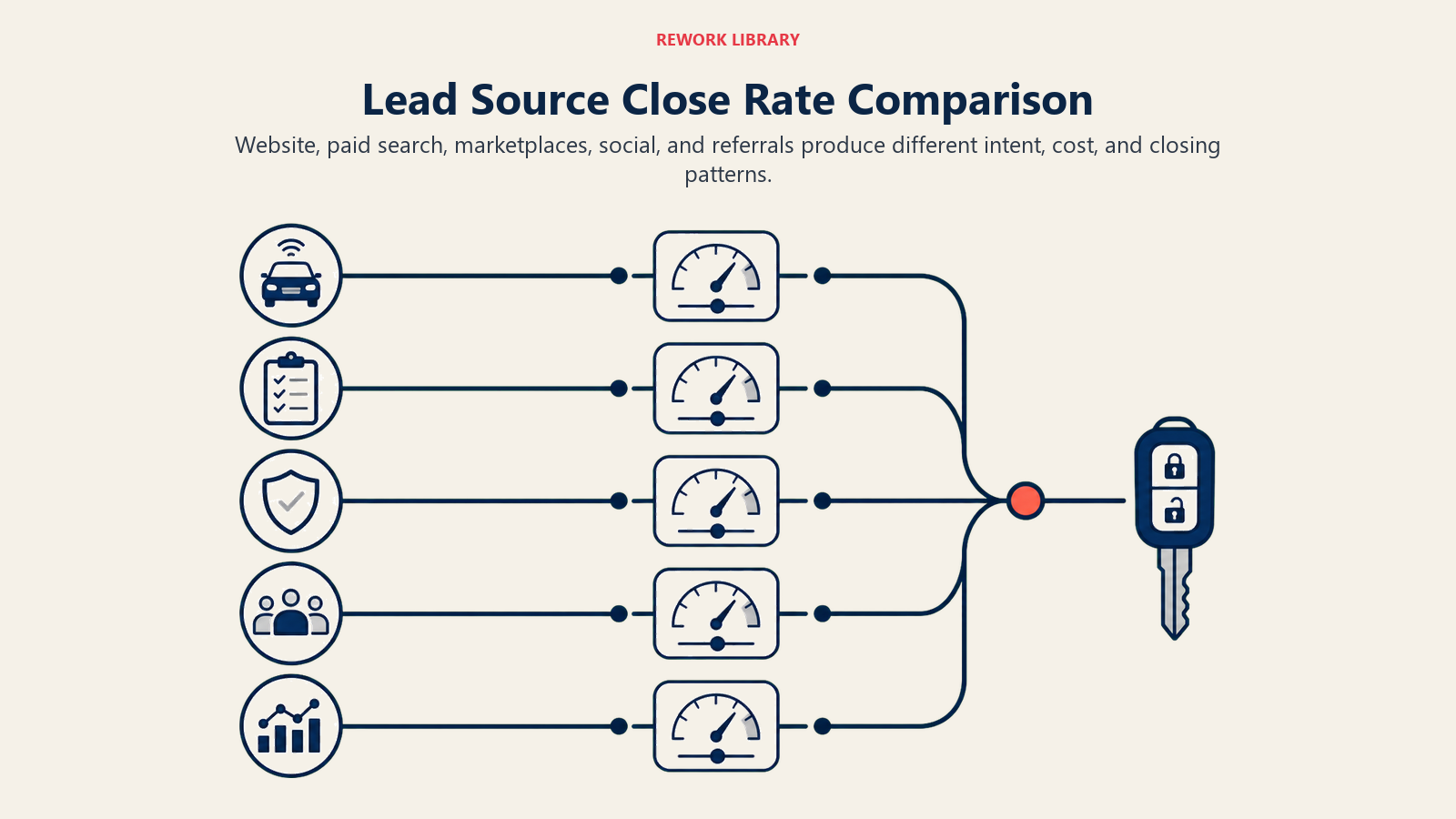
SEM and PPC leads from Google and Bing convert at medium rates, typically 12-18%. These buyers are actively shopping, searching for specific vehicles or deals. Quality varies by keyword and ad copy, so track performance by campaign.
Third-party leads from Autotrader, Cars.com, and CarGurus typically close at 8-12%. Buyers submit forms to multiple dealers simultaneously, so speed to lead and differentiation matter enormously. Some dealers refuse third-party leads entirely. Others make them work by responding instantly and creating urgency.
Social media leads vary wildly. Facebook and Instagram lead forms often produce low-intent shoppers, people browsing, not buying. Close rates of 5-8% are common. But remarketing ads to website visitors can hit 15%+ because they're warmer.
Email marketing leads to your existing database produce the highest close rates, often 25-35%, because these people already know and trust you. They're previous customers, service clients, or past inquiries.
Calculate cost per sale alongside close rate for each source. A source closing at 10% and costing $500 per sale beats one closing at 15% but costing $900 per sale. Gross profit per sale completes the picture.
BDC Performance Metrics
Your BDC makes or breaks internet close rate. Track individual and team performance relentlessly.
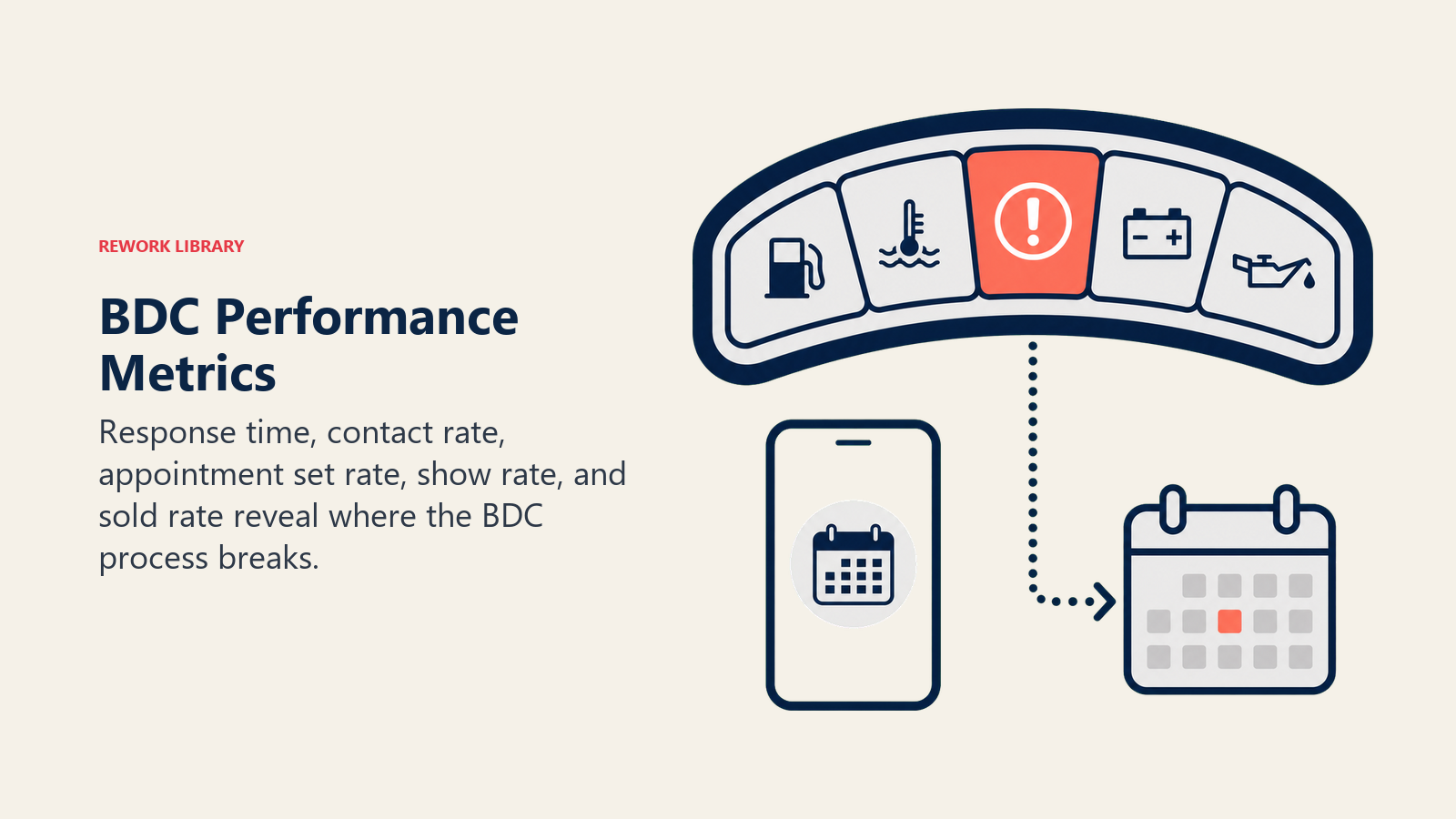
Contact rate and speed to lead come first. How fast do agents respond to new leads? What percentage do they actually reach? Automatic email and text responses buy you time, but nothing replaces a phone call within five minutes.
Appointment set rate reveals persuasion skills and process quality. Top BDC agents set appointments on 40-50% of contacted leads. They ask good questions, uncover needs, create urgency, and give clear next steps.
Appointment show rate measures confirmation process and value creation. Agents who confirm once the day before get 50% show rates. Agents who confirm three times, initial set, day before, and morning of, and send calendar invites with directions get 75-80%.
Phone handling time matters, but not how you think. Too short means you're rushing and not building rapport. Too long means you're talking too much or letting customers ramble. Aim for 6-8 minutes for initial contact, 4-5 for follow-up calls.
Email response time should be under 10 minutes for new leads, under 2 hours for follow-ups. Research shows dealers who respond to internet leads within 5 minutes are 9x more likely to contact the customer than those waiting 30 minutes.
Follow-up persistence separates closers from order-takers. Industry data shows most leads need 6-8 touches before setting an appointment. According to Cox Automotive research, dealers making 1-2 attempts lose deals to those making 10-12.
Create individual BDC agent scorecards showing these metrics. Publish rankings weekly. Celebrate top performers and coach bottom performers. Accountability drives improvement.
Sales Consultant Internet Performance
BDCs set appointments, but consultants close deals. Track internet performance separately from showroom walk-ins because the dynamics differ.
Internet appointment show rate by consultant reveals who customers want to see. If one consultant has a 75% show rate and another has 55%, ask why. Is the high performer calling to introduce themselves? Sending personalized videos? Confirming multiple times?
Internet lead close rate by consultant shows who converts educated, motivated buyers. These customers often know more than the salesperson about the vehicle. Top performers for internet leads aren't always top performers for walk-ins.
Demo and test drive rate should be near 90% for internet appointments. These customers came to see a specific vehicle. If they don't drive it, something went wrong.
Gross profit per internet sale tends to be lower than walk-ins because customers arrive more informed and price-focused. But top consultants still deliver strong gross by building value and offering alternatives.
CSI scores for internet customers often run higher because the process is smoother and more transparent. Use positive reviews to market your internet sales program.
Follow-up quality after the visit determines whether "be-backs" actually come back. Consultants who send personalized thank-you videos, competitive analysis, and incentive updates convert undecided shoppers at 2x the rate of those who don't follow up.
Process Optimization for Higher Close Rates
Knowing your numbers means nothing without action. Here's what top performers do differently.
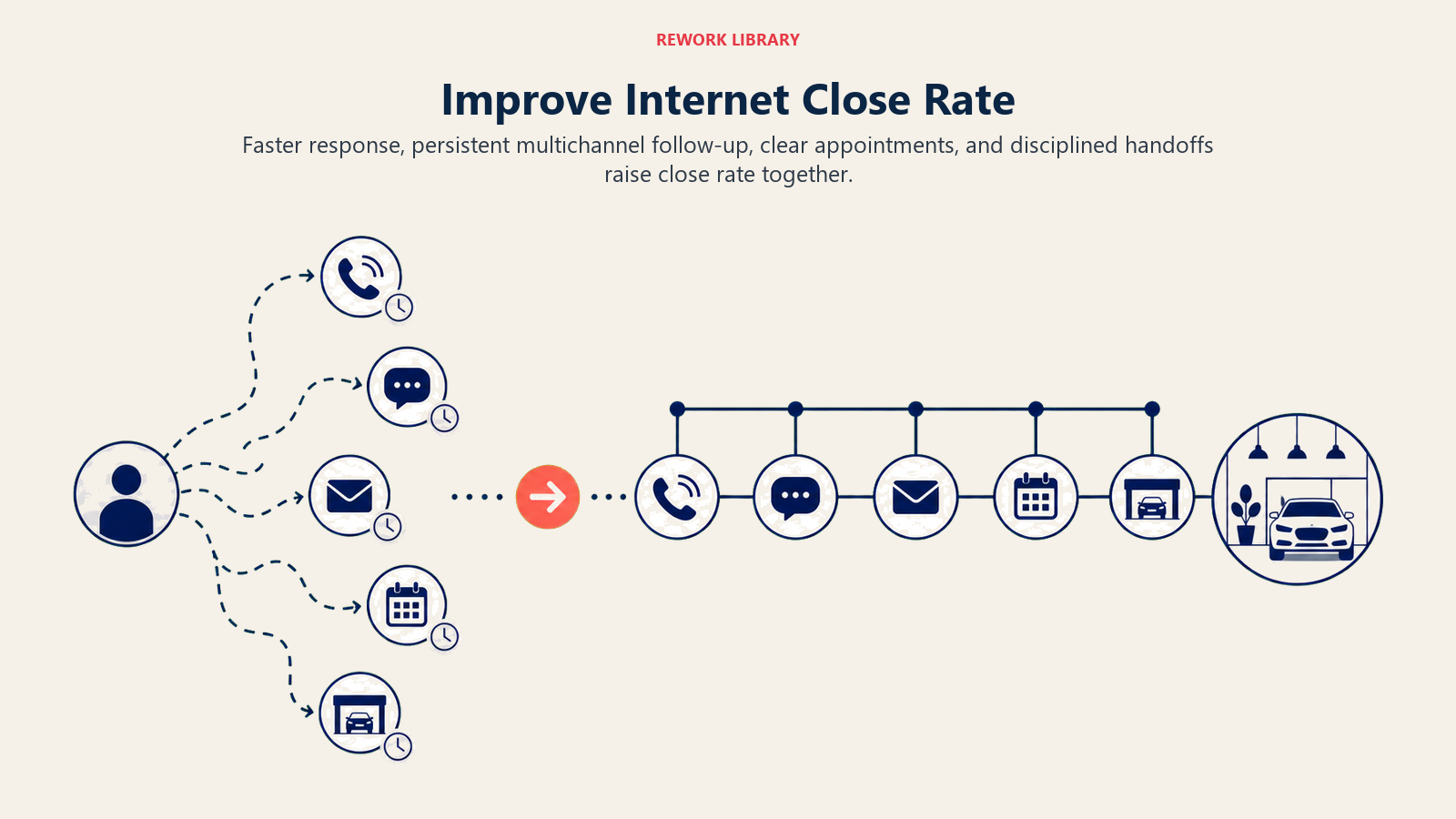
Immediate response isn't optional anymore. Install lead notifications that text or call BDC agents the second a lead arrives. Use AI chatbots to engage website visitors after hours, but always follow up with a human.
Phone skills and appointment setting tactics need continuous improvement. Role-play objection handling weekly. Record calls and have agents critique their own performance. Study top performers and steal their techniques.
Confirmation processes separate good from great. Send a calendar invite immediately after setting the appointment. Text the day before with a personal message. Call the morning of to confirm time and answer last-minute questions. For high-value appointments, send a personalized video.
CRM automation handles routine follow-up while humans focus on high-value conversations. Set up automated email sequences for leads who don't respond. But don't automate everything, personal touches matter.
Video and personalization strategies increase engagement dramatically. A 30-second video introducing yourself and highlighting the vehicle they inquired about can double show rates. Customers feel like they already know you before arriving.
Focus on trade-in and payment early in the conversation. Don't just push metal. Ask about their current vehicle, what payment fits their budget, and whether they've considered leasing. Address the real barriers to purchase.
Technology and Tools
The right tools make consistent performance easier.
Your CRM needs internet lead workflows built in. Automatic task creation, timed follow-up reminders, and escalation rules keep leads from falling through cracks. Most modern CRMs offer this, if you configure it properly.
Automated response and nurture sequences handle initial contact and ongoing follow-up for non-responsive leads. Integrate email and SMS so all communication lives in one place.
Text and SMS communication platforms let customers respond on their preferred channel. Younger buyers often prefer texting to phone calls. Meet them where they are.
Video messaging tools like BombBomb or Vidyard let you send personalized videos at scale. Record walk-arounds of inventory, introduce yourself to new leads, or send thank-you messages after appointments.
Call recording and coaching software improves phone performance faster than any other investment. Listen to recorded calls, identify patterns, and coach in real-time.
Lead source tracking and attribution platforms like CallRail or Phonexa connect marketing spend to actual sales. Know which campaigns deliver ROI and which ones waste money.
Benchmarking and Goal Setting
Data without context produces arbitrary goals. Benchmark against your own history and industry standards.
Industry benchmarks by lead source give you targets: 8-12% for third-party leads, 15-25% for organic, 25-35% for database email. But these are guidelines, not guarantees.
Establish your internal baseline first. Where are you today? Track monthly for six months to understand your normal range and identify trends. Use your KPI dashboard to monitor progress systematically.
Set realistic improvement targets based on where you are now. If you're closing 10% and the industry average is 15%, don't target 15% next month. Aim for 11% and build from there.
A/B test everything: response times, phone scripts, confirmation methods, follow-up cadences. Change one variable at a time and measure results.
Monthly review and optimization processes keep you improving. Review metrics with your team, celebrate wins, identify gaps, and commit to specific improvements. Repeat every month.
Close rate optimization isn't a one-time project. It's a continuous process of measurement, analysis, and refinement. The dealers winning today measure better, act faster, and never stop improving. For additional insights, explore automotive lead management, appointment setting best practices, sales process optimization, and dealership benchmarking strategies.
Automotive Sales Response and Internet Close Rate FAQ
How fast should a dealership respond to an internet lead?
Within 5 minutes. Dealers who respond in 5 minutes are 9 times more likely to reach the customer than those who wait 30 minutes. Set up instant text and call alerts so a BDC agent engages the second a lead arrives, then follow with a human call.
What is a good internet lead close rate?
It depends on the source. Third-party leads from Autotrader or Cars.com typically close at 8 to 12%, organic website leads at 15 to 25%, and database or email leads at 25 to 35%. Track close rate alongside cost per sale and gross profit per unit, not in isolation.
How many times should you follow up with an internet lead?
Top performers make 8 to 12 contact attempts over about 30 days. Dealers making only 3 to 4 attempts lose deals to those making 10 to 12. Persistence, not volume of new leads, is what separates closers from order-takers.
Why does lead response time matter so much?
Buyers submit forms to multiple dealers at once, so the first dealer to respond usually controls the conversation. Slow response means the customer has already engaged a competitor. Fast response also lifts contact rate, which compounds through every stage of the funnel.
How do I improve appointment show rate?
Confirm more than once. Agents who confirm three times (at set, the day before, and the morning of) and send a calendar invite with directions hit 75 to 80% show rates, versus around 50% for a single confirmation. A short personalized video before the visit raises it further.

Senior Implementation Consultant