Meet & Greet Techniques: Building Rapport and Trust in the First 90 Seconds
Turn this article into takeaways for your work.


Each assistant summarizes the article only for you and suggests best practices for your work.
First impressions in automotive sales are formed in under 60 seconds. That's how long you have to establish yourself as someone worth talking to versus someone to escape from. 86% of car shoppers research vehicles online before visiting a dealership, meaning first impressions often start digitally.
The traditional "Welcome to [Dealership], how can I help you today?" greeting has a 78% negative response rate. Customers either brush it off with "just looking" or immediately put up defensive walls.
Why? Because that greeting signals "I'm about to sell you something" before you've earned any right to sell anything. Modern buyers, who've already spent 14+ hours researching online, don't need help in the way that greeting implies. They need genuine connection with someone who respects their intelligence and time.
Sales consultants who master modern meet and greet techniques close at 30%+ rates compared to 12-18% for those still using outdated approaches. The difference isn't talent. It's technique. According to J.D. Power research, customer satisfaction with the sales experience directly correlates to higher purchase intent and brand loyalty.
Psychology of First Contact
When customers arrive at dealerships, they're not excited, they're guarded. Decades of high-pressure sales tactics have trained buyers to be defensive the moment they step onto dealer lots.
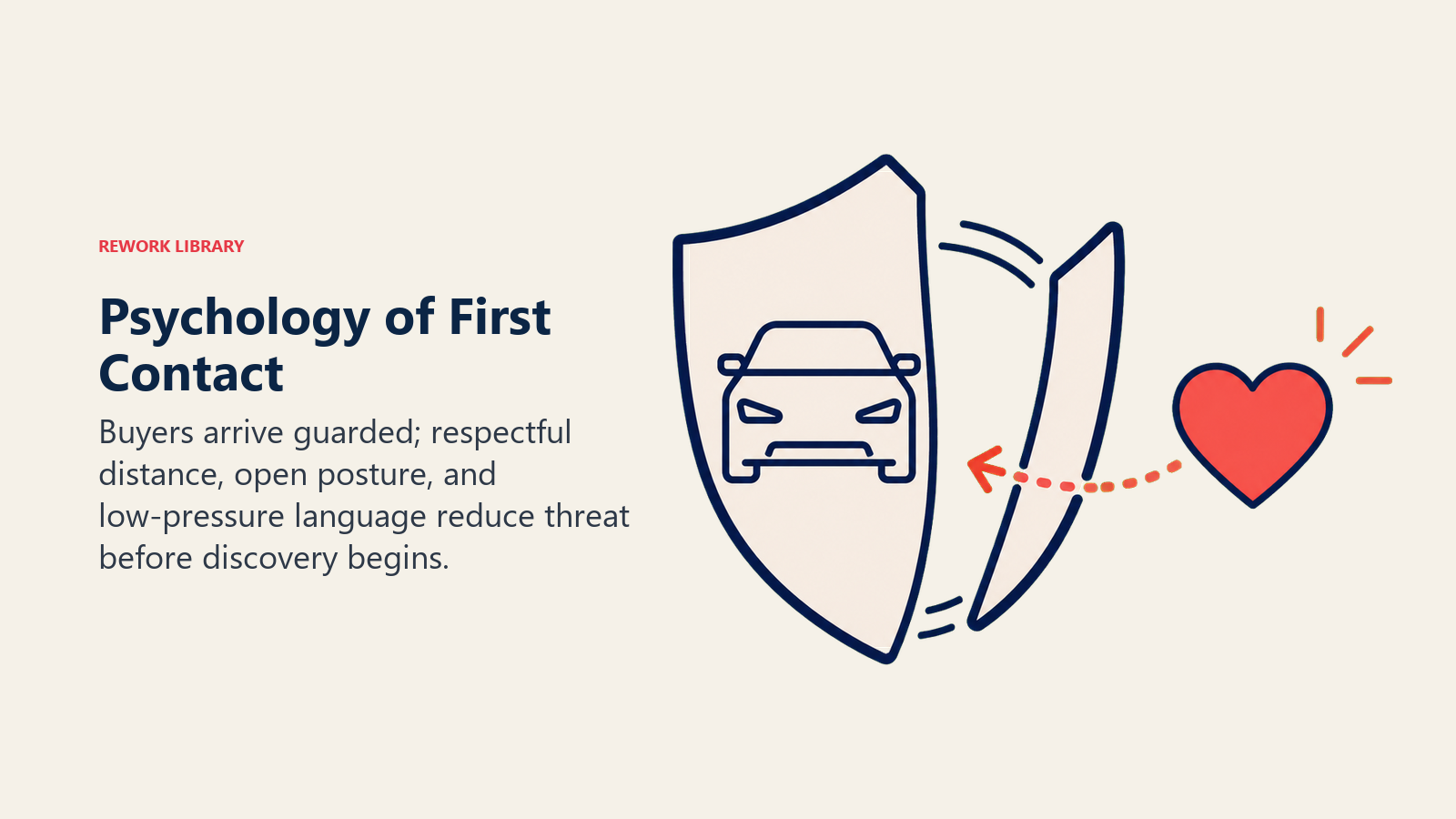
This defensive mechanism activates before you even speak. Customers see you approaching and their mental shields go up. They're preparing responses to dismiss you, avoid commitment, and protect themselves from manipulation.
Your job in the first 60 seconds is disarming those defenses, not triggering them harder. Building trust before selling becomes the essential foundation. Customers don't buy from people they don't trust, and they don't trust people who start selling before connecting. Transparency builds trust in every interaction, and providing clear, honest information creates the foundation for positive customer relationships.
Reading buyer signals and energy gives you critical information about approach. Some customers are open and friendly, signaling they're comfortable engaging. Others are closed off, indicating they need more space and softer approaches. Matching their energy shows social intelligence.
Communication style matching creates subconscious rapport. If they're formal, be professional. If they're casual, relax your approach. If they're all business, get to the point. If they want to chat, enjoy the conversation. Mirroring builds connection faster than any script.
Creating comfortable versus pressured environments determines whether customers stay or leave. Comfort comes from feeling respected, understood, and in control. Pressure comes from feeling pushed, rushed, or manipulated. You choose which environment you create.
Digital age expectations affect in-person interactions. Today's buyers expect service professionals to be informed about their digital activity, prepared for scheduled appointments, and ready to pick up where online conversations left off. Meeting these expectations establishes competence.
Modern Greeting Approaches
Effective modern greetings start conversations rather than pitches.
Natural Conversation Starters:
- "Beautiful day out there, isn't it?"
- "How's your weekend going so far?"
- "You look familiar, have we met before?"
- Comment on something you notice about them or their current vehicle
These openings feel human rather than transactional. They establish you as a person before a salesperson.
Non-Sales Opening Questions:
- "Is this your first time visiting us?"
- "Did you have any trouble finding the place?"
- "Have you been car shopping long?"
These questions gather information while feeling conversational rather than qualifying.
Acknowledging Appointments vs Walk-Ins:
For appointments: "You must be [Name]! Thank you so much for making an appointment. I'm [your name], and I've got the [vehicle] pulled up and ready for you."
For walk-ins: "Welcome! Feel free to look around. I'm [name], if you have any questions while you're browsing, just grab me."
The difference in approach respects the different levels of commitment each visitor has made.
Using Customer Names Appropriately:
Names create connection, but overuse feels manipulative. Use names at introduction and occasionally during conversation, but don't insert them awkwardly into every sentence like you learned from a bad sales training.
Avoiding the "Just Looking" Trap:
Never ask "Can I help you?" or "What brings you in today?" when customers first arrive. These questions invite the "just looking" brush-off.
Instead, make a statement or observation that doesn't require defensive responses:
- "Take your time looking around."
- "We just got a bunch of new inventory in this week."
- "Feel free to sit in anything that interests you."
Creating Partnership Positioning:
Position yourself as a resource, not a salesperson: "I'm here if you want me, but no pressure either way. I know car shopping can be overwhelming, so just let me know if I can answer questions or show you anything specific."
This approach disarms defensiveness by removing pressure while offering value.
Appointment Customer Reception
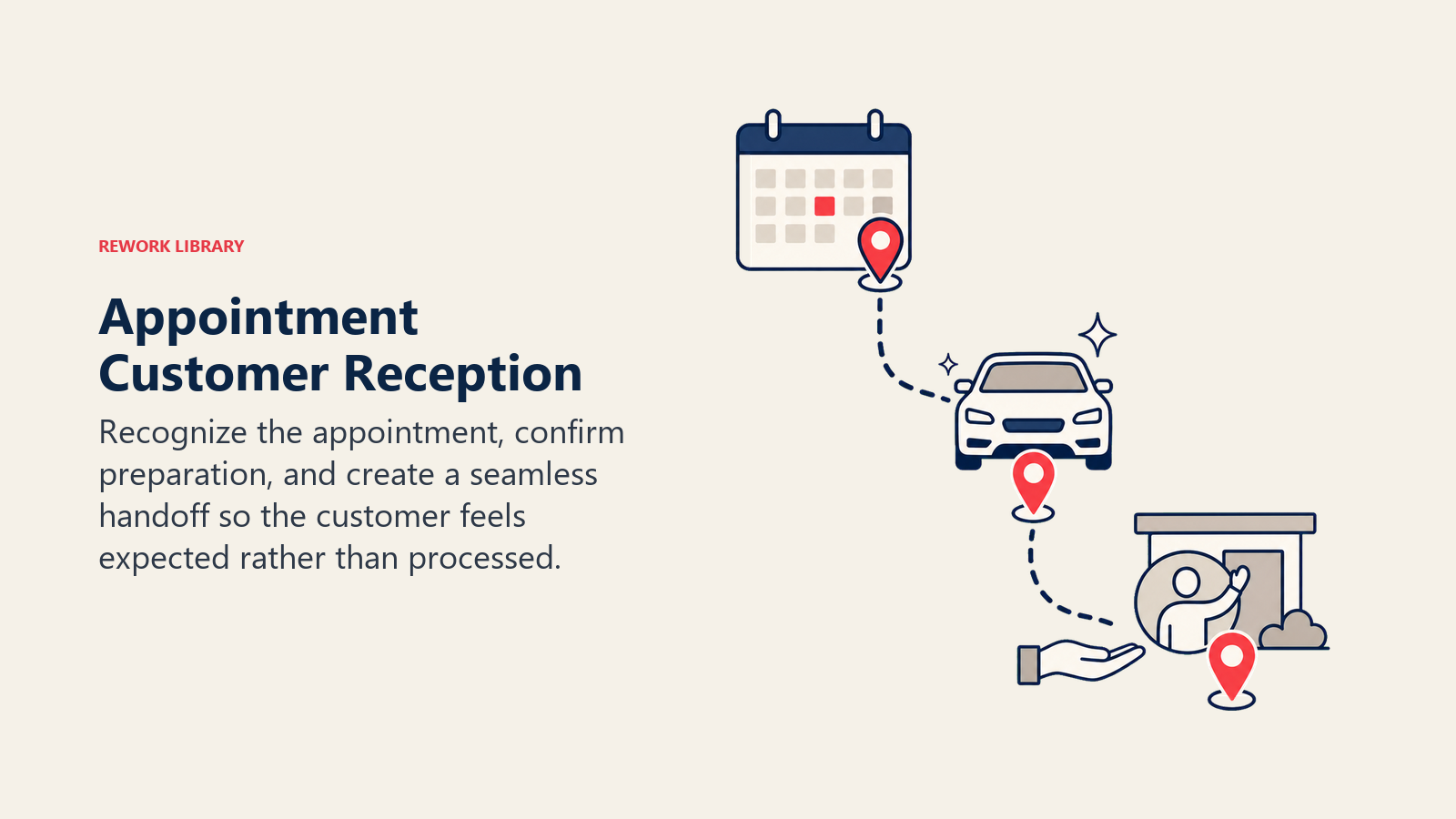
Appointment customers deserve VIP treatment. They invested effort into scheduling time at your dealership specifically. Your greeting should acknowledge and honor that.
Greeting by Name at Entrance:
Have someone watching for appointment arrivals (receptionist, BDC, manager, or the assigned consultant). When the customer enters, greet them immediately by name: "Mr. Johnson? Welcome! We've been expecting you."
This small detail creates massive impact. It shows organization, preparedness, and respect.
Acknowledging Online Research and Preparation:
Reference their digital journey: "I saw you've been looking at our inventory online" or "Thanks for filling out that information beforehand, that really helps us prepare."
This demonstrates you've done homework and aren't starting from scratch.
Confirming Appointment Purpose and Vehicle:
Verify what they're there to see: "You're here to see the [specific vehicle], right?" This ensures you're aligned before investing time.
Showing Prepared Materials and Vehicle:
Have the vehicle pulled, cleaned, and staged prominently. Have comparison sheets, build sheets, and relevant materials ready. Walk them directly to the prepared vehicle: "I've got it pulled up right here for you."
This level of preparation feels professional and respectful of their time.
Building on Digital Relationship:
If they've chatted with your BDC or emailed previously, reference those conversations: "I talked with Sarah from our internet team, and she mentioned you were interested in [feature]. Let me show you that."
Continuity between digital and in-person experiences creates seamless service.
VIP Treatment Without Over-Promising:
Offer beverages, comfortable seating, facility tours if appropriate. But don't make promises you can't keep or create expectations you can't meet. Genuine hospitality beats fake VIP treatment.
Walk-In Customer Engagement
Walk-ins require more reading and adapting since you know nothing about them initially.
Reading Body Language and Intent:
Are they walking with purpose toward specific vehicles or wandering generally? Purpose indicates higher interest. Wandering suggests early research phase.
Are they making eye contact or avoiding it? Eye contact signals openness. Avoidance suggests they want space.
Are they alone, with a partner, or with family? Groups require different approaches than individuals.
Soft Approaches vs Hard Selling:
Start soft with walk-ins. Give them space to browse. Make yourself available without hovering. Let them initiate deeper conversation when ready.
Property Tour and Orientation:
For walk-ins who seem unfocused, offer a brief tour: "Want me to show you where we keep the [category they glanced at]? I'll also point out our service department and customer lounge."
Tours create structure and give you a few minutes to build rapport while walking.
Building Curiosity Before Presenting:
Instead of jumping into vehicle presentations, build curiosity: "Have you seen the new [model]? It's pretty impressive." Let them express interest before launching into features.
Qualifying Without Interrogating:
Gather information through conversation, not interrogation. Pay attention to what they volunteer. Ask follow-up questions based on their comments rather than running through a checklist.
Creating Reasons to Stay Engaged:
Give walk-ins reasons to stick around beyond pure courtesy: "Want to sit in it?" "Should I grab keys so you can check out the cargo space?" "Have you seen [unique feature]?"
Small commitments (sitting in vehicles, looking at specific features) build toward larger commitments (test drives, price discussions).
Rapport Building Techniques
Rapport is the foundation everything else builds on. Without it, customers stay guarded and skeptical. With it, they open up and trust your guidance.
Finding Common Ground Quickly:
Listen for clues in conversation: where they live, what they do, where kids go to school, hobbies, interests. When you find shared connections, explore them briefly.
Common ground creates "we're similar" feelings that build trust faster than any sales technique.
Active Listening and Mirroring:
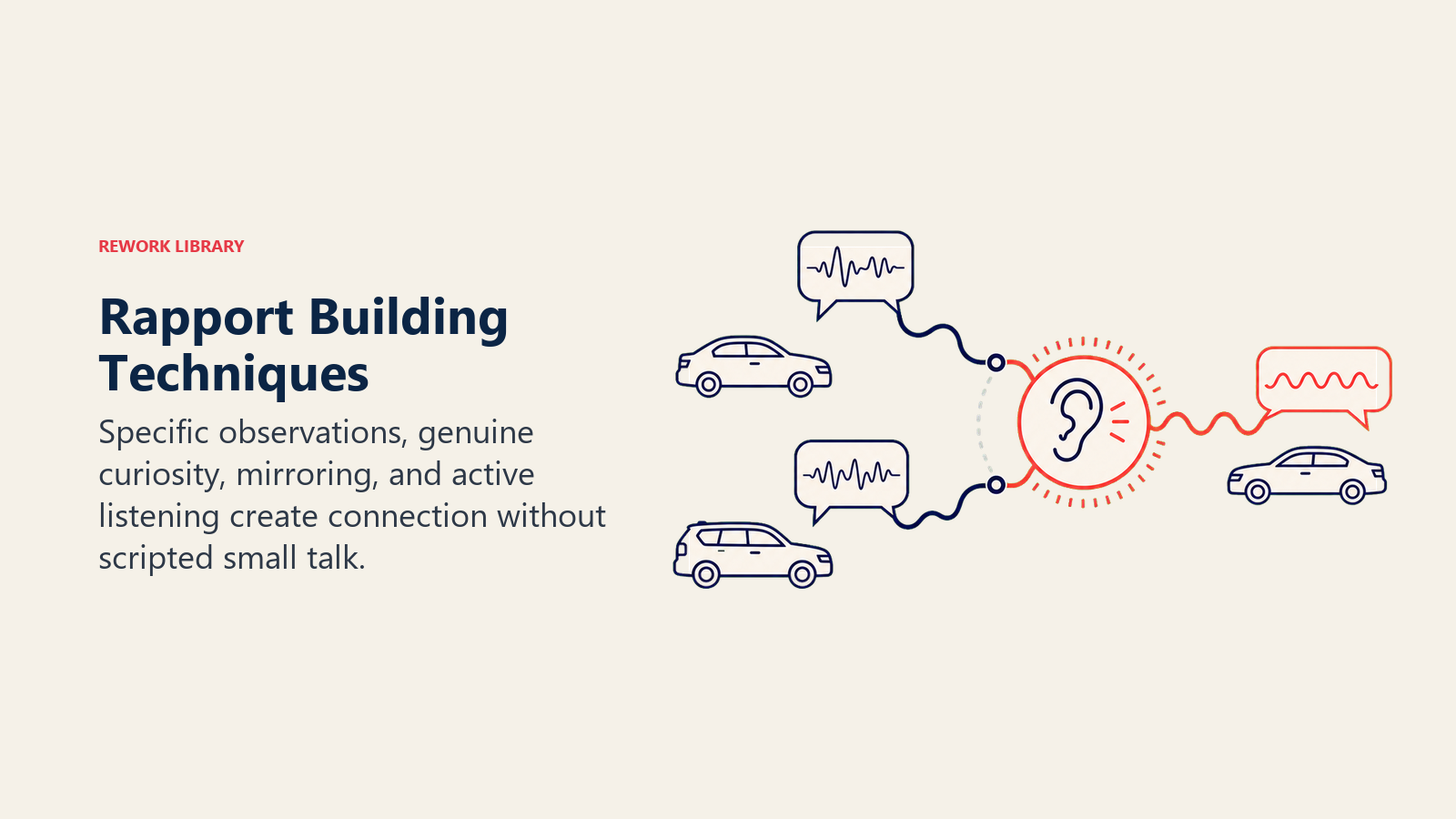
Listen more than you talk in the first few minutes. Let customers tell you about their situations. Ask follow-up questions that show you're paying attention.
Mirror their body language subtly, if they're leaning back relaxed, you relax. If they're leaning forward engaged, you engage. Mirroring creates subconscious rapport.
Genuine Compliments and Observations:
Notice things worth complimenting: "That's a great color on your current car" or "Your kids are so well-behaved" or "I love that [item they're wearing/carrying]."
Genuine compliments (not obviously fake flattery) create positive feelings.
Small Talk That Feels Natural:
Weather, traffic, local events, sports (if they're wearing team gear), weekend plans, small talk that anyone might make in any context feels natural and builds connection.
Using Humor Appropriately:
Light humor relaxes tension and makes you likable. But read the room, some customers want business-only interactions. Don't force humor on people who aren't responding to it.
Creating Memorable Interactions:
Do something slightly unexpected that creates positive memories: remember details from earlier in conversation and reference them later, make personal connections beyond the transaction, share relevant stories that add value.
Memorable interactions become "I really liked working with [name]" stories customers tell friends.
Transitioning to Discovery
At some point, you need to move from greeting and rapport to actual needs discovery and sales process. The transition should feel natural, not abrupt.
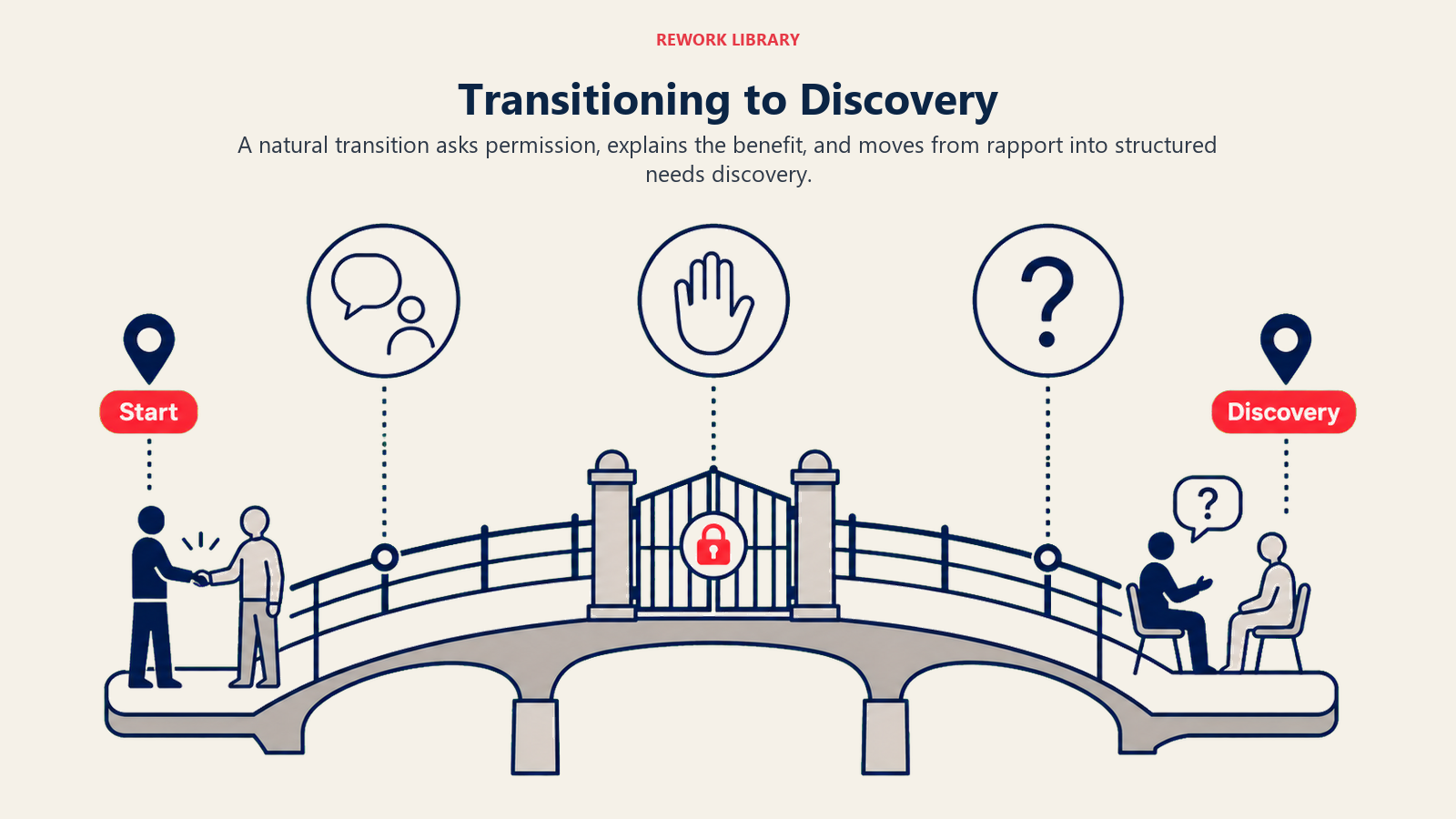
Moving from Greeting to Needs Assessment:
After a few minutes of rapport building, transition with: "So, what brings you in today?" or "Where are you at in your car shopping process?" or "Tell me a bit about what you're looking for."
These questions invite them to share information without feeling like interrogation.
Earning the Right to Ask Questions:
You earn this right by building rapport first. Customers will answer personal questions (budget, timeline, credit situation) from people they trust. They won't answer those same questions from strangers who pounced on them 30 seconds ago.
Permission-Based Selling Approach:
Ask permission before advancing: "Do you have a few minutes for me to ask some questions about what you're looking for? It'll help me point you in the right direction." This feels collaborative rather than pushy.
Seating and Environment Selection:
For serious buyers, invite them to sit down for discovery: "Want to grab a seat so we can talk about what you're looking for?" Sitting signals commitment and allows more in-depth conversation.
For casual shoppers, keep discovery conversational while standing or walking. Don't force formality they're not ready for.
Timeline and Urgency Assessment:
Early in discovery, understand their timeline: "When are you hoping to make a decision?" This tells you how much urgency is appropriate and whether they're shopping or buying.
Setting Expectations for the Process:
Outline what happens next: "Here's what I'm thinking, let's talk for a few minutes about what you're looking for, then I'll show you a couple options that might fit, and if something interests you, we can take it for a drive. Sound good?"
Setting expectations creates comfort and eliminates uncertainty about what's coming.
Common Mistakes to Avoid
Even experienced consultants make greeting mistakes that kill deals before they start.
Pouncing on Customers Entering the Lot:
Nothing triggers defensiveness faster than consultants rushing to greet customers the second they park. Let them exit vehicles, get oriented, and approach the building before engaging. Give them 20-30 seconds of space.
Selling Before Understanding Needs:
Starting vehicle presentations before discovery is guessing what customers want. You'll waste time showing wrong vehicles while losing credibility.
Talking Too Much in First Minutes:
Nervous consultants fill silence with chatter. This overwhelms customers and prevents them from sharing information. Listen more than you talk initially.
Using Scripted/Robotic Language:
Scripts make you sound like every other salesperson. Speak naturally. Be yourself. Authenticity builds trust; scripted language destroys it.
Ignoring Social Cues and Disinterest:
If customers are giving one-word answers, avoiding eye contact, or explicitly asking for space, respect those signals. Pushing harder when someone wants space just drives them away faster.
Being Too Casual or Too Formal:
Match the customer's energy. Some prefer professional, business-like interactions. Others want friendly, casual conversations. Reading and matching their preferred style builds rapport. Mismatching creates friction.
Practical Application
Here's what effective meet and greet looks like in practice:
Scenario 1: Appointment Customer
Customer arrives for 2 PM appointment.
You're watching for their arrival. When they enter: "Mr. Rodriguez? Welcome! I'm James. Thanks so much for coming in. You're here to see the Highlander, right?"
Walk toward pre-staged vehicle while talking
"I've got it pulled up right here. Beautiful color, isn't it? How was the drive over?"
Natural conversation while walking
"I saw you mentioned you're looking for third-row seating, this one has captain's chairs in the second row, which a lot of families really like. Want to check out the back seat?"
This approach acknowledges the appointment, shows preparation, and transitions smoothly into discovery.
Scenario 2: Walk-In Customer
Customer enters showroom, looking around somewhat uncertainly.
You approach after giving them 20 seconds to orient: "Good afternoon! Welcome. Feel free to look around, I'm Sarah if you need anything."
Give them space to browse
After a minute, they're looking at a specific SUV. You approach casually: "That's a nice one. Just came in this week actually. Are you in the market for an SUV, or just browsing?"
Customer: "Just looking around right now."
You: "No problem at all. If you want to sit in it or have questions, just grab me. No pressure either way."
Walk away, giving space
This respects their stated desire to browse while making yourself available when they're ready.
The meet and greet isn't about clever tricks or perfect scripts. It's about genuine human connection, reading people accurately, and building trust before asking for business.
Get these first 90 seconds right, and everything else gets easier. Get them wrong, and you're fighting uphill the entire time.
Master this, and you'll watch your closing rate climb steadily toward 30% and beyond. Continue improving with needs assessment in automotive, vehicle presentation and demo, test drive best practices, negotiation and closing techniques, and automotive customer experience.