Vehicle Merchandising Best Practices - Make Every Unit a Digital Showroom Star - 2026 Guide
Turn this article into takeaways for your work.


Each assistant summarizes the article only for you and suggests best practices for your work.
Here's a reality most dealers still don't fully accept: 95% of car shoppers research online before they ever visit your lot through dealership website optimization. According to J.D. Power automotive research, digital presence and online presentation have become critical factors in customer decision-making. They're scrolling through hundreds of vehicles on their phones, making split-second decisions about which ones deserve a closer look. And if your merchandising doesn't stop them mid-scroll, you've lost the opportunity.
Dealers with professional merchandising standards see 3x higher VDP-to-lead conversion compared to competitors using basic phone photos and generic descriptions. That's not a small edge, it's the difference between generating 15 leads per week from your online inventory and generating 45.
The gap between average merchandising and professional merchandising isn't about expensive equipment or specialized skills. It's about systems, standards, and consistency. Every vehicle that hits your website should look like it belongs in a showroom, not a driveway.
Professional Photography: The Foundation
Lighting makes or breaks automotive photography. Shoot outside on overcast days or in the morning/late afternoon when sunlight is softer. Harsh midday sun creates shadows and glare that make even pristine vehicles look mediocre. If you're shooting indoors, invest in proper lighting, a $500 lighting setup pays for itself in the first five vehicles that sell faster because they look better.
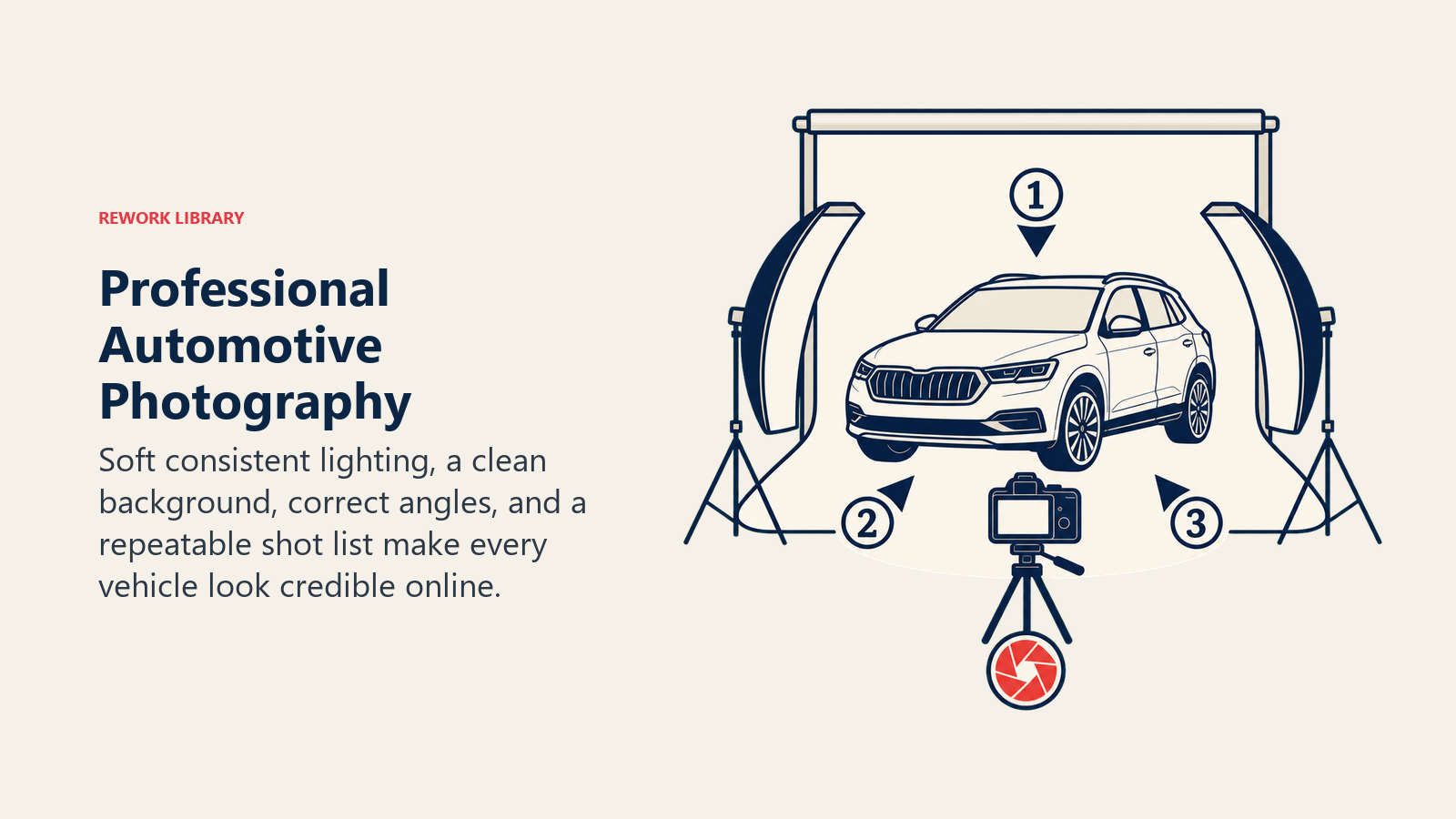
Background matters more than most dealers realize. A clean, uncluttered background keeps focus on the vehicle. Avoid parking lots full of other inventory, utility poles, trash cans, and other visual distractions. Many successful dealers create a designated photo location with a neutral backdrop, a clean wall, landscaping, or even a professional backdrop system.
Your exterior shot sequence should follow a standard pattern every time. Start with the front three-quarter view (the hero shot that appears in search results). Then front, passenger side, rear three-quarter, rear, driver side, and wheels. That's your minimum eight photos. Add detail shots of unique features, sunroof, upgraded wheels, tow package, roof rack.
Interior photography requires the same systematic approach. Driver's seat view of the dashboard, center console and shifter, front seats, back seats, cargo area, and any special features like third-row seating or upgraded audio. Open doors wide to show clean door panels and proper proportions. Turn on the vehicle so screens illuminate, a black infotainment screen looks dead.
Detail shots build confidence. An engine bay photo shows proper maintenance. Tire tread depth photos demonstrate value. Technology feature closeups (adaptive cruise radar, blind spot monitors, touchscreen controls) help shoppers understand what they're getting. These shots might not generate initial interest, but they close deals by answering questions before shoppers need to ask.
Photography Execution That Works
The dealers who do this well follow a checklist every single time. Vehicle is fully detailed, washed, dried, interior vacuumed, windows cleaned inside and out. Any visible items removed from interior. Gas door closed. All doors and trunk closed for exterior shots. Wheels turned slightly toward camera for front three-quarter shot to show wheel design.
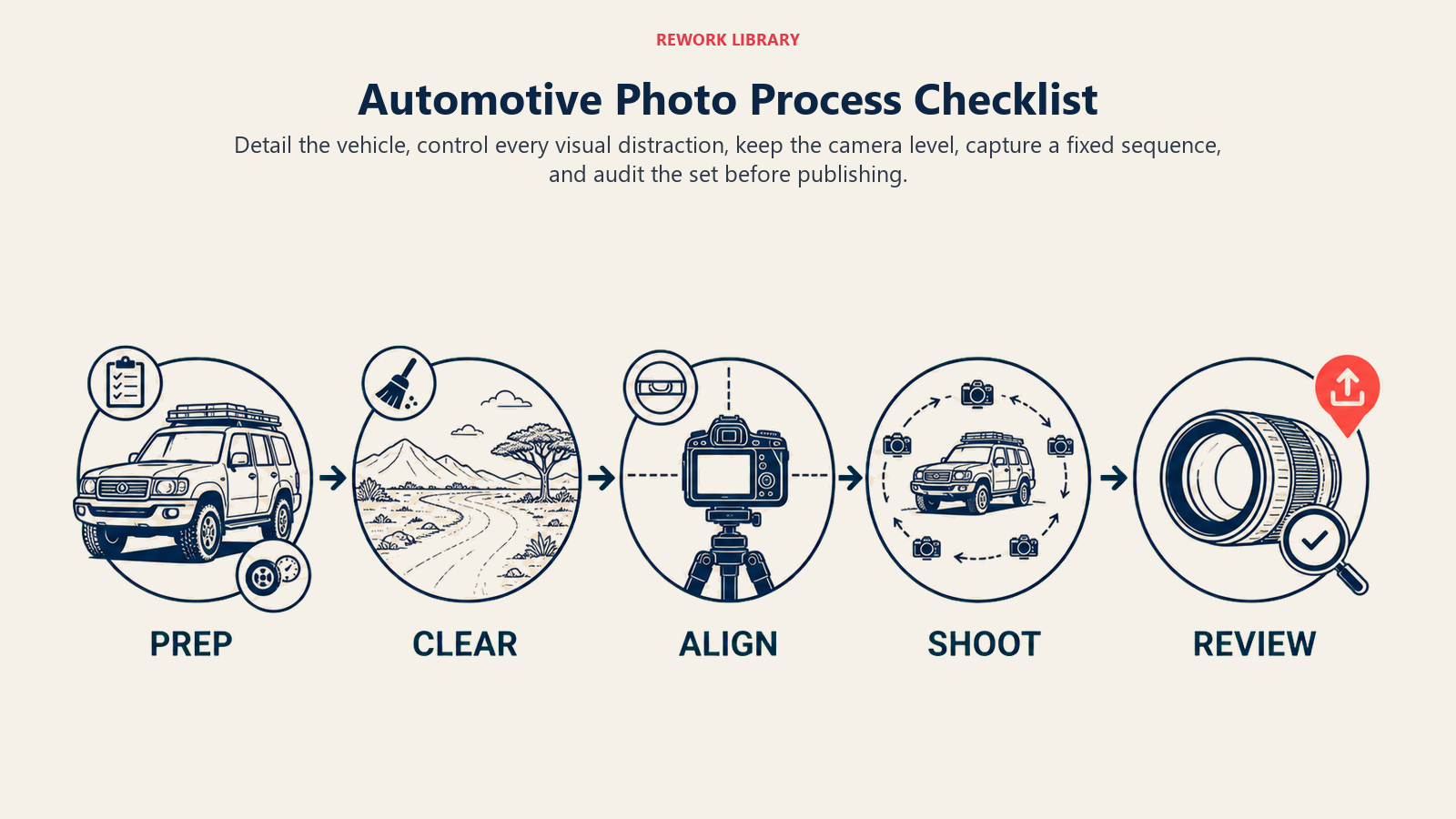
Camera settings matter less than consistency. Modern smartphones take excellent automotive photos if you understand a few basics. Tap to focus on the vehicle, not the background. Keep the phone level, tilted angles look unprofessional. Step back and zoom slightly rather than shooting too close. Take multiple shots of each angle and choose the best.
But here's where most dealerships fail: they assign photography to whoever's available that day. The lot porter shoots some vehicles. A salesperson shoots others. The used car manager shoots the rest. Every vehicle looks different because technique varies by photographer. Instead, assign one person as primary photographer, train them properly through your dealership's training systems, and hold them accountable to standards.
Photo editing shouldn't be heavy-handed, but basic adjustments matter. Slightly increase brightness and contrast. Straighten images if needed. Crop to eliminate distracting edges. Remove license plates for privacy. Many dealers use services like Spyne or CarCutter that automatically enhance and process photos for $2-3 per vehicle. That cost pays for itself in perceived quality.
Writing Descriptions That Convert
The opening line of your vehicle description has one job: stop shoppers from clicking to the next vehicle. Lead with the most compelling differentiator. "One owner, fully documented service history, loaded with technology" works better than "Nice car, runs great, must see."
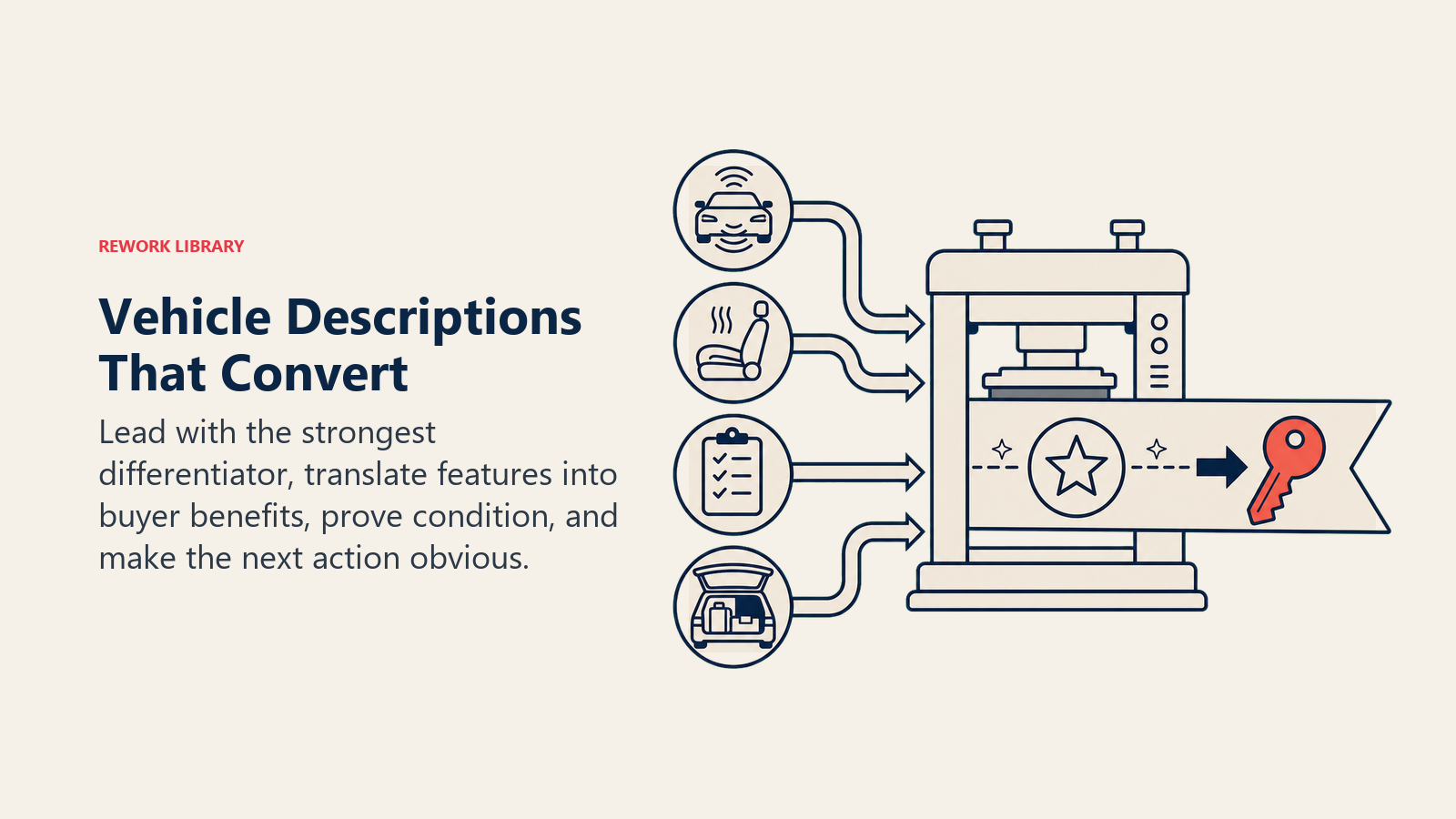
Feature-benefit translation separates professionals from amateurs. Don't just list equipment, explain why it matters. Instead of "blind spot monitoring," write "blind spot monitoring for confident lane changes in traffic." Instead of "heated seats," write "heated seats that warm up in 60 seconds on cold mornings." Connect features to the owner experience.
Address common objections preemptively. If a vehicle has higher mileage, explain why it's still a great value: "Highway miles, single owner, complete service records, recent timing belt service." If it's a year older, emphasize equipment level: "2020 model with all the same features as 2022 at thousands less." Give shoppers ammunition to overcome their own concerns.
The call-to-action at the end shouldn't be generic. "Contact us today" is weak. "Schedule your test drive and experience the performance difference" or "Reserve this vehicle with a $500 deposit before it's gone" create urgency and clear next steps.
Most importantly, avoid clichés that every dealer uses. "Won't last long," "cream puff," "sharp looking," "low miles", these phrases are so overused they've become invisible. Write like you're explaining the vehicle to a friend who's asking whether it's a good buy. Be specific, be honest, and be helpful.
Competitive Merchandising Elements
Carfax and AutoCheck integration used to be optional. Now they're essential for building customer confidence. Research from Cox Automotive shows that transparency in vehicle history and condition has become a key factor in online conversion rates. But simply including the report isn't enough, interpret it for the shopper. "Clean Carfax with no accidents" is better than just a logo. "23 service records showing meticulous maintenance" tells a story. "3 previous owners, all long-term ownership" builds confidence.
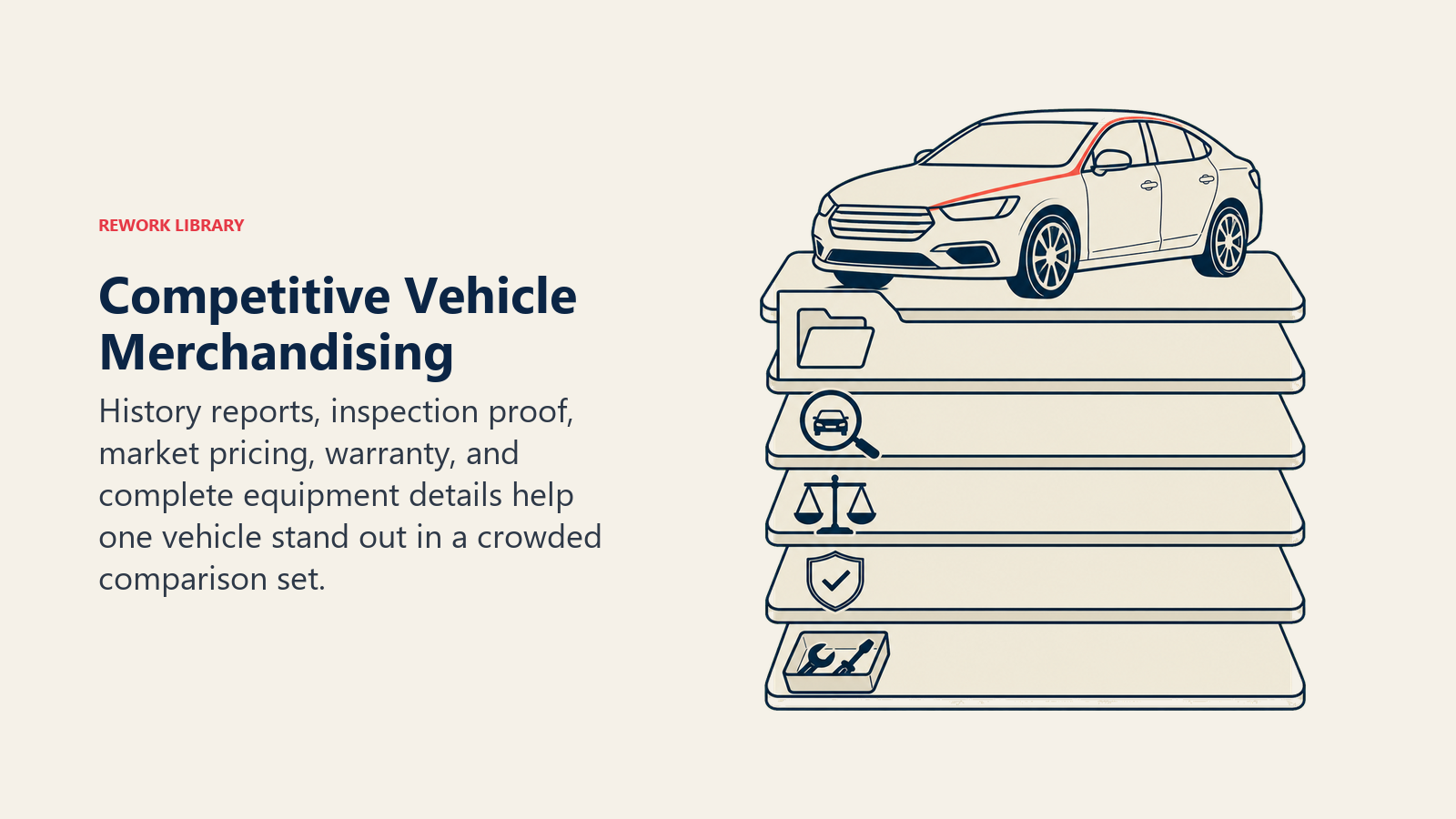
For CPO vehicles, your merchandising should emphasize the certification prominently. List the specific inspection points passed. Highlight the warranty coverage. Show the certification documents in photos. CPO commands premium pricing, but only if shoppers understand the value, your merchandising needs to educate.
Video walkarounds have become table stakes for premium inventory. A 60-90 second video of a salesperson or manager walking around the vehicle, starting it, showing key features, creates connection that photos alone can't achieve. It doesn't need professional production value, authenticity matters more. Shoot it on a phone, be enthusiastic but genuine, and focus on features shoppers care about.
Virtual tours and 360-degree views aren't necessary for every vehicle, but they're powerful for premium units. A shopper can explore the interior at their own pace, zoom in on details, and get a sense of space. Several affordable platforms (OEMs provide tools, or use services like Matterport for high-end inventory) make this accessible.
Digital Presentation Optimization
Your primary photo, the one that appears in search results and thumbnail grids, determines whether shoppers click through to your VDP. It should be the front three-quarter angle, properly framed, well-lit, with clean background. Test different angles through automotive inventory strategy to see what drives higher click-through rates. Some vehicles look better from the passenger side. Some look better straight-on.
Photo sequencing tells a story. Start with exterior overview, move to detail shots, transition to interior overview, then interior details. Shoppers should flow naturally through the photos in an order that builds desire. Avoid random sequencing that jumps from trunk to engine to dashboard to exterior.
Mobile optimization is non-negotiable. More than 70% of vehicle shoppers browse on phones. Your photos must load quickly. Descriptions must be readable on small screens without zooming. CTAs must be tappable with thumbs. If your website or VDP template isn't mobile-optimized, you're losing leads to competitors who are.
Third-party site syndication consistency matters more than dealers realize. Your vehicle should look the same on your website, Cars.com, AutoTrader, CarGurus, and everywhere else it appears through your online pricing transparency strategy. Same photos, same description, same price. When shoppers see inconsistent information across platforms, it triggers distrust. They wonder what else might be inconsistent or inaccurate.
Reconditioning Standards Matter
You can't photograph quality that isn't there. If a vehicle has swirl marks in the paint, dirty carpet, or minor cosmetic issues, those will show in photos, and shoppers will notice. Proper detailing before photography isn't optional. At minimum: wash, clay bar treatment, wax, wheel cleaning, full interior detail including carpet extraction, leather conditioning, and glass cleaning. This is part of your overall inventory pricing and aging strategy.
Some reconditioning decisions should be made with merchandising in mind. A set of worn floor mats costs $80 to replace but makes interior photos look $2,000 cheaper. Minor paint touch-ups on chips or scratches cost $200 but eliminate objections during the sale. Consider the visual impact of reconditioning decisions, not just the mechanical necessity.
Staging vehicles for photography includes small details that matter. Adjust the driver's seat to a normal position, not pushed all the way back or forward. Set climate controls to a reasonable temperature. Have a quarter tank of gas (not empty, not full). These details seem minor, but they subconsciously communicate care and attention.
Window sticker presentation varies by dealer philosophy. Some prominently display pricing in photos, believing transparency builds trust. Others avoid it, preferring to control price messaging through description text. Test both approaches and measure which drives better engagement in your market.
Measuring What Matters
VDP engagement metrics tell you if your merchandising is working. Track views per vehicle by age, units should generate 30-50 VDP views in the first two weeks through effective automotive lead generation. If a vehicle is getting impressions in search but few VDP clicks, your primary photo needs work. If you're getting VDP views but low time-on-page, your description or additional photos aren't compelling.
Photo view depth shows shopper interest. Most shoppers view 3-4 photos. If they view 8-10, they're serious. Track average photos viewed per VDP session. If that number is low across your inventory, it suggests your photo quality or sequencing isn't engaging shoppers to explore further.
Lead conversion rate by merchandising quality is the ultimate metric. Tag vehicles as "premium merchandising" (professional photos, detailed description, video walkaround) vs. "standard merchandising" and track lead generation rate. The difference will justify investing in better merchandising standards across all inventory.
A/B testing different merchandising approaches provides real data through your data analytics platform. Try two different primary photos for similar vehicles and track click-through rates. Test different description frameworks. Experiment with video placement and format. Most dealers never test, they just follow industry standards without knowing if those standards work in their market.
Building Your Merchandising System
Consistency requires systems, not heroic individual effort. Create a merchandising checklist that covers every step from detailing to photo review to description approval to website upload. Assign clear ownership, who's responsible for each step? Who verifies quality standards are met?
Quality audits should happen weekly. Review a sample of recently posted inventory against your standards. Are all required photos present? Is image quality consistent? Are descriptions following your template? Finding and fixing gaps in process is how you maintain standards over time.
Training new team members on merchandising standards takes time upfront but pays dividends. Don't just hand someone a camera and send them out. Show them examples of good vs. poor photography. Explain why each photo angle matters. Practice together until they consistently produce quality work.
Technology choices matter, but they're not magic. You can produce excellent merchandising with a modern smartphone, natural light, and attention to detail. Or you can produce mediocre merchandising with a $3,000 camera and professional lighting if you don't follow good process. Invest in systems and training before you invest in equipment.
Making Merchandising Work
The dealers who win at merchandising treat it like any other profit center, they measure it, manage it, and continuously improve it. They understand that online presentation is the new showroom floor, and every vehicle deserves premium presentation because that's where buying decisions happen.
Start by establishing minimum standards that every vehicle must meet before it hits your website. No exceptions for aged inventory, trade-ins that "we're just going to wholesale anyway," or vehicles acquired late in the day. Every unit gets professional treatment.
Your merchandising quality directly impacts metrics that matter: time to sale, gross profit, lead conversion rate, and customer satisfaction. Better merchandising lets you hold pricing longer because shoppers perceive higher value. It drives more showroom traffic because online shoppers are pre-qualified and motivated. And it creates positive first impressions that carry through the entire automotive sales process.
The 3x VDP-to-lead conversion advantage that professional merchandising delivers isn't theoretical. It's measurable, achievable, and sustainable. Make merchandising a competitive advantage and you'll sell more vehicles at better gross with less time and effort required from your sales team. That's what separates good dealers from great ones.

Senior Implementation Consultant