Virtual Showroom Experience: Selling Cars to Remote Buyers Without Floor Traffic - 2026 Guide
Turn this article into takeaways for your work.


Each assistant summarizes the article only for you and suggests best practices for your work.
Post-pandemic buying behavior revealed something that permanently changed automotive digital retailing: 45% of customers would complete the entire purchase process remotely if the experience matched showroom quality. That number isn't shrinking as life returns to normal, it's growing as technology improves and customer expectations evolve.
Virtual showrooms are no longer temporary solutions for crisis conditions. They're permanent competitive advantages that expand your market reach beyond 20-mile radius restrictions and allow you to compete in markets where you have no physical presence. According to Cox Automotive research, advancements in digital tools like virtual showroom tours have significantly increased customer satisfaction.
The dealerships executing virtual sales well aren't just surviving without floor traffic, they're growing revenue from customers who would never have visited their physical location in the first place.
Virtual Showroom Components
Live video walkarounds and product demonstrations replace the traditional lot walk. Your sales consultant grabs a phone or tablet, takes the customer on a personalized tour of their selected vehicle, and highlights features based on the needs discussion that happened minutes earlier. It's not scripted or canned, it's responsive to what matters to this specific buyer.
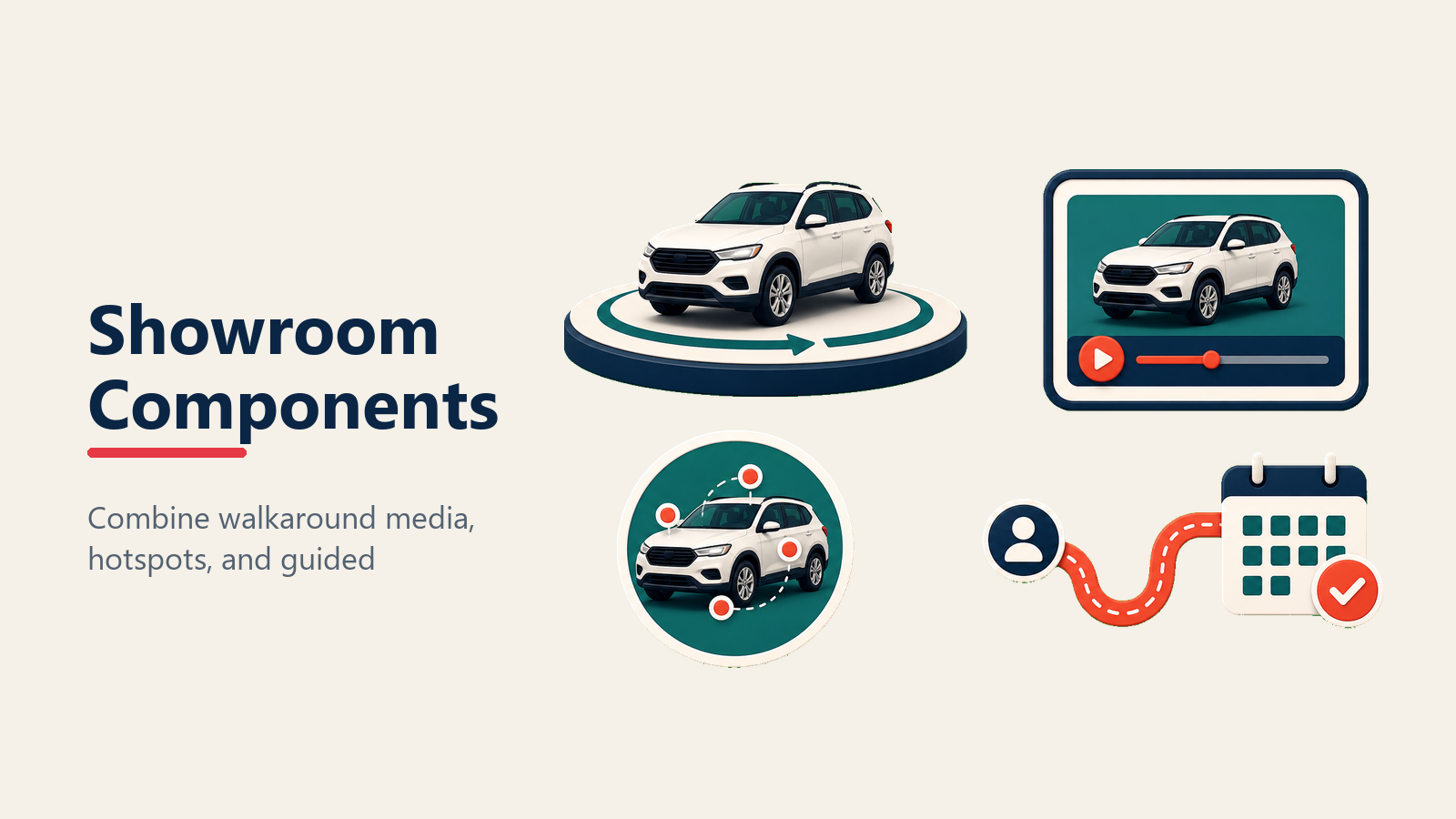
360-degree interior/exterior vehicle photography provides self-service exploration between live sessions. Customers can examine paint condition, interior wear, tire tread, and even read the window sticker without anyone talking at them. The good programs let customers zoom into specific areas, check panel gaps, and verify claimed condition through excellent vehicle merchandising.
Augmented reality features and visualizations bring configuration to life. Point a phone at your driveway and see that F-150 in Antimatter Blue sitting exactly where your current vehicle is parked. Change wheel options in real-time. Add a tonneau cover and running boards visually before adding them to the deal. AR isn't gimmicky anymore, it's closing deals by eliminating imagination gaps.
Virtual test drives and demonstration videos bridge the experience gap that keeps many buyers from committing remotely. POV driving footage from the exact vehicle they're considering, exhaust note recordings, acceleration demonstrations, and feature walkthroughs replace the traditional demo drive for customers who can't or won't visit in person.
Remote F&I presentation capabilities complete the digital journey. Your F&I manager shares their screen, walks through product options with the same presentation they use in the box, and captures signatures electronically. The deal doesn't pause because the customer is 200 miles away.
Technology Infrastructure
Video conferencing platforms create the foundation. Zoom dominates for its reliability and customer familiarity, Microsoft Teams works well for commercial and fleet buyers, and dealer-specific platforms like AutoFi or Roadster offer automotive-tailored features worth considering if you're building a dedicated virtual sales program.
But platform selection matters less than execution. You can close deals on FaceTime if your process is solid and your team knows how to sell without physical presence.
Streaming equipment and setup separate professional virtual experiences from amateur attempts. At minimum: 1080p webcam or better, ring lighting to eliminate shadows, lapel or directional microphone to cut background noise, and stable high-speed internet. Your virtual showroom should look better than your customer's Zoom calls, not worse.
Mobile device optimization is non-negotiable when your sales team is walking the lot with an iPhone. Gimbal stabilizers prevent shaky video, external microphones cut wind noise, and mobile apps designed for streaming deliver better quality than default camera apps.
Screen sharing for forms and presentations keeps customers engaged during paperwork portions. When you're walking through a credit application or explaining F&I products, you need the customer looking at the same screen you're viewing. Shared visibility reduces confusion and speeds decision-making.
Digital contracting and signature platforms (DocuSign, Adobe Sign, DealerSocket) handle the legal requirements of remote transactions. You can't close deals via Zoom alone, you need compliant digital signature capture that holds up in court and satisfies lender requirements.
Sales Process Adaptation
Virtual appointment scheduling and confirmation needs more structure than showroom visits. You're asking customers to carve out uninterrupted time in their home or office, so you'd better show up on time with the right vehicle ready and a clear agenda. Confirmation emails should include: Zoom link, expected duration, items to have ready (trade keys, license, payoff info), and technical requirements.
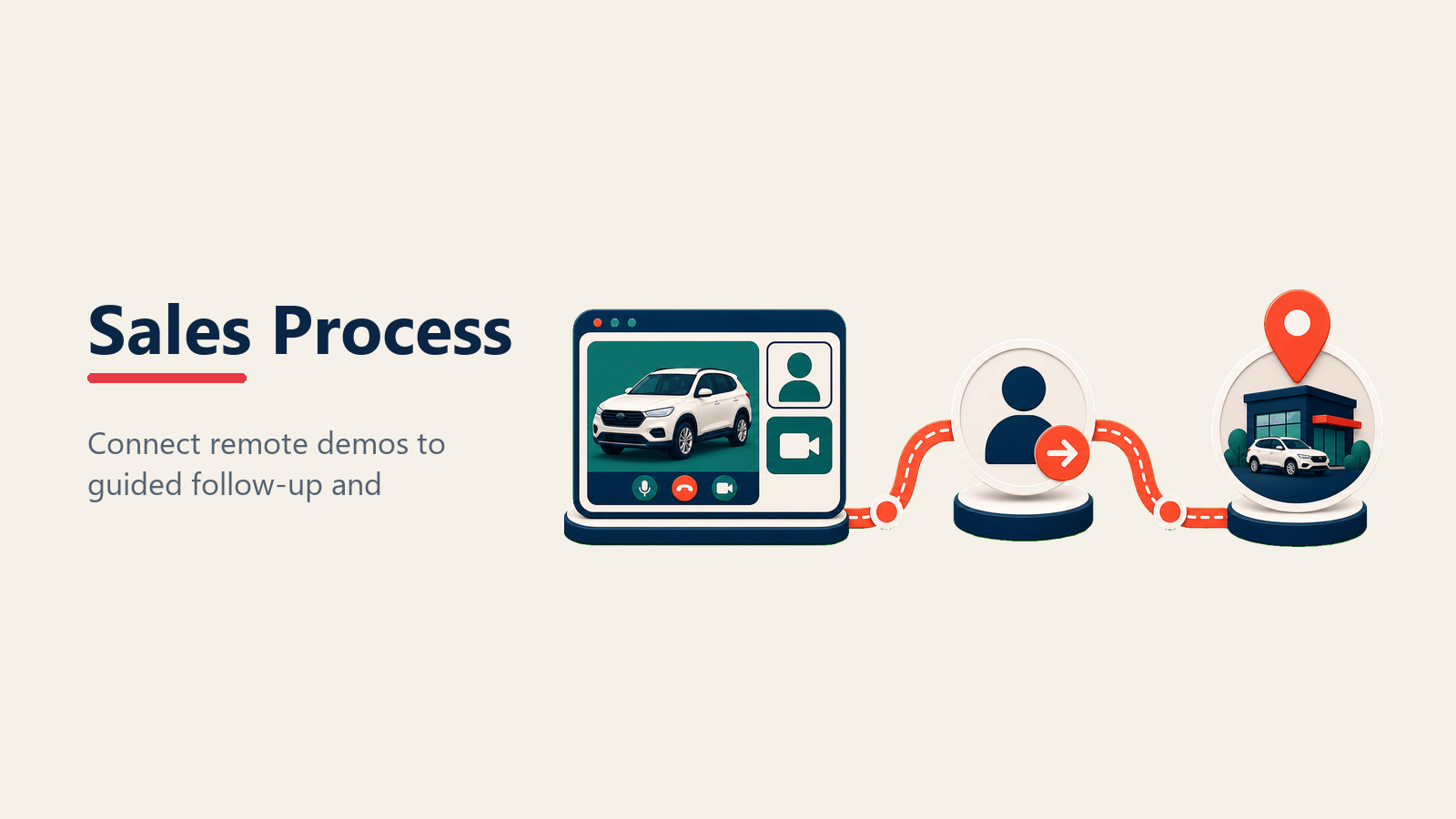
Pre-appointment vehicle preparation matters even more remotely than in person. When a customer arrives on your lot, they'll forgive some dirt or low fuel. When you're showing them a vehicle via video, they notice every detail. Wash it, fuel it, and park it somewhere with good lighting before you start the call.
Remote needs assessment techniques replace the walk-around interrogation. You can't gesture to their current vehicle or read body language as easily, so you compensate with better questions: "Walk me through your typical week, what do you use your vehicle for most?" followed by "What frustrates you about your current SUV that we need to solve with your next one?"
Digital presentation books and materials should be screen-share ready. PDFs of competitive comparisons, payment examples at different terms, and feature explanations that you can walk through together while staying on video. Don't email them materials and expect customers to review them alone, present together virtually.
Virtual trade-in appraisal process requires customer participation and complements online trade-in tools. Walk them through a photo sequence via video: "Point your camera at the driver's side door, now step back three feet, good, now tilt down to get the wheel and rocker panel." You're not getting CarMax-level appraisal precision, but you're getting enough to work a real number before they arrive.
Team Structure & Staffing
Dedicated virtual sales specialists vs floor integration is your first structural decision. Dedicated specialists develop expertise in video selling, become comfortable on camera, and aren't distracted by walk-in traffic. Floor integration keeps your entire team versatile and prevents virtual specialists from cherry-picking easy internet deals.
Most stores see better results with dedicated specialists once they're generating 15+ virtual appointments weekly. Below that volume, train your entire team and route virtual appointments to whoever's up next.
Training requirements for video selling go beyond traditional sales methods. Your team needs to perform on camera (which is genuinely uncomfortable for many salespeople), explain features without physical demonstrations, and create urgency without being able to hand someone keys and say "Let's see how it feels."
Invest 2-3 days in video-specific training before launching virtual programs. Role-play on camera, watch recordings together, and develop comfort with dead air and screen sharing.
BDC coordination and handoff determines whether your virtual appointments actually happen. The BDC sets expectations, confirms technology requirements, and screens for serious buyers vs researchers. The handoff needs scheduled prep time, your sales specialist shouldn't learn about the appointment 5 minutes before it starts.
Technical support and backup systems prevent disasters. Have a secondary internet connection available, backup devices in case of hardware failure, and phone numbers ready if video fails. Nothing kills credibility faster than "Sorry, my Zoom isn't working, can we reschedule?"
Performance expectations and compensation should mirror in-person metrics. Virtual specialists should close at similar rates (18-22%) to floor consultants, hit similar gross profit numbers, and maintain customer satisfaction scores. Don't create compensation structures that incentivize virtual sellers to pass difficult deals back to the showroom.
Customer Experience Design
Pre-appointment communication and setup instructions reduce no-shows and technical failures. Three days before: confirmation email with agenda and requirements. One day before: reminder with Zoom link and tech check instructions. One hour before: text message confirmation.
Customers who invest time in preparation show up and engage seriously. Customers who get surprised by appointment reminders often ghost.
Professional presentation standards matter more on camera than in person. Clean background (not your messy desk), dealership-branded shirt, good lighting, and energy that translates through video. What reads as "normal" enthusiasm in person often looks flat on camera, you need to amplify slightly.
Interactive elements and engagement tactics prevent passive viewing. Ask customers to take their own photos and text them to you during the call. Have them pull up your website and compare vehicles together. Request they walk around their current vehicle and describe what they want to change. Participation drives commitment.
Handling objections and questions remotely requires clarity over pressure. You can't overcome objections with physical presence or test drive excitement. Instead, you need logical frameworks, competitive comparisons, and transparent pricing that builds trust from a distance.
Creating urgency without physical presence comes from market reality, not artificial scarcity. "This 4Runner has been live on our site for 3 days and we've got two other appointments scheduled this week" works better than "I can only hold this price until end of day."
Delivery & Logistics
Home delivery coordination transforms from nice-to-have perk to standard expectation for remote buyers. They didn't come to you, so you're coming to them. Delivery scheduling, route optimization, and professional delivery drivers replace "Come pick up your car" as the default close.
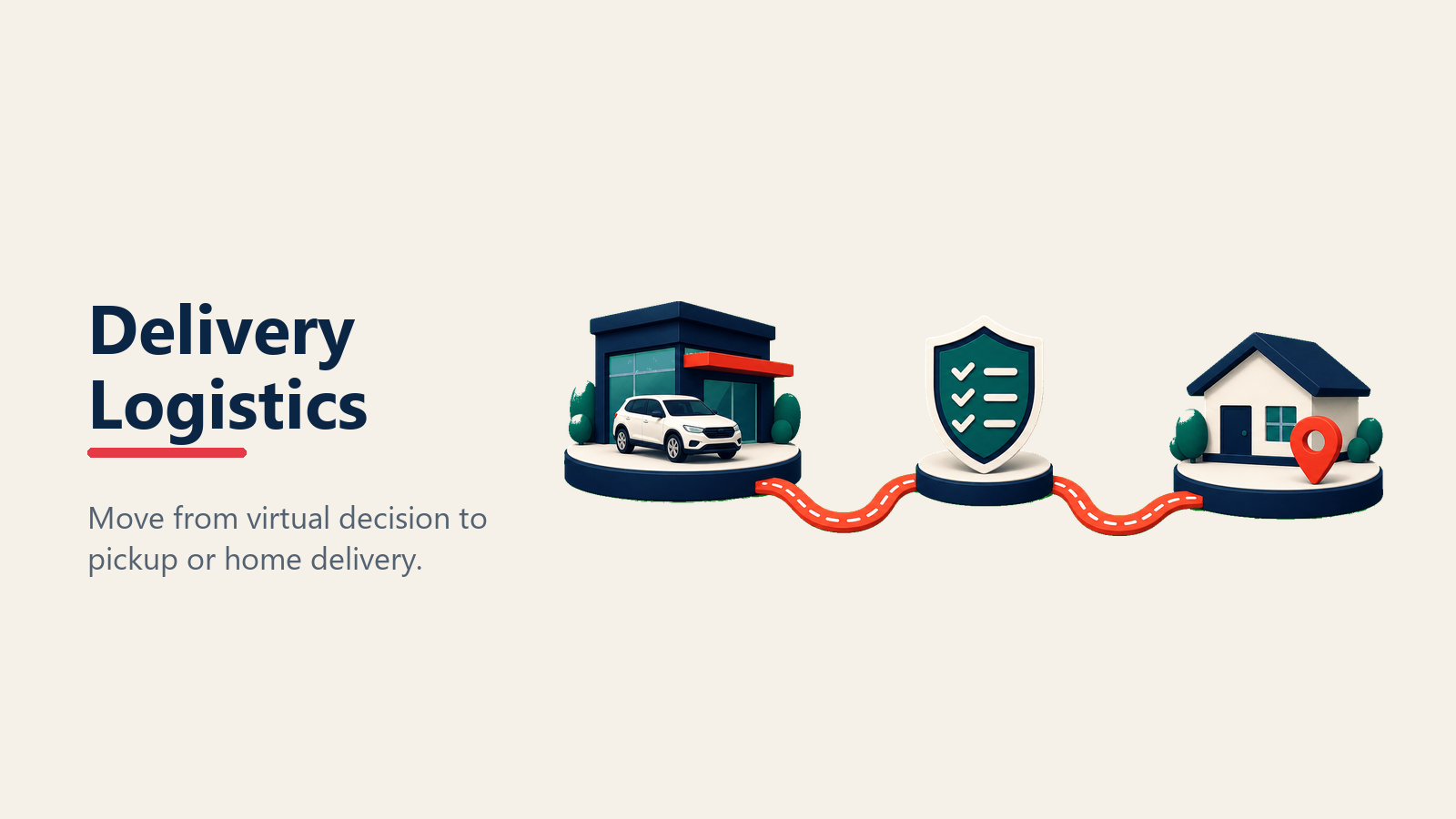
Many stores charge $200-400 for delivery beyond 50 miles. Some include it free for premium vehicles or as a closing concession. Price it based on your true cost, don't let delivery fees kill deals you spent hours building remotely.
Remote paperwork completion needs to happen before delivery, not during. All digital signatures captured, insurance confirmed, financing verified, and registration processed before your driver leaves the lot. The delivery is a celebration, not a closing negotiation.
Payment processing and security requires clear protocols. ACH transfers for down payments, verified cashier's checks, or lender direct payment, never accept personal checks from remote buyers. Your risk increases when customers aren't sitting across from your F&I manager.
Vehicle protection and transit insurance during delivery protects both parties. Your driver needs insurance that covers test drive and delivery scenarios. Your buyer needs to know they're covered from the moment the vehicle leaves your lot. Document everything with photos and signed delivery receipts.
Post-delivery support and follow-up is your retention opportunity. First call at 48 hours: "How's the new GLE treating you? Any questions about features?" Second call at two weeks: "Now that you've had some time, what do you love most?" Engage before problems become complaints.
Performance Metrics
Virtual appointment show rates should run 70-80% if your BDC is screening properly and your confirmation process works. Below 60% means you're booking unqualified appointments or your preparation communication is weak. Above 85% suggests you're being too selective and leaving revenue on the table.
Remote close rates vs showroom performance tell you whether your virtual process actually works. Top dealerships see 18-22% close rates on virtual appointments compared to 20-25% on showroom visits. If there's a significant gap, your virtual experience needs work, you're not replicating the in-person advantage. McKinsey research shows that 42% of respondents would consider switching brands if the online experience failed to meet expectations.
Average session duration for virtual appointments runs 45-75 minutes for serious buyers. Much shorter and you're rushing the process. Much longer and you've got inefficiency or customers who aren't ready to buy yet.
Customer satisfaction scores should match or exceed in-person experiences. Virtual buyers appreciate the convenience, time savings, and low-pressure environment. If your CSI drops on remote deals, you're likely being too aggressive with commitment asks or your delivery experience is disappointing.
Geographic market expansion data proves ROI on virtual programs. Track where your virtual customers are located using dealership analytics. If you're only reaching people within your traditional market, you haven't really built virtual reach, you've just created video appointments for local buyers. Real success means selling to customers 100-300 miles away who would never have purchased from you without virtual capabilities.
The dealerships winning with virtual showrooms aren't treating them as pandemic leftovers or stopgap measures. They're investing in professional equipment, training specialists, and building systematic processes that deliver consistent results regardless of whether customers can visit in person. The market's already decided it wants this option, the only question is whether you'll execute well enough to capture the opportunity.
For more on integrating virtual experiences with your broader digital strategy, see Automotive Digital Retailing. To understand how virtual appointments fit into your overall sales workflow, review Automotive Sales Process. For optimizing the vehicle presentation experience remotely, reference Vehicle Presentation & Demo. And to connect virtual selling with remote finance capabilities, explore Digital F&I Process.

Senior Implementation Consultant