Lead Nurturing Sequences: Staying Top-of-Mind with Shoppers Not Ready to Buy Today
Turn this article into takeaways for your work.


Each assistant summarizes the article only for you and suggests best practices for your work.
Here's what most dealerships get wrong about lead management: they treat every inquiry like it's ready to convert today. The reality? Only 25-30% of automotive leads are actually in-market for immediate purchase. The other 70% have purchase timelines stretching 2-6 months into the future.
Without proper nurture systems, dealerships abandon these future buyers to competitors who stay in touch. And that's leaving serious money on the table.
Modern dealerships are converting these long-cycle leads at 15-22% rates by implementing automated nurture sequences. These aren't aggressive sales campaigns, they're value-driven touch points that keep your dealership top-of-mind when the buying window finally opens.
The Reality of Automotive Purchase Timelines
The average car buyer spends 14 hours and 19 minutes researching before making a purchase decision, according to Cox Automotive's 2024 Car Buyer Journey Study. But that research doesn't happen in a single weekend anymore. Today's shoppers submit forms and make inquiries 60-120 days before they're actually ready to buy. They're gathering information, comparing options, understanding pricing, and planning their purchase. If your BDC treats these leads like they should visit the showroom tomorrow, you'll lose them.
The numbers tell the story: dealerships with active 90-day nurture programs convert 18% of "not ready now" leads compared to just 3% conversion for dealerships that stop following up after two weeks.
That's a 6x difference in revenue from the same lead sources.
Lead Nurture Philosophy: Value Without Pressure
Effective lead nurturing isn't about persistence, it's about relevance. Your goal isn't to convince someone to buy before they're ready. It's to become their trusted resource during the research process so they think of you first when the time comes. This requires a fundamental shift in mindset from quick conversion to long-term relationship building. You're not asking for the sale in every communication. You're delivering value, answering questions, and staying present without being annoying.
The best automotive nurture campaigns follow a simple principle: help first, sell second. Provide the information they're actively searching for anyway, buying guides, trade-in valuations, financing education, model comparisons. Position your dealership as the expert resource, not the pushy salesperson.
But there's a balance here. You also need to know when to stop nurturing. If someone hasn't engaged with any of your messages in 180 days and hasn't visited your website in 90 days, they've either bought elsewhere or abandoned the purchase entirely. Continuing to email them at that point just damages your sender reputation.
Segmentation: Not All Leads Need the Same Nurture Path
The biggest mistake in automotive lead nurturing is treating everyone the same. A buyer with a 30-day timeline needs different messaging than someone planning to purchase in 4 months. A credit-challenged buyer has different concerns than a cash buyer. Effective segmentation starts with timeline classification. When leads enter your system, classify them into buckets: 30-day, 60-day, 90-day, and 120+ day purchase windows. This determines message frequency and content approach.
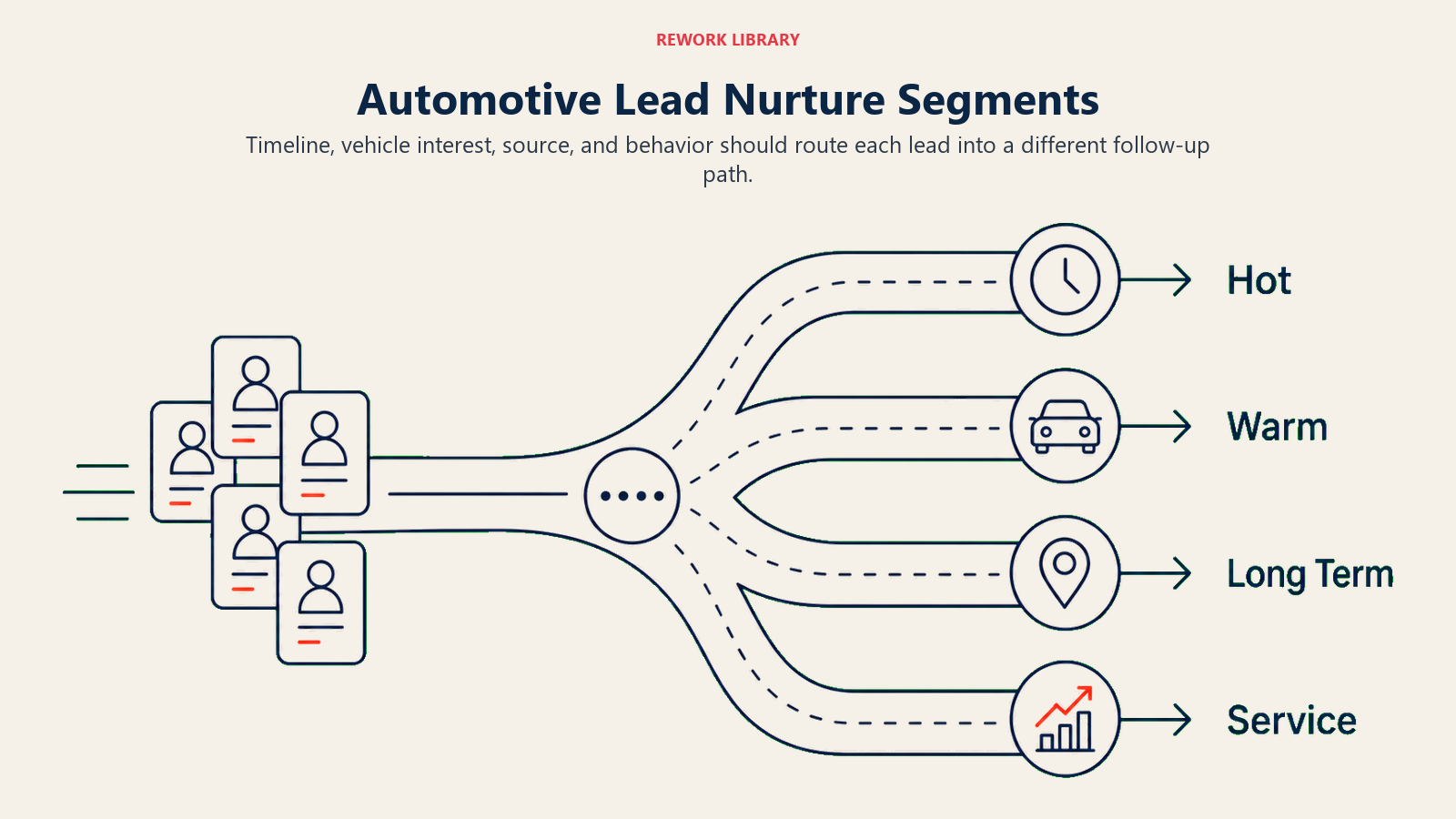
You should also segment by heat level. Hot leads get immediate sales attention plus nurture backup. Warm leads get weekly educational content and inventory matches. Cold leads get monthly value touches and seasonal campaigns.
New versus used buyers need different paths entirely. New car shoppers want information about model features, available inventory, incentives, and delivery timelines. Used buyers care more about vehicle history, condition reports, trade-in equity, and value comparisons.
Credit situation creates another important segment. Buyers with credit concerns appreciate financing education, credit improvement tips, and alternative financing options. Prime credit buyers want rate comparisons and lease versus finance calculations.
Trade-in equity position matters too. Buyers with positive equity are often ready to move faster than those who are underwater. Segment accordingly and adjust message timing and urgency.
Email Nurture Campaigns: The Foundation
Email remains the workhorse of automotive lead nurturing, with open rates of 22-28% in the industry and click rates around 3-4%. But those numbers only work when you're sending the right messages at the right time. Nearly 60 percent of potential car buyers under 45 prefer to purchase their vehicle online, making digital communication critical for younger demographics. Your welcome series sets the tone. When a new lead enters your system, they should receive an immediate acknowledgment email within 5 minutes, followed by a welcome series over the next 7 days. This series introduces your dealership, sets expectations for communication, highlights your value proposition, and delivers initial helpful resources.
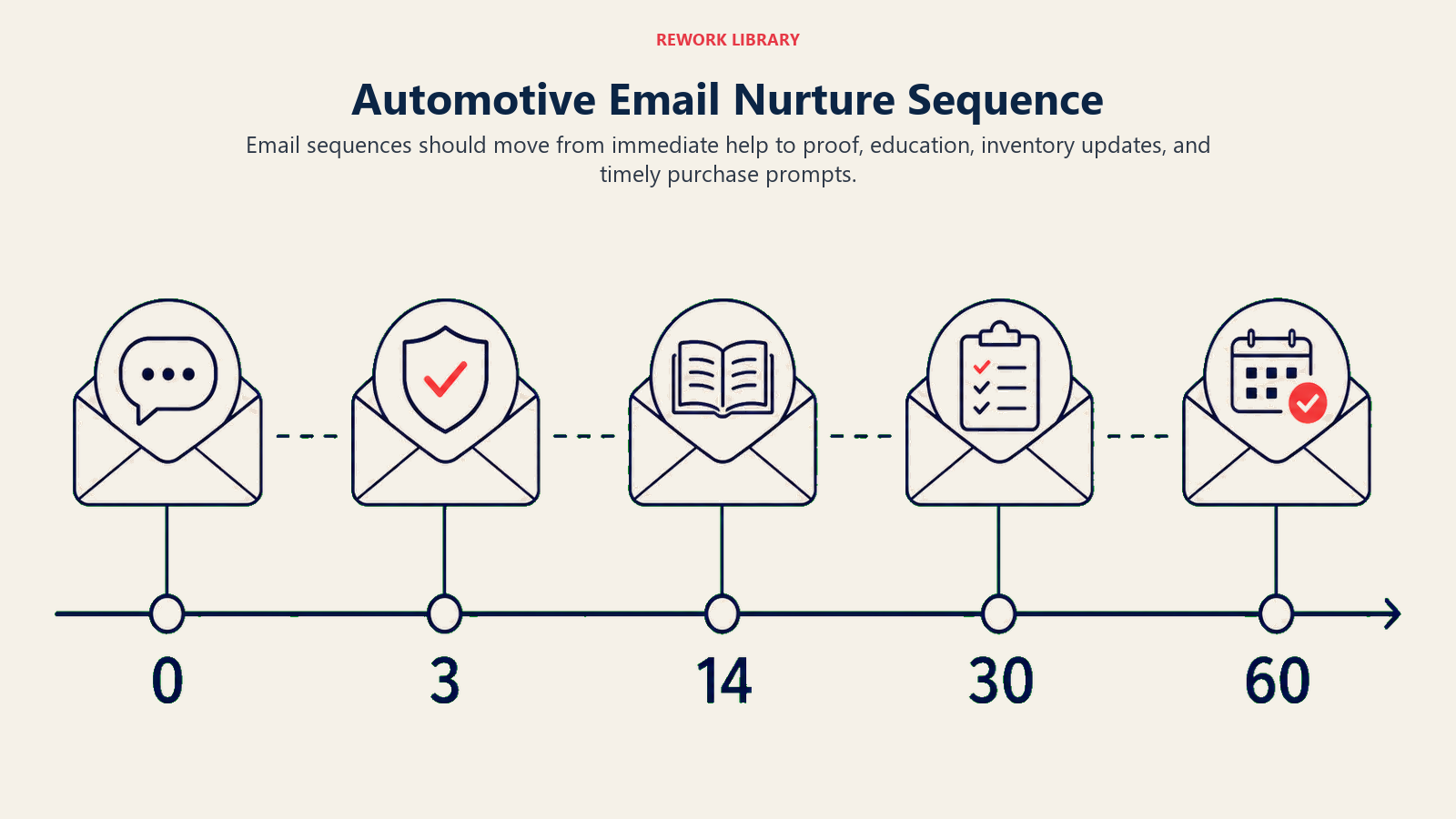
A solid welcome series might look like:
- Day 1: Immediate response with BDC contact info and next steps
- Day 2: Research guide for their vehicle type with comparison tools
- Day 4: Trade-in valuation process explanation and online tool access
- Day 7: Financing options overview and credit application invitation
After the welcome series, move into educational content sequences. These should run weekly for the first 30 days, then shift to bi-weekly for the next 60 days. Content focuses on answering common questions: total cost of ownership, maintenance expectations, insurance considerations, technology features, safety ratings.
Inventory match alerts are particularly effective for engaged shoppers. When vehicles matching their stated preferences arrive in stock or drop in price, automated alerts create timely reasons to reconnect. These messages generate 8-12% click-through rates because they're genuinely relevant.
Seasonal and promotional campaigns layer on top of your nurture sequences. End-of-year clearance, model year changeovers, manufacturer incentives, these create natural urgency for buyers who've been researching for months.
Finally, re-engagement win-back series target leads who've gone cold. If someone hasn't opened emails in 45 days, a re-engagement campaign might offer a special trade-in appraisal, VIP appointment, or exclusive inventory preview to restart the conversation.
SMS Nurturing: High Impact When Done Right
Text messaging has higher open rates than email (98% versus 22%), but it requires careful handling. The line between helpful and intrusive is much thinner with SMS than email. Start with explicit opt-in. Never add someone to SMS campaigns without clear permission. Your opt-in process should set expectations about message frequency, typically one message per week maximum for nurture campaigns, with the option to opt down to monthly or out entirely.
Message timing matters enormously with SMS. Don't text before 9 AM or after 7 PM in the recipient's timezone. Weekday afternoons (1-4 PM) tend to perform best for automotive nurturing.
SMS nurture content should be value-driven and concise. You have 160 characters to deliver utility. Examples:
- "Your trade-in value may have increased. Check updated estimate: [link]"
- "New arrival: 2026 [Model] with features you wanted. Photos: [link]"
- "Question about [specific topic from previous inquiry]? Reply YES for our guide"
MMS (multimedia messaging) adds impact by including vehicle photos, video walkarounds, or infographics. MMS messages get 15% higher engagement than text-only SMS in automotive applications.
The real power of SMS nurturing is two-way conversation capability. When recipients reply to your messages, route those responses to live BDC agents who can have real-time conversations. This converts 35% of engaged responders into showroom appointments.
Compliance is critical with SMS. Familiarize yourself with TCPA (Telephone Consumer Protection Act) requirements, maintain clear opt-out mechanisms, honor do-not-contact requests immediately, and keep meticulous records of consent. New TCPA rules effective April 11, 2025 require businesses to process opt-out requests within 24 hours.
Content Strategy: What to Send When
The content you deliver through nurture campaigns determines whether leads stay engaged or unsubscribe. Generic promotional messages get ignored. Helpful, relevant information builds trust and keeps your dealership top-of-mind. Buying guides are foundational content. Create comprehensive guides for each vehicle category you sell: compact sedans, midsize SUVs, trucks, luxury vehicles, electric cars. These guides should cover total cost of ownership, reliability ratings, common questions, and decision frameworks.
Trade-in value content addresses one of the biggest questions on every buyer's mind. Provide access to instant valuation tools, explain how trade-in values are determined, offer equity calculators, and clarify the trade-in versus private sale decision.
Financing and credit education removes a major barrier to purchase. Many shoppers avoid dealerships because they're uncertain about their credit situation or intimidated by the financing process. Content that demystifies credit scores, explains financing options, compares lease versus purchase, and provides pre-qualification paths builds confidence.
New model launch information keeps enthusiast buyers engaged. If someone inquired about a 2026 model that wasn't available yet, nurture them with updates about arrival timing, feature announcements, pricing reveals, and early reservation opportunities.
Seasonal maintenance and service tips position your dealership as a long-term partner, not just a sales channel. Winter preparation checklists, summer road trip guides, and routine maintenance schedules keep service top-of-mind and create touchpoints for equity mining.
Local events and community engagement humanize your dealership. Sponsorships, charity drives, community events, this content builds local reputation and gives leads a reason to engage beyond pure commerce.
Behavior-Based Triggers: Responding to What Leads Do
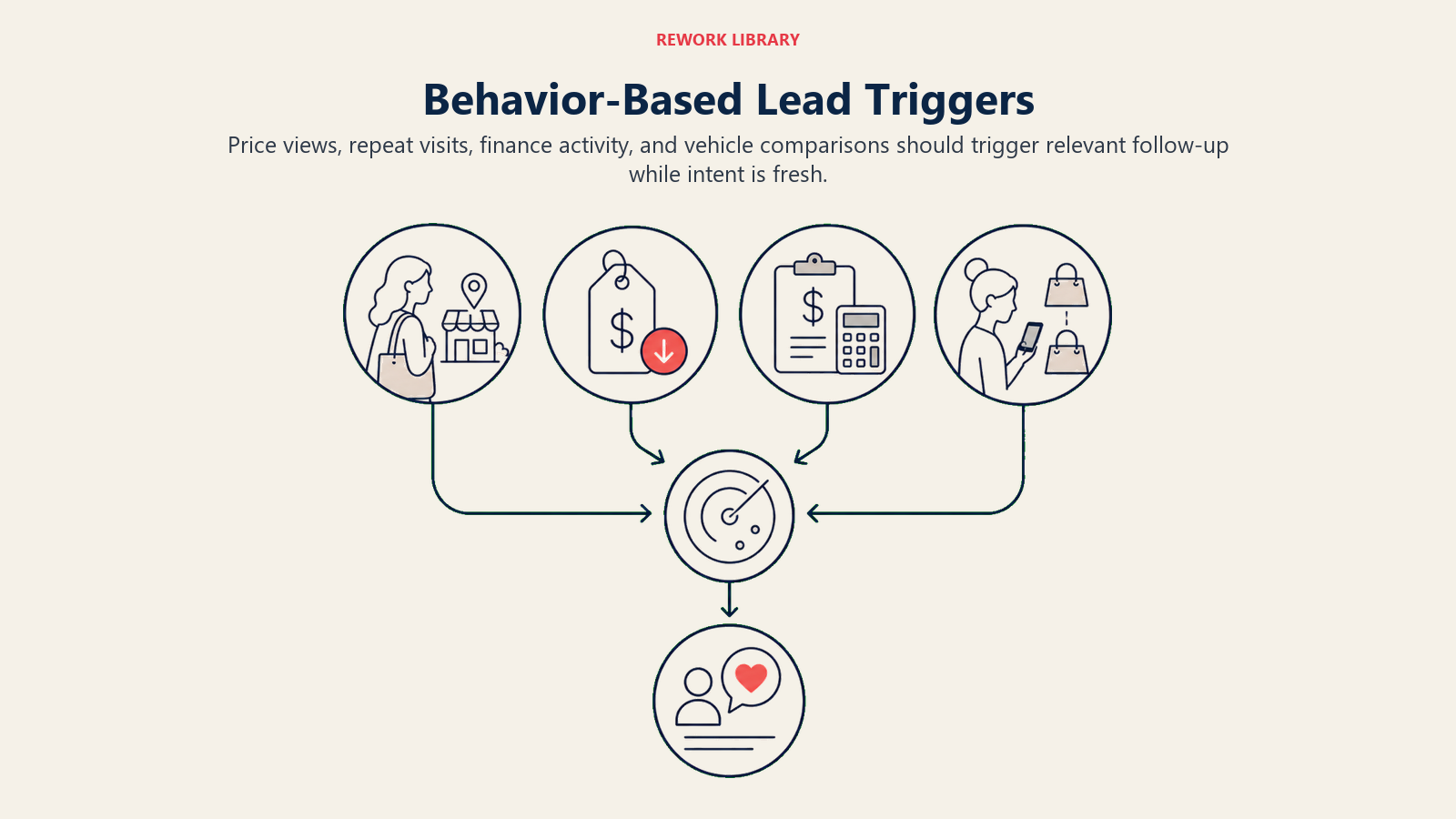
The most effective nurture sequences respond automatically to lead behavior, not just calendar dates. When someone takes action on your website or with your content, they're telling you something about their readiness and interests. Website return visits should trigger immediate response. If a lead returns to your site and views vehicle detail pages, send a same-day email or text highlighting those specific vehicles with additional photos, walkaround videos, or availability information.
Email open and click actions indicate engagement level. Leads who consistently open emails but don't click might need different calls-to-action. Leads who click through to specific content types should receive more of that content.
VDP (Vehicle Detail Page) re-engagement sequences capture buyers who viewed specific vehicles multiple times. If someone views the same listing three times in a week, trigger an automatic message offering a test drive appointment or additional photos/information about that vehicle.
Shopping cart abandonment applies in automotive too. When leads use payment calculators, build-and-price tools, or start but don't complete credit applications, trigger a follow-up within 24 hours offering help completing the process.
Price change notifications create urgency without being pushy. If a vehicle someone viewed drops in price or gets an incentive enhancement, automatic alerts provide legitimate reasons to reconnect.
Inventory status alerts work both ways. If a vehicle someone viewed sells, let them know and suggest similar alternatives. If a vehicle matching their preferences arrives, alert them immediately.
Technology & Automation: Making It All Work
None of this works without proper technology infrastructure. Modern lead nurturing requires marketing automation platforms integrated with your CRM and website. Platform selection should evaluate automotive-specific features. Generic marketing automation tools work, but platforms designed for automotive marketing automation (like DealerSocket Activator, VinSolutions Connect, or Dealer.com Activate) include pre-built nurture campaigns, automotive-specific triggers, and native CRM integrations.
CRM integration is non-negotiable. Your nurture platform must synchronize bidirectionally with your CRM so leads nurture sequences pause when sales conversations begin, BDC agents can see email engagement history, and sold customers exit nurture flows automatically.
Workflow design requires planning the logic trees that route leads to appropriate sequences. This includes entry conditions (how leads enter each nurture path), progression rules (what moves them to the next message), exit conditions (what removes them from nurturing), and branching logic (if/then scenarios based on behavior).
Personalization tokens and dynamic content increase relevance. Use first names, reference specific vehicles viewed, pull in local inventory matches, and customize content based on segment data. Personalized emails generate 26% higher open rates in automotive applications.
A/B testing drives continuous improvement. Test subject lines, send times, content formats, call-to-action placement, and message length. Even small improvements compound over long nurture cycles.
Performance analytics and ROI tracking prove the value of nurturing. Track not just email metrics (open, click, unsubscribe) but business outcomes: showroom appointments set, test drives completed, vehicles sold, revenue generated. Proper attribution connects long-term nurturing to eventual sales.
Building Your 90-Day Nurture Campaign
A practical 90-day nurture campaign for automotive might follow this structure:
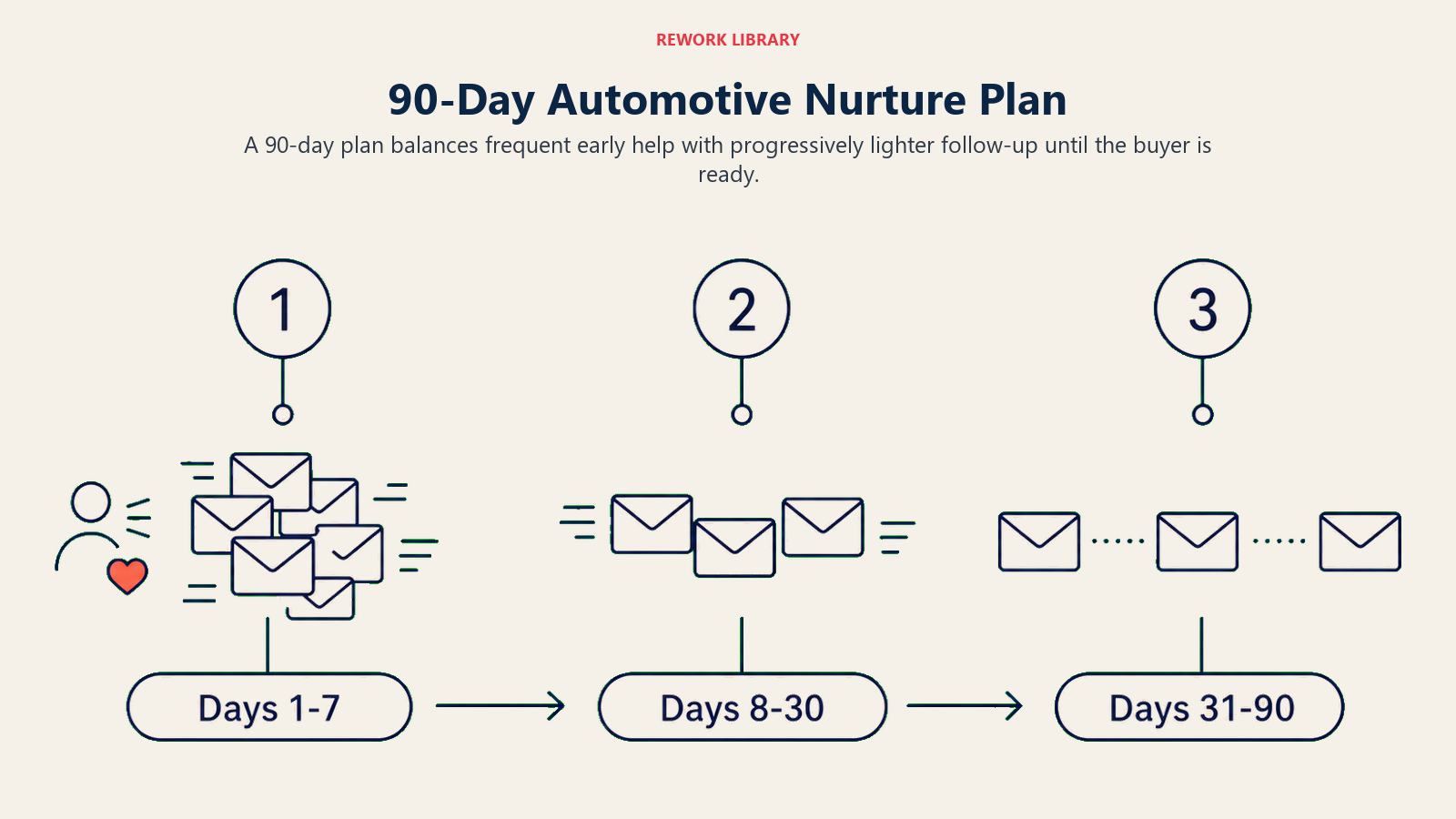
Days 1-7 (Welcome Series):
- Immediate response + welcome
- Research guide delivery
- Trade-in tools introduction
- Financing overview
Days 8-30 (Weekly Educational Content):
- Week 2: Total cost of ownership guide
- Week 3: Inventory match + new arrivals
- Week 4: Seasonal buying considerations
Days 31-60 (Bi-Weekly Value Delivery):
- Week 5: Manufacturer incentive updates
- Week 7: Trade-in value check-in
- Week 9: Customer testimonial + social proof
Days 61-90 (Monthly + Behavior Triggers):
- Week 10: Re-engagement attempt
- Week 13: End-of-quarter opportunity
- Ongoing: Behavior-based triggers throughout
This structure maintains presence without overwhelming leads. Adjust frequency and content based on engagement signals.
The dealerships winning with lead nurturing aren't the ones sending the most messages. They're the ones sending the right messages to the right people at the right time, staying top-of-mind without being top-of-annoyance.
Your leads aren't ignoring you because they bought elsewhere. They're ignoring you because you stopped being relevant. Fix that, and you'll convert a lot more of that 70% who weren't ready to buy today. For comprehensive lead management strategies, explore automotive lead management, internet lead follow-up, automotive marketing automation, dealership email marketing, and customer loyalty programs.

Senior Implementation Consultant
On this page
- The Reality of Automotive Purchase Timelines
- Lead Nurture Philosophy: Value Without Pressure
- Segmentation: Not All Leads Need the Same Nurture Path
- Email Nurture Campaigns: The Foundation
- SMS Nurturing: High Impact When Done Right
- Content Strategy: What to Send When
- Behavior-Based Triggers: Responding to What Leads Do
- Technology & Automation: Making It All Work
- Building Your 90-Day Nurture Campaign