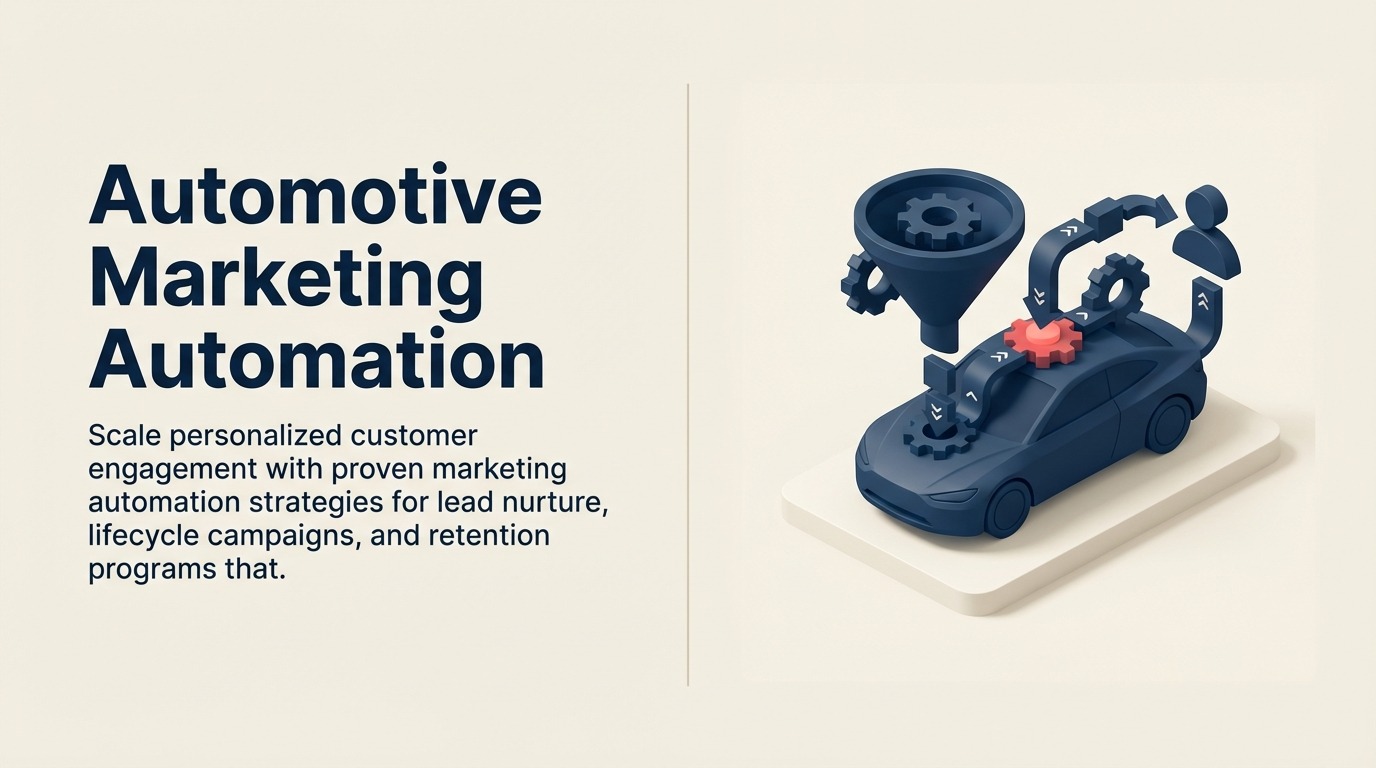
Automotive Marketing Automation: Scaling Personalized Customer Engagement - 2026 Guide
Turn this article into takeaways for your work.


Each assistant summarizes the article only for you and suggests best practices for your work.
The best salespeople follow up 8-12 times before giving up on a lead. Marketing automation does this for every prospect, at scale, with perfect consistency, while your team focuses on hot opportunities.
Here's the reality: your sales team is inconsistent. Some salespeople make 12 follow-up attempts over 30 days. Others make 2 attempts in 2 days, then move on. The leads that get ignored? They're buying somewhere else.
Marketing automation solves this by executing perfect follow-up for every lead, every time. It sends the right message at the right time based on customer behavior. It keeps prospects engaged during the consideration phase. And it brings past customers back when they're ready to buy again. According to Deloitte's 2025 GenAI in Retail survey, organizations implementing AI-enhanced marketing automation are seeing tangible benefits in efficiency, personalization, and speed to market.
This guide shows you how to implement marketing automation that delivers measurable improvements in conversion rates, customer retention, and revenue per customer.
Marketing Automation Fundamentals
Marketing automation isn't email blasts to your entire database. That's spam.
Real marketing automation is triggered, personalized communications based on customer behavior and data. A customer visits your website and looks at SUVs? They get SUV-focused emails. A lease customer hits 90 days until maturity? They get a sequence about renewal options. A service customer declines a brake recommendation? They get a follow-up about safety and financing options.
The difference from email blasts and batch campaigns:
Email blast: "Check out this month's specials!" sent to 10,000 people, 95% of whom aren't interested.
Marketing automation: Customer viewed a specific vehicle online yesterday → receives email featuring that vehicle with similar options, pricing, and appointment scheduling link. Open rate: 45%. Click rate: 18%. Conversion rate: 12%.
ROI potential is substantial:
- 15-25% improvement in lead conversion rates through consistent nurture
- 20-30% increase in service-to-sales conversion via automated campaigns
- 40-60% improvement in lease renewal rates with 6-month sequences
- 10-15 hours per week saved in manual follow-up tasks
Integration requirements for effective automation:
- CRM (customer database, lead tracking, activity logging)
- DMS (vehicle ownership, service history, equity positions)
- Website (behavioral tracking, form submissions, inventory views)
- Inventory feed (real-time availability, pricing, photos)
Successful automation requires solid DMS integration best practices and proper automotive CRM implementation.
Without these integrations, you're sending generic emails. With them, you're delivering personalized, relevant communications that drive action.
Platform Selection for Automotive
Choosing the right platform determines what's possible and how hard implementation will be.
Dealer-specific platforms (DealerSocket, VinSolutions, AutoAlert) are purpose-built for automotive:
- Pre-configured campaigns (equity mining, lease renewal, service reminders)
- Native DMS integration with major providers
- Automotive data models (vehicle ownership, service history, payoff amounts)
- Industry-specific templates and best practices
- Dealer-focused support and training
Cost: $500-1,500+ monthly depending on database size and features.
General marketing automation (HubSpot, Marketo, ActiveCampaign) offers broader capabilities:
- More sophisticated workflow builders and logic
- Better website personalization and tracking
- Superior multi-channel automation (email, SMS, social, ads)
- Lower per-contact pricing for larger databases
- Extensive integration marketplace
Cost: $200-800+ monthly with automotive customization required. The global auto dealership CRM software market, valued at $6.79B in 2025 and projected to reach $9.58B by 2029, includes marketing automation as a core functionality within comprehensive dealer CRM platforms.
Built-in CRM automation vs. standalone platforms:
If your CRM (VinSolutions, DealerSocket, Salesforce) includes automation, start there. You avoid integration complexity and data sync issues.
If CRM automation is limited, standalone platforms (HubSpot, ActiveCampaign) offer more power but require CRM integration to be effective.
Email deliverability and compliance considerations:
- Platform reputation and sender infrastructure quality
- SPF, DKIM, DMARC setup for your domain
- CAN-SPAM compliance features (unsubscribe, physical address)
- List hygiene tools (bounce handling, suppression lists)
- Volume sending capabilities without throttling
Cost models and ROI expectations:
Most platforms charge based on:
- Contact database size (number of customers and leads)
- Email send volume (monthly email quantity)
- Feature tier (basic vs. advanced automation capabilities)
ROI calculation: If automation increases lead conversion by 15% and you handle 500 leads monthly with $2,500 average gross profit, that's 75 additional sales annually = $187,500 additional gross profit. Your automation platform costs $12,000 annually. ROI: 1,463%.
Lead Nurture Automation
New leads need immediate response followed by systematic nurture until they're ready to buy.
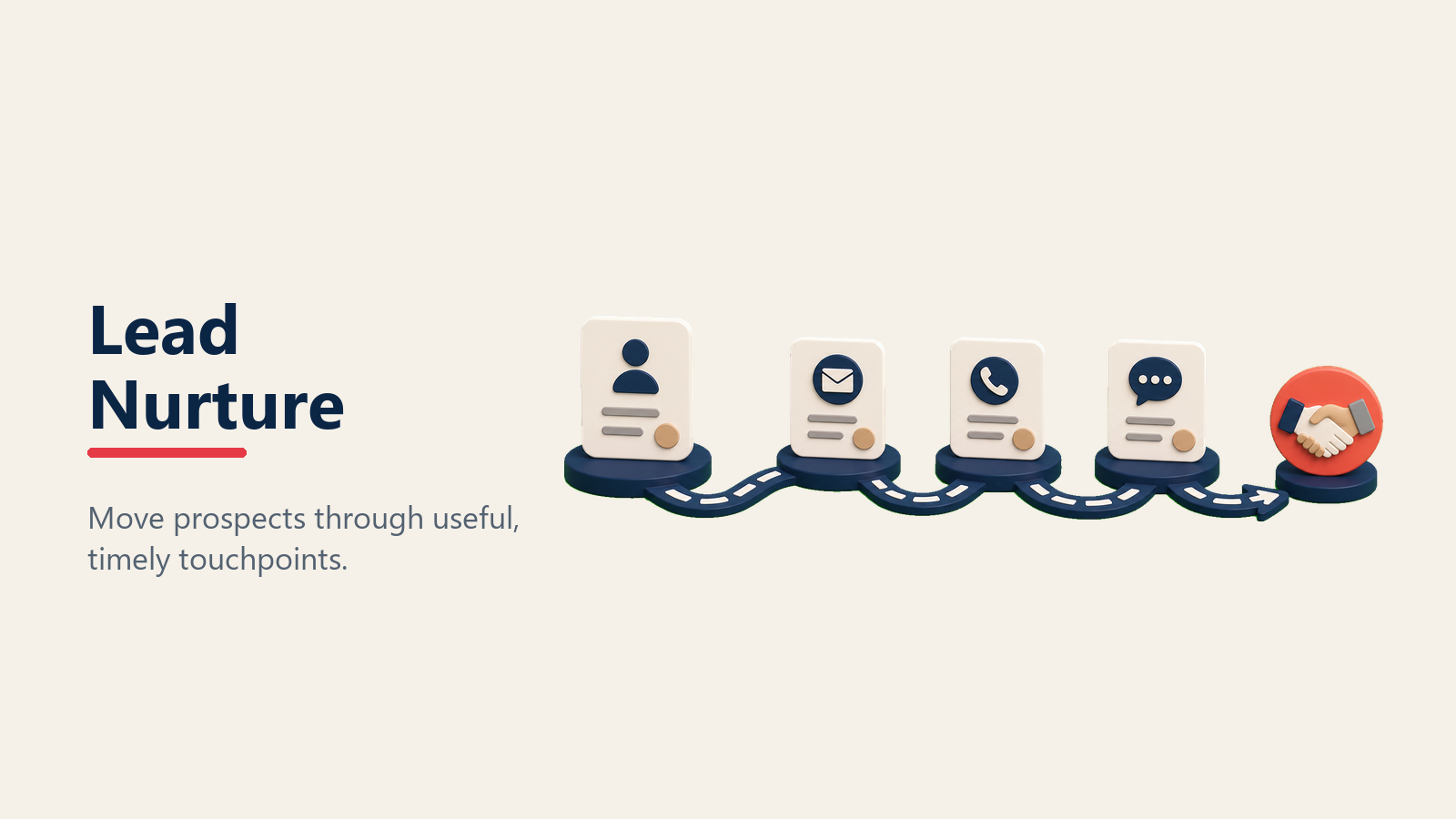
Initial inquiry response sequences (immediate to 30 days):
Day 0 (immediate): "Thanks for your interest in the [Vehicle]. Here are full details, photos, and pricing. When can you come see it?" Include direct link to schedule appointment.
This immediate response is critical, see lead response time optimization for impact data.
Day 1: Video from salesperson walking around the vehicle. "Hi [Name], I'm [Salesperson] and I'd love to show you this [Vehicle]. Here's a quick tour. Call me at [Phone] to schedule your test drive."
Day 3: Alternative vehicle suggestions. "If you're considering the [Original Vehicle], you might also like [Similar 1] and [Similar 2]. Compare them here."
Day 7: Educational content. "5 Things to Know Before Buying [Vehicle Type]" with subtle dealership positioning.
Day 14: Incentive/urgency. "This vehicle has been viewed by 8 other customers. Still available, but I wanted to give you first opportunity."
Day 30: Long-term nurture transition. "I know you're still researching. I'll keep you updated on [Vehicle Type] inventory and specials."
Behavior-triggered follow-ups respond to engagement:
Customer opens email but doesn't click → next day: "Quick question about [Vehicle]?"
Customer clicks pricing link → same day: "I see you checked pricing on [Vehicle]. Want to discuss trade-in value or financing options?"
Customer watches video → next day: "Ready to see [Vehicle] in person? I can work around your schedule."
No engagement for 7 days → re-engagement attempt with different angle
Abandoned digital retailing recovery:
Customer starts credit application but doesn't complete → 1 hour later: "Need help finishing your application? I can walk you through it in 5 minutes."
Customer builds deal online but doesn't submit → 2 hours later: "Your custom deal on [Vehicle] is saved. Want to review it together or make adjustments?"
Customer schedules appointment but doesn't show → same day: "Sorry we missed you! Want to reschedule? I'll hold [Vehicle] for you."
Test drive follow-up sequences:
Same day: "Thanks for test driving [Vehicle]! What did you think? Any questions I can answer?"
Next day: Comparison sheet showing vehicle specs vs. competitors with advantages highlighted.
Day 3: Financial options presentation. "Here are 3 payment scenarios for [Vehicle] based on our conversation."
Day 5: Urgency/scarcity. "Update: [Vehicle] is still available but we have 2 other appointments scheduled this week."
These follow-ups mirror proven test drive best practices for maintaining momentum after the drive.
Long-term nurture for "not ready yet" prospects:
Monthly: New inventory arrivals matching their interests Quarterly: Major sales events and seasonal promotions Immediately: When perfect-match vehicle arrives in inventory Annually: Re-engagement campaign to update preferences
Lifecycle Marketing Automation
Existing customers are your most valuable asset. Automated lifecycle marketing maximizes their lifetime value.
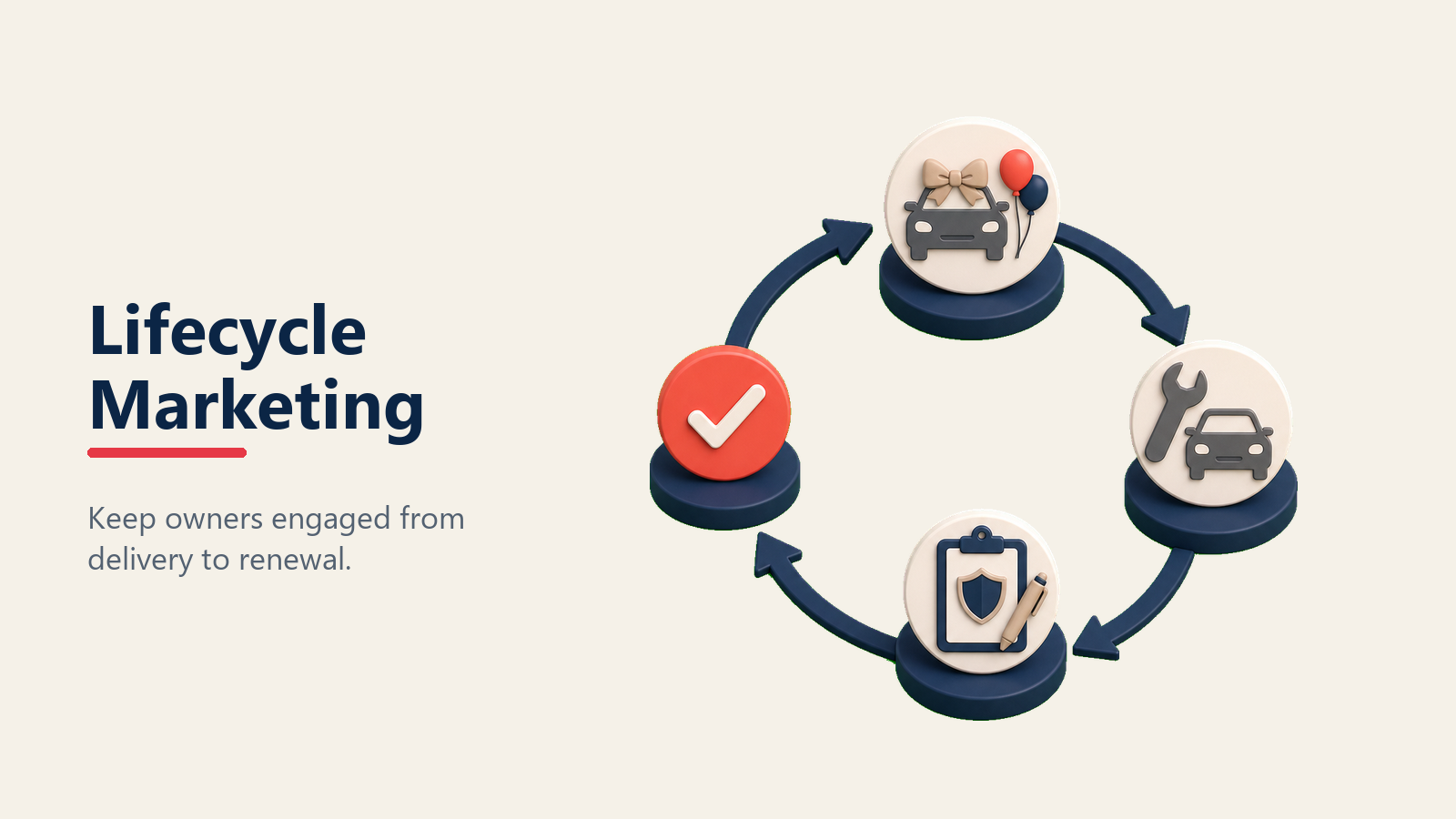
New owner onboarding and welcome series:
Day 1 (delivery day): "Congratulations on your new [Vehicle]! Here's what to expect next." Include maintenance schedule, owner's manual link, service department contact.
Day 3: "How's your new [Vehicle]? Any questions about features or settings?" Link to video tutorials.
Day 7: "Schedule your complimentary first service." Pre-book their first oil change/checkup.
Day 30: "We hope you're loving your [Vehicle]! Would you share your experience in a review?"
Day 90: "Quick check-in. Is there anything we can help with?" Build relationship for long-term retention.
This onboarding extends your vehicle delivery experience and sets the tone for the customer relationship.
Service reminder sequences (mileage-based, time-based):
Mileage-based: "Your [Vehicle] is approaching 15,000 miles. Time for service. Schedule here."
Time-based: "It's been 6 months since your last service. Book your appointment to keep warranty valid."
Seasonal: "Winter is coming. Schedule your cold-weather checkup: battery test, tire inspection, fluid top-off."
Open RO follow-up: "Last visit, we recommended [Service]. Is now a good time to address it? We're offering [Incentive]."
Lease maturity campaigns (6-month sequence):
6 months out: "Your lease ends [Date]. Let's start planning your next vehicle."
4 months out: "Pull-ahead programs can waive your last 3 payments. Interested?"
2 months out: "Preview new inventory before it hits the lot. VIP early access for existing customers."
1 month out: "Your lease ends soon. Let's schedule your renewal appointment before programs expire."
Lease maturity: "Final reminder: Turn in or renew? Let's discuss your options today."
This sequence follows the proven timeline from lease renewal process that maximizes retention rates.
Equity mining automation (monthly triggers):
Positive equity identified: "Great news! Your [Vehicle] is worth $3,200 more than you owe. Trade up to [Newer Model] with equity as down payment."
Significant equity (>$5,000): "Your equity position qualifies you for [Premium Vehicle] with minimal out-of-pocket. Interested?"
First-time positive equity: "This is the first time you have equity. Want to explore upgrade options?"
Birthday and anniversary campaigns:
Customer birthday: "Happy Birthday from [Dealership]! Enjoy complimentary service or detail this month."
Purchase anniversary: "Happy 1-year anniversary with your [Vehicle]! Schedule your annual checkup."
Lease anniversary: "2 years into your lease. 1 year remaining. Want to explore early upgrade options?"
These touchpoints are part of comprehensive customer loyalty programs that keep customers engaged year-round.
Segmentation and Personalization
Generic automation is just high-volume spam. Effective automation is relevant because it's personalized.
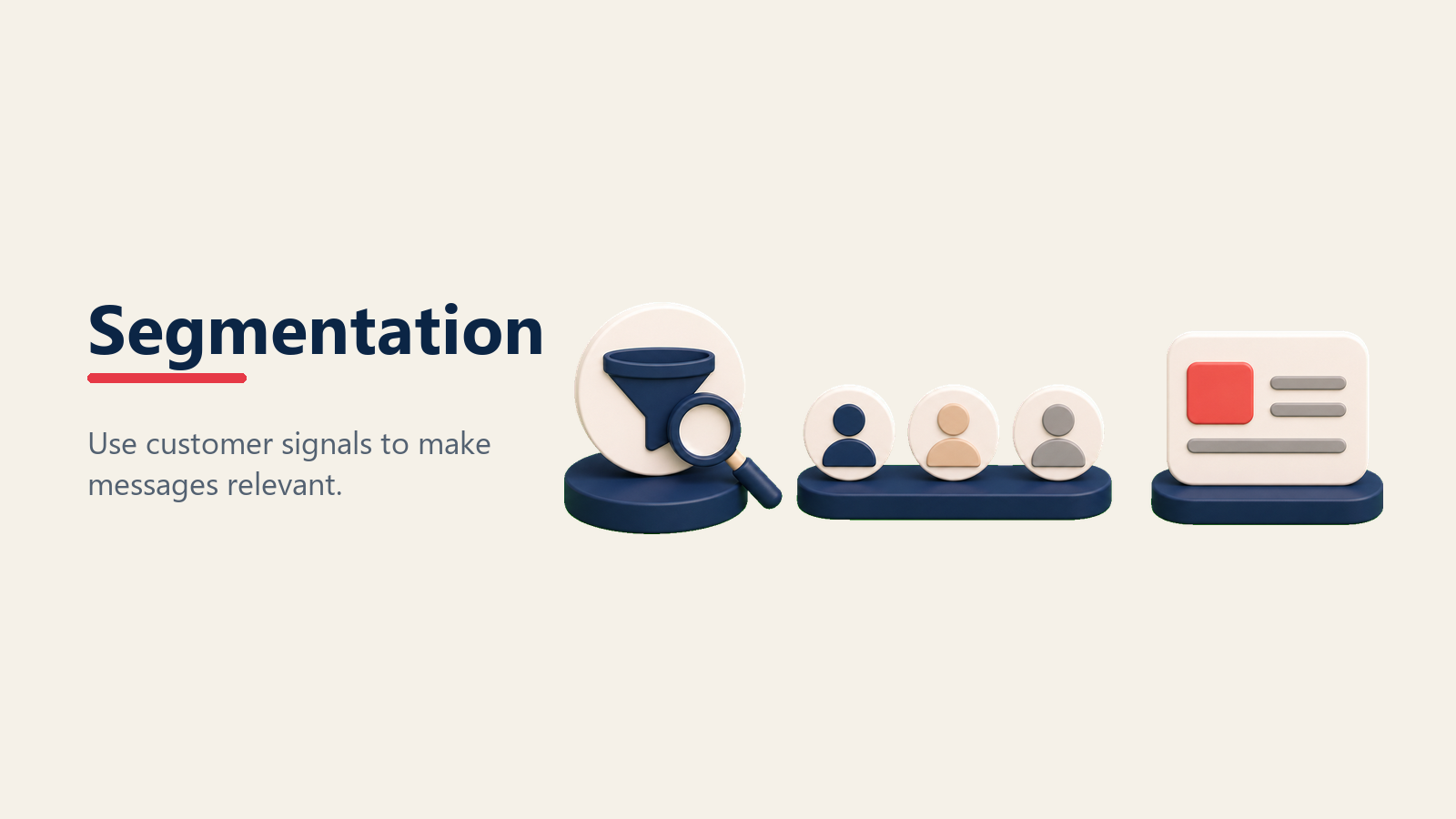
Database segmentation strategies:
Vehicle type: Sedan owners get sedan-focused messaging. Truck owners get truck-specific content.
Purchase stage: Active shoppers receive sales offers. Recent buyers receive service reminders.
Service behavior: Regular service customers get loyalty appreciation. Lapsed customers get win-back campaigns.
Customer value: High lifetime value customers get VIP treatment. First-time buyers get education-focused content.
Lease vs. own: Lease customers get renewal campaigns. Finance customers get equity mining.
Dynamic content insertion personalizes at scale:
Instead of: "Check out our inventory" Use: "Hi [Name], new [Make/Model matching their preference] just arrived. See photos here."
Instead of: "Service specials this month" Use: "Your [Vehicle] is due for [Specific Service based on mileage]. Save $X this week only."
Instead of: "Trade in your vehicle" Use: "Your [Year Make Model] is worth approximately [$Equity Amount] more than you owe. Ready to upgrade?"
Behavioral triggers and scoring:
Assign points based on engagement:
- Email open: +5 points
- Link click: +10 points
- Website visit: +15 points
- Video view: +20 points
- Form submission: +50 points
- Phone call: +75 points
When score hits 100+, trigger hot lead alert to sales team for immediate outreach.
A/B testing for optimization:
Test subject lines: "New 2026 Models Arriving" vs. "[Name], Your 2026 [Preferred Model] Is Here"
Test send times: Morning (8-10am) vs. evening (5-7pm) vs. weekend
Test content length: Short, direct emails vs. longer, educational content
Test calls-to-action: "Schedule Test Drive" vs. "Check Availability" vs. "Get Your Price"
Suppression lists and opt-out management:
Never email customers who:
- Unsubscribed from communications
- Marked previous emails as spam
- Requested DNC (do not contact)
- Recently purchased (during honeymoon period)
- Are already working with salesperson (prevents overlap)
Multi-Channel Automation
Email is powerful, but multi-channel coordination is more effective.
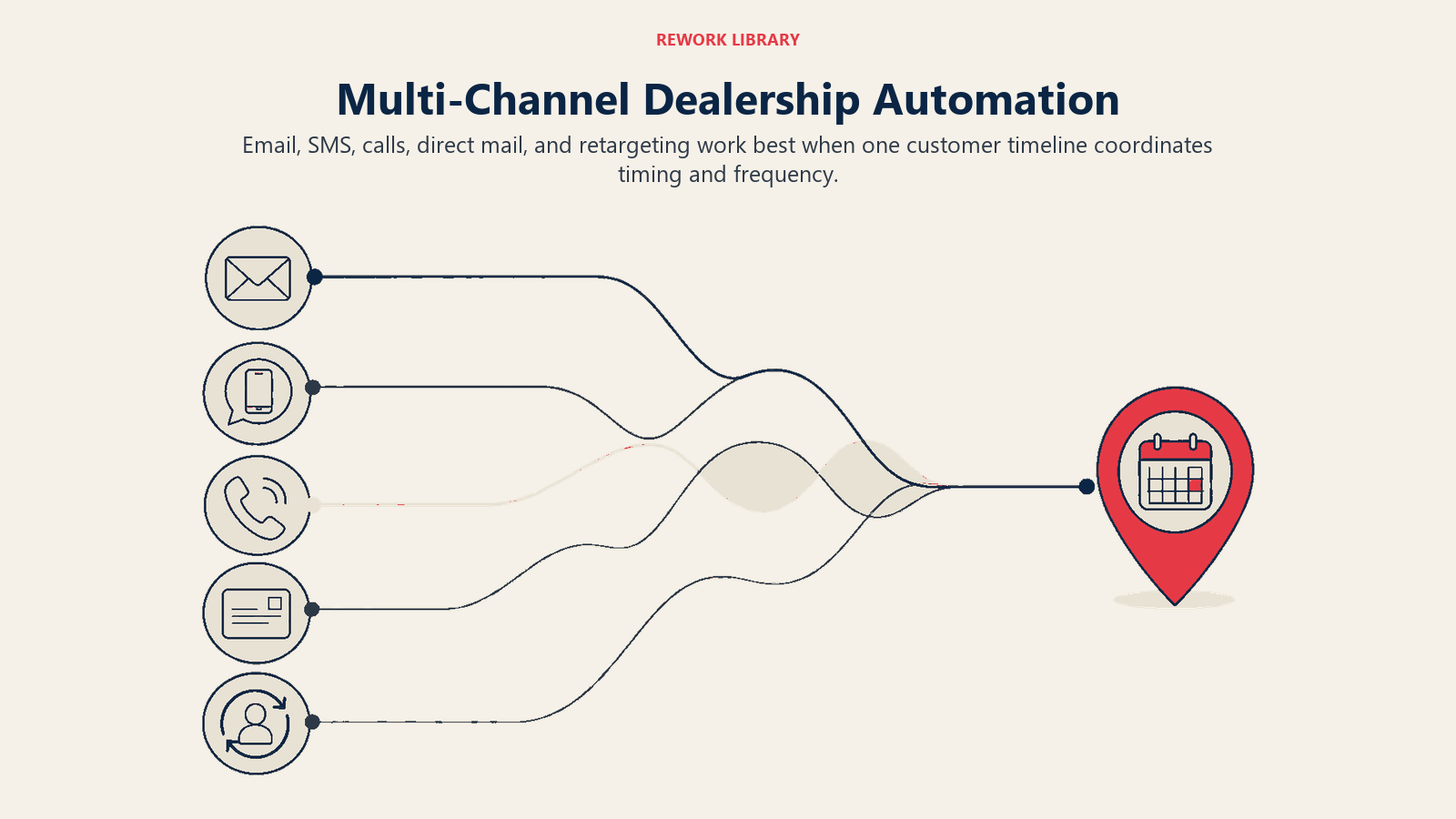
SMS and text message automation:
Appointment reminders: "Hi [Name], reminder: You have an appointment tomorrow at 2pm for [Service/Test Drive]. Reply C to confirm or R to reschedule."
Immediate lead response: "Thanks for your inquiry about [Vehicle]! I'm [Salesperson] and I'll call you in the next 15 minutes. Text me at this number anytime."
Service updates: "Your [Vehicle] service is complete and ready for pickup. Total: $[Amount]. Need us to deliver it?"
Hot lead alerts: "A customer just viewed [Vehicle] and submitted contact info. Call them now: [Phone]."
Direct mail integration and variable data printing:
Combine digital automation with physical mail for high-value opportunities:
- Lease customers 90 days from maturity receive personalized mailers with their current vehicle photo, lease details, and renewal options
- Equity customers receive postcards: "Your [Vehicle] is worth $[Amount] more than you owe"
- Service lapsed customers get "We miss you" letters with special incentive
Variable data printing makes each piece unique with customer-specific details.
Retargeting and paid advertising automation:
Customer visits website and views SUVs → Facebook/Google ads display SUV inventory for next 30 days
Customer receives email about specific vehicle but doesn't click → display ads for that vehicle appear across web
Customer abandons credit application → retargeting ads: "Finish your application in 2 minutes"
Social media automation (cautiously):
Auto-post new inventory arrivals to Facebook/Instagram Auto-share customer testimonials and reviews Auto-respond to Facebook Messenger inquiries with initial greeting BUT: Never auto-respond to comments or reviews (requires human touch)
Phone call triggers for BDC:
High engagement score → automated task for BDC to call immediately Multiple email opens with no response → "This lead is engaged but not responding. Call them." Abandoned appointment → "Customer no-showed. Attempt reschedule contact."
Sales and BDC Integration
Automation doesn't replace salespeople, it makes them more effective by focusing their time on ready-to-buy prospects.
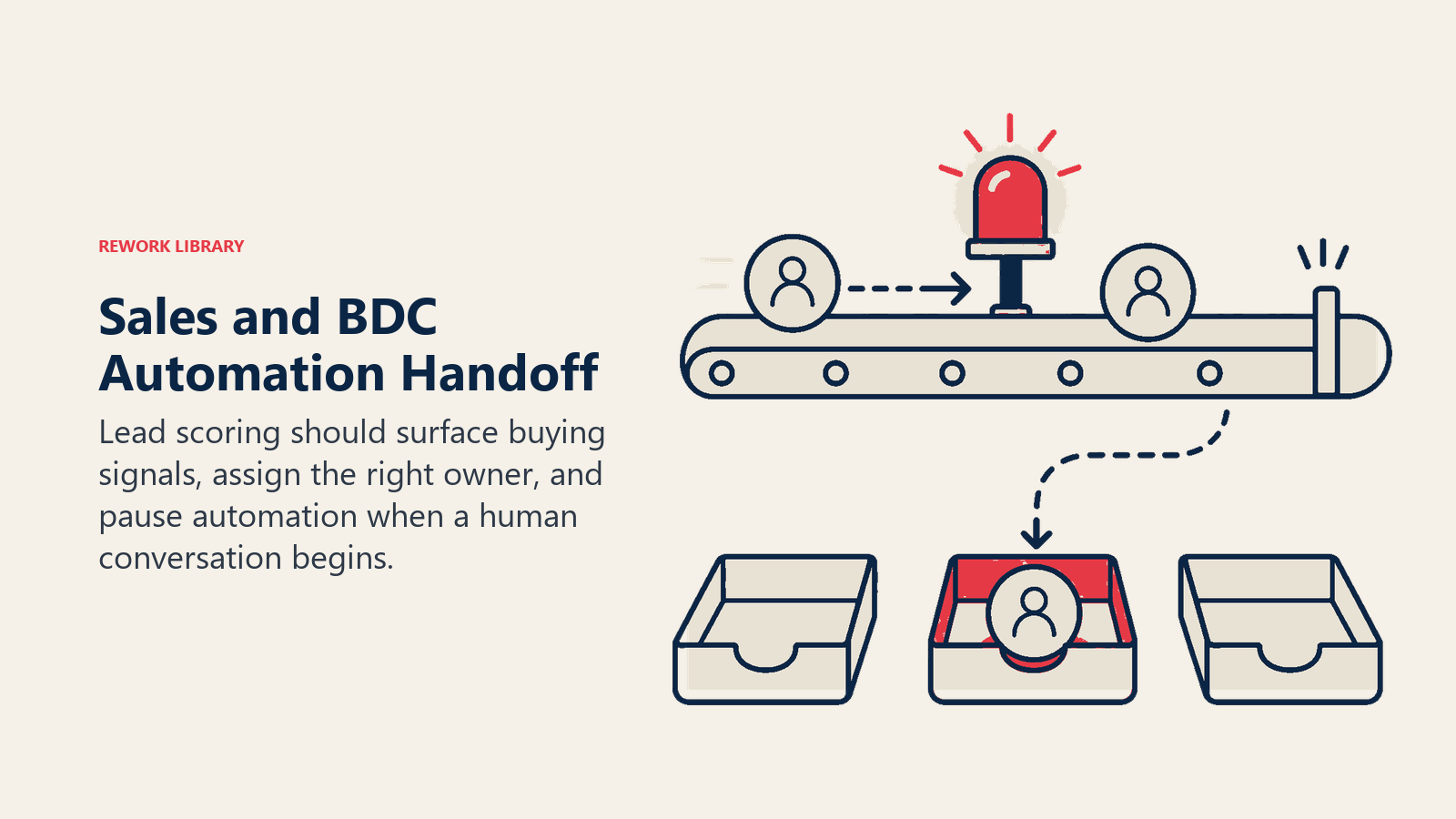
Lead scoring and hot prospect identification:
Automated scoring flags leads that are:
- Engaging with multiple emails
- Visiting website repeatedly
- Viewing specific vehicles
- Opening pricing information
- Watching videos
Sales team sees "hot lead" notifications in CRM and prioritizes those calls. This systematic approach to automotive lead scoring ensures high-probability prospects get immediate attention.
Automatic task creation for sales team:
When customer takes action, CRM creates task:
- Email opened 3+ times → "High interest. Call today."
- Appointment scheduled → "Confirm appointment 24 hours prior."
- Test drive completed → "Follow up same day to discuss financing."
CRM activity tracking and logging:
Every automated email, text, or campaign touchpoint logs to customer record in CRM. Sales team sees complete communication history and can reference previous messages when calling.
Handoff protocols from automation to sales:
Scenario 1: Lead enters at low engagement → automation nurtures until engagement score hits threshold → sales team takes over.
Scenario 2: Sales team attempts contact 5 times with no response → lead goes back to automation for long-term nurture → re-surfaces when engagement increases.
Scenario 3: Customer schedules appointment → automation confirms and reminds → salesperson calls day before to build rapport.
Sales team notification strategies:
Don't overwhelm salespeople with every automated email sent. Notify them only when:
- Lead engagement score reaches hot threshold
- Customer requests callback or appointment
- High-value customer (previous buyer, high equity) takes action
- Automated sequence completes without engagement (manual outreach needed)
Measuring Automation Performance
Marketing automation success is measurable. Track everything.
Email metrics (baseline and target):
Open rate: Industry average 20-25%, target 30-35% through personalization and segmentation
Click rate: Industry average 2-4%, target 8-12% through relevant content and strong CTAs
Conversion rate: Percentage who take desired action (appointment, call, visit). Target 5-10% for engaged leads.
Unsubscribe rate: Should be under 0.5% per campaign. Higher suggests poor targeting or excessive frequency.
J.D. Power's customer service research confirms that satisfaction is 75 points higher among customers who have an all-digital experience compared with analog experiences, and customers prefer text message communication (68%) over phone calls (16%).
Campaign attribution and ROI tracking:
Tag every lead and sale with source:
- Equity mining campaign → 37 appointments → 12 sales → $28,400 gross profit
- Lease renewal campaign → 64 appointments → 29 sales → $71,250 gross profit
- Service-to-sales campaign → 18 appointments → 5 sales → $11,500 gross profit
ROI calculation: Gross profit from campaign ÷ campaign cost (platform fees + time) = ROI multiple
Lead nurture velocity and progression:
Track time from lead entry to:
- First engagement (open/click)
- Appointment scheduled
- Appointment attended
- Test drive completed
- Sale
Identify bottlenecks: "Leads are scheduling appointments quickly but test drive conversion is low" → focus on test drive process improvement.
Customer engagement scoring:
Track aggregate engagement over time:
- Is overall database engagement increasing or declining?
- Which customer segments are most engaged?
- Which campaigns drive highest engagement?
- When do customers disengage (stop opening emails)?
Revenue impact by campaign type:
New lead nurture: $2,200 average gross profit per conversion, 8% conversion rate Equity mining: $2,800 average gross profit per conversion, 12% conversion rate Lease renewal: $3,100 average gross profit per conversion, 18% conversion rate Service-to-sales: $2,400 average gross profit per conversion, 6% conversion rate
Conclusion: Invest most in lease renewal and equity campaigns (highest conversion, highest gross).
Common Mistakes and Best Practices
Even good automation can fail if you make these mistakes.
Over-automation that feels impersonal:
Bad: "Dear [FIRSTNAME], check out [VEHICLE]!" with wrong merge fields or generic content.
Good: Automation feels like personal outreach because it references specific customer behavior and uses natural language.
Poor data quality undermining personalization:
If customer records have wrong vehicle ownership, misspelled names, missing email addresses, or outdated phone numbers, automation fails. Invest in data quality before launching campaigns.
Lack of sales team adoption:
Automation creates leads and appointments, but if sales team ignores them or doesn't follow the process, ROI plummets. Ensure salespeople understand automation supports them, doesn't replace them.
Insufficient testing before launch:
Always test with small audience first:
- Send test emails to internal team (check formatting, links, merge fields)
- Run campaign with 100 customers before 10,000
- Monitor results daily for first week to catch issues
Not optimizing based on performance data:
Most dealerships launch campaigns and forget them. Best performers continuously optimize:
- A/B test subject lines monthly
- Adjust send times based on open rate data
- Refine segmentation based on conversion rates
- Pause underperforming campaigns, double down on winners
Key Takeaways
Marketing automation transforms dealership marketing from manual, inconsistent outreach to systematic, scalable customer engagement.
Start with high-impact campaigns: lease renewal, equity mining, and service-to-sales. These deliver fastest ROI.
Integrate deeply with CRM and DMS to enable true personalization based on customer data and behavior.
Balance automation with human touch. Automation nurtures and qualifies, salespeople build relationships and close.
Segment aggressively. Generic emails to entire database don't work. Targeted messages to specific customer segments do.
Measure everything and optimize continuously. The difference between average and excellent automation is ongoing refinement.
And remember: automation isn't about sending more emails. It's about sending the right emails to the right people at the right time, so every message drives value for the customer and revenue for your dealership.
Related Resources:

Senior Implementation Consultant