Social Media for Dealerships: Building Brand and Driving Showroom Traffic - 2026 Guide
Turn this article into takeaways for your work.


Each assistant summarizes the article only for you and suggests best practices for your work.
The dealership with 15,000 engaged Facebook followers sells 40% more vehicles than their competitor across the street with 2,000 followers. Same market, same franchise, similar inventory. The difference? Social presence translates to top-of-mind awareness when someone's ready to buy.
But let's be clear about what social media does and doesn't do. It doesn't generate 50 qualified leads this month. It doesn't replace your automotive lead generation strategy. What it does is build trust, create community, and ensure when someone thinks "I need a new car," your dealership is the first name that comes to mind.
Social media plays the long game. The payoff comes 6-12 months down the road when your organic reach translates to showroom traffic. Dealers who treat it like direct response advertising get frustrated and quit. Dealers who treat it like relationship building see real results.
Social Media's Role in Automotive
Social media sits at the top of your sales funnel. Someone who follows your dealership isn't ready to buy today. But when they are ready, they'll remember your posts, your community involvement, your customer testimonials, and your inventory.
The customer journey in automotive is long, typically 90-180 days from initial consideration to purchase. Social media keeps you visible throughout that journey. The person who saw your Facebook post about a new model arrival? Three months later, they're scheduling a test drive.
Trust matters enormously in automotive purchases. It's a major financial decision with significant anxiety. Social media humanizes your dealership, showing your team, highlighting customer experiences, demonstrating community involvement. This builds the trust that precedes a sale.
Community engagement creates local awareness. When you sponsor the little league team and post about it, parents in your community see it. When you participate in charity events and share photos, people notice. This isn't direct sales, but it's the brand building that makes direct sales easier.
Realistic expectations prevent disappointment. Social media won't generate 100 leads monthly on its own. It will influence 20-30% of your buyers' decision to choose your dealership over competitors. It will reduce customer acquisition costs by building awareness that paid advertising would otherwise need to create. It will increase referrals because customers feel connected to your brand.
The dealers who win with social media understand it's a brand channel, not a lead channel. Metrics like engagement rate, reach, and follower growth matter more than immediate leads. The leads come later, influenced by months of brand building.
Platform Strategy by Channel
Not all social platforms serve the same purpose. Each has unique strengths for automotive marketing.
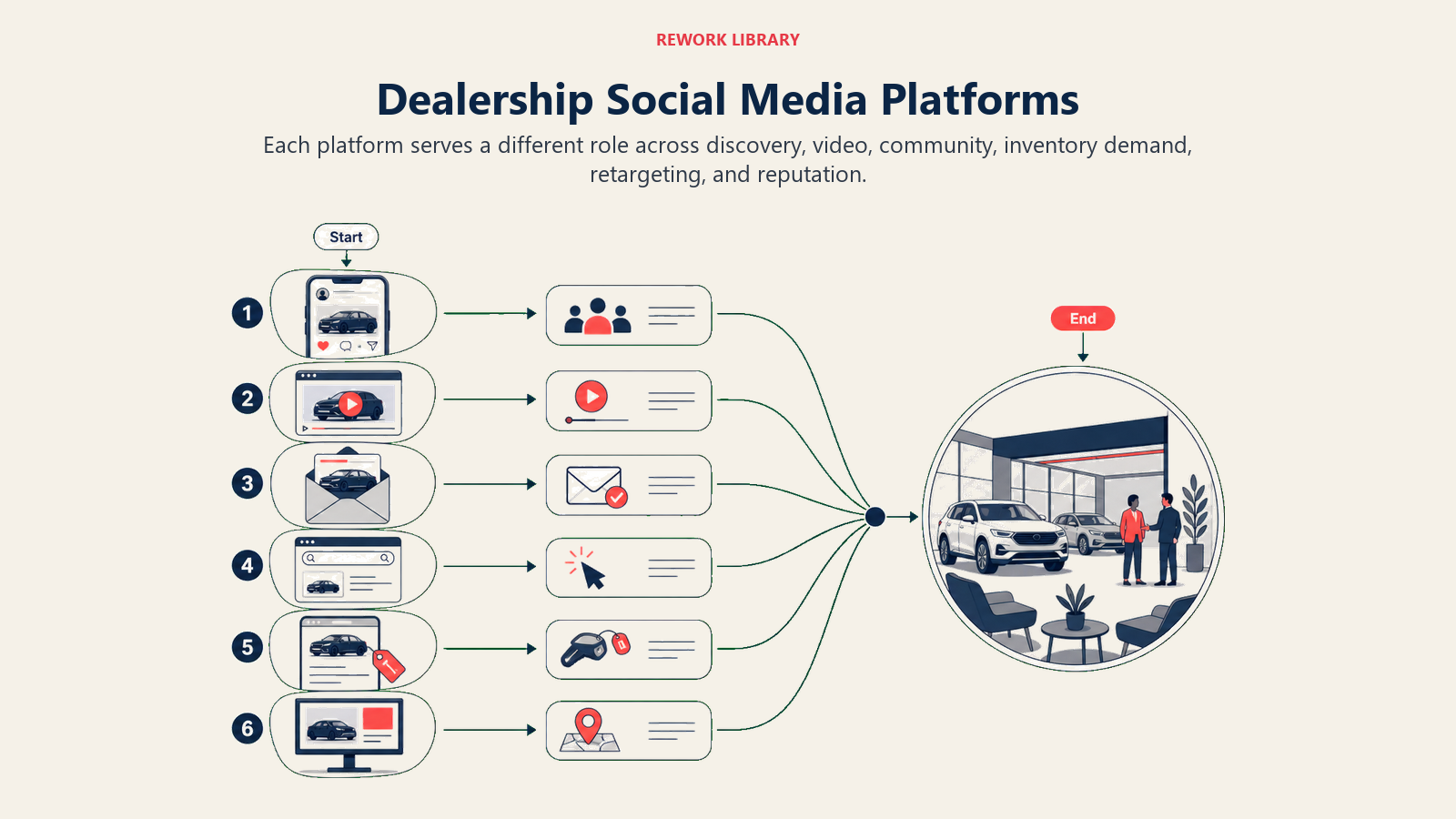
Facebook remains the dominant platform for dealerships because it matches your demographic. Car buyers are on Facebook according to Statista research. Your targeting options are sophisticated, by location, age, interests, behaviors, even competitors' customers.
Use Facebook for inventory posts (new arrivals, featured vehicles), event promotion (tent sales, charity drives), community engagement (local news, celebrations), and customer testimonials. Your organic posts won't reach everyone, Facebook's algorithm limits organic reach to 2-5% of followers, but they reach your most engaged audience.
Facebook Marketplace integration allows listing inventory where buyers actively shop for vehicles. Many dealers ignore this, missing an opportunity for free exposure to local in-market buyers.
Instagram skews younger (25-44 primary demographic) and focuses on visual storytelling. This platform works brilliantly for lifestyle content, showing vehicles in aspirational settings, behind-the-scenes team content, customer delivery photos, and video walkarounds.
Instagram Stories and Reels offer higher organic reach than feed posts. Short-form video content (15-60 seconds) showing vehicle features, delivery celebrations, or quick tips performs exceptionally well. The algorithm favors video, so prioritize it.
Instagram Shopping allows tagging vehicles in posts with pricing and direct links to VDPs. Setup requires a product catalog but creates a seamless path from social browsing to your website.
YouTube functions as a search engine for vehicle research. 41% of automotive buyers use YouTube when looking to purchase a car. Buyers search for model reviews, comparisons, and walkarounds. Your dealership videos can appear in these results, capturing research-phase shoppers.
Create vehicle walkarounds (5-8 minutes showing features and benefits), comparison videos (competing models explained), customer testimonials (3-5 minute stories), service tips (maintenance advice that builds authority), and community involvement videos (showing your dealership beyond sales).
YouTube content has long-term value. A comparison video from 2024 can generate views and leads in 2026. This contrasts with Facebook/Instagram posts that have 24-48 hour lifespans.
TikTok is emerging for automotive but only works if you commit to the platform's style, authentic, unpolished, entertaining short-form video. Younger buyers (18-34) spend significant time on TikTok. If that's your target demographic, test it. Otherwise, focus on proven platforms first.
LinkedIn serves B2B and fleet sales. If commercial accounts and fleet purchases represent significant revenue, maintain an active LinkedIn presence. Share business-focused content, fleet specials, commercial vehicle inventory, and company news.
Your platform strategy should match where your customers spend time. A luxury dealership targeting 45-65 year-olds should emphasize Facebook and YouTube. A dealership targeting first-time buyers should test Instagram and TikTok. Don't spread too thin, master 2-3 platforms before expanding.
Content Strategy Framework
The 60/30/10 rule prevents social media from becoming a constant sales pitch that drives unfollows.
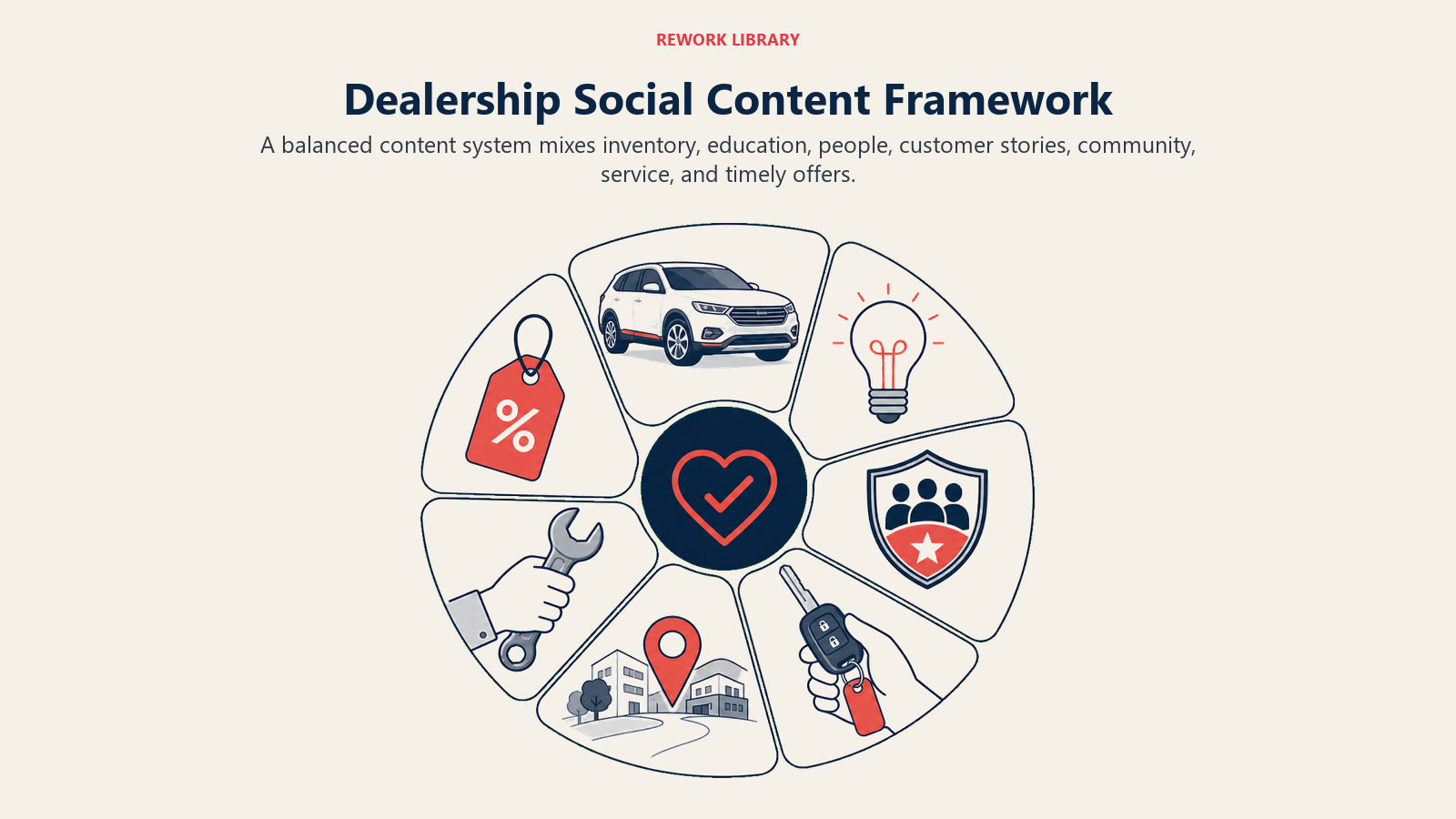
60% value content educates and entertains without selling. Maintenance tips (when to rotate tires, how often to change oil), buying guides (what to look for in a used car), feature explanations (how adaptive cruise control works), local community news, team highlights, and customer stories all provide value. This content builds authority and keeps followers engaged.
30% engagement content creates conversation and connection. Behind-the-scenes photos (service techs at work, sales team celebrations), community involvement (charity partnerships, local events), team introductions (getting to know your people), customer celebrations (delivery photos, anniversary acknowledgments), and interactive posts (polls, questions, contests) all drive engagement.
10% promotional content makes offers and highlights inventory. New arrivals, special pricing, incentive announcements, featured vehicle spotlights, and seasonal sales belong here. Yes, you're allowed to promote, just don't make it the only thing you post.
Posting frequency matters for algorithm visibility. Facebook: 5-7 posts weekly keeps you visible without overwhelming feeds. Instagram: 4-6 feed posts plus daily Stories maintains presence. YouTube: 2-4 videos monthly builds a library without overwhelming production. LinkedIn: 2-3 posts weekly for B2B presence.
Timing optimization improves reach. Facebook posts perform best weekdays 9am-2pm and weekends 8am-11am. Instagram engagement peaks weekdays 11am-1pm and evenings 7pm-9pm. YouTube uploads should go live Tuesday-Thursday afternoons. But test your specific audience, your data might differ.
Content themes create consistency: Monday Maintenance Tips, Thursday New Arrivals, Friday Customer Spotlights. Themes make content planning easier and train followers when to expect specific content types.
User-generated content (customers posting about their purchases and tagging you) is gold. Repost with permission, it's authentic social proof that outperforms anything you create yourself. Encourage tagging by making it part of the delivery process: "Tag us in a photo with your new vehicle and we'll feature you on our page!"
Inventory Marketing on Social
Your inventory is your product. Social media should showcase it, but strategically.
New arrival posts create urgency and excitement. "Just landed: 2026 Honda Pilot Elite in Sonic Gray Pearl. First one in our area, schedule your test drive before it's gone." Include multiple photos, key specs, and a clear call-to-action.
Featured vehicle spotlights go deeper than new arrivals. A carousel post or video showing 8-10 photos, highlighting specific features, explaining who this vehicle is perfect for, and including pricing/payment info. Do this 2-3 times weekly for both new and used inventory.
Video walkarounds outperform static photos dramatically. A 60-90 second video showing exterior, interior, cargo space, and key features gets 5x the engagement of photo posts. You don't need professional production, smartphone video works fine if lighting is good and audio is clear.
Facebook Marketplace integration lists your entire inventory on Marketplace automatically through your inventory feed. This is free exposure to local buyers actively shopping for vehicles. Ensure your feed includes quality photos, accurate pricing, and detailed descriptions.
Instagram Shopping allows tagging vehicles in posts with direct links to VDPs through automotive digital retailing. Someone sees a vehicle they like, taps the tag, sees pricing, and clicks through to your website. It reduces friction from discovery to inquiry.
Inventory post frequency should balance promotion with other content through vehicle merchandising. Don't post 30 vehicles weekly, that's spam. Post 5-7 featured vehicles weekly, chosen strategically: new arrivals, high-demand models, unique inventory, price-reduced vehicles, and vehicles matching seasonal demand.
Sold vehicle posts work when tied to customer stories. "Congratulations to the Smith family on their new CR-V! We'll miss this beauty, thank you for choosing Springfield Honda." This shows inventory movement (social proof) while celebrating customers.
Paid Social Advertising
Organic reach is limited. Paid social advertising amplifies your message to targeted audiences beyond your followers.
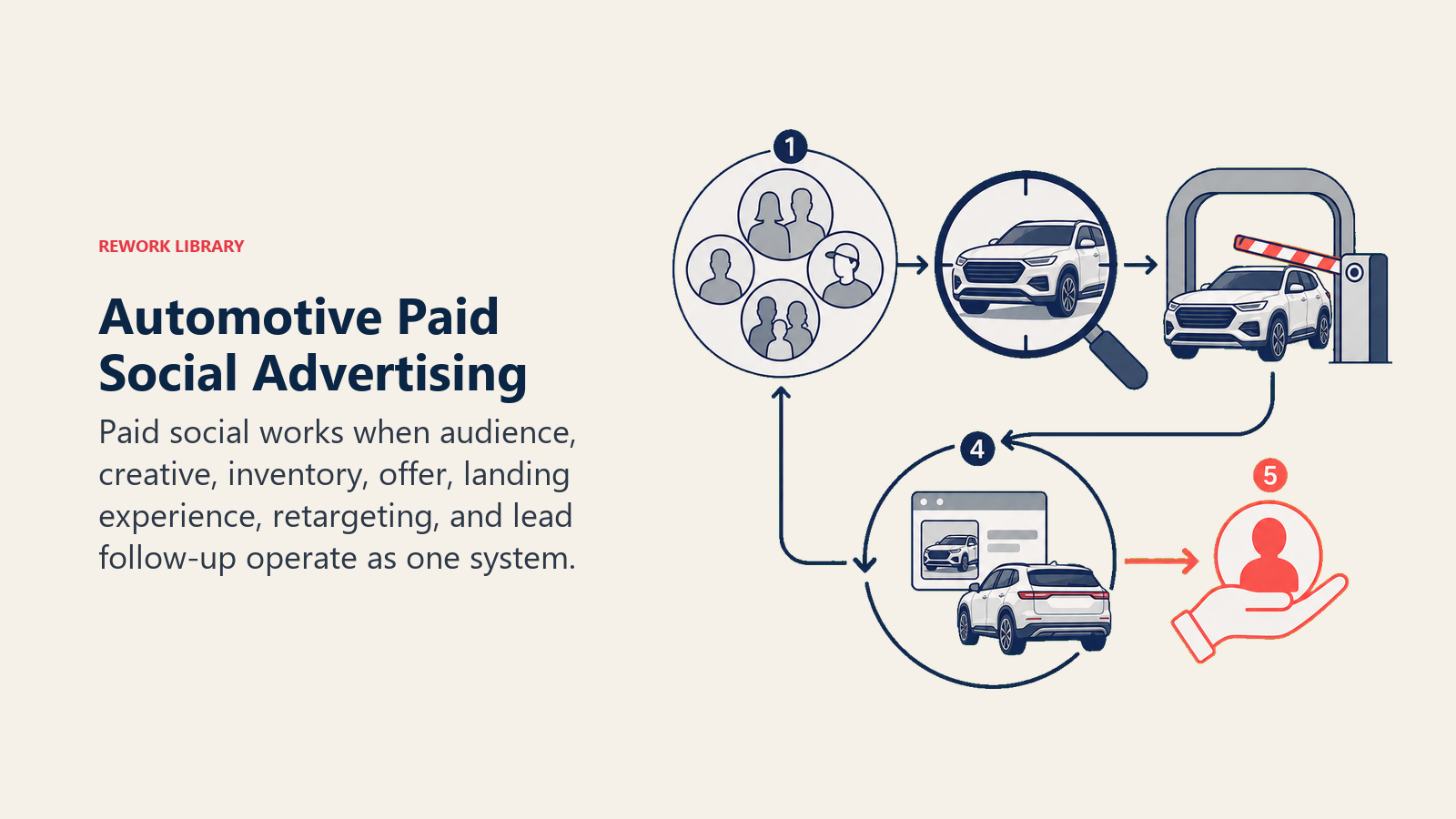
Facebook and Instagram lead generation ads capture contact information without users leaving the platform through automotive lead management. Pre-filled forms (name, email, phone) make it frictionless to submit leads. Expect $30-60 per lead depending on targeting and offer. These leads typically convert lower than Google Ads leads (15-20% vs 25-30%) because they're earlier in the funnel.
Retargeting campaigns follow website visitors across Facebook/Instagram after they leave your site through automotive marketing automation. Someone viewed a specific VDP? Show them ads for that exact vehicle for 30 days. Conversion rates on retargeting run 3-5x higher than cold traffic. Budget 30-40% of social ad spend on retargeting.
Lookalike audiences target people similar to your existing customers through customer data platform for dealers. Upload your customer email list, and Facebook finds users with similar demographics, interests, and behaviors. This expands reach while maintaining targeting quality. Lookalike audiences typically cost less per lead than broad targeting.
Event promotion campaigns drive attendance for tent sales, model launch events, or customer appreciation days through automotive content marketing. These work well because they're time-bound and action-oriented. Someone who RSVPs to your event is a qualified prospect worth immediate follow-up.
Video view campaigns build awareness at low cost through automotive video marketing. Run video ads showcasing your dealership, inventory, or customer testimonials. Cost per view runs $0.02-0.05. While these don't generate immediate leads, they build familiarity that improves conversion rates on direct response campaigns.
Budget allocation for paid social should represent 10-20% of your total digital advertising budget through automotive PPC advertising. If you're spending $10,000 monthly on Google Ads, allocate $1,000-2,000 to Facebook/Instagram. Social advertising complements search advertising, search captures demand, social creates it.
Campaign objectives matter: awareness campaigns optimize for reach, consideration campaigns optimize for engagement or video views, conversion campaigns optimize for leads or sales. Match objective to goal, don't run conversion campaigns when building awareness.
Community Engagement Tactics
Engagement builds relationships. Relationships build trust. Trust drives sales.
Responding to comments and DMs should happen within 1-2 hours through lead response time optimization. Someone comments on your post asking about vehicle availability? Respond publicly with helpful information, then DM to continue the conversation. Speed matters, responsiveness signals you care about customers.
User-generated content strategy encourages customers to create content for you through customer loyalty programs. Ask during delivery: "Share a photo with your new vehicle and tag us, we'll feature you!" Repost customer content with credit. It's authentic, it celebrates customers, and it shows prospects what buying from you looks like.
Local event sponsorships create content opportunities and community goodwill. Sponsor little league, local 5Ks, school events, charity fundraisers. Attend these events, take photos, share them on social media. Tag participating organizations. This builds local brand awareness that paid advertising can't replicate.
Charitable initiatives demonstrate values beyond profit. Partner with local food banks, homeless shelters, or children's organizations. "For every vehicle sold this month, we're donating $100 to Springfield Food Bank." Share impact updates. Customers increasingly choose brands aligned with their values.
Employee advocacy programs turn your team into brand ambassadors. Encourage employees to share dealership posts from their personal profiles. Feature employee spotlights. Celebrate work anniversaries and achievements. Team members have networks you can't reach directly, their shares extend your organic reach significantly.
Interactive content drives engagement: polls ("Which color looks best on the new CR-V?"), questions ("What features are most important in your next vehicle?"), contests ("Share your road trip photo for a chance to win a $500 service credit"), and live video Q&A sessions where followers ask questions and you answer in real-time.
The goal isn't just posting content, it's creating conversations. Every comment is an opportunity to engage. Every share extends your reach. Every tag introduces you to new potential customers.
Video Content Strategy
Video outperforms all other content types on social media. The algorithms favor it, and users engage with it at 5-10x the rate of static images.
30-second vs 3-minute content serves different purposes through automotive video marketing. Short-form video (15-60 seconds) works for Reels, TikTok, and Stories, quick hits that showcase features, celebrate deliveries, or share tips. Long-form video (3-10 minutes) works for YouTube, detailed walkarounds, comparisons, and educational content.
Vehicle comparison videos address common buyer questions through automotive content marketing. "2026 Honda CR-V vs Toyota RAV4: Which is better for your family?" Walk through specs, pricing, features, and provide an honest comparison. These videos rank in YouTube search and position you as a trusted advisor, not just a seller.
Customer testimonial videos are the most powerful social proof. Record 2-3 minute videos with customers explaining why they chose your dealership, their experience, and their satisfaction with their purchase. Authenticity matters more than production quality, smartphone video works fine.
Service department tips build authority and bring service customers back. "How to check your tire tread depth," "When to replace your cabin air filter," "What that dashboard light means." These 60-90 second videos provide value, demonstrate expertise, and keep your dealership top-of-mind for service needs, which feeds your service-to-sales pipeline.
Live video opportunities create real-time engagement. Facebook and Instagram Live allow you to broadcast model unveilings, walk the lot showing inventory, host Q&A sessions, or tour your service department. Live video gets algorithmic priority and notifies followers, driving higher viewership than recorded posts.
Video production doesn't require a studio. Modern smartphones shoot 4K video. Natural lighting beats studio setups. Authenticity beats polish. The barriers to video content aren't technical, they're psychological. Start shooting, even if it's imperfect. Consistency matters more than perfection.
Review Management on Social
Reviews aren't just reputation management, they're content that influences purchase decisions and impacts local SEO.
Monitoring and responding should happen daily. Reviews appear on Facebook, Google, Yelp, DealerRater, Cars.com, and more. Consolidate monitoring with tools like Reputation.com or Podium, or assign a team member to check manually. Respond within 24 hours to all reviews.
Amplifying positive experiences turns satisfied customers into marketing assets. When someone leaves a glowing review, share it as a social media post (with permission or by screenshot). "We're grateful for customers like Sarah who trust us with their automotive needs. Thank you for the kind words!" This showcases real experiences and encourages others to share theirs.
Handling negative feedback publicly demonstrates professionalism and accountability. Never argue or get defensive. Acknowledge the issue, apologize sincerely, and offer to resolve offline. "We're sorry to hear about your experience, John. This doesn't reflect our standards. Please DM us or call [phone] so we can make this right." Prospects watch how you handle complaints, grace under pressure builds trust.
Review generation strategy makes collecting reviews systematic. After every sale, include a review request in your follow-up process: "We'd love to hear about your experience! Leave us a review [link]." After every service visit, send an automated email/SMS with review links. QR codes on service receipts that link directly to your Google review page make it frictionless.
The volume and recency of reviews matter for online review management and local SEO. A dealership with 1,500 reviews and a 4.6-star average will outrank one with 200 reviews and a 4.9-star average. Generate 30-50 reviews monthly through systematic processes.
Measuring Social Media Success
Social media metrics should tie to business outcomes, not vanity numbers.
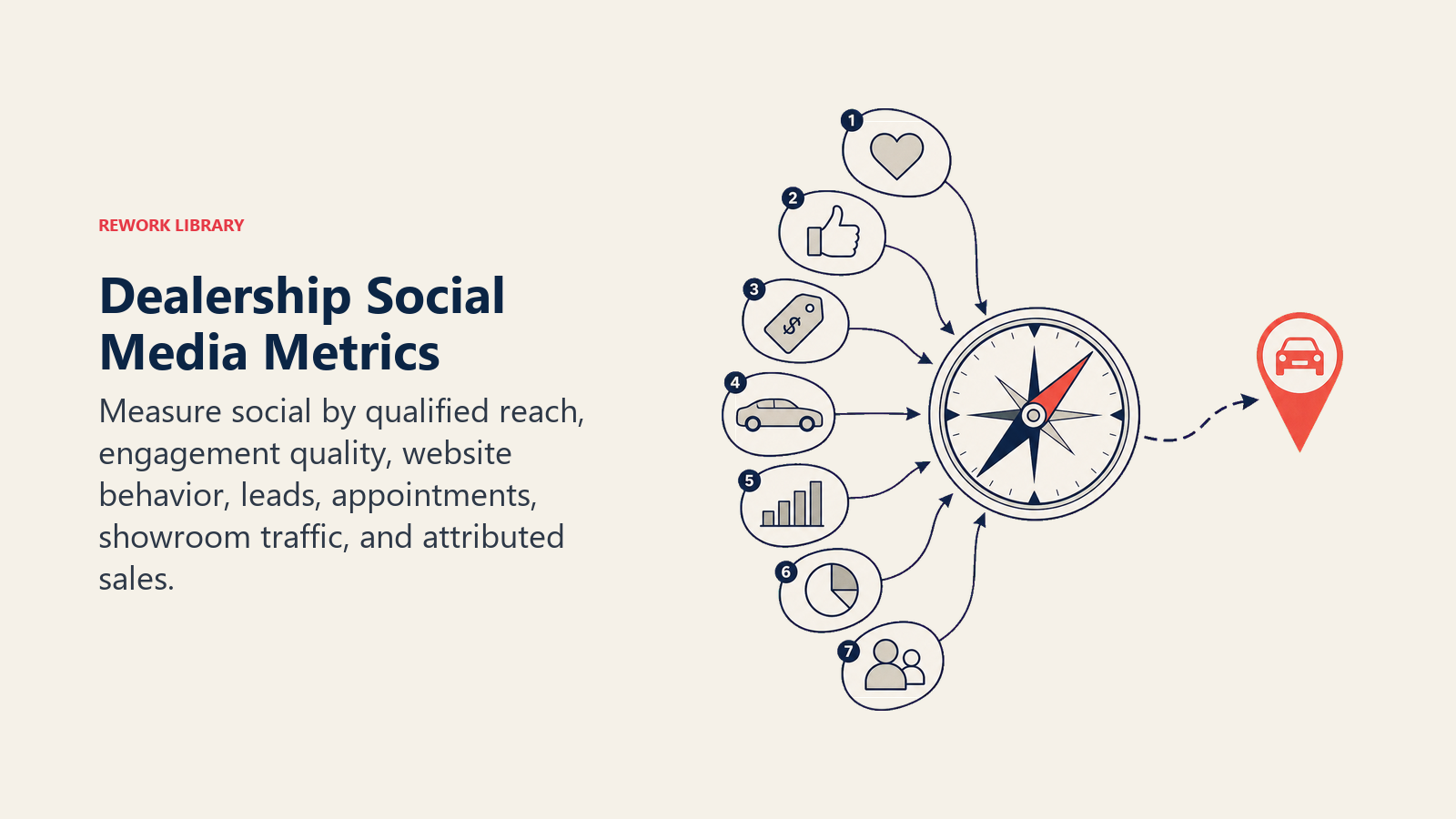
Engagement metrics (likes, comments, shares) indicate content resonance. Track engagement rate (total engagements ÷ total followers) to measure how well content connects. Industry benchmark: 1-3% engagement rate is average, 4-6% is good, 7%+ is excellent.
Reach and impressions show content visibility. Reach is unique users who saw content. Impressions is total views (includes repeat views). Growing reach over time indicates successful content strategy. Declining reach suggests algorithm penalties or poor content quality.
Lead attribution from social connects activity to revenue through automotive CRM implementation. Use UTM parameters on links to track website traffic from social sources. Use platform-native lead forms to capture social-sourced leads directly. Track these leads through your CRM to closed sales. Calculate cost per lead and cost per sale to measure ROI.
Cost per lead from paid social typically runs $30-80 depending on targeting and offer through cost per sale analysis. Compare this to other channels, it should be competitive with paid search. If social CPL exceeds $100 while Google Ads CPL is $40, shift budget to better-performing channels.
Brand search volume correlation is a leading indicator of social media impact through automotive SEO strategy. As social presence grows, more people should search for your dealership by name (branded searches). Monitor branded search volume in Google Search Console through dealership KPI dashboard. Growth in branded searches indicates successful brand building, even if direct social leads are modest.
Follower count matters less than engagement. A dealership with 5,000 engaged followers gets better results than one with 20,000 unengaged followers. Focus on attracting and retaining your local market, not building a massive but irrelevant audience.
Social media works when you commit long-term, provide consistent value, engage authentically, and measure properly. The payoff isn't immediate leads, it's brand awareness that translates to preference when customers enter the market.
Your automotive content marketing strategy should integrate social media as a distribution channel. Create valuable content, share it socially, engage with responses, and build relationships that eventually drive showroom traffic.
Start with one or two platforms. Post consistently. Engage authentically. Measure quarterly, not weekly. The dealer who posts quality content for 12 months will see results the dealer who posts sporadically never will.
Social media isn't a magic lead generation channel. It's a brand building, trust creating, community engaging channel that makes all other marketing more effective. Treat it accordingly, and it will deliver.

Senior Implementation Consultant