Building Profitable Customer Loyalty Programs for Automotive Dealerships - 2026 Guide
Turn this article into takeaways for your work.


Each assistant summarizes the article only for you and suggests best practices for your work.
The average dealership loses 50% of customers within three years. That's costing you $12,000+ in lifetime value per defection. Strategic loyalty programs can reverse this trend and turn one-time buyers into lifetime customers.
According to McKinsey research on automotive customer experience, customer experience has replaced hardware engineering as the critical battleground for car manufacturers and dealers. Tiered loyalty programs can improve customer retention by 20%, while subscription-based programs retain customers at rates 60% higher than non-subscription models.
Most dealerships think about customer loyalty in terms of good service and friendly staff. That helps, but it isn't enough. You need structured programs that give customers tangible reasons to keep coming back, not just to your service department, but for their next vehicle purchase.
The dealerships that win at loyalty don't just hope customers return. They engineer loyalty through systematic programs that reward repeat business and make switching to competitors financially irrational. Let's break down how to build loyalty programs that actually work.
The Financial Case for Loyalty Programs
Before you invest time and money into a loyalty program, you need to understand the ROI. The numbers are compelling if you look at the full picture.
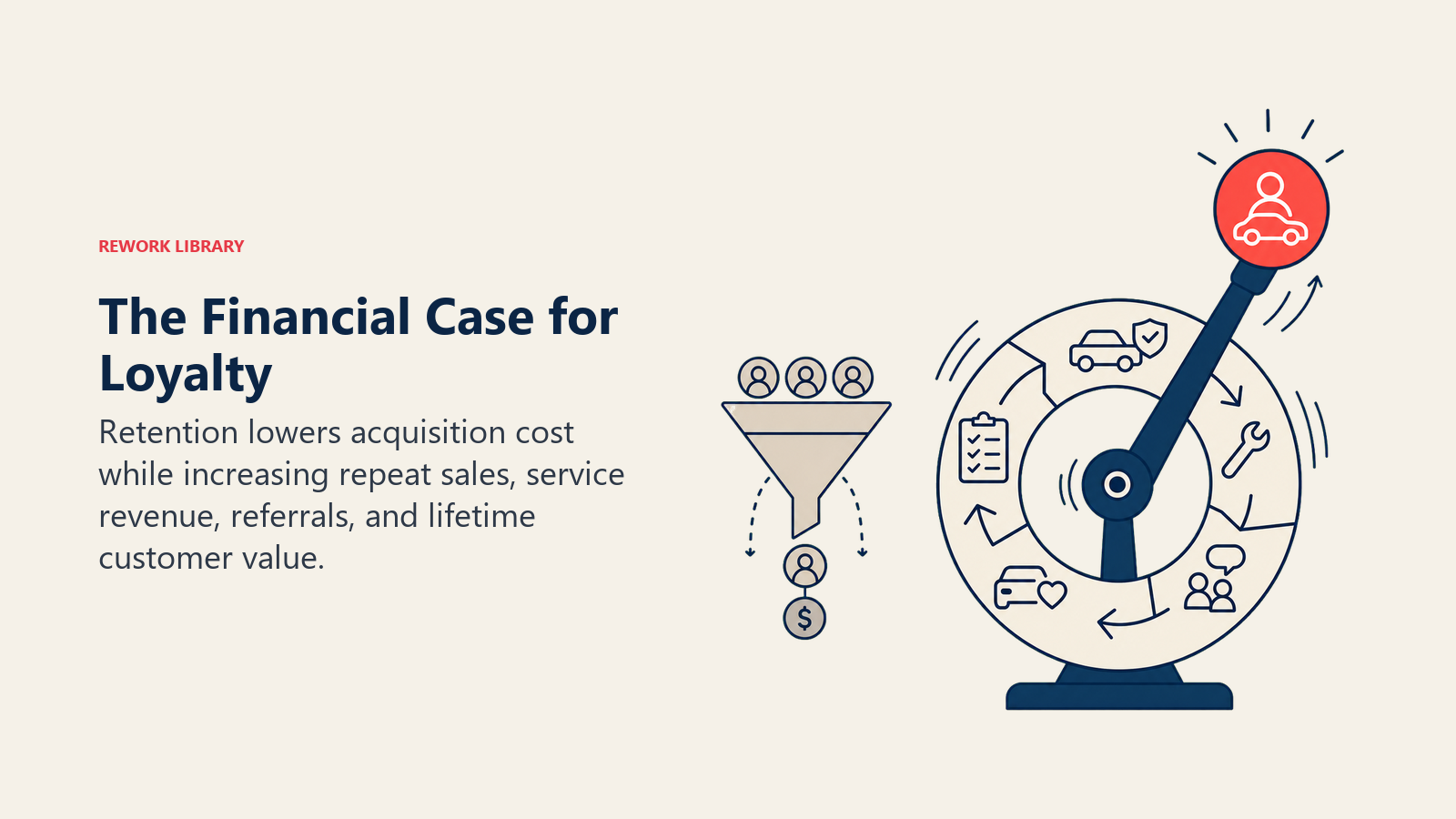
Cost differential between retention and conquest marketing is dramatic. Acquiring a new customer through conquest marketing costs $300-$800 per sale when you factor in advertising, lead costs, and sales time. Retaining an existing customer costs $50-$150 when you account for retention marketing, loyalty program benefits, and incentives. That's a 5:1 to 10:1 cost advantage.
Industry data from NADA (National Automobile Dealers Association) confirms these economics: it costs 10 times as much to obtain a new customer as it does to retain an existing one, and increasing automotive customer retention rates by just 5% can boost profits from 25% to 95%.
But the difference goes beyond acquisition cost. Loyalty customers close at higher rates (40-60% vs. 15-25% for conquest leads), require less negotiation time, and generate higher gross profit. They already trust you, so the sales process is faster and less contentious. You're not starting from zero.
Impact on CSI scores and OEM bonuses is significant. Loyalty customers typically score higher on satisfaction surveys because they've had multiple positive experiences with your dealership. They know your people, they trust your process, and they're predisposed to be satisfied. That translates directly to better CSI scores and bigger manufacturer bonuses.
Parts and service revenue retention is where loyalty programs really pay off. The lifetime profit from a customer isn't just the front-end and back-end gross from the vehicle sale. It's the 5-7 years of service revenue that follows. A customer who buys from you and services elsewhere is worth maybe $3,000. A customer who buys and services with you for seven years is worth $15,000-$20,000. Learn more about fixed operations overview and revenue optimization.
Loyalty programs keep customers in your service drive, which keeps them in your database, which makes them infinitely easier to sell when their trade cycle comes around. The compounding effect over multiple purchase cycles is massive.
Consider this: a customer who buys three vehicles from you over 15 years and services regularly is worth $60,000+ in total dealership revenue. That same customer buying elsewhere after the first purchase represents $50,000 in lost revenue. The stakes are high enough to justify meaningful investment in loyalty programs.
Types of Automotive Loyalty Programs
There's no one-size-fits-all loyalty program structure. Different models work better for different dealerships depending on customer base, competitive environment, and operational capabilities.
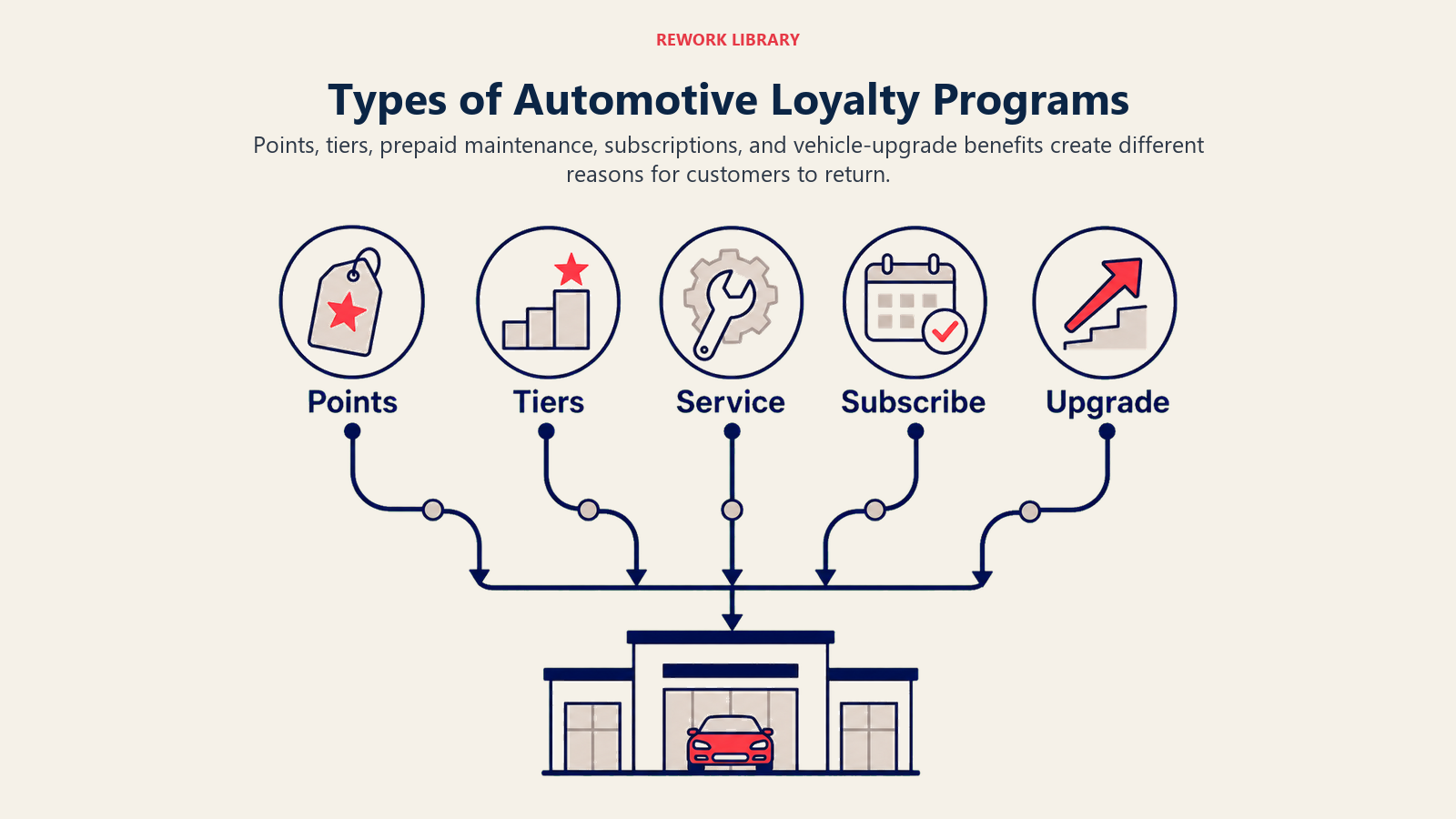
Points-based rewards programs are the most common structure. Customers earn points for vehicle purchases, service visits, parts purchases, and referrals. Points can be redeemed for service discounts, accessories, vehicle purchase incentives, or partner rewards. The key is making point accumulation feel meaningful and redemption feel valuable.
A typical structure might be: 1 point per dollar spent on service, 1,000 points for a vehicle purchase, 500 points for a referral that results in a sale. Redemption might be $100 off service for every 500 points, or $500 off next vehicle purchase for 5,000 points. The economics need to work for your dealership while feeling generous to customers.
Tiered membership programs create status levels (Silver, Gold, Platinum) that unlock progressively better benefits. This model leverages customers' desire for status and provides a clear path for increasing engagement. Lower tiers are easy to achieve and provide basic benefits. Higher tiers require significant spending but deliver premium experiences.
For example: Silver (automatic after first purchase) includes priority service scheduling and quarterly service coupons. Gold (after second purchase or $2,000 in service spend) adds complimentary loaner vehicles and exclusive sale previews. Platinum (after third purchase or $5,000 in service spend) includes concierge service, lifetime complimentary car washes, and premium trade-in allowances.
Paid VIP programs flip the traditional model by charging customers an upfront fee for access to premium benefits. This works best for luxury and high-volume dealerships where customers value convenience and exclusivity. A typical program might charge $299-$499 annually for benefits like unlimited express service, free loaner vehicles, priority allocation for new models, and special pricing on accessories.
The key to paid programs is ensuring the perceived value significantly exceeds the cost. If a customer uses free loaners three times and that would normally cost $150 per day, they've already justified the annual fee. Add in priority treatment and other perks, and the value proposition becomes clear.
Hybrid models combining sales and service benefits work well because they address both sides of the customer relationship. Sales-only programs often fail because the benefits don't kick in for 3-5 years when the next purchase cycle arrives. Service-only programs miss the bigger opportunity of vehicle sales. Hybrid programs keep customers engaged across both touchpoints.
The right model depends on your customer base. Mass-market dealerships with high service volume might focus on points-based programs. Luxury dealerships might emphasize tiered status programs. High-performing stores might experiment with paid VIP programs. Most dealerships benefit from hybrid approaches that reward both sales and service loyalty.
Program Design Framework
Designing an effective loyalty program requires careful attention to economics, psychology, and operational integration. Get the fundamentals right and the program will sustain itself. Get them wrong and you'll pour money into a program that doesn't change customer behavior.
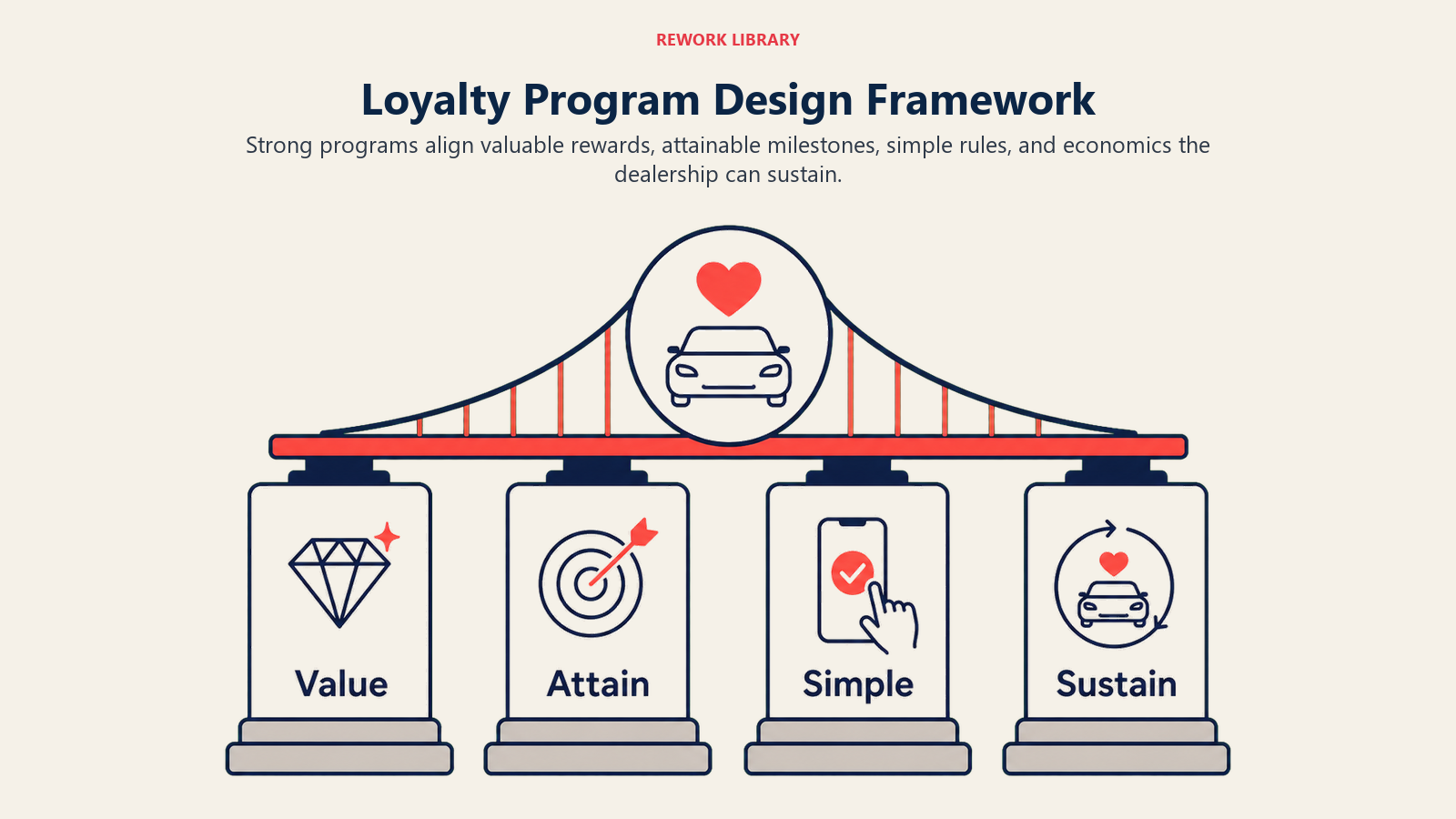
Reward structure and economics need to balance generosity with profitability. Your loyalty benefits should feel valuable to customers while maintaining positive ROI for the dealership. Run the numbers on customer lifetime value, defection costs, and program costs to find the sweet spot.
A good rule of thumb: aim to spend 3-5% of customer lifetime value on loyalty benefits. If your average customer is worth $15,000 over seven years, you can afford to invest $450-$750 in loyalty benefits. That might be $100 per year in service credits, a $500 trade-in bonus on their next purchase, and occasional perks like free car washes or loaner vehicles.
Benefit tiers and qualification thresholds should be designed to encourage specific behaviors. If you want more service retention, make service visit frequency a qualification criterion. If you want more referrals, reward them heavily. If you want faster repurchase cycles, offer bigger incentives for purchasing within 36 months instead of 60 months.
Make the first tier easy to achieve so customers feel like they're "in the club" immediately after their first purchase. Make subsequent tiers aspirational but achievable, customers should feel they can reach the next level with reasonable effort. Avoid tiers that require unrealistic spending that less than 1% of customers will ever achieve.
Integration with sales and service operations is critical. Your loyalty program can't be a marketing initiative that lives in a spreadsheet. It needs to be baked into your DMS, CRM, and daily processes. Service advisors need to see loyalty status when they pull up a customer. Sales consultants need to know what loyalty incentives are available during negotiation. For implementation details, see automotive CRM implementation.
If checking loyalty status or applying benefits requires special effort or approvals, staff won't do it consistently. The program will fail. Integration needs to be seamless enough that using the loyalty program is easier than not using it.
Technology platform requirements vary based on program complexity. Simple programs might run on your existing CRM with manual tracking. More sophisticated programs require dedicated loyalty software that tracks points, manages tiers, sends automated communications, and integrates with your DMS.
Evaluate whether you need custom development, off-the-shelf loyalty software, or an automotive-specific platform. The investment in proper technology pays for itself in reduced administrative burden and better program execution.
Sales Department Integration
Your loyalty program needs to provide real value during the vehicle sales process. Customers should see immediate benefits when they return to purchase their next vehicle.
Loyalty lease incentives and pull-ahead programs work particularly well for lease customers. Offer loyalty members the ability to end their lease 3-6 months early with waived disposition fees and remaining payments. This gets them back into your showroom before competitors have a chance to steal them. Integrate these offers with your equity mining strategy.
You might offer: "As a Gold member, you can turn in your current lease up to 90 days early with no disposition fee and no remaining payments. Let's get you into the new model." This removes the financial barrier that often prevents customers from trading early and gives you first access to the customer.
Trade-in bonuses for program members make your offers more competitive. If you can offer loyal customers an extra $500-$1,000 on their trade value (labeled as a "loyalty bonus"), you can often win deals where you're not the lowest price. Customers understand they're getting value for their loyalty and feel appreciated.
Structure the bonus so it makes financial sense: you're spending $500-$1,000 to secure a sale from a customer who already costs you nothing to acquire and will likely service with you for years. That $500 investment will return $3,000-$5,000 in future service revenue. It's the easiest money you'll ever spend.
Priority allocation for high-demand vehicles is a powerful benefit for luxury and specialty brands. When you have limited allocation of a hot new model or a vehicle in short supply, loyalty program members should get priority access. This creates real exclusivity and gives customers a concrete reason to stay loyal.
Communicate this proactively: "As a Platinum member, you'll get first access to our allocation of the new [Model]. We'll reach out to you before we open orders to the general public." That makes customers feel valued and creates tangible differentiation from competitors.
Referral rewards and family programs extend loyalty beyond the individual buyer. Offer meaningful incentives for referring friends and family who purchase from your dealership. Common structures include $250-$500 per referral or bonus loyalty points. Make it easy by providing referral cards customers can share. Learn more about systematic approaches in travel referral programs.
Family programs that extend benefits to immediate family members strengthen loyalty by creating a shared relationship with your dealership. If a parent, their kids, and their spouse all get loyalty benefits, you've just tripled your opportunity for repeat business within one household.
Service Department Benefits
Service department benefits are the foundation of most loyalty programs because service touchpoints happen more frequently than vehicle purchases. This is where customers experience ongoing value.
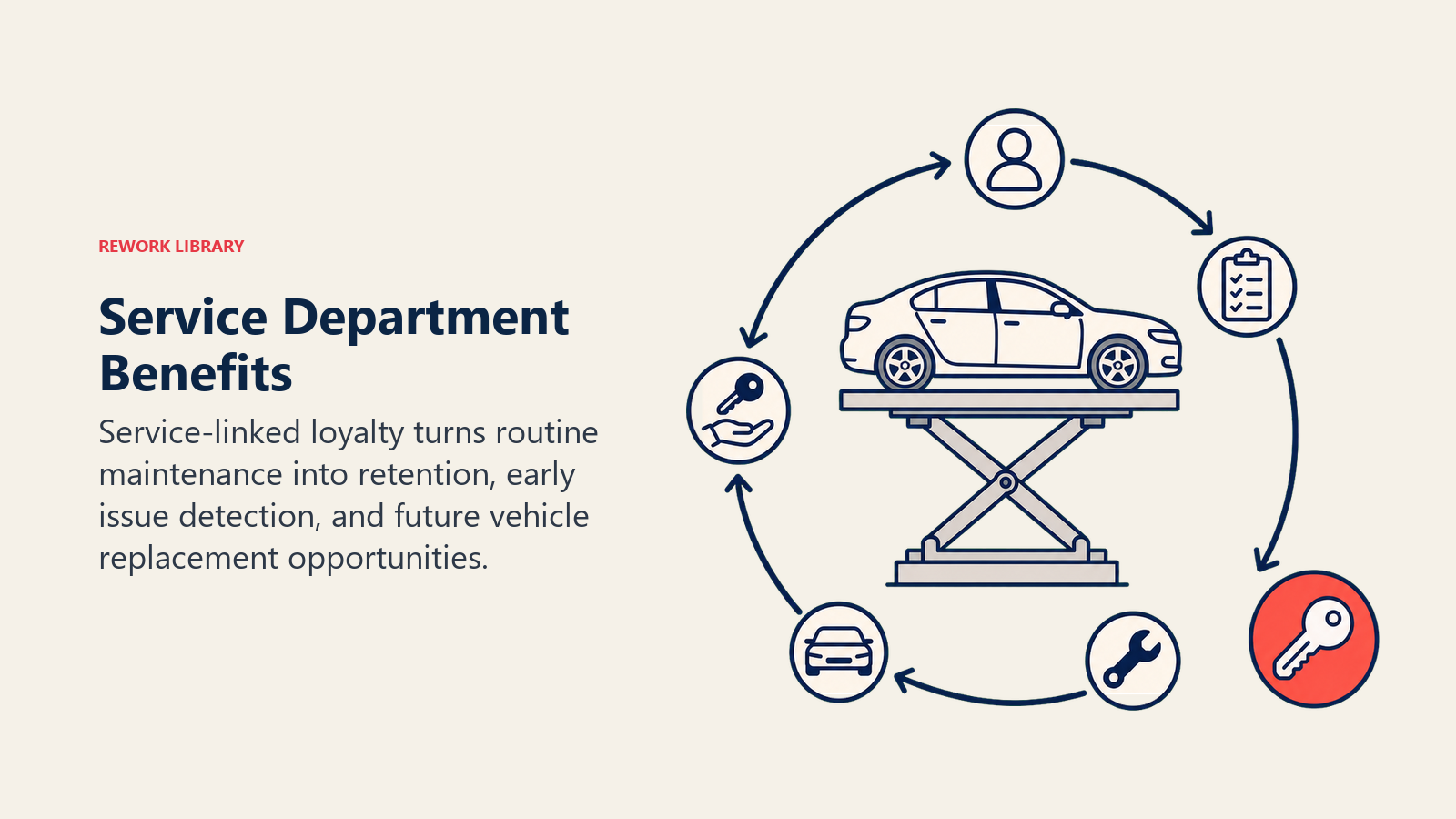
Complimentary maintenance packages are among the most valued benefits. Offering Gold and Platinum members complimentary oil changes (3 per year, for example) costs you $60-$90 per customer but keeps them coming to your service department where you have opportunities for additional revenue through recommended maintenance and repairs. Optimize pricing with maintenance menu pricing strategies.
The ROI is obvious: you spend $90 on complimentary oil changes and generate $1,000+ in additional service revenue over the year. Plus, you keep the customer engaged with your dealership and away from independent shops or competitor service departments.
Priority service scheduling means loyalty members get preferred appointment times and faster service. Create a dedicated express lane for loyalty members or reserve certain appointment slots exclusively for them. This delivers real value for customers who hate waiting and reinforces their decision to stay loyal. For comprehensive scheduling systems, see service appointment scheduling.
Train service advisors to proactively offer priority scheduling: "I see you're a Gold member, I can get you in tomorrow morning at 8 AM if that works better than waiting until next week." This makes the benefit tangible and memorable.
Loaner vehicle programs are expensive but highly valued, especially by luxury brand customers. Instead of waiting in the service department, loyalty members get a loaner vehicle so they can continue their day. This is a significant competitive advantage if your competitors don't offer it.
You don't need to provide loaners to everyone for every service. Tier it: Platinum members get loaners for all service visits. Gold members get loaners for service over two hours. Silver members get loaners for warranty work. This manages costs while still delivering value.
Service discounts and seasonal promotions give you flexible ways to reward loyalty. Offer members 10-15% off non-warranty service, or run exclusive promotions (20% off brake service in October for loyalty members only). These promotions drive service traffic during slow periods and give customers tangible savings.
Make sure discounts still maintain profitability. A 10% discount on a $500 service visit costs you $50 but keeps the customer from going to an independent shop that would charge $300 for the same work. You're still winning.
Technology and CRM Integration
A loyalty program is only as good as the technology supporting it. Poor technology makes programs feel clunky and creates administrative headaches that prevent consistent execution.
CRM platform requirements start with the ability to track customer status, points, and benefits in a centralized system. Your CRM needs to integrate with your DMS so customer loyalty data flows automatically based on purchases and service visits. Manual data entry leads to errors and outdated information.
Look for CRM platforms with built-in loyalty program functionality or strong integration capabilities with third-party loyalty software. The system should automatically update customer status when they qualify for new tiers, send automated notifications about benefits, and track redemptions.
Mobile app functionality enhances customer engagement and makes benefits easily accessible. A loyalty app should let customers check their points balance, view available rewards, schedule service appointments, and receive personalized offers. Push notifications keep your dealership top-of-mind and drive additional visits.
Don't build a custom app unless you have significant budget and development resources. White-label automotive loyalty apps are available from several vendors and provide professional functionality at a fraction of custom development costs.
Automated communication triggers keep customers engaged without manual effort. Set up automated emails or texts that trigger when customers reach new tiers, earn rewards, have benefits expiring, or haven't visited in a certain time period. These touchpoints maintain awareness and drive action.
Examples: "Congratulations! You've reached Gold status and now qualify for complimentary loaner vehicles." Or: "You have 500 loyalty points expiring next month. Redeem them for $100 off your next service visit."
Points tracking and redemption systems need to be foolproof. Customers should be able to see exactly how many points they have, how they earned them, and what they can redeem them for. Redemption should be seamless, customers shouldn't need to print coupons or remember to ask for their discount. The system should automatically apply available benefits.
Train service advisors and sales consultants to proactively mention available benefits: "I see you have 1,000 points available, would you like to apply $200 toward today's service?" This prevents benefits from going unused and reinforces the value of the program.
Marketing and Enrollment Strategy
The best loyalty program in the world doesn't work if nobody joins. You need a strategic approach to building membership and maintaining engagement.
Launch strategy and initial enrollment should create excitement and momentum. Don't just quietly roll out a loyalty program and hope people notice. Make a big deal out of it. Announce it on social media, in email campaigns, and throughout your dealership. Automatically enroll recent customers at appropriate tiers so they immediately see value. Use social media for dealerships to amplify your launch.
Consider a launch promotion: "Join in the first 90 days and receive double points on your first service visit." This drives early adoption and gives customers an immediate reason to engage with the program.
Sales process integration at the F&I presentation is the most effective enrollment point for new customers. When customers are sitting in finance signing paperwork for their new vehicle, present the loyalty program as an exclusive benefit of purchasing from your dealership. Walk them through the benefits and enroll them on the spot.
Script for F&I: "One of the benefits of purchasing from us is automatic enrollment in our [Program Name]. You're starting as a Silver member, which gives you priority service scheduling and quarterly service coupons. As you continue to service with us or purchase your next vehicle here, you'll qualify for Gold and Platinum status with even better benefits. Let me get you enrolled right now."
Service advisor enrollment tactics capture customers who purchased elsewhere but service with you. Train service advisors to identify customers who aren't in your loyalty program and pitch enrollment. "I noticed you're not enrolled in our loyalty program yet. It's free to join and you'll earn points for today's service visit that you can redeem for future discounts. Can I get you signed up?"
Some dealerships offer a first-visit incentive: "Join our loyalty program today and get 500 bonus points, that's $100 toward a future service visit." This overcomes initial resistance and gets customers invested in the program.
Digital marketing and retention campaigns keep members engaged. Regular email and SMS campaigns should highlight program benefits, announce exclusive promotions, remind customers about expiring points, and celebrate tier milestones. These touchpoints keep your dealership top-of-mind and drive repeat visits.
Segment your communications based on customer status and behavior. Don't send the same message to a Platinum member who visits every 90 days and a Silver member who hasn't been in for a year. Tailor messaging to drive the specific behaviors you want from each segment.
Program Metrics and Optimization
Launching a loyalty program isn't the end, it's the beginning. You need to continuously measure performance and optimize based on data.
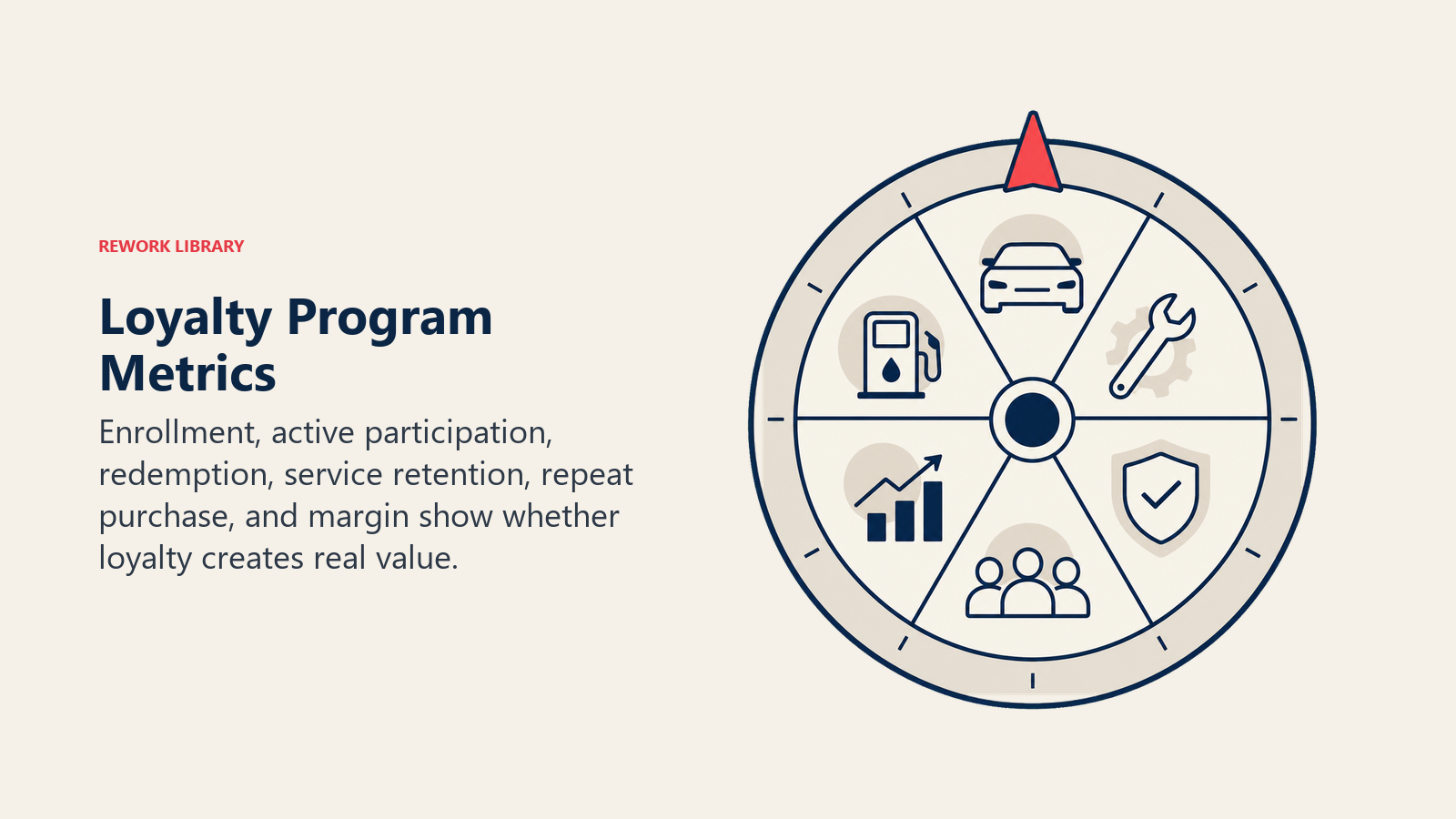
Key performance indicators should include retention rate (percentage of customers who return for next purchase), enrollment rate (percentage of eligible customers who join), redemption rate (percentage of earned rewards actually redeemed), service visit frequency, and customer lifetime value by tier. Track all metrics in your dealership KPI dashboard.
Track these metrics monthly and compare loyalty program members to non-members. The gap tells you whether your program is working. Loyalty members should have significantly higher retention rates, service frequency, and lifetime value. If they don't, your program needs adjustment.
Customer engagement scoring helps identify who's actively engaged with your program and who's at risk of defection. Score customers based on factors like service visit frequency, point redemption activity, email open rates, and time since last visit. Customers with declining engagement scores need proactive outreach.
Profitability analysis by tier ensures your program economics make sense. Track the total benefits delivered to customers in each tier and compare it to the revenue and profit they generate. Lower tiers should be highly profitable. Higher tiers might break even or operate at a small loss while driving significant lifetime value. If any tier is unprofitable without delivering strong retention, adjust the benefits or qualification criteria.
A/B testing reward offerings helps optimize what customers actually value. Test different benefit structures with segments of your customer base. Do customers prefer higher service discounts or complimentary loaners? Do they value exclusive access to sales events or trade-in bonuses? Let data guide your program design rather than assumptions.
Conduct annual surveys asking loyalty members what benefits they value most and what additional benefits would make them more likely to purchase their next vehicle from you. This direct feedback is invaluable for program evolution.
Common Pitfalls and Solutions
Many dealerships launch loyalty programs with enthusiasm only to see them fail. Here are the common mistakes and how to avoid them.
Over-promising and under-delivering kills programs quickly. Don't offer benefits you can't consistently deliver. If you promise complimentary loaners but you only have three loaner vehicles and frequent service customers, you'll disappoint people. It's better to offer more modest benefits that you can deliver 100% of the time than impressive benefits you can only deliver occasionally.
Complexity that confuses customers prevents engagement. Your program should be explainable in 30 seconds. If customers don't understand how to earn or redeem rewards, they won't participate. Simplify your structure, use clear language, and provide easy-to-understand communications.
Lack of staff buy-in and training ensures failure. If your service advisors and sales consultants don't understand the program, don't believe in its value, and don't mention it to customers, it won't work. Invest heavily in staff training and make sure their compensation is aligned with program success. If loyalty program enrollment or retention is tracked and rewarded, staff will prioritize it.
Poor integration with existing operations creates friction. If applying loyalty benefits requires multiple systems, manual lookups, or manager approval, staff will skip it when they're busy, which is most of the time. The program needs to be seamlessly integrated into existing workflows or it will be ignored.
The dealerships that succeed with loyalty programs treat them as strategic initiatives, not marketing campaigns. They invest in proper technology, train staff thoroughly, measure results rigorously, and continuously optimize based on data. Do that, and your loyalty program becomes a sustainable competitive advantage that drives millions in additional lifetime value from your customer base. For comprehensive retention strategies, see owner retention marketing.

Senior Implementation Consultant