One-Price Selling Strategy - No-Haggle Model Implementation for Dealerships - 2026 Guide
Turn this article into takeaways for your work.


Each assistant summarizes the article only for you and suggests best practices for your work.
Consumer research consistently shows that about 65% of car buyers would prefer a no-haggle buying experience. Yet most dealerships still operate on traditional negotiation models. Why? Because preference doesn't equal profitability, and execution determines whether one-price selling builds your business or tanks your margins. The J.D. Power 2025 Sales Satisfaction Index found that dealers who stay transparent during the deal and educate buyers see higher customer satisfaction scores.
The one-price model isn't new. Saturn pioneered it in the 1990s, and consumers gave the brand high satisfaction ratings for its low-stress buying process. CarMax built an empire on it. Carvana and Vroom made it their differentiator. But for every success story, there are cautionary tales of dealers who tried it, failed to execute properly, and lost both gross profit and market share. Understanding online pricing transparency is critical to one-price success.
The question isn't whether one-price selling can work. It's whether it makes sense for your market, your brand, and your operational capabilities. And if you decide to implement it, how do you structure pricing, process, and positioning to make it profitable?
One-Price Models
One-price isn't monolithic. There are several variations, each with different implications for your business.
Pure one-price means exactly what it sounds like: one price, no negotiation, ever. CarMax operates this way. The price on the window is the price you pay. No manager negotiation. No back-and-forth. You accept it or walk away. This is the most transparent but also the most constraining model.
Transparent pricing with small negotiation range gives you more flexibility. You publish a competitive market price online and in-store, but you allow consultants to negotiate within a small range, maybe $500-1,000 on the vehicle price. This captures customers who psychologically need to "negotiate" while limiting profit erosion.
Online pricing with in-store negotiation is what most traditional dealers have evolved to. You advertise competitive prices online to generate traffic, but you still negotiate in the showroom. This isn't really one-price selling, it's just competitive pricing with better transparency.
Hybrid models might use one-price on certain inventory (CPO vehicles, high-volume models) while maintaining traditional negotiation on others (luxury vehicles, low-volume specialty units). This lets you test the concept without full commitment.
Advantages of One-Price
The benefits of one-price selling are real, but they're not automatic. You need to execute well to capture them.
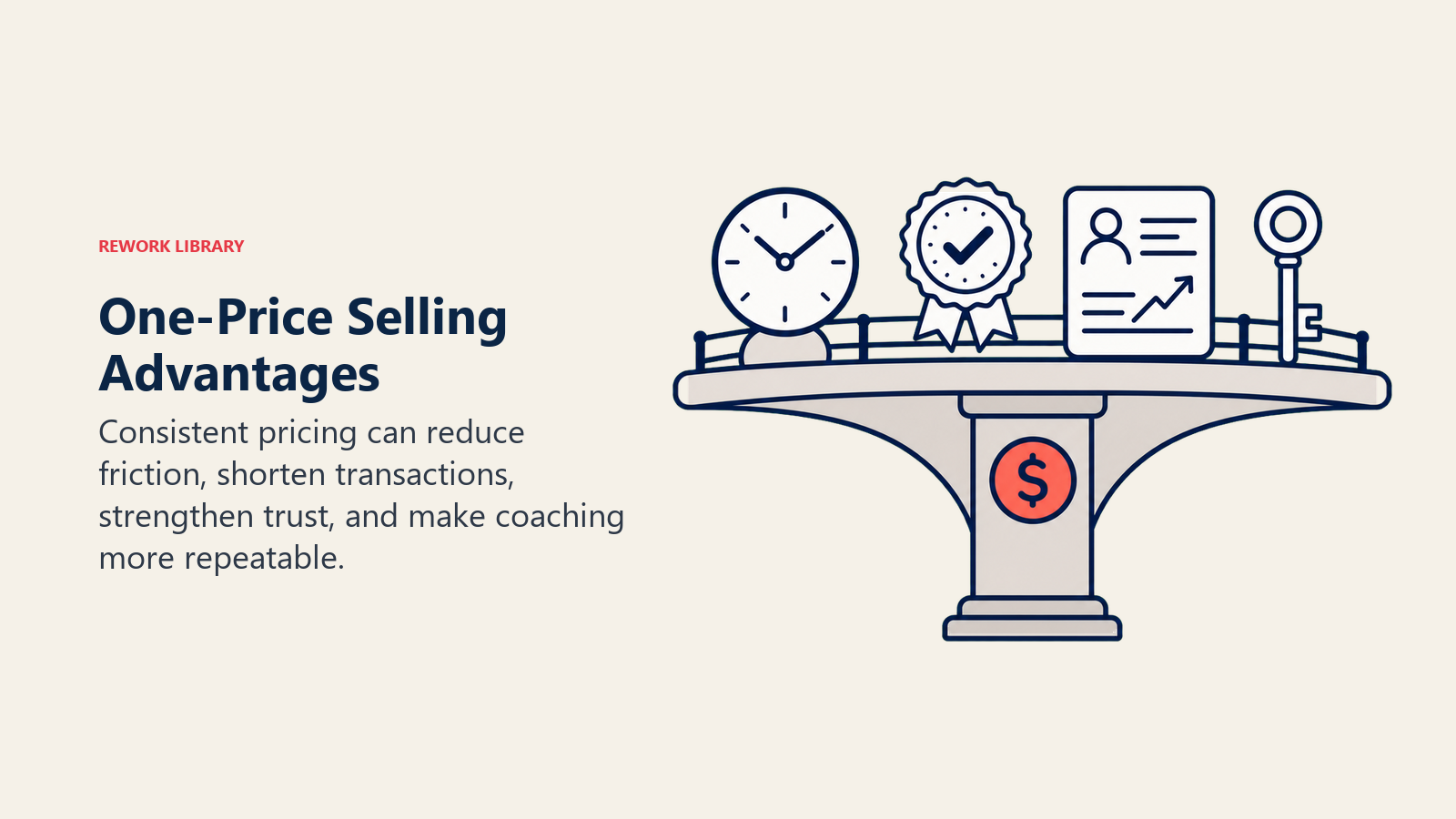
Sales cycle time reduction is immediate. Traditional negotiations take 2-4 hours from test drive to delivery. One-price can cut this to 90 minutes or less. No desk manager involvement. No back-and-forth. No "let me talk to my manager." The time savings compounds when you're selling 150+ vehicles per month.
Improved customer satisfaction happens when the process is genuinely simpler and more transparent. CSI scores often increase after implementing one-price, if customers believe the pricing is fair. If they suspect they're paying more than they should because they can't negotiate, satisfaction drops.
Staff efficiency and training simplification is significant. Teaching consultants to conduct needs assessments and present value is easier than teaching them to negotiate effectively. Your best closers might resist one-price because it eliminates a skill advantage. But your average consultants will sell more.
Price transparency and trust building differentiates you in markets where negotiation has created customer skepticism. "No games, no gimmicks, no back-and-forth" resonates with buyers who hate the traditional car-buying experience.
Inventory turn potential increases because price discipline often means you're priced more competitively on in-demand vehicles. Instead of starting high and negotiating down over weeks, you price to market and move units faster. Faster turns improve cash flow and reduce floor plan interest, as tracked through inventory turn optimization metrics.
Challenges and Trade-Offs
Here's what you give up with one-price selling, and you need to decide if the trade-offs are worth it.
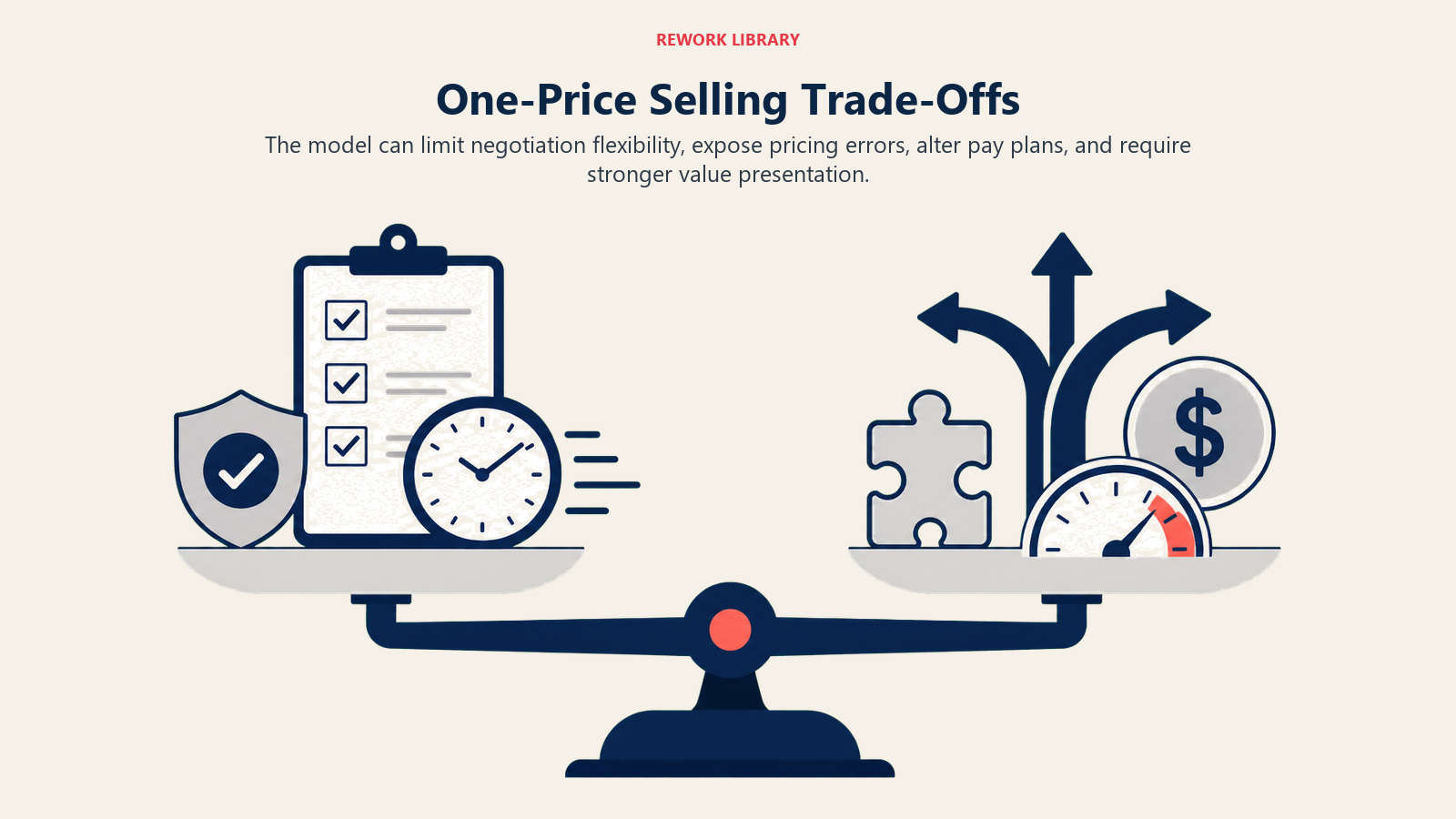
Gross profit compression on some deals is inevitable. In traditional negotiation, skilled desk managers extract maximum gross from motivated buyers who fall in love with a vehicle. One-price removes this ability. Your $3,500 gross deals become $2,200 gross deals because that's what market pricing supports.
Inability to maximize on motivated buyers is the flip side. A customer who's been looking for six months, finally finds the perfect vehicle, and is ready to pay full price? You can't capitalize on their motivation. You're locked into your published price. This frustrates sales managers who know they could get more.
Market pricing discipline required means you can't be lazy. If your prices are based on outdated market analysis or aren't adjusted for demand changes, you'll either lose deals to competitors or leave money on the table. One-price requires constant pricing vigilance.
Potential customer confusion in traditional markets happens when you're the only one-price dealer among 20 negotiating competitors. Customers might assume your "one price" is your starting price and push for discounts anyway. Or they'll shop your price to competitors who then undercut you because they're starting from negotiation positions.
Pricing Strategy
Your pricing methodology determines whether one-price selling is profitable or disastrous.
Market-based pricing is non-negotiable. You need to know what comparable vehicles are selling for in your market, not just what they're advertised for. Look at actual transaction prices through sources like vAuto, TrueCar, or CarGurus. Your one-price should be competitive with real transaction prices, not inflated asking prices. This requires continuous inventory pricing aging analysis.
Competitive analysis requirements increase significantly. In traditional selling, you can afford to be a bit off-market because negotiation lets you adjust. In one-price, if you're $800 above market, you don't sell the vehicle. Period. You need weekly (ideally daily) pricing updates based on competitor activity.
Gross profit targets by segment should guide your pricing. CPO vehicles might target $2,000 gross. Low-volume luxury vehicles might target $3,500. High-turn economy vehicles might only support $1,200. Understanding these targets by segment lets you price strategically across your inventory.
Dynamic pricing vs. static pricing is a critical decision. Dynamic pricing adjusts based on days-in-stock, market demand, and inventory levels. A hot-selling vehicle priced aggressively might start at market and increase if demand supports it. An aged unit might decrease weekly until it moves. Static pricing is simpler but less responsive.
Trade-in appraisal consistency becomes critical. If you're using one-price on vehicle sales but still negotiating trade values, you haven't really simplified anything. Your trade appraisals need to be market-based and defensible. Tools like KBB Instant Cash Offer or CarOffer provide transparent trade values that support one-price philosophy, as detailed in trade-in appraisal process.
Sales Process Redesign
Moving to one-price requires process changes beyond just pricing.
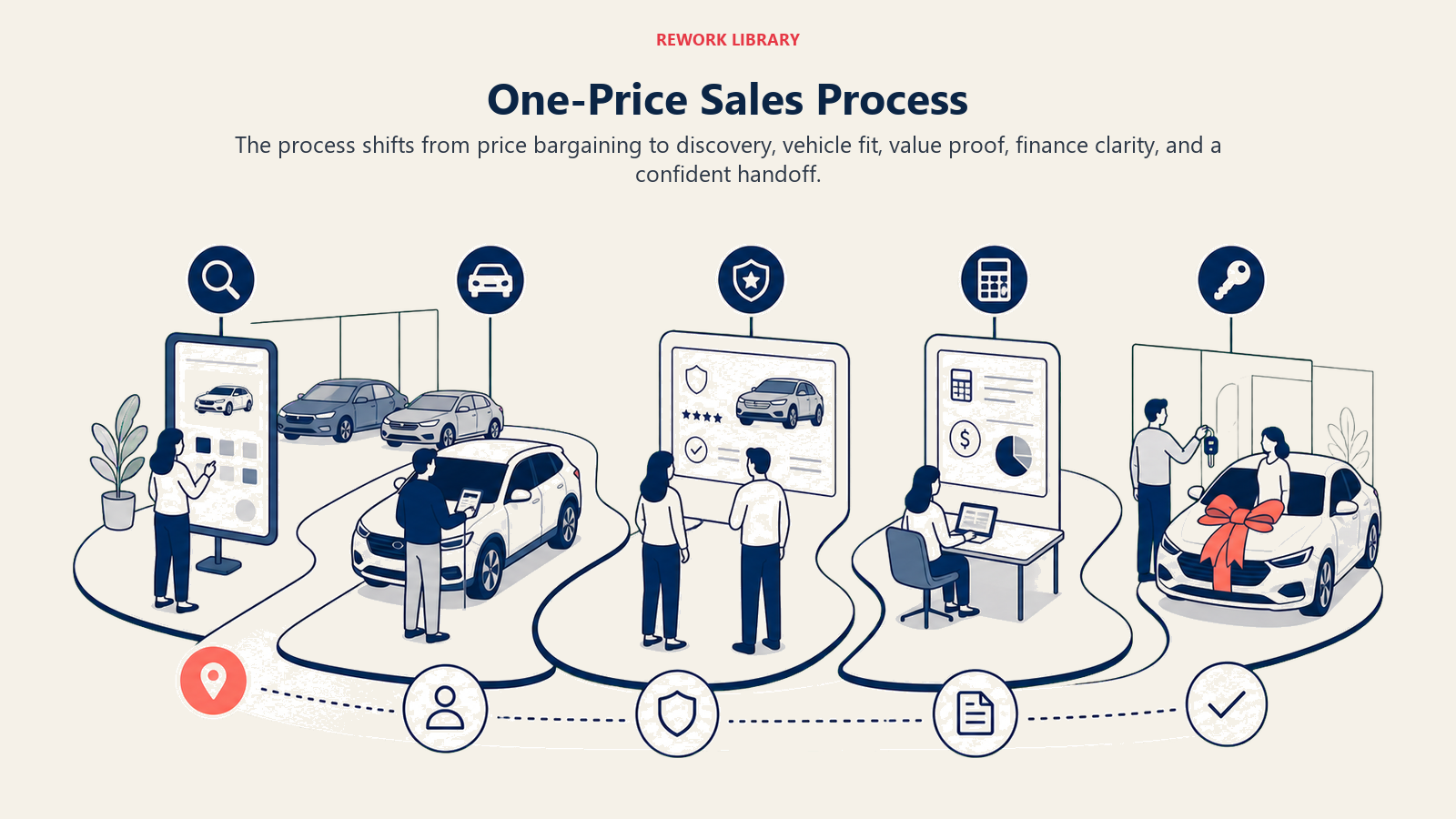
Eliminating negotiation steps means removing desk manager involvement for price approval. The sales consultant has the authority to present the price and move forward. But they still need manager approval for trade values, finance terms, and deal structure. You're not eliminating management, you're changing where they're involved.
Value presentation becomes critical because you can't fall back on price concessions to close deals. If the customer doesn't see why your vehicle is worth the price, they'll walk. Your team needs to master needs assessment in automotive, feature-benefit selling, and ROI presentation. The vehicle has to justify the price through effective vehicle presentation demo.
Manager involvement changes from negotiation to quality control and deal structure. Managers review trade appraisals for accuracy, ensure finance structure is optimized, verify that proper disclosures are made. But they're not grinding customers on price.
Time-to-deliver optimization becomes a competitive advantage. If you've cut negotiation time but still take 90 minutes to process paperwork and deliver the vehicle, you haven't delivered on the efficiency promise. Streamline F&I, pre-fund deals when possible, and use technology to speed documentation.
Marketing and Positioning
How you communicate one-price to the market determines whether it attracts customers or confuses them.
Brand messaging needs to be clear and consistent. "No games, no gimmicks, no back-and-forth" works if it's true across every interaction. "Our best price upfront" only works if customers believe it. Authenticity matters. If you claim one-price but then negotiate on trade values or add-ons, you'll be called out.
Competitive differentiation is why you're doing this. You're positioning against dealers who still play negotiation games. Your message: "We respect your time and intelligence. Here's our competitive price based on market data. You can accept it or not, but we're not playing games." This resonates with professionals who hate traditional car shopping.
Overcoming skepticism requires proof. Show the market data. Display your pricing methodology. Offer price guarantees. "If you find this vehicle cheaper within 50 miles, we'll refund the difference." Put your money behind your claim.
Digital presence requirements are higher in one-price models because customers need to trust your pricing before they visit. Your VDPs (vehicle detail pages) need rich content, multiple photos, detailed condition reports, and transparent pricing history. Online reviews become critical. A few "they said one-price but tried to negotiate me" reviews will kill your credibility.
Technology Requirements
One-price selling demands better technology than traditional models.
Market-based pricing software like vAuto or PricingEdge provides the data infrastructure you need. These tools analyze market pricing, days-to-turn, demand trends, and adjust pricing recommendations accordingly. Manual pricing doesn't scale in one-price models.
VDP pricing display needs to show not just the price but the reasoning. "Priced $1,200 below market average based on analysis of 47 comparable vehicles within 50 miles." This transparency builds trust. Optimize your vehicle detail page optimization strategy to support one-price credibility.
Trade-in valuation tools like KBB ICO (Instant Cash Offer) or Carvana's offer tool let customers get real-time trade values online before visiting. This supports your one-price positioning on trade-ins and reduces negotiation friction.
CRM process workflow changes need to reflect the new sales process. Traditional CRMs have negotiation milestones: first pencil, counter offer, manager approval, close. One-price CRMs track value presentation, test drive, price acceptance, F&I handoff. Your tracking metrics need to change.
Financial Impact Analysis
Before you implement one-price, model the financial implications carefully.
Volume vs. gross trade-off is the central question. Will increased volume from faster turns and better conversion offset decreased per-unit gross? The math varies by dealership, but a common scenario: you drop from $2,400 to $1,900 average front-end gross but increase volume by 15%. At 100 units/month, that's $50,000 less gross. But at 115 units/month, you're generating $218,500 vs. $240,000, still a loss. You need volume increases of 25-30% to offset 20% gross compression.
Backend gross opportunity often improves with one-price because you're creating payment room. If you're not maximizing front-end gross, customers have more budget for F&I products. A deal structured at $1,800 front gross with payment discipline leaves room for $2,200 in F&I products. That's $4,000 total gross, better than $2,400 front and $1,400 back. Optimize your F&I product menu presentation to capitalize on this opportunity.
Operational expense changes can go either way. You might reduce sales staff if efficiency improves and fewer consultants can handle higher volume. But you might increase marketing expense to communicate your one-price positioning. Technology costs increase with better pricing and CRM tools.
Breakeven analysis should account for all variables: gross per unit changes, volume changes, expense changes, and backend gross changes. Model conservative, expected, and optimistic scenarios. Understand what needs to happen for one-price to be more profitable than your current model.
Implementation Roadmap
Don't flip the switch dealership-wide overnight. Phase the transition carefully.
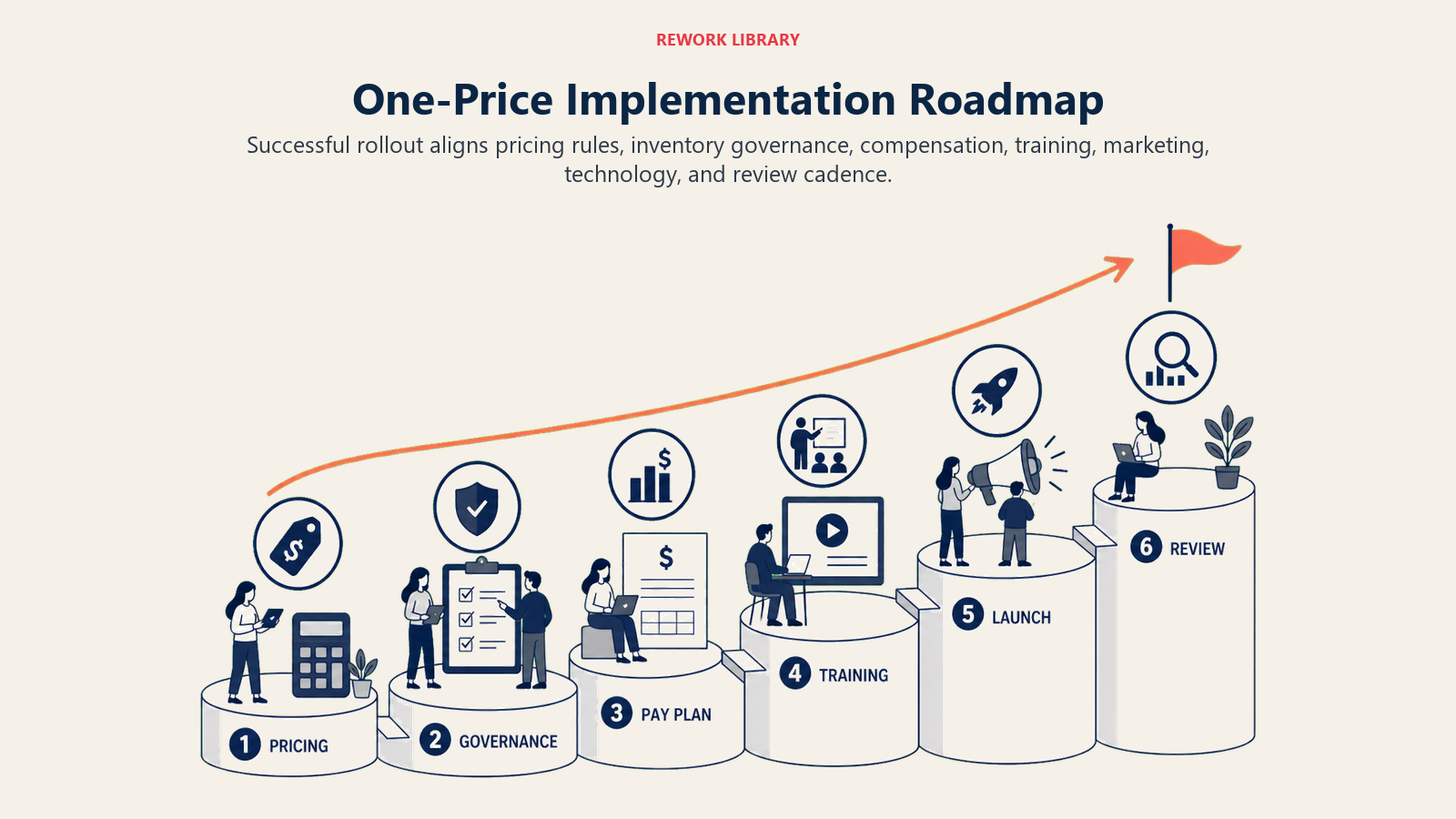
Pilot program approach reduces risk. Test one-price on a single brand or inventory segment. CPO vehicles are ideal because they're already priced more consistently and have manufacturer certification backing. Run the pilot for 90 days. Measure volume, gross, customer satisfaction, and consultant feedback.
Staff training and buy-in is critical. Your best closers might resist one-price because it removes a competitive advantage. Address this directly: "We're competing on process, not negotiation skill. We need you to become experts at value presentation and customer experience." Compensate consultants on volume, not gross per deal, to align incentives, as covered in sales consultant performance.
Pricing discipline enforcement requires management commitment. If your pricing strategy says $32,995 but a manager discounts to $32,200 to save a deal, you're not really doing one-price. Set clear rules: under what circumstances (if any) can published prices be adjusted? Who has authority to approve exceptions?
Measuring success metrics means tracking the right KPIs. Don't just measure total gross. Track gross per unit, total units sold, inventory turn days, CSI scores, online-to-showroom conversion rates, and time-to-deliver. You're optimizing a system, not a single variable.
One-price selling isn't right for every dealership. It works best in markets with price-sensitive customers, strong online shopping behavior, and competitive transparency. According to Cox Automotive trends analysis, transparent pricing combined with AI-powered tools is becoming increasingly important in automotive retail. It works less well in luxury segments where negotiation is expected or in markets where every competitor is still negotiating.
And if you decide one-price makes sense, commit fully. Half-measures, claiming one-price while negotiating on trade-ins or adding fees, create customer cynicism and operational confusion. Execute with discipline, support it with technology and training, and measure results rigorously. Done right, one-price can differentiate your dealership, improve efficiency, and build customer loyalty that drives long-term profitability.