Automotive Video Marketing: Using Video to Sell More Cars and Build Trust - 2026 Guide
Turn this article into takeaways for your work.


Each assistant summarizes the article only for you and suggests best practices for your work.
Video VDPs (Vehicle Detail Pages) generate 4x more inquiries than photo-only listings. That's not a small difference. It's the kind of gap that separates dealerships capturing 180 leads per month from those struggling to hit 45. Learn more about optimizing your automotive lead generation strategy.
But most dealers still treat video as optional. They'll spend $800 on a third-party photographer for still images, then skip the $50 smartphone video that would actually move the metal. The reason? They think video requires expensive equipment, professional crews, and hours of editing time.
It doesn't. Research from Google shows that 92% of auto shoppers visit YouTube when researching vehicles they may purchase, and watch time of test drive videos has grown by more than 65% in the past two years.
It doesn't. The highest-performing inventory videos are shot on phones by sales consultants in under two minutes. What matters isn't production quality, it's consistency, authenticity, and volume.
Video Marketing ROI in Automotive
88% of car buyers watch vehicle videos before making a purchase decision. They're not watching because videos are entertaining. They're watching because photos hide problems and written descriptions leave questions unanswered.
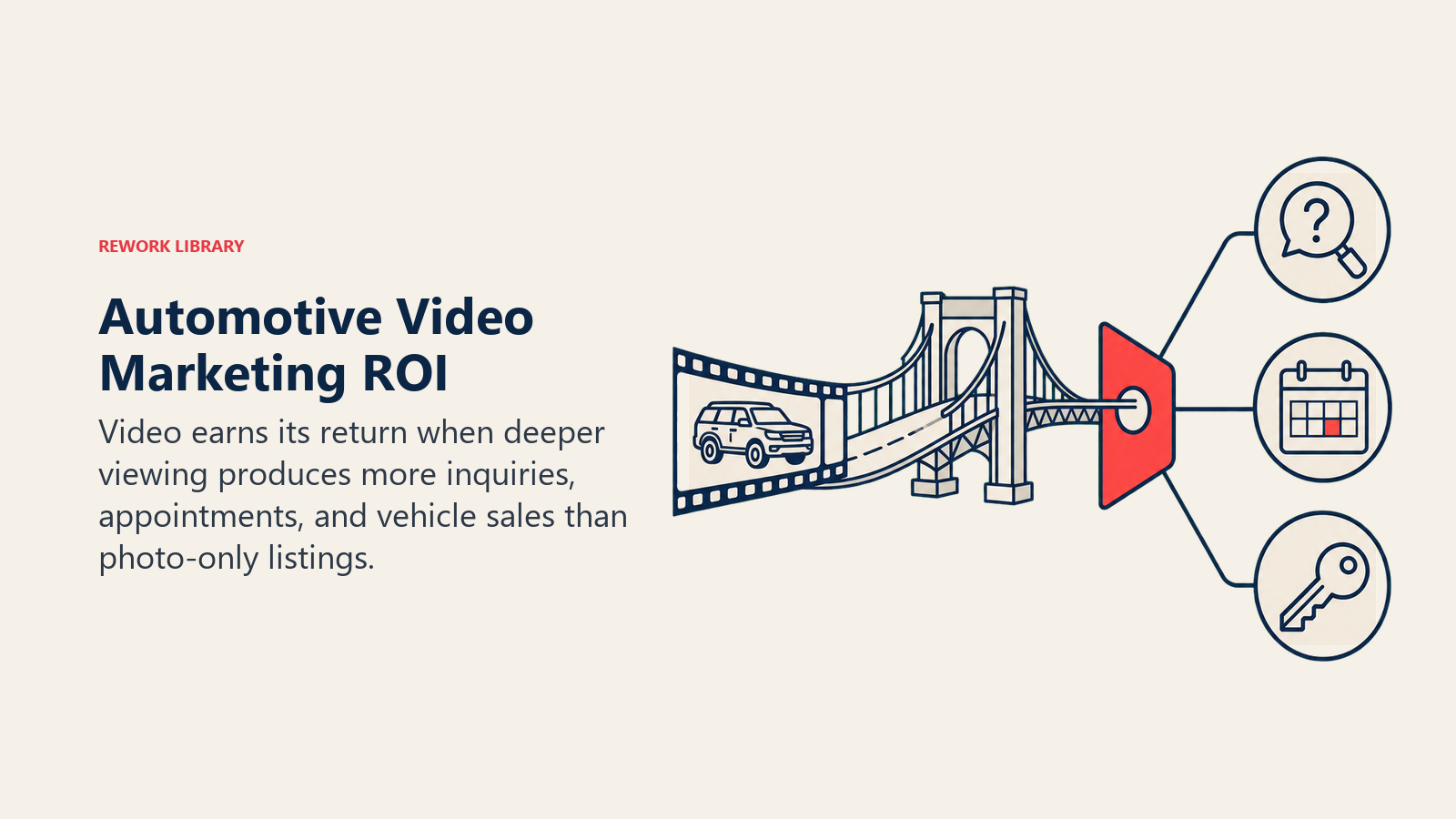
Video engagement rates tell the story. Static photo listings average 1.2 minutes of viewing time. Video listings average 4.7 minutes. That extra 3.5 minutes isn't passive scrolling, it's active evaluation. Buyers are examining paint condition, listening to door sounds, checking interior wear patterns. According to industry statistics, more than 60% of automotive shoppers visited a dealership or dealer website after watching a video about a particular vehicle.
Lead quality improves dramatically from video viewers. Dealerships tracking source attribution report that video-engaged leads close at 23% compared to 11% for photo-only viewers. The reason is simple: buyers who spend 5 minutes watching your walkaround video have already convinced themselves. They're calling to confirm details, not to start research. Learn how to convert these leads with automotive lead management.
Time-on-site metrics reflect similar patterns. Visitors who watch videos spend 8.4 minutes on your website compared to 2.1 minutes for non-video viewers. Bounce rates drop from 67% to 34%. Google's algorithm notices this engagement, video-rich dealer websites rank 3-5 positions higher for local inventory searches.
The cost comparison makes the ROI case clear. A professional photo shoot costs $75-150 per vehicle. A sales consultant shooting phone video costs $8-12 in labor (15 minutes at $30/hour). Quality photos matter for hero shots and marketing materials. But for daily inventory turnover, video wins on both cost and conversion.
Types of Automotive Video Content
Inventory Videos are the foundation. Every used vehicle should have a walkaround within 24 hours of hitting the lot. New inventory needs videos for high-demand models and anything sitting past 30 days. The format is simple: 90-second exterior-to-interior walkaround with verbal commentary pointing out condition, features, and unique selling points.
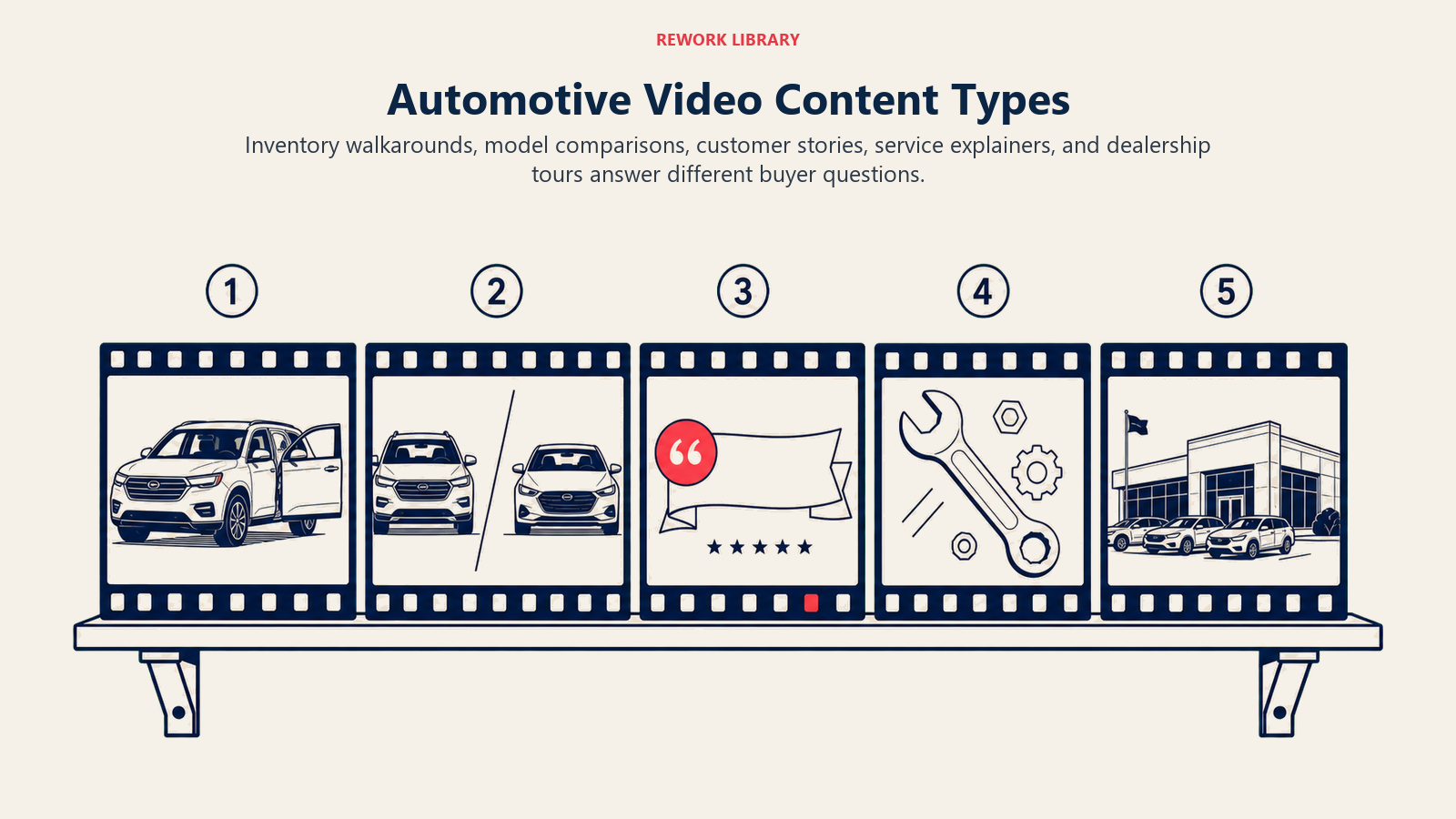
Comparison Videos answer the question buyers are already asking: "Should I get the RAV4 or the CRV?" Your sales team has this conversation 15 times per week. Record it once, post it to YouTube, and send the link to every prospect asking the same question. Comparison videos rank exceptionally well in search because they match exact buyer queries.
How-To Videos serve dual purposes. "How to pair Bluetooth in a 2024 Accord" helps current owners and shows prospects the technology works easily. "How to change the cabin air filter in a Camry" demonstrates your service expertise and keeps customers in your ecosystem. These videos have 3-5 year shelf lives and accumulate views over time.
Customer Testimonials work when they're specific. Generic "great experience" testimonials add nothing. But a 60-second video of a customer explaining how your finance team got them approved after three other dealers said no, that's social proof that converts.
Behind-the-Scenes content humanizes your dealership. Video tours of your service department, technician certifications on the wall, the reconditioning process for used cars, this builds trust before the first phone call. These videos answer the unspoken question: "Is this dealer trustworthy or just another shark operation?"
Educational Content positions you as the local automotive authority. "What to look for when buying a used truck" or "How to negotiate a fair trade-in value" demonstrates expertise and captures early-stage buyers who aren't ready to visit a dealership yet.
Vehicle Walkaround Videos
The optimal length is 90-120 seconds. Anything shorter feels rushed and incomplete. Anything longer loses attention. Your script should follow this structure:
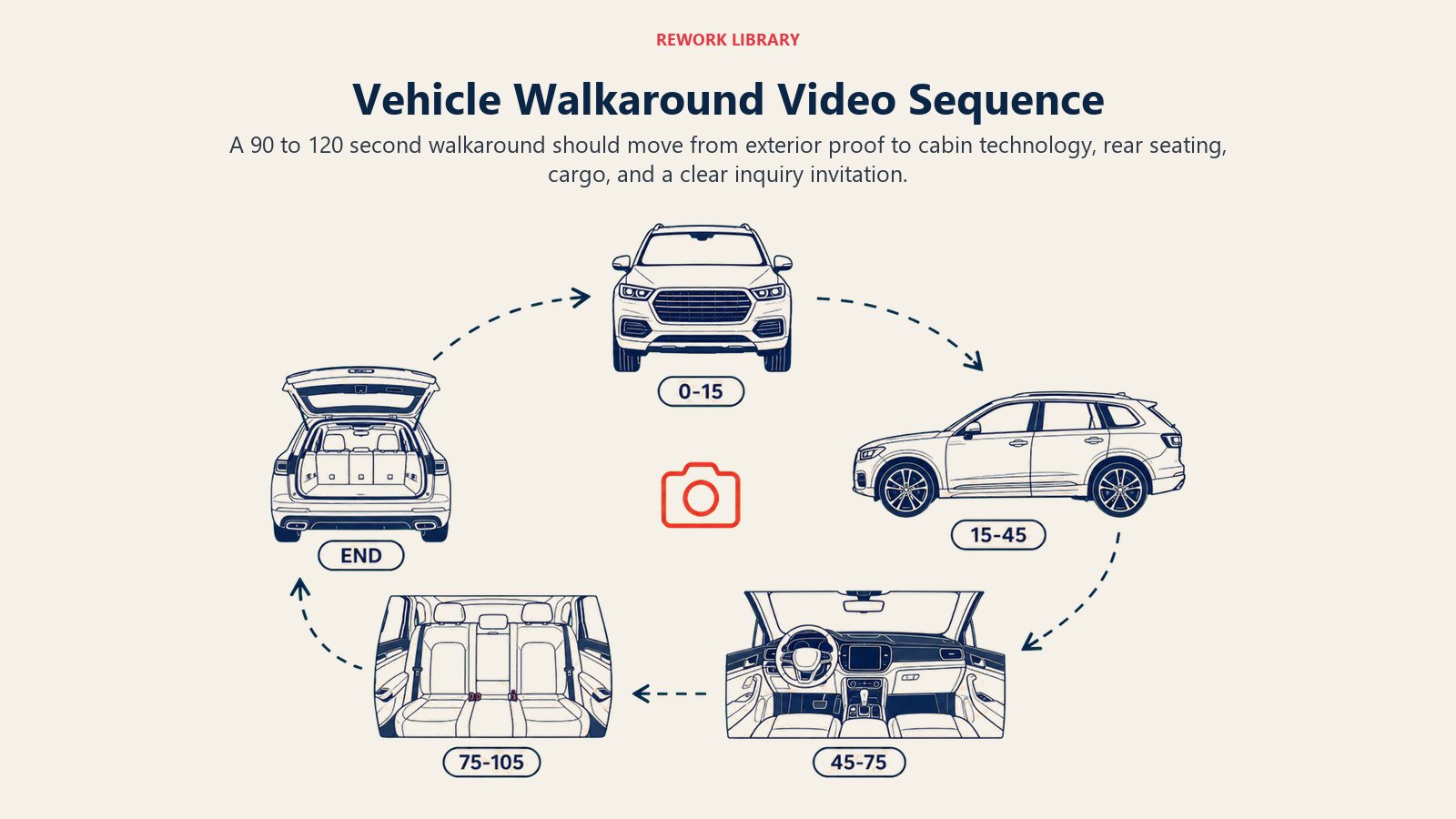
Seconds 0-15: Exterior front angle, state year/make/model/trim, mention key features or condition highlights.
Seconds 15-45: Walk around exterior, point out paint condition, tire condition, any unique features (sunroof, tow package, etc.).
Seconds 45-75: Interior walk-through starting with front seats, demonstrate technology (touchscreen, backup camera), show rear seating and cargo area.
Seconds 75-90: Finish with specific call-to-action ("Call me directly at [number]" or "Click below to schedule a test drive").
Production quality expectations are lower than you think. Buyers don't care about cinematic lighting or professional editing. They care about seeing the actual vehicle they're considering. Shaky footage from a phone is better than no footage at all.
The sales consultant vs professional production debate has a clear answer: sales consultants. They know the vehicles, they know how to sell features, and they can produce 10 videos in the time it takes a professional crew to shoot one. Train your sales team to record videos, don't outsource to vendors who'll create a production bottleneck.
Volume production requires a system. Top-performing dealers assign video creation to the salesperson who checks in the trade-in or preps the new arrival. The process takes 10 minutes: grab the keys, walk to the lot, record 90 seconds, upload to Google Drive. The BDC operations team or marketing person handles uploading to the website and YouTube. This workflow allows a 20-person sales team to video 100+ vehicles per week.
Video Equipment & Production
Start with a smartphone. iPhone 12 or newer, Samsung Galaxy S21 or newer, anything from the last 3-4 years shoots adequate video. Don't wait to upgrade to the latest model. The camera you have today is better than the professional camera you'll buy next month and never use.
Stabilization matters more than resolution. A $60 smartphone gimbal eliminates the shaky footage that makes viewers seasick. If budget doesn't allow gimbals for everyone, buy 2-3 for the dealership and assign video duties to specific people per shift. A basic tripod works for stationary shots (engine bay, trunk space) and costs $25.
Lighting is simple: shoot during daylight hours, preferably between 10am-4pm when sun is high and shadows are minimal. Overcast days produce the most even lighting. Avoid shooting in direct harsh sunlight (creates extreme shadows) or at dusk (colors look muddy). For interior shots, open all doors to let natural light in. If you must shoot indoors, park near large bay doors.
Audio quality is more important than most dealers realize. Wind noise ruins outdoor videos. A $15 lavalier microphone that clips to your shirt solves this. Built-in phone microphones are acceptable if you're shooting indoors or on calm days. Test your audio before recording 20 videos and discovering they're all unusable.
Editing software can be free. iPhone users have iMovie pre-installed. Android users can download CapCut. Both apps allow basic trimming, adding text overlays (year/make/model/price), and uploading directly to YouTube. Complex editing isn't necessary. Simple jump cuts to remove long pauses are the only editing most walkaround videos need.
Video Distribution Strategy
VDP integration on your website is non-negotiable. The video should auto-play (muted) when someone lands on the vehicle detail page. Buyers who see movement stay on the page longer. Those who want details unmute and watch. This single placement drives more engagement than any other distribution channel.
Your YouTube channel becomes a searchable inventory database. Create standardized titles: "2024 Toyota Camry XLE - Silver - 15K Miles - [Your Dealership Name]". This format captures search traffic from buyers looking for specific vehicle combinations. The description should include price, major features, vehicle history summary, and direct contact information.
Social media platforms each serve different purposes. Facebook gets the most reach for local inventory posts, use video thumbnails with price overlays. Instagram works well for luxury inventory and lifestyle-focused content. TikTok is surprisingly effective for under-$15K vehicles targeting younger buyers. The same 90-second walkaround can be repurposed across all three platforms with minor edits.
Third-party sites like Autotrader and Cars.com allow video uploads. Use this feature. Listings with videos appear higher in search results and get 4x more detail page views. The upload process takes 2 minutes per vehicle. The incremental leads justify the time investment.
Email marketing integration amplifies video impact. When a lead inquires about a specific vehicle, the BDC follow-up email should embed the video. Learn more about dealership email marketing best practices. Open rates on video emails run 22% higher than text-only emails. Click-through rates to schedule test drives increase by 31%.
YouTube Strategy for Dealerships
Channel setup starts with proper branding. Your channel name should be "[Dealership Name] - New & Used Cars in [City]". This geographical specificity helps with local search rankings. The banner image should feature your showroom, inventory, or team, not just a logo.
SEO optimization determines whether your videos get found. Titles should include year, make, model, trim, and location. Descriptions need 200+ words including vehicle details, features, pricing, and multiple mentions of your dealership name and city. Tags should cover make, model, body type, location, and related search terms.
Playlist organization makes your channel browsable. Create playlists by make (Toyota Inventory, Honda Inventory), by type (SUVs, Trucks, Sedans), by price range (Under $15K, $15K-$25K, $25K+), and by status (New Arrivals, Certified Pre-Owned). Buyers binge-watch playlists when they're in research mode.
YouTube Ads promote specific inventory or events. A $200 campaign promoting "New Arrival Trucks" to local truck buyers generates 15-25 qualified leads. Target by geography (15-mile radius), demographics (age/income), and interests (automotive enthusiasts). Run ads for 7-10 days, measure response, adjust targeting. Statista data shows the top automotive dealer channels on YouTube generate millions of views annually, demonstrating the platform's reach potential.
Analytics reveal what's working. Watch time and average view duration tell you if videos are engaging. Traffic sources show whether you're getting search traffic or just direct views. Click-through rate on your call-to-action links measures conversion intent. Review these metrics monthly and adjust your video strategy accordingly.
Sales Team Video Training
On-camera confidence comes from repetition, not natural talent. Your first 10 videos will feel awkward. Your next 90 will feel normal. Schedule a half-day training session where each salesperson records 5 practice videos with immediate feedback. Most anxiety disappears after the third take.
Script templates provide structure without sounding robotic. Give your team a 10-point checklist: introduce yourself, state vehicle details, mention condition highlights, walk exterior, show interior features, demonstrate technology, discuss mechanical condition, mention service history, state price, provide direct contact. This framework keeps videos consistent while allowing personality to show through.
The consistency vs authenticity balance tilts toward authenticity. Scripted word-for-word videos sound like hostage videos. Consultants who improvise based on a mental checklist sound natural and knowledgeable. Train for consistency in structure (always cover these 10 points) but encourage authenticity in delivery (use your own words).
Daily video production workflow integrates into existing processes. Morning: check for new arrivals and assign video duties. Mid-day: record videos during slow floor traffic. Afternoon: upload to shared drive for BDC processing. This rhythm creates consistent output without disrupting sales activities.
Quality control doesn't mean perfection. Watch for deal-breakers: audio issues, critical details missed (failed to mention accident history), inappropriate comments, poor lighting making vehicle invisible. Everything else is acceptable. A video with minor stumbles that goes live today beats a perfect video that never gets finished.
Video Metrics & Optimization
View rates matter more than vanity metrics. A video with 50 views that generates 8 inquiries outperforms a video with 500 views that generates 2 inquiries. Track view-to-inquiry ratio by vehicle type. Trucks might convert at 12% while sedans convert at 7%. This data informs inventory purchasing decisions.
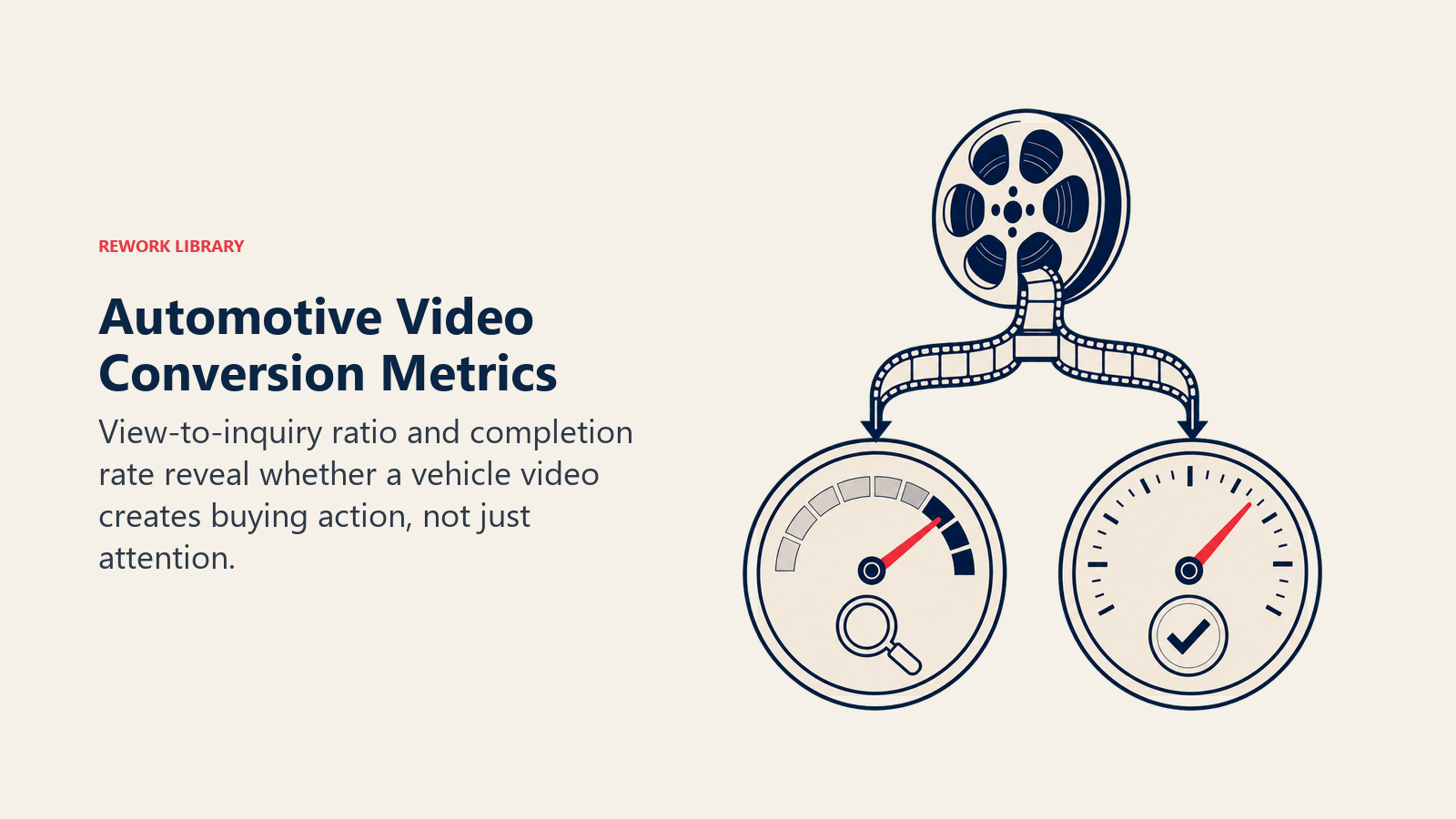
Completion rates indicate content quality. If 80% of viewers watch the full 90 seconds, your content is engaging. If 60% drop off after 20 seconds, you're losing them in the intro. Test different opening hooks: price-first, feature-first, condition-first. Measure which approach keeps viewers watching.
Click-through rates from video to action separate good videos from revenue-generating videos. Track how many viewers click "Schedule Test Drive," call the direct number, or fill out the contact form. Low CTR with high views means your content is interesting but not compelling. Strengthen your call-to-action.
Lead attribution from video viewers requires CRM tracking. Tag video-engaged leads in your system. Compare close rates, gross profit, and time-to-close between video-engaged and non-video leads. Most dealers find video leads close 8-12 days faster and negotiate less on price.
A/B testing reveals what resonates with your market. Test salesperson-narrated vs voiceover, exterior-first vs interior-first, price mentioned vs price withheld. Run tests for 30 days with 50+ videos per variation. Small improvements compound, a 2% increase in conversion rate generates 6 extra sales per month at a 100-vehicle-per-month dealership.
ROI measurement framework needs to account for both direct and assisted conversions. Direct: buyer says "I'm calling about the truck I saw on YouTube." Assisted: buyer watched 3 YouTube videos before visiting the lot and test-driving a different vehicle. Both are attributable to video. Most dealers find video contributes to 25-35% of total sales when measured correctly. Video marketing statistics indicate that 91% of businesses use video as a marketing tool in 2026, and 82% of marketers report good ROI from video marketing efforts.
Scaling Video Production
The in-house vs outsourced production decision depends on volume and consistency needs. Outsourced vendors deliver higher production quality at $75-150 per video. In-house production costs $8-12 in labor per video but requires training and management. For dealers turning 100+ vehicles monthly, in-house wins. For luxury dealers moving 30 vehicles monthly at higher margins, outsourced makes sense.
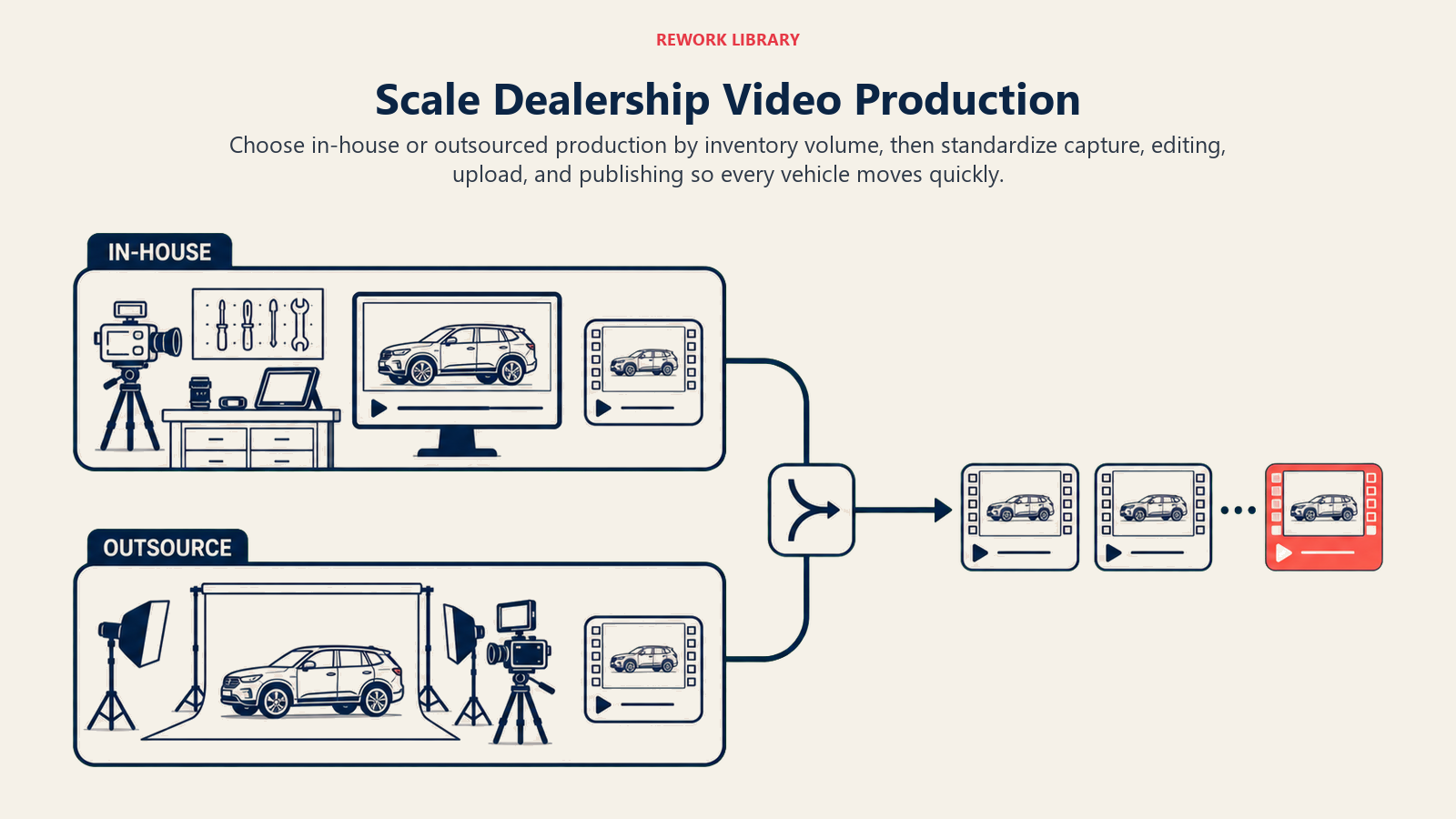
Workflow automation tools eliminate bottlenecks. Auto-upload apps like TubeBuddy schedule YouTube posts. Integration tools connect Google Drive to your DMS. Template-based editing software adds standard overlays (price, contact info) automatically. Technology removes the manual processing that prevents scaling.
BDC integration for video creation expands capacity without adding sales floor duties. Some dealers assign video production to BDC operations staff during phone downtime. This works if BDC personnel are trained on product knowledge and comfortable on camera. The trade-off: videos are consistent and high-volume but lack the sales consultant's expertise and authenticity.
Batch recording strategies maximize efficiency. Record 10 vehicles in one lot session rather than spreading across multiple trips. Bring a printed list of stock numbers, park vehicles in a well-lit area, record sequentially. This approach produces 10 videos in 60 minutes compared to 150 minutes if done separately.
Cost per video economics justify the investment quickly. In-house video costs $10 in labor. External platforms charge $0 for YouTube hosting and distribution. If one video generates one incremental inquiry that converts at 20%, and gross profit per sale is $3,000, ROI is 3,000%. Even at 1% conversion, the math works overwhelmingly in video's favor.
Video isn't optional anymore. Buyers expect it, algorithms reward it, and the dealerships implementing consistent video strategies are capturing market share from competitors still relying on 8 photos and a spec sheet. Start with 5 videos this week. Learn from what works. Scale from there.
For more strategies on converting online leads, see our guide on Automotive Lead Generation Overview. To optimize the pages where these videos live, check out Vehicle Detail Page (VDP) Optimization. Once you're producing video consistently, integrate it into your Social Media for Dealerships strategy and broader Automotive Content Marketing efforts. And don't forget that video quality starts with proper Vehicle Merchandising before you hit record.

Senior Implementation Consultant