Supply Chain Sustainability: Managing Environmental Impact Beyond Your Own Walls
Turn this article into takeaways for your work.


Each assistant summarizes the article only for you and suggests best practices for your work.
A manufacturer spends two years cutting its own facility's energy use 30%, installs solar on the roof, and proudly reports the results. Then a customer sustainability audit reveals that the steel, plastic resin, and packaging bought from suppliers generate ten times more emissions than the factory itself ever did. All that facility work barely moved the real number.
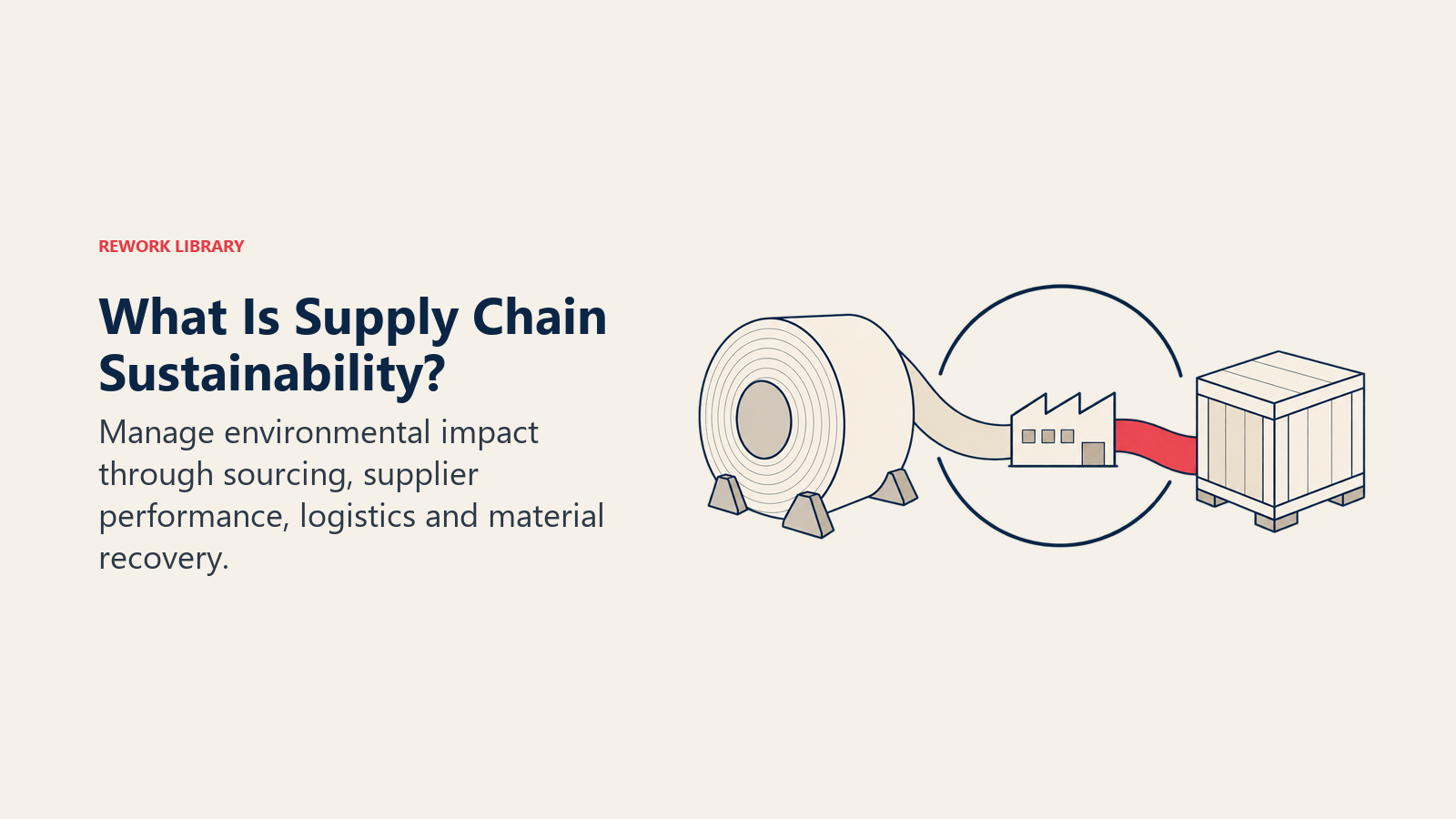
This isn't a rare surprise. For manufacturers with a physical product, most environmental impact sits upstream and downstream of the factory, not inside it. Sustainable manufacturing practices covers what you control directly: energy, water, and waste at your own facility. Supply chain sustainability covers everything harder to control: what your suppliers do, how materials get to you, and what happens to your product after it leaves, layered on top of the broader manufacturing supply chain strategy decisions that already govern sourcing and logistics.
Why Supply Chain Impact Dominates the Numbers
The scale gap between facility emissions and supply chain emissions surprises most manufacturing leaders the first time they measure it honestly.
Key Facts: The Scale of Supply Chain Emissions
- Corporates reporting to CDP in 2023 showed supply chain (Scope 3) emissions averaging 26 times higher than their direct operational emissions (CDP, 2023)
- Only 15% of disclosing corporates have set formal targets for supply chain emissions, even though most environmental impact sits there rather than in direct operations (CDP, 2023)
- Companies are 2.4 times more likely to set targets for their own operational emissions than for supply chain emissions, according to the same CDP dataset, a mismatch between where the impact actually is and where the management attention goes
This gap explains why facility-focused sustainability programs, while genuinely valuable, often plateau. Carbon footprint reduction work that stops at Scope 1 and Scope 2 emissions is measuring a fraction of the real number for most manufacturers.
Supplier Sustainability Requirements
Managing supply chain sustainability starts with deciding what you actually require from suppliers, not just what you'd prefer.
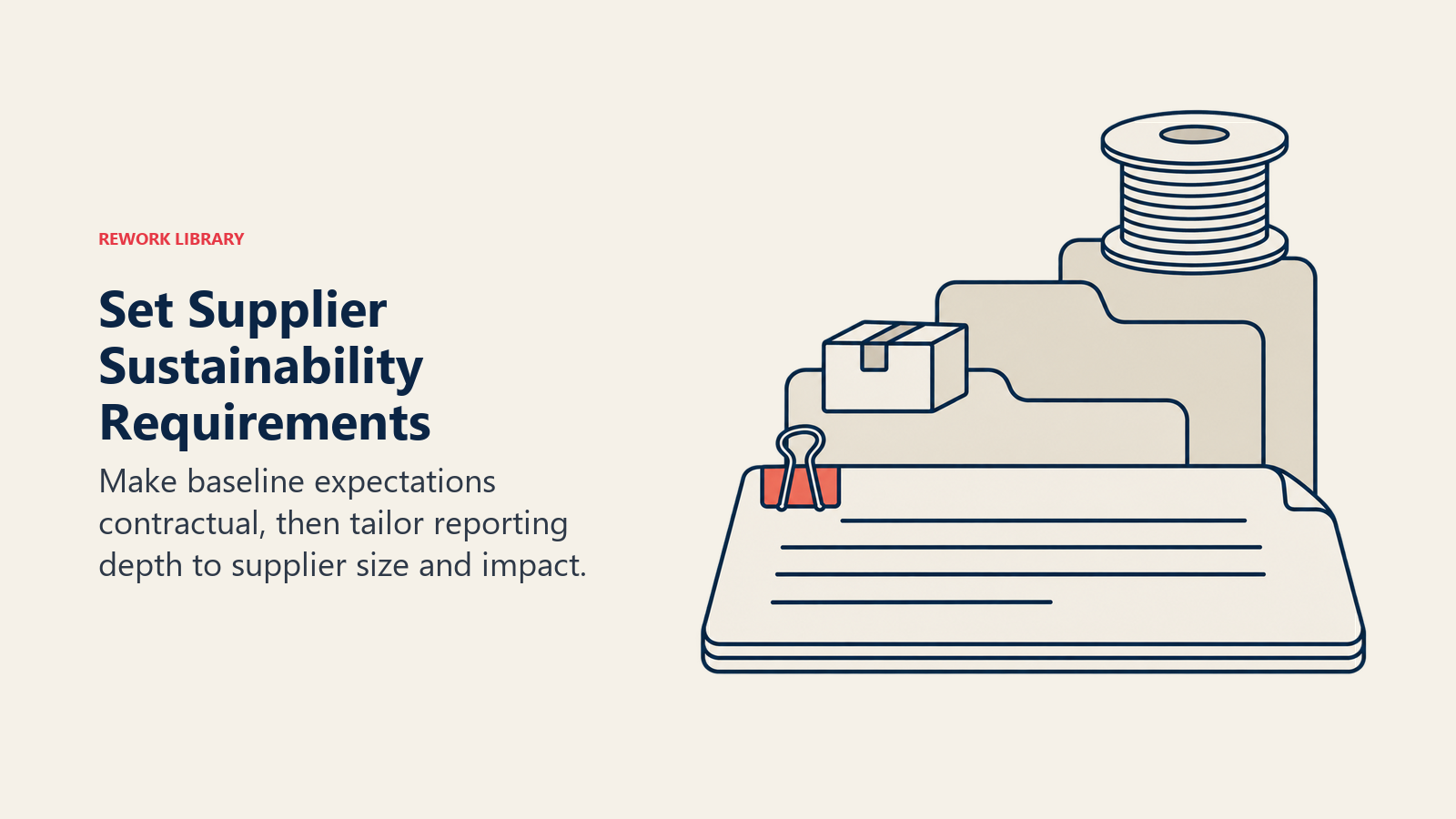
A supplier code of conduct sets baseline expectations: environmental compliance, responsible material sourcing, labor standards, and reporting obligations. Make it a contractual requirement for new suppliers and a renewal condition for existing ones, not a document that gets signed once and forgotten. Tie it explicitly to the standards already covered in supplier quality management, since the audit infrastructure you already run for quality can extend to sustainability criteria without building a parallel system from scratch.
Sustainability scorecards give suppliers a specific, measurable target rather than a vague expectation to "be more sustainable." Score suppliers on energy sourcing, waste management practices, emissions reporting maturity, and material sourcing transparency. Share results with suppliers directly and use them in sourcing decisions alongside cost and quality, not as an afterthought reviewed once a year.
Tiered requirements by supplier size and category keep this achievable. A small specialty supplier can't produce the same emissions reporting infrastructure as a global commodity supplier. Set baseline requirements everyone must meet, with more sophisticated reporting expected from strategic, high-volume suppliers who have the scale to invest in measurement. Where a customer or regulator requires evidence of this program, the documentation overlaps significantly with what regulatory compliance management already tracks, so build one system rather than two.
Sustainable Sourcing and Procurement Criteria
Sourcing decisions made purely on price and lead time lock in environmental impact long before a product ever reaches your production line.
Material selection criteria should weigh recycled content availability, extraction impact, and end-of-life recyclability alongside cost and performance specifications. A resin or alloy that's marginally more expensive but substantially easier to recycle can be the better sourcing decision once end-of-life costs and customer sustainability requirements factor in, a calculation that connects directly to the circular economy in manufacturing principles of designing for material recovery.
Supplier proximity and logistics distance affect transportation emissions meaningfully, particularly for heavy or bulky materials. Regional sourcing, where feasible, cuts transportation emissions and often improves the supply chain resilience covered in supply chain risk management, since fewer transit legs and shorter distances mean fewer disruption points, a case where sustainability and resilience goals reinforce each other rather than compete.
Certifications and third-party verification, sustainable forestry certification for wood-based materials, responsible mining certification for minerals, give procurement teams a defensible standard to specify rather than relying on supplier self-reporting alone. Build certification requirements into RFPs and sourcing criteria from the start, not as a retrofit once a supplier relationship is already established, using the same rigor strategic sourcing for manufacturing already applies to cost and quality criteria.
Measuring Scope 3 Emissions From Suppliers
You can't manage what you haven't measured, and Scope 3 measurement is where most manufacturers' sustainability programs are weakest.
Purchased goods and services typically represent the largest single category of Scope 3 emissions for a manufacturer, meaning the materials and components you buy usually outweigh transportation, waste, and business travel combined. Start emissions data collection here rather than spreading thin across every Scope 3 category simultaneously.
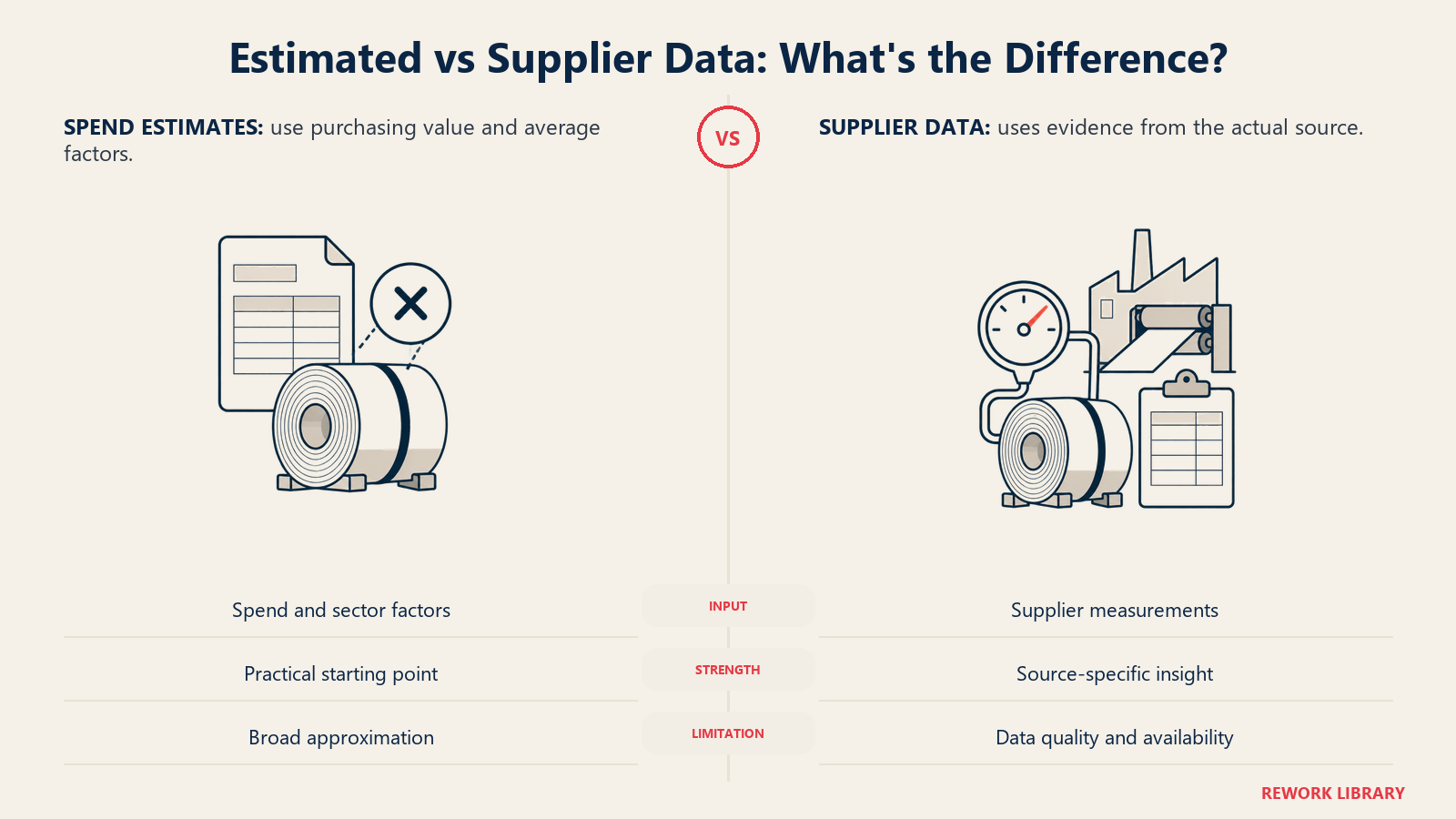
Supplier-specific emissions data beats industry-average estimates once a supplier relationship matures. Early measurement often relies on spend-based estimates (dollars spent multiplied by an industry emissions factor), which is a reasonable starting point but a poor long-term substitute for actual supplier-reported data. Request emissions data directly from strategic suppliers, and expect early responses to be incomplete. Most suppliers are still building their own measurement capability, so treat this as a multi-year capability-building relationship rather than a one-time data request.
Logistics and transportation emissions across inbound freight, warehousing, and outbound distribution deserve their own tracking separate from purchased goods, connecting to the broader optimization work in logistics and distribution optimization. Mode shifts, rail over truck for long-haul volumes, consolidated shipments over frequent small ones, reduce both cost and emissions simultaneously, one of the more reliable wins in supply chain sustainability work.
Supplier Engagement and Development
Requirements alone don't improve supplier performance. Suppliers that lack the capability to measure or reduce their environmental impact need support, not just a scorecard showing they're falling short.
Supplier sustainability audits, whether conducted directly or through a third party, verify claims and identify specific improvement opportunities rather than relying on self-reported surveys alone. Pair audits with a genuine improvement plan and timeline instead of a pass or fail judgment that leaves a struggling supplier with no path forward.
Collaborative improvement programs, sharing best practices, jointly funding efficiency upgrades at a critical supplier's facility, or providing technical assistance, produce faster results than one-sided enforcement, particularly with suppliers who are willing but lack resources or expertise. This mirrors the collaborative approach already common in supplier relationship management for quality and delivery performance, just extended to environmental criteria.
Recognition and preferred-supplier status for strong environmental performers create a positive incentive alongside compliance requirements. Suppliers who see sustainability performance translate into more business, not just fewer penalties for falling short, invest more seriously in improvement.
Packaging and Reverse Logistics
Two areas of supply chain sustainability get overlooked because they sit at the edges of the traditional supply chain, one at the start and one at the end.
Packaging sustainability spans the material coming in from suppliers and the material going out with finished product. Reducing packaging volume, switching to recyclable or reusable packaging formats, and working with suppliers to standardize packaging that fits your material handling equipment all reduce waste and often cost simultaneously. This connects to the broader waste elimination strategies already applied inside your own facility, just extended to the packaging suppliers ship in.
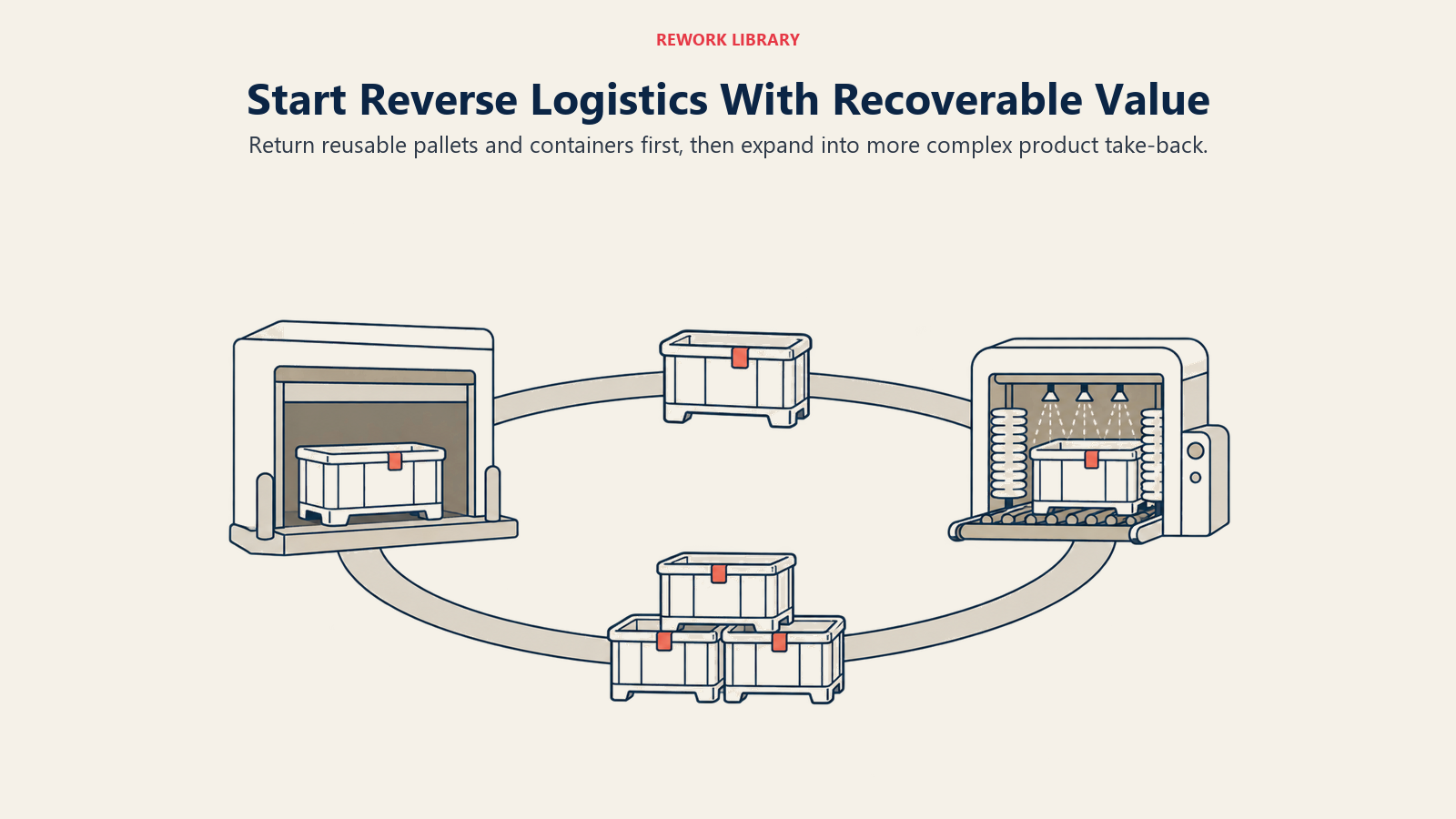
Reverse logistics and take-back programs, recovering packaging, pallets, or end-of-life products for reuse or material recovery, close a loop that linear supply chains typically leave open. These programs are genuinely harder to run than forward logistics: reverse flows are less predictable, lower volume per pickup, and require processing infrastructure most facilities don't already have. Start with the highest-value, easiest-to-recover materials, standardized pallets and containers are a common starting point, before attempting more complex product take-back.
Building the Program
Supply chain sustainability programs fail most often by trying to do everything at once across every supplier and every impact category simultaneously.
Start by identifying your highest-impact suppliers, typically the small percentage of suppliers representing the majority of spend and the majority of estimated emissions, the same segmentation logic behind inventory optimization strategies applied here to environmental impact instead of carrying cost. Focus requirements, measurement, and engagement effort there first. A tiered rollout that reaches your top 20 suppliers with real rigor beats a shallow requirement applied uniformly across five hundred suppliers who never engage seriously with it.
Integrate sustainability criteria into existing procurement processes rather than running a parallel sustainability review. If sourcing decisions, supplier scorecards, and contract renewals already have established processes, add sustainability criteria to those processes instead of creating a separate sustainability approval step that procurement teams learn to route around.
Report progress transparently, including where targets are being missed, not just wins. Customers and investors increasingly recognize honest reporting of gaps as more credible than sustainability communications that only ever show improvement. A supply chain sustainability program that's honest about being three years into a multi-year journey builds more trust than one that implies the work is already finished.
Frequently Asked Questions about Supply Chain Sustainability
How is supply chain sustainability different from sustainable manufacturing practices?
Sustainable manufacturing practices covers what you control directly inside your own facility: energy, water, and waste. Supply chain sustainability covers your suppliers' environmental performance, your sourcing and material decisions, and the logistics moving materials in and product out, which for most manufacturers represents a much larger share of total environmental impact.
Why do Scope 3 emissions matter more than Scope 1 and 2 for most manufacturers?
Because purchased goods, materials, and logistics typically generate far more emissions than a manufacturer's own facility operations. Supply chain emissions have been reported at roughly 26 times higher than direct operational emissions on average, meaning a program that only addresses your own facility is managing a small fraction of your real footprint.
Should small manufacturers require the same sustainability reporting from every supplier?
No. Tier requirements by supplier size and strategic importance. Set achievable baseline expectations for smaller suppliers and reserve detailed emissions reporting and audit requirements for your highest-volume, highest-impact suppliers, where the effort produces the most meaningful data and improvement.
What's a realistic first step for a manufacturer just starting a supply chain sustainability program?
Identify your highest-spend, highest-impact suppliers first, and start collecting whatever emissions or sustainability data they can currently provide, even if incomplete. Build a supplier code of conduct and a simple scorecard before attempting comprehensive Scope 3 measurement across your entire supply base.

Co-Founder, Rework.com