Contract Manufacturing Sales: Winning and Managing Production Partnerships
Turn this article into takeaways for your work.


Each assistant summarizes the article only for you and suggests best practices for your work.
Your facility has excess capacity. You've invested in equipment, built a skilled workforce, and created quality systems. Now you need to fill that capacity with profitable production contracts.
But contract manufacturing sales isn't like selling products. You're selling your production capability, technical expertise, and operational reliability. Customers aren't buying widgets. They're outsourcing critical production that directly impacts their business. They need confidence that you'll deliver quality, volume, and consistency month after month, year after year.
This requires different sales approaches, different contract structures, and different relationship management than traditional product sales. Get it right, and contract manufacturing provides stable, predictable revenue that puts your fixed assets to work. Get it wrong, and you're locked into unprofitable agreements that consume capacity without generating adequate returns.
Understanding Contract Manufacturing Dynamics
Contract manufacturing comes in several forms, each with different economics and relationship dynamics.
Contract manufacturing organization (CMO) arrangements involve producing finished or semi-finished products to customer specifications. You may handle everything from raw materials through packaging, or just specific production steps. The customer provides specifications, approves your processes, and takes delivery of completed products.
Tolling arrangements mean the customer provides materials and you provide labor and overhead. This minimizes your material cost risk but also limits your value-add and margins. Tolling works well when materials are expensive, specialized, or customer-controlled.
Private label manufacturing produces products that customers sell under their brand. You may use customer formulations and specifications, or you may offer standard products that customers rebrand. Private label provides steady volume if you can meet quality and cost targets.
Co-packing and secondary operations involve packaging, labeling, assembly, or finishing work on products or components. These services typically command lower margins but require less capital investment and technical capability.
Your value proposition depends on what you offer that customers can't easily replicate in-house or find elsewhere. Common differentiators include specialized equipment or technical capability, quality certifications and regulatory compliance, scale advantages and cost efficiency, flexibility and responsiveness, and geographic proximity or logistics advantages.
Generic capability ("we can make anything") doesn't sell well. Specific expertise that solves customer problems does. McKinsey research highlights how industrial companies can create strong digital B2B channels to reach customers more effectively.
Customer motivations for outsourcing manufacturing typically include capacity constraints, capital avoidance for non-core production, access to specialized expertise or equipment, variable cost structure instead of fixed overhead, and focus on core competencies.
Understanding why customers outsource helps you position your value and structure agreements that meet their needs.
Defining Your Contract Manufacturing Niche
Trying to serve everyone serves no one particularly well. Successful contract manufacturers specialize strategically.
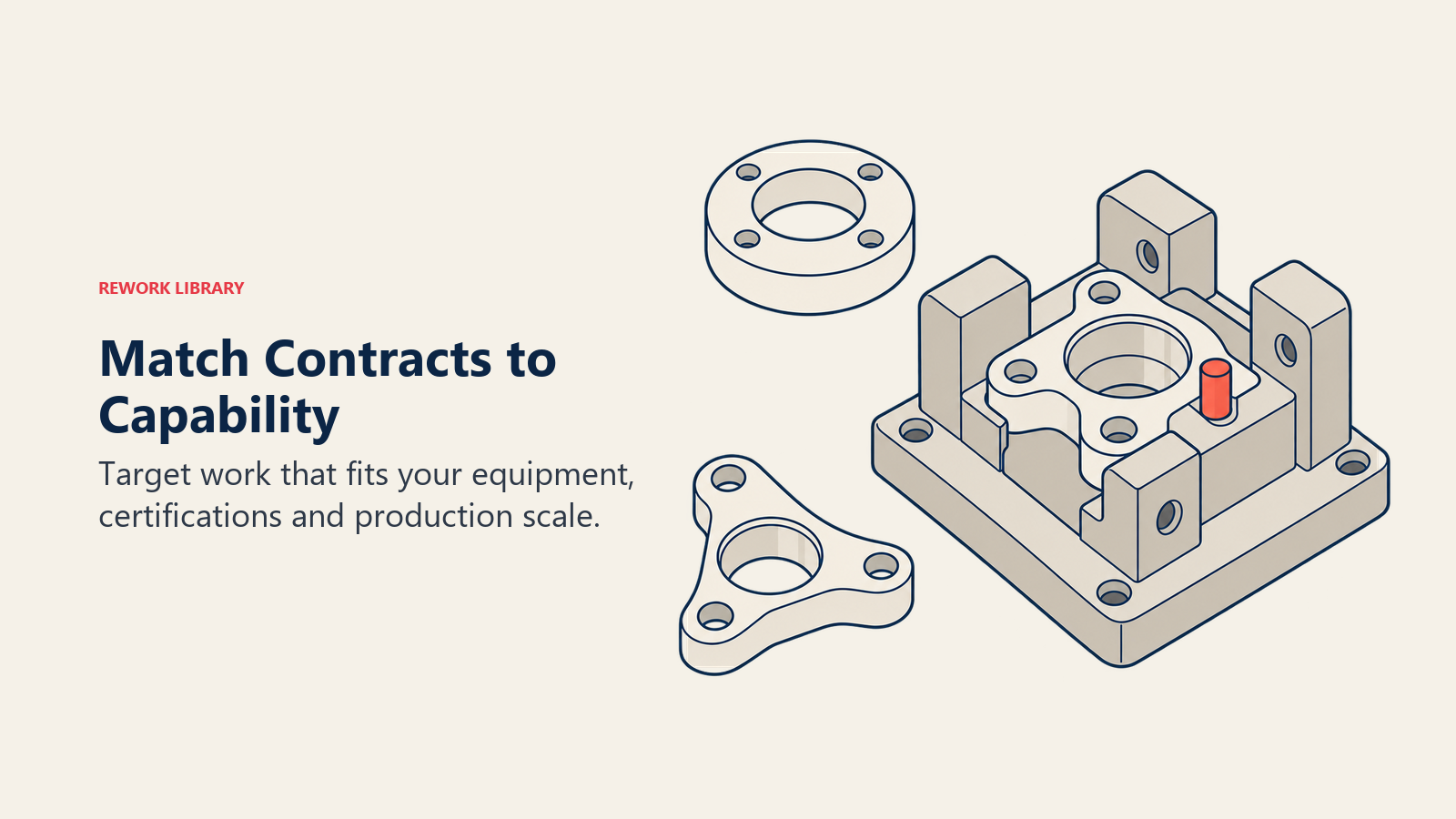
Capability differentiation and specialization focus your investment and marketing. Are you the low-cost producer for high-volume, simple products? The technical specialist for complex, tight-tolerance work? The certified manufacturer for regulated industries? The flexible partner for variable-volume production?
Each position requires different equipment, skills, certifications, and systems. Clarity about your niche guides capital investment, capability development, and sales targeting.
Industry and product focus concentrates expertise and attracts customers seeking relevant experience. Contract manufacturers serving medical devices develop different capabilities than those serving food products or industrial components.
Deep industry knowledge, understanding customer requirements, regulatory environment, quality expectations, and competitive dynamics, creates credibility and enables better service.
Quality certifications and compliance often determine whether you can even compete for certain business. ISO 9001, AS9100 for aerospace, ISO 13485 for medical devices, SQF or BRC for food products, UL or CE marks for various products all signal capability to meet demanding standards. Strong manufacturing quality management systems support these certifications.
Invest in certifications that matter for your target industries. They're expensive to obtain and maintain but essential for credibility.
Capacity and scale advantages make you competitive for certain volume profiles. If you have significant capacity and efficient processes, large-volume contracts are attractive. If you're smaller but flexible, high-mix low-volume work may be your niche.
Match your sales focus to where your capacity and economics create genuine advantages.
Winning Contract Manufacturing Business
Contract manufacturing sales is relationship-intensive and requires patience. Decision cycles are long and switching costs are high, so customers move deliberately.
Target customer identification focuses effort on prospects that fit your capabilities. Look for companies that outsource manufacturing, have product needs matching your technical capabilities, operate in industries you serve or want to enter, and show volume potential that matches your capacity.
Cold calling rarely works well. Networking, industry events, referrals from existing customers, and targeted marketing build your pipeline.
Capability presentations and plant tours demonstrate your expertise tangibly. Customers want to see your equipment, meet your team, observe your quality systems, and assess your operational maturity.
Professional tours highlight relevant capabilities, showcase quality and organization, demonstrate technical expertise, and provide references from similar customers.
First impressions matter enormously. A disorganized facility or unprofessional presentation kills opportunities immediately.
Technical expertise demonstration proves you understand the production challenges. Discuss process requirements knowledgeably, identify potential technical issues proactively, propose solutions based on experience, and show relevant past projects.
Customers need confidence that you won't just accept their specifications blindly but will contribute expertise to ensure successful production.
Building trust and credibility takes time and consistency. Deliver proposals when promised, respond promptly to questions, provide references willingly, be transparent about capabilities and limitations, and follow through on commitments.
Trust is earned through countless small interactions that demonstrate reliability and competence.
Structuring Profitable Agreements
Contract terms determine whether relationships are profitable or problematic. Structure agreements carefully.
Pricing models come in several forms. Per-unit pricing provides clear cost structure for customers and predictable margins for you if costs are well-understood. Cost-plus pricing passes through materials and costs plus a markup, protecting you from material volatility but requiring transparent cost accounting. Hybrid models might use cost-plus for materials with fixed processing fees.
Choose pricing models that match the uncertainty and risk profile of the work.
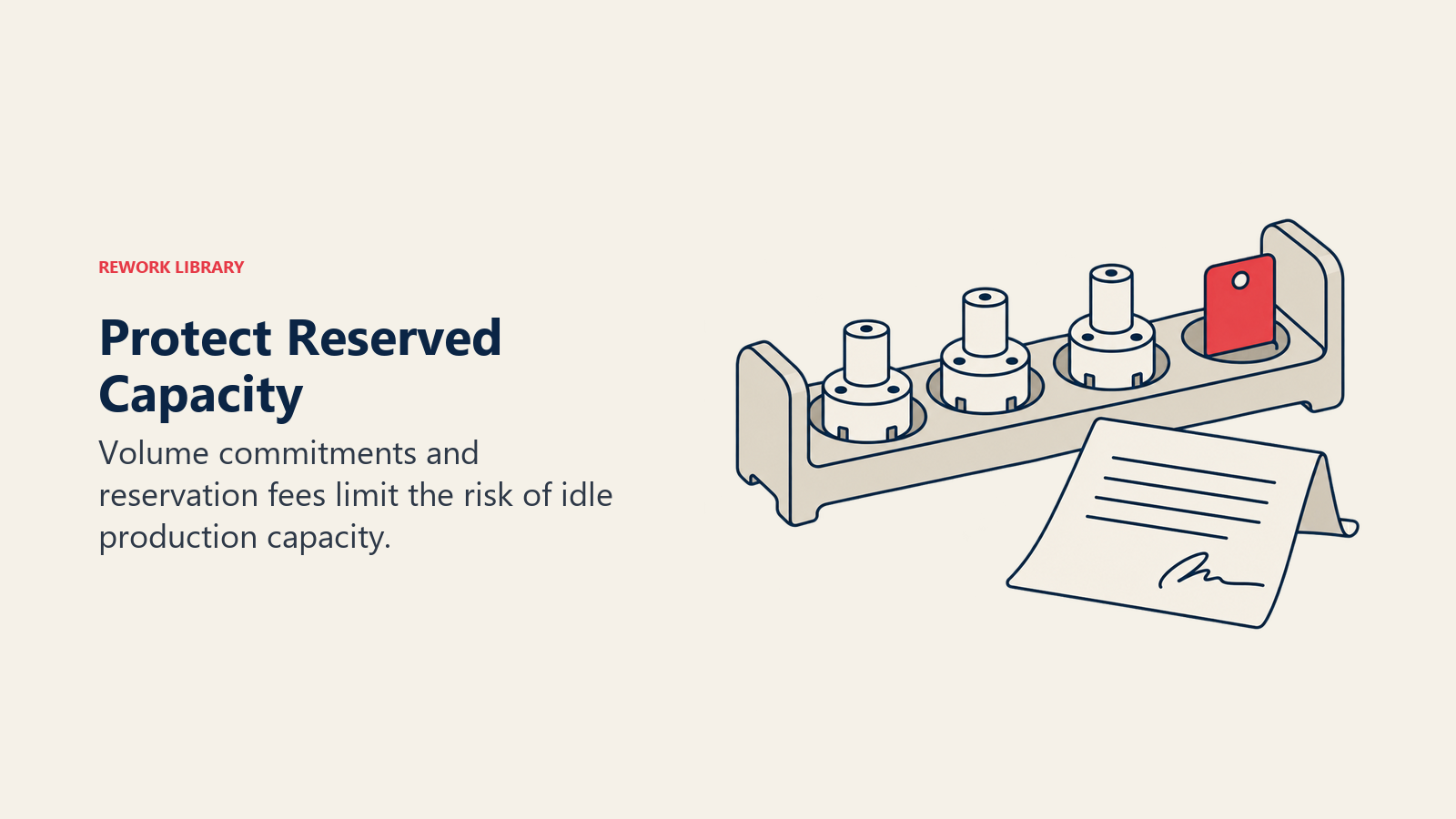
Volume commitments and capacity reservations balance your need for predictable utilization with customer needs for flexibility. Minimum volume commitments protect you from underutilization. Take-or-pay provisions ensure payment even if customers don't take full volume. Capacity reservation fees compensate you for holding capacity available.
Without volume protection, customers can starve you of volume when their demand drops, leaving you with stranded capacity.
Quality specifications and acceptance criteria must be clear, measurable, and achievable. Document exactly what constitutes acceptable quality, how quality will be measured and verified, what happens with rejected products, and who pays for rework or scrap.
Ambiguous quality specs create endless disputes. Crystal-clear specifications protect both parties.
Intellectual property and confidentiality provisions protect customer proprietary information while protecting your manufacturing knowledge. Clearly specify what information is confidential, how it will be protected, what you can use for your own purposes, and what happens to IP if the relationship ends.
Customers need assurance you won't share their designs or processes with competitors.
Term length and exit clauses balance stability with flexibility. Longer terms provide stability for capital investment and workforce planning. Shorter terms or liberal exit clauses reduce customer commitment but increase your risk.
Typical contracts run 1-5 years with clearly specified termination provisions, notice periods, and wind-down processes.
Launching Production Successfully
Winning the contract is just the beginning. Successful production launch sets the foundation for long-term relationships.
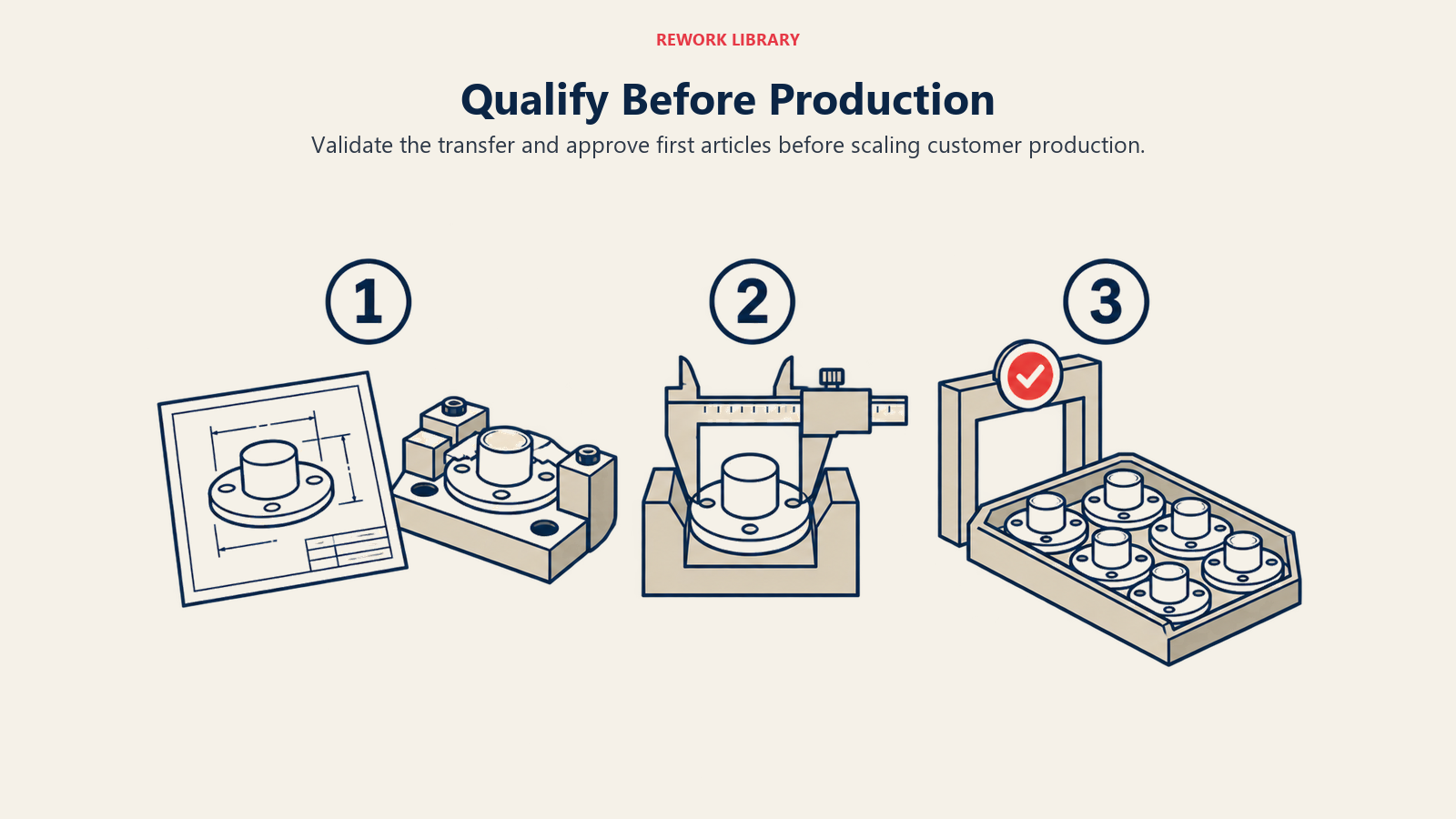
Technology transfer and validation moves customer processes to your facility. This includes process documentation and specifications, material specifications and approved suppliers, equipment requirements and setup, quality requirements and test methods, and customer approval of your processes.
Thorough validation prevents surprises when production scales up.
Tooling and equipment setup prepares your facility for production. You may need to purchase special tooling, modify equipment, install fixtures or work aids, or implement special handling or storage.
Clarify upfront who pays for tooling and what happens to it if the relationship ends.
Process qualification and first article proves you can produce to specifications before full production. Run qualification lots, conduct first article inspection, obtain customer approval, and document baseline capability.
Don't start full production until processes are stable and capable.
Supply chain integration connects your suppliers to customer schedules. Establish material sources and approval, integrate ordering and inventory management through inventory optimization strategies, implement quality incoming inspection, and establish communication protocols for changes or issues.
Supply chain problems are production problems. Get this right from the start.
Sustaining Profitable Partnerships
Long-term success in contract manufacturing comes from sustained operational excellence and relationship management.
Regular business reviews and communication maintain alignment. Conduct quarterly or semi-annual business reviews covering performance against metrics, upcoming volume and schedule changes, continuous improvement initiatives, issues and corrective actions, and strategic opportunities.
These reviews prevent small issues from becoming major problems.
Continuous improvement initiatives demonstrate commitment to efficiency and value. Track productivity and yield improvements, quality enhancements, cost reduction opportunities, and cycle time reductions.
Share improvement benefits with customers through periodic pricing reviews that pass through savings.
Capacity planning and forecasting ensure you can meet customer needs. Work together on rolling forecasts, capacity expansion decisions, volume ramp planning, and new product introductions.
Customers need confidence you can scale with their growth.
Pricing reviews and renegotiation address changing economics. Annual or periodic reviews should cover material cost changes, labor and overhead adjustments, volume-driven efficiency gains, and value-added improvements.
Transparent, data-driven pricing discussions maintain healthy margins while remaining competitive.
Building Sustainable Business
Contract manufacturing provides attractive economics when done well: spreading fixed assets across multiple customers, creating predictable capacity utilization, building specialized expertise that commands premium pricing, and generating recurring revenue from long-term relationships.
But it requires patience, operational discipline, and relationship skills. You're not just producing products. You're becoming an extension of your customers' operations. They depend on you for quality, reliability, and responsiveness.
Deliver consistently, communicate proactively, improve continuously, and structure agreements that work for both parties. Contract manufacturing can be the foundation of stable, profitable growth.
Learn More

Co-Founder, Rework.com