Logistics and Distribution Optimization: Reducing Costs While Improving Service
Turn this article into takeaways for your work.


Each assistant summarizes the article only for you and suggests best practices for your work.
Transportation costs for most manufacturers range from 5-10% of product costs, sometimes higher for low-value, bulky items. Distribution operations consume warehousing expenses, labor, and working capital. Yet many manufacturers treat logistics as a necessary evil, focusing optimization efforts on production while logistics gets managed reactively through functional silos. procurement handles inbound freight, sales manages outbound shipping, and warehouse operations run independently.
This fragmented approach leaves significant opportunities untapped. The warehouse layout forces inefficient picking paths. Shipments move in less-than-truckload (LTL) quantities paying premium rates when consolidation could fill full trucks. Distribution centers sit in locations chosen decades ago for different customer bases and transportation networks. Carrier relationships lack competitive pressure, allowing costs to drift upward.
The paradox of logistics optimization is that reducing costs and improving service aren't contradictory. they're complementary. Better network design reduces both costs and delivery times. Load consolidation cuts freight expenses while improving on-time performance through direct shipping. Warehouse efficiency improvements speed order fulfillment while reducing labor costs. Manufacturers optimizing logistics comprehensively gain competitive advantages from faster delivery and lower prices simultaneously.
Understanding Logistics and Distribution
Logistics encompasses all activities moving materials and products through supply chains. For manufacturers, this divides into inbound and outbound logistics, each with different characteristics and priorities.
Inbound logistics brings raw materials and components from strategic suppliers to manufacturing facilities. Transportation costs, timing coordination with production schedules, and receiving efficiency determine inbound performance. Cost optimization matters, but reliability matters more. delayed inbound shipments stop production.
Outbound logistics moves finished goods from factories to customers, usually through intermediary warehouses and distribution centers. Customer service drives outbound logistics. orders must ship quickly and arrive on time. But costs matter significantly since transportation and warehousing expenses directly impact product gross margins.
Distribution networks consist of facilities (warehouses, distribution centers, cross-dock terminals) and transportation connections between them. Network design determines how products flow from factories to customers. directly, through regional distribution centers, or through multiple warehouse tiers. These structural decisions drive costs and service capabilities more than operational improvements can.
The cost-service trade-off defines logistics strategy. Maximum service means inventory everywhere, next-day delivery, and premium transportation regardless of cost. Minimum cost means centralized inventory, slow ground shipping, and consolidated loads that might delay orders. The optimal point balances these extremes based on competitive requirements and customer willingness to pay for superior service.
Network Design Optimization
Distribution network structure determines logistics performance more than any operational improvement can. Poor network design dooms you to high costs or poor service no matter how well you execute operations.
Distribution center location analysis determines optimal facility placement balancing transportation costs, proximity to customers, real estate costs, and labor availability. Quantitative models evaluate potential locations by calculating total logistics costs. inbound from plants, outbound to customers, facility operating costs. Optimal locations minimize total delivered cost while meeting service requirements.
Several factors influence location decisions beyond pure cost optimization. Customer concentration determines whether centralized or distributed networks work better. Products with dense demand in specific regions benefit from regional distribution centers. Products with dispersed demand might justify centralized distribution. Delivery speed requirements drive facility placement. two-day ground delivery to 90% of customers dictates maximum distances from major markets.
Direct ship versus warehouse distribution strategies represent fundamental network choices. Direct shipping from factories eliminates warehousing costs and handling but increases transportation costs through small shipments. Warehousing adds inventory and handling costs but enables efficient transportation consolidation. The break-even depends on order sizes, transportation rates, and inventory carrying costs.
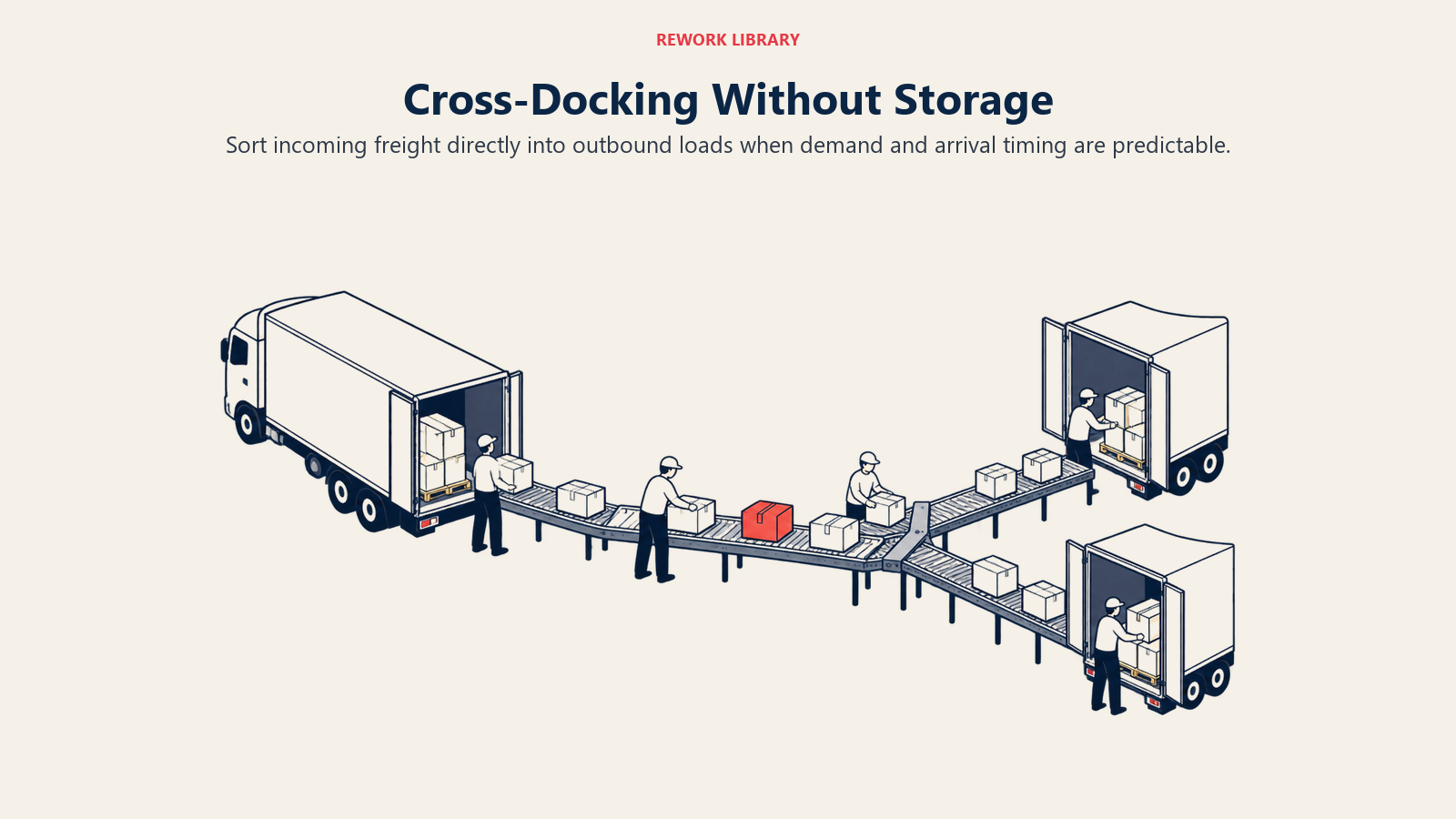
Cross-docking reduces inventory while maintaining consolidation benefits. Products arrive at cross-dock terminals, get sorted, and immediately ship to final destinations without storage. This works well for fast-moving items with predictable demand. Cross-docking eliminates storage costs and inventory while capturing transportation consolidation advantages, but requires precise timing coordination.
Make-to-order versus stock location decisions determine where customization occurs. Stock finished goods at warehouses for fastest delivery but highest inventory investment. Stock components centrally and complete customization at facilities when orders arrive, delaying fulfillment but reducing finished goods inventory. Stock work-in-process at regional facilities and complete production locally for speed with moderate inventory. The optimal choice balances product proliferation against service requirements.
Transportation Management
Transportation typically represents the largest component of logistics costs. Optimization reduces these expenses while improving service through mode selection, carrier management, and load planning.
Mode selection determines transportation type for each lane and shipment. Parcel services (UPS, FedEx) suit small packages requiring tracking and fast delivery. Less-than-truckload (LTL) carriers handle shipments too large for parcel but not filling full trucks, consolidating freight from multiple shippers. Full truckload (FTL) provides dedicated trucks for large shipments, offering lowest cost per unit. Intermodal combines truck and rail, trading speed for cost on long-distance moves.
Mode economics guide selection. Parcel is most expensive per pound but practical for small shipments. LTL costs less than parcel for larger shipments but includes freight class surcharges based on density and handling. FTL is cheapest for volume filling trucks but wasteful for partial loads. Each mode has sweet spots. using them appropriately optimizes total costs.
Service requirements constrain mode choices. Next-day delivery typically requires parcel. Two-day might use LTL for accessible markets. Weekly replenishment might use FTL or intermodal. Match modes to service needs, avoiding both over-service that wastes money and under-service that loses customers.
Carrier selection and negotiation through strategic sourcing practices determines rates and service quality. Maintain relationships with multiple carriers per mode, creating competition that drives better rates. Annual RFPs for major lanes generate competitive quotes. Negotiate based on total volume across lanes, not individual shipments. Consolidate freight spend with fewer carriers rather than fragmenting across many.
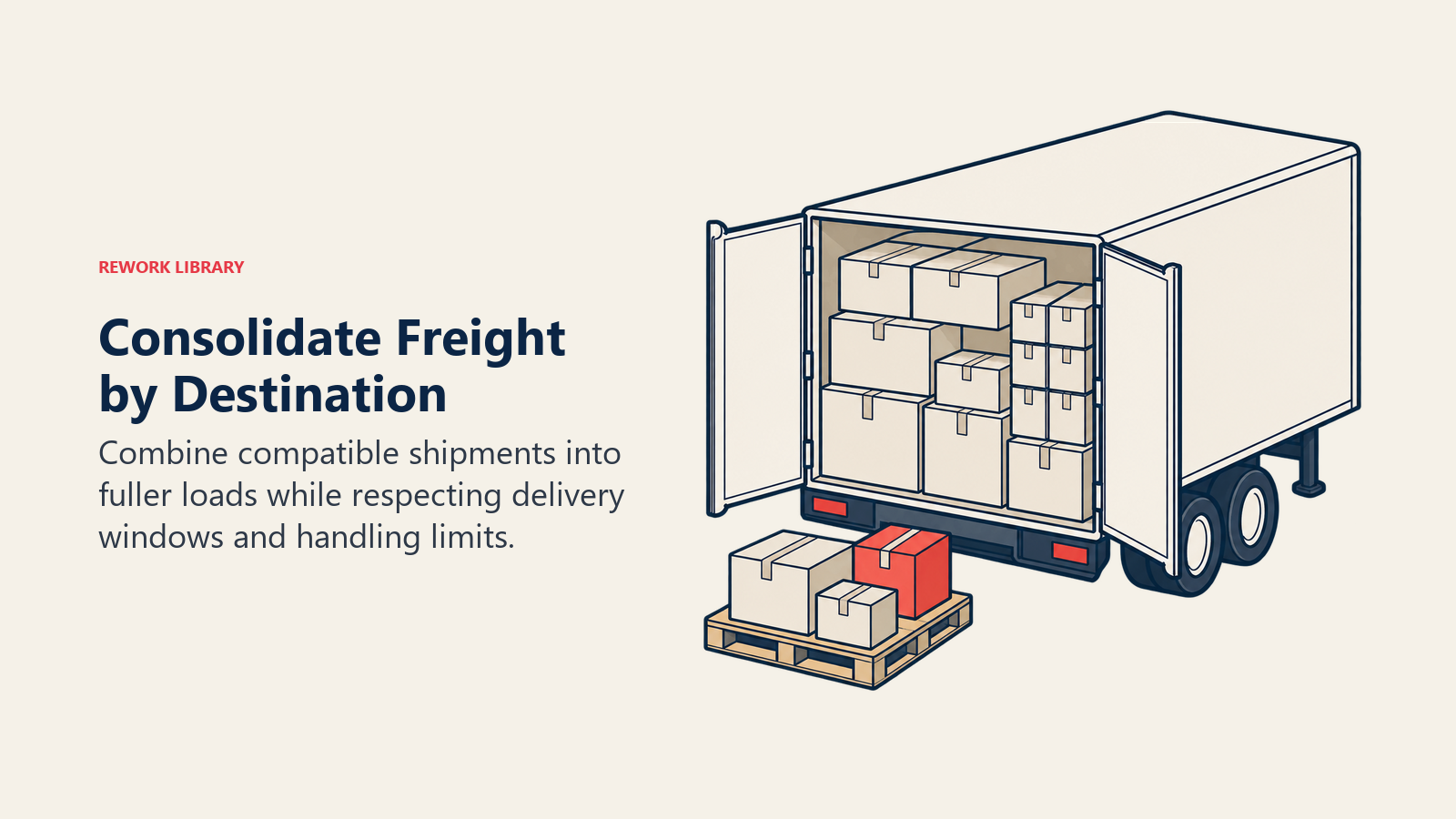
Freight consolidation strategies combine small shipments into full truckloads, dramatically reducing costs. Pool orders for the same region, shipping weekly FTL rather than daily LTL. Consolidate inbound freight from suppliers in the same area through milk runs that collect from multiple stops. Cross-dock shipments moving through the same terminal. Consolidation requires coordinating timing but saves 30-50% versus shipping individually.
Route optimization and load planning ensures efficient equipment utilization. Software optimizes delivery routes minimizing miles traveled while meeting time windows. Load planning maximizes cube utilization in trucks, fitting more product per vehicle. Weight distribution ensures legal compliance and vehicle stability. These optimizations improve both costs and service.
Warehouse Operations Excellence
Distribution facilities represent significant fixed costs and variable labor expenses. Operational efficiency reduces costs while improving throughput and order accuracy.
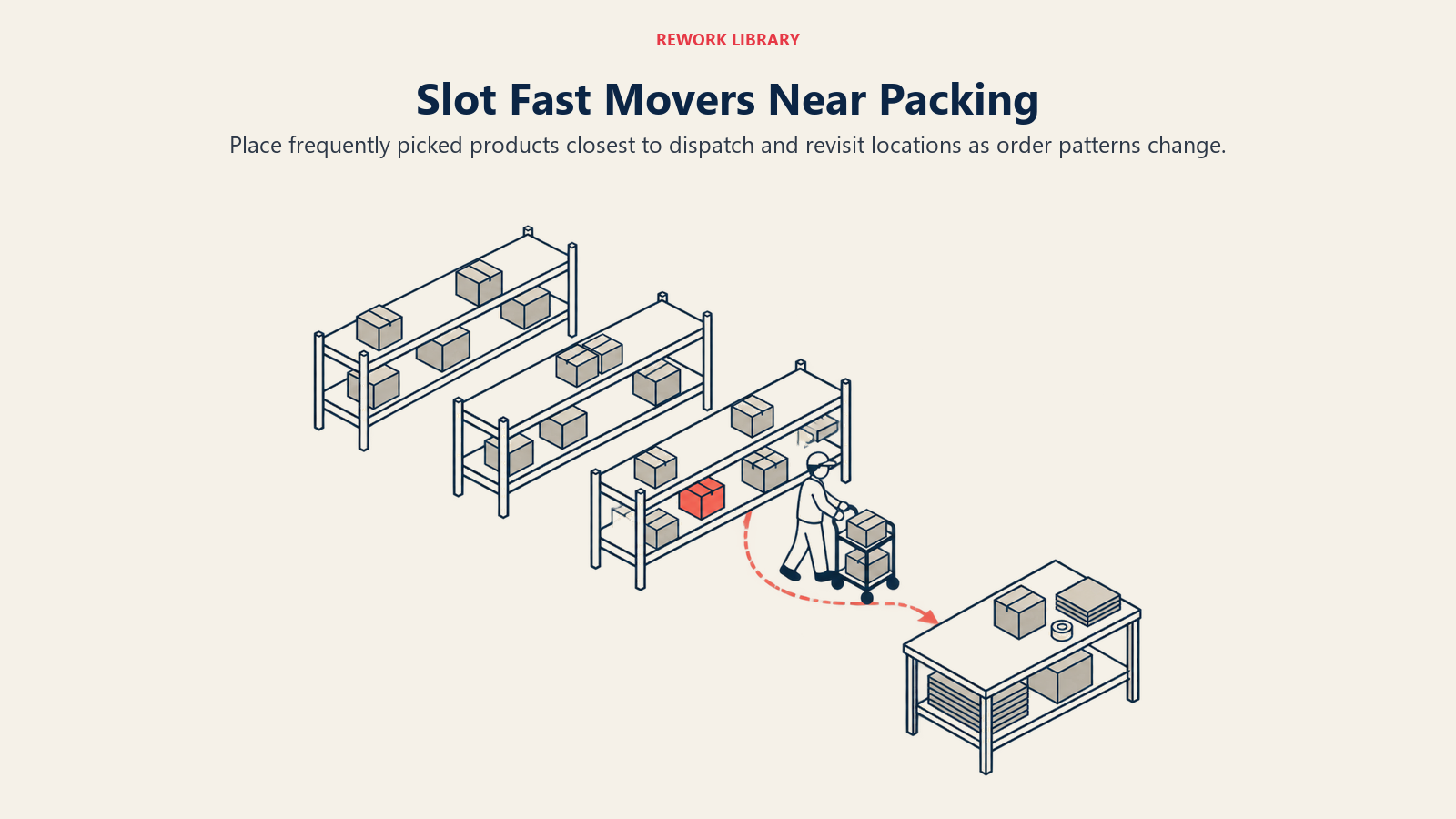
Layout optimization designs facility flows minimizing travel distance for order fulfillment. Position fast-moving items near packing areas, reducing picker travel. Organize inventory logically by product family, customer, or order patterns. Design receiving and shipping docks for efficient loading/unloading. Poor layouts force workers to walk miles daily. good designs eliminate wasted motion.
Inventory placement strategies position products optimizing picking efficiency. ABC analysis puts highest-volume items in most accessible locations. Slow movers occupy less premium space. Velocity slotting continuously adjusts locations based on current picking patterns. Intelligent slotting reduces picker travel by 15-30%.
Order picking methods determine warehouse labor productivity. Piece picking sends pickers to retrieve individual items for each order, appropriate for small operations or specialized items. Batch picking gathers items for multiple orders simultaneously, reducing travel but requiring sorting. Zone picking assigns pickers to specific areas, passing orders between zones. Wave picking coordinates picking timing across zones for efficient shipping. The optimal method depends on order profiles, facility size, and product characteristics.
Labor productivity management measures and improves worker efficiency. Track picks per hour, lines per hour, or orders per labor hour. Set productivity standards based on time studies or historical performance. Provide real-time feedback to workers on productivity. Incentive pay tied to productivity motivates improvement while controlling labor costs.
Slotting optimization software analyzes order history and product characteristics to determine optimal inventory placement. It identifies fast movers deserving prime locations, suggests reorganization for seasonal changes, and calculates labor savings from layout improvements. Annual slotting reviews capture changing demand patterns.
Automation opportunities range from simple mechanization to sophisticated robotics and automation. Conveyor systems eliminate manual cart pushing. Automated storage and retrieval systems (AS/RS) densify storage and improve picking accuracy. Goods-to-person systems bring inventory to stationary pickers, eliminating travel. Autonomous mobile robots transport products between zones. Right-sized automation balances investment costs against labor savings and throughput improvements.
Technology Enablement
Modern logistics operations require software systems coordinating complex activities across facilities, carriers, and customers.
Transportation Management Systems (TMS) plan and execute shipping operations. They optimize routes, select carriers, generate shipping documents, track shipments, and audit freight bills. TMS platforms typically save 5-15% on transportation costs through better carrier selection, load consolidation, and rate optimization through supply chain optimization. They improve service through visibility and exception management.
Warehouse Management Systems (WMS) coordinate warehouse operations from receiving through shipping. They direct putaway, manage inventory locations, optimize picking, verify shipping, and track labor productivity. WMS ensures accuracy, maximizes space utilization, and improves productivity through directed workflows replacing paper-based operations.
Real-time tracking and visibility provides location and status information throughout transit. GPS tracking shows truck locations. Electronic logging shares estimated arrival times. Shipment milestones update as freight moves through carrier networks. Customer portals provide self-service tracking. This visibility enables proactive exception management and accurate customer communication.
Analytics and reporting turn logistics data into actionable insights. Freight spend analysis identifies high-cost lanes justifying optimization. Carrier scorecards track on-time performance and damage rates. Warehouse productivity metrics show efficiency trends. Exception reports highlight problems requiring attention. Executive dashboards provide high-level visibility into logistics performance.
Integration platforms connect logistics systems with ERP, order management, and customer systems. APIs enable real-time data exchange through IoT connectivity. order information flows to WMS, shipping confirmations update order management, tracking information reaches customer portals. Integration eliminates manual data entry while enabling logistics systems to drive business processes.
Performance Measurement
Comprehensive metrics track logistics effectiveness across cost, service, and efficiency dimensions. What gets measured gets managed.
On-time delivery performance measures service reliability from customer perspective. Track orders shipping on promised dates and delivering on committed schedules. Calculate by order, line item, or units depending on what matters for your customers. Target 95%+ for competitive service. Root cause analysis of late shipments identifies improvement opportunities.
Cost per unit shipped normalizes logistics expenses across varying volumes and product mixes. Calculate total logistics costs (transportation, warehousing, labor) divided by units shipped. Track trends over time and compare across facilities or channels. Cost per unit combines efficiency and rate improvements into single metric.
Order cycle time measures speed from order receipt to customer delivery. Fast cycle times enable lower customer inventory and better responsiveness. Analyze components. order processing, warehouse picking, transit time. to identify bottlenecks. Benchmark cycle times against customer expectations and competitor capabilities.
Claims and damage rates measure logistics quality. Track freight claims as percentage of shipments and dollars. Analyze damage causes. packaging, handling, carrier performance. High damage rates increase costs and damage customer relationships. Target zero-damage operations through root cause elimination.
Perfect order rate combines multiple elements. delivered complete, on-time, damage-free, with accurate documentation. This composite metric captures overall customer experience better than individual measurements. Calculate as percentage of orders meeting all criteria. Perfect order performance strongly correlates with customer satisfaction.
Freight cost as percentage of sales measures logistics efficiency relative to business scale. This normalizes costs across growth or contraction. It enables comparisons across business units and historical periods. Target continuous improvement even as business conditions change.
Continuous Improvement
Logistics optimization isn't a one-time project but ongoing refinement as conditions evolve.
Network modeling evaluates redesign opportunities as business conditions change. Customer locations shift, product portfolios evolve, real estate markets fluctuate. Periodic network studies every 3-5 years determine whether distribution facility locations still optimize costs and service. Don't assume historical networks remain optimal indefinitely.
Rate negotiation cycles drive carrier cost improvements. Annual RFPs for major lanes ensure competitive rates. Mini-bids for specific lanes address rate increases or service issues. Share volume commitments earning discounts. But balance cost pressure against carrier relationships. lowest rates from carriers providing poor service is false economy.
Carrier performance management improves service quality. Scorecards track on-time delivery, damage rates, responsiveness. Regular business reviews discuss performance and improvement opportunities. Direct higher volumes to top performers, reduce or eliminate poor performers. Carrier competition drives service improvement and reasonable rates.
Technology upgrades deliver incremental improvements. Start with foundational systems (TMS, WMS), then add advanced capabilities like route optimization, slotting optimization, and AI-powered predictive analytics. Warehouse automation investments follow process optimization. automate stable, efficient processes, not broken ones.
Lean principles eliminate logistics waste. Value stream mapping identifies non-value-adding activities. 5S organizes warehouses for efficiency. Standard work defines best methods. Continuous improvement teams address problems systematically. Lean reduces costs while improving quality and speed.
Benchmarking reveals performance gaps and improvement opportunities. Compare your logistics costs, service levels, and productivity against industry standards or best-in-class performers. Significant gaps indicate opportunity. Understanding best practices guides improvement initiatives.
Learn More
