Manufacturing Cross-Training: Building Workforce Flexibility and Resilience
Turn this article into takeaways for your work.


Each assistant summarizes the article only for you and suggests best practices for your work.
Your best quality inspector called in sick. Production can't release any parts without inspection sign-off. Three other people are standing around waiting. You're about to miss your shipment deadline because one person is absent.
Or consider the alternative scenario: Your quality inspector is out, but two operators from the line are cross-trained in inspection. One of them steps in, inspection continues, production flows, and you hit your delivery commitment.
The difference between these scenarios isn't luck or heroic effort. It's systematic cross-training that builds workforce flexibility and operational resilience.
Why Cross-Training Matters More Than You Think
Cross-training:teaching employees to perform jobs beyond their primary role:creates operational advantages that directly impact your bottom line.
Workforce flexibility allows you to adapt to changing demands without hiring or costly overtime. When production volume spikes in certain areas, cross-trained employees can shift to help. When volume drops, you can redeploy people rather than laying them off or absorbing idle time. This flexibility translates directly into labor cost efficiency.
Bottleneck reduction happens when skills become less concentrated. Many manufacturers have critical operations where only one or two people are qualified. When those people are unavailable, the operation stops:even if you have plenty of people elsewhere. Cross-training breaks these bottlenecks by developing backup capability.
Absence coverage becomes manageable rather than crisis-inducing. Vacation, sick time, training, and turnover are inevitable. Cross-trained workforces absorb these absences without production disruptions, quality compromises, or expensive temporary labor.
Quality and productivity often improve with cross-training. When operators understand multiple processes, they see how their work affects downstream operations. This broader perspective typically leads to better quality consciousness and more process improvement ideas.
Employee engagement increases when people develop new skills and avoid repetitive monotony. Job variety makes work more interesting. Skill development creates career growth opportunities. Both factors improve retention and reduce the recruiting and training costs associated with turnover.
The financial case is strong. Calculate what bottlenecks cost you in delayed shipments and lost revenue. Calculate your overtime and temporary labor expenses covering absences. Calculate turnover and training costs. According to Deloitte research, building a resilient manufacturing workforce through cross-training enhances operational adaptability. Cross-training programs typically pay for themselves within 6-12 months through these savings alone.
Strategic Planning: Where Cross-Training Creates Maximum Value
Effective cross-training isn't training everyone on everything. It's strategically developing specific capabilities that reduce your biggest operational vulnerabilities.
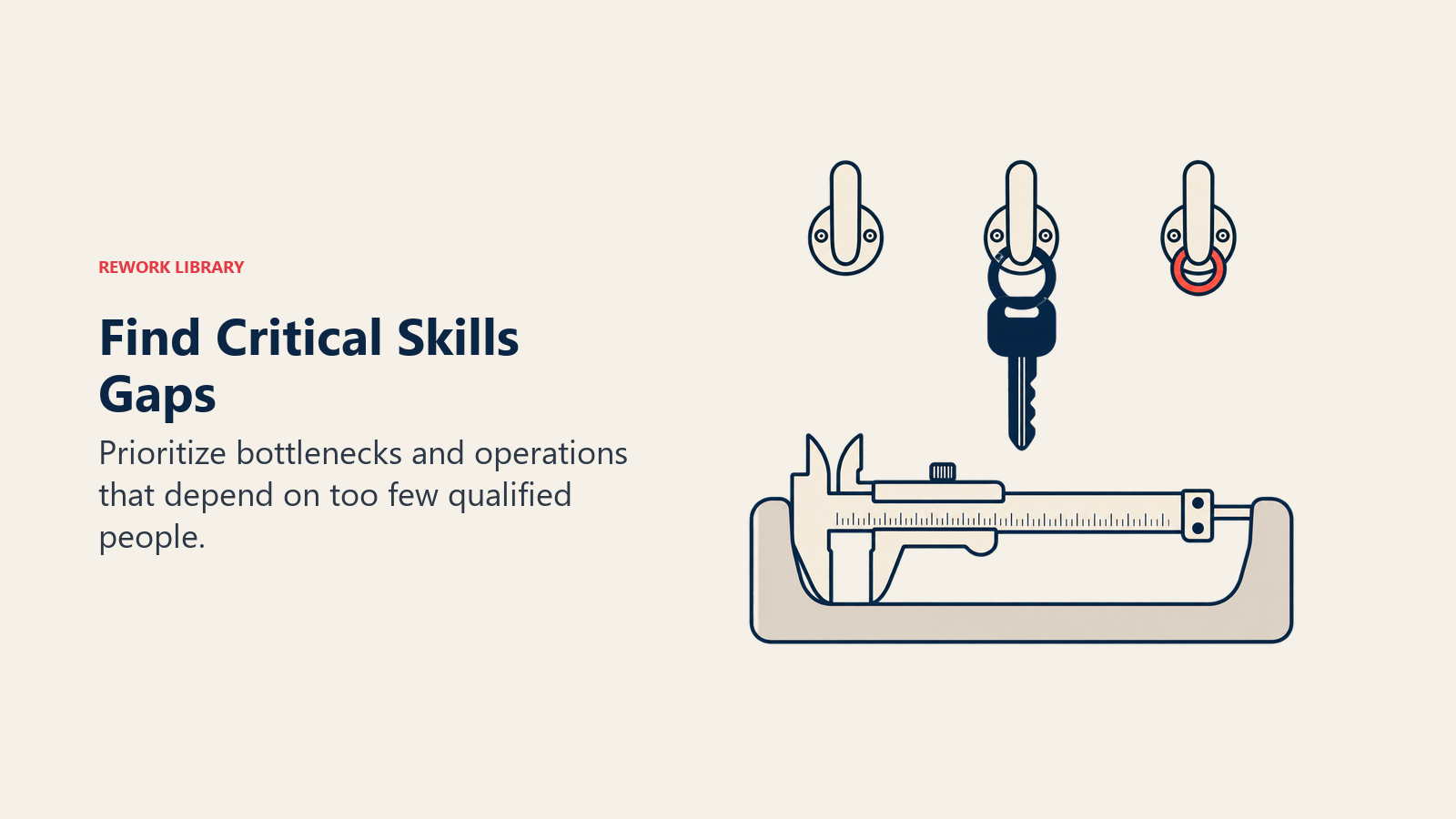
Start by identifying your bottleneck operations and critical skills. Walk your production flow and ask: Where do we have single points of failure? Which operations have the least backup capability? Where do absences or turnover create the biggest problems?
Map your current skills coverage. Create a matrix showing all critical operations and who can perform each. Look for skills that only one or two people have:these are your highest-risk points. Effective manufacturing workforce planning relies on understanding these coverage gaps. A simple visual makes the problem obvious: if all your machine setters are in one shift or all your inspection capability depends on three people, you're vulnerable.
Analyze your labor utilization and bottlenecks. Track where work waits because people aren't available, where overtime concentrates, and where you use temporary labor most. These patterns reveal where cross-training would have the biggest operational impact.
Consider your production variability patterns. If certain product lines run intermittently or demand fluctuates significantly by season, cross-training enables you to flex your workforce to match demand rather than maintaining excess capacity or missing deadlines.
Prioritize cross-training investments based on impact. You can't cross-train everything at once. Focus first on the areas where lack of flexibility costs you the most:typically bottleneck operations, skills with minimal coverage, and areas with highest absence rates or turnover.
Balance depth versus breadth strategically. For complex, critical operations, you need deep expertise:multiple people who can handle advanced troubleshooting and quality judgment. For simpler operations, broader coverage with basic competency provides flexibility without requiring expert-level training for everyone.
Building an Effective Cross-Training System
Ad hoc cross-training:teaching someone a new skill when you suddenly need it:rarely works well. Systematic programs create sustainable capability.
Skills matrices provide your structural framework. Create a grid with all employees on one axis and all critical skills on the other. Mark each person's competency level: not trained (blank), training in progress (T), competent (C), or expert (E) who can train others.
This matrix tells you exactly where your capability gaps exist, tracks training progress, and guides scheduling decisions. Update it regularly as people complete training and develop proficiency.
Define competency levels clearly. What does it mean to be competent versus expert? Competent typically means able to perform the task independently to standard quality and productivity. Expert means able to handle complex situations, troubleshoot problems, and train others. Be explicit about these definitions so everyone understands what certification means.
Training progression should be structured, not random. For each cross-training path, document the training sequence, expected learning timeline, knowledge and practice requirements, and assessment criteria.
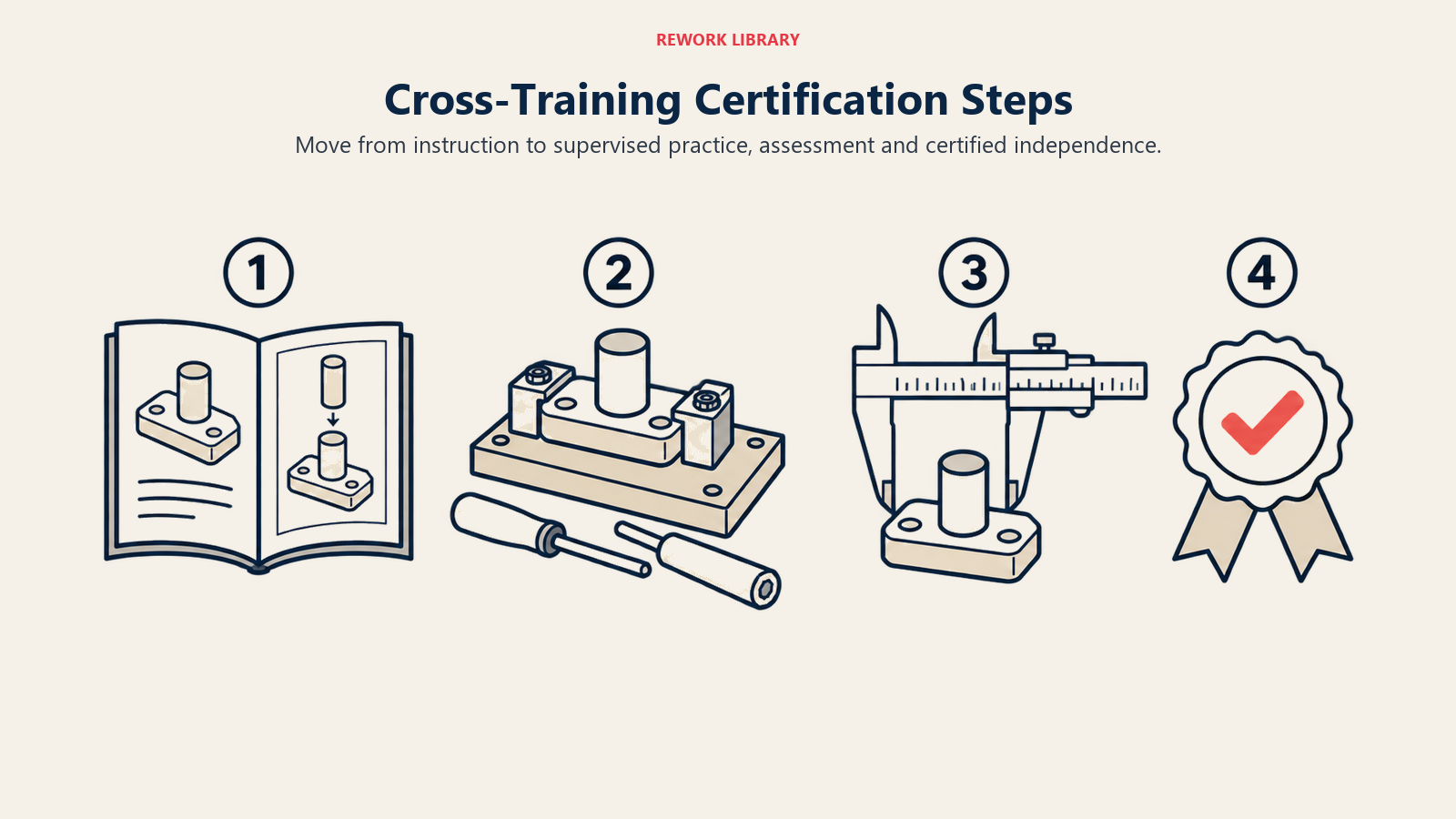
Don't just throw people into new tasks and hope they figure it out. Provide structured training using your organization's skills training and development methods: initial instruction, supervised practice, competency assessment, and final certification.
Time allocation for training requires planning. Cross-training happens during production time, which means reduced output from both the learner and the trainer. Budget for this productivity impact. Many manufacturers allocate one or two hours per week per person for cross-training, which allows steady progress without severely impacting production.
Certification and documentation ensure consistency. When someone completes cross-training, formally certify them as competent (or whatever level they've achieved). Document this in your skills matrix and HR records. This certification tells supervisors who can be assigned to which tasks with confidence.
Without formal certification, supervisors either don't trust cross-trained people's abilities and don't use them, or they assign tasks to people not actually ready:both defeating the purpose of cross-training.
Implementation Approaches That Work
Rolling out cross-training requires managing both the mechanics and the people dynamics.
Start with pilot areas to prove the concept and work out your approach before expanding organization-wide. Choose an area with clear bottlenecks or flexibility needs, engaged supervision, and willing participants. Success in the pilot creates champions who help spread cross-training to other areas.
The pilot teaches you what works in your environment: How much training time is realistic? What resistance emerges? How do you maintain production while training? What documentation and tracking work best? Adjust your approach based on pilot lessons before rolling out broadly.
Voluntary participation works better than forced cross-training, at least initially. Some people are enthusiastic about learning new skills. Others resist change. SHRM's research shows that effective cross-training initiatives enhance employee development and organizational flexibility. Starting with volunteers creates positive momentum and demonstrates benefits to skeptics.
Over time, cross-training can become an expectation for everyone, but forcing it immediately often creates resistance that undermines the program.
Incentives and recognition encourage participation and acknowledge the extra effort involved. Some manufacturers pay small premiums for each additional skill certified. Others factor cross-training into performance reviews and promotion decisions. Simple recognition:posting skilled employees on skills boards, celebrating certifications:also motivates participation.
The incentive doesn't need to be large, but it should acknowledge that cross-training requires effort beyond someone's regular job and creates value for the organization.
Supervisor roles are critical. Effective shop floor leadership is essential for successful cross-training. Supervisors must actively support cross-training by scheduling training time, recognizing progress, actually utilizing cross-trained capabilities, and holding people accountable for developing skills.
The program fails if supervisors see cross-training as a distraction from production rather than an investment in capability. Leadership must clearly communicate that cross-training is a priority and provide supervisors with the time and resources to support it.
Managing resistance requires addressing legitimate concerns. Some experienced employees worry that training others makes them replaceable or that cross-training will be used to cut jobs. Some supervisors worry about the short-term productivity impact. Some people simply resist learning new tasks.
Address these concerns directly. Emphasize that cross-training creates job security by making the operation more efficient and competitive, creates advancement opportunities by developing broader capabilities, and makes everyone's job easier by providing coverage for absences and workload spikes. McKinsey highlights that reimagining people development helps overcome critical talent challenges in manufacturing.
Measuring Cross-Training Effectiveness
You need metrics to know whether cross-training is working and where to improve.
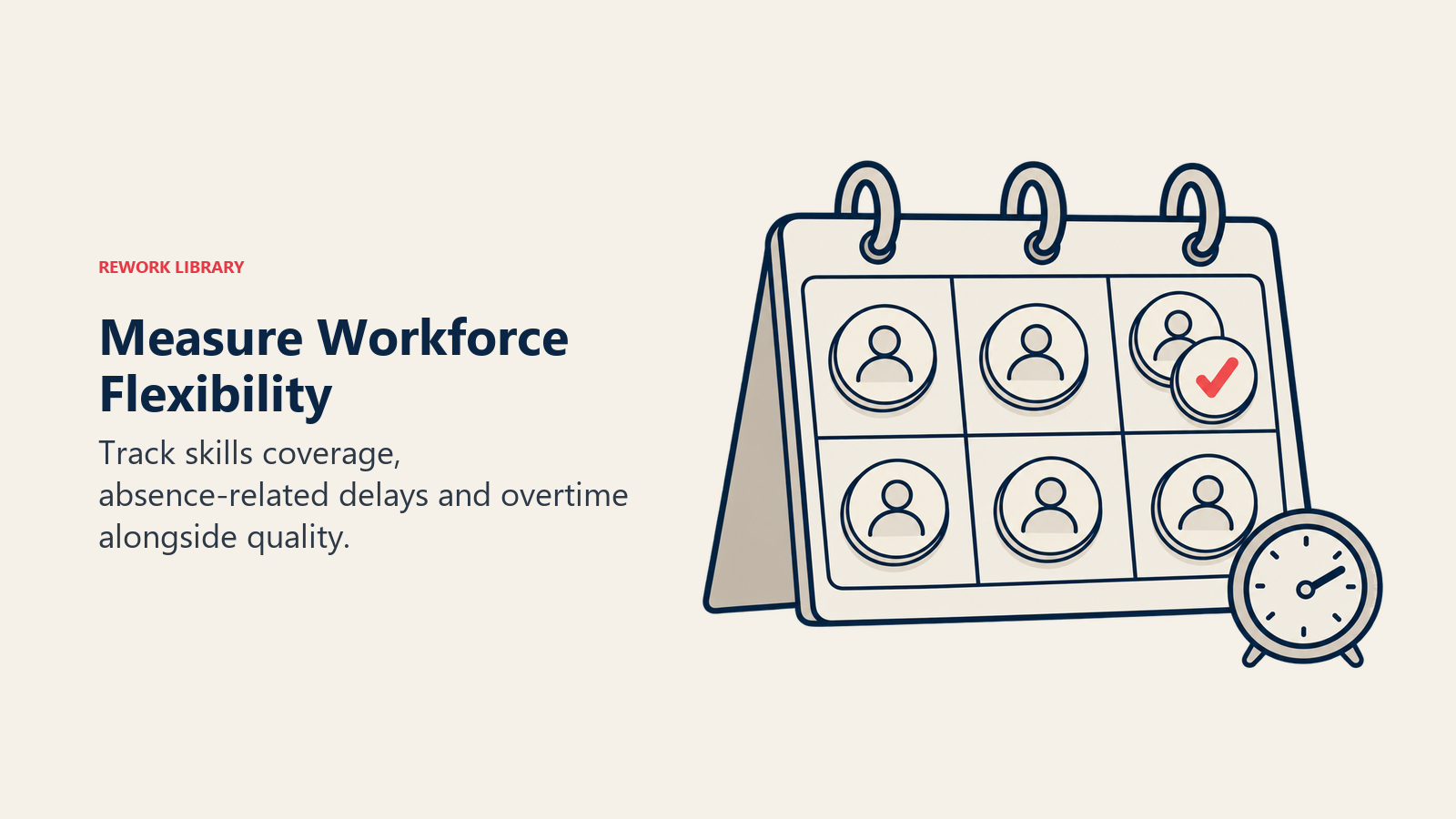
Skills coverage metrics track your training progress. Calculate what percentage of critical skills have at least two or three certified people. Track how many employees are certified in multiple skills. Monitor how these coverage percentages improve over time.
Your goal isn't 100% coverage of everything:that's unrealistic. But you should see steady improvement in coverage of your most critical skills and bottleneck operations.
Labor flexibility measures show operational impact. Track metrics like: How often can you cover absences without overtime or temps? How quickly can you respond to schedule changes or production spikes? How much has bottleneck waiting time decreased?
Compare your overtime and temporary labor costs before and after implementing cross-training. Using labor productivity metrics helps quantify these improvements. Significant reductions indicate the program is reducing the labor flexibility problems it was designed to solve.
Production continuity metrics capture the resilience benefits. Track production delays due to absence of key personnel before and after cross-training. Monitor on-time delivery performance. Measure how frequently you miss shipments because you couldn't cover for absent employees.
These metrics quantify the business value of improved workforce flexibility in terms that matter to operations and finance leaders.
Employee satisfaction and retention often improve with cross-training. Survey employees about their jobs, development opportunities, and engagement. Compare turnover rates for cross-trained versus single-skilled employees. Cross-training programs typically show positive effects on both metrics as people value skill development and job variety.
Quality and productivity should at minimum remain stable during cross-training and ideally improve afterward. Monitor defect rates and output per labor hour for cross-trained employees versus those with single skills. Applying manufacturing quality management standards ensures consistent performance. If quality suffers with cross-training, your training or certification process may not be rigorous enough.
Common Pitfalls and How to Avoid Them
Even well-intentioned cross-training efforts can fail through predictable mistakes.
Training without clear standards results in inconsistently developed skills. If cross-training is informal and undocumented, quality and capability vary widely. Some people receive thorough training, others get minimal instruction, and you don't know who can actually perform which tasks reliably.
The solution: Document training requirements clearly, certify competency formally, and maintain your skills matrix rigorously.
Not actually using cross-trained skills makes people forget what they learned and sends the message that cross-training was pointless. If you cross-train people but never use their additional skills, the capability atrophies and you've wasted the training investment.
Schedule cross-trained employees into their additional roles regularly:even briefly:to maintain proficiency. Use cross-training for absence coverage, peak demand periods, and continuous improvement projects.
Focusing only on entry-level skills limits the program's value. Cross-training should develop meaningful capabilities, not just teach everyone simple tasks that provide minimal operational flexibility. Identify which skills actually create bottlenecks and flexibility issues, and focus cross-training there.
Inadequate training time leads to superficial learning. Rushing through cross-training to minimize production impact results in people who are marginally trained but not competent. They can't really perform independently, quality suffers, and supervisors lose confidence in using cross-trained workers.
Invest adequate time for proper training. Saving a few hours during training creates problems that last far longer.
Lack of refresher training means capabilities fade. Skills that aren't used regularly decline. Schedule periodic refresher training or brief practice sessions for infrequently used skills to maintain competency.
Building Long-Term Workforce Versatility
The most successful cross-training programs evolve from solving immediate problems to creating strategic workforce capability.
This means building cross-training into your standard workforce development system. New hires don't just learn their primary job:they enter a planned cross-training progression. Career paths include developing broader skills, not just deepening expertise in a single area.
It means integrating skills matrices into your daily management. Supervisors use skills matrices for scheduling, cross-trained employees are regularly rotated through different roles to maintain skills, and skills development is part of regular performance discussions.
It means continuous expansion of cross-training. As new equipment is installed or processes change, plan immediately for how you'll develop multiple people with those capabilities rather than creating new single points of failure.
The manufacturers who consistently handle demand variability, manage through absences smoothly, and avoid bottlenecks have made cross-training a fundamental part of how they operate:not a program they tried once.
Your production system is only as flexible as your workforce. Equipment can often handle different products, but can your people? When demand shifts, when people are absent, when new opportunities arise, workforce flexibility determines whether you can respond effectively or must pass up the opportunity.
Cross-training builds that flexibility systematically. It's not complicated, but it requires commitment, structure, and persistence. The operational benefits:reduced bottlenecks, lower costs, better service, higher engagement:more than justify the investment.
Build workforce flexibility into your operation's DNA. Your ability to compete often depends on it.
Learn More

Co-Founder, Rework.com
On this page
- Why Cross-Training Matters More Than You Think
- Strategic Planning: Where Cross-Training Creates Maximum Value
- Building an Effective Cross-Training System
- Implementation Approaches That Work
- Measuring Cross-Training Effectiveness
- Common Pitfalls and How to Avoid Them
- Building Long-Term Workforce Versatility
- Learn More