Supplier Relationship Management: Strategic Framework for Manufacturing Excellence
Turn this article into takeaways for your work.


Each assistant summarizes the article only for you and suggests best practices for your work.
The manufacturing executive's nightmare isn't always internal. Sometimes, it's a critical supplier going bankrupt, a key component arriving defective, or discovering that your biggest competitor just locked down your best supplier with an exclusive contract. These scenarios share a common thread: treating suppliers as faceless vendors rather than strategic partners.
Most manufacturers approach suppliers transactionally, focusing on price negotiations and purchase orders. But companies that build strategic supplier relationships gain access to innovation, preferential treatment during shortages, and collaborative problem-solving that competitors can't match. The difference between transactional purchasing and strategic Supplier Relationship Management (SRM) often separates industry leaders from followers.
Understanding Supplier Relationship Management
SRM is a systematic approach to developing mutually beneficial partnerships with suppliers that create value beyond simple cost reduction. It moves past the traditional adversarial buyer-supplier dynamic toward collaboration that improves quality, accelerates innovation, and strengthens both parties' competitive positions.
Traditional procurement treats suppliers as interchangeable resources, selected primarily on price. SRM recognizes that suppliers bring capabilities, knowledge, and resources that can become competitive advantages when properly used. A supplier with deep expertise in materials science might help you redesign products for better performance. Another might share demand data that improves your forecasting accuracy through better collaboration.
The distinction matters because manufacturing complexity has increased dramatically. Products contain more components from more suppliers across longer supply chain networks. No manufacturer can maintain expertise in every technology or material. Strategic suppliers fill these gaps, but only when relationships extend beyond transactional exchanges.
Supplier Segmentation Strategy
Not all suppliers deserve equal attention. Effective SRM starts with categorizing suppliers based on their strategic importance and your spend with them. The Kraljic matrix provides a framework for this segmentation, plotting suppliers on axes of supply risk and profit impact.
Strategic suppliers sit in the high-risk, high-impact quadrant. They supply critical items where alternative sources are limited. Think specialized machinery components or proprietary materials. These suppliers warrant significant relationship investment: joint business planning, technology sharing, and long-term agreements. You might co-locate engineers at each other's facilities or give them visibility into your product roadmap.
Leverage suppliers offer high spend but low supply risk. Standard electronic components or common raw materials often fall here. Multiple suppliers exist, giving you negotiating power. Focus on competitive bidding through strategic sourcing processes, volume consolidation, and contract optimization. Relationships remain professional but don't require the strategic depth of your critical suppliers.
Bottleneck suppliers present high risk but represent relatively small spending. A single-source supplier of a small but essential component fits here. Your strategy should reduce risk through supplier development, long-term commitments that ensure supply, or finding alternative sources through supply chain risk mitigation. The relationship focuses on supply assurance rather than cost reduction.
Routine suppliers are low-risk, low-spend items like office supplies or MRO materials. Streamline these relationships through catalogs, automated ordering, and minimal management attention. Your purchasing team shouldn't spend valuable time negotiating paper clip prices when strategic suppliers need attention.
This segmentation prevents the common mistake of treating all suppliers identically. You can't maintain deep strategic relationships with hundreds of suppliers. But you can't afford transactional relationships with the dozen suppliers whose capabilities and reliability determine your success.
Relationship Development Model
SRM relationships evolve through stages, from arm's-length transactions to strategic collaboration. Understanding these stages helps you identify where relationships stand and how to advance them.
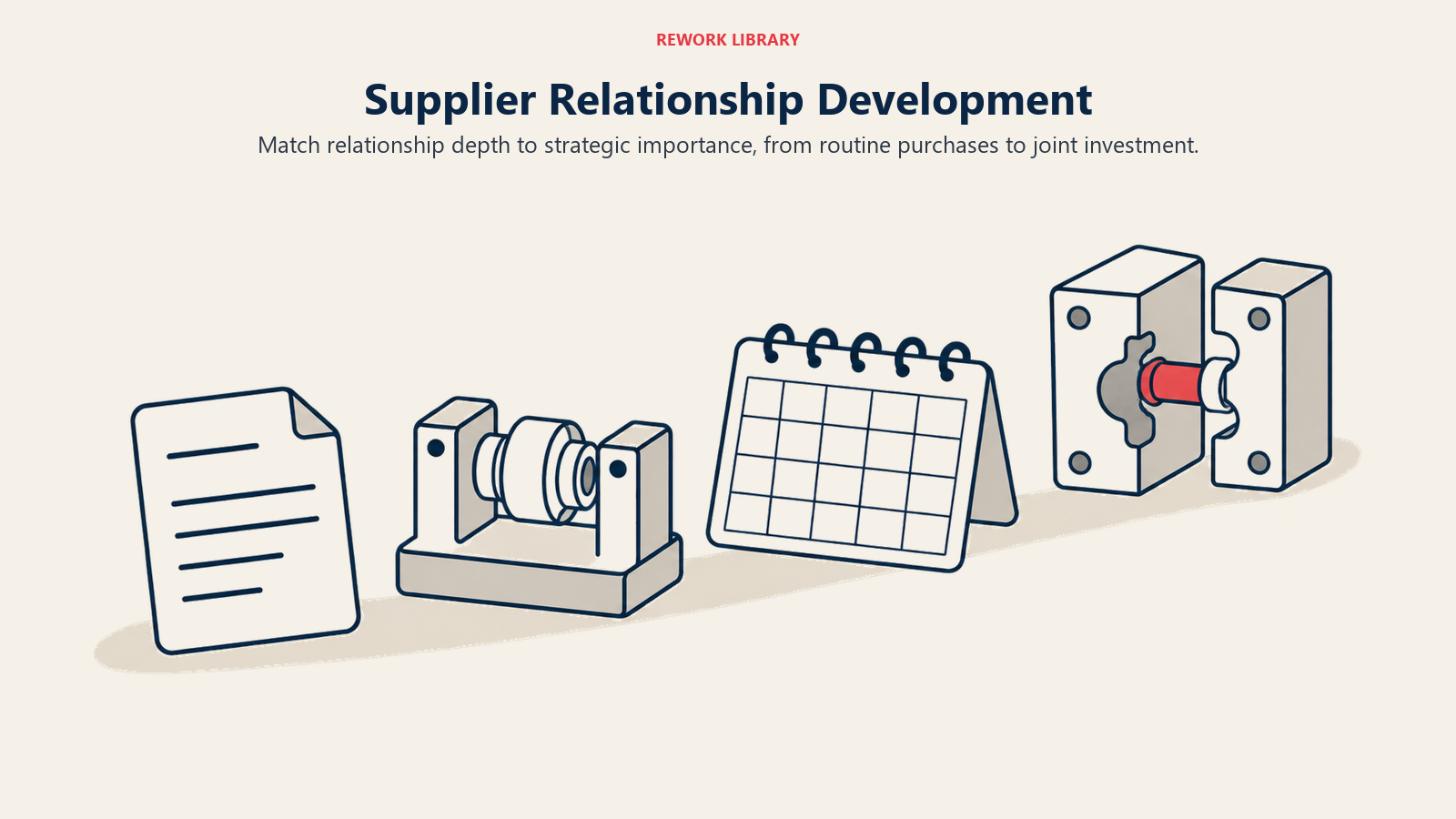
The basic stage involves sporadic, price-focused purchases. Communication is minimal, limited to orders and deliveries. Neither party invests in understanding the other's business. This works fine for routine suppliers but limits value creation with strategic ones.
Approved supplier status comes next. Regular business flows, quality expectations are clear, and performance metrics exist. Communication improves but remains transactional. Most supplier relationships plateau here, which is appropriate for leverage and bottleneck categories but insufficient for strategic suppliers.
Preferred supplier relationships show mutual commitment. You share forecasts, they provide pricing stability. Problems get addressed collaboratively. These suppliers receive larger order shares and earlier notification of new projects. Trust develops through consistent positive interactions.
Strategic partnerships represent the highest relationship level. Both parties invest in joint success through shared technology development, integrated planning systems, and collaborative innovation. Your engineers work together on cost reduction projects. They receive multi-year commitments; you gain preferential treatment and early access to innovations.
Moving suppliers up this maturity curve requires intentional effort. Regular business reviews build communication. Site visits and audits demonstrate commitment and build understanding. Joint projects on quality or cost reduction create shared wins. Executive sponsorship signals importance and removes obstacles.
Not every supplier should or can reach strategic partnership status. The goal is having the right relationship depth with each supplier category, ensuring your most critical suppliers receive the attention that drives mutual success.
Performance Management
You can't manage what you don't measure. Effective SRM requires quantitative performance tracking that goes beyond on-time delivery and price.
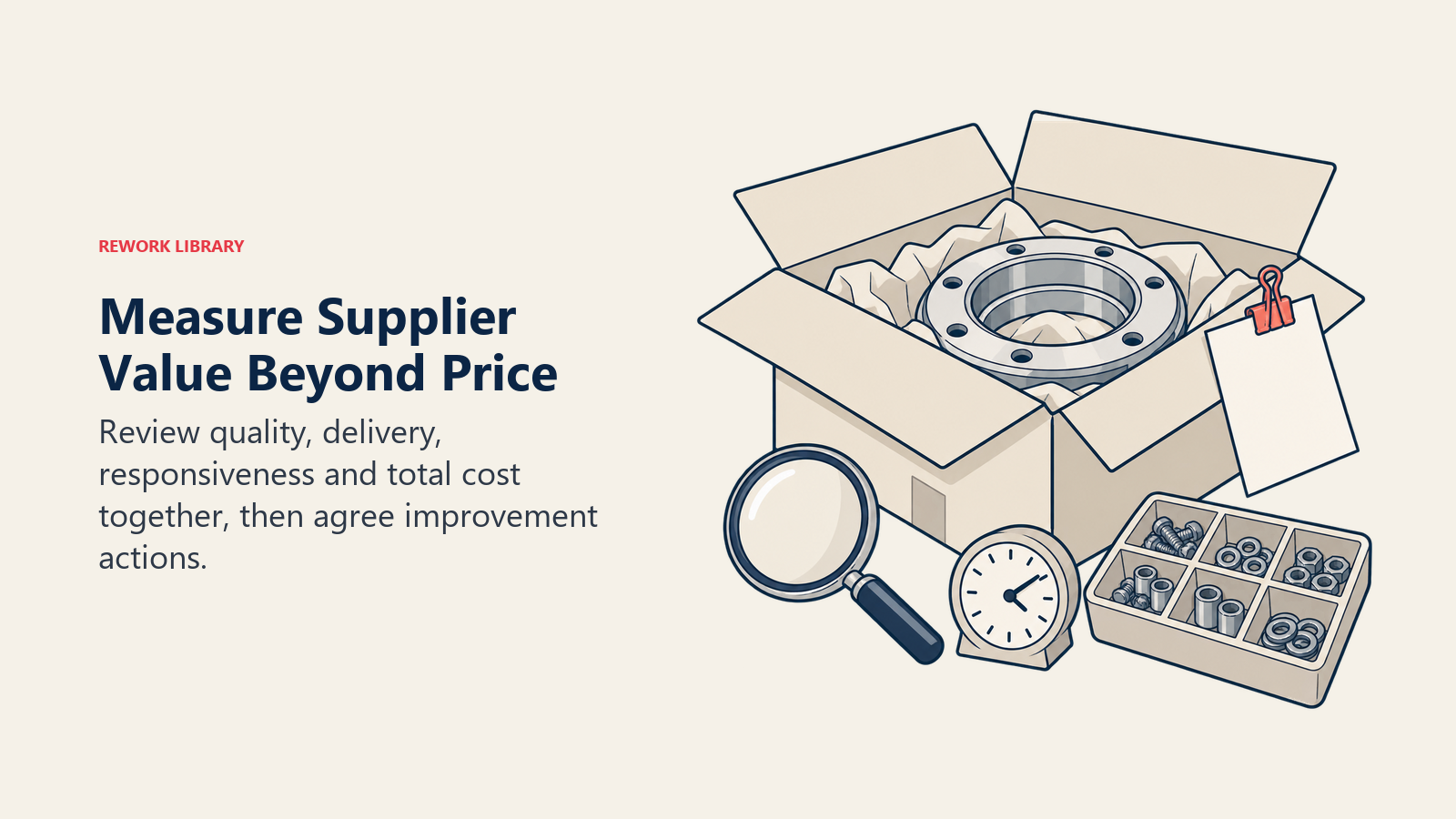
Start with supplier scorecards covering quality management, delivery, responsiveness, and total cost. Quality metrics might include defect rates, first-pass acceptance, and warranty claims. Delivery tracks on-time performance, order fill rates, and lead time consistency. Responsiveness measures communication timeliness, issue resolution speed, and flexibility in accommodating changes.
Cost metrics need sophistication beyond unit price. Track total cost of ownership including quality costs, inventory carrying costs, and transaction costs. A supplier with higher unit prices but zero defects and perfect delivery might cost less overall than a cheaper supplier requiring extensive incoming inspection and safety stock buffers.
Regular business reviews formalize performance discussions. Quarterly reviews for strategic suppliers should cover scorecard results, upcoming projects, market trends, and improvement initiatives. These aren't just report-outs but collaborative sessions identifying opportunities and addressing concerns before they become problems.
Continuous improvement initiatives extend SRM beyond monitoring to active capability development. Joint cost reduction projects apply lean manufacturing methodologies to eliminate waste in both operations. Quality improvement teams tackle chronic defect issues at their source. Technology sharing accelerates mutual innovation.
Recognition programs reinforce desired behaviors. Supplier awards for outstanding performance, case studies showcasing successful collaborations, and preferential treatment for top performers all signal what excellence looks like and encourage others to improve.
The goal isn't punishing poor performers but creating transparency that drives improvement. When both parties see the same data and agree on goals, collaboration becomes natural. Problems get solved jointly rather than blamed on each other.
Technology Enablement
Modern SRM requires technology platforms that support collaboration and information sharing at scale. Manual processes can't keep pace with the complexity and volume of supplier interactions.
Supplier portals provide self-service access to purchase orders, specifications, quality requirements, and forecasts. Instead of emailing documents back and forth, suppliers log in to see current information. They can acknowledge orders, submit advance shipping notices, and update lead times. This transparency reduces errors and accelerates communication.
Integration with your ERP and procurement systems enables real-time data exchange. Electronic data interchange (EDI) or API connections automate purchase orders, invoices, and shipping notices. This eliminates manual data entry, reduces transaction costs, and speeds processing.
Supplier relationship management software consolidates supplier information, performance data, and communication history. It tracks scorecards automatically, triggers business reviews, and provides analytics on supplier performance trends. Executives can see supply base health at a glance through manufacturing KPIs while buyers access detailed interaction histories.
Collaboration tools extend beyond transactions to joint projects. Shared document repositories, project management systems, and communication platforms support cross-company teams working on cost reduction or quality improvement. Virtual design reviews include supplier engineers early in product development.
Data analytics turn supplier information into insights. Spend analysis identifies consolidation opportunities. Performance trending highlights at-risk suppliers before they fail. Predictive analytics forecast which suppliers might struggle with upcoming volume changes.
But technology only enables SRM; it doesn't create relationships. The portal is worthless if suppliers don't use it. Integration helps only when processes are standardized. Analytics matter only when someone acts on insights. Technology must support a broader SRM strategy, not replace human relationships.
Making SRM Work
Several factors distinguish successful SRM programs from those that stall after initial enthusiasm. First, executive sponsorship matters. When procurement VP talks about strategic suppliers but the CEO treats them as cost centers to squeeze, suppliers notice the disconnect. Leadership must consistently reinforce that key suppliers are partners, not adversaries.
Cross-functional involvement prevents SRM from becoming a procurement silo. Engineering needs input on technical capabilities, quality on supplier processes, operations on delivery reliability. Supplier decisions affect multiple departments; their perspectives improve outcomes.
Realistic segmentation prevents relationship overload. You can't have strategic relationships with 200 suppliers. Ruthless prioritization focuses effort where it matters most. Better to deeply develop relationships with 15 critical suppliers than superficially manage relationships with 150.
Long-term perspective distinguishes SRM from tactical purchasing. Quarterly pressure to reduce costs tempts short-term decisions that damage supplier relationships. Switching suppliers for minor cost savings destroys trust and prevents collaboration. SRM requires patience as relationships mature and benefits compound.
Reciprocity builds sustainable partnerships. If you expect suppliers to invest in your success, you must invest in theirs. Share forecasts honestly, pay invoices promptly, and honor commitments even when convenient alternatives emerge. Suppliers prioritize customers who treat them well.
Common pitfalls include treating SRM as compliance paperwork. Scorecards that nobody reviews and business reviews that nobody attends waste everyone's time. SRM tools should drive action, not create bureaucracy.
Another mistake is one-size-fits-all relationship approaches. Strategic suppliers need customized relationship strategies reflecting their unique importance and capabilities. Template approaches miss what makes each relationship valuable.
Strategic Value Creation
The ultimate test of SRM is value creation beyond what transactional relationships deliver. Several mechanisms generate this value when relationships reach strategic levels.
Innovation collaboration accelerates product development and improvement. Suppliers with technical expertise contribute ideas during design phases. Early supplier involvement identifies cost reduction opportunities before designs lock. According to Gartner research, companies with effective SRM programs gain priority access to supplier capacity and innovation, particularly during supply shortages. Suppliers might suggest alternative materials or processes that improve performance while reducing cost.
Market intelligence flows from suppliers serving multiple industries. They spot trends, identify emerging technologies through Industry 4.0 adoption, and warn about supply disruptions before they hit. This early warning helps you respond proactively rather than reactively to market changes.
Preferential treatment during shortages rewards loyal customers. When capacity tightens or materials become scarce, suppliers prioritize strategic partners. The manufacturer who treated suppliers as partners gets supply while competitors scramble.
Risk reduction comes from supplier transparency and collaboration. When suppliers share capacity constraints, quality issues, or financial challenges early through logistics optimization coordination, you can respond before disruptions occur. Transactional relationships hide problems until they cause failures.
Process integration reduces costs for both parties. Electronic ordering, automated invoicing, and vendor-managed inventory eliminate transaction costs. Lean collaboration removes waste from interfaces between companies. These savings exceed what price negotiations alone achieve.
The competitive advantage from SRM compounds over time. Initial benefits come from improved quality and delivery. But as relationships mature, innovation collaboration and preferential treatment create advantages competitors can't quickly replicate. Your suppliers become a moat protecting your market position.
Learn More
