ERP for Manufacturing: Integrated Systems for Operational Excellence
Turn this article into takeaways for your work.


Each assistant summarizes the article only for you and suggests best practices for your work.
Twenty years ago, most manufacturers ran on spreadsheets, disconnected databases, and paper-based systems. Production schedules lived in one system, inventory in another, and accounting in a third. Today, that fragmentation is a competitive liability.
Enterprise Resource Planning (ERP) systems have evolved from back-office financial tools into comprehensive platforms that orchestrate every aspect of manufacturing operations. But not all ERPs are created equal, and selecting the wrong system, or implementing the right one poorly, can cripple operations for years.
ERP as the Integrated System of Record
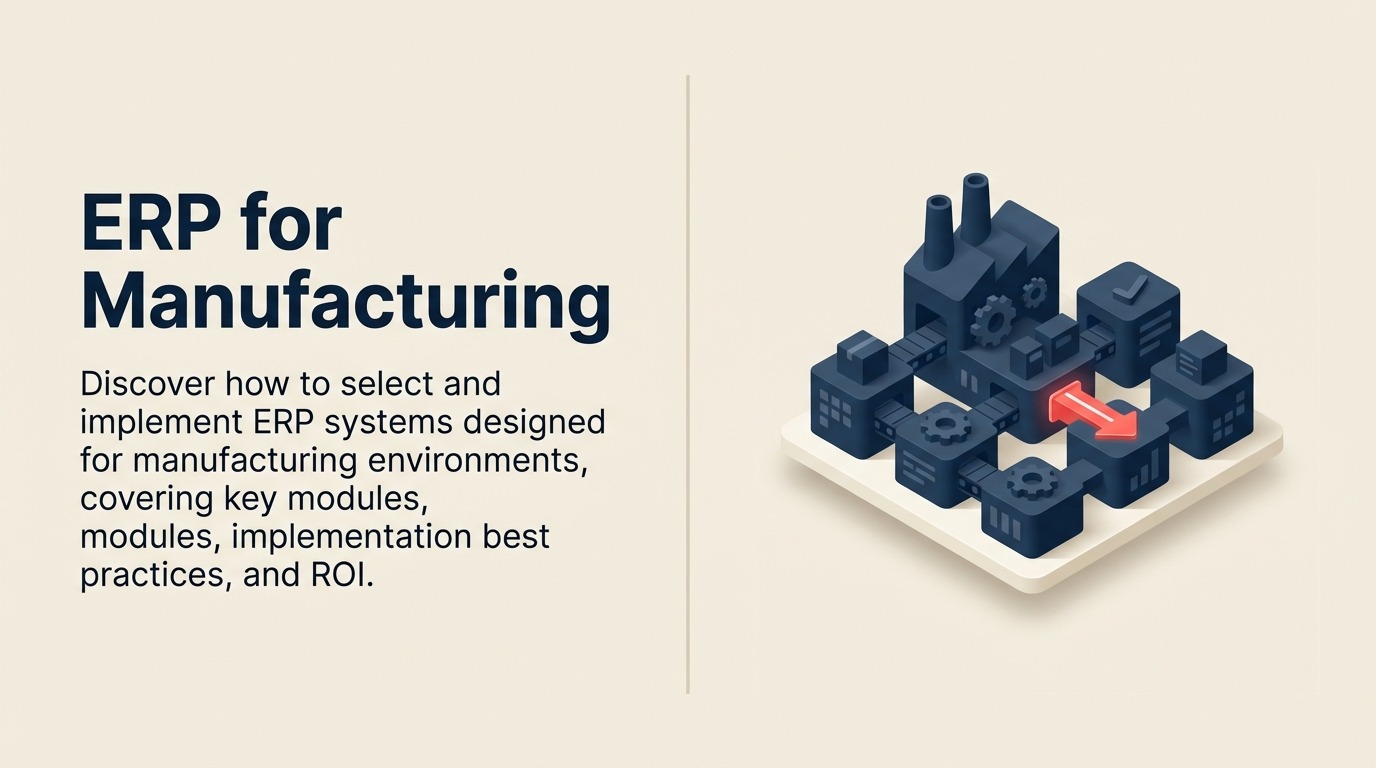
An ERP system serves as the single source of truth for manufacturing operations, integrating data and processes across the entire business. It's the backbone that connects production planning, inventory management, quality control, and financial operations into one cohesive platform.
What distinguishes manufacturing ERP from generic business software is its deep understanding of production operations. While a general ERP might handle orders and invoicing well, a manufacturing-specific system understands bills of materials, routings, work centers, capacity constraints, and the complex interdependencies between them.
Core ERP functionality typically includes financial management, human resources, and basic supply chain capabilities. Extended ERP functionality adds manufacturing-specific modules like production scheduling, quality management, and shop floor control. The key is ensuring your ERP can handle the specific complexities of your manufacturing environment without excessive customization.
Manufacturing-specific ERP capabilities include multi-level BOM management, production scheduling algorithms that respect capacity constraints, shop floor data collection integration, lot and serial number traceability, quality hold and quarantine management, and job costing for custom manufacturing.
Essential Manufacturing Modules
Production planning and scheduling modules form the operational heart of a manufacturing ERP. Master Production Scheduling (MPS) translates demand forecasts and customer orders into a production plan. Material Requirements Planning (MRP) then explodes that plan through the bill of materials, calculating what components need to be purchased or manufactured and when they're needed.
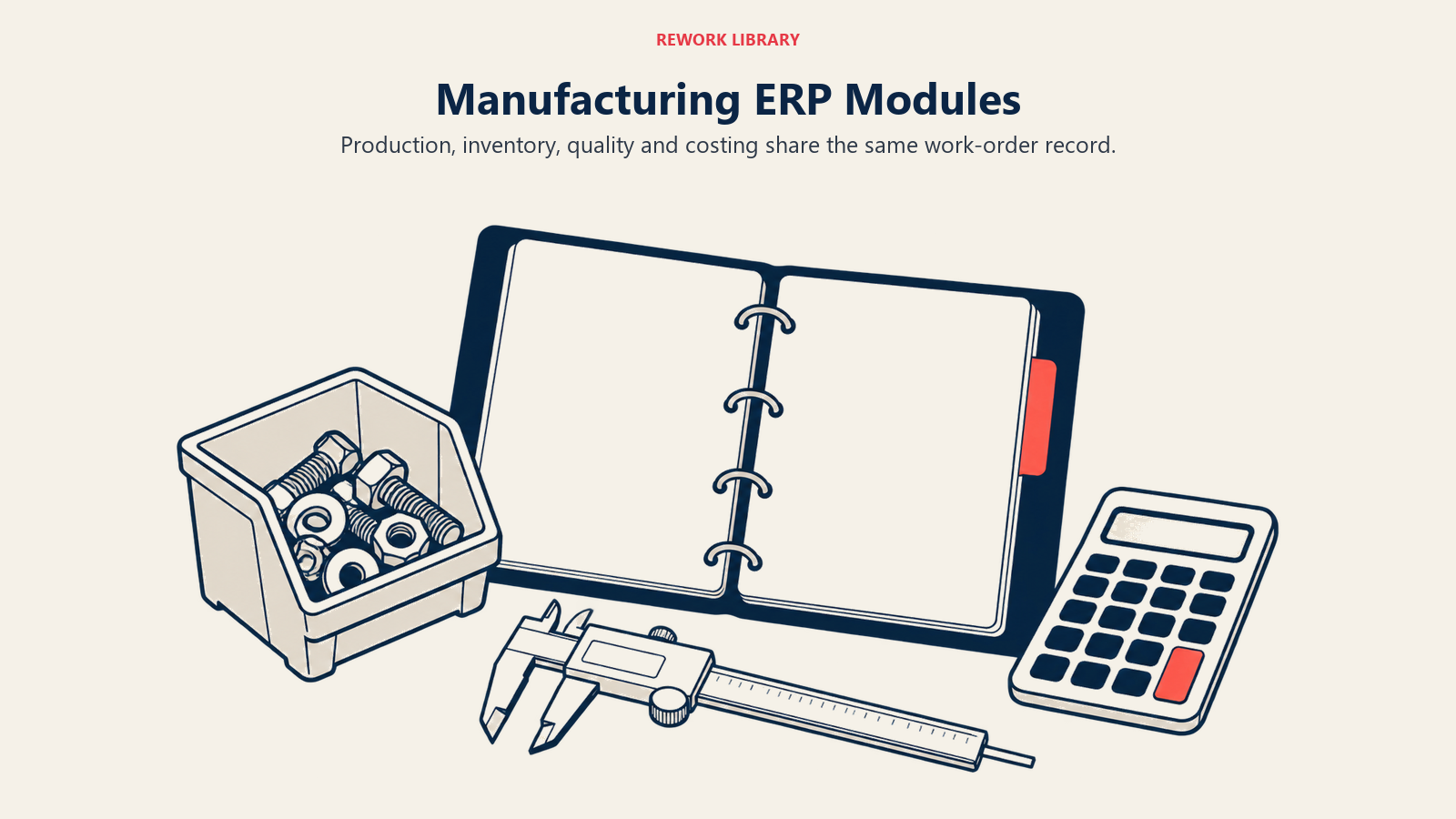
Inventory and warehouse management goes far beyond simple stock counts. Modern manufacturing ERPs track inventory by location, lot, serial number, and status. They manage multiple warehouses, support various inventory valuation methods, and handle complex scenarios like consignment inventory, vendor-managed inventory, and subcontractor stock.
Quality management modules integrate inspection plans with production processes. They trigger quality checks at specified operations, record inspection results, manage nonconforming material, and link quality data to specific lots for traceability. This integration ensures quality control isn't an afterthought but a built-in part of the production process.
Shop floor control and execution bridge the gap between the plan and reality. These modules release work orders to the floor, collect production data in real-time, track labor and machine hours, and provide visibility into work-in-process. Some ERPs include Manufacturing Execution System (MES) functionality, while others integrate with dedicated MES solutions.
Product lifecycle management (PLM) or product data management (PDM) capabilities manage engineering data. CAD files, specifications, engineering change orders. The integration between PLM and ERP ensures that production always uses the latest approved design and that changes flow smoothly from engineering to the shop floor.
Procurement and supplier management handles the sourcing side of the operation. Beyond basic purchase order processing, manufacturing ERPs support supplier quality management, blanket orders with scheduled releases, supplier portals for collaboration, and landed cost tracking that includes freight, duties, and other acquisition costs.
Maintenance management tracks equipment, schedules preventive maintenance, and manages repair work orders. Integration with production scheduling ensures maintenance can be planned during scheduled downtime rather than causing unplanned interruptions.
Cost accounting and job costing provides the financial visibility manufacturers need. Standard costing, actual costing, activity-based costing, the system needs to support your methodology. For custom manufacturers, job costing tracks all costs to specific orders, providing accurate profitability analysis.
ERP Selection Process
Requirements definition starts with mapping your core business processes by area: how do orders flow through your business? How do you plan and schedule production? How do you manage quality? Document current processes, identify pain points, and define must-have versus nice-to-have capabilities.
Manufacturing complexity considerations drive system requirements. Discrete manufacturing (producing distinct units like furniture or electronics) has different needs than process manufacturing (producing batches of chemicals or food products). Engineer-to-order operations require robust project management and change control. Make-to-stock environments need excellent demand planning and warehouse management.
The best-of-breed versus integrated suite decision involves tradeoffs. Best-of-breed means selecting specialized applications for each function, one vendor for ERP core, another for MES, another for PLM. This can provide superior functionality in each area but creates integration challenges. An integrated suite from a single vendor simplifies integration but might compromise on functionality in specific areas.
Cloud versus on-premise deployment has shifted dramatically toward cloud in recent years. Cloud ERPs eliminate server infrastructure, provide automatic updates, and enable access from anywhere. But some manufacturers still prefer on-premise systems for data control, customization flexibility, or because their facilities lack reliable internet connectivity.
Vendor evaluation criteria should include manufacturing industry experience (do they understand your specific industry?), functional fit to requirements, implementation methodology, total cost of ownership, financial stability of the vendor, customer references from similar manufacturers, and the quality and availability of support.
Implementation Best Practices
Project governance and leadership determines success or failure. You need executive sponsorship, not just nominal support but active participation in key decisions. A strong project manager who understands both manufacturing and change management is essential. And clear decision-making authority prevents endless debates that stall progress.
Business process reengineering versus customization is the eternal ERP dilemma. The vendor's system embodies best practices from hundreds of implementations. When you customize extensively to match current processes, you increase implementation cost, create upgrade difficulties, and may perpetuate inefficient practices. The better approach is to challenge existing processes: why do we do it this way? Could the standard system approach work?
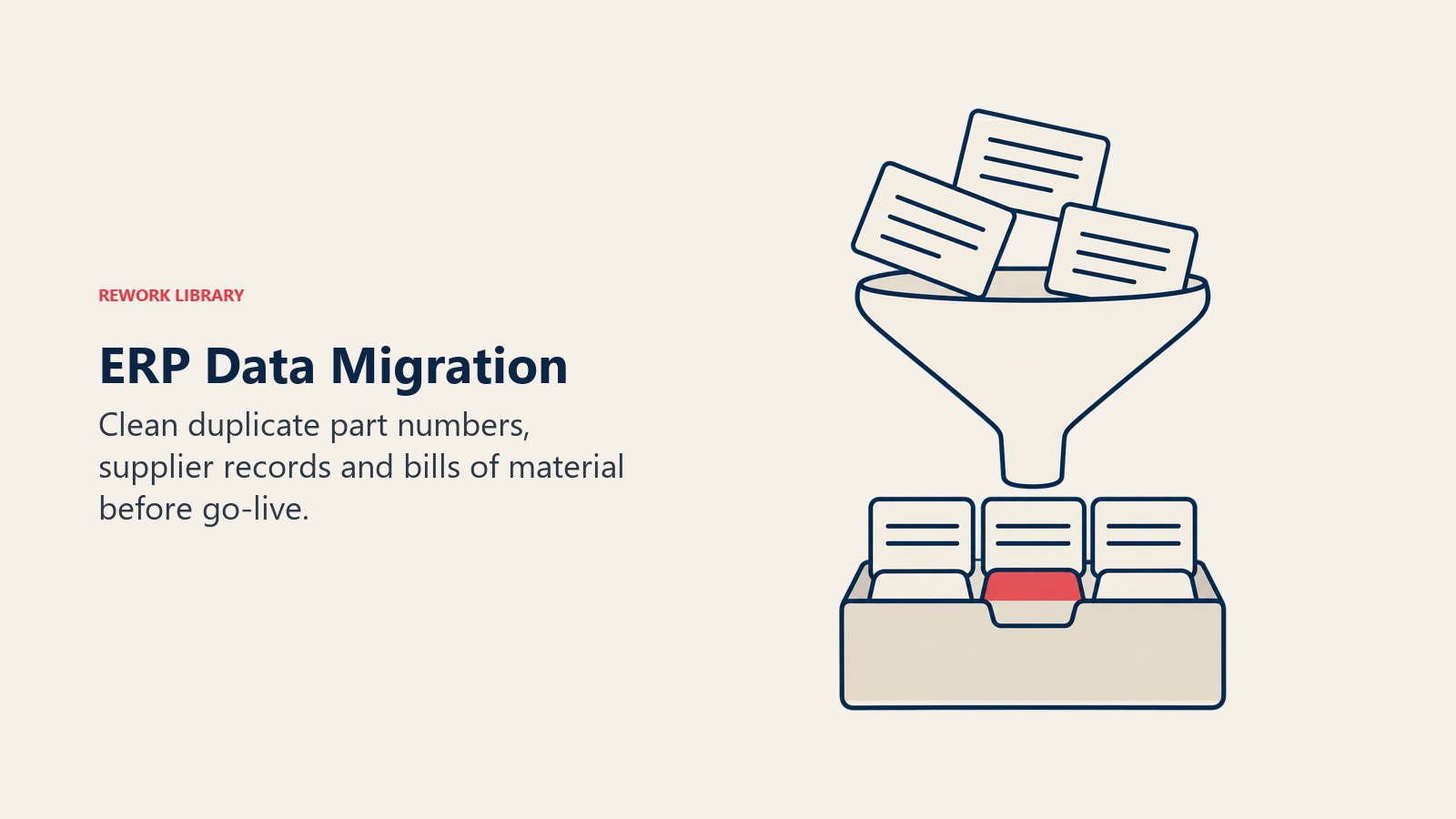
Data migration and master data management can consume 30-40% of implementation effort. You're not just moving data; you're cleaning it, standardizing it, and often restructuring it. This is the time to eliminate duplicate part numbers, standardize vendor names, and clean up bills of material. Poor data quality going into the new ERP guarantees problems from day one.
Phased versus big bang approaches each have merits. Phased implementations reduce risk, allow learning from early modules before tackling more complex ones, and spread out organizational change. Big bang implementations avoid running parallel systems and get everyone on the new system simultaneously. For most manufacturers, a phased approach by plant or product line reduces risk while maintaining momentum.
Change management and training can't be afterthoughts. People resist change, especially when new systems disrupt familiar workflows. Communicate early and often about why you're implementing the ERP and what benefits it will bring. Train not just on how to use the system but on the new business processes. Identify super-users in each department who can support their colleagues post-go-live.
Post-go-live support and optimization is when the real work begins. The first month after go-live will be chaotic. Have extra support available to handle issues quickly. But don't stop there. Most organizations only utilize 60-70% of their ERP's capabilities initially. Continuous optimization means gradually enabling additional functionality, refining processes, and building reports and analytics that drive better decisions.
Integration Architecture
MES integration for the shop floor creates a seamless flow between planning and execution. The ERP sends work orders and schedules to the MES. The MES collects real-time production data, tracks work-in-process, and sends completions and material consumption back to the ERP. This integration provides the visibility manufacturers need while keeping each system focused on what it does best.
IoT and equipment connectivity is transforming ERP integration. Rather than manually entering machine hours and production counts, sensors capture data automatically. Equipment communicates its status, performance, and maintenance needs. This real-time data feeds into the ERP, enabling predictive analytics and faster response to issues.
Supply chain partner EDI (Electronic Data Interchange) automates transactions with customers and suppliers. Customer orders flow directly into your ERP. Your purchase orders transmit electronically to suppliers. Advanced shipping notices from suppliers automatically update your expected receipts. This automation eliminates manual entry errors and accelerates information flow.
Business intelligence and analytics extract value from the data in your ERP. The operational system captures transactions; BI tools turn that transaction data into insights. Which products have the highest margins? Where are quality issues concentrated? How does actual production compare to the plan? Modern ERPs often include embedded analytics, but many manufacturers also use specialized BI platforms for more sophisticated analysis.
Building on an Integrated Foundation
An ERP implementation is not a project with a defined end, it's the foundation for continuous operational improvement. The most successful manufacturers view their ERP as a platform that evolves with their business, enabling new capabilities as needs change.
The key is matching system capabilities to your specific manufacturing complexity, implementing thoughtfully with a focus on both technology and people, and integrating with the broader technology ecosystem. When done right, a manufacturing ERP transforms operations from reactive firefighting to proactive orchestration.
Learn More
