Environmental Compliance for Manufacturers: Managing Regulations, Risk, and Reporting
Turn this article into takeaways for your work.


Each assistant summarizes the article only for you and suggests best practices for your work.
A metal finishing company received a notice of violation for discharge permit exceedances. The fine was $75,000. But the real cost came from mandatory corrective actions, increased monitoring, enhanced reporting, and the attention of regulators who now watched them closely. Over two years, compliance with the consent decree cost $400,000. The violation stemmed from a failed monitoring pump that nobody noticed for three months. A $300 part that wasn't maintained properly cost half a million dollars plus reputation damage.
Environmental compliance violations can be existential. Fines reach millions. Operations get shut down. Criminal prosecution is possible for knowing violations. Reputation damage affects customer relationships and community standing. Insurance costs increase. But the bigger cost is operational disruption from enforcement actions, remediation requirements, and regulatory scrutiny. Compliance isn't optional bureaucracy. It's fundamental risk management that protects business continuity.
The Compliance Landscape
Environmental regulations come from federal, state, and local authorities creating layers of requirements that vary by location and industry. Understanding what applies to your operations is the first step toward compliance.
Federal regulations through EPA establish baseline requirements nationwide. Clean Air Act governs air emissions. Clean Water Act regulates water discharges. Resource Conservation and Recovery Act manages hazardous waste. Toxic Substances Control Act controls chemical use. These laws authorize EPA to set standards, issue permits, and enforce compliance. Violations can result in civil penalties up to $50,000 per day plus criminal prosecution for knowing violations.
State regulations often exceed federal minimums. California environmental requirements are notably stringent. New York has specific standards. Texas has its own compliance framework. Even when federal regulations apply, state agencies often administer them with additional state-specific requirements. You need to understand both federal baseline and state-specific rules.
Local regulations add another layer. Air districts regulate emissions locally. Sewer districts control wastewater discharge. Fire marshals regulate hazardous material storage. Building departments oversee modifications. These local authorities have direct enforcement power and often conduct more frequent inspections than state or federal agencies.
Industry-specific standards apply based on what you make and how you make it. Metal finishing faces plating waste requirements. Chemical manufacturing has process safety standards. Foundries have particulate emission limits. Paint shops need VOC controls. The EPA provides sector-specific guidance for various manufacturing industries. Understanding which industry-specific rules apply prevents missing requirements that don't apply to all manufacturers.
International standards matter for exports and global operations. European REACH regulations affect chemical use. ISO 14001 provides environmental management frameworks. Country-specific regulations apply to overseas facilities. Global operations mean managing compliance across multiple regulatory systems with different requirements and enforcement approaches.
Compliance Management Systems
Reactive compliance (responding when regulators show up) is expensive and risky. Proactive compliance management prevents violations through systematic identification, control, and monitoring of requirements.
Regulatory tracking identifies requirements that apply to your operations. This isn't a one-time analysis. Regulations change constantly. New rules get promulgated. Existing rules get amended. Permits get renewed with modified conditions. Someone needs to track regulatory developments and assess how changes affect your operations. Many companies subscribe to regulatory tracking services or use environmental management consultants for this.
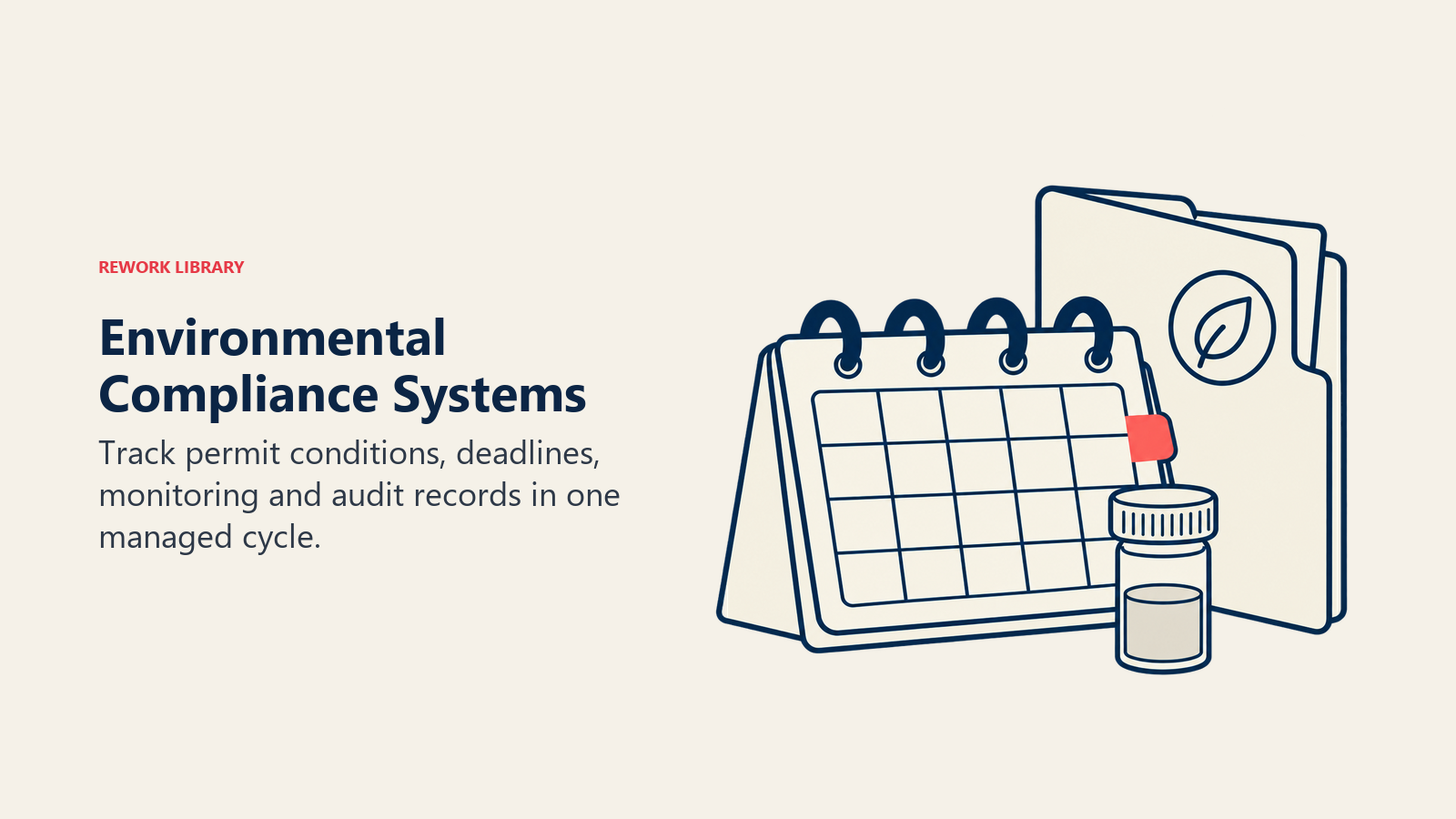
Compliance calendars organize obligations chronologically. Permits require renewal dates. Reports have submission deadlines. Monitoring happens on schedules. Training must occur annually. Calibrations need periodic completion. A comprehensive compliance calendar prevents missing deadlines that trigger violations. Even when you're in compliance operationally, late reporting creates violations.
Permits and licenses require applications, renewals, and condition compliance. Air permits authorize emissions and set limits. Water discharge permits control what you send to sewers or waterways. Hazardous waste permits enable storage and treatment. Each permit has specific conditions you must meet. Tracking permit conditions and demonstrating compliance is core environmental management work.
Monitoring and measurement verify compliance with limits and detect problems early. Emissions monitoring ensures you're within permitted levels. Discharge sampling confirms wastewater meets limits. Ambient monitoring at property boundaries checks for exceedances. Some monitoring is required by permits. Additional voluntary monitoring provides early warning before exceedances occur. More data is better than less when it comes to compliance.
Record-keeping documents compliance for regulatory inspections and enforcement. You need records of monitoring results, maintenance activities, training completion, waste manifests, and virtually everything environmental-related. Regulations often specify how long records must be kept. Digital systems make record management easier but backup systems prevent loss from system failures. If you can't prove compliance with records, regulators assume non-compliance.
Internal auditing validates that compliance systems work. Periodic internal audits check that monitoring happens as required, records are maintained properly, and procedures are followed. Internal audits find problems before regulators do, enabling corrective action before violations occur. Third-party audits provide independent verification and fresh perspectives.
Organizational Approach
Environmental compliance can't be one person's responsibility. It requires organizational commitment with clear roles, adequate resources, and management oversight.
Accountability must be clear. Someone owns overall environmental compliance, typically an environmental health and safety manager or similar role. But operational managers own compliance in their areas. Maintenance owns equipment that affects compliance. Operators follow procedures that ensure compliance. Purchasing buys materials that affect compliance. Everyone has environmental responsibilities. Clear assignment prevents everyone's responsibility becoming nobody's responsibility.
Training ensures people know requirements and how to comply. Operators need training on procedures that affect compliance. Supervisors need understanding of regulatory requirements. Maintenance staff need training on environmental systems. New employee orientation should include environmental compliance basics. Regular refresher training prevents knowledge decay. Document training completion for regulatory inspections.
Management review provides executive oversight ensuring compliance gets adequate attention and resources. Quarterly or annual management reviews of environmental performance, compliance status, audit findings, and improvement initiatives keep executives engaged. When management treats compliance as important, organizations respond. When management delegates and ignores it, compliance deteriorates.
Continuous improvement applies lean thinking to compliance. You can always improve compliance processes, reduce risk, enhance monitoring, or increase efficiency. Treating compliance as continuous improvement opportunity rather than static obligation builds organizational capability that becomes competitive advantage. Companies excelling at compliance spend less managing it and face less enforcement risk than companies treating it as burden.
Common Compliance Areas
While specific requirements vary, certain environmental compliance areas affect most manufacturers. Understanding these domains helps focus compliance efforts.
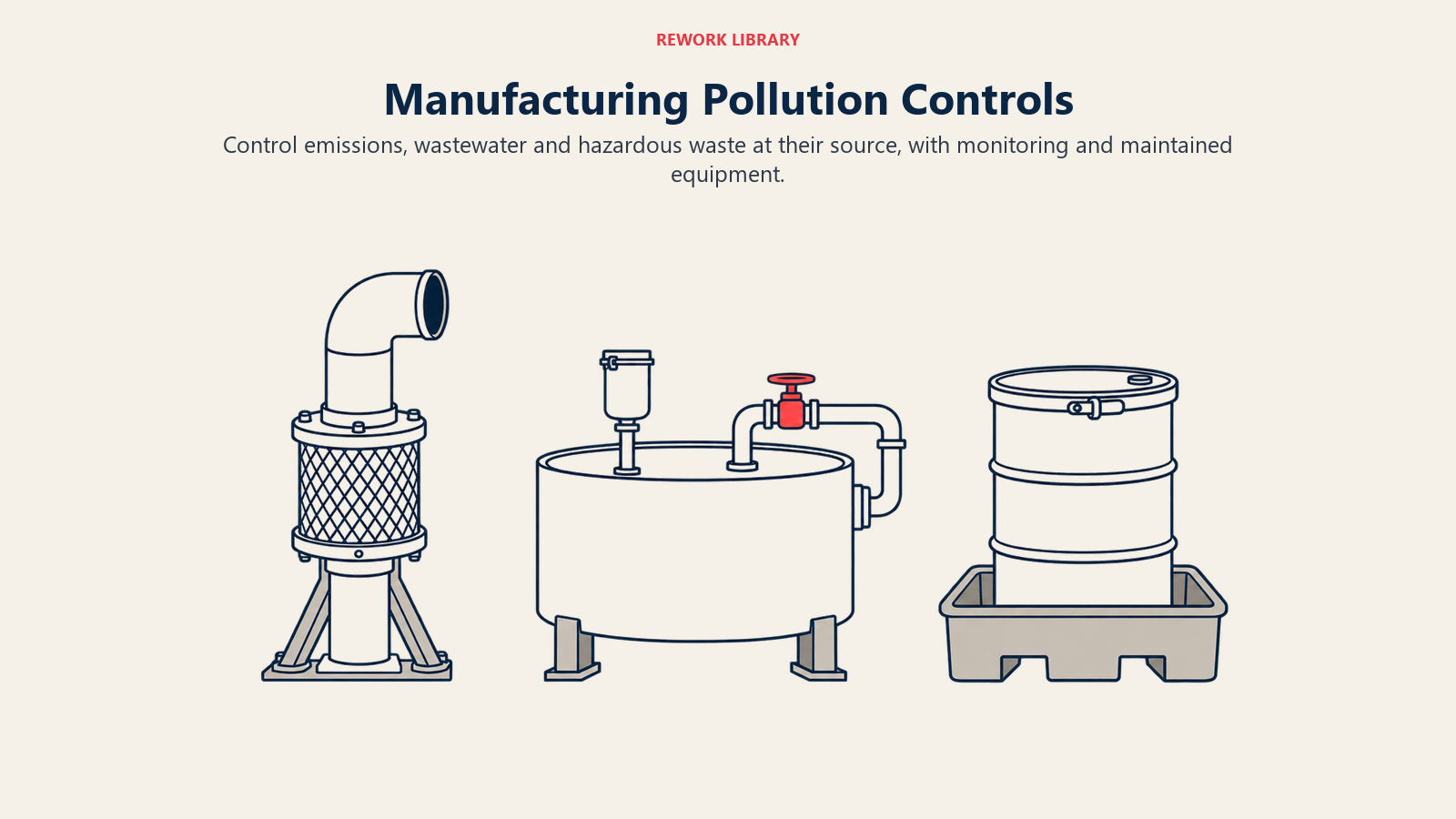
Air quality permits limit emissions of regulated pollutants including particulate matter, volatile organic compounds, nitrogen oxides, and many specific chemicals. Compliance involves operating within permitted limits, monitoring emissions, maintaining control equipment, and record-keeping. Air permits are often the most complex environmental permits manufacturers hold because they require detailed technical understanding of emissions sources and controls.
Water discharge permits control what goes down drains or into waterways. Wastewater must meet limits for pH, metals, organics, temperature, and other parameters depending on what you discharge and where. Some discharges require pretreatment before sending to sewers. Direct discharge to waterways faces stricter limits. Compliance involves sampling, analysis, and maintaining treatment systems.
Hazardous waste management governs storage, handling, and disposal of wastes classified as hazardous. Generators must identify hazardous wastes, store them properly, use appropriate containers, track with manifests, and dispose through permitted facilities. Large quantity generators face stricter requirements than small generators. But the fundamentals (proper identification, storage, and disposal) apply universally.
Stormwater discharge requires permits preventing polluted stormwater from leaving your property. Best management practices like detention ponds, filters, and good housekeeping prevent contamination. Regular inspections verify practices work. Storm sewer discharge is often overlooked until violations occur because stormwater systems are separate from process wastewater.
Spill prevention and response plans address how you prevent releases and respond when they occur. Spill prevention includes secondary containment, material handling procedures, and equipment maintenance. Response plans define notifications, containment actions, and cleanup procedures. Having plans matters less than training people to execute them effectively.
Chemical management and reporting includes inventory tracking, safety data sheets, employee right-to-know, and toxic release reporting. Some chemicals require specific storage conditions. Others trigger reporting thresholds. Tracking what chemicals you use and in what quantities enables compliance with multiple regulations that key off chemical inventories.
Crisis Management
Despite good compliance management, incidents happen. Response capabilities minimize damage and demonstrate responsibility to regulators.
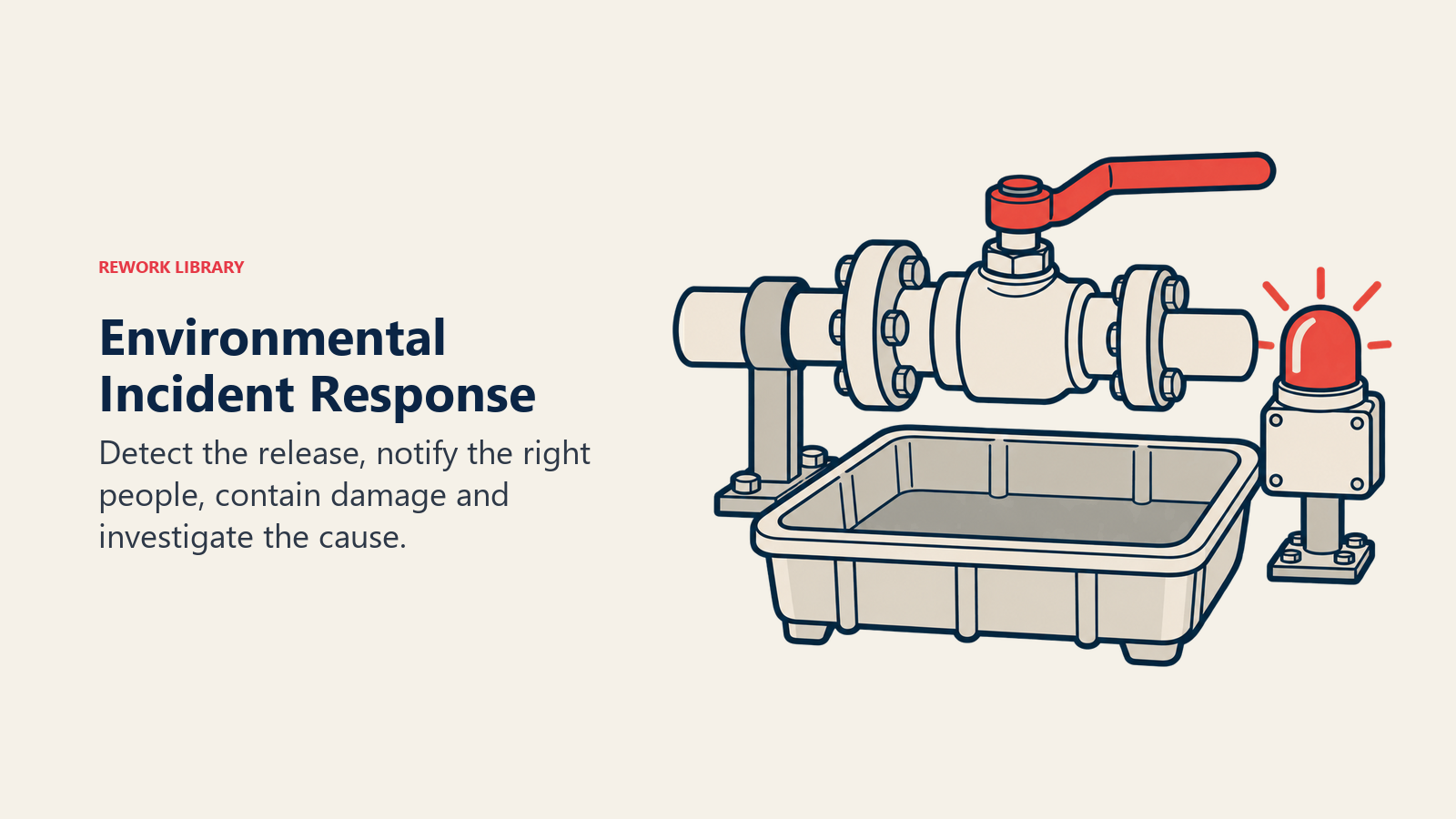
Incident detection systems alert you to problems immediately. Alarms on critical monitoring equipment. Visible indicators when conditions are abnormal. Employee training to recognize and report problems. Fast detection enables fast response before small problems become major incidents. Every minute counts when something goes wrong environmentally.
Notification protocols define who gets contacted when. Some incidents require immediate regulatory notification. Others don't. But knowing the threshold and having contact information ready prevents delays during crises. Delayed notification makes incidents worse because it suggests hiding problems. Prompt notification demonstrates responsibility even when delivering bad news.
Containment and mitigation actions stop releases and minimize environmental damage. This might mean shutting down processes, closing valves, deploying spill equipment, or activating backup systems. Having equipment staged and procedures practiced means effective response instead of chaos. Practice drills validate that plans work and people know their roles.
Investigation and root cause analysis determine what happened and why. Understanding causes enables corrective action that prevents recurrence. Regulators want to see that you understand problems and are fixing underlying causes, not just symptoms. Thorough investigations demonstrate responsible management.
Remediation cleans up damage from incidents. This might be simple cleanup of small spills or expensive soil and groundwater remediation from major releases. Having remediation contractors pre-qualified enables fast mobilization. Insurance coverage for environmental incidents protects against catastrophic costs though policies often have significant exclusions.
Technology Solutions
Modern technology enables more effective compliance management than manual systems. Digital tools, sensors, and analytics improve both compliance performance and efficiency.
Environmental management information systems centralize compliance data, track deadlines, manage documentation, and generate reports. These systems prevent missing requirements through automated reminders and workflow management. They also aggregate data for analysis revealing trends and enabling proactive management. Many EMIS products integrate with other business systems pulling data automatically rather than requiring manual entry.
Continuous monitoring systems track parameters in real-time detecting exceedances immediately. Continuous emissions monitoring measures air pollutants constantly rather than periodic sampling. Continuous water quality monitoring catches discharge violations as they occur. Real-time monitoring enables corrective action before significant violations occur and creates comprehensive compliance records.
Mobile applications enable field inspections, observations, and reporting. Inspectors use tablets or phones to complete checklists, take photos, and record findings. This data uploads to central systems immediately rather than transcribing paper notes later. Mobile tools make field data collection more efficient and accurate.
Predictive analytics identify compliance risks before violations occur. Machine learning algorithms analyze monitoring data, maintenance records, and operational parameters predicting when systems might fail or conditions might exceed limits. This enables preventive action avoiding violations.
Automated reporting generates compliance reports from system data reducing manual effort and errors. Monthly discharge monitoring reports pull data from monitoring databases. Annual emissions inventory reports aggregate data from multiple sources. Automation ensures consistent, timely reporting with less effort than manual preparation.
Moving Forward
Environmental compliance isn't optional or something you add on when convenient. It's fundamental business requirement that protects operations, finances, and reputation. Violations create risks that threaten business survival.
Build compliance management systematically rather than reactively. Identify requirements. Track obligations. Monitor performance. Maintain records. Audit regularly. This systematic approach prevents violations and demonstrates responsible management to regulators, customers, and communities.
Treat compliance as integrated with operational excellence rather than separate burden. Environmental compliance improves when operations improve. Process control reduces variability that causes exceedances. Maintenance prevents equipment failures that create releases. Quality systems prevent waste that affects disposal costs. Connect environmental compliance with operational improvement rather than treating them as competing priorities.
Invest in people and systems that enable effective compliance management. Environmental compliance expertise whether internal staff or external consultants pays for itself by preventing violations. Environmental management systems organize compliance preventing expensive chaos. These investments cost less than violations and enforcement actions.
Remember that compliance is minimum standard, not aspiration. Meeting regulatory requirements prevents violations but doesn't make you environmentally excellent. Leading companies go beyond compliance to environmental stewardship that creates competitive advantage through stakeholder trust and operational efficiency. Use compliance as foundation for environmental excellence.
Learn More
