COGS Optimization in Manufacturing: Reducing Costs While Maintaining Quality
Turn this article into takeaways for your work.


Each assistant summarizes the article only for you and suggests best practices for your work.
Your gross margins are under pressure. Material costs are up 8% year-over-year. Competitors are offering lower prices. Customers are demanding cost reductions. Senior leadership wants a plan to reduce cost of goods sold by 10% while maintaining quality and delivery performance.
Where do you even start?
COGS optimization isn't about slashing costs indiscriminately. It's about systematically identifying and eliminating waste, improving efficiency, and making smarter sourcing decisions, without compromising the quality and service that customers value.
The manufacturers who excel at COGS optimization make it a continuous discipline, not a one-time crisis response. They attack costs across all dimensions (materials, labor, overhead, and quality) with rigorous analysis and sustained execution.
COGS Optimization Fundamentals
Effective cost reduction starts with understanding what you're optimizing and why.
COGS components and structure vary by business. In a typical manufacturer, materials might represent 45-60% of COGS, direct labor 15-25%, and manufacturing overhead 20-35%. Your specific breakdown determines where optimization efforts have the most impact.
If materials are 60% of COGS, a 5% material cost reduction equals a 3% total COGS reduction. If labor is only 15%, a 5% labor reduction equals less than 1% COGS improvement. Focus effort where impact is largest.
Impact on gross margin and profitability makes COGS reduction strategically important. Every dollar of COGS reduction flows directly to gross profit and then to operating profit. If you generate $50 million in revenue with 35% gross margin, reducing COGS by 3% adds $1.5 million to gross profit, an 8.6% improvement. McKinsey's analysis demonstrates that manufacturers can reduce COGS spending by about 30% through strategic approaches.
Trade-offs between cost, quality, and delivery require careful management. Cutting costs that compromise quality or on-time delivery performance destroys value. The goal is eliminating waste and inefficiency without sacrificing customer value.
Sustainable versus one-time cost reduction distinguishes lasting improvements from temporary fixes. One-time actions like inventory liquidation or delayed maintenance reduce costs temporarily but don't change your cost structure. Sustainable improvements based on lean manufacturing principles or supplier consolidation reduce costs permanently.
Focus on sustainable improvements that compound over time.
Understanding Your Current State
You can't improve what you don't measure. Start with comprehensive cost analysis.
COGS breakdown by product and component reveals where costs concentrate. Analyze total COGS by product line, material cost per product, labor hours and cost per product, overhead allocation per product, and cost-to-sell ratio by product.
This analysis often reveals surprising patterns: products you thought were profitable are losers, or high-volume products have worse economics than low-volume ones.
Cost trends and benchmarking show whether performance is improving or degrading. Track material cost trends, labor productivity trends, overhead rate trends, and total COGS as percentage of revenue.
Compare your costs to industry benchmarks or competitors where data is available. Are you within competitive range or at a structural disadvantage?
Identifying high-impact opportunities prioritizes where to focus improvement efforts. Use Pareto analysis to find the vital few cost elements representing the majority of costs. Evaluate potential savings magnitude, implementation difficulty, and strategic importance.
Not all cost reduction opportunities are equally attractive. Pursue high-impact, achievable improvements first.
Quick wins versus strategic initiatives require different approaches. Quick wins might include supplier negotiations, scrap reduction, or overtime elimination, implementable in weeks or months. Strategic initiatives like automation, supplier consolidation, or product redesign require longer timeframes and more investment.
Balance portfolio between quick wins that generate momentum and strategic initiatives that transform cost structure.
Optimizing Material Costs
For most manufacturers, materials represent the largest cost element and biggest opportunity.
Supplier negotiation and consolidation reduces purchase costs. Strategies include competitive bidding for significant purchases, consolidating volume to fewer suppliers for better pricing, negotiating long-term agreements with volume commitments, and leveraging market conditions when suppliers have excess capacity.
Even 3-5% material cost reduction creates significant COGS improvement.
Alternative materials and value engineering finds lower-cost materials that meet requirements. Work with engineering to identify substitute materials with lower cost, alternative suppliers or grades, reduced material content through design changes, and lighter-weight materials where weight isn't critical.
Value engineering questions every specification: Is this material really required? Could a less expensive option work? Can we use less of it?
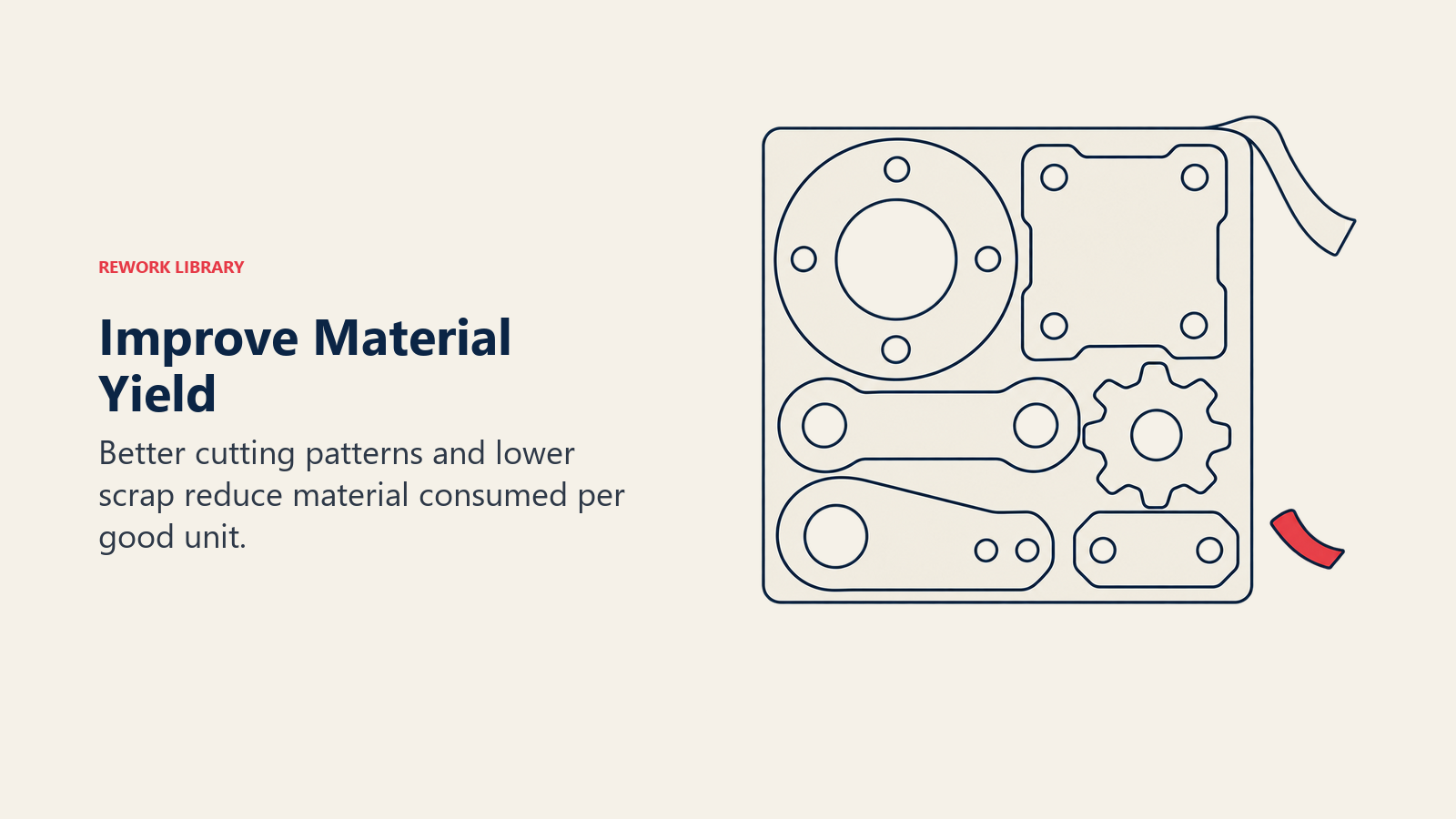
Scrap and waste reduction improves material yield. Track scrap by cause and product, implement process improvements to reduce defects, optimize cutting patterns to minimize waste, reuse or recycle scrap where possible, and improve first-pass yield.
If scrap is 5% of material cost, eliminating half of it reduces material costs by 2.5%.
Purchasing leverage and global sourcing accesses better pricing. Options include regional or global sourcing when logistics allow, purchasing consortiums with other companies, direct sourcing from manufacturers versus distributors, and long-term contracts locked in during favorable markets.
Balance cost savings against supply chain risk and total cost including logistics.
Inventory optimization and carrying costs reduce working capital and storage costs. Lower inventory levels through improved forecasting, reduce safety stock with better supplier reliability, implement just-in-time delivery where practical, and eliminate obsolete inventory.
Inventory reduction frees cash and reduces storage, handling, and obsolescence costs.
Improving Labor Productivity
Direct labor optimization improves efficiency and reduces cost per unit.
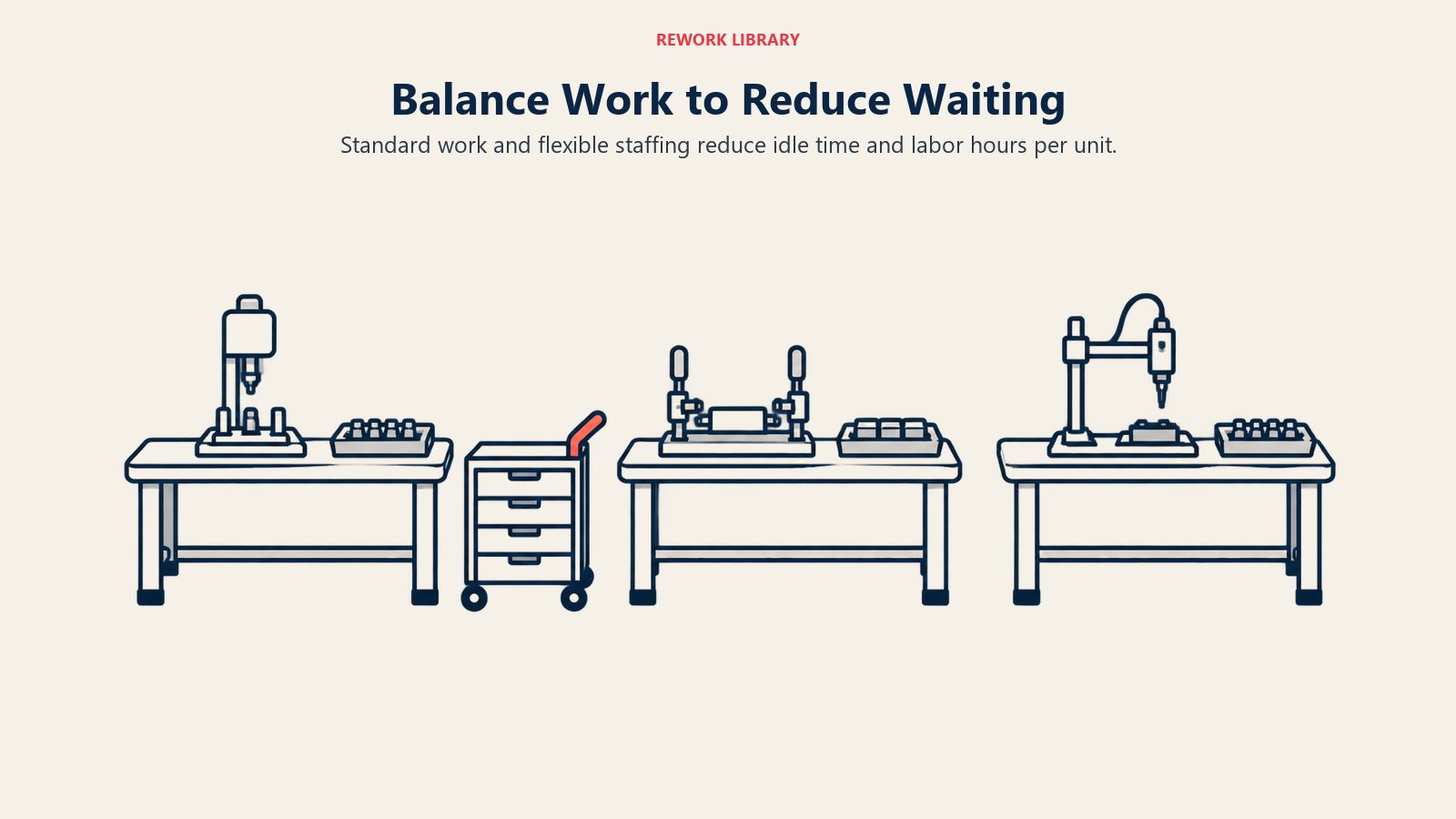
Process improvement and standardization establishes best methods. Document standard work for consistency, eliminate motion waste and unnecessary steps, improve workplace organization (5S), optimize process sequences and flows, and reduce setup and changeover time.
Standardized processes performed efficiently reduce labor hours per unit.
Automation and technology investment replaces high-cost labor with capital equipment where ROI justifies. Candidates for automation include repetitive manual operations, high-volume production runs, operations with quality or safety issues, and bottleneck processes limiting capacity.
Calculate payback period including all costs and savings. Don't automate for automation's sake.
Skills development and cross-training improves workforce flexibility and capability. Multi-skilled workers reduce bottlenecks, minimize downtime from absenteeism, enable more efficient scheduling, and adapt better to volume changes.
Investment in training pays back through higher productivity and quality.
Overtime management and shift optimization controls premium labor costs. Analyze root causes of overtime, add capacity at bottlenecks if chronic overtime occurs, optimize shift schedules for demand patterns, and use temporary labor for peaks instead of overtime.
Sustained overtime above 10% signals structural problems requiring capacity or scheduling solutions.
Labor utilization improvement reduces idle time. Balance workloads across operations, cross-train to shift labor to bottlenecks, improve material flow to reduce waiting, and implement pull systems to maintain steady work.
High utilization of productive work (not busy work) improves labor productivity.
Managing Overhead Costs
Overhead often grows unnoticed and requires active management.
Manufacturing overhead analysis breaks down the components. Major overhead categories include facilities costs (rent, depreciation, utilities), equipment depreciation and maintenance, indirect labor (supervision, quality, material handling), consumables and supplies, and tooling and fixtures.
Understand what drives each category so you can target improvements.
Capacity utilization improvement spreads fixed costs over more units. Increasing output from 70% to 85% capacity reduces overhead cost per unit by 18%. Strategies include sales growth to fill capacity, shift additions to run more hours, contract manufacturing to use excess capacity, and product mix shifts to constraint resources.
Higher utilization improves overhead absorption.
Energy efficiency initiatives reduce utility costs. Investments include LED lighting retrofits, HVAC optimization and controls, equipment power management, compressed air leak elimination, and peak demand management.
Energy projects often have attractive paybacks and environmental benefits.
Maintenance cost optimization balances reliability with cost. Implement preventive maintenance to avoid breakdowns, analyze breakdown patterns to identify unreliable equipment, negotiate maintenance contracts competitively, train operators to perform basic maintenance, and optimize spare parts inventory.
Better maintenance prevents costly downtime while controlling maintenance spending.
Facility and equipment rationalization eliminates underutilized assets. Consolidate into fewer facilities if footprint is excessive, dispose of redundant or obsolete equipment, sublease excess space if possible, and right-size facility services to actual needs.
Carrying excess capacity that you'll never use wastes overhead dollars.
Reducing Quality Costs
Quality problems create hidden costs throughout operations.
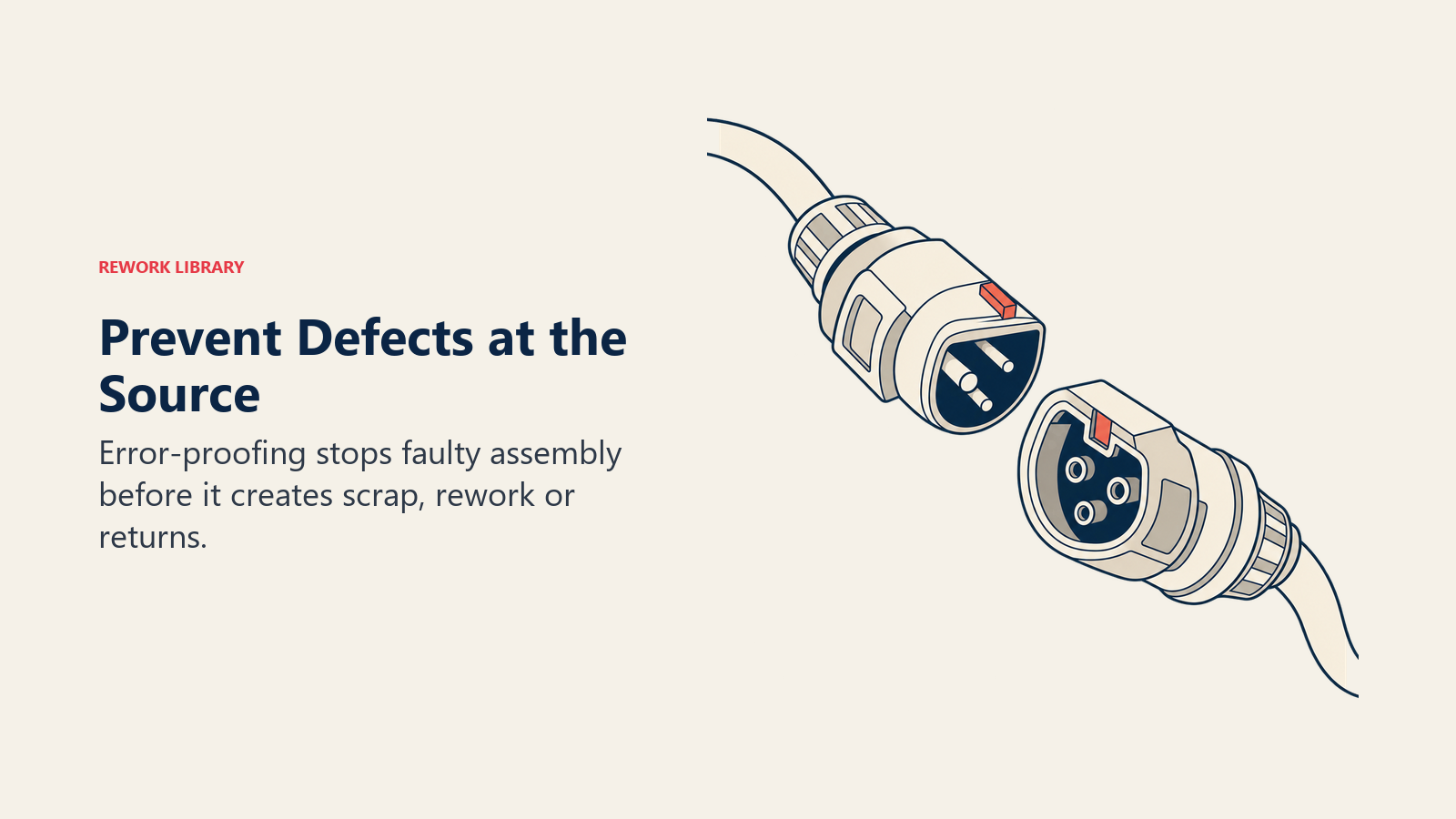
Reducing rework and scrap eliminates waste. Track defect rates by product and cause, implement error-proofing (poka-yoke), improve process capability to reduce variation, enhance operator training and awareness, and conduct root cause analysis on quality issues.
Every defect represents wasted material, labor, and overhead.
First-pass yield improvement measures quality right-first-time. Track percentage of products passing inspection initially, identify operations with lowest FPY, implement corrective actions targeting root causes, and monitor improvement over time.
Improving FPY from 92% to 97% reduces rework costs by 60%.
Warranty and field failure reduction prevents expensive post-shipment problems. Analyze field failure data for patterns, implement design or process changes to prevent failures, improve quality systems to catch defects before shipment, and enhance testing and validation.
Field failures cost 10-100 times more than catching defects internally.
Prevention-focused quality systems reduce detection costs. Shift from inspection to prevention, implement statistical process control, develop reliable processes with wide margins, and build quality into design through DFMEA and PFMEA.
Prevention costs less than detection, which costs far less than failure.
Executing COGS Reduction Programs
Successful COGS optimization requires structured execution, not random cost-cutting.
Goal setting and target deployment establishes clear objectives. Set overall COGS reduction target, cascade targets to categories (materials, labor, overhead, quality), assign accountability to leaders, and establish timelines and milestones.
Clear goals create focus and accountability.
Cross-functional improvement teams address opportunities requiring multiple departments. Include representatives from operations, engineering, purchasing, quality, and finance. Empower teams to make recommendations and implement approved changes.
COGS optimization isn't just a finance exercise. It requires operational expertise and execution.
Project tracking and governance monitors progress and addresses obstacles. Track project pipeline, savings realized versus plan, implementation status and timeline, resources required and allocated, and risks and mitigation plans.
Regular governance reviews keep programs on track and remove barriers.
Change management and sustainability ensures improvements stick. Communicate the business case and urgency, involve employees in identifying solutions, celebrate successes and recognize contributions, standardize improved processes, and audit to prevent backsliding.
Cost reductions achieved but not sustained waste effort. Make improvements permanent through standardization and culture change.
Building Continuous Improvement Culture
The most successful manufacturers don't just run COGS reduction programs. They build continuous improvement into how they operate.
This means everyone thinking about cost and waste elimination, systematic approaches like lean and six sigma, measurement and visibility of cost performance, accountability for improvement targets, and investment in capability that reduces future costs.
COGS optimization isn't a one-time project. It's a discipline practiced continuously. Market conditions change, costs evolve, and competitors improve. Standing still means falling behind.
Attack costs systematically across all elements. Focus on high-impact opportunities. Implement sustainably without compromising quality or delivery. Measure rigorously and celebrate progress.
Your cost structure determines your competitive position and profitability. Make continuous improvement your competitive weapon.
Learn More
