Supplier Quality Management: Ensuring Excellence Across the Supply Base
Turn this article into takeaways for your work.


Each assistant summarizes the article only for you and suggests best practices for your work.
A single defective component can shut down an entire production line. When that component came from a supplier, the frustration multiplies. You've invested in internal quality systems, trained your workforce, and implemented statistical process controls, but if suppliers ship defective parts, your quality performance suffers anyway.
The traditional approach (inspecting every incoming part) wastes resources and catches problems too late. By the time you detect a defect at receiving, the supplier has already produced hundreds or thousands more defective units. Your choice becomes accepting bad parts to maintain production or stopping the line while waiting for replacements. Neither option helps your bottom line.
Effective supplier quality management shifts the focus upstream. Instead of detecting defects after they arrive, you prevent them from occurring by ensuring suppliers have capable processes and share your commitment to quality. This proactive approach reduces costs, improves reliability, and transforms supplier quality from a reactive problem into a competitive advantage.
Foundation of Supplier Quality Management
Supplier Quality Management (SQM) represents a systematic approach to ensuring that purchased materials and components consistently meet specifications. Rather than treating quality as an incoming inspection issue, SQM integrates quality assurance into supplier selection, monitoring, and development processes.
The cost of poor supplier quality extends far beyond the obvious scrap and rework expenses. Defective components cause production delays while you sort good parts from bad or wait for replacements. They increase inventory carrying costs as you buffer against quality uncertainty. Customer complaints damage your reputation even when the defect originated with a supplier. Finding and fixing supplier quality issues after they enter your facility costs 10 to 100 times more than preventing them upstream.
Traditional quality control relied heavily on incoming inspection to catch supplier defects. But inspection doesn't create quality; it only detects the absence of it. Comprehensive inspection adds cost without adding value. Sampling inspection catches some defects while allowing others through. The solution isn't more inspection but better supplier processes that eliminate defects at the source.
SQM shifts responsibility for quality to those best positioned to control it: the suppliers themselves. They understand their processes, materials, and equipment better than any external inspector could. When suppliers embrace quality ownership, they prevent problems rather than shipping defects and hoping they go undetected.
Supplier Qualification Process
Quality assurance begins before you place the first order. Rigorous supplier qualification prevents quality problems by ensuring suppliers have the capability and commitment to meet your requirements.
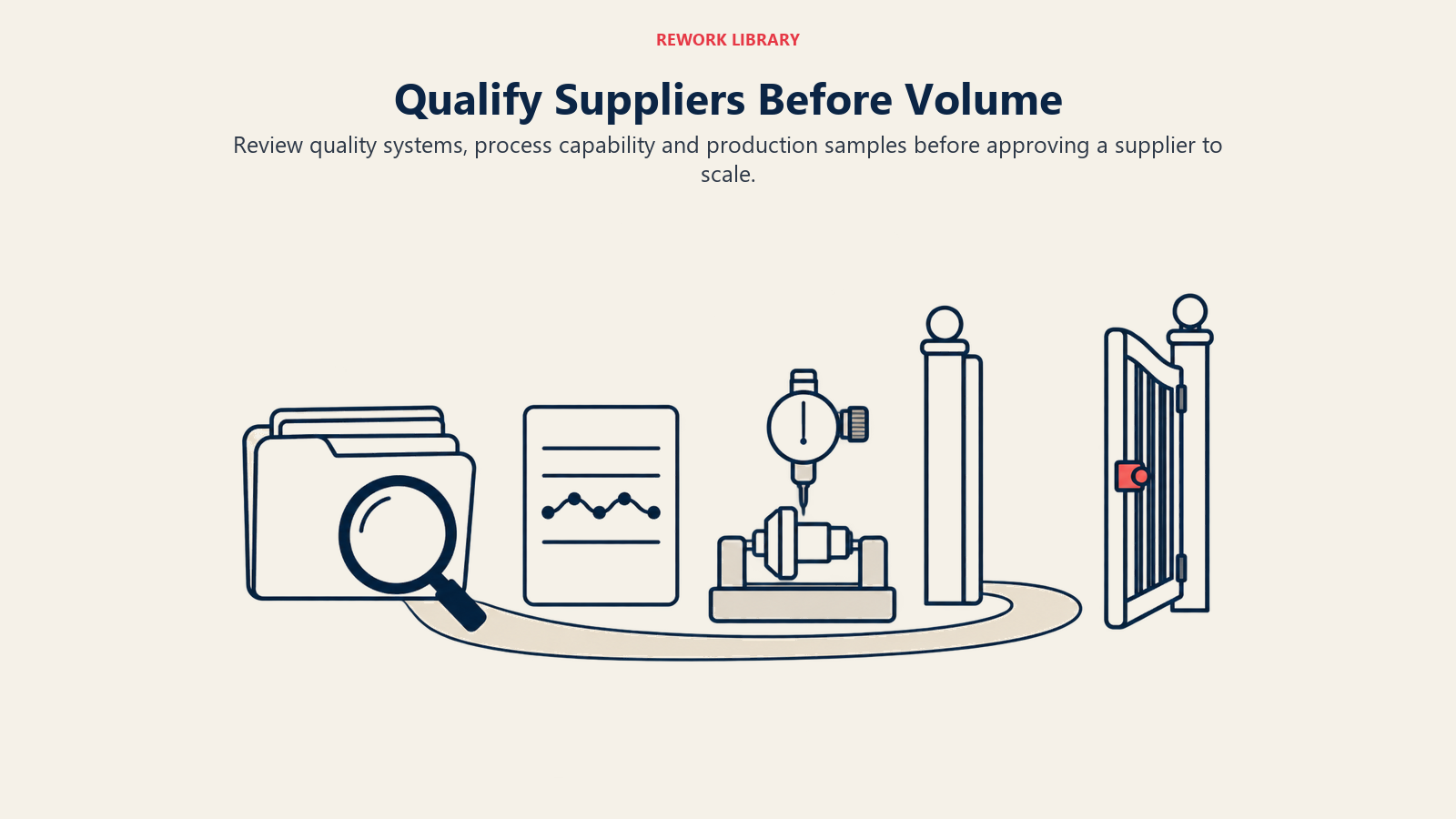
Start with supplier audits that assess quality management systems. These audits examine documented procedures, quality metrics, corrective action processes, and continuous improvement activities. Look for ISO 9001 certification or equivalent quality standards, but don't stop there. Certification confirms minimum standards; audits reveal how well suppliers actually execute their systems.
Process capability studies demonstrate whether supplier processes can consistently meet specifications. A supplier's process might produce good parts on average but with variation that creates unacceptable defect rates. Capability indices like Cpk quantify this ability through statistical process control methods. Request capability data for critical dimensions and characteristics before awarding business.
Sample approval procedures formalize the transition from development to production. The Production Part Approval Process (PPAP) common in automotive and similar frameworks in other industries require suppliers to demonstrate process stability before full production begins. Suppliers submit production samples along with capability studies, measurement systems analysis, and control plans. You verify that parts meet specifications and the supplier can consistently produce them before ramping volume.
First Article Inspection (FAI) serves a similar purpose for smaller volumes or custom parts. The supplier manufactures and inspects the first production unit, documenting complete conformance to all specifications. This catches design interpretation errors, tooling problems, or process issues before producing full batches.
Don't rush qualification because you need parts urgently. Qualifying an incapable supplier creates a chronic quality problem that's harder to fix than finding an alternative supplier upfront. The time and cost of proper qualification pale compared to managing ongoing quality issues with an inadequate supplier.
Ongoing Quality Monitoring
Qualification proves capability at a point in time. Ongoing monitoring ensures suppliers maintain that capability over time and alerts you to emerging problems before they cause disruptions.
Incoming inspection strategy depends on supplier performance and part criticality. New suppliers or critical components might require 100% inspection initially. As suppliers prove reliability, reduce inspection to sampling plans that balance risk and cost. Top performers earn dock-to-stock status where you skip incoming inspection entirely, trusting supplier certifications and process controls.
Real-time quality metrics provide visibility into supplier performance. Track defect rates, typically measured in parts per million (PPM), for each supplier and commodity. Monitor trends over time rather than reacting to individual occurrences. A supplier with 50 PPM one month and 500 the next deserves attention even if 500 remains below your threshold.
Quality dashboards consolidate supplier metrics into actionable intelligence. Executive dashboards show overall supplier quality trends and identify problem areas requiring attention. Operational dashboards give quality engineers detailed data for working with specific suppliers. Automated alerts notify appropriate personnel when metrics exceed thresholds.
Defect tracking and corrective action systems document quality issues and supplier responses. When you find defects, issue formal corrective action requests requiring root cause analysis and preventive measures. Track supplier response time and solution effectiveness. Suppliers who repeatedly identify cosmetic root causes without addressing systemic problems need escalation.
Regular reporting cycles keep quality visible. Monthly quality reviews with strategic suppliers provide forums for discussing trends, sharing data, and addressing emerging concerns. These reviews shouldn't be one-way report-outs where you lecture suppliers about defects. The best reviews involve collaborative problem-solving where both parties contribute insights and solutions.
Supplier Development Programs
Monitoring identifies quality problems; development solves them. Supplier development activities build supplier capabilities to prevent defects rather than just detecting and sorting them.
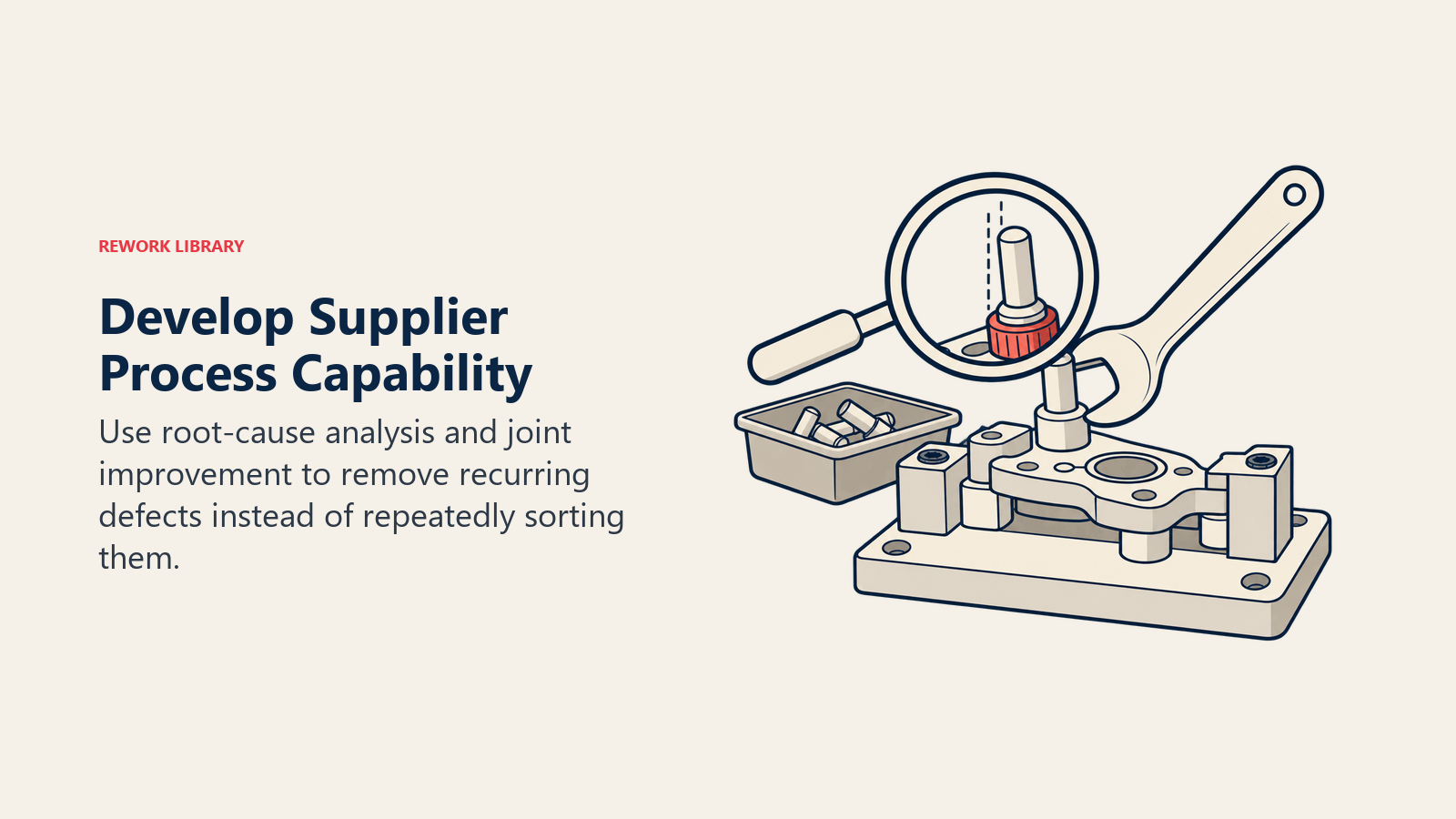
Root cause analysis digs beneath symptoms to understand why defects occur. Many suppliers respond to quality issues with containment actions (sorting inventory, adding inspection) without addressing root causes. Effective development programs require disciplined root cause analysis using tools like 5 Whys, fishbone diagrams, or more sophisticated methods for complex problems.
Your role might include facilitating root cause analysis, especially with smaller suppliers lacking quality engineering expertise. Send your quality engineers to help suppliers investigate problems. This builds supplier capabilities through workforce training and development while ensuring thorough analysis. The investment in helping suppliers improve pays returns through better quality and stronger relationships.
Supplier improvement projects tackle chronic quality issues through structured problem-solving. Rather than responding to each defect individually, improvement projects address systemic issues causing multiple problems. A project might focus on improving a supplier's process control, implementing statistical process control, or upgrading equipment to increase capability.
Technical assistance and training accelerate supplier development. Your quality team possesses expertise suppliers might lack, particularly smaller companies. Offer training on quality tools, process control methods, or problem-solving techniques. Share best practices from your internal operations or other suppliers. This knowledge transfer improves supplier capabilities while demonstrating your commitment to their success.
Some manufacturers establish formal supplier development programs with structured improvement methodologies. Toyota's supplier development program is famous for sending engineers to work with suppliers on lean manufacturing and quality improvement. While resource-intensive, these programs generate substantial returns through improved supplier performance and stronger strategic partnerships.
Development focus should reflect supplier importance and improvement potential. Strategic suppliers with quality challenges deserve significant development investment. Commodity suppliers with minor issues might receive less intensive support. Match your development resources to business impact.
Quality Agreements and Standards
Clear expectations prevent misunderstandings that cause quality problems. Formal agreements and standards document requirements and establish accountability for meeting them.
Supplier quality manuals compile your quality requirements into comprehensive references. These manuals cover specifications, inspection requirements, documentation standards, and corrective action processes. They explain your quality management system and how suppliers fit within it. Manuals ensure consistency across suppliers and provide new suppliers with clear onboarding guidance.
Quality clauses in purchase orders and contracts make quality requirements legally binding. Standard clauses address conformance to specifications, notification requirements for process changes, right to audit, and corrective action obligations. For critical suppliers, negotiate specific quality agreements detailing performance expectations, improvement targets, and consequences of non-conformance.
Certification and compliance requirements ensure suppliers meet industry standards and regulatory requirements. Medical device manufacturers need suppliers with ISO 13485 certification. Aerospace requires AS9100. Food processing demands HACCP compliance. Build these requirements into supplier qualification criteria and verify maintenance through periodic audits.
Quality specifications must be clear, complete, and achievable. Vague requirements like "good commercial quality" create disputes when supplier interpretations differ from yours. Provide detailed specifications including dimensions, tolerances, material requirements, and appearance standards. If certain characteristics are critical, call them out explicitly with tighter controls.
Change notification requirements prevent quality surprises. Suppliers must notify you before changing materials, processes, or production locations. These changes might affect quality even if suppliers believe them equivalent. Your change approval process reviews impacts and updates controls as needed.
Documentation requirements support traceability and problem investigation. Specify what records suppliers must maintain: inspection data, lot numbers, material certifications, and how long they must retain them. When quality issues arise, documentation helps you understand scope and causes.
Advanced Quality Assurance Methods
As supplier relationships mature, more sophisticated quality approaches replace traditional inspection-based methods.
Statistical Process Control (SPC) at suppliers shifts quality focus from detection to prevention. Suppliers monitor process variation in real-time through Six Sigma methodologies, adjusting processes before they produce defects. Instead of inspecting finished parts, they ensure processes remain stable and capable. Request SPC charts for critical characteristics, reviewing them during business reviews to verify process stability.
Supplier self-certification programs eliminate redundant inspection when suppliers demonstrate consistent capability. Instead of you inspecting incoming parts, suppliers certify conformance based on their inspection and process monitoring. This reduces your costs while maintaining quality. Only extend certification to suppliers with proven quality systems and track records.
Quality at source programs integrate quality checks into production processes rather than relying on final inspection. Suppliers build quality verification into work instructions so operators confirm quality as they work. This catches problems immediately when correction costs less and prevents shipping defective batches.
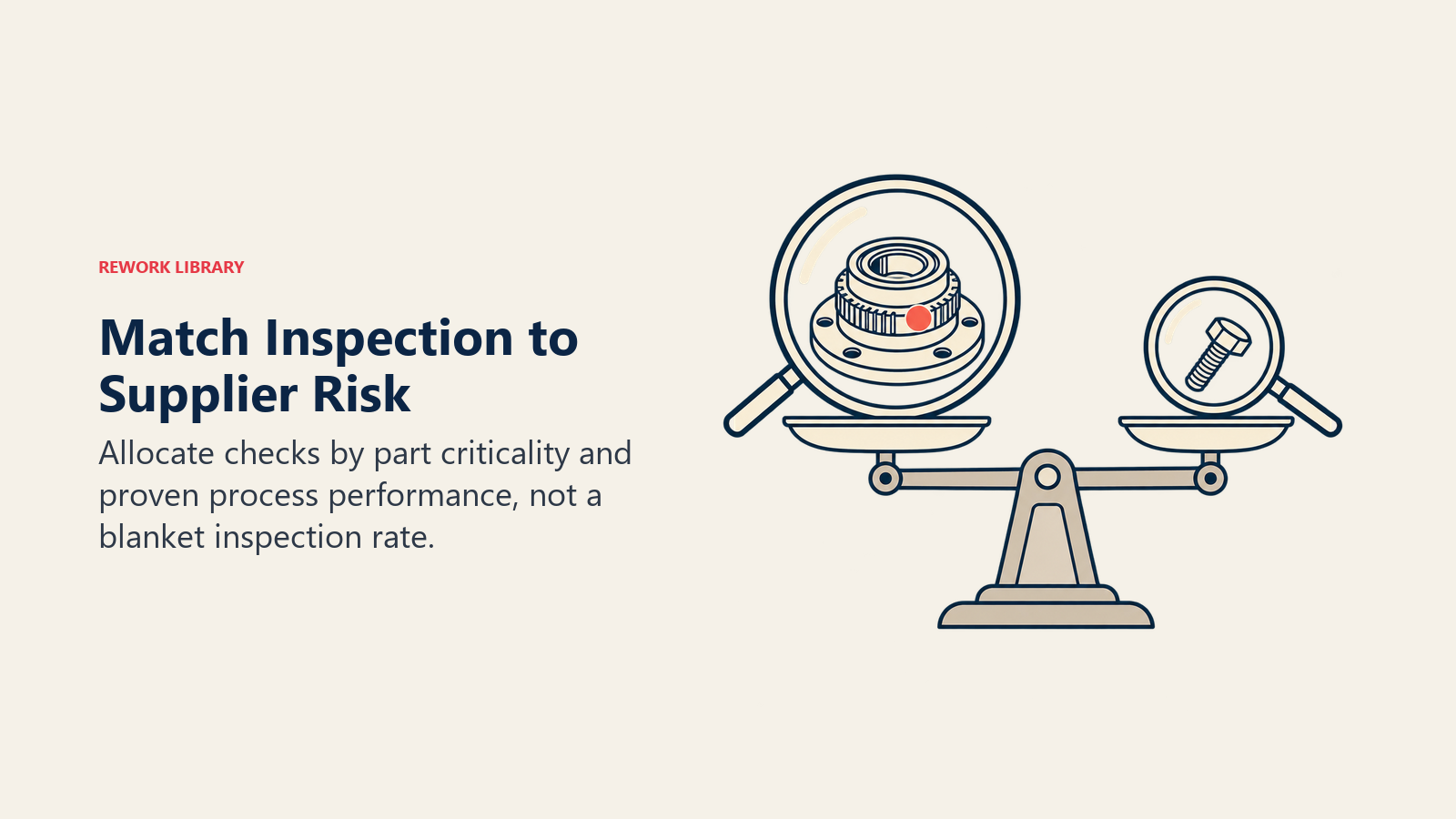
Risk-based inspection approaches allocate inspection resources according to risk. High-risk items get more intensive inspection regardless of supplier history. Low-risk items from proven suppliers get minimal inspection. This optimizes inspection resources while managing quality risk.
Early supplier involvement in product development prevents quality problems by designing for manufacturability. Bring suppliers into design reviews to identify potential production challenges before designs lock. Their process knowledge helps you avoid specifications that look good on paper but prove difficult or expensive to manufacture consistently.
Supplier scorecards consolidate quality performance into actionable metrics. Weight quality heavily alongside delivery and cost analysis. Share scorecards with suppliers regularly, recognizing top performers and working with underperformers on improvement through strategic sourcing relationships. Scorecards drive improvement by making performance visible and tying it to business consequences.
Building a Quality Culture
Technical tools and procedures enable supplier quality management, but culture determines whether it succeeds. Several factors separate companies with excellent supplier quality from those constantly fighting quality fires.
Top management commitment signals that supplier quality matters strategically, not just operationally. When executives discuss supplier quality in business reviews, attend supplier recognition events, and hold leaders accountable for supplier performance, the organization responds accordingly. Quality becomes a shared priority rather than a quality department problem.
Clear accountability prevents quality issues from falling through organizational cracks. Someone must own each supplier relationship with explicit responsibility for quality performance. Procurement can't assume quality owns it while quality thinks procurement is responsible. Matrix responsibility ensures both procurement and quality contribute their expertise while one person coordinates.
Collaboration beats confrontation when addressing quality issues. Treating suppliers as adversaries creates defensive behavior that hides problems. Approaching quality as shared problem-solving builds partnerships that prevent issues. The best supplier relationships involve regular communication, mutual problem-solving, and shared success metrics.
Continuous improvement mindsets treat today's performance as tomorrow's baseline. Never settle for current quality levels, even if they meet targets. Engage suppliers in identifying improvement opportunities and implementing countermeasures. Celebrate improvements while raising expectations for what's possible.
Recognition and rewards reinforce quality excellence. Supplier awards acknowledge outstanding performance and motivate others to improve. Share success stories internally and with other suppliers as examples. Consider financial rewards like increased business for quality leaders.
Practical Implementation
Start supplier quality management with pilot programs focused on critical suppliers or chronic problem areas. Implement qualification processes, establish monitoring systems, and launch development activities with a manageable scope. Learn what works in your environment before expanding.
Invest in supplier quality resources. Quality engineers dedicated to supplier management bring specialized expertise that general procurement or quality staff might lack. These specialists understand supplier processes, conduct effective audits, and lead development projects.
Implement enabling technology gradually. Start with basic defect tracking and supplier scorecards before investing in sophisticated SQM software platforms. Technology should support established processes, not replace them. Manual processes reveal what actually needs automation.
Standard work creates consistency across supplier relationships. Develop standard processes for supplier audits, corrective action management, and business reviews. Templates and checklists ensure thorough, consistent execution while reducing time requirements.
Training builds organizational capability in supplier quality management. Train procurement staff in quality principles so they consider quality during sourcing decisions. Train quality engineers in supplier relationship management so they work effectively with external partners. Train suppliers in your quality requirements and methods.
Metrics drive improvement when you track supplier quality alongside internal quality. Include supplier defect rates in executive dashboards, plant metrics, and quality reviews. Set targets for supplier quality improvement and hold teams accountable for achieving them.
Learn More
