Manufacturing Margin Analysis: How to Identify and Improve Your Most Profitable Products
Turn this article into takeaways for your work.


Each assistant summarizes the article only for you and suggests best practices for your work.
An industrial equipment manufacturer celebrated when they hit $50 million in revenue. Then they did the margin analysis. Turns out three of their ten product lines destroyed value. After-tax margins were negative. The company was growing revenue while shrinking actual profit. They'd been steering by gross margin, which told them almost nothing about true profitability.
This happens more than most manufacturers admit. Revenue looks healthy. Gross margin seems acceptable. But underneath, product mix and customer decisions are quietly bleeding profit. Without margin analysis that goes beyond surface metrics, you can't see where money actually gets made and where it disappears.
Why Gross Margin Isn't Enough
Gross margin subtracts cost of goods sold from revenue. It's simple, consistent, and completely insufficient for understanding profitability. COGS typically includes direct materials, direct labor, and allocated manufacturing overhead. What it doesn't include is everything else that varies with products and customers.
Sales commissions vary by product and customer. Some products require application engineering support. Some customers demand frequent small shipments. Some require custom packaging. Some return product frequently. Some pay slowly. These costs are real, they vary with business decisions, and gross margin ignores them all.
Operating margin includes more costs but often gets calculated at the company or division level. You can see total operating profit but not which products or customers generate it. Making decisions based on aggregate margins is like navigating with a map that shows your continent but not your city. The information exists but at the wrong granularity.
The solution is contribution margin analysis at multiple levels. Start with product contribution (revenue minus variable costs including direct and indirect variable costs). Then subtract customer-specific costs to get customer contribution. Finally, subtract fixed costs to reach operating profit. Each level reveals different insights and supports different decisions.
Understanding Margin Layers
Contribution margin comes first. Revenue minus all costs that vary with production and sales. This includes direct materials, variable labor, variable overhead, commissions, freight, and any other costs you don't incur if you don't make the sale. Contribution margin tells you what each sale contributes toward fixed costs and profit.
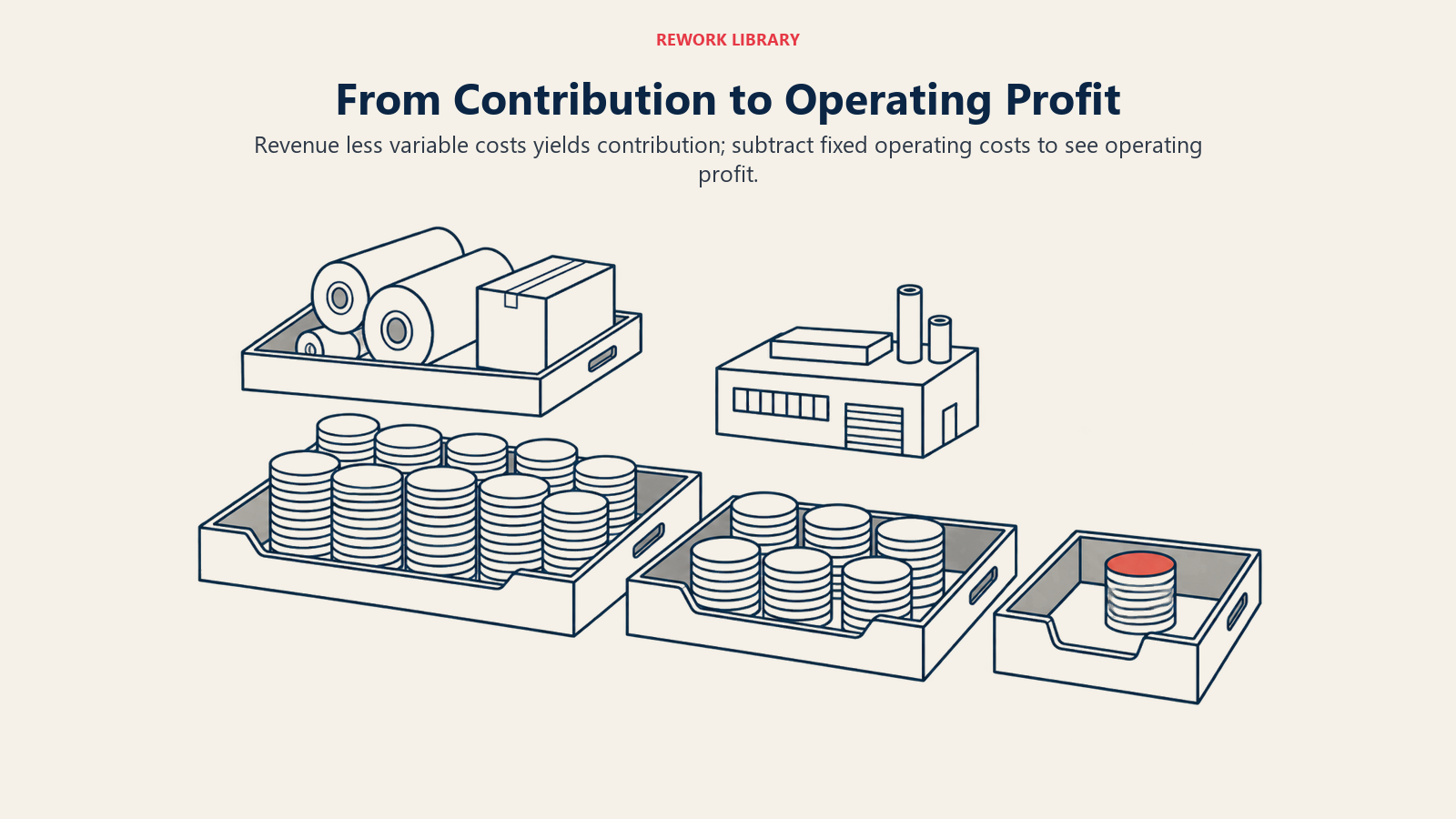
Products with positive contribution margin cover their variable costs and contribute something toward fixed costs. Products with negative contribution margin destroy value with every sale. Price increases or volume reductions improve profitability. This seems obvious, but according to manufacturing research, many manufacturers discover they have negative contribution margin products when they finally calculate it properly.
Gross margin sits between variable costs and contribution margin. It includes manufacturing costs but excludes selling and distribution costs. Gross margin works fine for inventory valuation but misleads for product mix decisions. A product with 40% gross margin and high variable selling costs might contribute less than a product with 30% gross margin and low selling costs.
Operating margin subtracts fixed costs. At the company level, operating margin determines actual profit. But allocating fixed costs to products creates arbitrary results that confuse decisions. Fixed costs don't vary with product mix in the short term. Knowing that a product contributes $500,000 toward $10 million in fixed costs tells you more than knowing it has 15% operating margin after an arbitrary allocation.
Product-Level Margin Analysis
Product margin analysis starts with clean variable cost data. You need materials costs by product, labor costs if they vary by product, variable overhead, and product-specific selling costs. Many manufacturers discover their cost systems can't provide this easily. Cost data exists in different systems. Allocations obscure direct costs. Nobody tracks selling costs by product.
Start by improving cost visibility. Can you separate variable from fixed costs in your cost accounting? Can you track commissions by product? Do you know freight costs by product line? Can you measure engineering support time? Getting accurate inputs matters more than sophisticated analysis methods.
Once you have clean data, calculate contribution margin for each product. Sort products by absolute contribution dollars, not margin percentage. A product with 20% contribution margin and $5 million revenue contributes $1 million. A product with 40% margin and $500,000 revenue contributes $200,000. The first product matters more to profitability even though the second has better margin.
Look for patterns. Do low-volume products have lower margins? Do custom products cost more than their premiums justify? Are certain product families consistently more profitable? These patterns suggest where to focus improvement efforts and where to adjust commercial strategy.
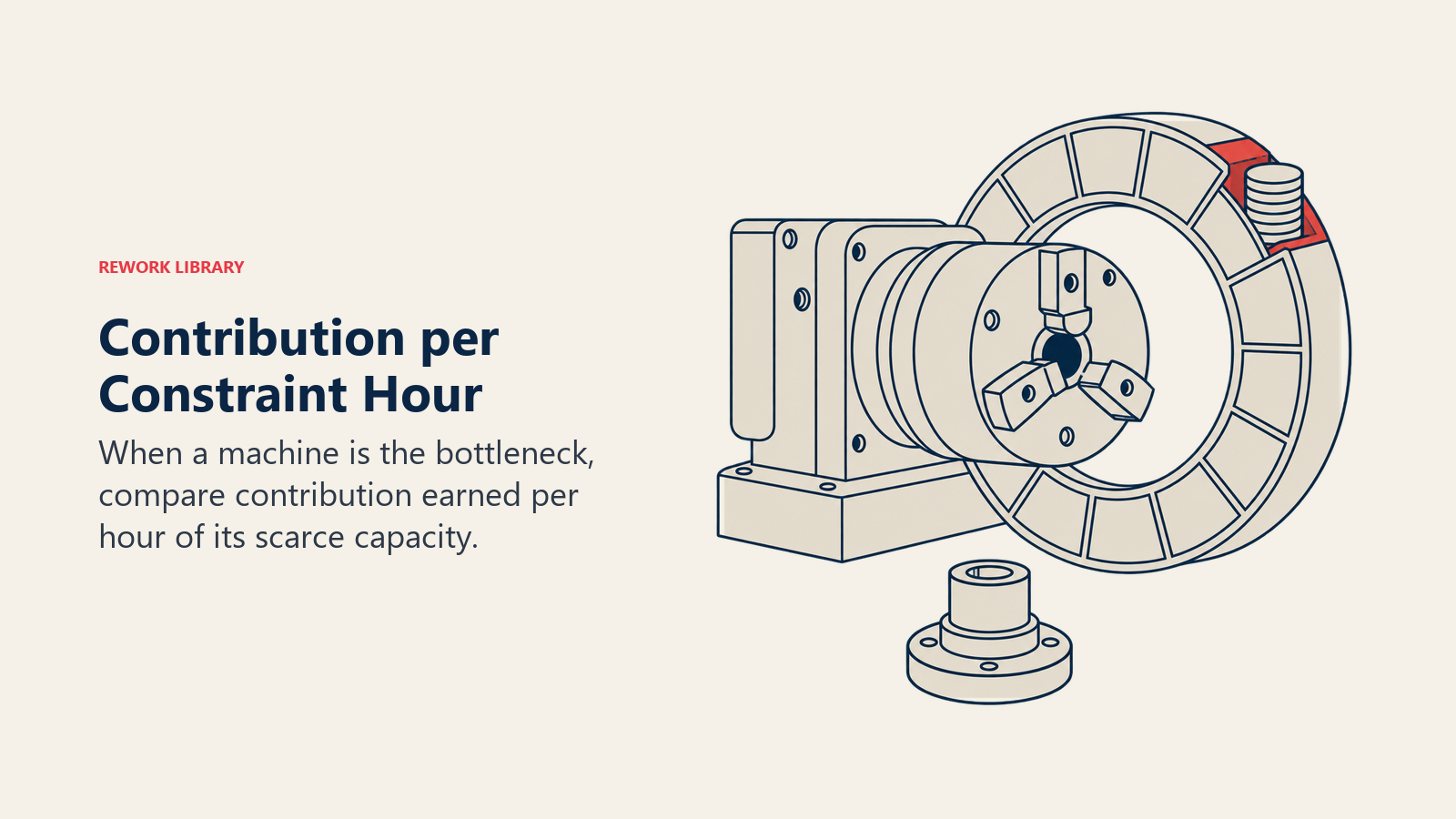
Compare margin to capacity consumption. Some products generate strong margins but tie up constrained resources. Other products generate modest margins but move quickly through the plant. When capacity is constrained, margin per unit of constraint matters more than margin per unit sold. A product making 30% margin in one machine hour beats a product making 40% margin in three machine hours.
Customer Profitability Analysis
Customer profitability extends product margin analysis to the customer level. Some customers buy high-margin products in efficient quantities. Others buy low-margin products in small lots requiring special handling. Some customers order predictably. Others send urgent requests requiring overtime and expediting. These differences determine which customers actually generate profit.
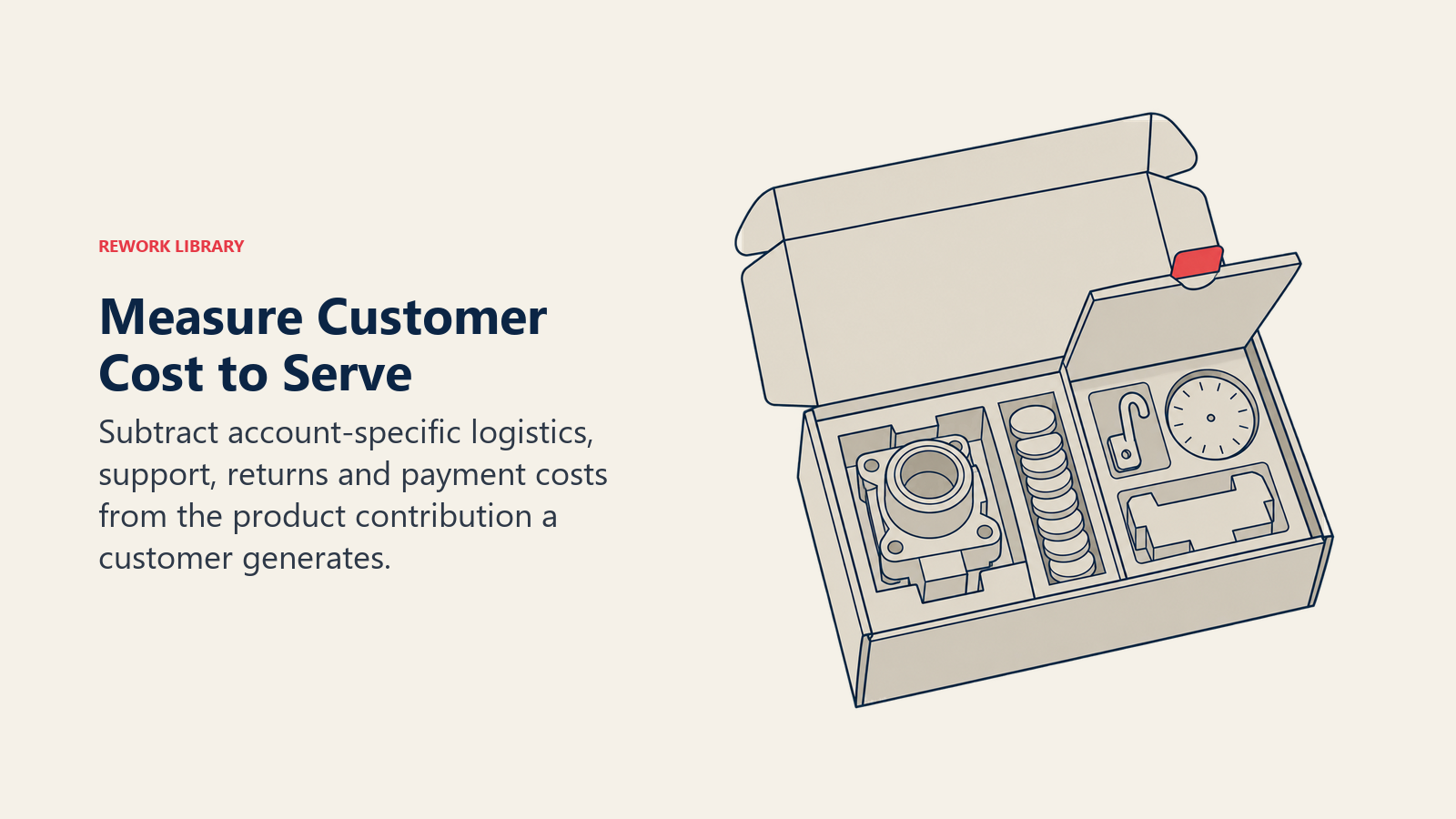
Start by calculating customer revenue and product contribution margin. If a customer buys products worth $1 million with 35% average contribution margin, they generate $350,000 product contribution. Then subtract customer-specific costs: account management time, special logistics requirements, returns and warranty costs, engineering support, and payment delays.
The results often surprise. High-revenue customers might be low-profit customers. Small customers might deliver better returns than large ones. Customers you thought were profitable might destroy value once you include all costs. This information transforms account management strategy.
Don't react by immediately firing unprofitable customers. First, understand why they're unprofitable. Some customers are unprofitable because they're new and haven't reached efficient scale. Some are unprofitable because they buy the wrong product mix. Some are unprofitable because they've trained you to accept poor terms. Different causes require different responses.
For customers unprofitable due to service intensity, consider service-based pricing. Minimum order quantities, expedite fees, small order surcharges, and payment terms linked to promptness shift costs to customers creating them. For customers unprofitable due to product mix, guide them toward higher-margin products. For customers unprofitable due to poor pricing, negotiate better terms or reduce service levels.
Production Line and Facility Margins
Product and customer margins matter, but operations managers need facility-level margin visibility too. Which production lines generate profit? Which facilities contribute to the bottom line? Which shifts perform best? These questions require margin analysis at the operational level.
Calculate revenue and product contribution by production line. Allocate fixed costs directly attributable to each line (line labor, depreciation, maintenance). This shows line-level operating profit. Lines that can't cover their direct fixed costs need improvement or closure. Lines generating strong returns justify investment.
Facility-level analysis works similarly. Sum product contribution for all products made at a facility. Subtract facility-specific fixed costs (building, utilities, facility management). If a facility can't cover its costs, you need to increase volume, improve margins, or consider consolidation. Multi-site manufacturers often discover that spreading production across too many facilities destroys profitability.
Shift analysis reveals productivity differences. Calculate margin by shift and investigate differences. Sometimes second and third shifts have lower productivity, higher scrap, or more downtime. These operational realities affect profitability but remain invisible without shift-level margin analysis. Making operational improvements targeted at specific shifts delivers faster returns than plant-wide initiatives.
Margin Improvement Strategies
Once you understand where margins are strong and weak, you can attack improvement systematically. Product mix optimization comes first. Push sales toward high-contribution products. Reduce emphasis on low-contribution products. This doesn't mean abandoning low-margin products, but it means making conscious decisions about where to invest sales resources.
Pricing adjustments follow naturally from margin analysis. Products with low contribution margins need price increases or cost reduction. Some products can't be made profitable at any reasonable price. These candidates for discontinuation or outsourcing. Other products have margin erosion you can fix through disciplined pricing.
Process efficiency gains improve margins by reducing variable costs. If scrap and rework cost 3% of revenue, eliminating them improves contribution margin by 3%. If machine downtime reduces throughput, improving uptime reduces cost per unit. Margin analysis helps prioritize these operational improvements by showing where cost reduction delivers the biggest profit impact.
Cost reduction initiatives should focus on high-volume products where small unit cost reductions generate large total savings. Reducing costs 5% on a million-unit product beats reducing costs 20% on a ten-thousand-unit product. Margin analysis keeps improvement efforts focused on opportunities that matter.
Preventing Margin Erosion
Margins don't just exist. They erode constantly through price pressure, cost creep, and mix deterioration. Preventing erosion requires monitoring systems that detect problems early and trigger corrective action.
Build margin dashboards showing contribution margin trends by product, customer, and facility. Update them monthly or quarterly. When margins decline, investigate immediately. Material costs increased? Prices decreased? Volume mix shifted? Overhead allocation changed? Understanding causes enables appropriate responses.
Set margin targets and review performance regularly. Products should maintain minimum contribution margin levels. Customers should meet profitability thresholds. When performance falls below targets, create action plans. Some situations require operational improvement. Others need commercial intervention. Both require discipline to execute.
Create approval processes for margin exceptions. Requests for special pricing, expedited delivery, or custom configurations should require margin impact analysis and appropriate approval levels. This doesn't mean saying no to everything. It means making conscious trade-offs with eyes open about profitability impact.
Technology and Tools
Modern ERP systems can support contribution margin analysis, but most implementations focus on gross margin and standard costing. You'll probably need to extend your systems or supplement them with analytics tools.
Business intelligence platforms can consolidate cost data from ERP, customer data from CRM, and operational data from manufacturing systems. This integration enables product and customer profitability analysis that single-source systems can't provide. The investment pays for itself through better visibility and faster decision-making.
Spreadsheet-based analysis works for initial margin analysis or small businesses. Export revenue by product and customer. Add cost data from your cost system. Calculate contribution margins. Build pivot tables showing different cuts of profitability. This approach requires more manual effort but delivers insights immediately without waiting for system enhancements.
The tools matter less than the discipline. Regular margin review, clear targets, and action plans for exceptions generate value regardless of technology sophistication. Start simple and let results justify system investment.
Building a Margin-Focused Culture
Margin analysis becomes powerful when it shapes daily decisions. This requires more than reports. It requires embedding margin thinking into how people evaluate opportunities and make trade-offs.
Sales teams need margin visibility to guide product emphasis and customer management. Give them tools showing customer profitability and product contribution margins. Train them to maximize contribution dollars, not just revenue. Compensate them for profitable growth, not just growth.
Product management needs margin data to guide product development and lifecycle decisions. New products should target attractive margin opportunities. Mature products with eroding margins need improvement or replacement. End-of-life decisions should consider contribution margin, not just revenue decline.
Operations teams need to understand margin implications of quality, uptime, and efficiency. Scrap doesn't just cost materials. It destroys margin. Downtime doesn't just reduce output. It increases cost per unit. Frame operational improvements in margin terms to connect shop floor actions to financial results.
Taking Action
Margin analysis without action is just interesting accounting. The value comes from decisions: changing product emphasis, adjusting pricing, improving operations, managing customers differently. These decisions compound over time into substantially different profitability trajectories.
Start with your current data even if it's imperfect. Calculate product contribution margin with available information. Rank products by contribution dollars. Look for patterns and opportunities. This initial analysis usually surfaces enough insights to justify deeper investigation and better data.
Pick high-impact opportunities first. Products or customers representing significant revenue with surprisingly low margins. Operational improvements that could boost margins on high-volume products. Pricing opportunities where margins have eroded. Quick wins build momentum and demonstrate value.
Build margin analysis into regular business reviews. Monthly or quarterly margin reviews should examine trends, investigate variances, and create action plans. This discipline prevents margin erosion and catches problems early when they're easier to fix.
Remember that perfect data isn't necessary to make better decisions. Approximately right beats precisely wrong. If your current approach is gross margin at the company level, any product-level or customer-level analysis improves decision quality even if the data has limitations. Start where you are and improve as you go.
Learn More

Co-Founder, Rework.com