Shop Floor Leadership: Building High-Performance Manufacturing Teams
Turn this article into takeaways for your work.


Each assistant summarizes the article only for you and suggests best practices for your work.
The shift supervisor walks onto the floor at 6 AM and knows immediately that something's off. Line 3 is running slower than normal. Two operators from Line 1 called in sick. The quality inspector flagged some parts from yesterday's run. And corporate wants an update on last week's safety incident.
By 6:15, she's reassigned two cross-trained operators to cover the sick calls, sent a sample from Line 3 to engineering for analysis, scheduled a team meeting to review the quality issue, and sent the safety incident report. The shift runs smoothly because she saw problems early and acted decisively.
That's shop floor leadership. It happens in the first 30 minutes of every shift, in dozens of quick decisions and interactions that determine whether your operation runs excellently or struggles constantly.
Why Frontline Leadership Makes or Breaks Manufacturing
Your shop floor supervisors and team leaders are the most critical roles in your organization:more important than any VP or director for daily operational success.
They directly influence every key metric you track. Safety incidents happen or don't happen based on how supervisors enforce standards and respond to risks. Building a strong manufacturing safety culture starts with frontline leadership. Quality improves or degrades based on how leaders coach operators and address problems. Productivity increases or stagnates based on how effectively supervisors remove obstacles and optimize workflows. Employee engagement and retention depend heavily on the daily relationship people have with their direct supervisor.
The economics are straightforward. A supervisor typically manages 15-40 people. If that supervisor is excellent, those 15-40 people produce more, waste less, work safer, and stay longer. If that supervisor is poor, you get the opposite:and it affects a lot of people simultaneously. Harvard Business Review explores how effective factory floor leadership transforms operations.
But here's the challenge: most shop floor leaders were promoted because they were excellent technicians, not because they demonstrated leadership capability. Being the best machinist doesn't mean you can lead ten other machinists. The skills that made someone successful as an individual contributor:technical expertise, attention to detail, independent work:aren't the same skills that make someone successful leading a team.
This creates the classic manufacturing leadership gap. You need strong frontline leaders, but you're selecting them primarily based on technical skills and hoping they figure out the leadership part. Some do. Many struggle. A few fail badly.
What Makes Shop Floor Leaders Effective
Effective frontline leaders combine three distinct capabilities that must work together.
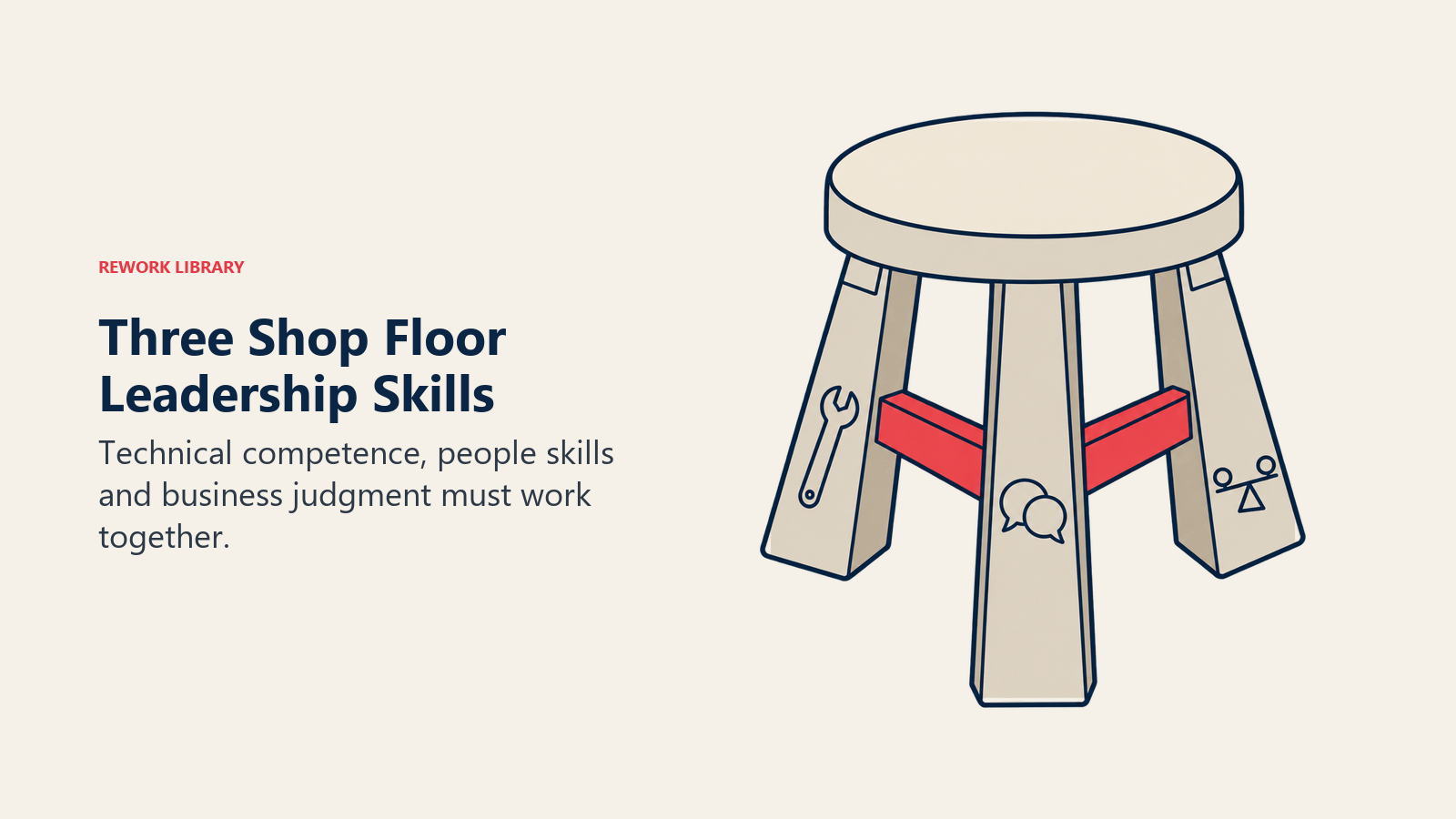
Technical competence provides credibility. Shop floor leaders don't need to be the best technician on the team, but they need to understand the work deeply enough to make sound decisions, troubleshoot problems, and coach improvement. When a complex issue arises, the team needs to trust that their leader grasps what's happening and knows how to respond.
But technical knowledge alone doesn't make someone a leader. Some of the most technically brilliant people can't lead a team effectively because they lack the people skills that enable others to perform.
People skills separate adequate supervisors from excellent ones. This includes the ability to communicate clearly under pressure, provide feedback that improves performance without demotivating people, resolve conflicts before they escalate, recognize contributions in ways that drive continued effort, and handle difficult conversations professionally.
The best shop floor leaders read their team constantly. They notice when someone's frustrated before it becomes a problem. They sense when someone's struggling with a task before quality suffers. They recognize when the team's energy is high and push for breakthrough improvements, or when energy is low and focus on maintaining standards.
Business judgment rounds out the capability set. Shop floor leaders make dozens of decisions every shift that affect costs, schedule, quality, and safety. Should we run overtime or let that order slip? Should we stop the line to fix this issue or keep running? Should we use the backup equipment or wait for repairs?
These decisions require understanding the business implications:not just the technical factors. Leaders who can balance multiple objectives (hit the schedule, control costs, maintain quality, keep people safe) make better decisions than those who optimize for a single metric.
The Daily Management System That Drives Results
Excellent shop floor leadership isn't about heroic efforts during crises. It's about consistent daily routines that prevent crises and drive continuous improvement.
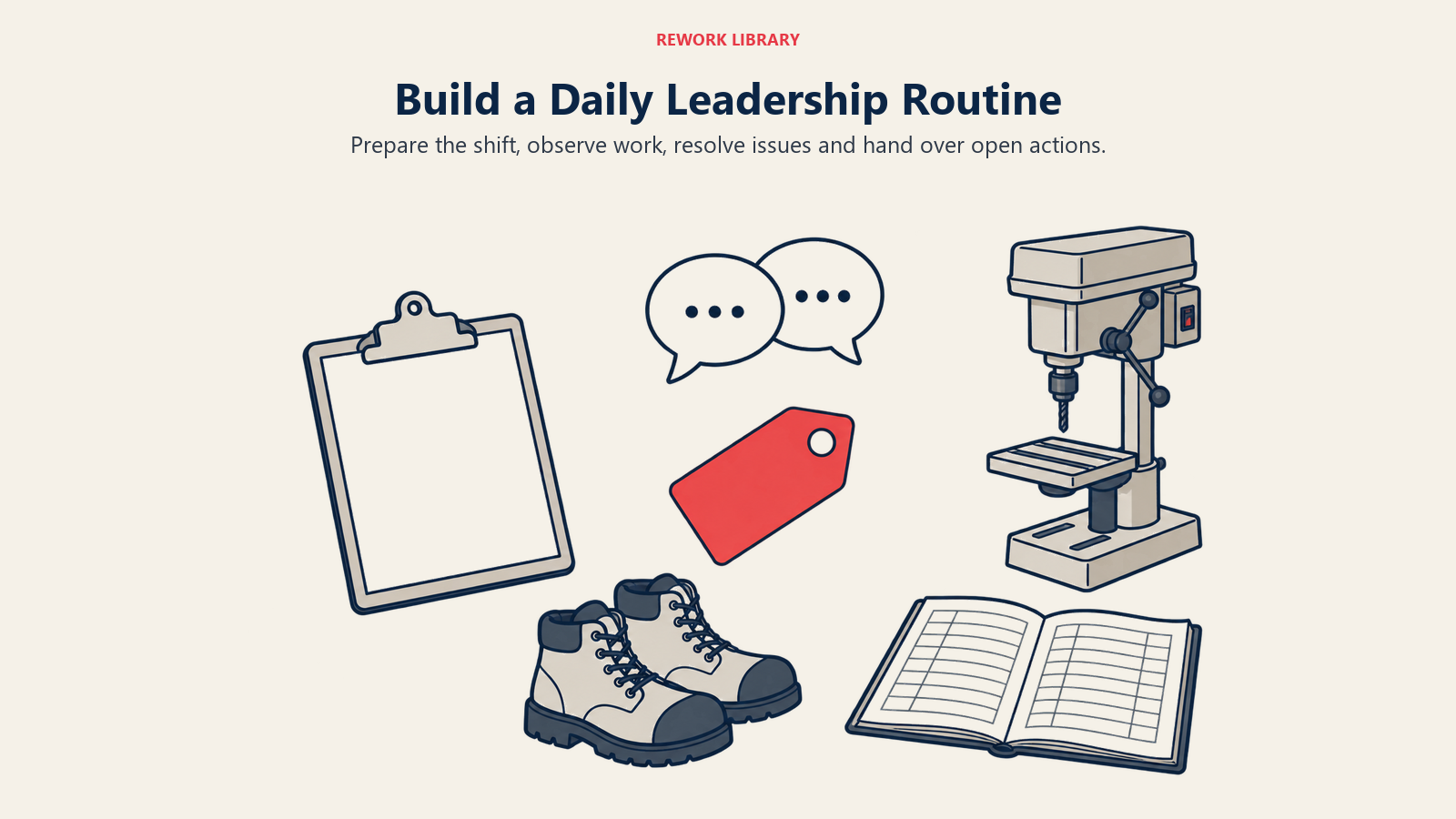
Shift startup sets the tone for everything that follows. Effective leaders arrive 15-30 minutes before their shift starts to review the handoff information, check the production schedule, identify potential issues, and prepare their team.
The shift startup meeting:typically 10-15 minutes at the beginning of each shift:covers what the team needs to know: today's production targets, quality focus areas, safety reminders, staffing changes, and any issues from the previous shift. This meeting is crisp and focused, not a rambling discussion. It creates alignment so everyone starts the shift working toward the same priorities.
Gemba walks provide continuous visibility into what's really happening. Effective supervisors don't manage from an office or computer. They spend 60-70% of their time on the floor, watching production, talking with operators, and spotting issues early.
But Gemba walks aren't aimless wandering. They're purposeful observation focused on specific questions: Are people following standard work? Are materials available where needed? Are quality checks happening as required according to manufacturing quality management standards? Are there any safety hazards developing? This structured observation catches problems while they're small.
Visual management enables leaders to see status at a glance. Production boards show whether lines are on schedule, behind, or ahead. Quality charts display defect trends. Safety boards track days without incidents. Cross-training programs matrices show who can cover which positions. These visual tools allow leaders to quickly assess status and focus their attention where it's needed.
Daily huddles provide quick team alignment and problem-solving. Many effective supervisors hold brief standup meetings (5-10 minutes) at mid-shift to check progress, address issues, and make adjustments. These aren't formal meetings:they're quick coordination to keep the shift on track.
Performance feedback happens in real-time, not weeks later during a review. When a supervisor sees excellent work, they recognize it immediately. When they see a problem, they address it on the spot with coaching that improves performance. This continuous feedback creates a learning culture where people get better every day.
Shift handoffs transfer knowledge and accountability. The outgoing supervisor should brief the incoming supervisor on production status, equipment issues, quality concerns, staffing situations, and any problems requiring follow-up. Poor handoffs create confusion and dropped issues:sharp handoffs ensure continuity.
Developing Your Team's Capability
Shop floor leaders who see their job as "getting production out" eventually plateau. Leaders who see their job as "developing people who get production out" create sustained excellence.
Onboarding new operators establishes their trajectory. The first 30-90 days determine whether new hires become productive contributors or struggle indefinitely. Effective leaders personally oversee new hire onboarding, even if they delegate the actual training to experienced operators.
This means setting clear expectations from day one, assigning a qualified buddy or mentor, following a structured training plan with checkpoints, monitoring progress actively, and providing frequent feedback. The supervisor who checks in with new hires twice a day for the first two weeks gets very different results than the supervisor who assumes someone else is handling it.
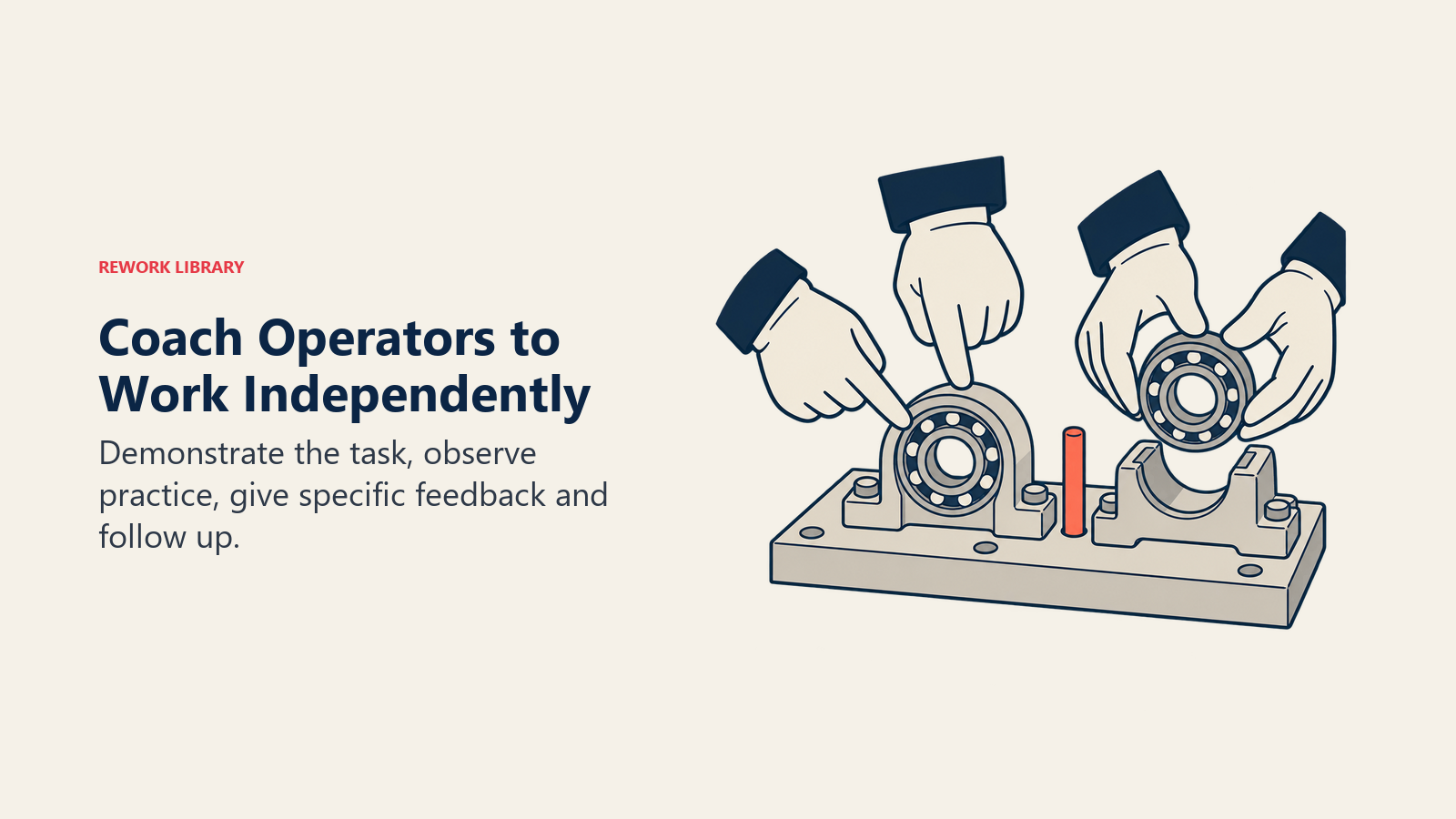
Coaching conversations develop capability continuously. When a supervisor sees an operator struggling with a task, the easy response is to fix it yourself or assign it to someone else. The effective response is to coach the operator to improve.
Coaching isn't the same as telling someone what to do. Strong skills training and development relies on effective coaching techniques. It involves asking questions that help people think through problems ("What do you think is causing this issue?" "What have you tried?" "What else could we do?"), demonstrating the right approach when needed, watching them practice, providing specific feedback, and following up to reinforce the learning.
Most shop floor leaders underinvest in coaching because it takes more time initially than doing it yourself. But operators who are coached develop capability that multiplies over time:they can handle more complex issues independently, they coach others, and they bring a problem-solving mindset to their work. Research from McKinsey demonstrates that investing in frontline talent is a critical productivity ingredient.
Recognition and motivation go beyond saying "good job." Effective leaders recognize specific contributions in ways that reinforce the behaviors they want to see more of. "Good job" is generic. "The way you caught that defect before we shipped bad parts to the customer:that saved us a major problem. Thanks for staying focused on quality" is specific and meaningful.
People want to know their work matters, their contributions are noticed, and their efforts lead somewhere. Leaders who connect daily tasks to larger purposes, recognize genuine contributions promptly, and show clear paths for growth and advancement get higher engagement and lower turnover.
Difficult conversations separate good leaders from great ones. Every supervisor faces situations requiring tough feedback:performance issues, behavior problems, policy violations, or conflicts between team members. How they handle these conversations determines whether problems get resolved or fester.
Effective difficult conversations are direct but respectful, focused on specific behaviors rather than personal attacks, conducted privately rather than in front of others, and solution-oriented rather than just punitive. The goal is improving future behavior, not punishing past mistakes.
Many supervisors avoid difficult conversations, hoping problems will resolve themselves. They rarely do. Small issues that aren't addressed become big issues that require discipline or termination. Leaders who address problems early and directly create clearer expectations and healthier team dynamics.
Building Your Leadership Pipeline
Your best shop floor leaders should be developing the next generation of leaders. This requires systematic approach, not hoping leadership skills materialize.
Supervisor training programs provide foundational skills before promotion, not after. Waiting until someone becomes a supervisor to train them in leadership, communication, and people management guarantees a painful learning curve. MIT's research shows how training manufacturing technologists as future shop floor leaders develops critical capabilities. Smart manufacturers identify high-potential operators early and provide leadership training before promotion.
This training should cover both technical supervision (production planning, schedule management, quality systems) and people leadership (communication, feedback, conflict resolution, team development). Blend classroom learning with on-the-job practice:have potential supervisors shadow current supervisors, lead small projects, train new hires, or run daily huddles.
Mentoring accelerates leadership development. Pair new supervisors with experienced leaders who can provide guidance, answer questions, and help navigate challenges. Mentoring isn't a formal program necessarily:it's making sure new leaders have someone to turn to when they're not sure how to handle a situation.
Leadership expectations must be clear and consistent. What does good leadership look like in your operation? What behaviors do you expect from supervisors? What results should they drive? When these expectations are explicit and consistently reinforced, people can develop toward them intentionally.
Performance evaluation for supervisors should focus heavily on leadership effectiveness, not just production results. Are they developing their team? Is turnover in their area high or low? How do their team members rate engagement and satisfaction? Using labor productivity metrics alongside leadership measures provides a balanced view. Do they coach effectively? Do they follow safety procedures and standards?
Supervisors who hit production numbers by overworking people, cutting corners on quality, or creating toxic environments shouldn't be considered successful:even if the short-term results look good. Measure and evaluate the sustainability of their approach.
Common Leadership Failures and How to Prevent Them
Even well-intentioned supervisors fall into predictable traps that undermine their effectiveness.
Doing rather than leading happens when supervisors spend their time running equipment or doing technical work instead of leading the team. Effective manufacturing workforce planning helps ensure supervisors can focus on leadership rather than firefighting. This usually stems from being promoted from a technical role and falling back into familiar, comfortable work rather than the harder work of leadership. Supervisors who do the work themselves instead of developing others to do it create bottlenecks and don't scale.
Playing favorites destroys team trust faster than almost anything else. When supervisors give preferred schedules, better assignments, or more recognition to a favored few while ignoring others' contributions, team morale collapses. Fair treatment doesn't mean treating everyone identically:it means making decisions based on performance and business needs, not personal relationships.
Inconsistent enforcement of standards creates confusion and resentment. If safety rules are enforced sometimes but not always, or some people get held accountable while others don't, the message is that standards don't really matter. Effective leaders apply expectations consistently:including to themselves.
Poor communication leaves people guessing. Supervisors who don't share information about schedule changes, priority shifts, or reasons behind decisions create uncertainty and rumors. Transparent communication about what's happening and why builds trust and alignment.
Avoiding accountability for their own mistakes damages credibility. When supervisors blame others, make excuses, or deny their own errors, they lose respect. Leaders who own their mistakes, learn from them, and improve demonstrate the accountability they expect from others.
Investing in Leadership Development for Sustained Excellence
Your shop floor leaders determine your operational ceiling. Excellent leaders drive excellent results. Adequate leaders get adequate results. Poor leaders create problems that ripple through your entire operation.
This makes leadership development one of your highest-return investments. Time and money spent improving supervisor capability pays back through better safety, higher quality, improved productivity, lower turnover, and stronger culture.
But leadership development must be ongoing, not a one-time training event. Supervisors need continuous learning, regular feedback on their leadership effectiveness, and support as they face new challenges. Organizations that treat leadership development as a journey rather than a destination build the sustained excellence that separates industry leaders from everyone else.
Your production equipment matters. Your processes matter. Your systems matter. But none of it works without effective people leading other people through the daily execution that determines whether you succeed or struggle.
Invest in your frontline leaders. Develop them systematically. Support them consistently. Hold them accountable for leading well, not just hitting numbers. The return on this investment shows up in every metric that matters.
Learn More

On this page
- Why Frontline Leadership Makes or Breaks Manufacturing
- What Makes Shop Floor Leaders Effective
- The Daily Management System That Drives Results
- Developing Your Team's Capability
- Building Your Leadership Pipeline
- Common Leadership Failures and How to Prevent Them
- Investing in Leadership Development for Sustained Excellence
- Learn More