Headless Commerce: The Complete Guide to API-First E-commerce Architecture

Turn this article into takeaways for your work.


Each assistant summarizes the article only for you and suggests best practices for your work.
Headless commerce represents a fundamental shift in how e-commerce platforms are built and operated. By decoupling the frontend presentation layer from the backend commerce functionality, businesses gain unprecedented flexibility to create unique customer experiences while maintaining robust e-commerce capabilities.
This architectural approach has become increasingly critical as consumer expectations evolve and businesses need to deliver consistent experiences across web, mobile, social commerce, IoT devices, and emerging channels.
What is Headless Commerce?
Headless commerce is an e-commerce architecture that separates the frontend presentation layer (the "head") from the backend commerce functionality (the "body"). These two systems communicate through APIs (Application Programming Interfaces), allowing developers to build custom frontend experiences while leveraging powerful backend commerce engines.
Traditional vs. Headless Architecture
Traditional Commerce Platform:
- Frontend and backend are tightly coupled
- Limited customization without affecting core functionality
- Changes to one layer often require changes to the other
- Restricted to the platform's native capabilities
Headless Commerce Platform:
- Frontend and backend operate independently
- Complete frontend design freedom
- API-based communication between layers
- Technology-agnostic frontend choices
This separation enables businesses to innovate rapidly on customer-facing experiences without the constraints of monolithic platform limitations.
Core Components of Headless Commerce
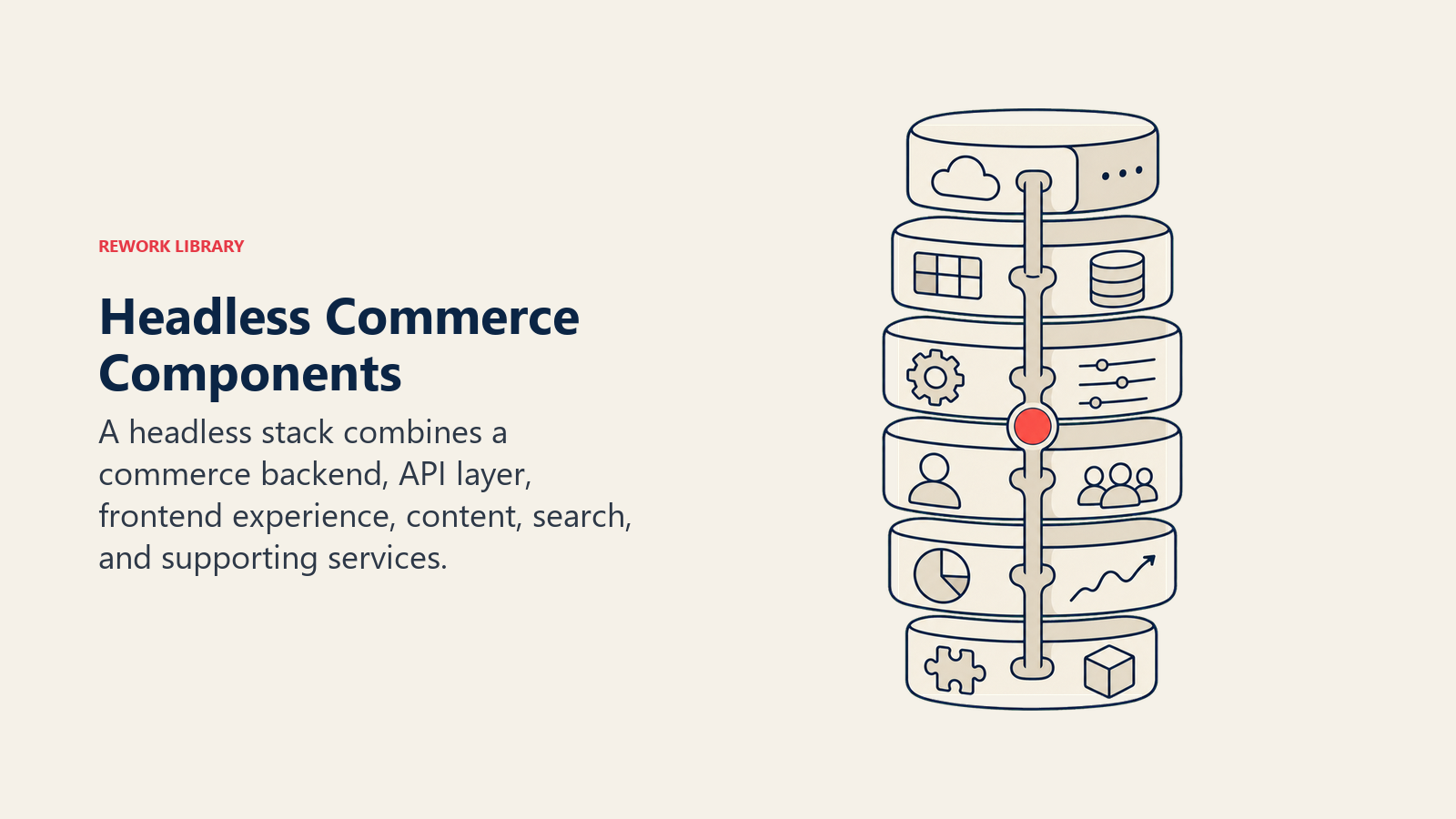
Headless commerce works because each layer has a clear job: the commerce backend manages operations, the frontend controls the experience, and APIs keep the two moving together.
1. Backend Commerce Engine
The backend handles all core commerce functionality:
- Product catalog management
- Inventory tracking and management
- Order processing and fulfillment
- Payment processing and security
- Customer data and account management
- Pricing rules and promotions
- Tax calculations and compliance
These capabilities are exposed through APIs that frontend applications can access.
2. Frontend Experience Layer
The frontend can be built using any technology:
- Progressive Web Apps (PWAs)
- Native mobile applications
- Voice commerce interfaces
- IoT device integrations
- Digital signage and kiosks
- Social commerce storefronts
Developers have complete freedom to choose frameworks, libraries, and tools that best suit their needs.
3. API Layer
APIs serve as the connection point:
- RESTful APIs for standard operations
- GraphQL for flexible data queries
- Webhooks for real-time updates
- Authentication and authorization
- Rate limiting and security
A well-designed API layer ensures reliable communication while maintaining security and performance.
Why Choose Headless Commerce?
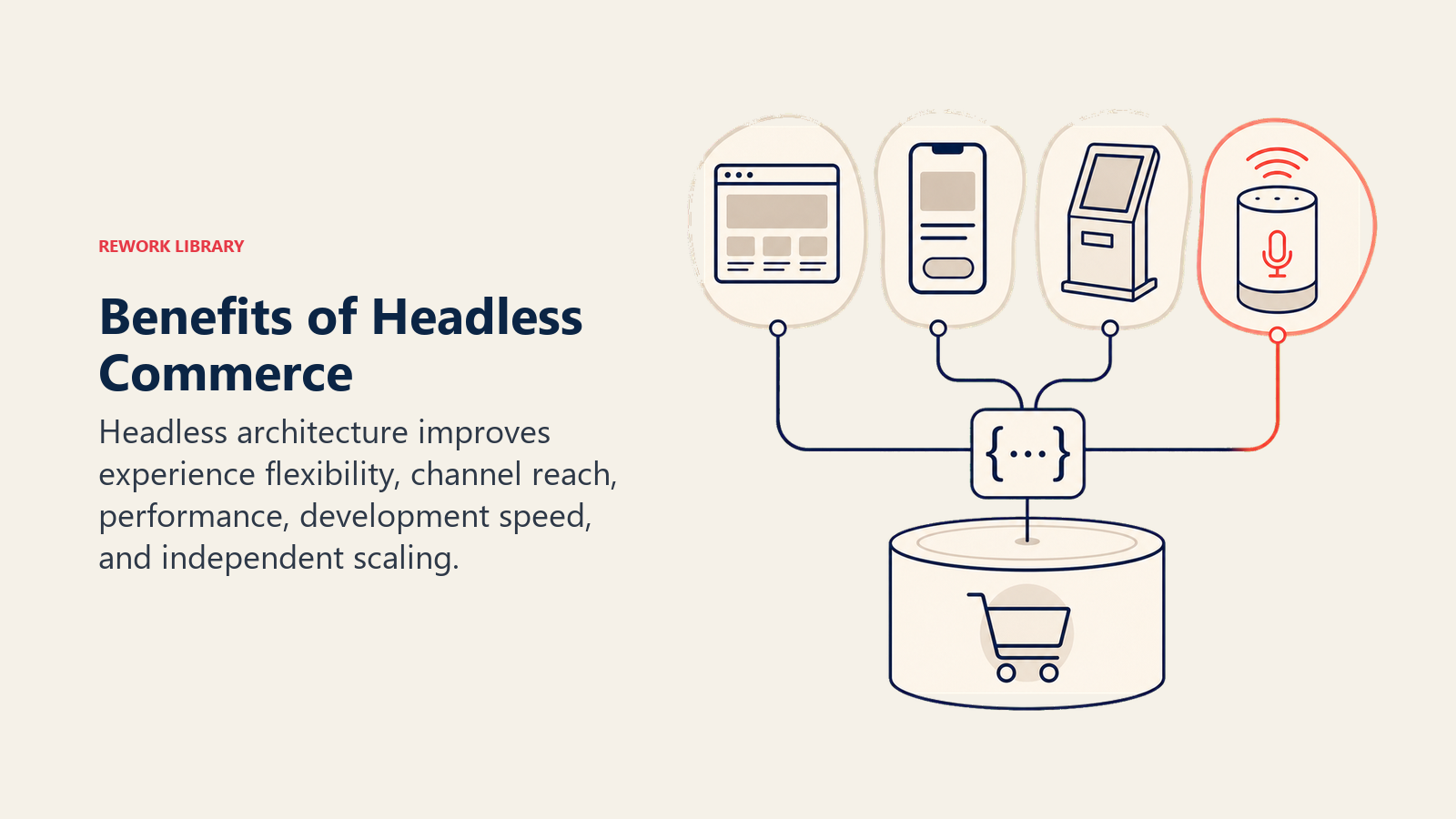
The strongest case for headless commerce is flexibility: brands can improve speed, personalize experiences, and sell across more touchpoints without waiting on one monolithic platform.
Speed and Performance Benefits
Headless architecture enables significant site speed and performance improvements through several mechanisms:
Optimized Frontend Loading:
- Static site generation for instant page loads
- Progressive enhancement strategies
- Optimized asset delivery
- Reduced JavaScript overhead
Content Delivery Network (CDN) Integration:
- Frontend files served from edge locations
- Reduced server load
- Lower latency for global audiences
- Improved caching capabilities
Microservices Architecture:
- Isolated service failures don't crash entire site
- Independent scaling of different functions
- Faster deployment of specific features
Performance improvements directly impact conversion rates, with faster sites consistently showing higher customer engagement and sales.
Flexibility and Customization
Headless commerce provides unmatched flexibility in several key areas:
Design Freedom:
- Build completely custom user interfaces
- Implement unique brand experiences
- Create differentiated customer journeys
- Integrate cutting-edge design patterns
Technology Choices:
- Select best-of-breed frontend frameworks
- Integrate specialized tools and libraries
- Adapt to new technologies quickly
- Avoid vendor lock-in constraints
Development Workflow:
- Frontend and backend teams work independently
- Faster iteration on customer-facing features
- Reduced risk of breaking core commerce functions
- Streamlined testing and deployment
Omnichannel Excellence
Headless architecture enables true omnichannel commerce by allowing a single backend to power multiple frontends. This is particularly valuable when implementing a multi-channel marketplace strategy:
Consistent Commerce Across Channels:
- Unified product catalog across all touchpoints
- Synchronized inventory across channels
- Consistent pricing and promotions
- Single source of truth for customer data
Channel-Specific Optimization:
- Tailored experiences for each channel
- Platform-specific features and interactions
- Optimized for device capabilities
- Contextually relevant experiences
Emerging Channel Readiness:
- Quick adoption of new platforms
- Integration with social commerce
- Voice and conversational commerce
- AR/VR shopping experiences
Faster Time to Market
Headless architecture accelerates innovation cycles:
Independent Development:
- Frontend changes don't require backend updates
- Multiple teams work simultaneously
- Reduced dependencies and bottlenecks
Rapid Experimentation:
- Quick implementation of new features
- Easy A/B testing of different experiences
- Lower risk when trying new approaches
Continuous Improvement:
- Frequent small updates instead of major releases
- Faster response to customer feedback
- Agile development methodologies
Mobile Commerce Advantages
Headless commerce particularly excels for mobile commerce optimization, offering several advantages over traditional platforms:
Native App Development:
- True native iOS and Android applications
- Access to device-specific features
- Better performance than mobile web
- Enhanced user experiences
Progressive Web Apps:
- App-like experiences without app store requirements
- Offline functionality and caching
- Push notifications and engagement features
- Lower development costs than native apps
Mobile-First Design:
- Optimized specifically for mobile interactions
- Touch-friendly interfaces and gestures
- Mobile-optimized checkout flows
- Responsive design that adapts to any screen
Implementation Considerations
When Headless Commerce Makes Sense
Headless architecture is particularly beneficial for:
High-Growth Brands:
- Need for rapid feature development
- Complex customization requirements
- Significant development resources
- Long-term strategic investment
Omnichannel Retailers:
- Multiple customer touchpoints
- Integration with physical stores
- Social commerce strategies
- Emerging channel adoption
Content-Rich Experiences:
- Heavy editorial content alongside commerce
- Complex product storytelling
- Brand-focused experiences
- Content marketing integration
Technical Capabilities:
- In-house or dedicated development teams
- API integration experience
- Modern DevOps practices
- Ongoing maintenance capacity
When Traditional Platforms May Be Better
Consider traditional platforms if you:
- Need quick time to market with limited resources
- Have small or non-technical teams
- Require out-of-the-box features and functionality
- Prefer platform-managed updates and security
- Have straightforward commerce requirements
Platform Selection for Headless Commerce
When evaluating headless commerce platforms as part of your e-commerce platform selection process, consider these factors:
Backend Commerce Platforms
Pure Headless Platforms:
- Commerce Layer
- Shopify Plus (with headless capabilities)
- BigCommerce (headless option)
- commercetools
- Elastic Path
Traditional Platforms with Headless Options:
- Magento Commerce
- Salesforce Commerce Cloud
- SAP Commerce Cloud
Frontend Frameworks and Tools
Static Site Generators:
- Next.js (React-based)
- Gatsby (React-based)
- Nuxt.js (Vue-based)
- SvelteKit (Svelte-based)
Frontend Frameworks:
- React
- Vue.js
- Angular
- Svelte
E-commerce Frontend Solutions:
- Vue Storefront
- Front-Commerce
- Shogun Frontend
Content Management Systems
Headless commerce often pairs with headless CMS solutions for content marketing strategy execution:
- Contentful
- Sanity
- Strapi
- Prismic
- DatoCMS
Technical Architecture Patterns
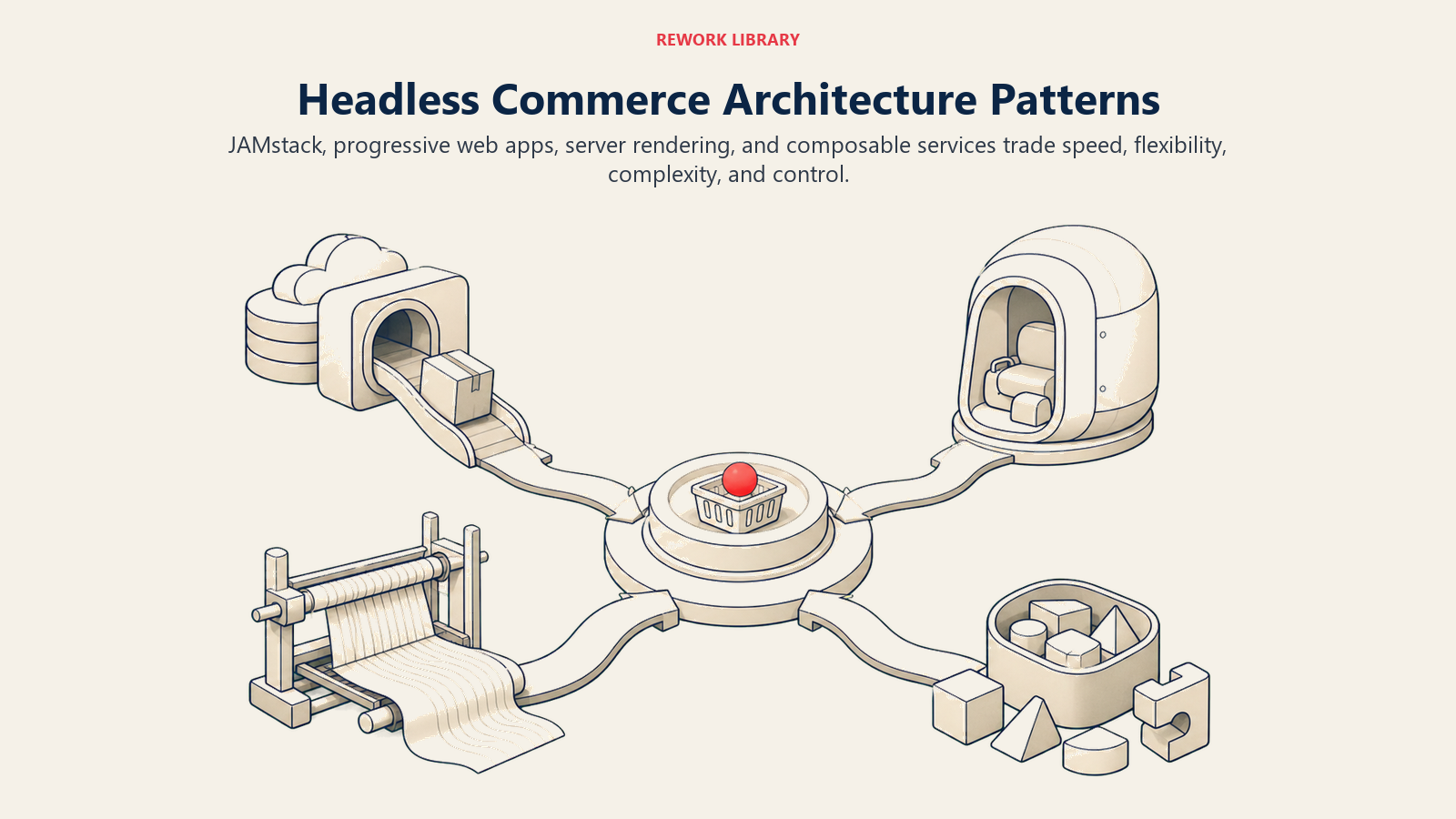
The right headless architecture depends on how much speed, flexibility, and operational control your team needs across storefronts and channels.
JAMstack Architecture
JAMstack (JavaScript, APIs, Markup) represents a popular approach for headless commerce:
Benefits:
- Pre-rendered static pages for maximum speed
- Enhanced security with reduced attack surface
- Excellent scalability through CDN distribution
- Lower hosting costs
Typical Stack:
- Static site generator (Next.js, Gatsby)
- Headless commerce backend
- Headless CMS for content
- CDN for global distribution
Progressive Web App (PWA) Approach
PWAs combine the best of web and native apps:
Capabilities:
- Offline functionality
- Push notifications
- Home screen installation
- App-like navigation
- Background sync
Implementation:
- Service workers for offline caching
- Web app manifest for installation
- HTTPS for security
- Responsive design principles
Performance Optimization
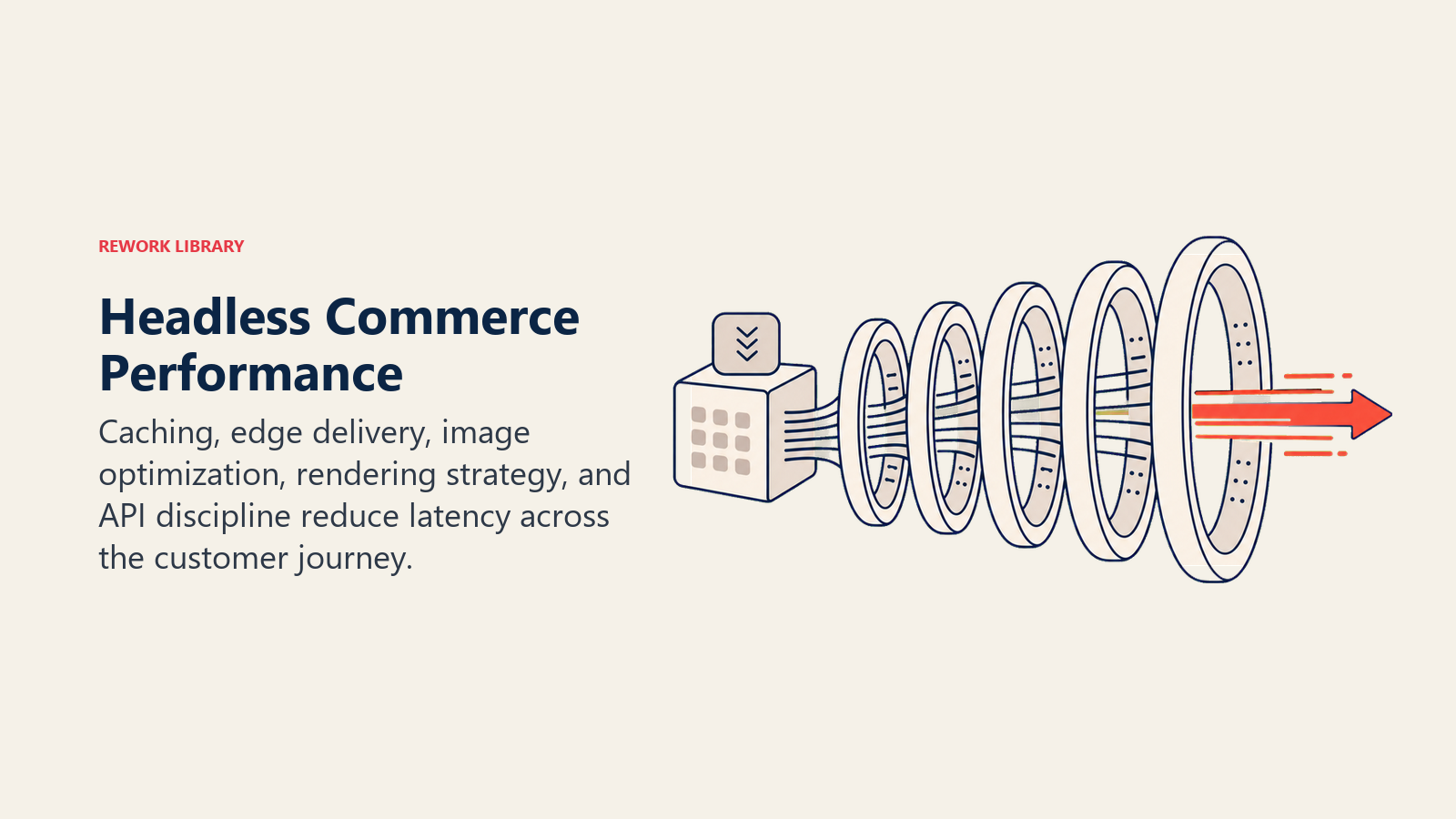
Performance gains come from choosing the rendering pattern, caching strategy, and frontend delivery model that match your catalog and traffic profile.
Frontend Performance Strategies
Headless architecture enables advanced performance techniques:
Static Generation:
- Pre-render pages at build time
- Serve static HTML files
- Update through incremental builds
- Optimal for product pages and content
Server-Side Rendering (SSR):
- Generate pages on-demand
- Fresh data on every request
- Better for personalized content
- SEO benefits for dynamic content
Client-Side Rendering (CSR):
- Interactive experiences
- Single-page application feel
- Reduced server load
- Best for authenticated experiences
Hybrid Approaches:
- Combine strategies based on page type
- Static shell with dynamic data
- Incremental static regeneration
- Edge rendering for personalization
API Performance Optimization
Efficient API usage is critical for headless commerce performance:
GraphQL Benefits:
- Request only needed data
- Reduce over-fetching
- Single request for complex queries
- Strong typing and validation
Caching Strategies:
- CDN caching for static endpoints
- Browser caching for client-side
- Redis for backend caching
- Stale-while-revalidate patterns
Rate Limiting and Quotas:
- Protect backend infrastructure
- Prevent abuse and overuse
- Throttle expensive operations
- Monitor API usage patterns
Conversion Optimization with Headless
Headless architecture provides unique opportunities for conversion rate optimization:
Custom Checkout Experiences
Streamlined Flows:
- Remove unnecessary steps
- Single-page checkout options
- Guest checkout optimization
- Express payment methods
Personalized Experiences:
- Dynamic field requirements based on context
- Smart autofill and suggestions
- Contextual help and guidance
- Progress indicators and trust signals
A/B Testing and Experimentation
Headless enables more sophisticated testing:
Frontend Testing:
- Rapid deployment of variants
- Fine-grained control over experiences
- Advanced segmentation options
- Real-time result monitoring
Feature Flags:
- Gradual feature rollouts
- Targeted feature access
- Quick rollback capabilities
- Reduced deployment risk
Measurement and Analytics
Proper analytics and tracking setup is essential for headless commerce success:
Tracking Implementation
Event-Based Tracking:
- Custom event definitions
- Granular user interaction tracking
- API call monitoring
- Performance metrics collection
Enhanced E-commerce Tracking:
- Product impressions and clicks
- Cart interactions
- Checkout progression
- Transaction data
Custom Dimensions:
- Frontend framework version
- API response times
- Feature flag states
- User segments and cohorts
Key Performance Indicators
Track these headless-specific e-commerce metrics and KPIs:
Technical Performance:
- Page load times across devices
- API response latency
- Error rates and types
- Cache hit ratios
User Experience:
- Time to interactive (TTI)
- First contentful paint (FCP)
- Cumulative layout shift (CLS)
- Core Web Vitals scores
Business Impact:
- Conversion rate by channel
- Revenue per visit
- Cart abandonment rates
- Customer acquisition costs
Marketing Automation Integration
Headless commerce works seamlessly with modern marketing automation platforms:
Data Integration
Customer Data Synchronization:
- Real-time customer profile updates
- Purchase history integration
- Behavioral data collection
- Preference management
Segmentation Capabilities:
- Dynamic audience creation
- Multi-channel targeting
- Behavioral triggers
- Lifecycle stage tracking
Campaign Execution
Personalized Experiences:
- Dynamic content insertion
- Recommendation engines
- Targeted promotions
- A/B tested messaging
Cross-Channel Campaigns:
- Unified customer view
- Consistent messaging across channels
- Attribution tracking
- Multi-touch journeys
Customer Data Platform Integration
Headless architecture facilitates deep customer data platform integration:
Unified Customer Profiles
Data Collection:
- Behavioral tracking across channels
- Transaction history
- Customer service interactions
- Social media engagement
Identity Resolution:
- Cross-device identification
- Anonymous to known customer tracking
- Household-level insights
- Probabilistic matching
Activation and Personalization
Real-Time Personalization:
- Dynamic product recommendations
- Personalized content
- Contextual offers
- Predictive analytics
Audience Activation:
- Marketing platform synchronization
- Advertising platform integration
- Email and SMS targeting
- Push notification campaigns
Security Considerations
API Security
Authentication:
- OAuth 2.0 implementation
- JWT tokens for session management
- API key rotation policies
- Role-based access control
Data Protection:
- HTTPS/TLS encryption
- PCI DSS compliance
- Data encryption at rest
- Secure credential storage
Rate Limiting:
- Request throttling
- IP-based restrictions
- User-based quotas
- DDoS protection
Frontend Security
Client-Side Protection:
- Content Security Policy (CSP)
- XSS prevention
- CSRF protection
- Secure cookie handling
Third-Party Integration:
- Vendor security audits
- Minimal data exposure
- Sandboxed implementations
- Regular dependency updates
Development and Deployment
Team Structure
Recommended Organization:
- Frontend development team
- Backend API developers
- DevOps and infrastructure
- QA and testing specialists
- Product and design leads
Collaboration Practices:
- API contract definitions
- Shared documentation
- Regular sync meetings
- Cross-functional reviews
CI/CD Pipeline
Automated Workflows:
- Continuous integration testing
- Automated deployment pipelines
- Environment provisioning
- Rollback procedures
Quality Assurance:
- Automated testing suites
- Visual regression testing
- API contract testing
- Performance monitoring
Cost Considerations
Initial Investment
Development Costs:
- Custom frontend development
- API integration work
- Infrastructure setup
- Team training and onboarding
Platform and Tool Costs:
- Headless commerce platform fees
- Frontend framework and tools
- CDN and hosting services
- Development and staging environments
Ongoing Expenses
Maintenance and Operations:
- Development team salaries
- Platform subscription costs
- Infrastructure and hosting
- Monitoring and analytics tools
Long-Term ROI:
- Faster feature development
- Improved conversion rates
- Better performance metrics
- Reduced vendor lock-in risk
Migration Strategies
Moving to headless works best as a phased migration, where the team protects existing revenue while replacing the highest-impact parts of the stack first.
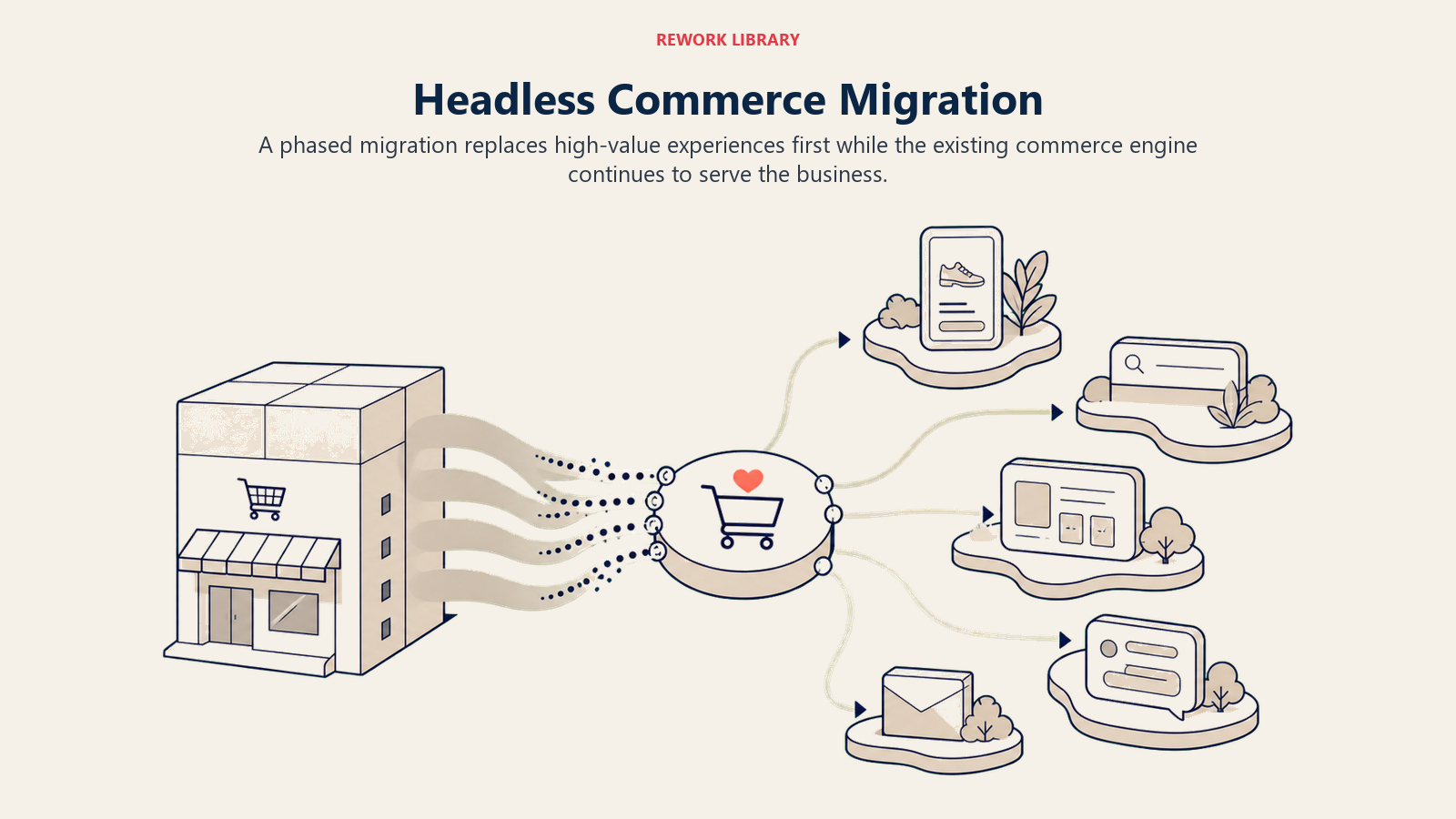
Phased Approach
Step 1: Assessment and Planning
- Audit current platform capabilities
- Define headless requirements
- Evaluate platform options
- Create migration roadmap
Step 2: Pilot Implementation
- Start with single channel or region
- Build core functionality first
- Test with limited traffic
- Gather feedback and iterate
Step 3: Progressive Rollout
- Expand to additional channels
- Migrate more functionality
- Increase traffic allocation
- Monitor performance and issues
Step 4: Full Migration
- Complete traffic cutover
- Decommission legacy systems
- Optimize and refine
- Continuous improvement
Hybrid Approach
Many businesses maintain both traditional and headless systems:
Parallel Operations:
- Traditional platform for some channels
- Headless for others (e.g., mobile app)
- Shared backend data
- Gradual transition
Benefits:
- Reduced migration risk
- Continuous business operations
- Learning opportunity
- Flexibility to adjust strategy
Common Challenges and Solutions
Challenge: Increased Complexity
Solutions:
- Comprehensive documentation
- Developer training programs
- Standardized processes
- Monitoring and alerting tools
Challenge: Higher Initial Costs
Solutions:
- Phased implementation approach
- Focus on high-impact areas first
- Build internal expertise
- Leverage open-source tools
Challenge: API Rate Limits
Solutions:
- Implement caching strategies
- Optimize API calls
- Use GraphQL for efficiency
- Monitor and alert on limits
Challenge: SEO Concerns
Solutions:
- Server-side rendering (SSR)
- Static site generation (SSG)
- Proper meta tag implementation
- Sitemap generation
- Structured data markup
Future of Headless Commerce
Headless commerce is moving toward more composable, edge-powered, and AI-assisted experiences that let brands adapt faster as buying channels change.
Emerging Trends
Edge Computing:
- Rendering at edge locations
- Reduced latency
- Personalization at the edge
- Better global performance
Composable Commerce:
- Best-of-breed service integration
- Microservices architecture
- Packaged business capabilities
- Modular approach to features
AI and Machine Learning:
- Predictive personalization
- Intelligent search and discovery
- Dynamic pricing optimization
- Automated content generation
Voice and Conversational Commerce:
- Voice assistant integration
- Chatbot commerce experiences
- Natural language product search
- Conversational checkout flows
Getting Started with Headless Commerce
Initial Steps
Assess Your Needs:
- Define business objectives
- Evaluate technical capabilities
- Identify key use cases
- Determine success criteria
Build Your Team:
- Hire or train developers
- Establish roles and responsibilities
- Create collaboration processes
- Set up development environments
Select Your Stack:
- Choose backend platform
- Select frontend framework
- Identify supporting tools
- Plan integration points
Start Small:
- Begin with pilot project
- Focus on single use case
- Prove value before scaling
- Learn and iterate
Success Factors
Executive Support:
- Secure leadership buy-in
- Adequate budget allocation
- Long-term commitment
- Clear success metrics
Technical Expertise:
- Skilled development team
- Modern DevOps practices
- API design experience
- Frontend specialization
Clear Strategy:
- Defined business goals
- Phased implementation plan
- Risk mitigation strategies
- Continuous optimization focus
Conclusion
Headless commerce represents a powerful architectural approach that enables businesses to deliver exceptional customer experiences while maintaining robust commerce capabilities. By separating the frontend from the backend, organizations gain the flexibility to innovate rapidly, optimize for performance, and deliver consistent experiences across all customer touchpoints.
While headless commerce requires greater initial investment in development resources and technical expertise, the long-term benefits of improved performance, enhanced flexibility, and future-proof architecture make it an increasingly attractive option for growth-focused e-commerce businesses.
Success with headless commerce requires careful planning, the right technology choices, skilled teams, and a commitment to ongoing optimization. When implemented thoughtfully, headless architecture positions businesses to adapt quickly to changing customer expectations and emerging commerce channels.
Learn More
Explore these related resources to deepen your understanding of modern e-commerce technology and optimization:
- E-commerce Platform Selection - Comprehensive guide to evaluating and choosing the right e-commerce platform for your business needs
- Site Speed & Performance - Technical strategies for optimizing page load times and improving Core Web Vitals scores
- Mobile Commerce Optimization - Best practices for creating exceptional mobile shopping experiences
- Conversion Rate Optimization - Data-driven approaches to improving conversion rates throughout the customer journey

On this page
- What is Headless Commerce?
- Traditional vs. Headless Architecture
- Core Components of Headless Commerce
- 1. Backend Commerce Engine
- 2. Frontend Experience Layer
- 3. API Layer
- Why Choose Headless Commerce?
- Speed and Performance Benefits
- Flexibility and Customization
- Omnichannel Excellence
- Faster Time to Market
- Mobile Commerce Advantages
- Implementation Considerations
- When Headless Commerce Makes Sense
- When Traditional Platforms May Be Better
- Platform Selection for Headless Commerce
- Backend Commerce Platforms
- Frontend Frameworks and Tools
- Content Management Systems
- Technical Architecture Patterns
- JAMstack Architecture
- Progressive Web App (PWA) Approach
- Performance Optimization
- Frontend Performance Strategies
- API Performance Optimization
- Conversion Optimization with Headless
- Custom Checkout Experiences
- A/B Testing and Experimentation
- Measurement and Analytics
- Tracking Implementation
- Key Performance Indicators
- Marketing Automation Integration
- Data Integration
- Campaign Execution
- Customer Data Platform Integration
- Unified Customer Profiles
- Activation and Personalization
- Security Considerations
- API Security
- Frontend Security
- Development and Deployment
- Team Structure
- CI/CD Pipeline
- Cost Considerations
- Initial Investment
- Ongoing Expenses
- Migration Strategies
- Phased Approach
- Hybrid Approach
- Common Challenges and Solutions
- Challenge: Increased Complexity
- Challenge: Higher Initial Costs
- Challenge: API Rate Limits
- Challenge: SEO Concerns
- Future of Headless Commerce
- Emerging Trends
- Getting Started with Headless Commerce
- Initial Steps
- Success Factors
- Conclusion
- Learn More