Subscription Model Design: Building Predictable Revenue Through Strategic Subscriptions
Turn this article into takeaways for your work.


Each assistant summarizes the article only for you and suggests best practices for your work.
The subscription model has changed how e-commerce works. Traditional online retail needs constant customer acquisition just to maintain growth. Subscriptions build compound revenue streams. Customers who subscribe generate 2-3x more revenue over their lifetime compared to one-time purchasers, with businesses enjoying 90% revenue predictability versus 30-40% for transaction-based models. This shift in customer lifetime value creates real competitive advantages.
This isn't about forcing subscriptions on products that don't fit. It's about finding natural subscription opportunities in your catalog and designing models that actually improve customer experience while creating business advantages. Done right, subscriptions reduce customer acquisition costs, improve inventory forecasting, and build moats against competition.
Here's how to design subscription models that work for both your business and your customers.
Subscriptions are one of the most reliable engines of ecommerce growth because they convert one-time buyers into recurring revenue. Subscribers generate 2 to 3 times more lifetime value than one-time purchasers and give a business 90% revenue predictability versus 30 to 40% for transaction-based models, which lowers acquisition pressure and funds compounding growth.
Subscription Model Fundamentals
Not all subscription models are created equal. Understanding the four core types helps you choose the right approach for your products and customer base. Replenishment subscriptions serve consumable products customers need regularly. Coffee, vitamins, pet food, and razor blades fit this model perfectly. Customers subscribe because they value the convenience of never running out, and you benefit from predictable reorder cycles. Dollar Shave Club built a billion-dollar business on this simple premise.
Curation subscriptions deliver surprise and discovery. Think Birchbox, Stitch Fix, or Book of the Month. Customers subscribe for the experience of receiving curated selections they might not have chosen themselves. The value comes from expert selection, personalization, and the delight of discovery. This model works when choice overwhelm is a real problem for customers.
Access subscriptions provide ongoing benefits or exclusive perks. Amazon Prime pioneered this model by bundling free shipping, streaming content, and other benefits. Customers subscribe for convenience and savings that exceed the subscription cost. This model requires substantial benefit infrastructure but creates powerful lock-in effects.
Hybrid subscriptions combine elements of multiple models. You might offer replenishment with occasional curated add-ons, or access benefits with product discounts. HelloFresh combines meal kit delivery (replenishment) with recipe curation and exclusive benefits. Hybrid models increase complexity but can command premium pricing when executed well.
Subscription Model Comparison
| Model Type | Best For | Key Value Prop | Complexity | Churn Risk |
|---|---|---|---|---|
| Replenishment | Consumables | Convenience | Low | Medium |
| Curation | Discovery products | Surprise & expertise | High | Medium-High |
| Access | High-frequency buyers | Benefits & savings | Medium | Low |
| Hybrid | Diverse catalogs | Multiple benefits | Very High | Low-Medium |
Product Suitability Analysis
Not every product should be a subscription. Forcing subscriptions on unsuitable products creates customer frustration and high churn rates. Start with this framework. Consumption pattern analysis reveals natural subscription candidates. Products customers buy at predictable intervals work best. If your data shows customers reorder coffee every 23-28 days, that's a strong subscription signal. If purchase intervals vary widely (20-90 days), subscriptions become harder to optimize without flexible scheduling options. Look at your repeat purchase rate by SKU. Products with 40%+ repeat purchase rates within 90 days are excellent candidates. Products with 20-40% repeat rates might work with the right incentives. Below 20%, focus on one-time sales unless you can create access-based value beyond the product itself. Need versus want distinction matters significantly. Customers subscribe more readily to needs than wants. Pet food is a need that runs out on a schedule. Specialty cooking ingredients are wants with irregular usage. This doesn't mean wants can't be subscriptions, but they require stronger value propositions beyond convenience.
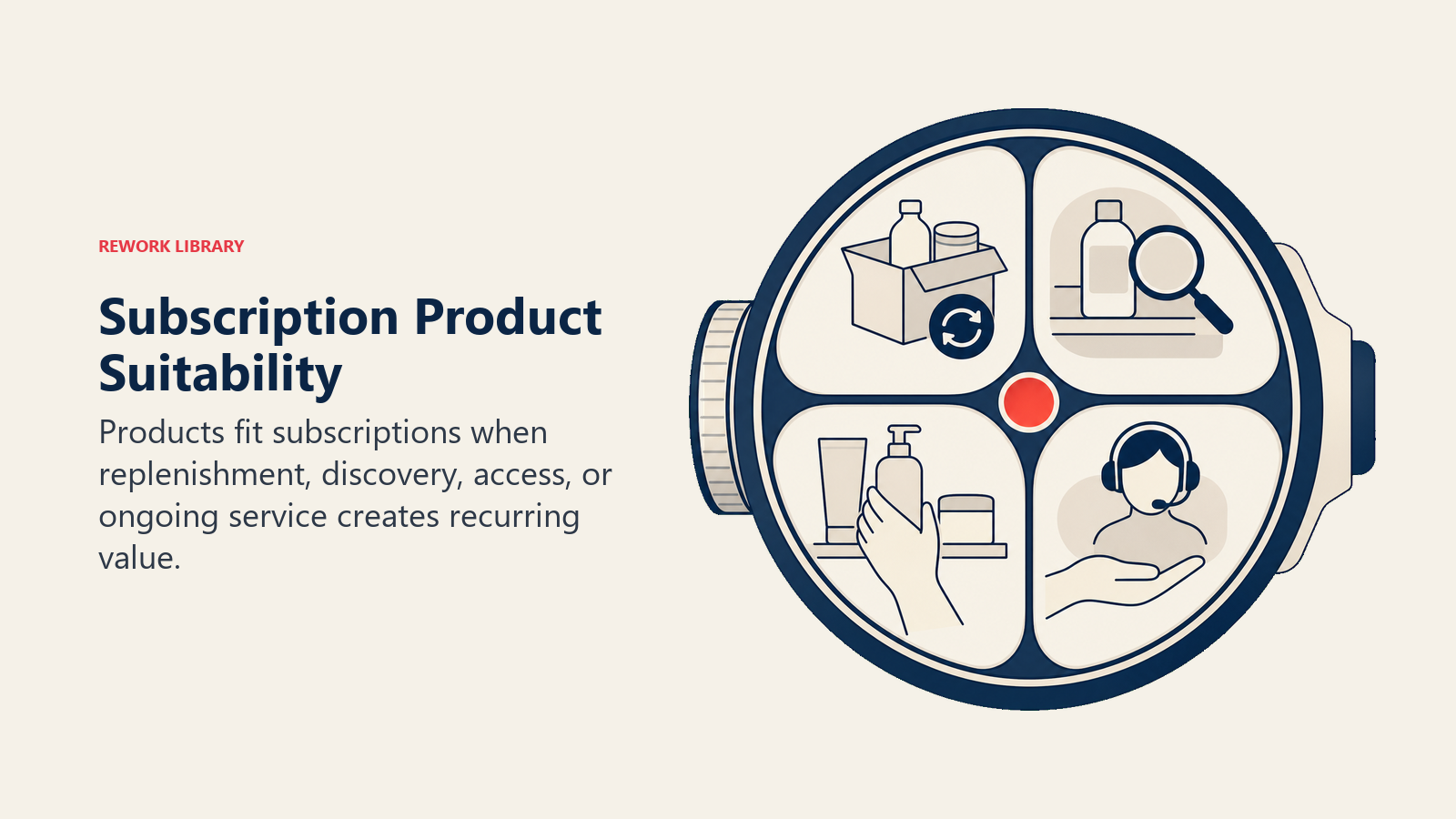
Margin preservation matters for subscription economics. You'll probably offer 10-25% discounts to subscription customers, plus you'll have additional costs for subscription management, flexible billing, and enhanced customer service. Your gross margins need to support these discounts while maintaining healthy unit economics for e-commerce. Products with 60%+ gross margins can usually support subscription discounts. Below 50%, subscriptions may squeeze margins too much.
Subscription Pricing Models
Pricing determines both customer adoption and long-term profitability. The right structure balances acquisition, retention, and margin preservation. Tiered pricing gives customers choice while encouraging upgrades. A basic tier might offer 10% off with monthly delivery. A premium tier could provide 20% off, free shipping, early access to new products, and flexible scheduling for a higher commitment. Tiered models improve lifetime value by giving customers room to grow with your program rather than hitting a ceiling. Most successful e-commerce subscriptions offer 10-25% discounts depending on commitment level and competitive dynamics. Start at 10-15% for monthly subscriptions, offering 20-25% for annual prepayment. These discounts must deliver genuine savings that exceed friction costs while preserving your margins. Test subscription pricing separately from one-time pricing as part of your pricing strategy optimization. Don't automatically match promotional prices in subscription plans, or you'll train customers to expect compounded discounts. The subscription discount itself is the ongoing promotion.
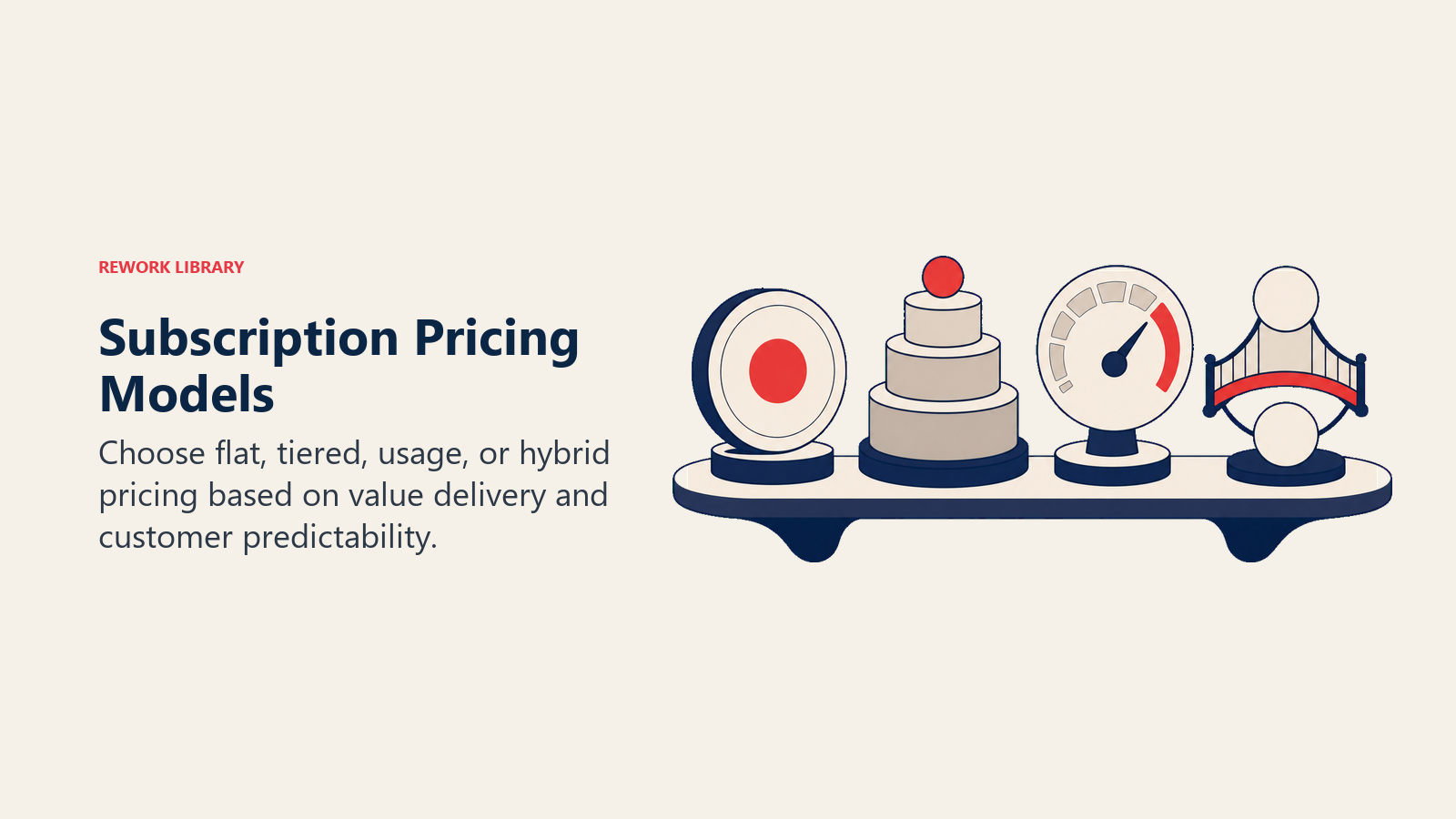
Frequency-based pricing can optimize for different customer segments. A customer who wants delivery every 14 days might pay full subscription price, while someone comfortable with 45-day deliveries gets a smaller discount but provides better inventory forecasting and lower fulfillment costs. This flexibility reduces churn from customers who feel locked into incorrect frequencies.
Consider lock-in incentives carefully. Requiring annual commitments increases upfront revenue but may reduce total subscriptions acquired. Monthly commitments lower barriers to entry but increase churn risk. Many businesses use a hybrid approach: offer monthly subscriptions but provide meaningful discounts (additional 10%) for annual prepayment. This lets the customer choose their commitment level.
Value Proposition Design
Customers subscribe when the subscription value clearly exceeds the cost and effort. Build your value proposition across multiple dimensions. Convenience value is the foundation for replenishment subscriptions. "Never run out" resonates for products with real consequences when supplies lapse. Pet owners subscribe to pet food because running out creates immediate problems. This value grows stronger when you add flexible scheduling, easy skipping, and intelligent delivery prediction based on usage patterns.
Guaranteed supply value works powerfully for products with availability constraints. Limited edition products, seasonal items, or supply-chain-challenged categories become more attractive as subscriptions when you can promise subscribers first access or guaranteed allocation. This was a key driver during pandemic-era subscriptions for hard-to-source products.
Cost savings value needs to be concrete and calculable. Don't just say "save with subscriptions." Show exactly what customers save: "Subscribe and save $47 per month versus one-time purchase prices." Show cumulative annual savings. Make the math obvious. This works especially well when compared against retail prices if you're a DTC brand.
Exclusive benefits differentiate access-based subscriptions. Early product launches, subscriber-only products, enhanced customer service, or community access create value beyond discounts. Glossier's subscription program succeeds partly through exclusive product access that non-subscribers can't purchase at any price. These benefits work especially well when integrated with loyalty programs to create layered value propositions.
Subscription Unit Economics
Subscription economics differ fundamentally from transaction-based models. Understanding these differences prevents expensive mistakes. Gross margin after subscription discount is your starting point. If standard gross margin is 65% and you offer a 15% subscription discount, your subscription gross margin becomes approximately 50%. This assumes no other cost increases, though you'll likely incur additional subscription management costs (2-3% of revenue). Make sure this margin supports your customer acquisition and operational costs. CAC payback period typically extends for subscriptions compared to one-time purchases. You're offering discounts upfront for future revenue predictability. If your standard CAC is $45 and your product sells for $30 with 65% margins, you achieve payback in approximately 2.3 orders. With a subscription discount bringing margins to 50%, payback extends to about 3 orders. This is acceptable if retention improves sufficiently. Track cohort-based payback to understand true subscription economics. Your first subscription month may not achieve payback, but by month 3-4, subscribers should become profitable. If payback extends beyond 6 months, your CAC is too high, your discounts too steep, or your churn too significant.
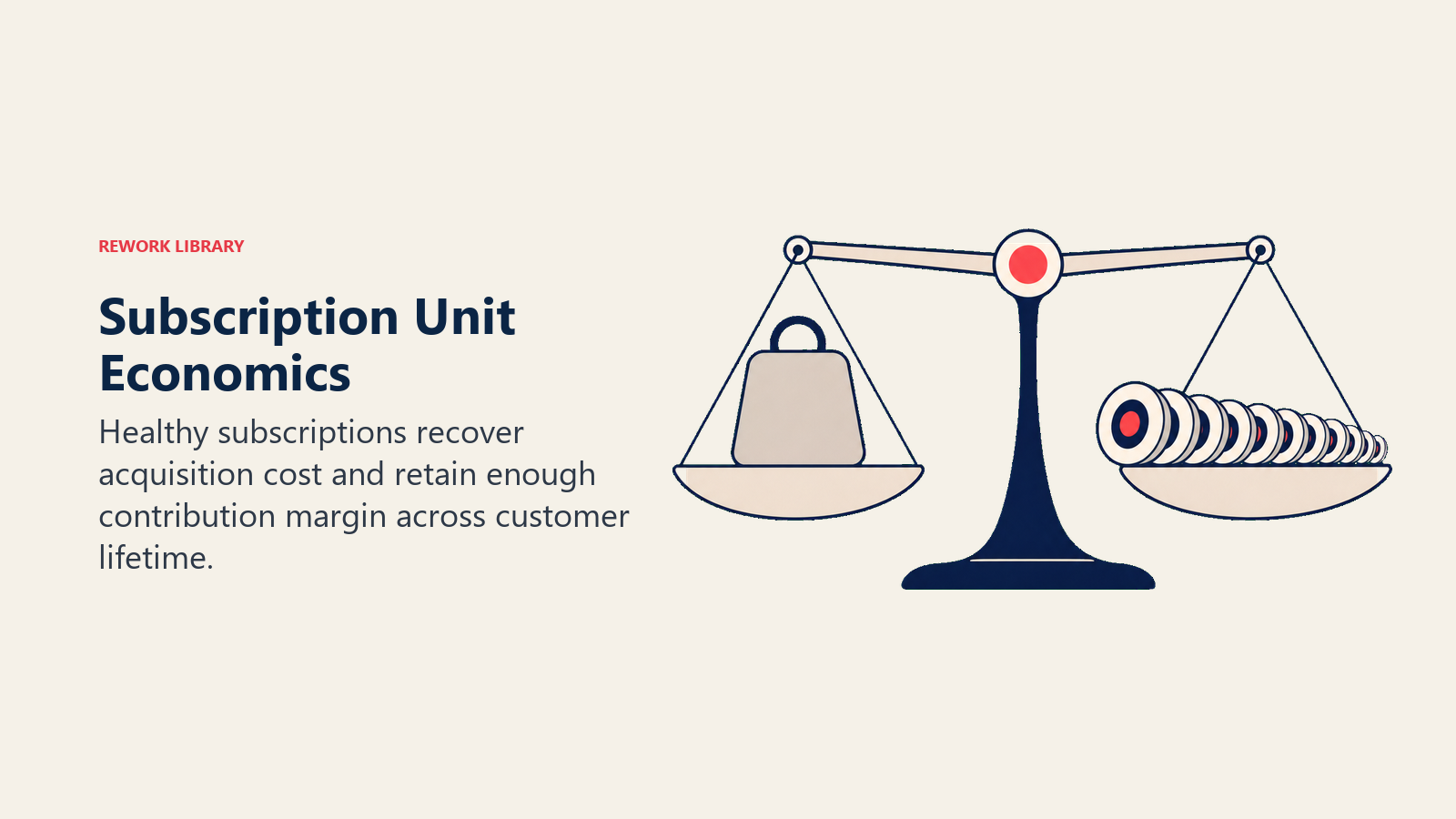
Churn impact on LTV grows exponentially in subscription models. At 5% monthly churn, average customer lifetime is 20 months. At 10% monthly churn, lifetime drops to 10 months. This dramatically impacts unit economics. A customer worth $600 over 20 months becomes worth $300 over 10 months. Small churn improvements create outsized revenue impacts through effective subscription churn management strategies.
Calculate MRR per subscriber (Monthly Recurring Revenue) and track it religiously. This metric reveals the health of your subscription base better than total revenue. Growing MRR with stable subscriber counts means your customers are upgrading or adding products. Flat MRR with growing subscribers might indicate you're attracting lower-value customers.
Implementation Architecture
Your technology stack must support subscription complexity without creating operational nightmares. Platform requirements start with flexible subscription management. You need systems that handle variable frequencies, easy pausing and resuming, simple product swaps, and graceful failure handling when payment methods expire. Shopify's subscription apps, ReCharge, and similar platforms provide this foundation without building from scratch. Your platform must support flexible scheduling if you want low churn. Customers need to skip shipments, adjust frequency, modify quantities, and pause subscriptions without talking to customer service. Friction in these actions drives cancellations. Enable self-service for 90%+ of subscription management tasks. Billing infrastructure needs reliable retry logic for failed payments. The average credit card failure rate is 10-15% for recurring charges. Smart retry systems with varying timing, automatic payment method updates, and proactive customer notification recover 40-60% of initially failed payments. This directly impacts revenue, a business with $1M MRR loses $100-150K monthly without retry systems. Your payment processing strategy must account for these subscription-specific challenges.
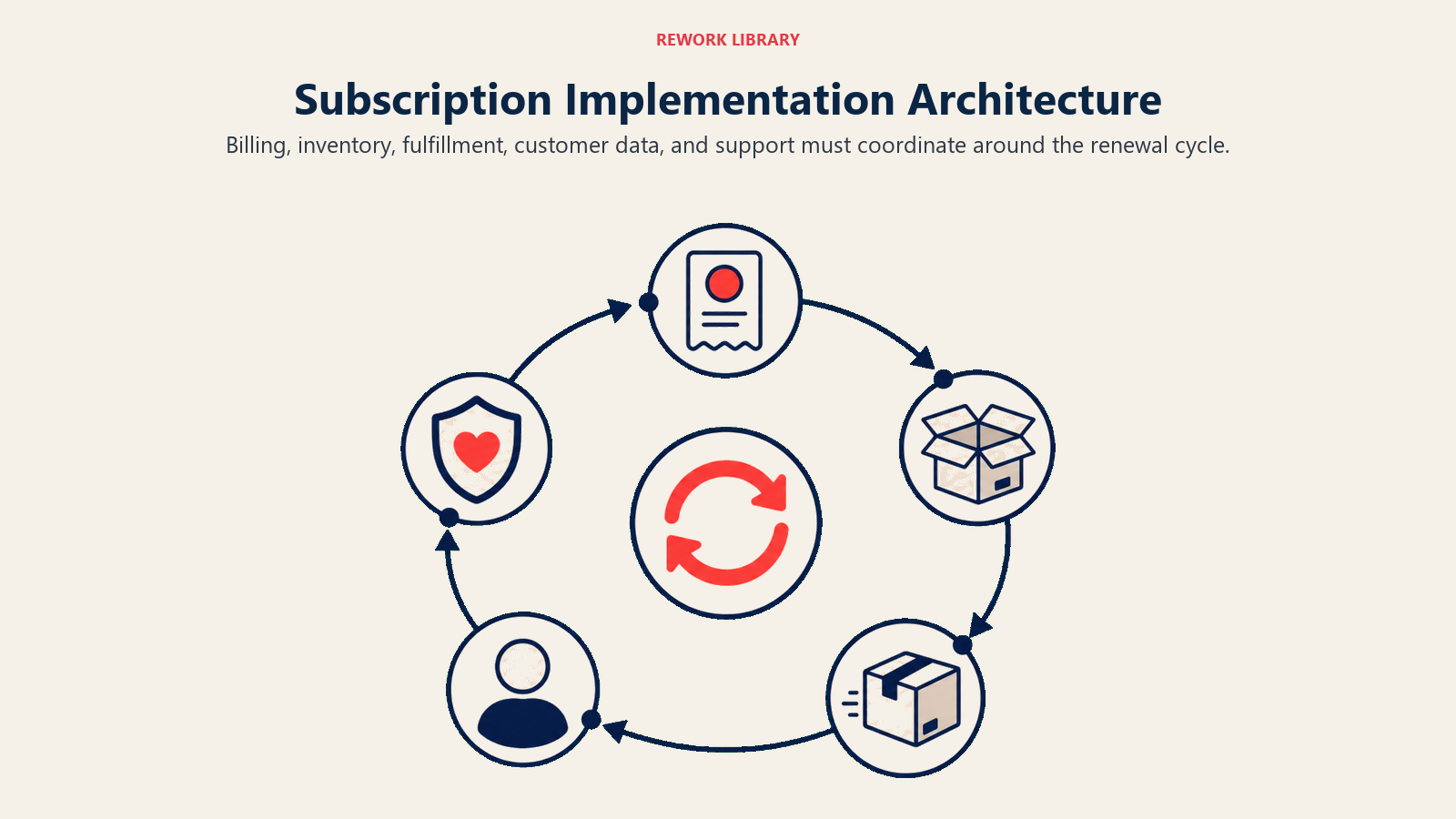
Billing infrastructure needs reliable retry logic for failed payments. The average credit card failure rate is 10-15% for recurring charges. Smart retry systems with varying timing, automatic payment method updates, and proactive customer notification recover 40-60% of initially failed payments. This directly impacts revenue: a business with $1M MRR loses $100-150K monthly without retry systems. Your payment processing strategy must account for these subscription-specific challenges.
Implement dunning management that balances persistence with customer experience. Send pre-charge notifications 3 days before billing. Retry failed payments at 1 day, 3 days, and 7 days with increasingly urgent messaging. Offer payment method update links in every communication. Pause subscriptions rather than cancel them when payment fails, giving customers 30 days to update payment before cancellation.
Your customer portal should allow subscribers to see upcoming charges, modify orders, view subscription history, access special subscriber pricing, and manage preferences without friction. Poor portal experiences drive support tickets and churn. Invest in making self-service genuinely easy.
Go-to-Market Strategy
Launching subscriptions requires intentional positioning and customer education.
Positioning decisions determine adoption rates. Are subscriptions your primary business model or a convenience option alongside one-time purchases? Primary subscription businesses (Dollar Shave Club) optimize everything around subscription acquisition. Optional subscription models (many DTC brands) maintain flexibility but may struggle with conversion rates.
Make subscriptions visible without being pushy. Subscription options should appear prominently on product pages, with clear value propositions and savings calculations. Use "Subscribe and save X%" messaging with easy comparison to one-time purchase prices. Don't hide subscriptions in account settings or require multi-step processes to enroll.
First-time incentives accelerate adoption but must be sustainable. Offering an additional 20% off first subscription orders can spike signups, but creates cohorts with poor economics if those discounts compress margins too severely. Better approaches include free shipping on first subscription order, bonus gifts, or extended trial periods (first month 50% off, full price thereafter).
Consider cross-sell timing carefully. Should you offer subscriptions only after first purchase, or immediately to new customers? Testing shows both approaches work depending on product type. For consumables with clear replenishment value, immediate subscription offers convert well. For products requiring trial (supplements, specialty foods), offering subscriptions after positive first experiences works better. Strategic customer segmentation helps you target the right subscription offers to the right customer groups.
Competitive Differentiation
Subscription models proliferate across e-commerce. Differentiation determines whether you win customers or blend into commodity subscription options.
Customization depth separates mediocre from exceptional subscription experiences. Basic subscriptions ship the same thing every month. Advanced subscriptions learn from customer feedback, purchase behavior, and stated preferences to evolve over time. Function of Beauty built their subscription around complete product customization. Customers fill out detailed hair profiles, and formulations adjust based on changing needs.
Consider customization across multiple dimensions: product selection, delivery frequency, quantity, add-ons, and exclusive options. Each customization point increases perceived value and switching costs.
Quality consistency matters more for subscriptions than one-time purchases. A disappointing one-time order may not result in a repeat purchase, but customers move on. A disappointing subscription shipment triggers immediate cancellation. Ensure your sourcing, quality control, and fulfillment processes maintain consistent high standards. Subscription customers have higher expectations because they've made ongoing commitments.
Community building creates sustainable competitive advantages. Subscription customers are your most engaged segment. Build community through subscriber-only content, forums, events, or social groups. Peloton's subscription success comes partly from community connections that make cancellation psychologically difficult. You're not just canceling a product subscription, you're leaving a community. This sense of belonging becomes a powerful customer retention strategy that goes beyond product value alone.
Onboarding and First Experience
The first 90 days determine subscription success. Poor onboarding creates immediate churn. Unboxing experience sets expectations for ongoing value. Your first subscription shipment should exceed expectations. Include welcome materials explaining subscription benefits, how to manage preferences, what to expect in future shipments, and exclusive subscriber perks. Small touches matter, handwritten notes, premium packaging, or unexpected bonuses create positive emotional connections. First shipments are your opportunity to showcase why subscriptions are better than one-time purchases. Don't waste it by treating subscription orders identically to standard orders.
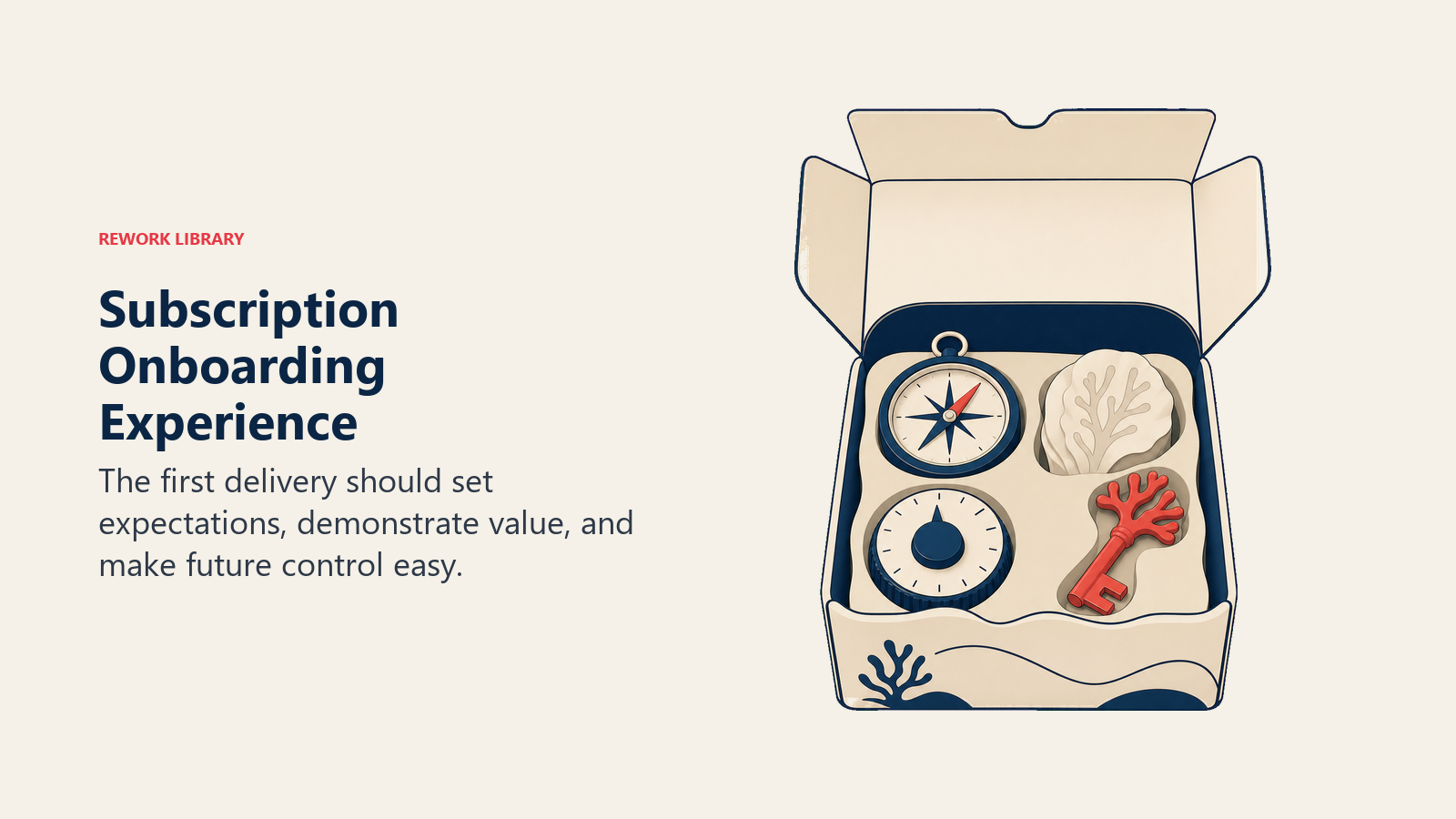
Unboxing experience sets expectations for ongoing value. Your first subscription shipment should exceed expectations. Include welcome materials explaining subscription benefits, how to manage preferences, what to expect in future shipments, and exclusive subscriber perks. Small touches matter, like handwritten notes, premium packaging, or unexpected bonuses that create positive emotional connections.
Communication timeline guides subscribers through their first months. Send an immediate welcome email after signup with clear expectations, account management instructions, and next steps. Follow up 3-7 days before first shipment with delivery notifications and modification options. After first delivery, request feedback to optimize future shipments.
Many subscriptions fail because customers forget they subscribed or don't remember how to manage preferences. Combat this with proactive communication: "Your second shipment arrives in 5 days. Want to adjust anything?" This prevents surprise charges and cancellations from forgetfulness.
Feedback loops in early subscription cycles reduce long-term churn. After first delivery, ask: "How was your first shipment?" Offer easy adjustment options based on feedback. "Too much product? Reduce quantity or extend frequency." This responsiveness shows subscribers you're optimizing for their needs, not just shipping products on autopilot. Systematic implementation of customer feedback loops turns early signals into retention improvements.
Metrics and Monitoring
Subscription businesses require different metrics than transaction-based e-commerce. Conversion rate to subscription reveals how effectively you're communicating value. Track this separately from standard conversion rates. Benchmark: 5-15% of product page visitors should convert to subscriptions for strong replenishment products. Lower rates suggest value proposition, pricing, or presentation issues. Segment conversion by traffic source, product type, and customer type (new versus returning). New customers may convert to subscriptions at 3-8% rates, while returning customers convert at 15-30% when they've validated product quality through first purchases. Monthly Recurring Revenue (MRR) is your north star metric. Track total MRR, MRR by cohort, new MRR from acquisitions, expansion MRR from upgrades, contraction MRR from downgrades, and churned MRR. These components reveal business health better than total subscriber counts.

Growing subscriber counts with flat MRR means you're acquiring lower-value customers. Shrinking subscriber counts with growing MRR indicates successful upsells but acquisition challenges. Both scenarios require different responses.
Churn by cohort shows retention patterns over time. Calculate monthly churn rate: (subscribers lost this month / subscribers at month start) × 100. Track this by acquisition cohort to understand if retention improves or degrades with newer customers. Healthy subscription businesses achieve 3-7% monthly churn rates. Above 10% indicates serious retention issues.
Monitor churn reasons through cancellation surveys. Don't just track that customers left, understand why. Common reasons include too much product accumulation (frequency problem), price concerns (value proposition problem), product dissatisfaction (quality problem), or switching to competitors (differentiation problem). Each reason requires different solutions.
Customer Lifetime Value (LTV) for subscribers should be 2-3x higher than one-time purchasers. If this gap is smaller, your subscription model isn't creating enough additional value. Calculate LTV as: (Average order value × Purchase frequency × Gross margin) / Churn rate. Track this monthly to see if improvements in any variable are driving overall LTV growth.
Reactivation rate measures how many canceled subscribers return. This metric reveals whether cancellations stem from temporary issues (product accumulation, budget constraints) or permanent dissatisfaction. Reactivation rates above 10-15% suggest you should invest in win-back campaigns. Below 5%, focus on preventing cancellations rather than recovering them. Track these alongside other critical e-commerce metrics and KPIs to understand overall business health.
Scaling Considerations
Subscription growth creates operational complexities that don't exist in transaction-based models.
Inventory forecasting becomes simultaneously easier and more challenging with subscriptions. You have better visibility into future demand from existing subscribers, but must balance this against uncertainty from new subscriber acquisition and churn. Build forecasting models that factor in subscriber counts, average order frequency, seasonal patterns, and historical growth rates.
Maintain safety stock for subscription orders above normal levels. Running out of stock impacts one-time purchasers temporarily. Running out of stock for subscribers breaks trust and triggers cancellations. Buffer stock for subscriptions should be 20-30% higher than for standard products.
Operational cadence shifts from reactive to proactive. You know exactly when subscription orders will process, allowing you to batch fulfillment, optimize labor scheduling, and negotiate better shipping rates through volume. Use this predictability to reduce operational costs even as discounts reduce gross margins.
Consider dedicated subscription fulfillment as you scale. Subscription orders have different requirements than one-time orders, consistent packaging, preference management, special handling for modifications. Separating subscription fulfillment workflows allows optimization without disrupting standard operations.
Expansion strategies should consider subscription economics. Can you expand subscriptions to adjacent product categories? Can existing subscribers easily add products to their regular orders? Cross-category subscriptions create powerful economics, customers subscribing to both coffee and skincare products have dramatically lower churn rates than single-category subscribers.
Test geographic expansion carefully for subscriptions. Shipping economics, customs regulations, and payment processing complexity all increase internationally. Ensure unit economics remain positive in new markets before aggressive expansion. You may need different subscription pricing by region to account for logistics costs. Strong email marketing for e-commerce drives subscription retention through regular value reinforcement and engagement campaigns.
Making Subscriptions Work
Subscription models aren't magic revenue generators. They're strategic business model shifts that require careful design, implementation, and ongoing optimization. Done poorly, they create customer frustration, operational complexity, and compressed margins without meaningful retention improvements.
Done well, subscriptions transform your business economics. They provide revenue predictability that enables better inventory planning, reduces customer acquisition pressure, and creates compound growth through expanding subscriber bases. The businesses winning with subscriptions understand they're not selling convenience, they're building ongoing relationships where consistent value delivery earns the right to recurring revenue.
Start with products that have natural subscription fit, design pricing that balances customer value with business economics, implement technology that makes subscription management frictionless, and obsess over the metrics that reveal retention health. The first 100 subscribers teach you everything you need to know about whether your model works. Listen to what they tell you through their behavior, and adjust accordingly.
The subscription economy rewards businesses that genuinely make customers' lives better through ongoing relationships. Design your model around that principle, and revenue predictability follows naturally.
Frequently Asked Questions about Subscription Model Design for Ecommerce Growth and Recurring Revenue
How do subscriptions drive ecommerce growth?
Subscriptions convert one-time buyers into recurring revenue, so growth compounds instead of resetting with every acquisition cycle. Subscribers generate 2 to 3 times more lifetime value than one-time purchasers and deliver around 90% revenue predictability, which lowers customer acquisition pressure and improves inventory forecasting.
Which products are a good fit for a subscription model?
Products customers buy at predictable intervals work best, especially consumables like coffee, vitamins, and pet food. Look for SKUs with a 40% or higher repeat purchase rate within 90 days and gross margins above 60%, since subscriptions usually require a 10 to 25% discount.
What discount should a subscription offer?
Most successful ecommerce subscriptions offer 10 to 25% off depending on commitment level. Start at 10 to 15% for monthly plans and 20 to 25% for annual prepayment, ensuring the discount feels meaningful while still preserving healthy gross margins.
What is a healthy subscription churn rate?
Healthy ecommerce subscription businesses run 3 to 7% monthly churn. Above 10% signals a serious retention problem, since churn compounds: at 5% monthly churn average lifetime is 20 months, but at 10% it drops to just 10 months.
Learn More
Strengthen your subscription business with these related resources:
- Subscription Churn Management - Reduce cancellations and extend subscriber lifetime through data-driven retention strategies
- Customer Lifetime Value - Calculate and optimize the metric that determines subscription profitability
- Unit Economics for E-commerce - Master the financial fundamentals that make subscription models sustainable
- Payment Processing Strategy - Optimize billing infrastructure to minimize failed payments and maximize revenue recovery

On this page
- Subscription Model Fundamentals
- Subscription Model Comparison
- Product Suitability Analysis
- Subscription Pricing Models
- Value Proposition Design
- Subscription Unit Economics
- Implementation Architecture
- Go-to-Market Strategy
- Competitive Differentiation
- Onboarding and First Experience
- Metrics and Monitoring
- Scaling Considerations
- Making Subscriptions Work
- Learn More