Product Bundling Strategies: Increase AOV Through Strategic Bundle Creation
Turn this article into takeaways for your work.


Each assistant summarizes the article only for you and suggests best practices for your work.
Product bundling is one of the most powerful yet underused strategies for increasing average order value in e-commerce. When done right, bundles can boost AOV by 20-40% while also improving customer satisfaction and inventory turnover. This guide explores how to create, price, and promote product bundles that drive real revenue growth.
Why Product Bundling Matters
Product bundling works because it addresses three core psychological principles: perceived value, decision simplification, and discovery. Customers feel they're getting a better deal when products are grouped together at a discount compared to purchasing individually. The curated nature of bundles reduces decision fatigue by presenting pre-selected combinations that work well together. Finally, bundles introduce customers to products they might not have discovered otherwise.
From a business perspective, bundling drives benefits beyond AOV increases. It helps move slow-moving inventory by pairing it with popular items. It reduces per-order fulfillment costs by shipping multiple items together. It increases customer lifetime value by exposing buyers to more of your product catalog. And it creates differentiation in competitive markets where individual product pricing may be commoditized.
The data supports bundling as a growth driver. Retailers implementing strategic bundling programs typically see 25-35% of their revenue coming from bundle purchases within 12 months. Average order values for bundle purchases run 40-60% higher than single-item purchases. Perhaps most importantly, customers who purchase bundles show 30-50% higher repurchase rates compared to single-item buyers.
Bundle Types and Models
Understanding different bundle structures helps you match the right approach to your product catalog and customer needs. Pure Bundles require customers to purchase items together - they can't be bought separately. This model works best for products specifically designed to work together, like subscription boxes, meal kits, or matched sets. Pure bundles give you maximum control over the customer experience and inventory management but limit flexibility for shoppers who may only want specific items. Mixed Bundles offer products both individually and as part of bundles, giving customers flexibility while still encouraging multi-item purchases through bundle discounts. This is the most common bundling approach in e-commerce because it maximizes market coverage. You capture customers who want the convenience and savings of bundles while not losing sales from those who prefer individual items.
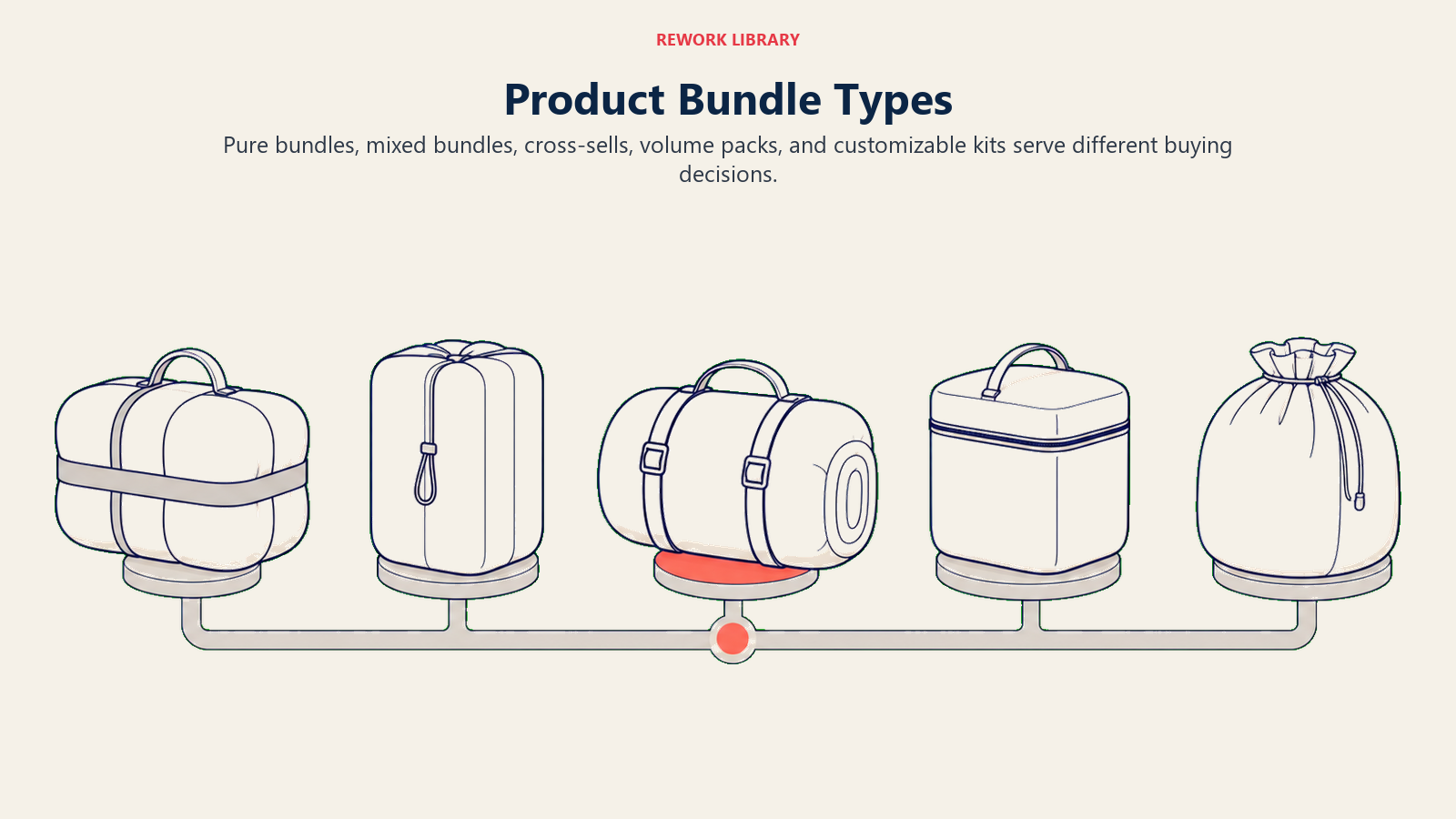
Complementary Bundles group products that naturally go together based on usage. A camera bundled with memory cards, case, and extra battery exemplifies this approach. These bundles succeed because they solve a complete customer need rather than requiring multiple shopping sessions. The key is selecting items that truly complement each other rather than forcing unrelated products together.
Tiered Bundles offer multiple bundle options at different price points, like "Essential," "Deluxe," and "Ultimate" packages. This structure leverages price anchoring, the highest-priced option makes the middle tier seem more reasonable, while the entry level captures price-sensitive customers. Tiered bundles are particularly effective for complex products where different customer segments have varying needs and budgets.
Build-Your-Own Bundles let customers select a specified number of items from a defined set to create their own bundle. This approach combines the psychological benefits of bundling with the personalization customers expect. The framework might be "Choose any 3 products from this collection and save 20%" or "Build your skincare routine - select 4 items and get 25% off." This model works well for products where personal preference matters.
Identifying Bundle Opportunities
Effective bundling starts with data analysis to identify which products naturally fit together based on customer behavior and product attributes. Begin by analyzing purchase patterns in your order history. Which products are frequently bought together in the same order or in sequential purchases? Co-purchase analysis reveals natural product affinities that customers have already validated through their buying behavior. Tools like market basket analysis can quantify these relationships and help you prioritize bundle opportunities, similar to how product research and validation informs product development decisions.
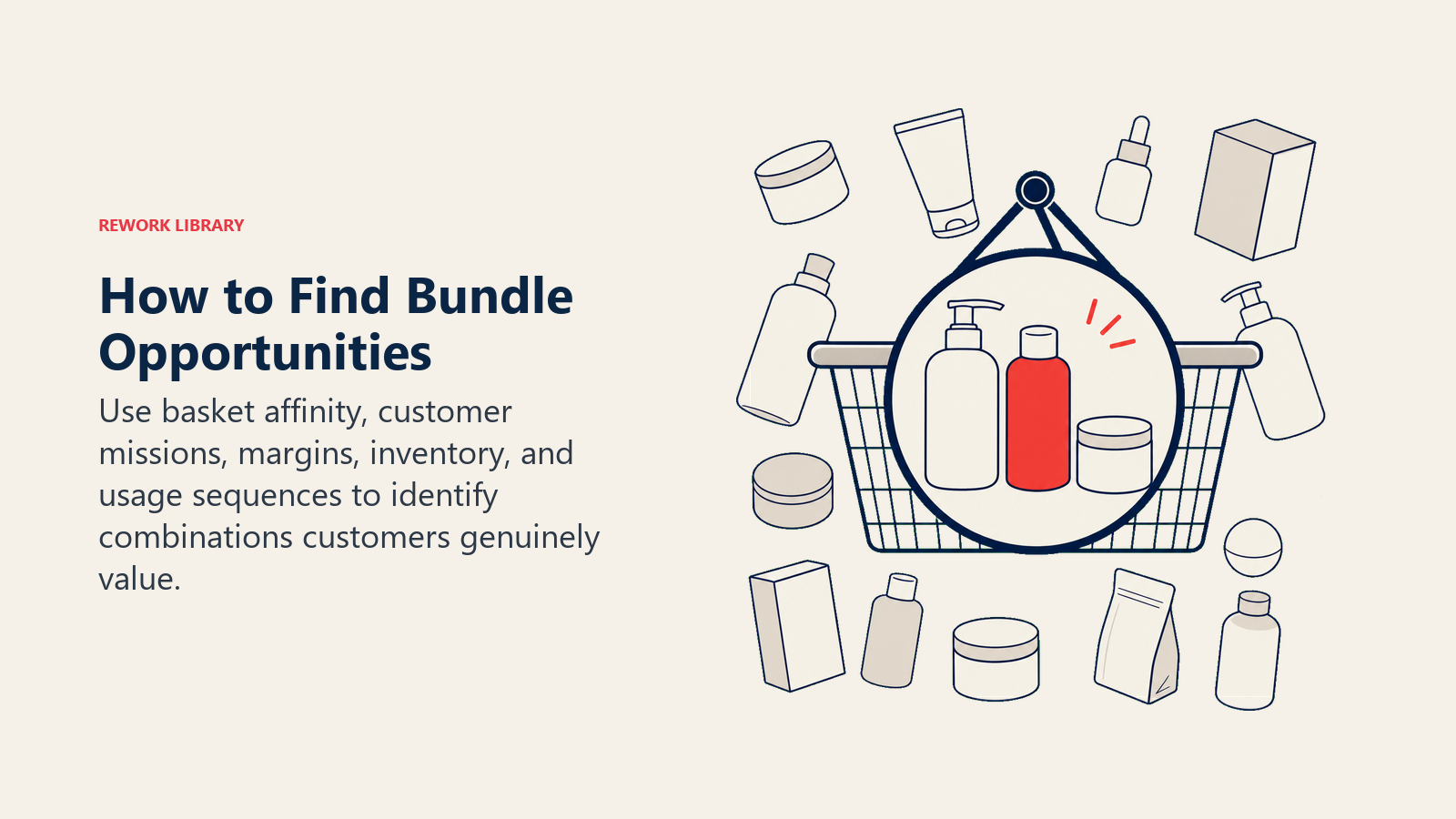
Review your product catalog for functional relationships. Which items complete a solution, extend product functionality, or enhance the primary product experience? A yoga mat bundles naturally with blocks, straps, and carrying bags. A coffee maker pairs logically with filters, cleaning supplies, and premium beans. Map out these functional relationships across your catalog to identify strong bundle candidates.
Consider your inventory situation. Bundling provides an elegant way to move slower-inventory items by pairing them with bestsellers. Look for products with high turnover that can carry slower-moving complementary items. This approach improves overall inventory management while creating value for customers who might not have discovered the less popular products otherwise.
Analyze margin structures across your catalog. Effective bundles often pair high-margin products with lower-margin items to maintain healthy overall bundle profitability while offering compelling customer value. Understanding your unit economics helps ensure bundle discounts maintain profitability, reducing margin on the high-turnover anchor product while generating incremental profit from higher-margin complementary items.
Survey customers about their buying process and pain points. Ask what they wish came with products they've purchased. Review support tickets and product questions for insights into what confusion or friction exists in assembling complete solutions. This qualitative data often reveals bundle opportunities that purchase history alone might miss.
Bundle Pricing Psychology
How you price bundles dramatically impacts their conversion rate and profitability. Several psychological principles guide effective bundle pricing. Discount positioning matters more than you might expect. A $100 bundle with a "$120 value" reference point performs very differently than the same $100 bundle presented as "Save $20." Testing consistently shows that showing the dollar savings amount rather than a percentage discount drives higher conversion, particularly for larger purchases. Make the savings concrete and immediately visible. Price anchoring through tiered bundles works by presenting the most expensive option first, which resets customers' reference point for what represents good value. When a "Complete" bundle is priced at $199, the "Core" bundle at $129 seems much more reasonable than it would without that higher anchor. Place your premium bundle first in the visual hierarchy to establish this anchor effect.
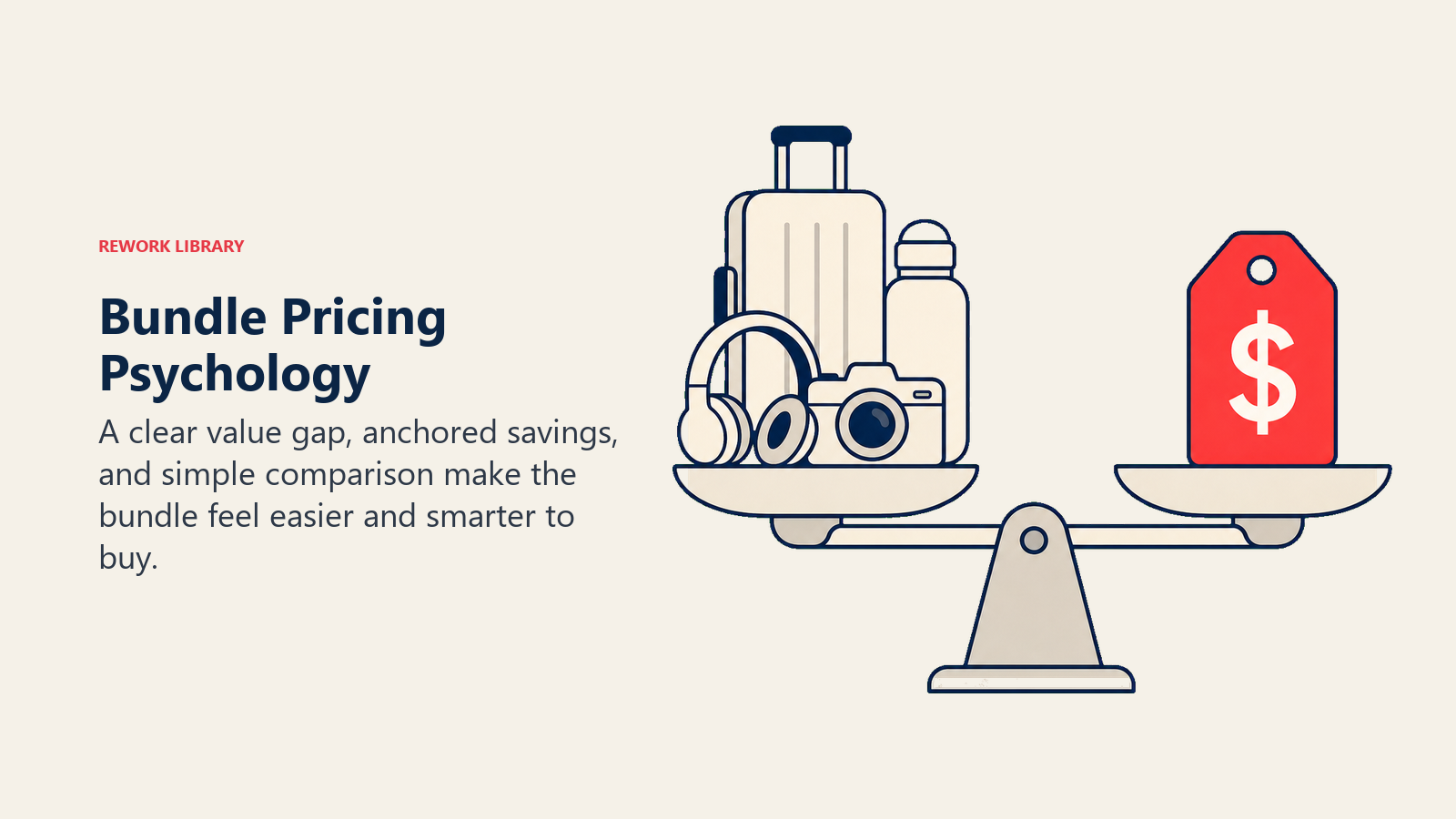
Decoy pricing involves introducing a strategically priced bundle specifically to make your target bundle appear more attractive. If your goal is to sell a $99 bundle, introducing a less compelling $79 bundle with noticeably less value can make the $99 option seem like a better deal. The decoy isn't meant to sell in volume, it exists to influence perception of your primary offer.
Round numbers versus precise pricing affects how bundles are perceived. Bundles priced at round numbers like $100 or $150 feel more appropriate for emotional purchases, while precise prices like $127 or $148 signal rational value for functional, necessity-based bundles. Match your pricing precision to your product category and target customer mindset.
The actual discount amount requires careful consideration. Too small and the bundle isn't compelling enough to change behavior. Too large and you leave money on the table while potentially devaluing your products. Most successful bundles offer 15-25% savings compared to individual purchase prices. This range provides meaningful savings without excessive margin sacrifice, aligning with broader pricing strategy and optimization principles.
Bundle Creation and Configuration
Structuring bundles effectively requires attention to both the technical implementation and the customer experience. Optimal bundle size typically ranges from 2-5 items. Two-item bundles are easy to understand and reduce decision complexity. Three to four items hit the sweet spot for most categories, enough variety to feel substantial but not overwhelming. Five-plus item bundles work for specific contexts like gift sets or starter kits but risk decision paralysis in general merchandising.
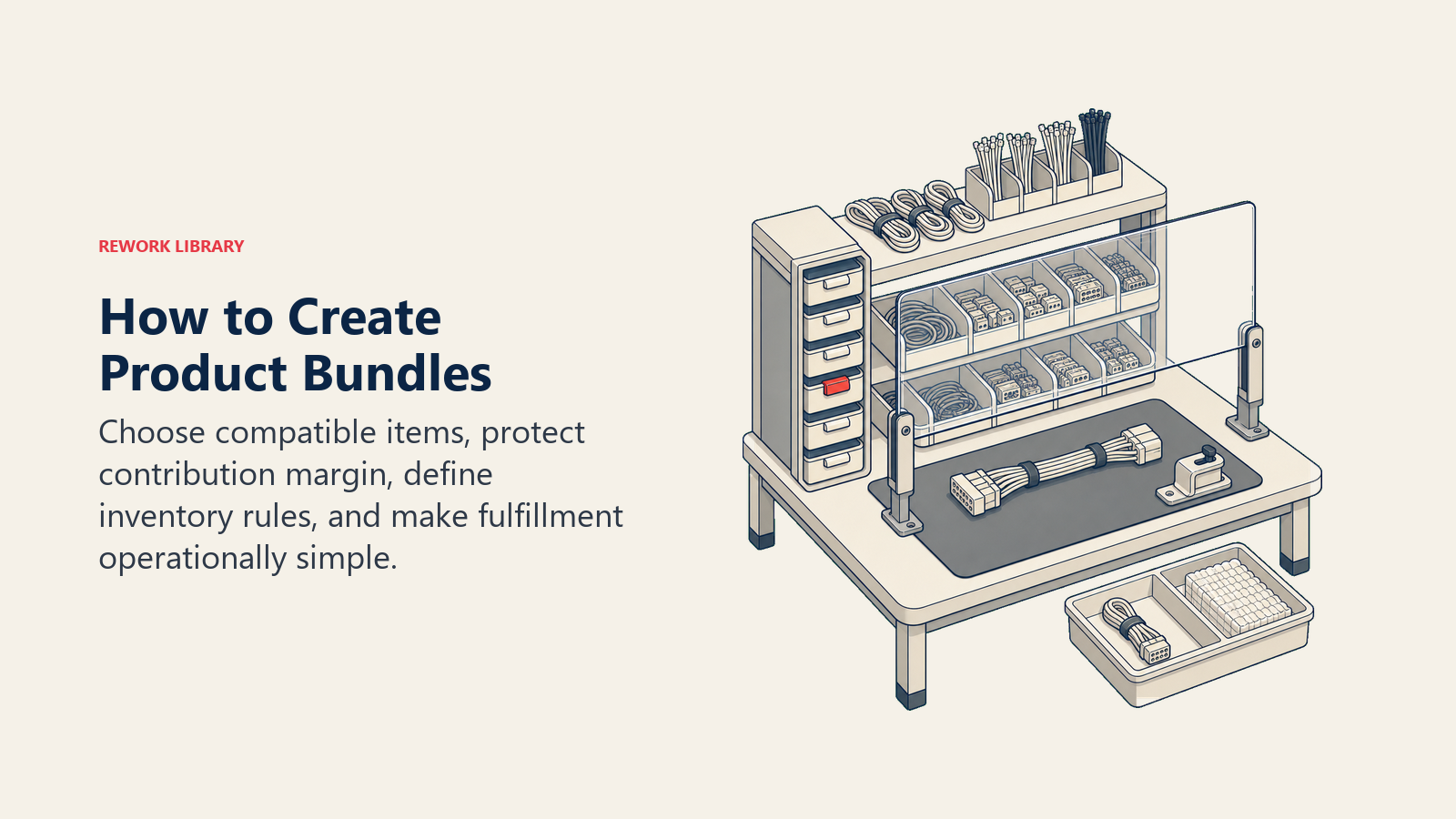
SKU management for bundles requires a clear system. Will you create new SKUs for pre-configured bundles or dynamically combine existing SKUs at checkout? Pre-configured bundle SKUs simplify inventory tracking and reporting but reduce flexibility. Dynamic bundling maintains individual item inventory but complicates reporting and fulfillment. Choose based on your catalog size, inventory complexity, and technical capabilities.
Inventory allocation becomes critical with popular bundles. Should you reserve inventory specifically for bundles or pull from general stock? Reserved inventory protects bundle availability but can result in items showing as out of stock individually while still available in bundles, frustrating some customers. Shared inventory maintains flexibility but risks bundles becoming unavailable when individual items sell out. Most retailers start with shared inventory and move to reserved allocation for proven high-volume bundles, requiring careful inventory management practices.
Bundle customization options increase complexity but can significantly boost conversion. Allowing customers to select sizes, colors, or flavors within a bundle framework accommodates individual preferences. The tradeoff is technical complexity in your platform and potential fulfillment complications. Start with fixed bundles and add customization options based on demand and capability.
Packaging considerations impact both cost and customer experience. Will bundled items ship in existing packaging or special bundle packaging? Custom bundle packaging can enhance perceived value and gifting appeal but adds cost. Evaluate bundle volume and price points to determine where custom packaging investment makes sense.
Presenting Bundles Effectively
How you display bundles across your site significantly impacts their performance. Product page integration represents your highest-leverage opportunity. When customers view individual products, prominently display relevant bundles that include that item. Position bundles above the fold, near the add-to-cart button where attention naturally focuses. Clearly show the savings and complete contents of the bundle. Make it trivially easy to switch from purchasing the individual item to the bundle with a single click. Dedicated bundle pages work for complex bundles or extensive bundle catalogs. These pages allow fuller explanation of bundle contents, benefits, and use cases without cluttering individual product pages. Use dedicated pages for curated collections, seasonal bundles, or gift-focused bundles where storytelling adds value. This approach complements product page integration for your most strategic bundles.
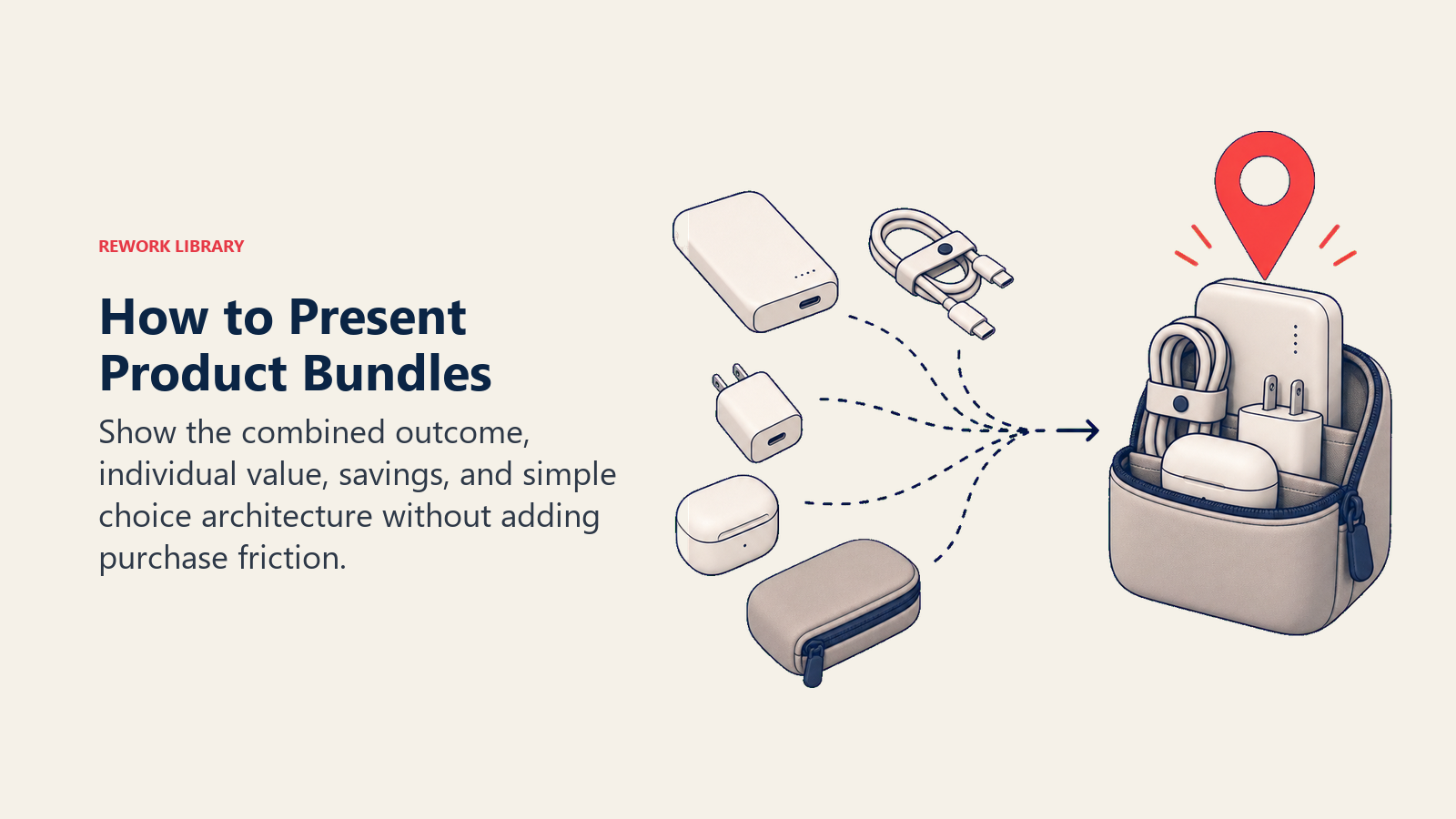
Visual presentation should make bundle composition immediately clear. Show all included items, ideally with individual product images arranged together. For physical products, lifestyle imagery showing items in use together helps customers visualize the complete solution. Avoid cluttered presentations that make it hard to understand exactly what's included.
Value communication needs to be explicit and immediate. Show the individual prices of included items, the bundle price, and the dollar savings in a clear format. Consider showing additional value elements like "Free shipping" or "Bonus item included" that compound the deal's attractiveness. Don't make customers calculate the value, present it clearly, using product page optimization techniques to maximize clarity and appeal.
Mobile optimization is non-negotiable given that 60-70% of e-commerce traffic comes from mobile devices. Bundle presentations must work within mobile screen constraints. Use collapsible sections to show full bundle contents without overwhelming the viewport. Ensure add-to-cart buttons remain accessible without excessive scrolling. Test bundle layouts specifically on mobile devices, not just responsive desktop views.
Bundle Promotion and Marketing
Even well-constructed bundles need promotional support to gain traction and drive awareness. Email campaigns targeting existing customers are often the highest-converting channel for bundle launches. Segment customers based on past purchases and present bundles relevant to products they've already bought. Someone who purchased a coffee maker three months ago is a prime candidate for an email featuring coffee accessory bundles. Personalized bundle recommendations based on purchase history typically convert 3-5x better than generic bundle promotions.
Homepage featuring gives bundles maximum visibility to all site visitors. Rotate featured bundles regularly to maintain freshness and match seasonal needs. Consider different bundle features for new versus returning visitors, new visitors might see curated starter bundles while returning customers see advanced bundles or complementary products to past purchases.
Category page placement ensures bundles appear in natural browsing paths. Feature relevant bundles at the top of category pages before individual product listings. This catches customers early in their shopping journey when they're most open to complete solutions rather than searching for specific items.
Cart abandonment campaigns present an ideal opportunity to introduce relevant bundles. If a customer added a single item but didn't complete checkout, your abandonment email can showcase a bundle including that item: "You left behind [Product], get it as part of this value bundle." This approach recovers the potential lost sale while increasing order value.
Seasonal and event promotion aligns bundles with shopping occasions when bundled solutions are particularly relevant. Holiday gift bundles, back-to-school bundles, seasonal preparation bundles (like winterizing kits), and occasion-based bundles (wedding registries, new baby) tap into when customers are actively seeking multi-item solutions.
Influencer and affiliate programs can feature bundles as exclusive offers or limited-time deals. Provide influencers with unique bundle configurations or discount codes for bundles. The curated nature of bundles aligns well with how influencers typically recommend products, as complete solutions rather than individual items.
Cross-Sell and Upsell Integration
Bundles work synergistically with other AOV optimization strategies when integrated thoughtfully.
Cart-level bundle recommendations appear after customers add items to cart, suggesting bundles that include those items or complement them. The timing is strategic, customers have already committed to purchasing something and are primed to consider related additions. Present bundle options as: "Customers who bought what's in your cart often purchase these bundles" or "Complete your solution with this bundle."
Bundle upsells involve presenting higher-tier bundles when customers show interest in lower-tier options. If someone is viewing your "Starter" bundle, show them how much more they get with the "Deluxe" bundle for an incremental price. Frame the difference in terms of value received per dollar spent, applying proven upselling and cross-selling techniques.
Post-purchase bundle offers in confirmation emails or account dashboards introduce complementary bundles after initial purchase. "You bought [Product], complete your setup with this accessory bundle at a special customer discount." This timing capitalizes on buyer momentum while the customer is engaged with your brand.
Subscription bundle combinations pair one-time purchases with subscription products or convert single purchase bundles into subscribe-and-save options. A coffee bundle might include the brewer as a one-time purchase with coffee beans on subscription. This model combines immediate AOV increase with ongoing recurring revenue.
Build-your-own paired with recommendations uses product recommendation algorithms to suggest specific items as customers build custom bundles. When a customer selects their first item in a build-your-own bundle, recommend the most commonly paired products as their next selections. This guides them toward high-performing combinations while maintaining personalization.
Analytics and Performance Measurement
Tracking bundle performance requires going beyond basic revenue metrics to understand true impact and optimization opportunities. Understanding e-commerce metrics and KPIs helps you measure bundle effectiveness. Bundle conversion rate measures what percentage of customers who view bundles ultimately purchase them. Track this both overall and for specific bundles. If bundle views are high but conversion is low, you likely have a presentation or pricing issue. If views are low, you have a discovery or visibility problem. Bundle attachment rate shows how often bundles are added to carts alongside individual product views. This metric indicates how effectively you're integrating bundle options into the shopping flow. Low attachment rates suggest bundles aren't prominent enough in product pages or the value proposition isn't clear.
AOV impact analysis compares average order values for orders including bundles versus orders without bundles. The difference quantifies the incremental value bundles drive. Segment this by customer type (new vs. returning), traffic source, and product category to understand where bundles have the most impact.
Bundle profit margin requires tracking the actual profitability of bundle sales versus individual item sales. While bundles may have lower percentage margins due to discounting, the absolute profit per transaction often exceeds single-item purchases. Calculate profit per order for bundled versus unbundled purchases to assess true financial impact.
Item velocity within bundles identifies which products move faster as part of bundles versus individually. Products that significantly outperform standalone sales when bundled are strong candidates for anchor positions in additional bundles. Items that underperform in bundles might be poor fits or might need repositioning in different bundle combinations.
Customer cohort analysis tracks the lifetime value of customers who first purchased bundles versus those who started with single items. Bundle buyers often show higher retention and lifetime value, validating the strategy beyond immediate AOV impact. This longer-term view helps justify bundle development investment and provides critical insights into long-term customer profitability.
Return and satisfaction rates for bundles versus individual items indicate whether bundles deliver on their value proposition. Higher return rates might suggest bundle components don't work as well together as presented or that customers are buying bundles primarily for one item and returning the rest. Monitor customer service feedback specific to bundle purchases.
Bundle Management Best Practices
Maintaining an effective bundle program requires ongoing attention and optimization.
Regular bundle performance reviews should happen at least quarterly. Identify underperforming bundles to be retired or reconfigured. Analyze top performers to understand what makes them successful and replicate those characteristics in new bundles. Don't let bundles become set-it-and-forget-it, treat them as living merchandising elements.
Seasonal bundle rotation keeps your offering fresh and relevant. Holiday bundles, back-to-school bundles, seasonal preparation bundles all have defined relevance windows. Plan bundle launches and retirements aligned with your merchandising calendar. Archive seasonal bundles rather than deleting them so you can relaunch updated versions next cycle.
Inventory-driven bundle adjustment means modifying bundles based on inventory levels. If a component item is running low or being discontinued, either remove that bundle or swap in an alternative item. Conversely, if you have excess inventory, create limited-time bundles featuring those items to accelerate turnover.
Competitive bundle monitoring keeps you aware of how competitors are bundling similar products. Don't copy directly, but understand market standards for bundle composition and discounts in your category. If competitors are consistently offering more generous bundles, you may need to adjust to remain competitive.
Testing bundle variations through methodical A/B testing approaches optimizes performance over time. Test different discount levels, bundle compositions, presentation formats, and promotional tactics. Small improvements compound, a 5% conversion rate increase on bundles that generate 30% of revenue has meaningful bottom-line impact.
Customer feedback integration provides qualitative insights that pure analytics miss. Survey bundle purchasers about their experience. What prompted the bundle purchase? Were all items useful? What would improve the bundle? This feedback guides bundle refinement and new bundle development.
Customer Retention Through Bundling
Bundles can be structured to drive repeat purchases and build lasting customer relationships. Subscription bundle models combine multiple products into recurring deliveries. A meal prep bundle might include proteins, sauces, and side ingredients delivered weekly. A personal care bundle might bundle shampoo, conditioner, and styling products on a monthly schedule. The bundle framework increases the subscription value while reducing churn since customers get more value per delivery. Progressive bundles introduce increasingly sophisticated product combinations as customers advance in their journey. A beginner fitness bundle with basic equipment leads to an intermediate bundle with more specialized gear, followed by an advanced bundle with premium products. This progression creates a natural upgrade path that grows with customer needs.
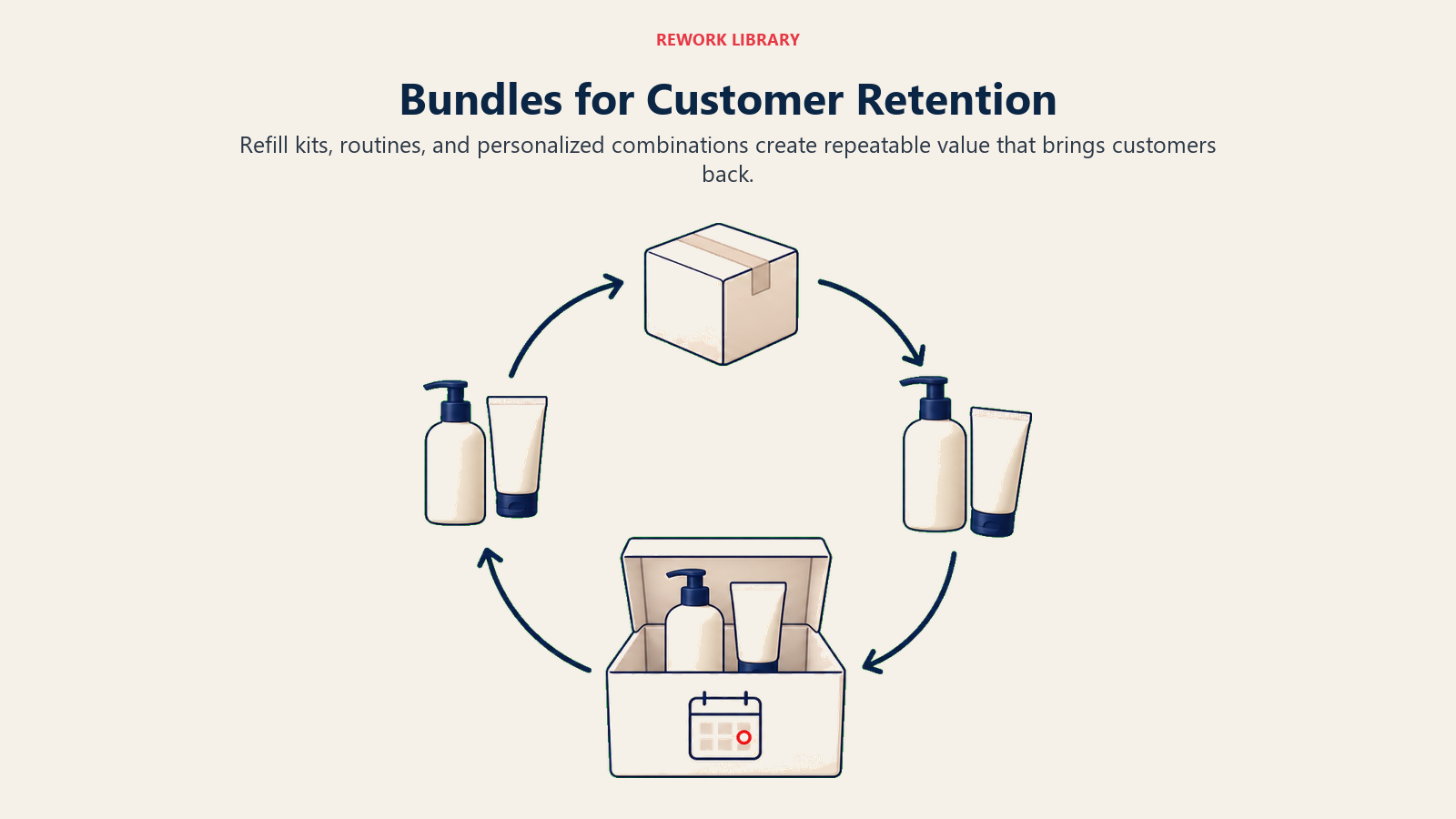
Replenishment bundle reminders target customers who purchased consumable bundles months ago. "It's been 90 days since you bought your skincare bundle, time to restock?" This timing-based outreach drives repeat bundle purchases from proven buyers.
Bundle loyalty programs reward repeat bundle purchases with increasing benefits. Buy three bundles and get a fourth at an enhanced discount. Accumulated bundle purchases unlock exclusive bundle options. These structures incentivize ongoing bundle engagement beyond individual transactions.
Referral bundle incentives encourage customers to share bundles with friends. "Refer a friend to this bundle, you both save an additional 10%." Bundles make excellent referral offers because they provide substantial value and solve complete needs, making them natural sharing opportunities.
Competitive Bundling Strategy
Your bundle approach should account for competitive dynamics in your market. Differentiated bundle composition creates unique value that competitors can't easily replicate. Instead of bundling the obvious accessories everyone offers, include exclusive items, proprietary products, or unexpected complements that deliver distinctive value. This approach protects margins while creating memorable customer experiences.
Value-based positioning emphasizes the complete solution your bundles provide rather than competing purely on price. While discount is important, framing bundles around outcomes, "Everything you need to start your home gym" or "Complete skincare routine", differentiates based on value rather than price alone.
Exclusive bundle access for loyalty members, email subscribers, or specific customer segments creates a benefit of program membership. This approach drives list growth and engagement while making certain bundles feel special rather than commodity offers available to everyone.
Limited availability bundles create urgency through scarcity. Seasonal bundles, limited-edition collaborations, or bundles tied to specific inventory lots encourage immediate purchase decisions. The time-bound nature of the offer reduces comparison shopping and price sensitivity.
Bundle matching and beating acknowledges competitive bundles while positioning yours as superior. If competitors bundle three items, bundle four. If they offer 20% off bundles, offer 25%. This direct comparison approach works when your products are comparable but requires careful margin analysis to ensure profitability.
Integrating Bundles into Growth Strategy
Product bundling shouldn't exist in isolation, it's part of a comprehensive growth and conversion rate optimization strategy.
Consider how bundles support other AOV initiatives. Bundles provide product variety while volume discounts reward quantity. Offer both to maximize AOV across different customer preferences.
Bundles also enhance the effectiveness of product recommendation systems. Instead of only recommending individual products, your recommendation engine can suggest complete bundles based on browsing behavior, creating a more compelling cross-sell opportunity.
The best e-commerce operations view bundling as a core merchandising strategy rather than a promotional tactic. They allocate resources to bundle development, testing, and optimization the same way they would for category expansion or new product launches. This strategic approach to bundling, integrated with broader growth initiatives, consistently delivers 20-40% AOV increases while improving customer satisfaction and retention metrics.
Start with a small set of high-potential bundles based on your purchase data analysis. Test different bundle types and compositions to understand what resonates with your customers. Gradually expand your bundle program as you identify patterns of success and build operational capability. The impact of strategic bundling, compounded over time, represents one of the highest-leverage opportunities for sustainable e-commerce growth.
Learn More
Enhance your bundling strategy with these related resources:
- AOV Optimization Strategy - Explore comprehensive tactics for increasing average order value beyond bundling
- Upselling & Cross-selling - Learn complementary techniques that work alongside bundling to maximize revenue per customer
- Pricing Strategy & Optimization - Master pricing psychology and frameworks that enhance bundle effectiveness
- Product Research & Validation - Discover data-driven approaches to identifying winning bundle combinations

On this page
- Why Product Bundling Matters
- Bundle Types and Models
- Identifying Bundle Opportunities
- Bundle Pricing Psychology
- Bundle Creation and Configuration
- Presenting Bundles Effectively
- Bundle Promotion and Marketing
- Cross-Sell and Upsell Integration
- Analytics and Performance Measurement
- Bundle Management Best Practices
- Customer Retention Through Bundling
- Competitive Bundling Strategy
- Integrating Bundles into Growth Strategy
- Learn More