TikTok Commerce Strategy: Creator Partnerships, Viral Content & Shop Optimization - 2026 Guide
Turn this article into takeaways for your work.


Each assistant summarizes the article only for you and suggests best practices for your work.
TikTok isn't just another social media channel anymore. It's become a full shopping destination where products go from zero to sold out in hours. But here's the thing: most brands approach TikTok like it's Facebook or Instagram and wonder why nothing works.
TikTok commerce requires a completely different playbook. The algorithm works differently. The audience expects different content. And the path from discovery to purchase happens faster than on any other platform. As you build your comprehensive traffic acquisition strategy, understanding TikTok's unique dynamics is essential for modern e-commerce growth.
For ecommerce growth, a TikTok commerce strategy means using TikTok Shop, creator partnerships, and short viral videos to move shoppers from discovery to purchase inside the app. It works because the algorithm gives small brands reach, impulse buying is built in, and micro-creators convert better than expensive celebrity influencers. Treat it as a profitable channel, not a vanity play.
Why TikTok Commerce Matters in 2026
The numbers tell the story. TikTok passed 1 billion monthly users back in 2021, and Gen Z and Millennials make up the core of that audience. More importantly, these users actually buy things. They spend long sessions on the app in discovery mode, not just scrolling through updates from friends.
Here's what makes TikTok commerce unique:
Impulse buying behavior is built into the platform. Users discover products they didn't know existed and buy them immediately. The entire journey from discovery to purchase happens in minutes, sometimes seconds.
The algorithm favors small brands. Unlike Instagram or Facebook where you need a massive following to get reach, TikTok's algorithm gives everyone a chance. A brand-new account can get millions of views on their first video if the content resonates.
Creator partnerships scale differently. On Instagram, you need to pay big influencers big money. On TikTok, micro and nano-creators often drive better results because authenticity matters more than follower count. This shift in influencer marketing dynamics makes TikTok accessible for brands of all sizes.
Global reach happens fast. Your video can go viral in countries you've never targeted, opening up international markets without traditional market entry costs.
The platform evolved from entertainment to commerce faster than anyone expected. TikTok Shop launched in select markets and changed everything. Now users can buy products without ever leaving the app.
TikTok Shop Setup & Optimization
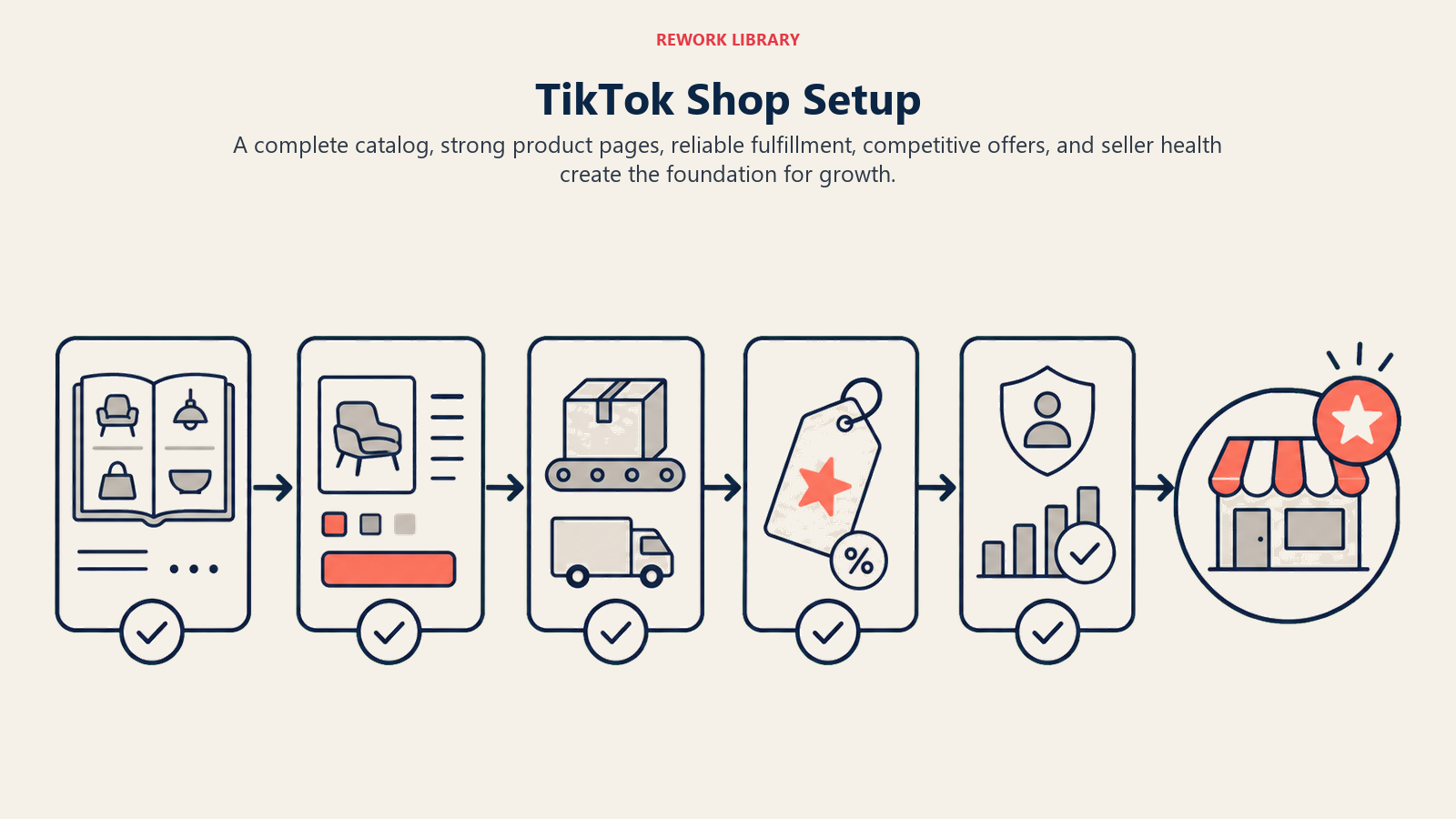
Before you can sell on TikTok, you need TikTok Shop set up properly. This isn't like adding a buy button to your Instagram bio. TikTok Shop is a full e-commerce platform inside the app.
Eligibility requirements vary by market. In the US, you need to be registered as a business with a valid tax ID. In the UK and Southeast Asia, requirements differ slightly. Check your specific market requirements before starting the application process.
Shop setup takes planning. You'll need business documentation, product photos that meet TikTok's specifications, detailed product descriptions, and pricing that accounts for TikTok's referral fee on every sale (the rate varies by market and category, so confirm yours in Seller Center).
Product catalog management works differently than other platforms. TikTok wants short, scannable titles (40 characters or less), vertical product images optimized for mobile viewing, clear category assignments that match how users search, and competitive pricing because users compare options quickly.
Your shop tab is your storefront. Customize it to match your brand and make shopping easy. Feature your bestsellers at the top, create collections that make sense for impulse purchases, use high-quality cover images that grab attention in a scroll, and update featured products based on trending content. Apply product page optimization principles to your TikTok Shop listings to maximize conversion rates.
Integration with your existing e-commerce platform saves time. TikTok Shop connects with Shopify, WooCommerce, and other major platforms. Sync your inventory to avoid overselling, push product updates automatically, and maintain consistent pricing across channels.
Inventory management is critical. Nothing kills momentum like going viral and running out of stock. Keep buffer inventory for featured products, set up low-stock alerts, have backup suppliers ready, and plan fulfillment capacity before launching major campaigns.
Fulfillment options include seller-fulfilled or TikTok-fulfilled. Seller-fulfilled gives you more control but requires fast shipping times (2-3 days is the standard expectation). TikTok Fulfillment (similar to Amazon FBA) handles storage, packing, and shipping but comes with fees and less flexibility.
Creator Partnership Strategy
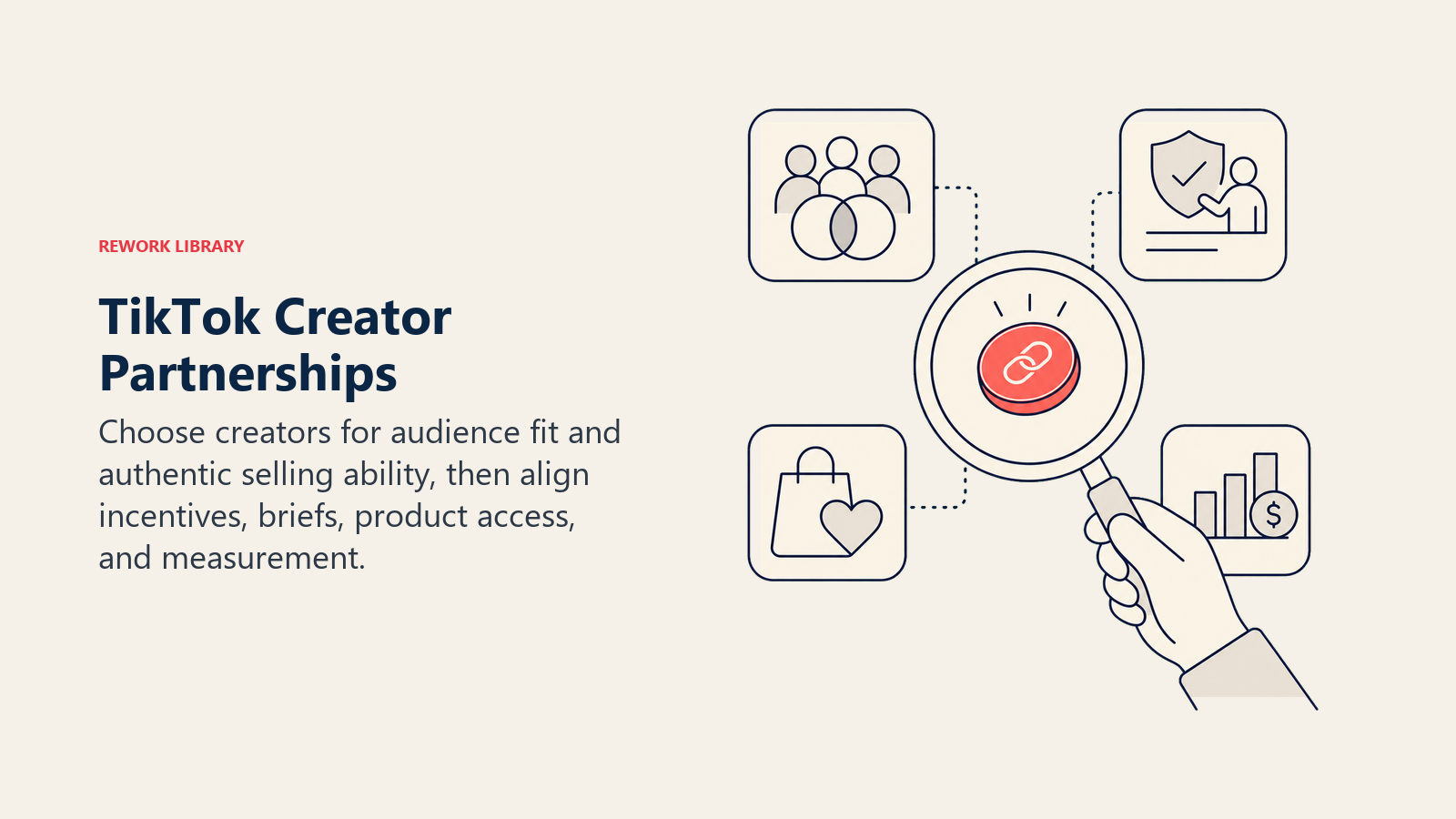
Creator partnerships are the engine of TikTok commerce. But picking creators isn't about follower counts. It's about finding people whose audience actually buys what you sell.
Creator tiers matter less on TikTok than other platforms. Mega-creators (1M+ followers) often have lower engagement rates and higher costs. Macro-creators (100K-1M) offer good reach but can be expensive. Micro-creators (10K-100K) usually drive the best ROI because their audiences trust them. Nano-creators (1K-10K) work well for testing new products and authentic content.
Selection criteria should focus on audience fit, not vanity metrics. Look at engagement rate (5%+ is good), audience demographics that match your customer profile, content quality and authenticity, and past brand partnerships to see how they promote products.
Collaboration models each serve different goals. Sponsored posts work for one-time campaigns with guaranteed deliverables. You pay a flat fee, get specific content, and own the usage rights (negotiate this upfront). Affiliate partnerships scale better for ongoing relationships. Creators earn commission on sales, you only pay for performance, and creators are incentivized to make content that converts. Ambassador programs build long-term relationships with top performers who get exclusive products, higher commission rates, and become the face of your brand.
Commission structures need to be competitive. Affiliate rates on TikTok Shop vary widely by product category and price point, so check what similar products in your category offer. Higher commissions attract better creators. Consider tiered structures that reward performance. When setting commission rates, factor in your overall unit economics for e-commerce to ensure profitability at scale.
Creator briefs should guide, not dictate. Share product benefits and key features, highlight unique selling points, provide dos and don'ts (safety, compliance), but let creators control the storytelling. The best content feels native to the creator's style.
Long-term partnership building pays off. Give creators early access to new products, share performance data so they can optimize, respond quickly to questions and concerns, and feature their best content on your own channels.
Viral Content Creation
Going viral isn't luck. It's understanding what makes TikTok's algorithm show your video to more people, then giving it what it wants.
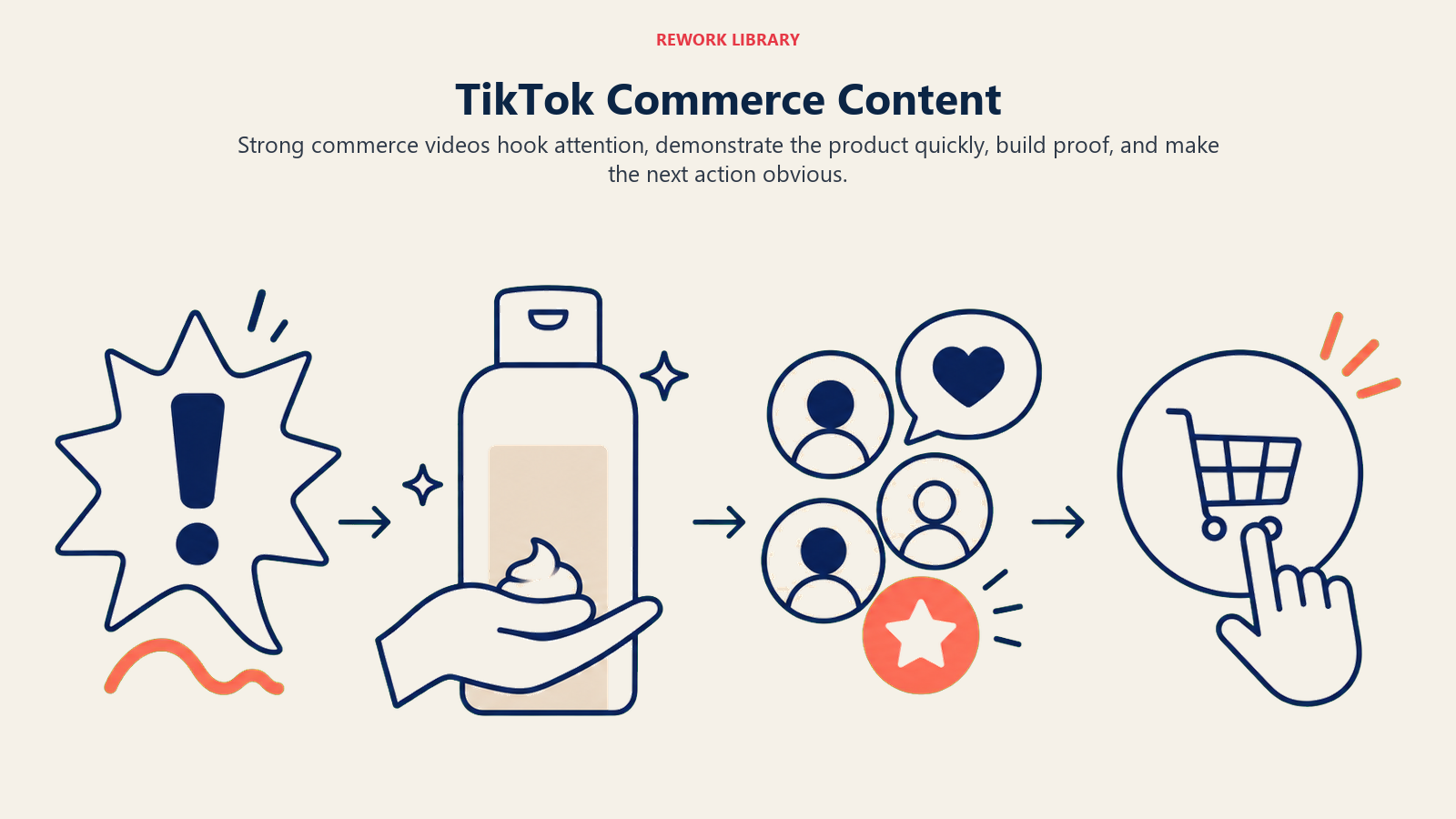
The algorithm prioritizes watch time and engagement. Complete video views (people watching to the end) matter most. Likes, comments, and shares tell the algorithm your content resonates. Rewatches signal extremely engaging content. And quick drop-offs kill your reach.
Hook viewers in the first second. Show the product or result immediately. Start with movement or unexpected visuals. Use text overlay that makes people curious. And skip lengthy intros - save those for YouTube.
Trending sounds give you free reach. Use popular sounds while they're hot (check the "Trending" tab), but match the sound to your product authentically. Don't force a trend that doesn't fit. Add your own voice-over when it makes sense.
Hashtag strategy is simpler than you think. Use 3-5 relevant hashtags including one trending hashtag in your niche, one or two specific product category hashtags, and your branded hashtag. Skip generic hashtags like #fyp or #viral - they don't help.
Product showcase formats that actually convert include:
Before/after transformations that show clear results in seconds. Problem-solution videos that present a pain point then show your product solving it. Unboxing with genuine reactions (staged enthusiasm is obvious and fails). How-to tutorials that teach something useful while featuring the product. Behind-the-scenes content showing how products are made or selected.
Authentic storytelling beats polished production. Users trust raw, real content over professionally produced ads. Show real people using products, share actual customer stories, admit when something isn't perfect (builds trust), and embrace imperfections in filming and editing.
User-generated content (UGC) is your secret weapon. Encourage customers to make content by creating a branded hashtag challenge, offering incentives for featured content, and making it easy with clear instructions. Repost the best UGC (with permission) and engage with every piece of customer content. Learn more about leveraging customer reviews and user-generated content to build social proof across all channels.
Managing Creator Collaborations
Finding and managing creators takes systems. Search product-related hashtags, check competitors' partnerships, use TikTok's Creator Marketplace, and look at your engaged followers.
Vetting prevents problems. Review their last 20-30 videos, check audience demographics, look at past partnerships, and verify engagement is real (watch for sudden spikes or weird comments).
Micro and nano-creators cost less ($100-500 for micro, often free products for nano) and have highly engaged audiences. You can work with many for the cost of one macro-influencer.
Systems for managing campaigns: Create a spreadsheet with campaign details and deadlines. Send products with clear instructions. Set expectations about delivery and usage rights. Track performance with unique codes or affiliate links.
Get usage agreements in writing. Specify where you can use their content, how long, whether you can edit it, and how you'll credit them.
TikTok Ads Strategy
Organic content is powerful, but paid ads help you scale faster and maintain consistent traffic.
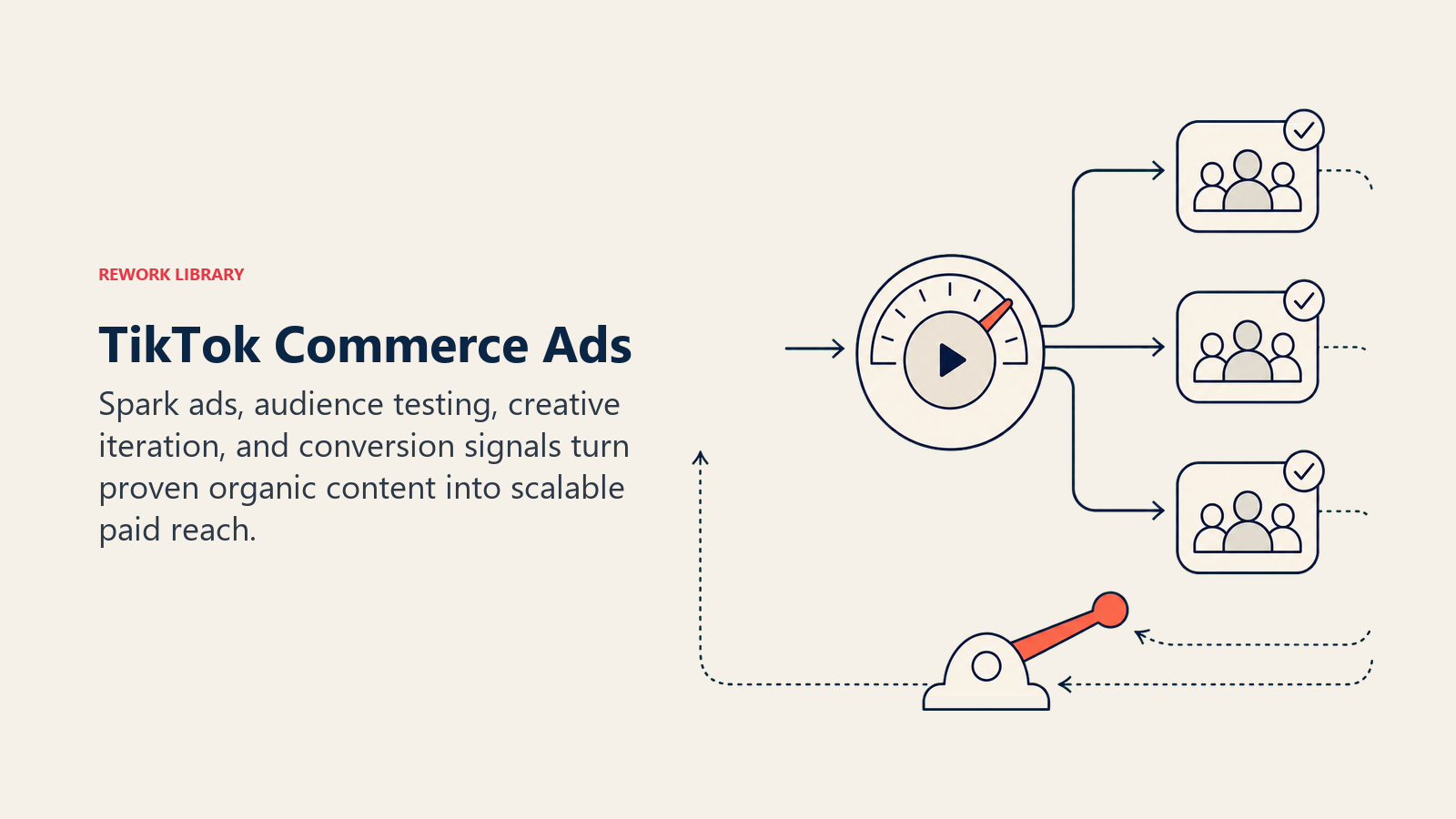
Organic versus paid should work together, not compete. Use organic content to test what resonates, then boost top-performing videos with ads. Build audience and awareness organically, then use ads to drive conversions. And test creative concepts organically before investing in ad production. While TikTok's ad platform differs significantly from Facebook and Instagram advertising, the principles of testing and optimization remain critical.
TikTok Ads Manager setup is straightforward. Create your ad account through ads.tiktok.com, install the TikTok Pixel on your website, set up your business profile, and connect your TikTok Shop if you have one.
Campaign types serve different goals. TopView ads appear when users first open the app - expensive but massive reach. In-Feed ads appear in users' For You feed - most common and cost-effective. Branded Hashtag Challenges get users to create content about your brand - powerful but premium pricing. And Branded Effects let users interact with custom filters and effects.
Audience targeting works differently than Facebook. Start broad and let TikTok's algorithm find your buyers. Interest and behavior targeting is less precise than Facebook. Lookalike audiences work well once you have conversion data. And automatic targeting often outperforms manual selection. While the mechanics differ, you can apply similar strategies from Google Shopping ads for product catalog management and feed optimization.
Video creative best practices for ads:
Make it look native - ads should feel like organic content, not polished commercials. Start with the hook in frame one. Keep it short (15-30 seconds performs best). Show the product being used in real situations. And include clear CTAs but make them feel natural.
Test multiple creative variations because what works is unpredictable. Try different hooks, different product angles, different creators or actors, and different sounds and music. Implement a structured A/B testing framework to systematically identify winning creative elements.
Sales Integration & Checkout Optimization
Getting views is one thing. Converting them to sales is another.
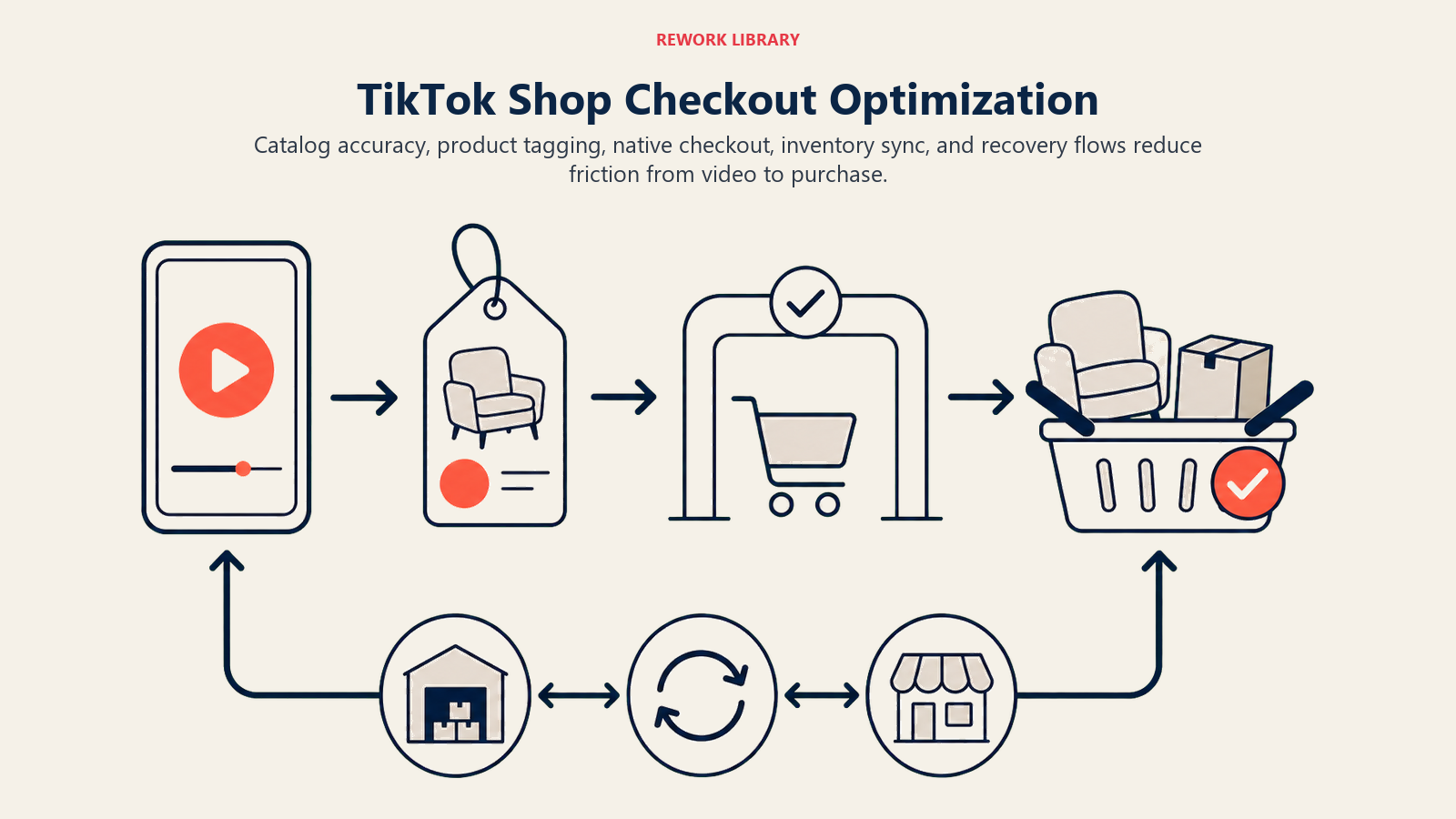
In-app checkout versus external links perform very differently. TikTok Shop's in-app checkout removes most of the friction of sending users to external sites because users never leave the app, payment info is saved, and the checkout is optimized for mobile. For external traffic, apply conversion rate optimization best practices to maximize mobile checkout performance.
TikTok Pixel implementation is required for tracking conversions. Install the base pixel code on your website, set up standard events (view content, add to cart, purchase), and test events are firing using TikTok's Event Manager. Use advanced matching to connect TikTok users with website activity. Proper analytics and tracking setup ensures you capture accurate conversion data across all touchpoints.
Conversion tracking and attribution get messy. TikTok users often view on mobile but purchase on desktop later, making attribution hard. The platform uses a 7-day click and 1-day view attribution window. Track TikTok-specific discount codes for clearer attribution. And accept that some conversions won't track perfectly.
Cart abandonment recovery works through remarketing. Set up website custom audiences for cart abandoners, create specific ad content addressing common objections, offer limited-time discounts to recover sales, and test different time delays (2 hours, 24 hours, 3 days).
Post-purchase engagement keeps customers coming back. Follow up with customers who bought through TikTok, encourage them to share unboxing or review videos, offer referral incentives for creating content, and build a community around your brand. Focus on maximizing customer lifetime value by turning one-time TikTok buyers into repeat customers.
Community Building & Engagement
TikTok is a community, not a billboard. Brands that engage build loyal followings.
Comment management matters. Respond to questions quickly (first hour helps visibility), reply to positive comments, address concerns honestly, and pin great comments. Don't delete negative feedback - responding well builds trust.
Build community consistently. Create a branded hashtag, feature customers regularly, share behind-the-scenes content, and show your team.
Live shopping events drive sales. Schedule lives when your audience is active, showcase products, offer live-exclusive discounts, and engage with comments. Use email marketing for e-commerce to notify your subscriber base about upcoming live shopping events and exclusive drops.
Respond to trends. Monitor trending sounds daily, create trend content quickly, prepare seasonal campaigns early, and pivot when opportunities emerge.
Measuring Performance & ROI
You can't improve what you don't measure. Track the right metrics and make data-driven decisions.
TikTok analytics provides basic performance data. Video views and profile views show reach. Follower growth rate indicates content resonance. Average watch time reveals content quality. Traffic source shows how people find you. And audience demographics help refine targeting.
Key e-commerce metrics to track:
Click-through rate (CTR) from videos to product pages - aim for 1-3%. Conversion rate from clicks to purchases - 2-5% is good for cold traffic. Customer acquisition cost (CAC) - total spend divided by new customers. Average order value (AOV) - higher is better, bundle products to increase. Return on ad spend (ROAS) - aim for 2.5-3x minimum for sustainable growth.
Attribution models for TikTok traffic are imperfect. Use UTM parameters on external links to track traffic sources. Compare TikTok-specific discount code usage. Look at overall sales lift during TikTok campaigns. And accept that brand awareness impact is hard to measure directly.
Comparing organic versus paid performance helps optimize budget allocation. Track cost per view, cost per click, cost per conversion, and engagement rate for both. Usually organic has better engagement but paid scales faster. The best strategy uses both.
Reporting and optimization cycles should be weekly at minimum. Review video performance and identify top performers. Analyze which formats and hooks work best. Check creator performance and double down on winners. Adjust ad spend based on ROAS. And update product merchandising based on what's selling.
Common Pitfalls & Solutions
Every brand makes mistakes when starting with TikTok commerce. Here's how to avoid the biggest ones.
Over-reliance on viral content without systems kills momentum. Going viral once is lucky. Consistent results require systems. Build a content calendar with regular posting, develop templates for proven formats, diversify content types and topics, and don't bet everything on virality.
Mismatched creator partnerships waste money and damage your brand. Vet creators thoroughly before partnering, make sure their audience aligns with your customer, check that their content style fits your product, and start small before committing to big contracts.
Poor product-platform fit means you're on the wrong channel. Not every product works on TikTok. High-consideration purchases (cars, real estate) struggle. Complex B2B products don't resonate. And invisible benefits are hard to show in 15 seconds. If your product can't be demonstrated visually and understood quickly, TikTok might not be your best channel.
Inadequate fulfillment planning creates disasters. Running out of stock after going viral damages your brand. Going viral means 10-100x normal order volume in 24-48 hours. Have backup inventory and fulfillment capacity. Use TikTok Shop's inventory protection to prevent overselling. And communicate shipping delays clearly.
Ignoring platform authenticity expectations kills engagement. TikTok users can spot inauthentic content instantly. Overly polished ads perform worse than raw content. Scripted influencer reads feel fake. And trying too hard to be trendy backfires. Be genuine or don't bother.
International TikTok Commerce
TikTok Shop now runs in a growing list of markets across North America, Europe, Southeast Asia, Latin America, and Japan, so check Seller Center for where it is live today. But international commerce is complex. User behavior varies by country. Purchasing power differs. And competition levels change by market.
Cross-border challenges: Shipping times (7-14 days kills conversion), customs duties, product compliance, and returns logistics.
Local creators work better than trying to use US creators internationally. Find creators who speak the language natively, understand cultural norms, and know local trends.
Start with one market. Test with ads to validate demand. Partner with local creators. Have reliable fulfillment before scaling.
Future-Proofing Your Strategy
TikTok changes fast. Build adaptability into your strategy.
Stay ahead of trends. Spend 15-30 minutes daily scrolling your For You page, follow trend accounts, and watch successful brands.
Adapt to algorithm changes by diversifying content types, testing new features early, building owned audiences outside TikTok (email, SMS), and using paid ads for stability.
Stand out in saturated niches with unique angles, stronger creator relationships, better customer experience, and brand personality.
Scale without losing authenticity. Resist over-producing content. Keep featuring real customers and employees. Stay responsive. Remember why your content worked.
The brands winning on TikTok commerce understand the platform's culture, invest in creator relationships, produce authentic content, and move fast. For brands targeting younger demographics, TikTok is becoming the primary growth driver.
Frequently Asked Questions about TikTok Commerce
Is TikTok good for ecommerce growth?
Yes, for visually demonstrable products with sub-$100 price points. TikTok's algorithm gives new brands organic reach that Instagram and Facebook no longer offer, and in-app TikTok Shop checkout keeps shoppers inside the app instead of sending them to an external site. High-consideration or complex B2B products tend to underperform.
How do I start selling on TikTok Shop?
Register as a business with a valid tax ID in your market, apply for TikTok Shop, then upload products with short scannable titles (40 characters or less), vertical mobile-first images, and pricing that accounts for the referral fee in your market and category. Connect your Shopify or WooCommerce catalog so inventory stays in sync.
Do I need a big budget to grow on TikTok?
No. Micro-creators (10K-100K followers) and nano-creators (1K-10K) often drive the best return because authenticity outperforms follower count. Many nano-creators work for free product, and you can pair affiliate commissions with organic posting before spending on paid ads.
How do I measure TikTok commerce ROI?
Track click-through rate from videos to product pages (aim for 1-3%), conversion rate (2-5% for cold traffic), customer acquisition cost, average order value, and return on ad spend (target 2.5-3x minimum). Use TikTok-specific discount codes to clean up attribution.
Related Resources

Sales Operations Practice Lead
On this page
- Why TikTok Commerce Matters in 2026
- TikTok Shop Setup & Optimization
- Creator Partnership Strategy
- Viral Content Creation
- Managing Creator Collaborations
- TikTok Ads Strategy
- Sales Integration & Checkout Optimization
- Community Building & Engagement
- Measuring Performance & ROI
- Common Pitfalls & Solutions
- International TikTok Commerce
- Future-Proofing Your Strategy
- Related Resources