Loyalty Programs: Designing Systems That Transform One-Time Buyers Into Lifetime Customers
Turn this article into takeaways for your work.


Each assistant summarizes the article only for you and suggests best practices for your work.
Loyalty programs drive ecommerce growth by converting one-time buyers into repeat customers, the cheapest revenue a store can earn. Well-designed programs lift retention 15-30%, raise average order value 15-25%, and multiply customer lifetime value 3-5x, typically returning 5-10x on administration cost within 12-18 months.
A first-time customer buys once and disappears. A loyalty program member comes back 3-5 times per year, spends 67% more per transaction, and refers their friends. The difference? A well-designed system that rewards the behavior you want to see repeated.
Most e-commerce brands think about loyalty programs too late. They've already spent thousands acquiring customers who never return. The best operators build loyalty mechanics into their business model from day one, treating repeat purchase behavior as the primary growth lever and implementing comprehensive customer retention strategies from the start.
Here's how to design loyalty programs that transform transaction-based relationships into long-term customer partnerships.
The Business Case for Loyalty Programs
The numbers don't lie. Loyalty program members consistently outperform non-members across every meaningful metric:
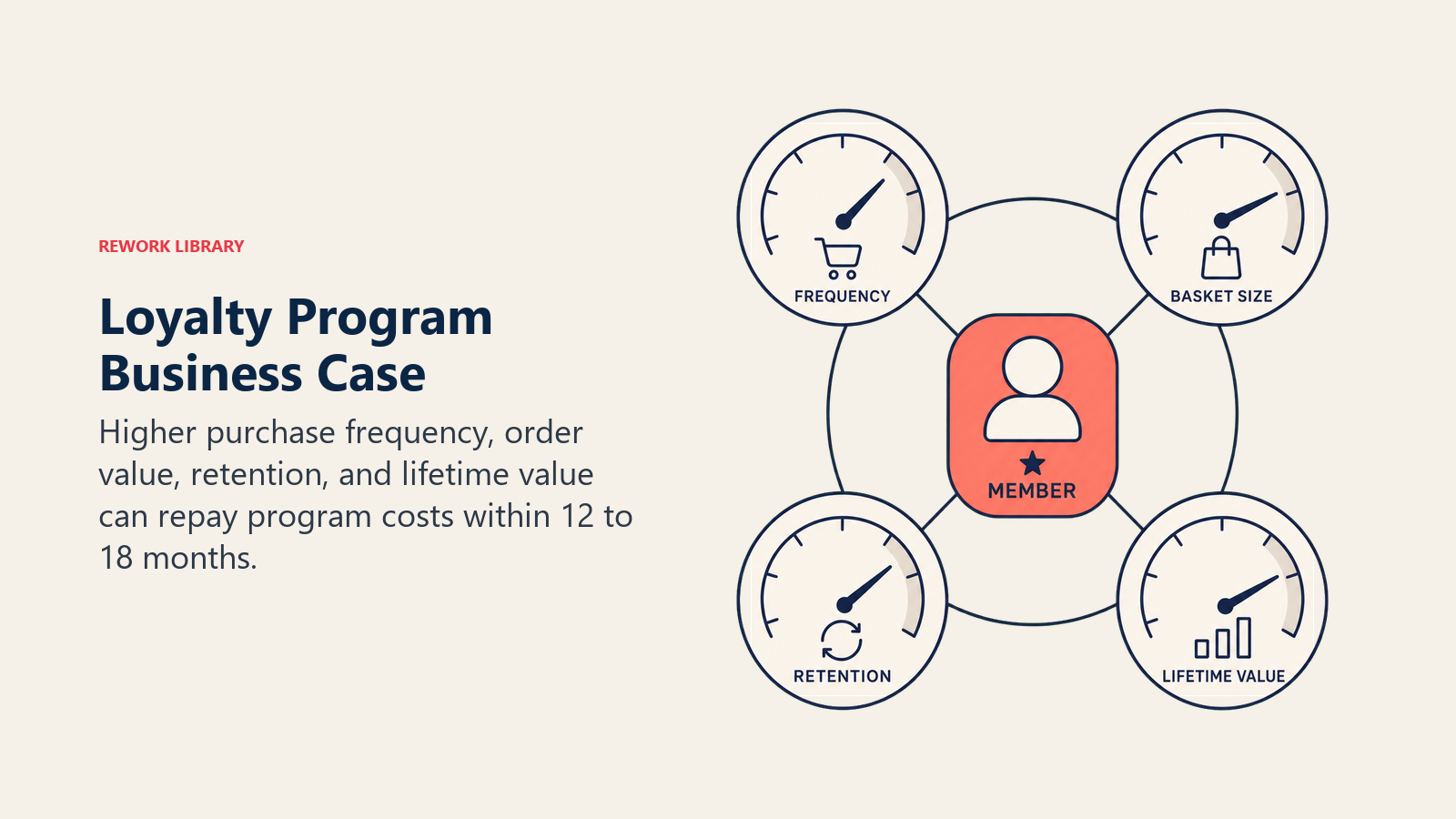
Purchase frequency increases by 2-3x. Non-members buy 1-2 times per year. Active program members? They buy 3-6 times per year, sometimes more depending on product category and purchase cycle.
Average order value grows 15-25% higher. When customers know they're earning points or working toward rewards, they add extra items to hit point thresholds or qualify for bonus rewards. A $75 cart becomes $95 to earn the 100-point bonus. This psychological trigger is a powerful AOV optimization strategy that compounds over time.
Customer lifetime value multiplies by 3-5x. More frequent purchases at higher values compound over time. A customer worth $200 without a program becomes worth $600-1,000 as an active member over 2-3 years.
Retention rates improve 15-30%. Program members have a reason to return to your store rather than shop wherever they find the lowest price. The accumulated points represent sunk value that creates switching costs.
Marketing efficiency improves dramatically. You spend less reactivating members than acquiring new customers. A Win-Back Campaign targeting lapsed members costs $5-15 per conversion. New customer acquisition costs $40-80 in most categories.
The program economics work when designed right. Brands typically see 5-10x ROI on program administration costs within 12-18 months. A program costing $50,000 annually to operate generates $250,000-500,000 in incremental profit through increased purchase frequency and higher order values.
Loyalty Program Fundamentals & Psychology
Effective loyalty programs tap into fundamental psychological drivers that influence purchase behavior.
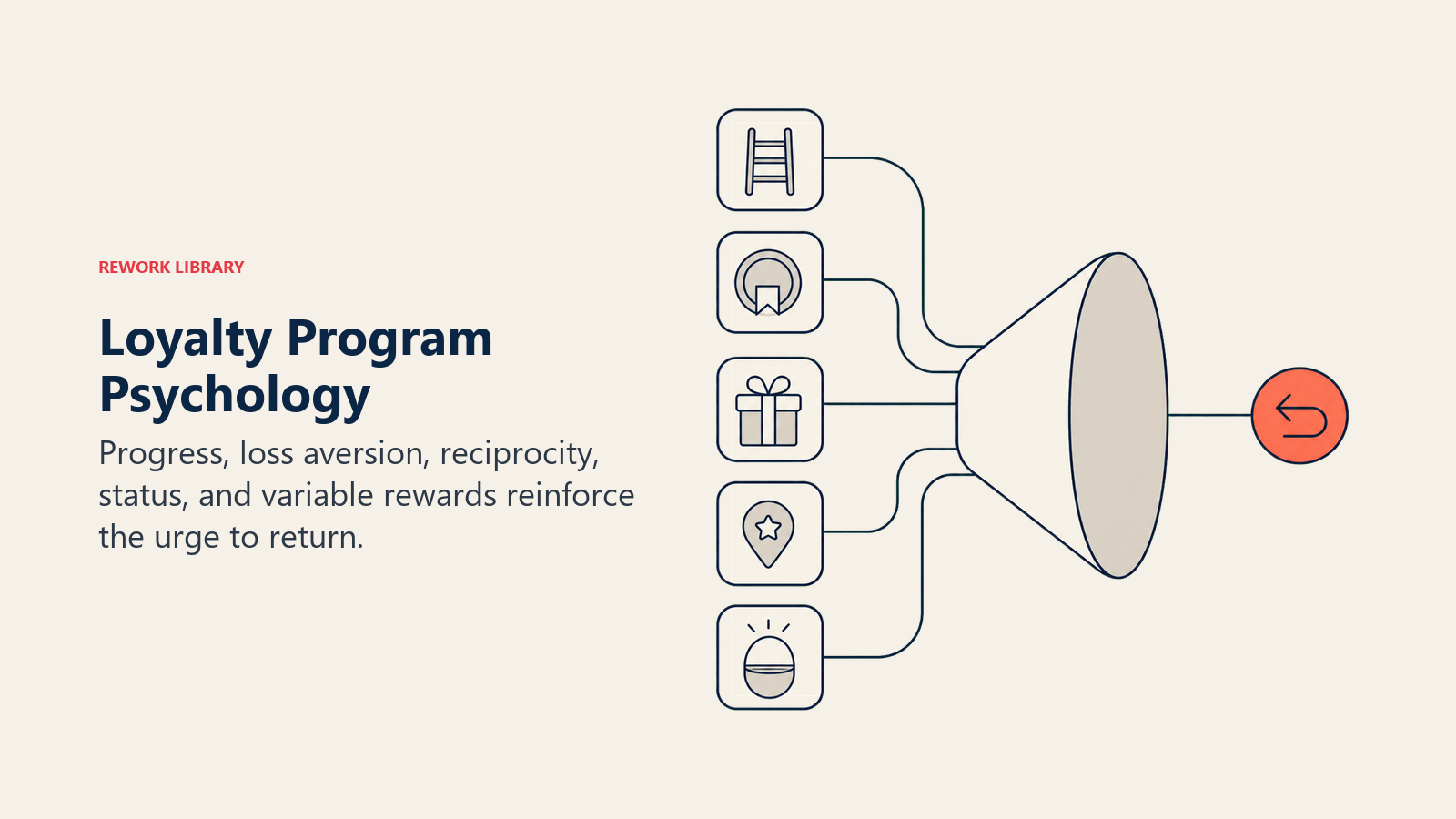
Progress and achievement. People are motivated by visible progress toward goals. A points balance that grows with each purchase provides tangible evidence of advancement. Status tiers create achievement milestones that drive increased spending to reach the next level.
Loss aversion. Accumulated points represent value that customers don't want to lose. A customer with 2,500 points (worth $25) is less likely to switch to a competitor because they'd be abandoning that value. The switching cost isn't monetary, it's psychological.
Reciprocity. When you reward customers, they feel a subconscious obligation to reciprocate by purchasing more. A surprise bonus of 500 points triggers reciprocity that often results in a purchase within days.
Status and recognition. Humans are social creatures who value status signals. A VIP tier membership provides social proof and ego satisfaction beyond the monetary value of the perks. "Gold Member" status feels meaningful even when the actual benefits are modest.
Gamification and engagement. Variable rewards create dopamine hits similar to gaming mechanics. "Spend $50 this week and earn 2x points" transforms shopping into a game with clear objectives and instant gratification.
The most successful programs layer multiple psychological triggers into a cohesive experience. Points provide progress tracking. Tiers create achievement goals. Surprise bonuses trigger reciprocity. VIP status delivers recognition. Together, these elements create an engagement loop that keeps customers returning.
Points-Based Loyalty Programs
Points systems are the most common loyalty structure because they're simple to understand and flexible to design.
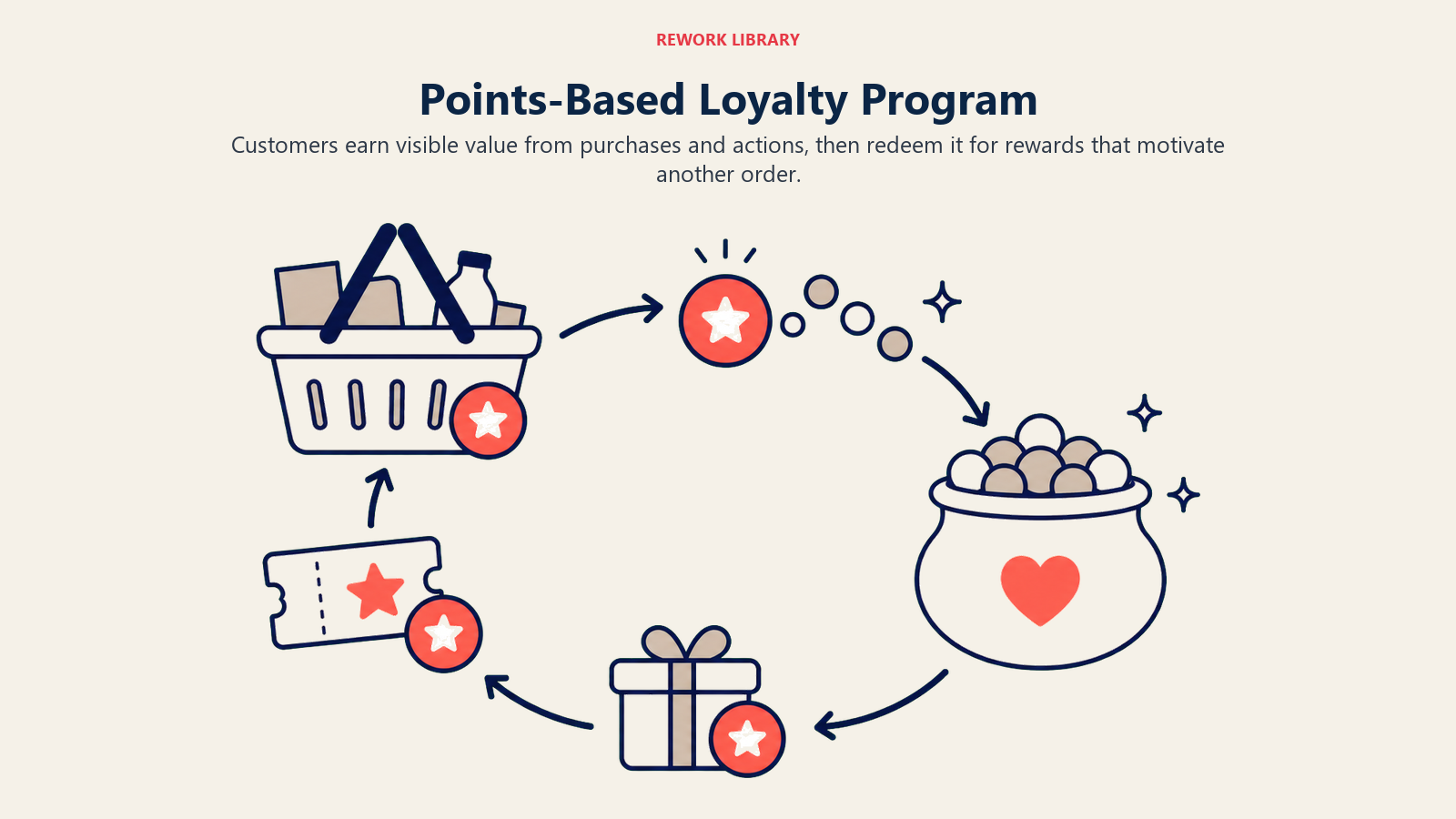
Basic mechanics: Customers earn points for purchases (typically 1 point per $1 spent), then redeem those points for rewards. A common structure offers $5 off for every 500 points earned, creating a 1% base reward rate.
Accumulation strategy. The earn rate determines program generosity and cost. Conservative programs offer 1 point per $1 (1% rewards). Generous programs offer 5-10 points per $1 (5-10% rewards). Most e-commerce brands settle around 3-5 points per dollar to balance attractiveness with profitability.
Redemption thresholds matter. Setting the first reward at 500 points ($50 spend at 1 point/$1) means most customers need 2-3 purchases before they can redeem anything. That delay reduces immediate cost but also reduces perceived value. Setting the first reward at 100-200 points lets customers experience redemption quickly, reinforcing the program's value.
Bonus point opportunities accelerate engagement. Beyond base earning, smart operators offer multipliers:
- 2x points on first purchase as a new member
- 3x points during birthday month
- 5x points on specific product categories with high margins
- 10x points during flash promotions to drive urgency
Expiration policies create urgency. Points that expire after 12-24 months prevent customers from accumulating massive balances without purchasing. Expiration also reduces long-term liability on your balance sheet. The trick is communicating expiration clearly and sending reminder emails when points are about to expire to trigger redemption purchases.
Redemption flexibility increases value. The more ways customers can use points, the more valuable the program feels. Common redemption options:
- Discounts on purchases ($5 off, $10 off, $25 off)
- Free products from a rewards catalog
- Free shipping (typically costs less than discount rewards)
- Exclusive access to limited products or sales
- Donations to charity (builds brand affinity)
The best points programs make earning visible and redemption easy. Every email receipt shows points earned. Account pages display points balance prominently. Checkout flows make redeeming points obvious and friction-free.
Tiered Loyalty Programs
Tiered programs add status levels that customers progress through based on spending or engagement, creating stronger retention through status achievement motivation.
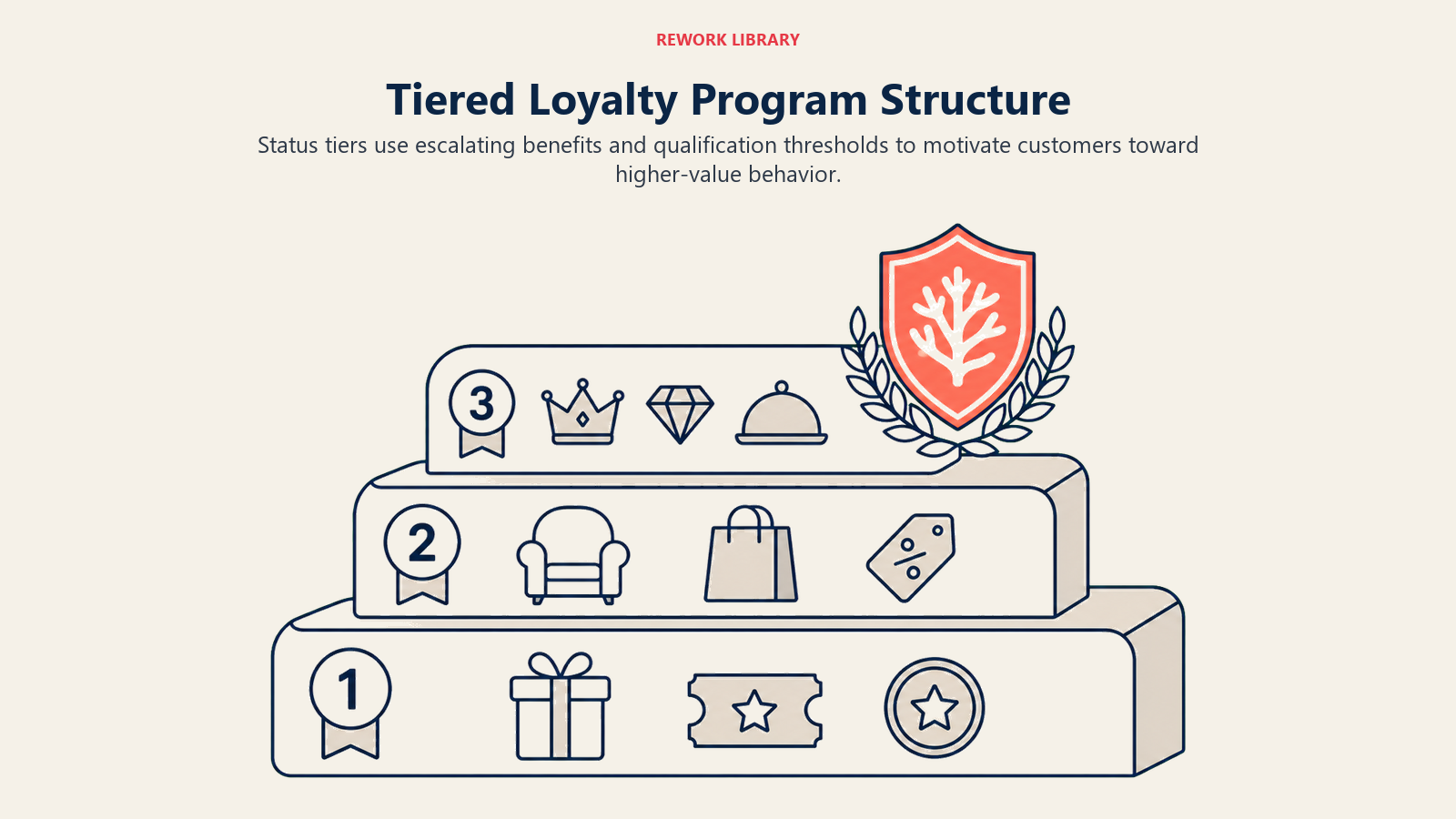
Tier structures typically follow 3-4 levels:
- Bronze/Member - Everyone starts here, base benefits
- Silver - Achieved at $500-1,000 annual spend, modest perks
- Gold - Achieved at $1,500-2,500 annual spend, meaningful benefits
- Platinum/VIP - Achieved at $5,000+ annual spend, exclusive treatment
Qualification metrics determine advancement. Most programs use annual spending as the primary metric. A customer who spends $2,000 in a calendar year reaches Gold tier. Some programs add engagement actions: points for reviews, social shares, referrals, or account profile completion.
Tier benefits create differentiated value:
Bronze tier (baseline):
- Earn 1 point per $1 spent
- Birthday bonus: 50 points
- Early access to sales (24 hours)
Silver tier (achievers):
- Earn 1.25 points per $1 spent (25% bonus)
- Birthday bonus: 200 points
- Free shipping on orders over $50
- Early access to sales (48 hours)
Gold tier (high-value):
- Earn 1.5 points per $1 spent (50% bonus)
- Birthday bonus: 500 points
- Free shipping on all orders
- Early access to sales (72 hours)
- Exclusive products and colorways
- Dedicated customer service line
Platinum tier (VIP):
- Earn 2 points per $1 spent (100% bonus)
- Birthday bonus: 1,000 points
- Free shipping and free returns
- First access to all new products
- Concierge service
- Invitation to exclusive events
- Surprise gifts and samples
Tier retention periods matter. Some programs require re-qualification every calendar year. Others offer "soft landings" where customers drop only one tier if they don't meet spending thresholds. The best approach depends on your purchase cycle and average customer value.
For products purchased quarterly, annual re-qualification makes sense. For products purchased every 2-3 years, lifetime tier status might be more appropriate to avoid demotivating loyal customers during natural gaps between purchases.
Tier communication drives behavior. The most effective programs show customers exactly what they need to reach the next tier: "Spend $327 more in the next 43 days to reach Gold status." That specificity creates a clear goal and urgency that drives incremental purchases.
Learn more about creating elevated experiences for your best customers in our guide to VIP Customer Programs.
Cashback & Rebate Programs
Cashback programs offer simpler mechanics than points systems, making them attractive for brands that want straightforward value propositions.
Direct cashback structures. Customers earn 1-5% cash back on every purchase, deposited into an account balance that can be applied to future orders. A $100 purchase with 3% cashback earns $3 in account credit.
Variable rate strategies. Smart operators adjust cashback rates by product margin:
- High-margin products: 5-7% cashback
- Standard margin products: 2-3% cashback
- Low-margin products: 1% cashback or excluded
This approach maintains program attractiveness while protecting margin on products where you can't afford generous rewards.
Threshold-based cashback increases engagement. Rather than flat rates, some programs offer tiered cashback: 2% on $0-500 annual spend, 3% on $500-1,500, 4% on $1,500+. This structure incentivizes customers to increase spending to reach higher cashback tiers.
Minimum redemption amounts reduce transaction costs. Allowing redemption only when customers accumulate $10-25 in cashback reduces the administrative burden of processing many small redemptions. It also delays gratification slightly, making the eventual redemption feel more substantial.
Cashback expiration creates similar urgency to points expiration. Cashback earned but not used within 12-18 months expires, encouraging customers to return and redeem before losing value.
The primary advantage of cashback over points: simplicity. Customers immediately understand "3% cash back" without needing to calculate point values. The disadvantage: less flexibility in designing earning mechanics and fewer psychological levers to pull for engagement.
Program Economics & Financial Modeling
A loyalty program is an investment that must generate positive ROI. Here's how to model the economics:
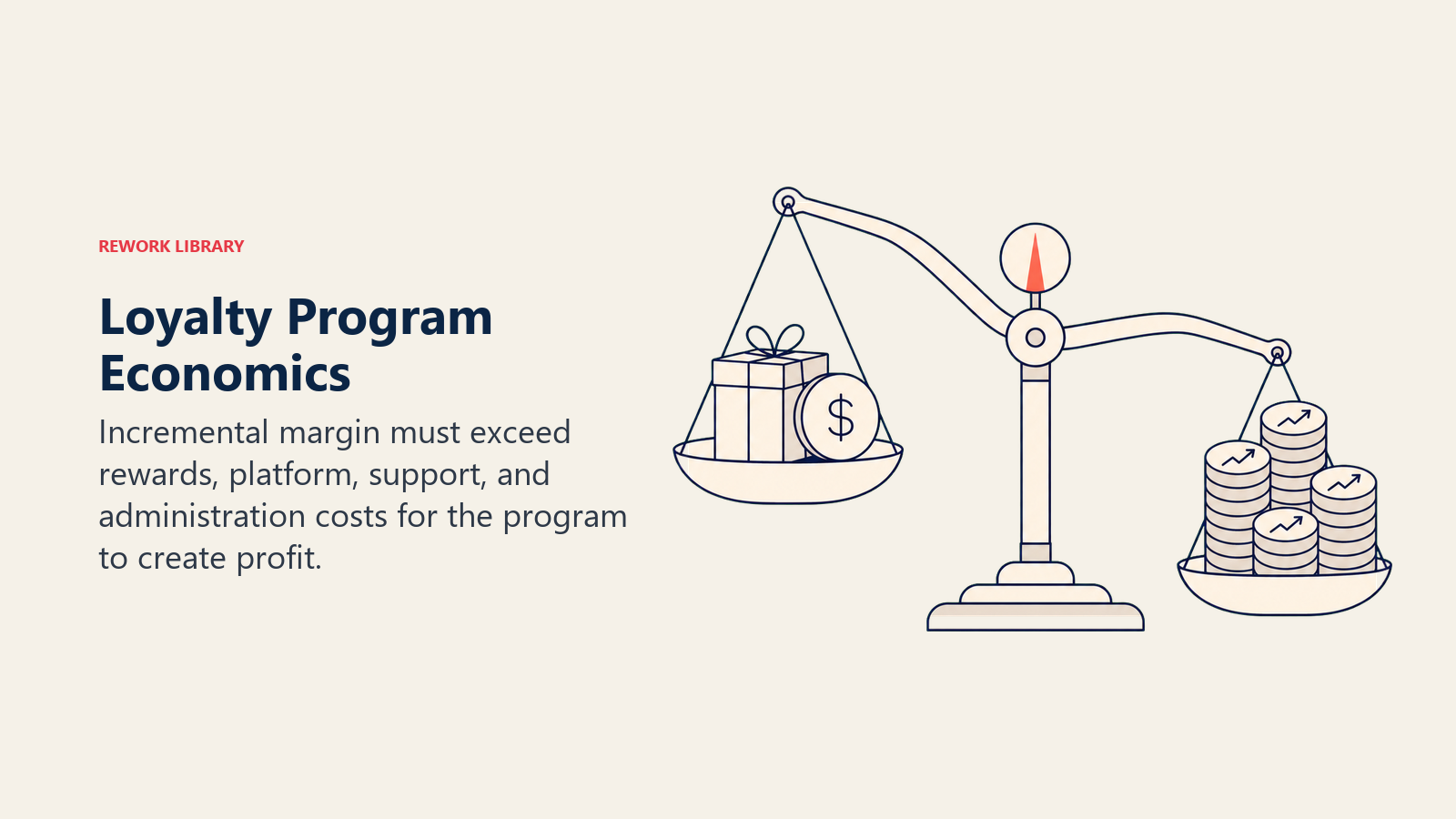
Cost per customer calculation:
Reward cost per customer = (Average annual spend × Reward rate) + (Bonus rewards)
Example: Customer spends $500/year, earns 3% back = $15 in rewards. Add $10 in birthday bonuses and promotional bonuses. Total cost = $25 per active member annually.
Program administration costs:
- Platform fees: $300-5,000/month depending on size
- Customer service: 2-5% increase in support volume
- Marketing communications: Email Marketing and SMS Marketing costs increase 15-25%
Break-even analysis:
For a program to break even, the incremental profit from increased purchases must exceed the reward costs and administration costs.
Example scenario:
- 10,000 active members
- Average spend without program: $300/year
- Average spend with program: $450/year (50% increase)
- Gross margin: 60%
Incremental profit per member: ($450 - $300) × 60% = $90
Reward costs per member: $450 × 3% = $13.50 Admin cost per member: $5
Total program cost per member: $18.50
Net benefit per member: $90 - $18.50 = $71.50
Program ROI: $71.50 / $18.50 = 3.9x
At 10,000 members, this program generates $715,000 in incremental annual profit.
Liability management. Points and cashback represent future obligations on your balance sheet. Most brands see 60-80% redemption rates, meaning 20-40% of issued rewards are never redeemed. This "breakage" effectively reduces program cost, but you must account for the liability until expiration.
Understanding how loyalty programs impact your overall business metrics ties directly to customer lifetime value modeling and proper unit economics analysis.
Customer Engagement Mechanics
A loyalty program only works if customers actively participate. Engagement mechanics keep the program top-of-mind and drive consistent interaction.
Welcome series sets expectations. When customers join, immediately send a Post-Purchase Email Sequence explaining:
- How to earn points
- How to redeem rewards
- Current points balance
- Next reward threshold
Monthly statements maintain awareness. Send monthly emails showing:
- Points earned this month
- Total points balance
- Points expiring soon
- Special earning opportunities
Milestone celebrations trigger engagement. Automate emails for:
- First reward earned
- Tier advancement
- Point balance milestones (500, 1,000, 2,500 points)
- Anniversary of joining program
Gamification mechanics create urgency:
- "Double points weekend" - 48-hour multiplier events
- "Spend $X, get Y bonus points" - threshold challenges
- "3 days left to reach Gold tier" - countdown urgency
- "Mystery bonus: spin to win 100-500 points" - surprise mechanics
Point balance reminders prevent abandonment. When customers haven't purchased in 60-90 days but have accumulated points, send reminder emails: "You have $15 in rewards waiting - don't lose them!"
Expiration warnings recover revenue. Send escalating warnings as points approach expiration:
- 60 days before: "Your points expire soon"
- 30 days before: "Don't lose $XX in rewards"
- 7 days before: "Final reminder: Redeem by [date]"
These expiration campaigns consistently drive 15-30% conversion rates among recipients because the loss aversion trigger is so powerful.
Birthday and anniversary bonuses feel personal. Automate point bonuses on:
- Customer birthday (if collected)
- First purchase anniversary
- Program enrollment anniversary
These touchpoints build emotional connection beyond transactional mechanics.
Program Integration & Operations
Technical implementation determines whether your program feels seamless or frustrating.
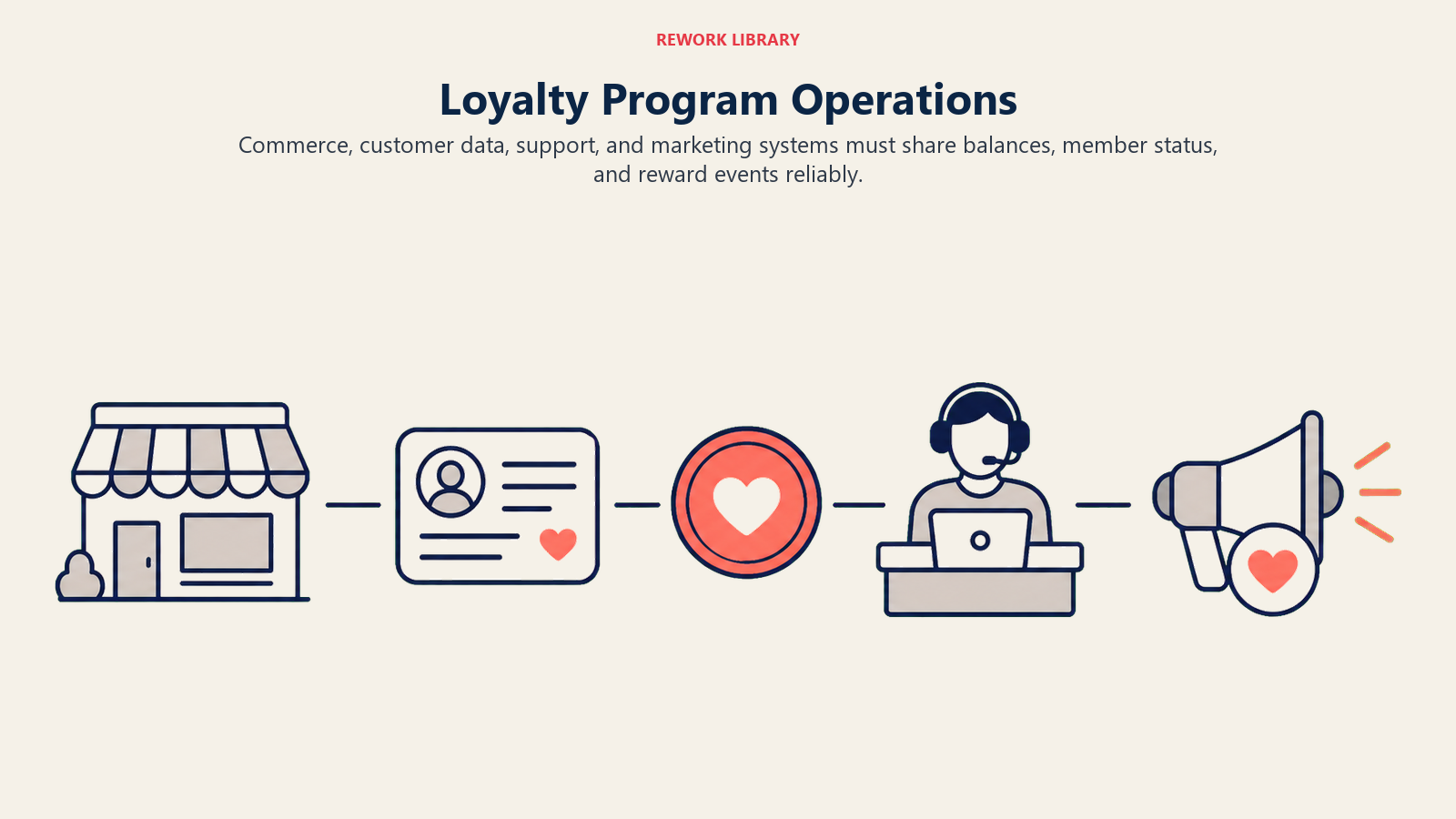
Technology stack options:
- All-in-one platforms: Smile.io, LoyaltyLion, Yotpo - Best for small to mid-size stores, $50-500/month
- Enterprise platforms: Antavo, Annex Cloud, SessionM - Best for large retailers, $5,000-50,000+/month
- Custom development: Built on your own infrastructure - Best for unique requirements, highest flexibility and cost
Enrollment flow optimization. Make joining the program as friction-free as possible:
- Auto-enroll at account creation
- Offer enrollment at checkout without requiring separate registration
- Allow social login (Google, Facebook) to reduce form fields
- Clearly communicate value proposition at enrollment
Cross-channel integration ensures consistency:
- Website displays points balance in header when logged in
- Checkout shows available rewards and redemption options
- Email receipts include points earned and balance
- Mobile app (if applicable) provides full program access
- SMS notifications for point bonuses and expiration warnings
Customer service training prevents frustration. Your support team must be able to:
- Check customer points balances
- Manually adjust points for service recovery
- Explain program rules clearly
- Override redemption rules in exceptional circumstances
Fraud prevention protects program integrity. Implement safeguards against:
- Multiple account creation for sign-up bonuses
- Return abuse to game point earning
- Account sharing to accumulate points
- Bot activity creating fake accounts
Personalization & Segmentation
Generic loyalty programs treat all customers the same. Sophisticated programs personalize rewards and communications based on customer behavior and value through strategic customer segmentation.
Segment-based reward structures:
High-value customers (top 20% by LTV):
- 5% reward rate instead of 3%
- Exclusive bonus opportunities
- First access to limited products
Price-sensitive customers (frequent discount users):
- Standard reward rate
- Bonus points instead of percentage discounts
- Emphasis on accumulating points for free products
Brand enthusiasts (high engagement, reviews, referrals):
- Bonus points for social actions
- Early product access
- Community recognition
Personalized earning opportunities. Use purchase history to offer relevant bonuses:
- "Earn 3x points on running shoes" (for customers who previously bought athletic wear)
- "Birthday bonus: 500 points on your favorite category" (based on past purchases)
- "Complete your collection: 5x points on [related product]"
VIP recognition beyond tier benefits. Your absolute best customers deserve special treatment:
- Handwritten thank-you notes
- Surprise gifts with orders
- Direct access to founder or leadership
- Beta access to new products
- Private shopping events
This level of personalization extends beyond basic loyalty mechanics into comprehensive VIP Customer Programs that build lasting relationships.
Predictive reactivation. Use engagement patterns to identify when members are likely to lapse, then send targeted reactivation offers before they disengage completely. A customer whose typical purchase cycle is 90 days who hasn't bought in 100 days receives proactive outreach with bonus point incentives.
Measurement & Program Optimization
You can't improve what you don't measure. Track these e-commerce metrics and KPIs to optimize program performance:
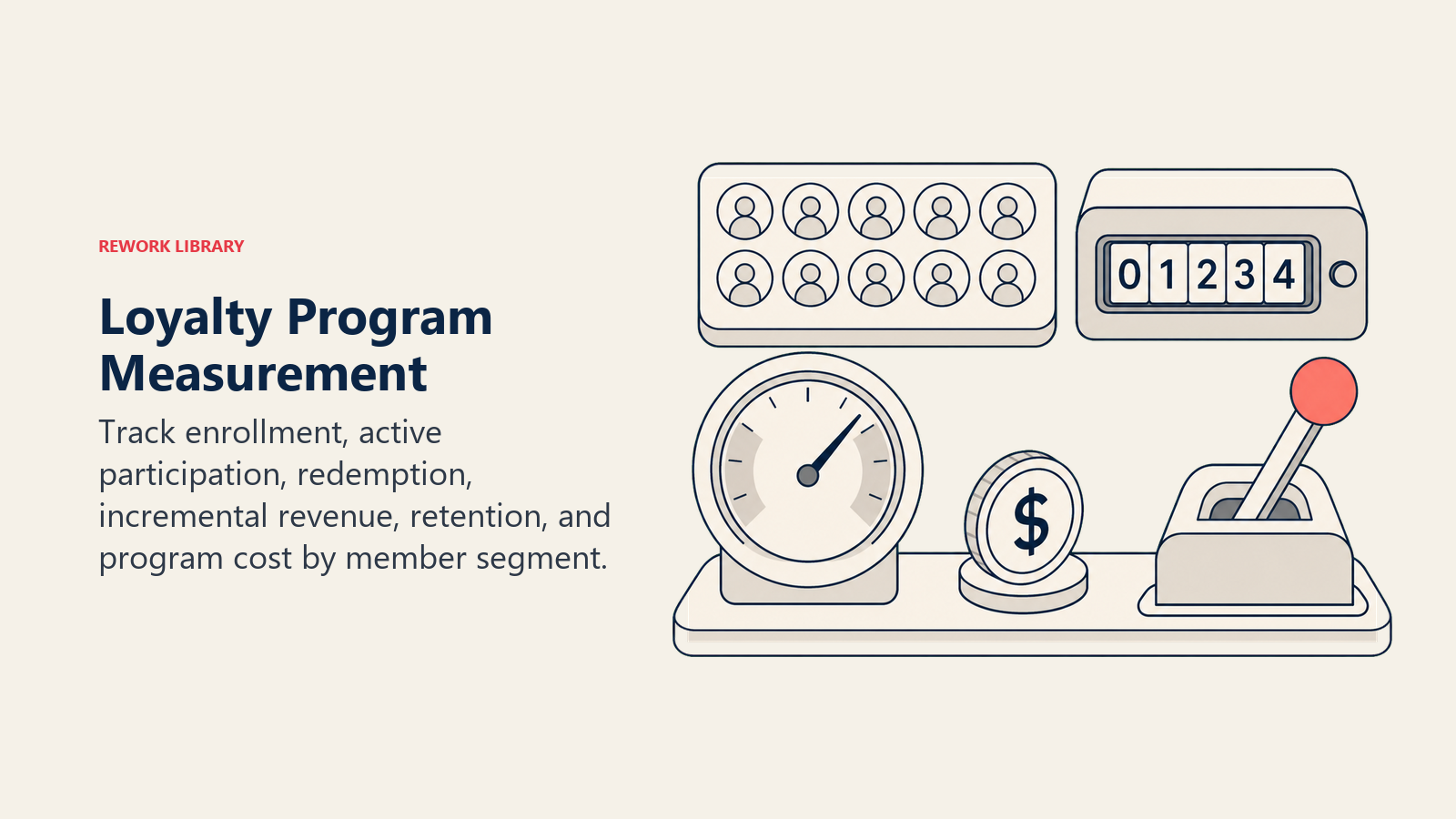
Enrollment rate: What percentage of customers join the program? Target: 60-80% of purchasers. Low enrollment indicates poor value communication or too much friction.
Active participation rate: What percentage of members earn or redeem points quarterly? Target: 40-60%. Low participation means members aren't engaged with the program.
Purchase frequency lift: How much more often do members buy compared to non-members? Target: 2-3x increase. This is the primary behavior change you're trying to drive.
Average order value lift: How much more do members spend per transaction? Target: 15-25% increase. Point thresholds and tier advancement goals drive this behavior.
Redemption rate: What percentage of earned rewards are redeemed? Target: 60-80%. Too low suggests rewards aren't attractive. Too high might indicate you're being too generous.
Program ROI: Incremental profit divided by program costs. Target: 3-5x in mature programs. Calculate this at cohort level to understand which customer segments generate positive ROI.
Tier distribution: What percentage of members fall into each tier? Healthy distribution: 60% base, 25% middle tier, 12% high tier, 3% VIP. If too many customers reach top tiers too easily, you need to adjust qualification thresholds.
Cost per incremental purchase: Total program cost divided by incremental purchases driven by the program. Compare this to your customer acquisition cost to ensure retention investment is more efficient than acquisition spending.
Liability as percentage of revenue: Total outstanding points/cashback divided by monthly revenue. Target: 3-5%. Higher percentages indicate potential redemption risk.
A/B testing optimization opportunities:
- Reward rates (3% vs 4% vs 5%)
- Point expiration periods (12 vs 18 vs 24 months)
- First reward threshold (100 vs 250 vs 500 points)
- Tier qualification levels
- Communication frequency and messaging
Run these tests with controlled cohorts over 3-6 month periods to measure impact on repeat purchase rate and program ROI.
Common Program Structures & Comparisons
Different program types suit different business models and customer behaviors:
Points programs work best when:
- You have frequent repeat purchases (monthly/quarterly)
- Product margins support 3-5% reward rates
- You want flexibility in reward design
- Gamification and engagement matter to your brand
Tiered programs work best when:
- You have wide customer value distribution
- High-value customers justify VIP treatment
- Status and recognition motivate your audience
- Annual spending varies significantly ($200-5,000+)
Cashback programs work best when:
- Simplicity is a core brand value
- You have less frequent purchases (annual/biennial)
- Customers prefer straightforward value
- You want minimal program administration
Hybrid programs combine elements:
- Points earning + tier status (most common)
- Points for purchases + rewards for actions (reviews, referrals)
- Cashback with tier multipliers
Program comparison matrix:
| Feature | Points | Tiered | Cashback |
|---|---|---|---|
| Customer understanding | Moderate | Low | High |
| Psychological engagement | High | Very High | Low |
| Administration complexity | Moderate | High | Low |
| Reward flexibility | High | High | Low |
| Margin protection | Good | Excellent | Poor |
| Status/recognition value | Low | High | None |
Most successful e-commerce programs combine points earning with tiered status to leverage both accumulation psychology and status achievement motivation.
For businesses exploring ongoing customer relationships beyond loyalty points, see our guide on subscription commerce strategy.
Launch & Growth Strategy
Rolling out a loyalty program requires careful planning to maximize adoption and minimize operational disruption.
Pre-launch preparation (4-8 weeks before):
- Finalize program rules and reward structure
- Complete technical integration and testing
- Train customer service team thoroughly
- Prepare email templates and landing pages
- Set up tracking and analytics
Announcement strategy:
- Email existing customers 1 week before launch
- Offer founding member bonus (e.g. 500 points for enrolling in first 30 days)
- Create social media content explaining benefits
- Add prominent website banners and popups
Phased rollout approach (lower risk):
- Week 1: VIP early access for top 10% of customers
- Week 2-3: Invitation-only expansion to top 50%
- Week 4+: Open enrollment for all customers
This approach allows you to identify and fix issues before full launch while making early access feel exclusive and valuable.
First 90 days focus:
- Drive enrollment to 60%+ of customer base
- Ensure first redemption happens quickly (builds habit)
- Collect feedback through surveys and support interactions
- Optimize communication cadence
- Fix technical issues and clarify confusing rules
Post-launch optimization (Months 4-12):
- Analyze cohort performance by enrollment date
- Adjust reward rates based on actual redemption patterns
- Introduce new earning opportunities (referrals, reviews)
- Expand tier benefits based on member feedback through customer feedback loops
- Test personalization and segmentation strategies
Communication calendar:
- Weekly: Limited-time earning opportunities
- Monthly: Points balance statements
- Quarterly: Program updates and new benefits
- Annually: Year-in-review with total earnings
Growth acceleration tactics:
- Referral bonuses (give 500 points, get 500 points)
- Partner integrations (earn points from complementary brands)
- Community features (member forums, exclusive content)
- Events and experiences (VIP shopping nights, product launches)
The goal isn't just launching a program, it's building a sustainable system that increases Customer Lifetime Value and powers Repeat Purchase Strategy at scale.
Getting Started
Building an effective loyalty program requires three foundational decisions:
First, determine your primary goal. Are you optimizing for increased purchase frequency, higher average order values, or improved retention rates? Your goal determines program structure. Frequency-focused programs emphasize low redemption thresholds and frequent bonus opportunities. AOV-focused programs use spending tiers and threshold bonuses. Retention-focused programs emphasize long-term tier status and exclusive perks.
Second, calculate what you can afford. Model program economics before launch. Know your margins, understand your customer purchase patterns, and determine what reward rate generates positive ROI at your specific unit economics. A 5% reward rate might work beautifully for a high-margin cosmetics brand but destroy profitability for a low-margin grocery retailer.
Third, start simple and evolve. Don't launch with ten tier levels, fifteen earning mechanisms, and complex rules. Start with basic points earning and redemption. Add tier status after you have baseline data. Layer in bonus opportunities once you understand what drives behavior. The best programs evolve based on actual customer behavior rather than initial assumptions.
Most importantly, treat your loyalty program as infrastructure, not a marketing campaign. This isn't a promotional tactic you test for a quarter. It's a fundamental business system that transforms how customers interact with your brand over years and reinforces your brand building and positioning efforts.
The difference between businesses that grow through retention and those that depend on endless new customer acquisition often comes down to one thing: a loyalty program that makes coming back more valuable than shopping elsewhere.
Frequently Asked Questions about Ecommerce Loyalty Programs
How do loyalty programs drive ecommerce growth?
They shift growth from expensive new-customer acquisition to repeat purchases from existing customers. Members buy 2-3x more often, spend 15-25% more per order, and stay 15-30% longer, so a fixed customer base generates more revenue each year without proportional ad spend.
What ROI should a loyalty program deliver?
Well-run programs typically return 5-10x on administration cost within 12-18 months. A program costing $50,000 a year to operate commonly generates $250,000 to $500,000 in incremental profit through higher purchase frequency and order values, once breakage and reward liability are accounted for.
Points, tiers, or cashback, which structure is best?
Points suit frequent repeat purchases and gamified engagement. Tiers suit a wide spread of customer value where status motivates spending. Cashback suits less frequent purchases where simplicity matters. Most high-performing ecommerce programs combine points earning with tiered status.
What reward rate is sustainable?
Most ecommerce brands settle between 1% and 5%, tuned to gross margin. Conservative programs offer 1 point per dollar; generous ones reach 5-10%. Model reward cost plus admin cost against incremental profit per member before launch, since a rate that works for cosmetics can break a low-margin category.
How do you measure loyalty program success?
Track enrollment rate (target 60-80% of purchasers), active participation (40-60%), purchase frequency lift (2-3x), AOV lift (15-25%), redemption rate (60-80%), and program ROI (3-5x in mature programs). Reward liability should stay around 3-5% of monthly revenue.

On this page
- The Business Case for Loyalty Programs
- Loyalty Program Fundamentals & Psychology
- Points-Based Loyalty Programs
- Tiered Loyalty Programs
- Cashback & Rebate Programs
- Program Economics & Financial Modeling
- Customer Engagement Mechanics
- Program Integration & Operations
- Personalization & Segmentation
- Measurement & Program Optimization
- Common Program Structures & Comparisons
- Launch & Growth Strategy
- Getting Started