International Shipping: Managing Customs, Duties, and Global Logistics for E-commerce Growth
 Profitable international shipping comes down to three fundamentals: knowing the true landed cost a customer pays, clearing customs correctly with the right HS codes and duties, and picking carriers by clearance speed, not just rate. Master these and cross-border expansion can multiply your addressable market 3 to 5x; get them wrong and surprise fees and returns erase your margins.
Turn this article into takeaways for your work.


Each assistant summarizes the article only for you and suggests best practices for your work.
The International Opportunity & Challenge
Your domestic market represents roughly 4% of global e-commerce spending. International expansion can multiply your addressable market by 3-5x, but unlike adding a new domestic sales channel, cross-border shipping introduces regulatory complexity, unpredictable costs, and customer experience challenges that can destroy margins if handled poorly.
Companies winning internationally treat global logistics as a competitive advantage, not an afterthought. They calculate true landed costs before entering markets, select carriers based on clearance speed rather than just rates, and design pricing strategies that maintain margins while meeting local customer expectations.
The difference between profitable international expansion and a money-losing experiment comes down to understanding three fundamentals: what customers actually pay (landed cost), how goods clear customs (regulations and duties), and which carriers can reliably deliver to your target markets. Get these wrong, and you'll face abandoned carts from sticker shock, angry customers hit with surprise fees, and mounting losses from returns you can't economically process.
This guide provides the operational framework for managing international shipping profitably, from calculating landed costs and selecting markets to negotiating with global carriers and maintaining compliance across dozens of tax jurisdictions.
Understanding Landed Cost
Landed cost is what your customer actually pays to receive your product in their country. Most brands dramatically underestimate this number, then wonder why international conversion rates tank or customer satisfaction plummets. True Landed Cost Formula:
- Product price (in local currency)
- International shipping fee
- Import duties (product category × country rate)
- Value-Added Tax or GST (typically 5-25%)
- Customs clearance fees ($5-25 per shipment)
- Currency conversion fees (1-3%)
- Optional: Customs broker fees ($15-50 if not handled by carrier) A $100 product shipped to the UK might cost the customer $160 after shipping ($25), VAT (20% = $25), and duties (5% = $5), plus clearance fees ($5). That 60% markup matters when your competitors are offering DDP pricing (duties paid). Hidden Costs That Kill Margins:
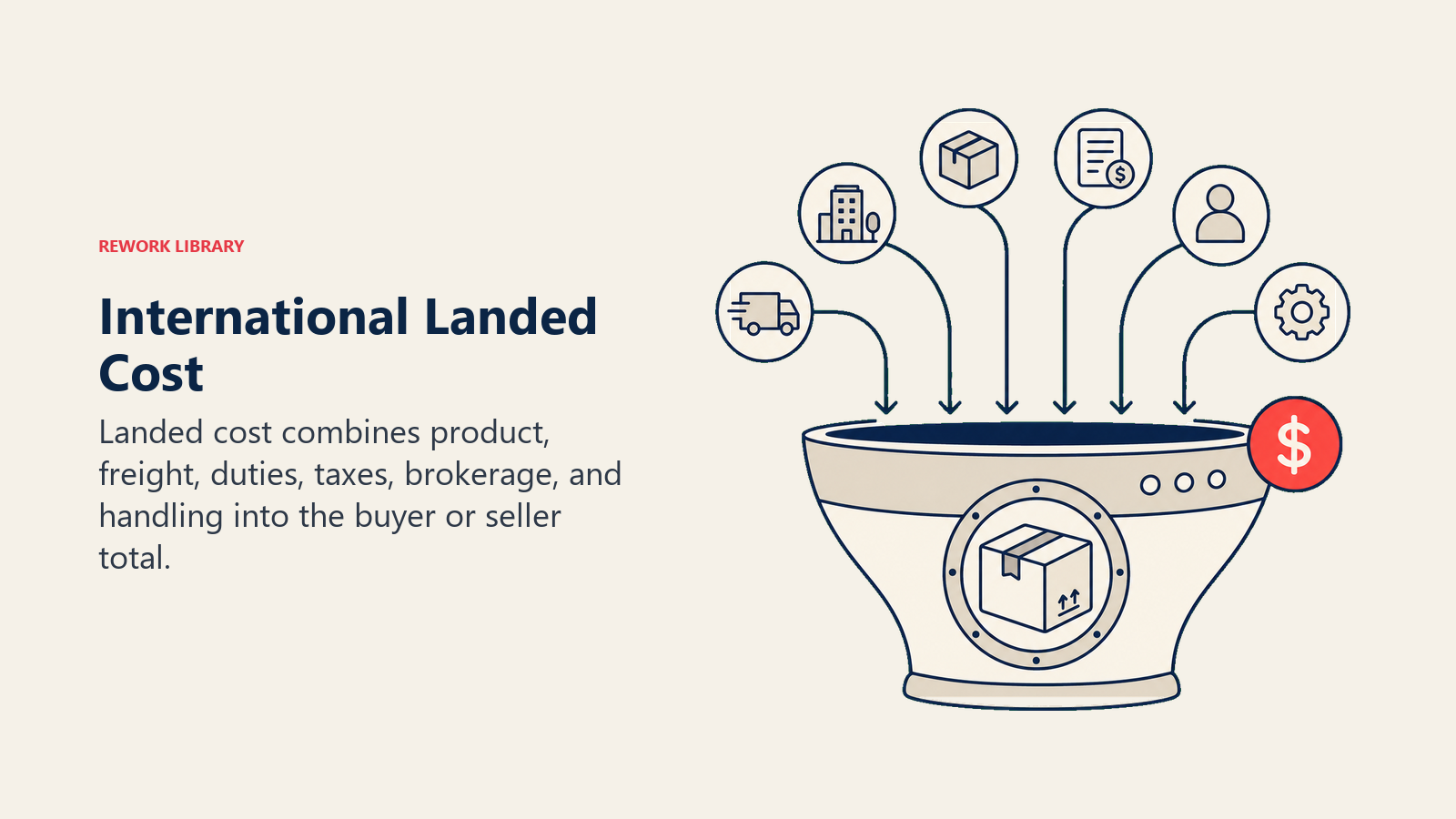
Regional handling surcharges (residential delivery in Australia adds $8-12), fuel surcharges (3-12% variable), dimensional weight pricing (volumetric charges can double shipping costs for lightweight, bulky items), and peak season surcharges (20-40% during holidays).
Your actual cost to deliver internationally might be 40-60% higher than the base rate you negotiated. Build these into your unit economics for e-commerce models from day one.
Regional Variation Examples:
Canada: Low duties (0-18%), no VAT, high shipping costs due to sparse population
UK/EU: Moderate duties (0-12%), high VAT (19-25%), good carrier competition
Australia: High duties (5-10%), 10% GST, expensive shipping due to distance
Singapore: Low duties (0-8%), 9% GST, excellent infrastructure and speed
The same $100 product might have a landed cost of $130 in Canada, $145 in the UK, $155 in Australia, and $125 in Singapore. You'll need different approaches for each market.
Customs, Duties & Regulations
Every product crossing a border needs classification, valuation, and documentation. Mess this up and shipments sit in customs for weeks while customers demand refunds. HS Codes (Harmonized System): Six-digit international classification codes that determine duty rates. A cotton t-shirt (6109.10) might face 16.5% duties in the US but 12% in the EU. Getting the code wrong can result in incorrect duties, customs delays, or penalties. Most e-commerce platforms integrate with customs classification databases, but verify codes for your top products manually. A $10,000 penalty for misclassification wipes out months of international profit.
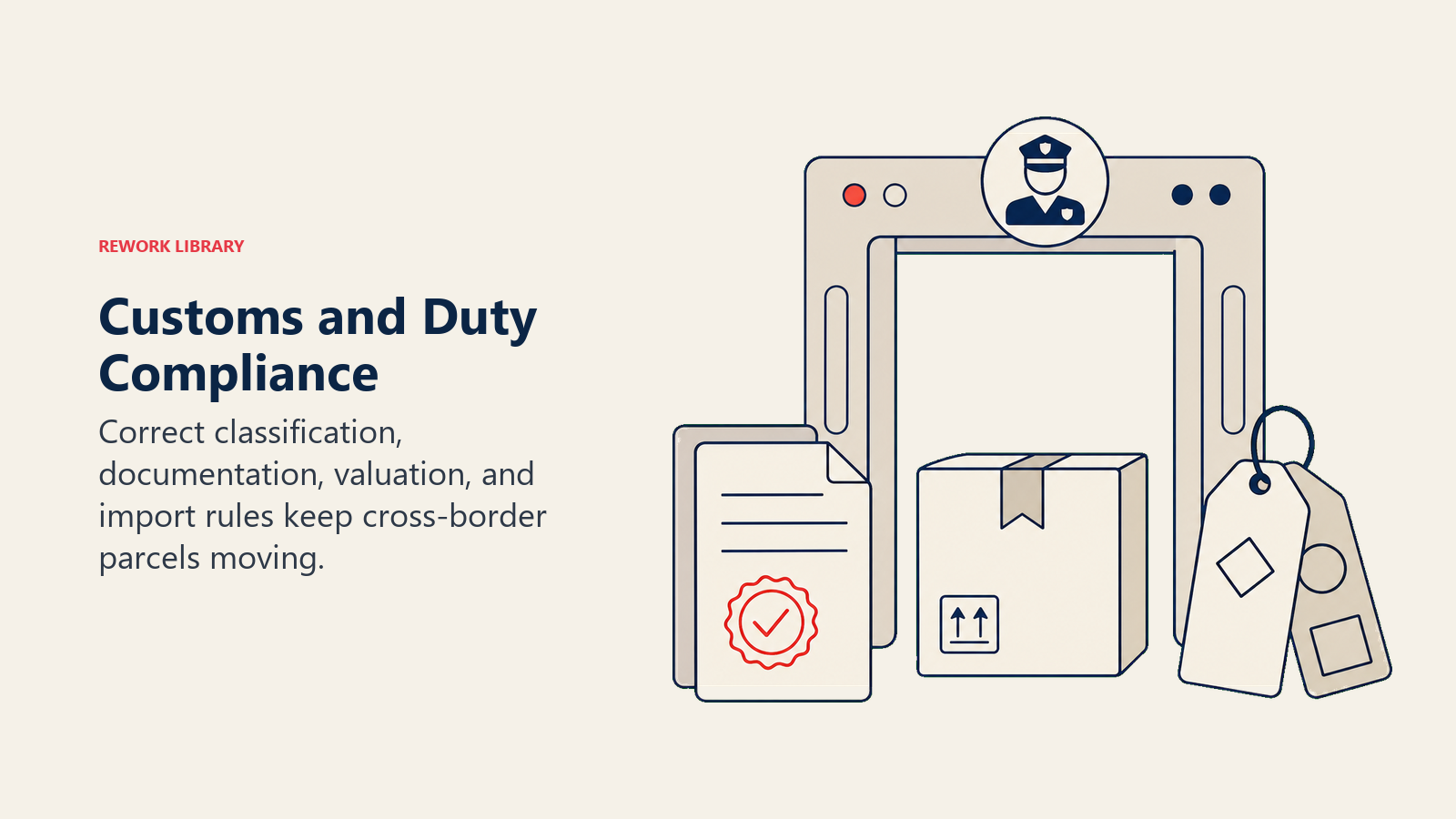
Duty Calculation:
Duties are typically calculated on CIF value: Cost (product) + Insurance + Freight. Some countries add duties before VAT, others after. This changes the final calculation significantly.
Example for $100 product to Germany:
- CIF Value: $100 + $25 shipping = $125
- Duty (4.7%): $125 × 0.047 = $5.88
- VAT (19%): ($125 + $5.88) × 0.19 = $24.87
- Total paid by customer: $125 + $5.88 + $24.87 = $155.75
If you're offering free shipping as a promotion, the duty base still includes the actual shipping cost, not zero.
Incoterms (International Commercial Terms):
These three-letter codes define who pays for what and when risk transfers:
DDP (Delivered Duty Paid): You pay all duties, taxes, and clearance fees. Customer sees one final price. Highest conversion rates but requires local tax registration in many markets. This is the Amazon standard and what customers increasingly expect.
DDU (Delivered Duty Unpaid, now DAP): Customer pays duties and taxes at delivery or before release. Lower upfront cost but creates surprise fees, refused deliveries, and poor customer experience. Works only in markets where customers expect this (parts of Asia).
FOB (Free On Board): You deliver to port, customer handles import. Almost never used in D2C e-commerce, mainly B2B.
CIF (Cost, Insurance, Freight): You arrange shipping but customer handles import. Again, mostly B2B.
For consumer e-commerce, DDP dramatically outperforms DDU in conversion and satisfaction. The complexity is worth it if you're serious about the market.
Document Requirements:
Every international shipment needs: Commercial invoice (product description, value, HS codes, country of origin), packing list (weight, dimensions, quantity), certificate of origin (for preferential duty rates under trade agreements), and potentially permits or licenses (food, cosmetics, electronics).
Carriers provide templates, but accuracy matters. Declared values must match your website prices, or customs may reject shipments or assess penalties.
International Carrier Selection
Domestic shipping lets you optimize on cost and speed. International requires evaluating customs clearance capability, destination coverage, and regulatory compliance support. Major International Carriers: DHL Express: Strongest in Europe, Asia, and emerging markets. Best customs clearance technology and dedicated brokerage teams. Premium pricing but fewer delays. Ideal for high-value products where speed and reliability justify costs. FedEx International: Strong in Americas and Europe, good technology platform. Competitive pricing and excellent tracking. Solid choice for balanced cost and service.
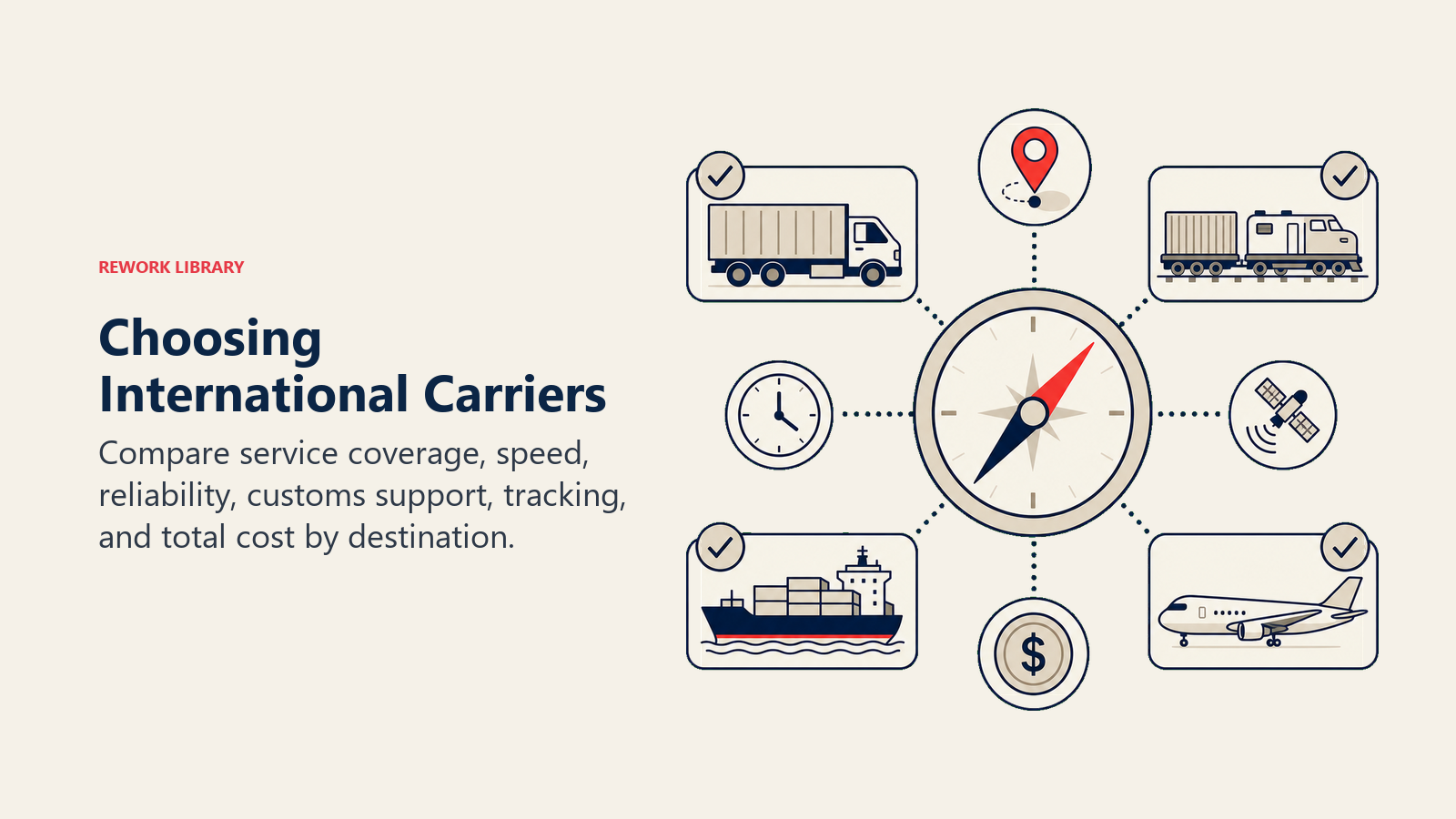
UPS Worldwide: Good Americas coverage, decent in EU/Asia. More economical than DHL but slower customs processing in some regions. Works well for less time-sensitive shipments.
Regional Carriers: PostNord (Scandinavia), Australia Post, Japan Post offer economical options with good local networks but limited tracking and slower customs processing.
Courier vs Postal Services:
Courier services (DHL, FedEx, UPS) provide: Door-to-door tracking, faster customs clearance (often 1-2 days), proactive exception management, and insurance options. Cost: $25-75 for small packages internationally.
Postal services (USPS, Royal Mail, etc.) offer: Lower cost ($10-25 for small packages), wider final-mile coverage (especially rural), but slower customs (3-7 days), limited tracking, and inconsistent service quality.
Use couriers for your first 6-12 months internationally to minimize customer issues, then test postal services for low-value, non-urgent orders once you have volume.
Service Level Selection by Region:
North America: 2-4 day express service hits the sweet spot for most products. 6-10 day economy works for price-sensitive customers.
Europe: 3-5 day service is standard expectation. Next-day only for premium customers willing to pay $50+ in shipping.
Asia-Pacific: 4-7 day express, 10-15 day economy. Accept longer timelines and communicate clearly.
Latin America: 7-14 days minimum due to customs complexity. Set expectations low and delight when faster.
Middle East: 5-10 days but high variation due to customs unpredictability. Build buffer into estimates.
Volume Negotiation Thresholds:
20-50 shipments/month: Retail rates, no negotiation leverage 50-200 shipments/month: 10-20% discounts possible, assigned account rep 200-1,000 shipments/month: 20-35% discounts, custom pricing for lanes 1,000+ shipments/month: 35-50% discounts, dedicated support, zone skipping, customs programs
Start conversations at 100 shipments/month. Carriers want the relationship before you scale. Leverage competition between DHL, FedEx, and UPS by getting parallel quotes.
Market Selection & Priority Regions
Don't ship everywhere because you can. Prioritize markets where customer acquisition cost, regulatory complexity, and logistics costs align with your profitability targets. Market Ranking Framework:
Score each potential market on:
- Market size for your category (1-10)
- Customer willingness to buy internationally (1-10)
- Shipping cost vs domestic benchmark (1-10, lower is better)
- Duty/tax complexity (1-10, lower is better)
- Language/cultural fit (1-10)
- Returns logistics difficulty (1-10, lower is better)
Multiply scores for total opportunity index. Markets scoring 6+ on average merit investment.
Priority Market Profiles:
Canada: Best first international market for US brands. $30B+ e-commerce, English/French language, low duties for many categories (USMCA agreement), fast shipping (2-4 days), familiar payment methods. Main issues: higher shipping costs than domestic, currency fluctuation management, French requirements in Quebec.
United Kingdom: $120B+ e-commerce market, high online adoption, English language, good logistics infrastructure. Challenges: 20% VAT requires collection and remittance, Brexit added customs complexity, returns are expensive. Strong market for fashion, home goods, premium products.
European Union: $400B+ combined market but requires VAT registration after €10,000 in sales to EU. IOSS (Import One-Stop Shop) simplifies collection for shipments under €150. Language localization needed for conversion. Germany, France, Netherlands, and Sweden are top priorities.
Australia: $30B+ market, English language, high online adoption, premium pricing tolerance. Challenges: Expensive shipping ($35-50 for standard parcels), GST on all imports, returns are cost-prohibitive. Focus on high AOV products.
Asia-Pacific: Massive growth markets but high complexity. Singapore and Hong Kong are easy entry points (English, low duties, good infrastructure). Japan requires localization but has $130B+ market. China requires local entity for serious operations.
Start Strategy:
Year 1: Canada + UK (if US-based) or UK + EU (if Europe-based) Year 2: Add Australia and 2-3 EU countries Year 3: Add Singapore/Hong Kong, test LATAM or Japan
This sequencing builds logistics competency and revenue before tackling high-complexity markets.
Fulfillment Model Decisions
Where you hold inventory determines your shipping costs, delivery speed, and operational complexity. Domestic-Based Fulfillment: Ship everything from your home country. Simplest operationally but highest per-shipment costs and slowest delivery. Pros: One inventory pool, simpler compliance, easier returns processing, lower inventory investment Cons: $25-75 per shipment internationally, 5-15 day delivery times, higher duties in some markets
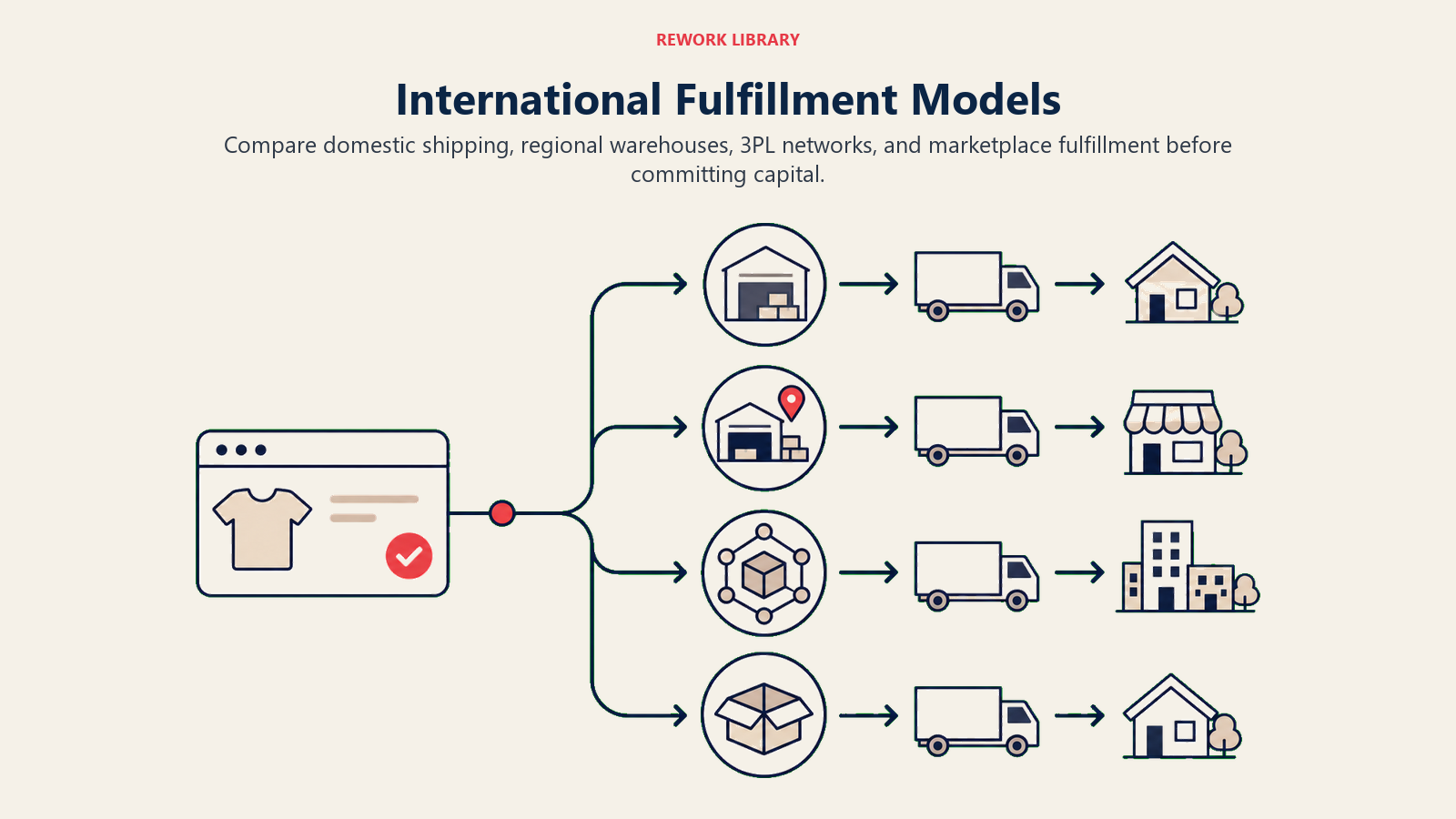
Works well for: Test phase (first $500K international revenue), high-value products ($200+), custom/made-to-order products.
International Warehouses:
Stock inventory in target markets for local fulfillment. Enables fast delivery (2-4 days) and often eliminates import duties if goods cleared beforehand.
Pros: Domestic shipping rates in each market, faster delivery, better customer experience, lower landed costs Cons: Inventory splits, local tax/entity requirements, multiple warehouse management, higher fixed costs
Required for: Mass-market products competing on delivery speed, markets contributing $1M+ annually, subscription models requiring fast replenishment.
3PL with Global Networks:
Partner with 3PL providers that have global networks that have warehouses in multiple countries. ShipBob, Flexport, and others offer distributed fulfillment with unified technology.
Pros: Faster time to market, shared infrastructure, volume rates, technology integration Cons: Higher per-unit costs than direct warehouse leases, less control, switching costs
Sweet spot for: $2M-20M annual revenue brands, testing new markets, brands needing 3-5 warehouse locations.
Amazon FBA International:
Use Amazon's fulfillment network across multiple countries. Products sold on Amazon.com can ship from Amazon.ca, Amazon.co.uk, etc.
Pros: Leverage Amazon's logistics, built-in customer base, simplified compliance through Amazon Cons: Amazon-only (doesn't help your D2C site), high fees, commingled inventory risks, limited branding
Useful for: Brands with strong Amazon presence, testing markets with low risk, leveraging a multi-channel marketplace approach.
Dropshipping Complications:
International dropshipping adds another layer of complexity: Who is the importer of record? Who handles customs? How do you ensure compliance across vendors?
Only viable if: Suppliers have experience with international fulfillment, clear agreements on responsibility, and automated customs documentation.
Tax & Compliance Framework
Getting tax wrong internationally creates legal liability, not just operational headaches.
VAT/GST Collection Requirements:
Most countries require you to register for VAT/GST once you hit a threshold:
- EU: €10,000 in sales (can use IOSS for simplified collection under €150)
- UK: £85,000 (can register voluntarily below threshold)
- Australia: A$75,000
- Norway: No threshold (register immediately)
- New Zealand: NZ$60,000
Many require registration before hitting the threshold if you hold local inventory.
Registration Process:
Apply for tax ID in each country (weeks to months), implement collection in checkout, file regular returns (monthly, quarterly, or annually depending on volume), and remit collected taxes.
Use VAT automation services (Avalara, TaxJar, Zonos) to handle calculations and filings. Manual compliance doesn't scale beyond 2-3 countries.
Import Duty Responsibility:
Under DDP, you're the importer of record and responsible for:
- Accurate product classification and valuation
- Payment of duties and taxes
- Customs documentation accuracy
- Compliance with product-specific regulations (safety, labeling, etc.)
Under DDU/DAP, customer is importer of record, but you still provide accurate documentation.
Customs Documentation Standards:
Commercial invoice must include:
- Accurate product descriptions (not vague "apparel" but "men's cotton t-shirt")
- Correct HS codes for each product
- Country of origin (where product was manufactured)
- Individual and total values
- Your business details and customer details
- Reason for export (sale, gift, sample, return)
Carriers provide documentation tools, but you're liable for accuracy. Budget time for training your team on proper customs documentation.
Regulation Changes:
CBAM (Carbon Border Adjustment Mechanism) in EU adds carbon costs to certain imports starting 2026. Digital Services Taxes affect marketplace platforms. Product-specific regulations (CPSIA for children's products, FCC for electronics, MDR for medical devices) vary by country.
Subscribe to customs broker newsletters and carrier compliance updates. Budget for annual compliance reviews as you scale.
International Shipping Pricing Strategy
Your pricing approach determines whether customers convert and whether the channel is profitable. Cost-Plus Models: Calculate true landed cost, add margin, present to customer. Transparent but often results in sticker shock. Example: $100 product with $40 landed cost increment = $140 presented price. Customer compares to local alternatives at $110 and abandons cart.
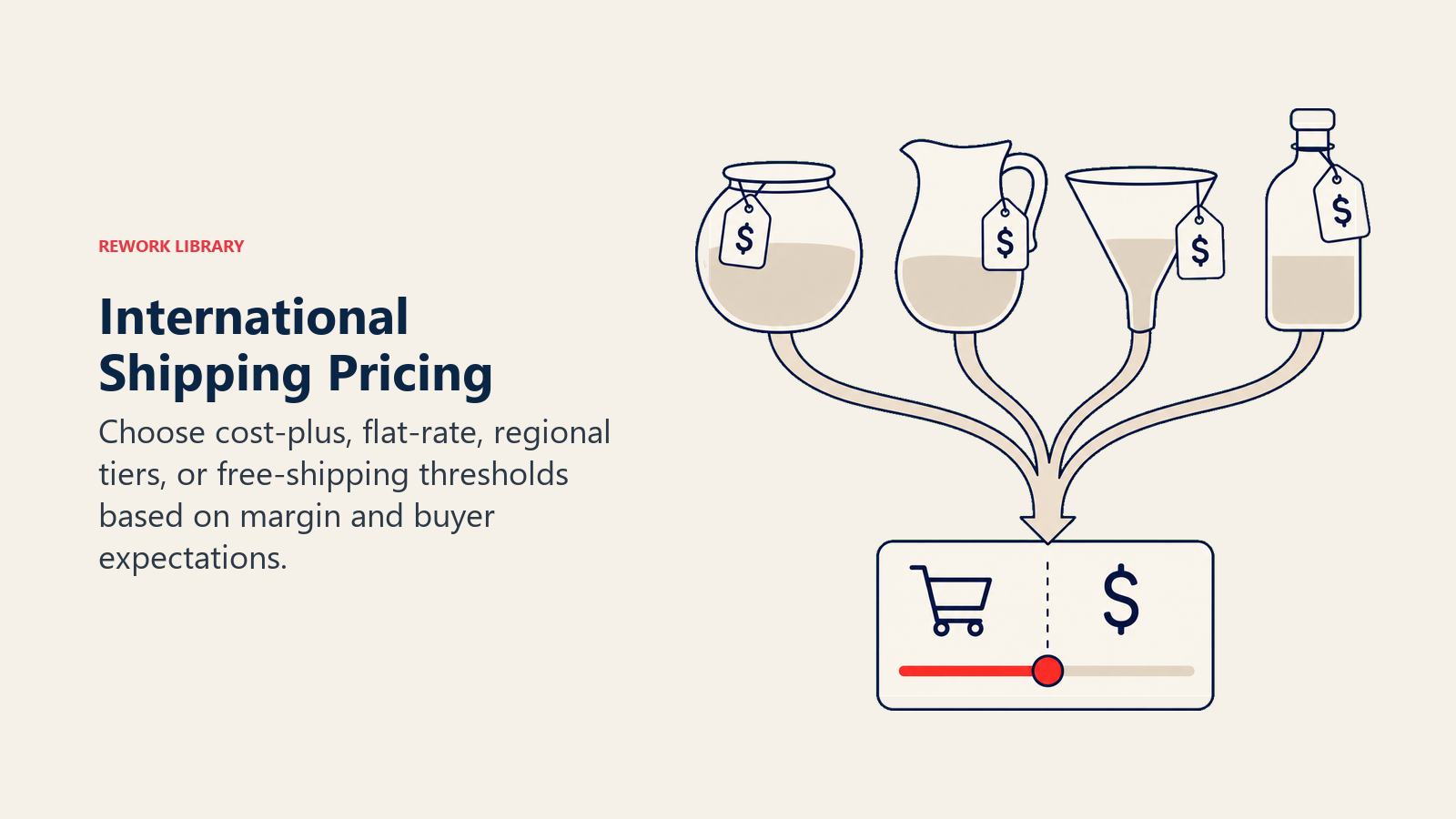
Works for: Unique products without local alternatives, luxury goods where price is less elastic, B2B sales.
Flat-Rate International Options:
Charge consistent shipping fee regardless of destination. Simple for customers, but you subsidize expensive destinations.
Example: $20 flat international shipping. You lose money on Australia ($45 actual cost), break even on Canada ($20), make money on Mexico ($12).
Requires: Order volume data by country to model profitability, willingness to treat shipping as customer acquisition cost, monitoring to prevent abuse.
Effective for: Building international revenue quickly, markets where customers expect flat rates, products with high margins.
Regional Tier Pricing:
Group countries into 2-4 zones with different shipping rates. Balance accuracy and simplicity.
Example tiers:
- Zone 1 (Canada, Mexico): $15
- Zone 2 (UK, EU): $25
- Zone 3 (Australia, Asia): $35
- Zone 4 (Rest of world): $50
Most common approach for sustainable international programs.
Free Threshold Strategy:
Offer free international shipping above a threshold that ensures healthy unit economics.
Calculate: Average international shipping cost / target shipping-to-revenue ratio = minimum threshold
If average shipping is $30 and you want 10% shipping-to-revenue, set free threshold at $300. This also boosts your average order value (AOV).
Subsidizing for Acquisition:
Many brands lose money on first international orders to acquire customers, betting on repeat purchases at better economics.
Model: Customer lifetime value (LTV) by market × repeat rate - fully-loaded first order cost = acceptable acquisition loss
If UK customers have $400 LTV and 60% repeat rate, you can afford to lose $30-50 on first order. If they have $150 LTV and 20% repeat rate, you can't.
Run different shipping promotions by market based on these economics.
Managing Margin Erosion:
International shipping costs increase 5-15% annually (fuel, labor, compliance). Build in annual price adjustments or reduce subsidies as markets mature.
Track shipping-cost-to-revenue ratio monthly. Alarm bells if it exceeds 15% for mature markets. Investigate carrier rate increases, package size creep, or destination mix changes.
Returns & Reverse Logistics Internationally
Returns destroy international profitability faster than any other factor. A $30 return shipment on a $100 order with 15% margin costs twice your profit. Return Policy Design: Option 1: Full Returns Accepted Customer returns at their expense or you provide prepaid label. You receive goods back, inspect, restock. Pros: Builds confidence, matches domestic policy, enables warranty handling Cons: Expensive ($25-75 per return), slow (2-4 weeks), high damage rate during return transit Use for: High-value products ($200+), markets with strong return expectations (US, UK, Germany), brands building loyalty.
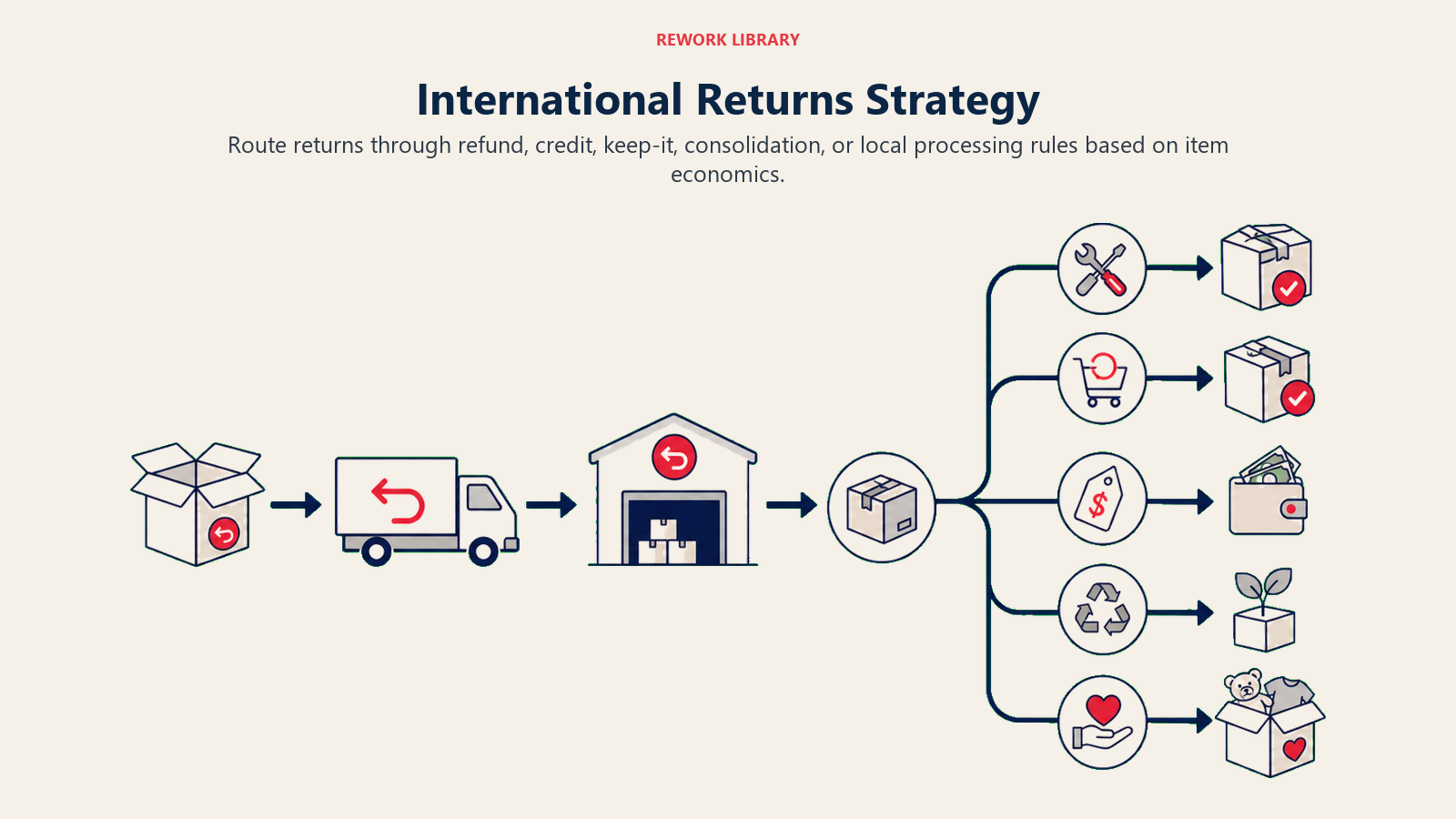
Option 2: Store Credit for Returns Accept returns but issue credit rather than refund, reducing immediate cash impact and encouraging repurchase. Pros: Improves unit economics, keeps customer in ecosystem, reduces return abuse Cons: Some customers prefer refunds, may hurt conversion for new customers
Use for: Mature markets, repeat customers, fashion/fit-based products.
Option 3: No International Returns No returns accepted except defects. Issue refunds/replacements without requiring product back. Pros: Eliminates return shipping costs, simpler operationally Cons: Higher refund costs, may reduce conversion, vulnerable to fraud
Use for: Low-value products (under $50), test markets, high fraud-risk categories.
Option 4: Return to Local Warehouse If you have in-market fulfillment, accept returns locally. Dramatically reduces costs. Pros: Affordable returns ($5-15), fast processing, enables restocking Cons: Requires local presence, inventory management complexity
Required for: Markets with strong return laws (EU 14-day right, Germany especially), fashion/apparel, mature markets. Learn more about effective returns management for international operations.
Reverse Logistics Partners:
Returns services (Happy Returns, Loop, Returnly) provide international return infrastructure. Customer drops at local location, consolidated shipping back to you.
Cost: $6-12 per return plus monthly fees. Economical at 50+ returns/month per market.
Managing Return Costs:
Track return rate by market and product. UK fashion might see 30% returns, US electronics 8%, Australia home goods 5%.
Build expected return costs into unit economics for e-commerce:
- Product cost: $30
- Domestic shipping: $8
- International shipping: $25
- Return rate: 15%
- Return cost: $35
- Expected return cost per order: $35 × 0.15 = $5.25
That $5.25 is real cost that must fit in your margin model.
Customer Communication:
Be explicit about return policies before purchase. "International returns accepted within 30 days, customer pays return shipping (approximately $25 USD)" sets expectations.
For no-return policies: "Due to international shipping costs, we cannot accept returns unless defective. Please review sizing carefully."
Clear communication reduces chargebacks and negative reviews.
Carrier Negotiations & Cost Optimization
International shipping costs can vary 300% between retail rates and optimized contracts. Negotiation is mandatory, not optional.
Volume Commitments:
Carriers offer better rates for volume commitments: "Ship 500 packages/month internationally for 12 months, receive 35% discount."
Balance commitment vs flexibility. Start with 6-month terms, move to 12-month once volume is predictable. Include escape clauses if volume drops 50%+ due to business changes.
Regional Partnerships:
Instead of one global carrier, use regional specialists:
- DHL for Europe and Asia
- FedEx for Americas
- Australia Post for Australia
Complexity increases but costs can drop 20-30% vs single-carrier pricing.
Consolidation Strategies:
For high-volume lanes (US to UK, US to Canada), negotiate LCL (Less than Container Load) or pallet pricing. Ship bulk inventory to 3PL, they handle final-mile.
Economical at 1,000+ orders/month to a country. Can reduce per-unit shipping costs by 40-60%.
Negotiating Customs Clearance:
Carriers charge customs clearance fees ($10-25 per shipment). With volume, these become negotiable:
- Reduce or eliminate clearance fees
- Include brokerage in shipping rate
- Get priority clearance processing
- Access to dedicated clearance team
Clearance speed matters as much as shipping speed. A 3-day shipment that sits in customs for 5 days is an 8-day delivery.
Technology Partnerships:
Carriers offer integration tools, tracking APIs, and address validation. With volume, negotiate:
- Free API access (normally $100-500/month)
- Dedicated integration support
- Beta access to new services
- Customs documentation automation
These operational efficiencies compound as you scale.
Rate Review Cadence:
Review carrier contracts every 12 months. Volume growth, competitive landscape changes, and your negotiating leverage all improve over time.
Get parallel quotes even if satisfied with current carrier. "DHL is offering 40% off, can you match?" is powerful negotiation leverage.
Customer Communication & Expectations
International customers need more communication than domestic, not less.
Transparent Cost Breakdowns:
At checkout, show:
- Product subtotal
- Shipping fee
- Estimated duties/taxes (if DDU)
- Total in their currency
Use "Total landed cost: $155 USD ($210 CAD), no surprise fees at delivery" for DDP. This transparency is essential for checkout flow optimization.
For DDU, warn: "You may be charged $20-35 in duties and taxes at delivery, based on your country's regulations."
Transparency reduces cart abandonment and customer service inquiries by 30-40%.
Delivery Estimates:
Provide ranges, not specific dates: "Delivery in 5-10 business days" rather than "Arrives January 15."
Add buffer for customs: "Allow 2-3 extra days for customs clearance."
Under-promise, over-deliver. Better to surprise with early arrival than face complaints about delays.
Customs Delay Management:
When shipments stick in customs (happens 3-8% of the time), communicate proactively: "Your order is clearing customs in [country], which typically takes 2-5 business days. We're monitoring and will update you daily."
Provide customs tracking if available. Customers tolerate delays when kept informed, but go silent and they assume you lost the package.
Building Trust:
First-time international buyers are nervous. Reduce anxiety:
- Show international reviews and testimonials
- Highlight secure checkout and buyer protection
- Provide clear contact methods for support
- Share estimated delivery times prominently
- Offer order tracking via SMS/email
FAQ sections for international shipping should cover: Delivery times, duties/taxes, returns, customs issues, packaging/damage, and currency.
Analytics, Monitoring & Continuous Improvement
International shipping requires constant optimization as volumes, carrier rates, and regulations shift.
Key Metrics to Track:
Shipping Cost Metrics:
- Average international shipping cost per order (by market)
- Shipping cost as % of revenue (target 8-15%)
- Average discount from retail carrier rates
- Cost per package by weight band and zone
Delivery Performance:
- Average delivery time by market and carrier
- On-time delivery rate (target 85%+)
- Customs clearance time (target under 3 days)
- Lost/damaged package rate (target under 1%)
Customer Experience:
- International conversion rate (vs domestic baseline)
- Cart abandonment at shipping page
- International return rate
- Customer satisfaction scores by market
Duty & Tax Metrics:
- Average duty + tax as % of order value
- Refused delivery rate (for DDU)
- Customs documentation error rate
Pull monthly reports, review quarterly for strategic decisions.
Carrier Performance Reviews:
Score each carrier on:
- Cost competitiveness (1-10)
- Delivery speed (1-10)
- Customs clearance speed (1-10)
- Tracking accuracy (1-10)
- Customer service responsiveness (1-10)
- Claims handling (1-10)
Any carrier scoring below 6 on average needs improvement plan or replacement.
Customer Satisfaction by Region:
Track NPS or CSAT by country. Low scores indicate:
- Delivery times too slow (add local fulfillment)
- Surprise fees (switch to DDP)
- Product damaged in transit (improve packaging or switch carriers)
- Poor communication (enhance tracking updates)
Regional satisfaction differences reveal where to invest in infrastructure.
Scaling Roadmap:
Phase 1 (0-500 international orders/month):
- Ship from domestic warehouse
- Use 2-3 carriers with retail rates
- DDU or simple DDP on low-duty products
- Manual customs documentation
- Accept limited returns
Phase 2 (500-2,000 orders/month):
- Negotiate 20-30% carrier discounts
- Implement DDP for top 2-3 markets
- Automate customs documentation
- Add VAT registration for EU
- Establish return policies by market
Phase 3 (2,000-5,000 orders/month):
- Add 1-2 international fulfillment centers
- Negotiate 30-40% discounts plus custom programs
- Full DDP across all major markets
- Returns handling infrastructure
- Dedicated logistics team
Phase 4 (5,000+ orders/month):
- Full distributed fulfillment (5-10 global locations)
- 40-50% carrier discounts
- Consolidated shipping programs
- Advanced customs programs (AEO, C-TPAT)
- In-house logistics operations team
Each phase requires 6-12 months to stabilize before advancing.
Frequently Asked Questions
What is landed cost in international shipping?
Landed cost is the full amount a customer pays to receive your product in their country. It adds the product price, international shipping, import duties, VAT or GST, customs clearance fees, and currency conversion to the base price. A $100 item to the UK can land near $160 once 20% VAT, duties, and fees are included.
What is the difference between DDP and DDU shipping?
Under DDP (Delivered Duty Paid) you collect all duties and taxes at checkout, so the customer sees one final price with no surprise fees. Under DDU, now DAP, the customer pays duties on delivery, which causes refused parcels and poor experience. DDP converts and satisfies far better for consumer e-commerce.
When do you need to register for VAT to sell internationally?
Thresholds vary by market: the EU at €10,000 in sales (with IOSS for shipments under €150), the UK at £85,000, Australia at A$75,000, and Norway from the first sale. Holding local inventory often triggers registration before you hit the threshold. Use a tax automation service once you sell into more than two or three countries.
Which international markets should an e-commerce brand enter first?
Sequence by readiness, not ambition. US-based brands usually start with Canada and the UK, then add Australia and a few EU countries in year two, then Singapore, Hong Kong, or Japan in year three. Score each market on size, shipping cost, duty complexity, and returns difficulty before committing.
International expansion multiplies your market opportunity but demands operational sophistication far beyond domestic fulfillment. The brands succeeding globally treat customs, duties, and logistics as core competencies, not outsourced commodities.
Start with landed cost clarity, build carrier relationships before you need them, and enter markets sequentially based on readiness rather than aspiration. Your international fulfillment strategy becomes your competitive advantage when you can deliver faster, cheaper, and more reliably than competitors.
Track e-commerce metrics & KPIs by market, optimize continuously based on data, and reinvest savings from carrier negotiations into better customer experience. International shipping will shift from cost center to growth driver when you master the operational details that most brands ignore.

On this page
- The International Opportunity & Challenge
- Understanding Landed Cost
- Customs, Duties & Regulations
- International Carrier Selection
- Market Selection & Priority Regions
- Fulfillment Model Decisions
- Tax & Compliance Framework
- International Shipping Pricing Strategy
- Returns & Reverse Logistics Internationally
- Carrier Negotiations & Cost Optimization
- Customer Communication & Expectations
- Analytics, Monitoring & Continuous Improvement
- Frequently Asked Questions