Retargeting & Remarketing: Converting Visitors into Customers
 Most e-commerce stores lose 97-98% of their first-time visitors without a purchase. That's not a failure, it's how online shopping works. People browse, compare prices, get distracted, abandon carts. What separates successful stores from the rest is bringing those visitors back.
Turn this article into takeaways for your work.


Each assistant summarizes the article only for you and suggests best practices for your work.
Retargeting ads follow people who visited your site but didn't buy, showing them your products again across Facebook, Instagram, Google, and other platforms. When done right, retargeting generates some of the highest returns in e-commerce advertising, often 3-5x better than cold traffic acquisition campaigns. These people already know your brand and have seen your products. They just need the right nudge to come back and complete their purchase.
This guide covers the complete retargeting strategy: tracking setup, audience segmentation, ad creative, sequencing, and budget allocation. We'll focus on what actually converts browsers into buyers.
Why retargeting works better than cold traffic
Cold traffic campaigns cast a wide net, hoping to find buyers among people who've never heard of you. Retargeting targets people who already raised their hand by visiting your site. They're warmer, more familiar with your brand, and significantly more likely to convert. The numbers back this up. Retargeted visitors are 8x more likely to click your ads and 70% more likely to convert than new visitors. Cost per acquisition through retargeting typically runs 50-70% lower than cold acquisition because you're not spending budget educating people about who you are.
Think about your own shopping behavior. You browse a product, close the tab, see an ad for that exact product a few hours later, and suddenly you're back on the site checking out. That's retargeting working as designed. You weren't ready to buy the first time, but the reminder pushed you over the edge.
But here's where most stores go wrong: they treat all visitors the same. Someone who spent 10 seconds on your homepage isn't the same as someone who added a product to cart and got to checkout. Your retargeting strategy needs to reflect these differences through audience segmentation and customized messaging.
Tracking setup: building your retargeting foundation
Before you can retarget anyone, you need tracking pixels installed on your site. These small pieces of code track visitor behavior and build audiences you can advertise to later.
Facebook Pixel and Meta Pixel setup
The Facebook Pixel (now called Meta Pixel) tracks visitors across your site and captures events like page views, add to cart, initiated checkout, and purchases. Install the pixel in your site's header. Most e-commerce platforms (Shopify, WooCommerce, BigCommerce) offer one-click integrations. For custom sites, add the pixel code manually and configure event tracking.
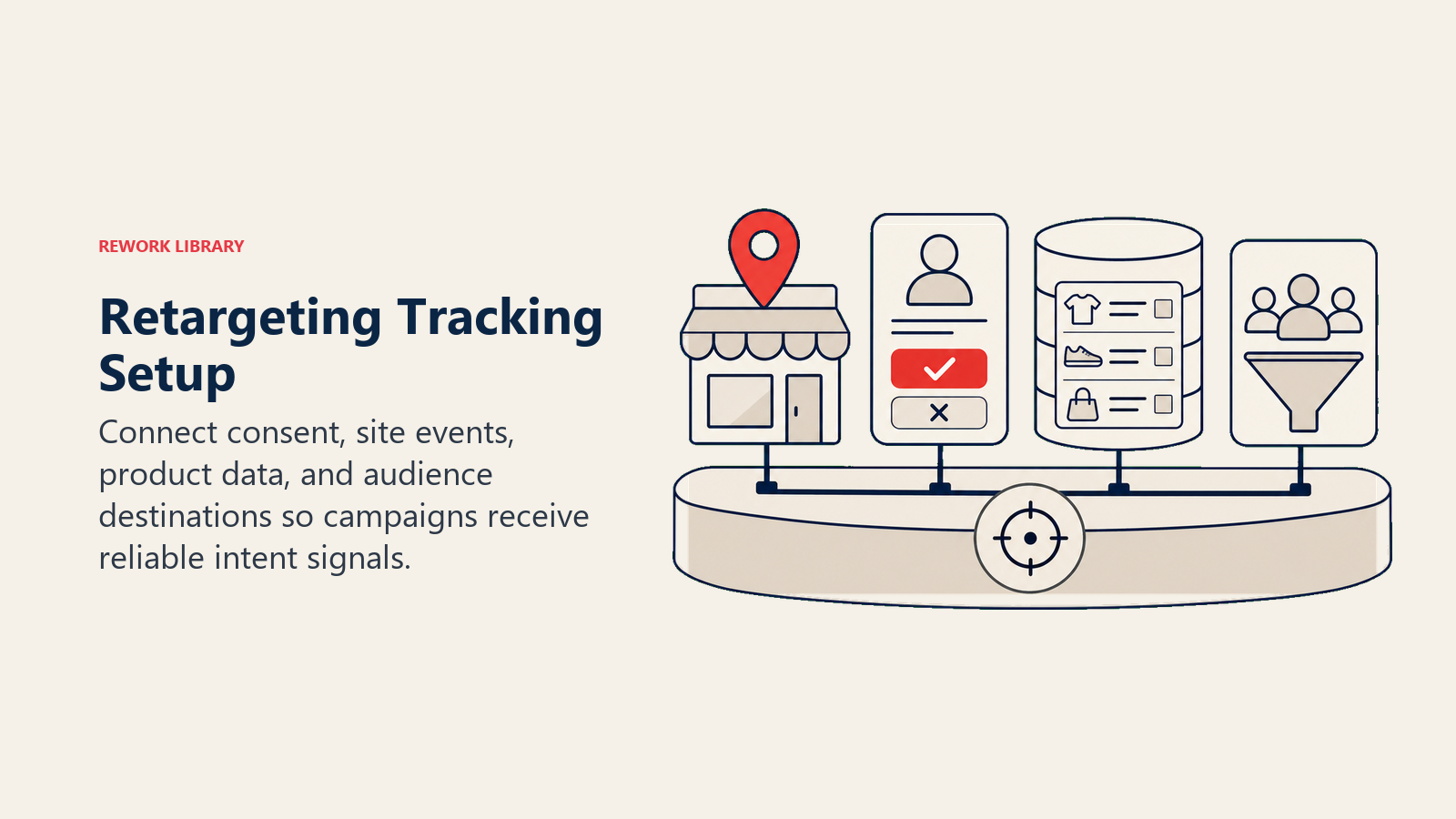
Standard events to track:
- ViewContent: Someone viewed a product page
- AddToCart: Someone added a product to cart
- InitiateCheckout: Someone started checkout
- Purchase: Someone completed a purchase
These events power your audience segmentation. You can create audiences of people who viewed products but didn't add to cart, people who abandoned carts, people who started checkout but didn't finish. Each audience needs different messaging.
Verify your pixel works using Facebook's Pixel Helper Chrome extension. Check that events fire correctly and pass product data (product IDs, prices, categories). This data enables dynamic product ads that show people the exact products they viewed.
Google Ads remarketing tag
Google's remarketing tag (Global Site Tag or gtag.js) works similarly to the Facebook Pixel. It tracks visitors and builds remarketing audiences for Google Display Network, YouTube, and Shopping campaigns.
Install the tag in your site header. If you're already running Google Ads, grab your tag from the Audience Manager section. For Google Analytics users, enable remarketing through GA4 audiences linked to your Google Ads account.
Set up custom parameters to track:
- Products viewed (product ID, category, price)
- Cart activity (items added, cart value)
- Checkout progress (initiated, abandoned)
- Transaction data (purchases completed)
Privacy compliance and consent management
Tracking pixels collect user data, which means you need proper consent management to comply with GDPR, CCPA, and other privacy regulations.
Implement a cookie consent banner that asks visitors to opt in to tracking cookies before pixels fire. Use a consent management platform like OneTrust, Cookiebot, or Termly. For more on tracking implementation, see our guide on analytics tracking setup.
When users opt out, don't fire your tracking pixels. This reduces your retargeting audience size but keeps you legally compliant. Most stores see 60-80% consent rates, meaning you're still capturing the majority of visitors.
Audience segmentation strategy
Not all site visitors are equal. Your retargeting strategy needs to segment audiences by behavior and intent level, then customize messaging for each segment.
Audience hierarchy by intent
Build audiences based on how close people got to purchasing: General visitors (low intent): Viewed homepage or category pages only. These visitors are window shopping. Focus budget on higher-intent audiences first.
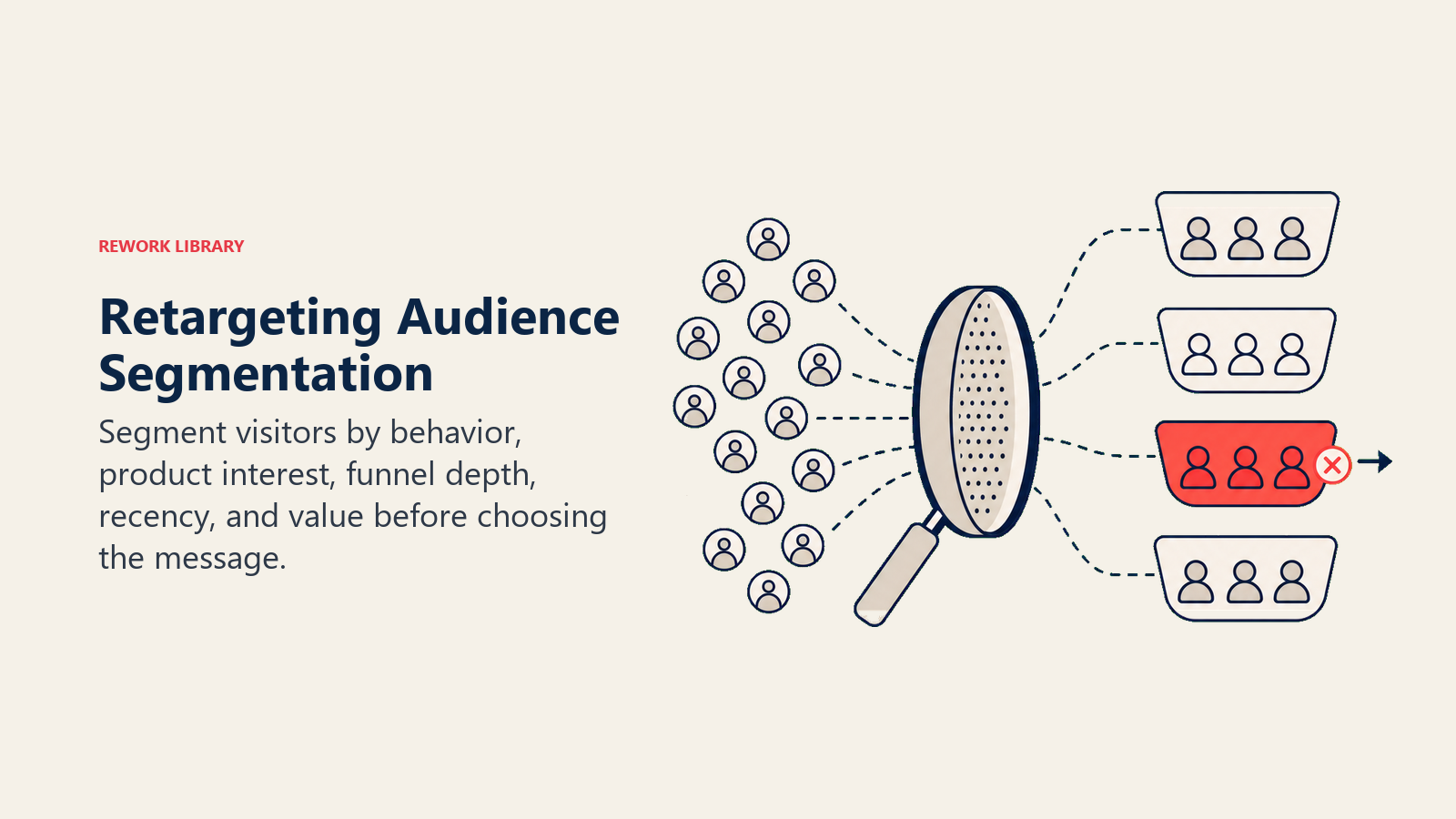
Product viewers (medium intent): Viewed product pages. Show them the products they viewed with messaging focused on benefits, social proof, or offers.
Cart abandoners (high intent): Added products to cart but didn't purchase. These are your hottest prospects. Prioritize this audience with aggressive retargeting and strong offers if needed. Learn more strategies in our cart abandonment recovery guide.
Checkout abandoners (highest intent): Started checkout but didn't complete purchase. Often due to unexpected shipping costs or complicated checkout. These people are incredibly close to converting.
Past customers: Deserve separate retargeting focused on repeat purchases, upsells, or complementary products. Understanding customer lifetime value helps you determine how aggressively to retarget existing customers.
Create separate campaigns for each tier to allocate budget based on conversion probability and customize creative appropriately.
Time-based audience windows
How long should you retarget someone after they visit? It depends on your product and purchase cycle, but here's a starting framework:
30-day window: Standard for most e-commerce. Track visitors for 30 days and include them in retargeting during that period.
7-14 day window for hot audiences: Cart and checkout abandoners should be in a shorter, more intense retargeting window. Hit them hard in the first week when interest is highest.
180-day window for research audiences: For high-consideration products (furniture, appliances, expensive items), extend the window to 6 months. Buying decisions take longer for these categories.
Check how long the average time between first visit and purchase is for your store. If most conversions happen within 14 days, shorten your retargeting windows to focus budget on the most likely buyers.
Dynamic product audiences
Dynamic retargeting shows people the exact products they viewed on your site. This requires product catalog integration with your ad platforms.
Facebook dynamic product ads: Upload your product catalog to Facebook Business Manager, then create dynamic ad campaigns that automatically pull in products based on user behavior. Someone who viewed red sneakers sees ads for those specific red sneakers.
Google dynamic remarketing: Similar concept through Google Merchant Center. Your product feed powers ads that show the items people browsed.
Dynamic ads perform significantly better than static retargeting because they're personalized. Seeing the exact product you were considering is more persuasive than a generic "Come back to our store" message. For advanced personalization tactics, explore personalization engine strategies.
Exclusion audiences
Just as important as who you target is who you don't target.
Recent purchasers: Exclude people who purchased in the last 7-14 days from conversion-focused retargeting. They just bought from you, so hitting them with "Complete your purchase" ads wastes budget.
Converted visitors: If someone viewed a product and then purchased it, exclude them from campaigns retargeting that specific product.
Long-time non-converters: If someone has been in your retargeting audiences for the full window (30+ days) without converting despite seeing your ads multiple times, they're not buying. Exclude them to stop wasting budget.
Ad creative strategy for retargeting
Your retargeting ads need different creative than cold acquisition ads. These people already know your brand. Now you need to give them a reason to come back.
Messaging by audience segment
For product viewers: Highlight what makes the product special. Show it in use, feature customer reviews, emphasize unique benefits. The goal is to overcome objections they might have had during their first visit. Strong product page optimization increases the likelihood of conversion when retargeted visitors return.
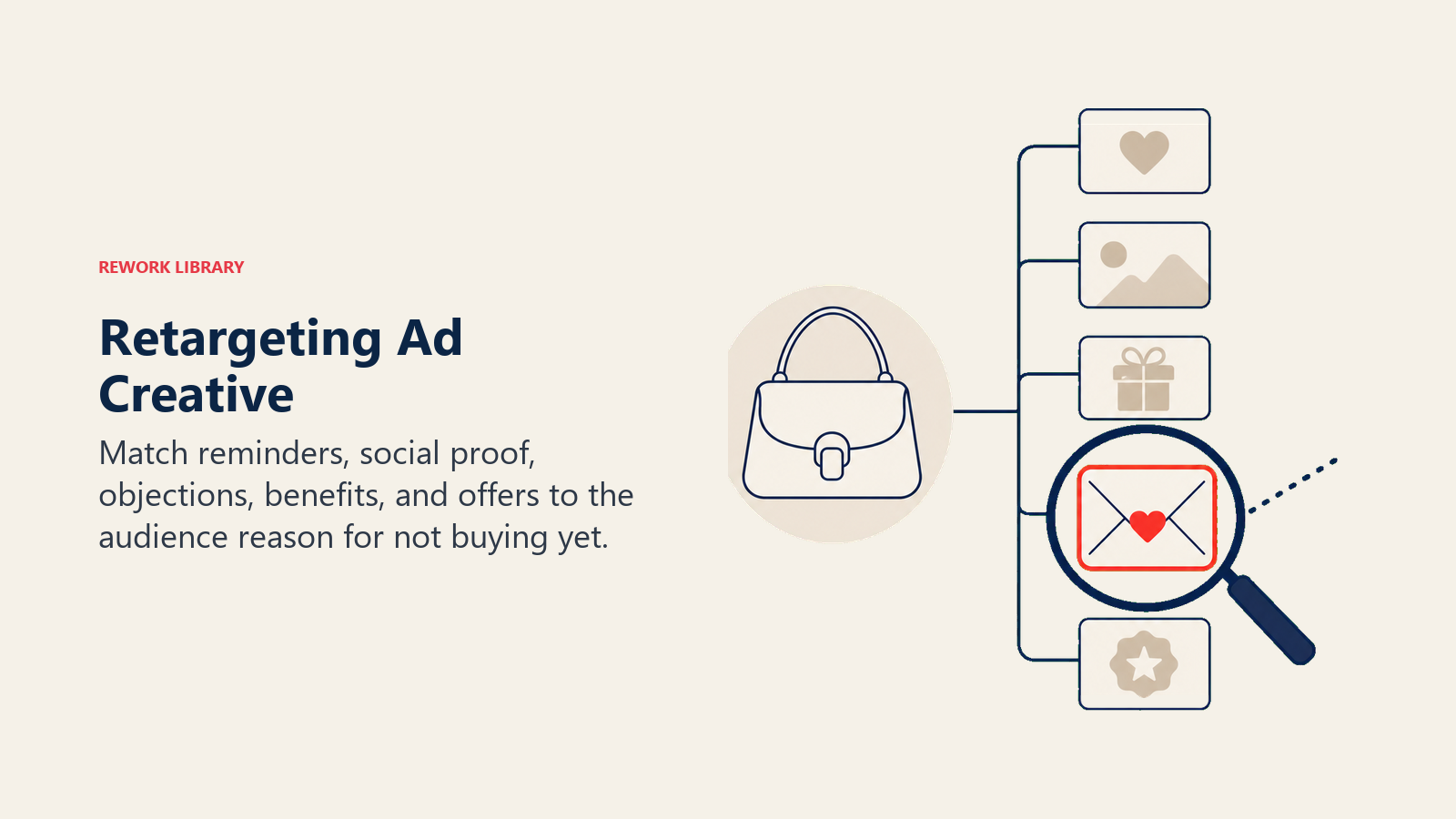
For cart abandoners: Address price concerns directly if that's likely the issue. Offer free shipping, a discount code, or payment plans. Remind them what they left behind with urgency messaging.
For checkout abandoners: Remove friction. Emphasize easy returns, secure checkout, fast shipping. These people are closest to buying, so focus on making the final step as easy as possible.
For past customers: Shift from conversion to retention. Show new arrivals they'd like, recommend complementary products, offer loyalty discounts.
Don't use the same ad creative across all audiences. A 20% discount might convert cart abandoners, but offering it to everyone who viewed a product trains customers to wait for deals.
Social proof and urgency
Retargeting ads work better with credibility signals because you're asking people to reconsider a decision they already made (leaving your site without buying).
Include:
- Customer review quotes and star ratings
- "X people bought this today" social proof
- Low stock warnings for hot products
- Limited-time offers that create real urgency
- Press mentions or awards if you have them
These elements tip undecided shoppers toward conversion by reducing perceived risk and adding fear of missing out.
Offer strategy and discounting
Should you offer discounts in retargeting ads? It depends on your margin structure and brand positioning, but here's a balanced approach:
Don't lead with discounts: Start retargeting with non-discount messaging. Emphasize product benefits, social proof, free shipping. See if people convert without needing a discount.
Escalate to offers for high-intent audiences: If someone abandoned their cart and hasn't converted after 3-5 days of retargeting, escalate to a discount offer. A 10-15% off code or free shipping often tips cart abandoners toward purchase.
Avoid training discount behavior: Don't show discount codes to everyone immediately. This trains customers to abandon carts and wait for the discount instead of buying at full price.
Test non-discount incentives: Free shipping, extended returns, buy-now-pay-later options, free gifts with purchase. These can work as well as discounts without eroding margins as much.
Ad sequencing and frequency management
Show people the same ad too many times and they tune it out. Too few times and they don't notice. Strategic sequencing solves this.
Ad sequencing by time and behavior
Build ad sequences that evolve based on how long someone has been in your retargeting audience: Days 1-3: Product-focused ads showing what they viewed. Educational messaging, benefit-driven. No discount offers yet.
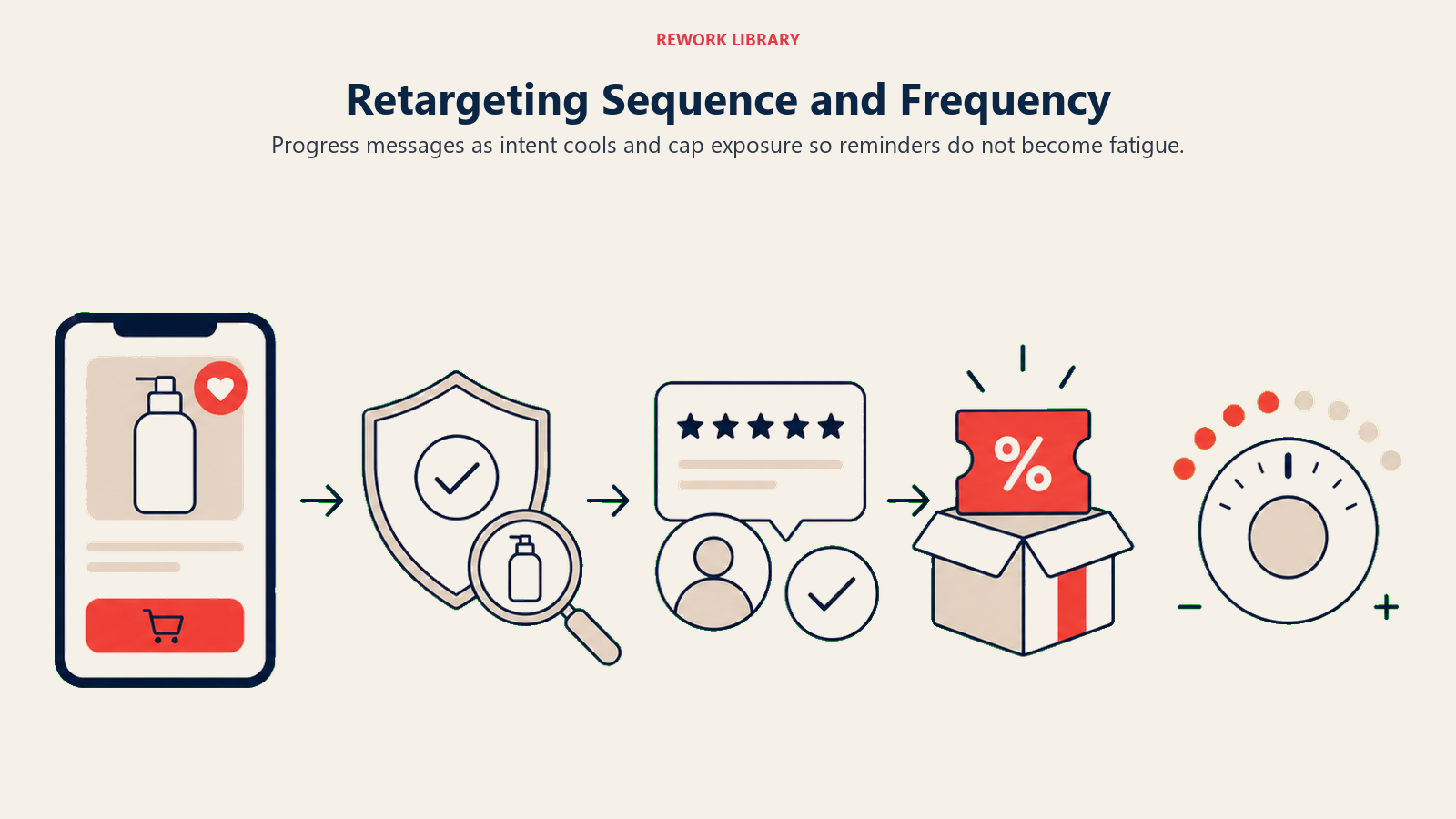
Days 4-7: Add urgency and social proof. Reviews, testimonials, low stock warnings. Test soft offers like free shipping.
Days 8-14: Escalate to discount offers for cart/checkout abandoners. Emphasize limited-time nature of the deal.
Days 15-30: Broader catalog ads showing alternatives to what they viewed. Cross-sell complementary products.
This progression gives people multiple chances to convert at different decision points rather than hammering them with the same message repeatedly.
Frequency caps
Frequency cap controls how many times the same person sees your ads in a given time period. Without caps, your highest-spending audiences see your ads constantly, leading to ad fatigue and annoyance.
Recommended frequency caps:
- Facebook/Instagram: 3-4 impressions per person per week
- Google Display Network: 5-7 impressions per person per day, 15-20 per week
- YouTube: 2-3 impressions per person per week
Monitor frequency metrics in your ad platforms. If frequency climbs above 5-6 on Facebook or you're seeing declining CTR and conversion rates, you're showing ads too often.
Platform-specific strategies
Each ad platform has unique strengths for retargeting. Optimize your approach for each.
Facebook and Instagram retargeting
Facebook's retargeting capabilities are the most sophisticated in e-commerce. Dynamic product ads, detailed audience segmentation, and cross-platform reach make it the primary retargeting channel for most stores. For comprehensive platform strategies, see our Facebook & Instagram ads guide.
Campaign structure: Create separate campaigns for each audience tier (product viewers, cart abandoners, checkout abandoners). This gives you independent budget control and ad creative for each segment.
Dynamic product ads: Set these up for product viewers. Facebook automatically shows people the products they browsed using your product catalog.
Placement optimization: Retargeting works well across Facebook and Instagram feeds, Stories, and Reels. Test all placements but prioritize feeds and Stories where people spend the most time.
Google Ads retargeting
Google's retargeting happens through Display Network and YouTube. Display remarketing shows banner ads across millions of websites, best for brand awareness. YouTube retargeting works well for brand-building but typically converts at lower rates than Facebook.
The most effective Google retargeting tactic is RLSA (Remarketing Lists for Search Ads): add your retargeting audiences to Search and Shopping campaigns with bid adjustments. When past visitors search for product terms, bid more aggressively because they're warmer leads. Learn more about optimizing your product feed in our Google Shopping ads guide.
Email retargeting and integration
Email isn't traditionally thought of as retargeting, but it's your most direct channel for bringing back visitors.
Cart abandonment emails: Automated emails triggered when someone adds to cart but doesn't purchase. These convert at 10-15% on average. Send a sequence: reminder after 1 hour, second reminder after 24 hours, final reminder with offer after 3 days.
Browse abandonment emails: Triggered when someone views products but doesn't add to cart. Lower conversion rates than cart abandonment but still valuable.
Coordinate email and paid retargeting. If someone gets a cart abandonment email and clicks through, exclude them from paid cart abandonment retargeting for 48 hours. For complete email automation strategies, see our email marketing for e-commerce guide.
Budget allocation and bidding
How much should you spend on retargeting vs cold acquisition? It depends on your traffic volume and conversion rates, but here's a framework.
Retargeting vs acquisition budget split
Most e-commerce stores should allocate 20-40% of total ad budget to retargeting, 60-80% to cold acquisition. This keeps your funnel balanced: bringing in new visitors through acquisition while converting them through retargeting.
If you allocate too much to retargeting (50%+), your audience pools shrink because you're not feeding enough new traffic into the top of the funnel. If you allocate too little (under 15%), you're leaving money on the table.
Start at 30% retargeting, 70% acquisition. Monitor performance and adjust. If retargeting campaigns hit budget caps and show strong ROAS, shift more budget there.
ROAS targets by audience
High-intent retargeting should generate 4:1 to 8:1 ROAS or better. If your cart abandonment retargeting isn't hitting at least 4:1 ROAS, something's wrong with your tracking, creative, or offer strategy.
Product viewer retargeting typically generates 3:1 to 5:1 ROAS, better than cold acquisition but not as strong as cart retargeting.
General site visitor retargeting might only hit 2:1 to 3:1 ROAS because conversion rates are lower. This is still valuable but watch that it doesn't cannibalize budget from higher-performing audiences.
Monitor blended ROAS across all retargeting campaigns. Most stores should see 3.5:1 to 6:1 blended ROAS from retargeting efforts. Understanding your unit economics for e-commerce helps you set profitable ROAS targets for each audience segment.
For a deeper dive into tracking and optimizing return on ad spend, see our guide on E-commerce Metrics & KPIs.
Common mistakes to avoid
Retargeting everyone the same way: Showing the same ads to homepage visitors and checkout abandoners is lazy and ineffective. Segment your audiences by intent level and customize messaging. Proper segmentation doubles or triples retargeting ROAS. Leverage customer data platform capabilities to create more sophisticated audience segments. Over-retargeting recent purchasers: Hitting customers with conversion-focused retargeting immediately after they purchased wastes budget. Set up proper exclusion audiences and move recent buyers to post-purchase nurture campaigns.
Ignoring ad fatigue: Running the same retargeting ads for months burns them out. Watch for declining CTR and rising frequency. If CTR drops by 30% or more from initial levels, refresh your creative.
Discount dependency: Training customers to wait for retargeting discounts kills margin and full-price sales. Use discounts strategically for highest-intent audiences only. Test non-discount conversion tactics first.
Poor tracking implementation: If your pixel tracking is broken, your retargeting audiences are inaccurate and your performance data is wrong. Regularly audit your tracking setup to ensure pixels fire correctly and events pass accurate data.
The bottom line on retargeting success
Retargeting works because you're advertising to people who already expressed interest in your products. But generic retargeting that treats all visitors the same leaves money on the table.
Segment audiences by intent level, customize messaging for each segment, and allocate budget toward the highest-converting audiences. Build ad sequences that evolve based on time and behavior. Test creative, offers, and frequency to optimize performance.
Coordinate retargeting with your broader acquisition strategy. You need cold traffic campaigns to feed new visitors into your retargeting funnel. For stores doing $50K+ per month, retargeting typically generates 25-35% of total sales from paid ads while consuming 20-30% of ad budget.
Your next step: audit your current retargeting setup. Check tracking accuracy, review audience segmentation, examine your ad creative by audience tier. Fix the basics first. Most retargeting improvements come from doing the fundamentals better.
Related resources
Traffic & Acquisition:
- Traffic Acquisition Strategy - Comprehensive approach to driving qualified traffic
- Google Shopping Ads - Product feed optimization and Shopping campaign strategy
- Facebook & Instagram Ads - Social advertising strategies for e-commerce
Conversion & Optimization:
- Conversion Rate Optimization (CRO) - Turn more traffic into paying customers
- Cart Abandonment Recovery - Strategies to recover lost sales
- E-commerce Metrics & KPIs - Track the metrics that actually matter for profitability

On this page
- Why retargeting works better than cold traffic
- Tracking setup: building your retargeting foundation
- Facebook Pixel and Meta Pixel setup
- Google Ads remarketing tag
- Privacy compliance and consent management
- Audience segmentation strategy
- Audience hierarchy by intent
- Time-based audience windows
- Dynamic product audiences
- Exclusion audiences
- Ad creative strategy for retargeting
- Messaging by audience segment
- Social proof and urgency
- Offer strategy and discounting
- Ad sequencing and frequency management
- Ad sequencing by time and behavior
- Frequency caps
- Platform-specific strategies
- Facebook and Instagram retargeting
- Google Ads retargeting
- Email retargeting and integration
- Budget allocation and bidding
- Retargeting vs acquisition budget split
- ROAS targets by audience
- Common mistakes to avoid
- The bottom line on retargeting success
- Related resources