Influencer Marketing: Selection, Partnerships, and Campaign ROI
Turn this article into takeaways for your work.


Each assistant summarizes the article only for you and suggests best practices for your work.
You're scrolling Instagram and see your favorite fitness creator talking about a new protein powder. They're making a smoothie, showing the ingredients, explaining why they switched brands. Three days later, you order a bag.
That's influencer marketing. For e-commerce brands, it's one of the most powerful traffic and awareness channels available when done right.
But here's the problem: most brands treat influencer marketing like buying ads. They find someone with a big audience, pay them to post, and wonder why they got terrible ROI. Then they declare influencer marketing doesn't work.
The brands that actually get results from influencers understand something different. This isn't about buying reach. It's about finding people who already talk to your target customers, building real partnerships, and creating content that feels like a recommendation from a friend, not an ad.
Let's break down how to build an influencer program that drives actual traffic, sales, and profitable growth.
Why Influencer Marketing Works: Trust and Recommendation Power
Traditional advertising is losing effectiveness. People skip ads, block banners, and ignore sponsored content that looks like marketing.
But they trust people they follow. When someone they've watched for months recommends a product, explains why they use it, and shows it in their daily life - that carries weight. It's social proof at scale.
The economics are simple: influencers have already built the audience you want to reach. They've spent years creating content, building trust, and establishing credibility with specific demographics. You're paying to tap into that relationship.
For e-commerce brands, influencers serve multiple functions:
- Discovery: Introduce your brand to new audiences who've never heard of you
- Consideration: Provide social proof and validation during research phase
- Conversion: Give reluctant buyers the push they need to purchase through customer reviews and user-generated content
- Retention: Keep existing customers engaged with your brand
When integrated properly with your traffic acquisition strategy, influencer marketing becomes a high-ROI channel that drives immediate sales and long-term brand awareness.
The Influencer Landscape: Understanding Different Tiers
Not all influencers are created equal. The right partnership depends on your goals, budget, and product category.
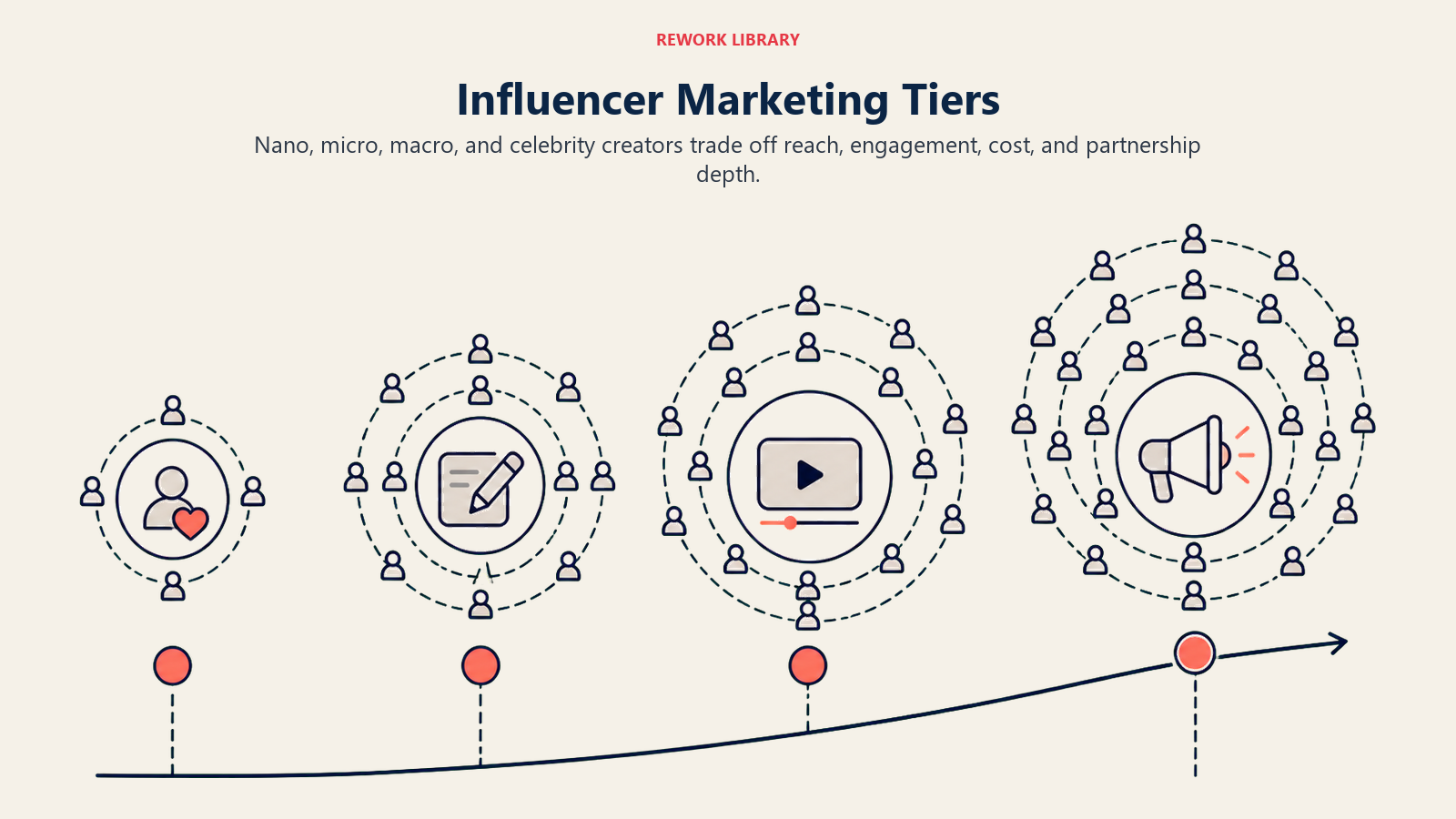
Mega-influencers: 1M+ followers
These are celebrities and major content creators with massive reach. Think fitness stars with 5 million followers, beauty gurus with 10 million subscribers, lifestyle creators with 3 million fans.
Strengths:
- Maximum reach and awareness
- Professional content quality
- Established brand partnerships
- Strong production capabilities
Weaknesses:
- Extremely expensive ($10K-$100K+ per post)
- Lower engagement rates (often 1-2%)
- Less authentic feel
- Audience may be less targeted
- Difficult to build real relationships
Best for: Major product launches, brand awareness campaigns, established brands with large budgets
Most e-commerce brands starting with influencer marketing should skip this tier. The costs are too high and the ROI is too unpredictable unless you have serious budget and goals focused on pure awareness rather than immediate sales.
Macro-influencers: 100K-1M followers
These creators have built substantial audiences around specific niches. They're recognizable within their category but not household names.
Strengths:
- Significant reach within niche
- Better engagement than mega-influencers (2-5%)
- More affordable ($1K-$10K per post)
- Often have media kits and campaign experience
- Can drive meaningful traffic and sales
Weaknesses:
- Still expensive for small brands
- May work with many brands simultaneously
- Less personal connection with audience
- Some bought followers in this range
Best for: Growing brands with proven product-market fit, niche categories with active influencer ecosystems, campaigns focused on reach within specific demographics
This tier works well when you've validated influencer marketing with smaller creators and are ready to scale.
Micro-influencers: 10K-100K followers
This is the sweet spot for most e-commerce brands. Micro-influencers have real audiences, strong engagement, and affordable rates while still reaching meaningful numbers of people.
Strengths:
- High engagement rates (5-10%)
- Authentic connection with followers
- Affordable pricing ($200-$2K per post)
- Often genuinely excited about products
- Easier to build relationships
- Better targeting to niche audiences
Weaknesses:
- Limited reach per influencer (requires working with multiple)
- Variable content quality
- Less experience with brand partnerships
- May need more guidance on campaigns
Best for: Most e-commerce brands, niche products, building initial influencer programs, testing content and messaging
Start here. Work with 10-20 micro-influencers before jumping to more expensive tiers. You'll learn what works, build processes, and generate meaningful ROI without risking huge budgets.
Nano-influencers: 1K-10K followers
These are everyday people who've built small but engaged followings. They might be local fitness coaches, hobby enthusiasts, or community leaders.
Strengths:
- Highest engagement rates (10-20%)
- Extremely authentic and trusted
- Very affordable (often product gifting only)
- Happy to promote products they genuinely like
- Can work at volume for broad testing
Weaknesses:
- Very limited reach per person
- Inconsistent content quality
- No campaign experience
- Time-intensive to manage at scale
- May not understand FTC disclosure rules
Best for: Product seeding campaigns, user-generated content creation, testing messaging, building brand advocacy, very tight budgets
Don't dismiss nano-influencers. While individual reach is small, working with 50-100 of them can generate significant traffic, content, and social proof at low cost. Plus, they're often your most passionate advocates.
Industry experts and trade influencers
These are niche authorities - industry publications, specialized reviewers, category experts, or professional communities. They may not have huge followings, but their audiences are highly targeted.
Strengths:
- Extremely qualified, high-intent audiences
- Strong purchase influence
- Long-lasting content value
- SEO benefits from backlinks
- Professional credibility
Weaknesses:
- Limited reach
- Often expensive relative to audience size
- Long sales cycles
- May have strict editorial standards
Best for: Technical products, B2B commerce, professional categories, SEO-focused content partnerships
If you sell professional equipment, technical products, or B2B goods, trade influencers often deliver better ROI than lifestyle creators.
Influencer Selection Criteria: Finding the Right Partners
Follower count is the least important metric when selecting influencers. Here's what actually matters.
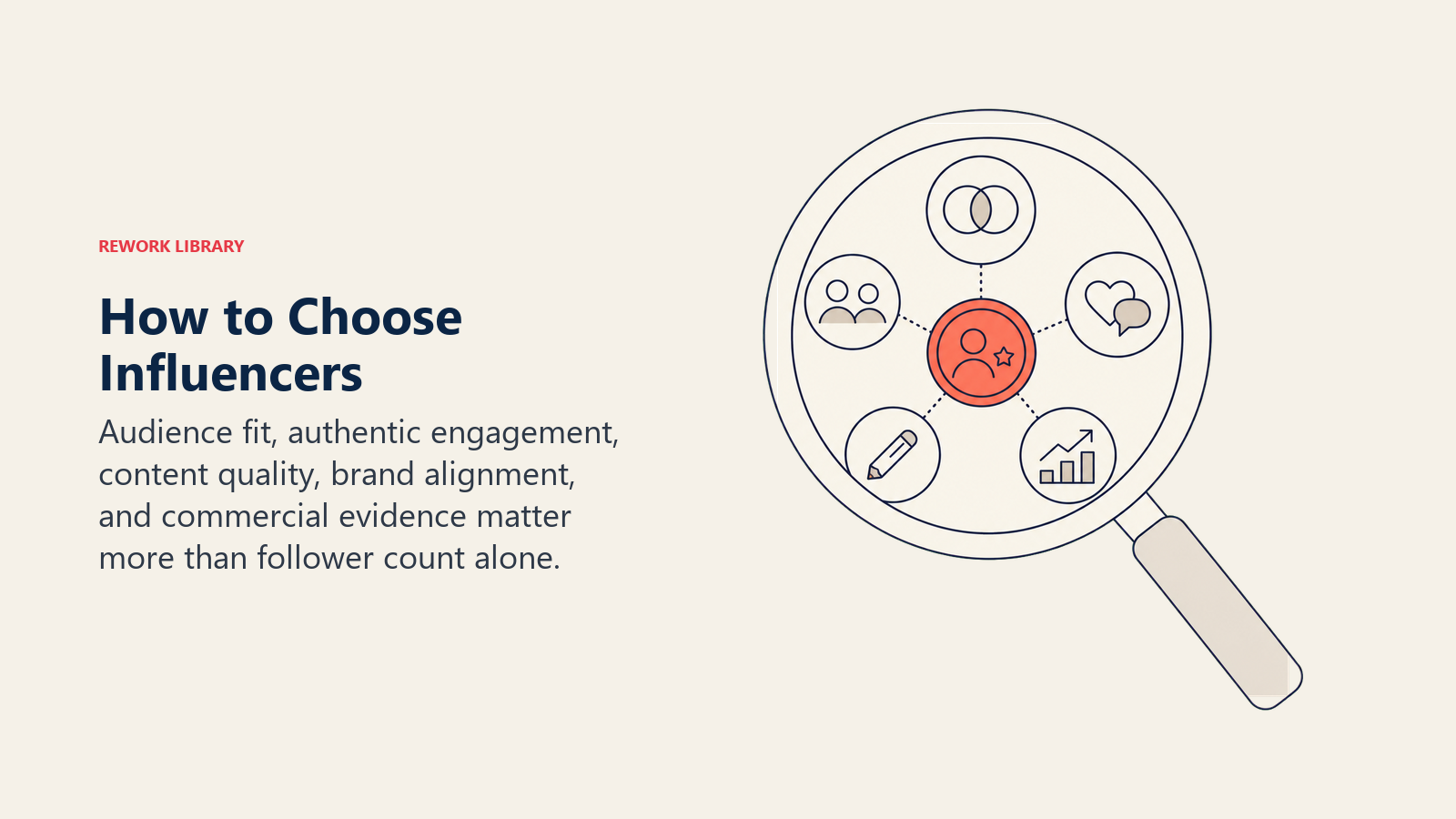
Audience alignment: do they reach your customers?
An influencer with 500K followers is worthless if none of them want your product. Start with audience analysis.
Questions to answer:
- What's their audience demographic? (Age, gender, location, income)
- What are their followers interested in?
- Does this match your target customer profile?
- Are their followers actually engaged or just passive scrollers?
Check their audience insights if possible. Many creators share demographic breakdowns in media kits. For Instagram, request audience insights showing follower locations, age ranges, and gender splits.
If 80% of their followers are 18-24 year old males but you sell maternity products, it doesn't matter how many followers they have. It's the wrong audience.
Engagement rate: do people actually care?
Engagement rate is your best indicator of authentic influence. It shows what percentage of followers actively interact with content.
How to calculate: (Likes + Comments) ÷ Followers × 100
Good engagement benchmarks:
- Instagram: 3-6%
- TikTok: 5-10%
- YouTube: 2-4%
Someone with 50K followers and 5% engagement (2,500 interactions per post) has more influence than someone with 200K followers and 1% engagement (2,000 interactions per post).
Look at multiple recent posts. Check if comments are genuine or just emojis and generic praise. Real engagement means questions, conversations, and thoughtful responses.
Content quality and style fit
Does their content match your brand aesthetic? Will your product fit naturally into their feed?
Evaluate:
- Photography and video quality
- Editing style and production value
- Tone and personality
- How they integrate sponsored content
- Whether products feel natural or forced
You want creators whose content already looks like it could feature your product. If they post polished flat lays and your product is rugged outdoor gear, it might not fit even if the audience aligns.
Authenticity and credibility
Fake followers and engagement are everywhere. Look for red flags:
Warning signs:
- Sudden follower spikes
- Comments that are all generic ("Nice!" "Great post!")
- Engagement that doesn't match follower count
- Followers from unexpected geographies
- Previous sponsored posts for competing brands
- Promoting products in wildly different categories
Check using tools like Social Blade, HypeAuditor, or even just manual review of recent posts and follower lists. Better to work with smaller, authentic creators than large ones with fake audiences.
Values and reputation alignment
What else does this influencer talk about? Do they promote values that align with your brand? Have they been involved in controversies?
An influencer partnership can reflect on your brand. If they've promoted scammy products, been involved in public scandals, or represent values opposite to yours, it's a risk.
Search their name plus "controversy" or "drama" before signing agreements. Check what other brands they've worked with. Make sure their reputation matches your brand standards.
Content rights and usage
Can you repurpose their content for your own marketing? Rights to use influencer content for ads, social media, website, and email can multiply the value of a partnership.
Typical usage structures:
- Organic post only: They post, you can't reuse content
- Limited reuse: You can share to your social channels
- Full usage rights: You can use content for paid ads, website, email
- Exclusive content: Created specifically for your use
Full usage rights typically cost more but provide far more value. A single great piece of influencer content can be used across paid social, email campaigns, and product pages for months.
Partnership Models: How to Structure Influencer Deals
There are several ways to compensate influencers and structure partnerships. Each has different economics and risk profiles.
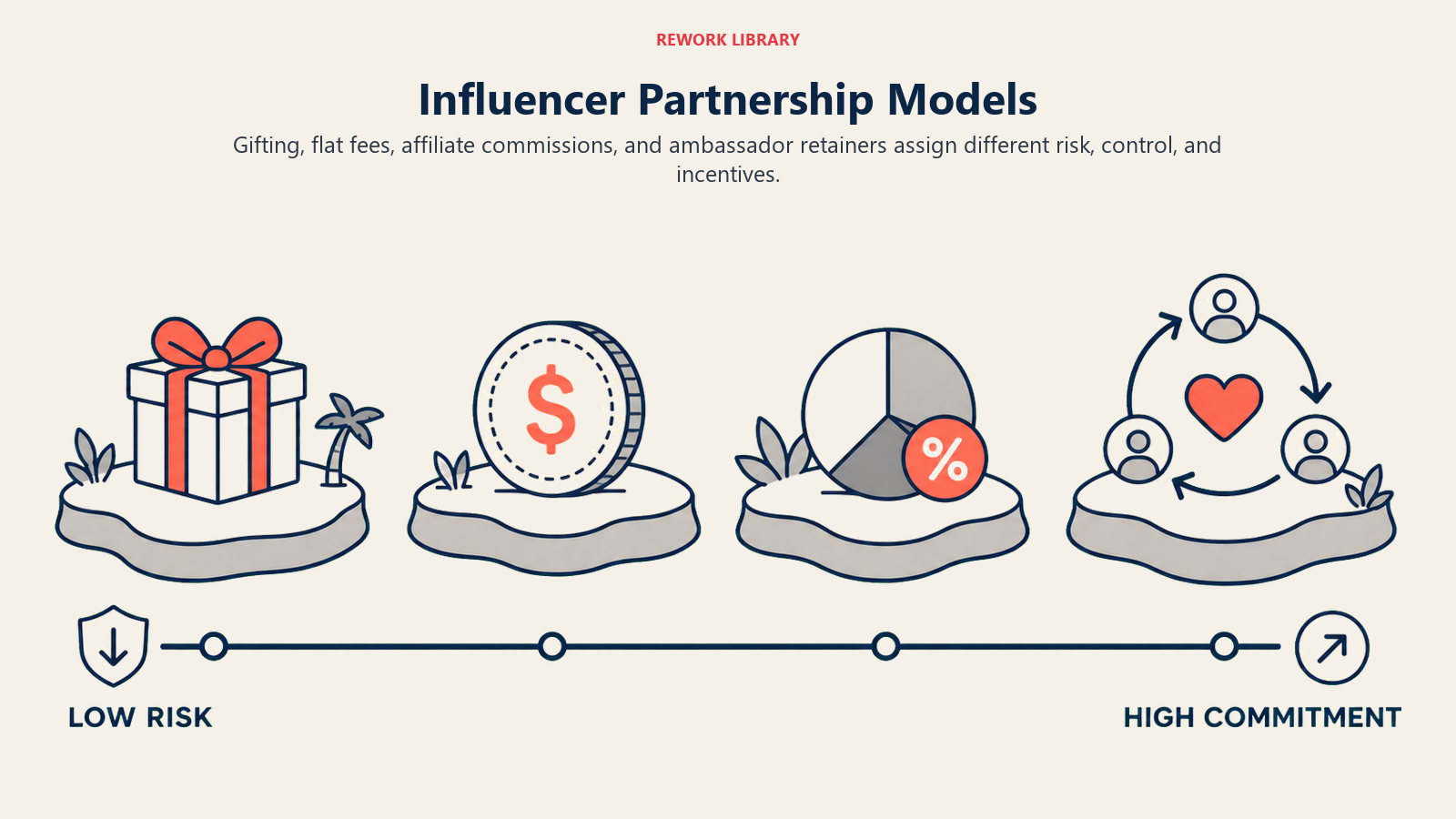
Product gifting: lowest cost, lowest commitment
You send free products in exchange for potential coverage. The influencer decides whether to post about it.
How it works:
- Identify creators you want to work with
- Send them free products with a friendly note
- No guarantee they'll post
- If they do post, it's typically organic and authentic
Pros:
- Very low cost (just product + shipping)
- Can work with many creators simultaneously
- Posts feel authentic since there's no paid requirement
- Good for building relationships
Cons:
- No control over timing or content
- Most recipients won't post
- Can't require specific messaging or CTAs
- Takes volume to see results
Best for: Initial outreach, nano and small micro-influencers, building long-term relationships, generating user-generated content
Start here with 50-100 creators. Track who posts, what they say, and what results you get. Those who post organically become candidates for paid partnerships.
Sponsored posts: pay per content piece
The most common model. You pay a flat fee for specific content - usually a set number of posts, stories, or videos.
Typical structure:
- 1 Instagram post + 2 stories: $500-$5K depending on size
- 1 TikTok video: $300-$3K
- 1 YouTube integration: $1K-$10K
- Multi-platform package: $2K-$15K
Pros:
- Clear deliverables and timeline
- Control over messaging and content
- Can negotiate usage rights
- Predictable costs
Cons:
- Upfront payment regardless of results
- Can feel less authentic
- One-time transaction doesn't build long-term relationship
- Risk of poor performance
Best for: Campaigns with specific launch dates, creators you've validated through gifting, testing new influencers at scale
Negotiate content requirements clearly: number of posts, platform, posting window, required talking points, usage rights, FTC disclosure requirements.
Affiliate relationships: pay for performance
Influencers earn commission on sales they generate through unique tracking links or discount codes.
Typical structure:
- Provide unique discount code or affiliate link
- Pay 10-20% commission on sales
- Sometimes include small upfront payment for content creation
- Track sales through affiliate marketing program
Pros:
- Only pay for actual results
- Aligns incentives - they benefit when you benefit
- Can run indefinitely
- Lower risk for testing new partners
Cons:
- Top influencers may decline performance-only deals
- Harder to track full attribution
- Discount codes can erode margin
- Requires affiliate infrastructure
Best for: Long-term partnerships, influencers who believe in the product, ongoing programs rather than one-off campaigns, brands with affiliate systems in place
Combine affiliate with upfront payment for content. Pay $500 for content creation plus 15% commission on sales. This balances their time investment with performance incentives.
Brand ambassadors: long-term partnerships
Exclusive or semi-exclusive relationships where influencers become ongoing faces of your brand.
Typical structure:
- Monthly retainer ($1K-$10K+/month)
- Ongoing content requirements (4-8 posts per month)
- Longer commitment (6-12 months)
- Often includes affiliate commission on top of retainer
- May include exclusivity clause (can't promote competitors)
Pros:
- Deep integration with influencer's content
- Authentic long-term relationship with audience
- More content for your investment
- Exclusivity prevents competitor partnerships
- Influencer becomes invested in your success
Cons:
- Significant ongoing commitment
- Higher total cost
- Risk if partnership doesn't perform
- Audience may tire of repeated promotions
Best for: Proven influencer relationships, subscription products that benefit from repeated mentions, competitive categories where exclusivity matters
Don't jump into ambassador deals until you've tested with smaller campaigns. Once you identify influencers who consistently drive results, ambassadorships multiply that value.
Commission-based: pure performance
Pure performance deals where influencers only earn based on sales generated, with no upfront payment.
Typical structure:
- 15-30% commission per sale
- No upfront payment
- Ongoing relationship
- Often combined with high commission rates to compensate for risk
Pros:
- Zero upfront cost
- Completely aligned incentives
- Can scale indefinitely
- No risk of wasted spend
Cons:
- Most established influencers won't accept
- Only works with creators who genuinely love product
- Requires strong margins to support high commissions
- Limited control over content and timing
Best for: Early stage brands with tight budgets, products with strong margins, building affiliate networks at scale
This works better for affiliate networks than traditional influencer marketing. Most creators with real audiences expect some compensation for content creation regardless of performance.
Campaign Structure & Execution: Running Successful Partnerships
Once you've identified influencers and agreed on partnership terms, execution determines whether campaigns succeed or fail.
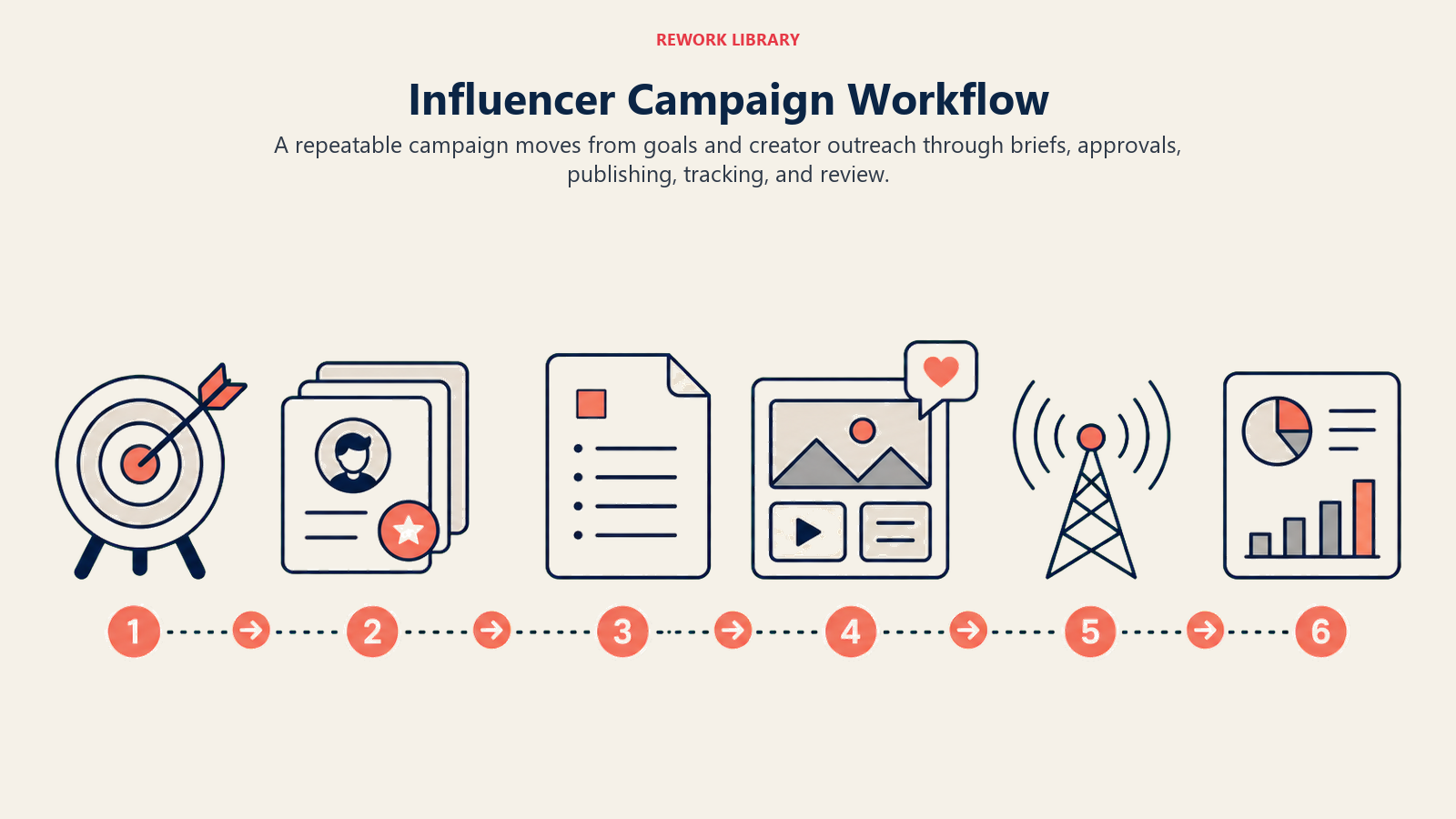
Brief development: clear expectations without creative constraints
The influencer brief outlines campaign requirements while leaving room for authentic creativity.
Essential brief elements:
Campaign overview:
- What you're launching or promoting
- Campaign goals and success metrics
- Timeline and key dates
Content requirements:
- Number of posts/stories/videos required
- Platforms to use
- Posting window or specific dates
- Minimum deliverables (captions, hashtags, etc.)
Key messaging:
- Main product benefits to highlight
- Unique selling points
- What problem it solves
- Any claims to avoid
Creative guidelines:
- Brand aesthetic and tone
- What to include in visuals
- Must-have elements (product name, website, discount code)
- What to avoid
Disclosure requirements:
- FTC guidelines for sponsored content
- Required hashtags (#ad, #sponsored)
- Disclosure language
Approval process:
- Whether content requires pre-approval
- Turnaround time for feedback
- How many rounds of revisions
The key balance: be clear about must-haves without micromanaging creative execution. Influencers know their audience better than you do. Let them create content that fits their style.
Content approval: balancing brand control and authenticity
Should you require pre-approval of content before it goes live? There's a tradeoff.
Pre-approval pros:
- Ensures brand guidelines are met
- Catches mistakes or misrepresentations
- Maintains quality standards
- Protects brand reputation
Pre-approval cons:
- Slows down campaign execution
- Can feel controlling to creators
- May result in less authentic content
- Creates extra workload
The practical approach:
- Require pre-approval for first-time partnerships until you trust the creator
- Skip approval for proven partners who consistently deliver quality content
- Request pre-approval for high-budget campaigns or sensitive products
- Allow posting without approval for nano and smaller micro-influencers
When you do require approval, respond quickly (within 24 hours) and be specific about any requested changes. Vague feedback like "this doesn't feel right" frustrates creators. Say exactly what needs to change and why.
Timeline management: coordinating campaign execution
Plan campaign timelines that account for content creation, approval cycles, and posting windows.
Typical timeline:
Week 1-2: Outreach and negotiation
- Identify potential partners
- Initial outreach
- Negotiate terms and rates
- Execute contracts
Week 3: Product delivery
- Ship products with tracking
- Confirm receipt
- Answer any product questions
Week 4-5: Content creation
- Influencers create content
- Submit for approval if required
- Revisions if needed
Week 6-7: Campaign execution
- Content goes live
- Monitor performance
- Engage with comments
- Track traffic and sales
Week 8: Analysis
- Pull performance data
- Calculate ROI
- Document learnings
- Follow up with top performers
Build buffer time. Influencers miss deadlines. Products get delayed. Content needs revisions. Plan for campaigns to take 6-8 weeks from initial outreach to completion.
Platform strategy: matching content to channels
Different platforms serve different purposes in influencer marketing.
Instagram:
- Best for: Visual products, lifestyle brands, fashion, beauty, home goods
- Content types: Feed posts, Stories, Reels
- Strengths: High engagement, strong shopping integration, visual storytelling
- Typical reach: 5-15% of followers see feed posts
TikTok:
- Best for: Trending products, younger demographics, entertainment value
- Content types: Short-form video
- Strengths: Viral potential, massive reach, authentic feel
- Typical reach: Can exceed 100% of followers if video goes viral
YouTube:
- Best for: Complex products, detailed reviews, tutorials, demonstrations
- Content types: Long-form video, reviews, tutorials
- Strengths: Long-lasting content value, high purchase intent, SEO benefits
- Typical reach: 10-30% of subscribers per video
Facebook:
- Best for: Older demographics, community-focused brands, longer content
- Content types: Posts, videos, live streams
- Strengths: Broad reach, older demographics, group targeting
- Typical reach: 2-5% organic reach
Match your product to the platform where it fits naturally. Skincare tutorials work on YouTube. Fashion fits Instagram. Trend-driven products belong on TikTok.
For more on platform-specific advertising strategies, see Facebook & Instagram Ads and TikTok Commerce Strategy.
Authentic Content Creation: What Actually Drives Results
The difference between influencer campaigns that drive sales and those that flop often comes down to content authenticity.
Storytelling approaches that work
People buy from stories, not features. The best influencer content tells a story about how the product fits into real life.
Effective storytelling frameworks:
Problem-solution narrative: "I used to struggle with [problem]. Then I found [product]. Here's what changed."
Day-in-the-life integration: "Here's what I actually use [product] for in my daily routine."
Before-after transformation: "This is what [results] looked like before. Here's the difference after using [product]."
Expert explanation: "Here's why [product] works and what makes it different from alternatives."
Let influencers choose the story that fits their content style. Just ensure the product plays a clear role in solving a real problem or improving their life.
Product integration: natural vs. forced
Bad influencer content screams "ad." Good content makes the product feel like a natural part of the creator's life.
Natural integration:
- Product appears in context of how it's actually used
- Creator explains why they personally choose this product
- Shows specific use cases and results
- Feels like a recommendation to a friend
Forced integration:
- Product awkwardly held up to camera
- Generic praise without specific details
- No explanation of actual use or benefits
- Clearly just reading from a script
Give influencers creative freedom to show the product how they'd naturally use it. A fitness creator should show your protein powder in their actual post-workout routine, not just hold the container and read features.
Platform-specific content best practices
What works on one platform fails on another.
Instagram feed posts:
- High-quality, well-composed photos
- Product prominently but naturally featured
- Detailed caption explaining benefits
- Clear CTA and discount code
- Multiple hashtags for discovery
Instagram Stories:
- Behind-the-scenes, casual feel
- Multiple slides showing product use
- Swipe-up links (if available) or link stickers
- Polls and questions to drive engagement
- Time-sensitive offers to create urgency
TikTok videos:
- Hook in first 3 seconds
- Fast-paced, entertaining content
- Trending audio when relevant
- Show results or transformation
- Clear product name and where to buy
YouTube integrations:
- Longer product explanation (2-5 minutes)
- Detailed demonstration or review
- Comparison to alternatives
- Honest pros and cons
- Link in description and pinned comment
Adapt content requirements to platform norms. Don't ask for the same content across all platforms - it won't perform equally everywhere.
Measuring Campaign Performance: Tracking What Matters
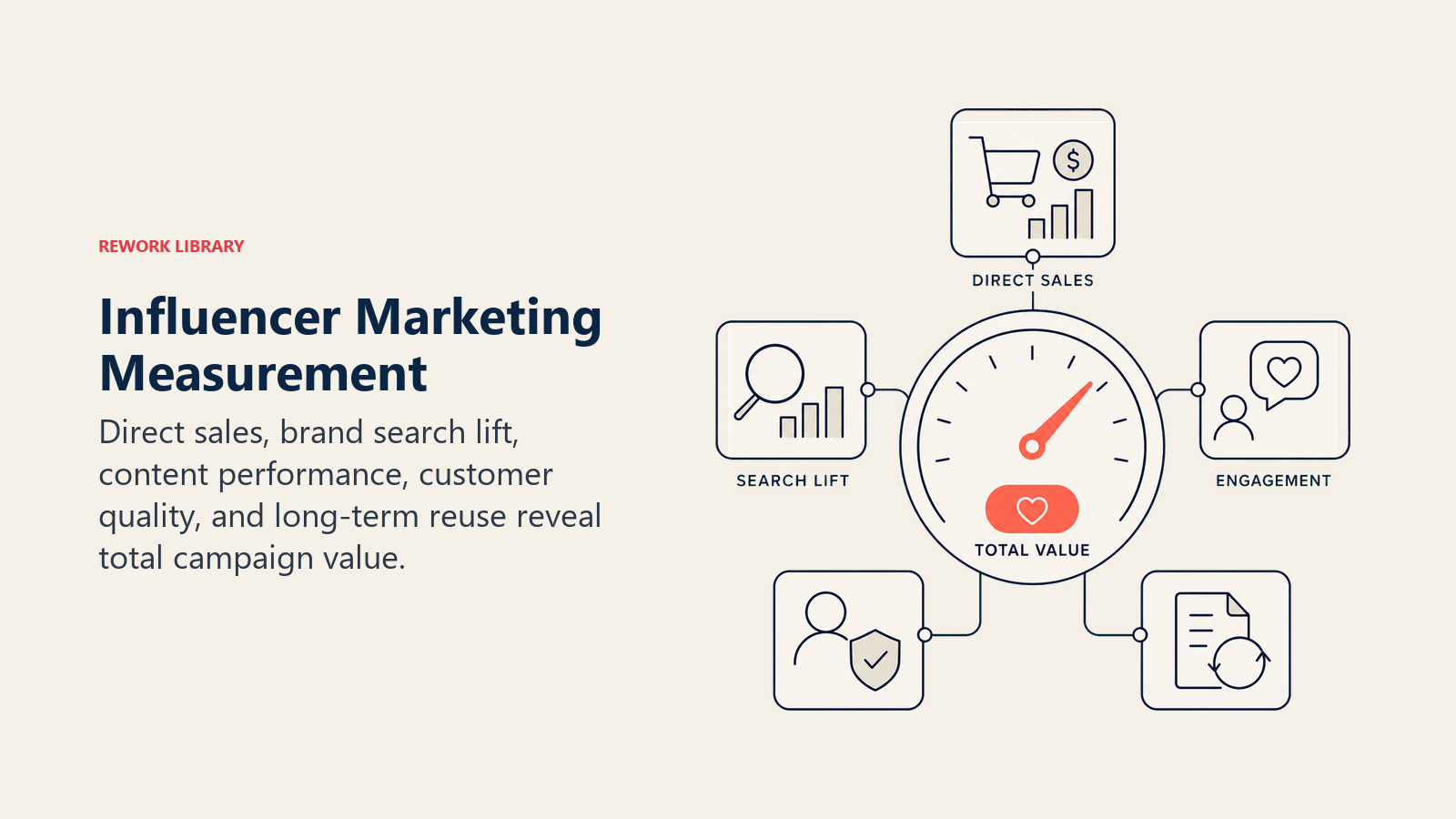
Influencer marketing ROI is notoriously hard to measure, but it's not impossible. You just need the right metrics and tracking systems.
Direct traffic and conversion tracking
The most obvious metrics are direct traffic and sales from influencer content.
Key tracking methods:
Unique discount codes:
- Give each influencer a custom code (SARAH15, MIKE20)
- Track uses in e-commerce platform
- Calculate revenue directly attributed to each creator
- Easy to implement and understand
Affiliate links:
- Provide unique tracking URLs
- Use UTM parameters to identify traffic source
- Track in analytics and tracking setup
- More detailed attribution than discount codes
Link-in-bio services:
- Use services like Linktree or Koji
- Track clicks to your website
- See which influencers drive most traffic
- Monitor conversion rates by source
Dedicated landing pages:
- Create custom URLs for specific campaigns
- Track visitors and conversions
- Test different messaging
- Capture emails for retargeting
Track both immediate sales and traffic for retargeting. Someone who clicks through but doesn't buy immediately might convert later, so integrate influencer traffic into your broader conversion rate optimization strategy.
Attribution models for influencer impact
Not everyone who sees influencer content clicks the link immediately. Some Google your brand later. Others search on Amazon. Others see an ad next week and convert.
Attribution approaches:
Direct attribution:
- Only count sales from tracking codes/links
- Undervalues awareness impact
- Easy to measure
- Works for immediate ROI calculation
Brand search lift:
- Monitor branded search volume during campaigns
- Compare to baseline before campaign
- Track new customers from branded search
- Reveals discovery impact
Survey attribution:
- Ask new customers "How did you hear about us?"
- Include specific influencer names
- Captures discovery that doesn't click through
- Cheap to implement
Multi-touch attribution:
- Track all touchpoints in customer journey
- Give partial credit to influencer touchpoint
- Requires sophisticated customer data platform
- More accurate but complex
Use multiple methods. Calculate conservative direct ROI from tracking codes, but also monitor brand search lift and survey responses to understand full impact.
Content performance metrics
Beyond sales, track how influencer content performs as content.
Engagement metrics:
- Likes, comments, shares, saves
- Engagement rate vs. influencer's average
- Quality of comments (questions, conversations)
- Audience sentiment
Reach metrics:
- Impressions and views
- Reach vs. follower count
- Viral performance (shares beyond followers)
- Story completion rates
Quality indicators:
- Follower growth during campaign
- Website traffic from link
- Time on site from influencer traffic
- Email signups from influencer audience
Content that performs well on the influencer's channel (high engagement, strong reach) typically also drives better business results. It indicates the audience is actually paying attention.
Long-term brand impact
Some influencer benefits are harder to quantify but still valuable.
Long-term indicators:
Content library:
- User-generated content for repurposing
- Content for ads and social media
- High-quality product photography and video
- Customer testimonials
Social proof:
- Reviews and testimonials
- Third-party validation
- Trust signals for product pages
- Credibility with new customers
Brand awareness:
- Search volume for brand terms
- Direct traffic growth
- Social media follower growth
- Press and media coverage
Customer quality:
- Customer lifetime value from influencer traffic
- Repeat purchase rates
- Average order values
- Referral rates
Track these over time. A creator who drives $5K in immediate sales but generates content you use in ads for 6 months has delivered more value than direct sales suggest. Understanding these key e-commerce metrics and KPIs helps you measure influencer impact accurately.
ROI calculation framework
Here's how to calculate actual influencer marketing ROI.
Basic ROI formula:
(Revenue from campaign - Campaign costs) ÷ Campaign costs × 100 = ROI%
Campaign costs include:
- Influencer payment (or product value if gifting)
- Shipping costs
- Agency or management fees
- Internal time and resources
- Tools and software
Revenue includes:
- Direct sales from tracking codes
- Sales from brand search lift (estimate)
- Value of content created (estimate)
- Long-term customer value (if tracking cohorts)
Example calculation:
Campaign costs: $5,000 total
- $3,500 influencer payments (7 creators at $500 each)
- $300 product costs and shipping
- $1,200 management time
Direct revenue: $12,000 from tracking codes Content value: $2,000 (estimated value of content for ad reuse) Brand search revenue: $1,500 (increase in branded search sales)
Total value: $15,500 ROI: ($15,500 - $5,000) / $5,000 × 100 = 210%
Target minimum 200% ROI on influencer campaigns once you've optimized your process. Early tests may be lower while learning. Maintaining healthy unit economics for e-commerce ensures your influencer spending remains profitable as you scale.
Managing Influencer Relationships: Building Long-Term Partnerships
The best influencer programs aren't transactional. They're built on real relationships that benefit both parties over time.
Contracts and legal protection
Always use written agreements, even for small gifting campaigns.
Essential contract elements:
Scope of work:
- Specific deliverables (posts, stories, videos)
- Platforms to be used
- Posting window or specific dates
- Content requirements and talking points
Compensation:
- Payment amount and structure
- Payment timeline (upfront, upon posting, net-30)
- Expense reimbursement if applicable
- Commission structure for ongoing sales
Content rights and usage:
- Who owns created content
- Where and how you can use it
- Duration of usage rights
- Additional fees for extended usage
FTC compliance:
- Required disclosures (#ad, #sponsored)
- Language requirements
- Compliance with platform rules
- Consequences for non-compliance
Exclusivity and restrictions:
- Can they work with competitors?
- For how long?
- What categories are restricted?
- Non-disparagement clauses
Termination and cancellation:
- How either party can exit
- Notice requirements
- Payment obligations if cancelled
- Content usage if terminated early
Use templates for efficiency, but customize for larger partnerships. Have legal review for contracts over $5K or long-term ambassador deals.
Payment terms and timing
Clear payment terms prevent confusion and build trust.
Common structures:
Upfront payment:
- Full payment before content creation
- Best for smaller creators who need cash flow
- Requires trust in deliverable quality
- Most common for gifting programs
Payment upon delivery:
- Pay when content is approved
- Protects you from non-delivery
- Standard for professional creators
- Balances risk for both parties
Payment upon posting:
- Pay after content goes live
- Ensures content actually publishes
- Can create cash flow issues for creators
- Use for proven relationships
Net-30 or Net-60:
- Pay 30-60 days after posting
- Common with larger agencies
- May require negotiation with smaller creators
- Include clearly in contracts
Be reliable with payments. Pay on time. Don't nickel-and-dime on small issues. Influencers talk to each other - a reputation for being difficult or slow to pay will hurt your ability to recruit top creators.
Performance expectations and feedback
Set clear expectations about what success looks like, but be reasonable.
What you can expect:
- Content that meets quality standards in brief
- Posting within agreed timeline
- Proper FTC disclosure
- Professional communication
- Authentic promotion of product
What you can't expect:
- Guaranteed sales results
- Specific engagement numbers
- Control over exact creative execution
- Promotion outside contracted scope
- Audience growth or follower guarantees
Provide constructive feedback when content needs improvement, but avoid being overly controlling. "Can you show the product being used rather than just held?" is helpful. "Can you recreate this entire concept differently?" is not.
Building long-term partnerships
The most valuable influencer relationships develop over time.
How to build lasting partnerships:
Start small:
- Begin with product gifting or single post
- Test compatibility before bigger commitments
- See if they genuinely like your product
Communicate regularly:
- Check in beyond campaign asks
- Share company news and product launches
- Ask for feedback on products
- Treat them as partners, not vendors
Pay fairly:
- Compensate appropriately for their time and audience
- Increase rates for proven performers
- Offer bonuses for exceptional results
- Don't nickel-and-dime
Give creative freedom:
- Trust their expertise with their audience
- Let them create authentic content
- Save micromanaging for major issues only
Recognize and reward success:
- Acknowledge top performers
- Share their content to your audience
- Feature them prominently in campaigns
- Increase commitment for proven partners
The influencers who consistently drive results should graduate to ambassador programs with higher compensation, longer commitments, and deeper integration with your brand.
Scaling Influencer Marketing: From Tests to Programs
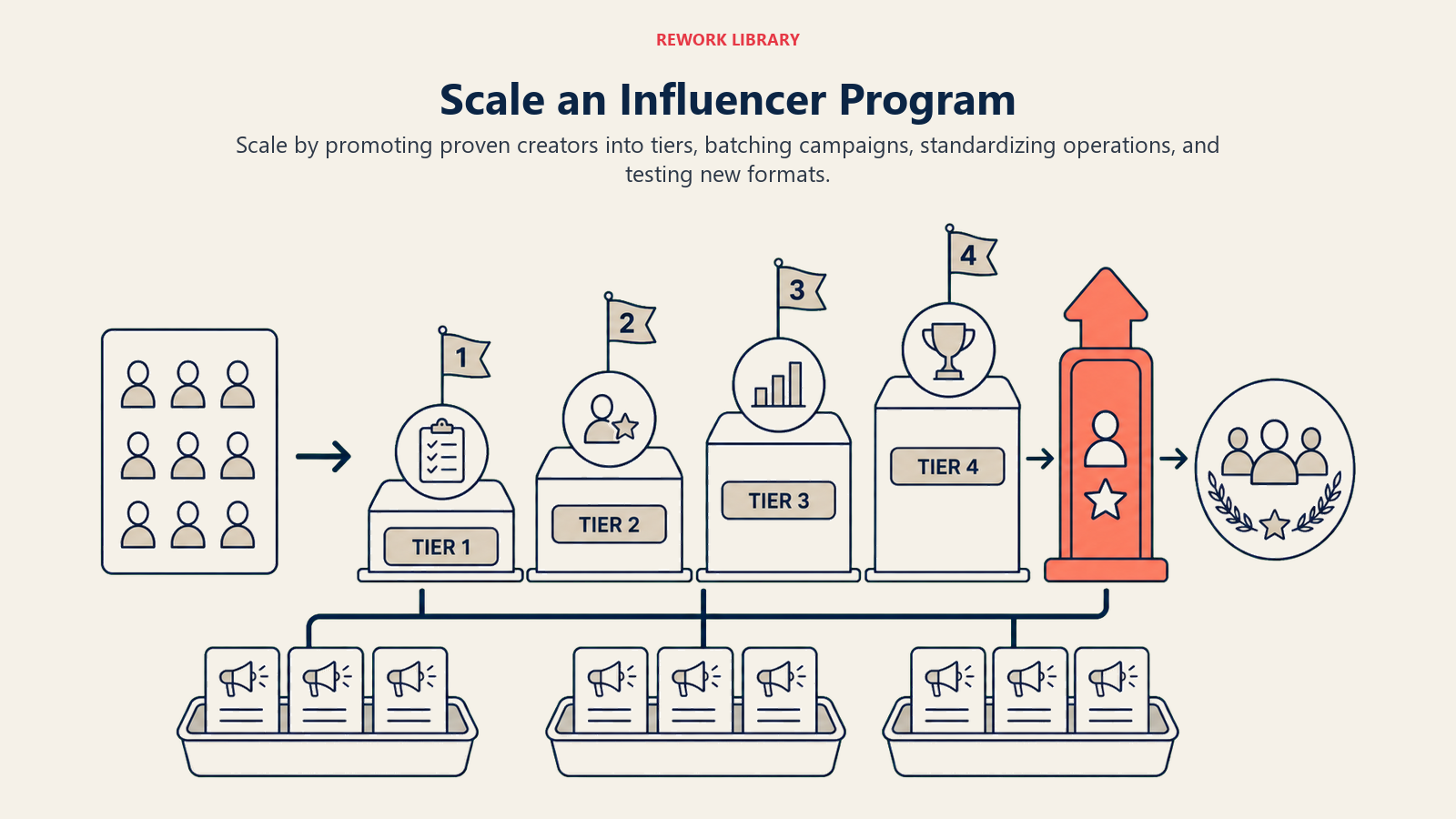
Once you've validated influencer marketing with initial campaigns, scale systematically.
Building tiered programs
Don't treat all influencers the same. Create tiers based on performance and audience size.
Sample tier structure:
Brand advocates (Tier 4):
- Nano-influencers and customers
- Free products only
- No guaranteed posting
- Volume approach (50-100+)
Content creators (Tier 3):
- Small micro-influencers
- $100-$500 per campaign
- 1-2 posts per campaign
- Work with 10-20 simultaneously
Key partners (Tier 2):
- Proven micro and small macro influencers
- $500-$2,000 per campaign
- Multi-post campaigns
- 5-10 active relationships
Brand ambassadors (Tier 1):
- Top performers with proven ROI
- $2,000-$10,000+ monthly retainer
- Ongoing content and promotion
- 2-5 exclusive partnerships
Move influencers up tiers based on performance. Start everyone in Tier 3-4 and promote top performers to higher tiers with better compensation.
Batch campaigns for efficiency
Running influencer campaigns one-off is time-intensive. Batch for efficiency.
Quarterly campaign approach:
Q1: New product launch
- Recruit 15-20 creators across tiers
- Unified messaging around product benefits
- Coordinated posting window (2-3 weeks)
- Single brief and approval process
Q2: Seasonal promotion
- Reactivate top performers from Q1
- Add 5-10 new creators
- Focus on summer use cases
- Affiliate links for ongoing promotion
Q3: Back-to-school/Fall campaign
- Scale tier 1-2 partnerships
- Test new platform or format
- Longer content (YouTube reviews)
Q4: Holiday gift campaign
- All-hands campaign with 30+ creators
- Gift-focused messaging
- High volume, shorter content
- Drive year-end sales push
Batching lets you create one brief, manage approvals in batches, and analyze results collectively rather than constantly starting new campaigns.
Software tools for management at scale
As you work with more influencers, manual tracking in spreadsheets breaks down.
Influencer marketing platforms:
Discovery and outreach:
- Creator.co, AspireIQ, Grin, Upfluence
- Find influencers by niche, audience, engagement
- Contact creators at scale
- Manage outreach and negotiation
Campaign management:
- Brief distribution and content submission
- Approval workflows
- Payment processing
- Performance tracking
Analytics and reporting:
- Track campaign performance
- Calculate ROI by creator
- Monitor brand mentions
- Measure sentiment
Relationship management:
- Maintain creator database
- Track historical performance
- Manage contracts and agreements
- Schedule ongoing campaigns
Start with simple tracking in spreadsheets or Airtable for your first 10-20 partnerships. Graduate to dedicated platforms once you're working with 30+ creators regularly.
Testing new platforms and formats
Don't let your program stagnate. Continuously test new platforms and content formats.
Emerging opportunities:
- TikTok Shop and live shopping
- YouTube Shorts
- Instagram Broadcast Channels
- Podcast advertising and integrations
- Livestream shopping events
- Virtual influencer partnerships
Allocate 10-20% of influencer budget to testing new formats. Most won't work. But finding the next high-ROI channel before competitors is worth the experimentation cost.
Common Pitfalls: What Kills Influencer Campaigns
Here's where most brands go wrong with influencer marketing.
Choosing influencers based only on follower count
Buying influencer partnerships based on follower count alone is like buying ads based on impressions without checking conversion rates.
Someone with 500K followers and 0.5% engagement (2,500 interactions) has less real influence than someone with 50K followers and 8% engagement (4,000 interactions).
Focus on engagement rate, audience quality, content fit, and authentic connection over vanity metrics like follower count.
Not tracking performance properly
If you can't measure it, you can't optimize it. Too many brands run influencer campaigns without any tracking beyond "we got some sales."
Implement tracking from day one:
- Unique discount codes for each creator
- UTM-tagged links
- Landing page analytics
- Survey questions asking how customers heard about you
Without data, you're making budget decisions blind.
Over-controlling creative
Sending influencers a script to read word-for-word kills authenticity. Their audience can tell. Engagement drops. Sales don't materialize.
Provide clear guidelines on must-haves (product name, website, key benefits), but let creators integrate your product into their natural content style.
The influencers who know their audience best should have creative freedom to reach that audience effectively.
Ignoring FTC disclosure requirements
Influencers must disclose paid partnerships clearly. This isn't optional - it's federal law.
Required disclosures:
- Must be clear and prominent
- Before the "more" button on Instagram
- In video itself, not just description
- Use #ad or #sponsored clearly
- Can't hide in wall of hashtags
Violations can result in FTC fines for both you and the influencer. Always require proper disclosure in contracts and review content for compliance.
Not building ongoing relationships
Treating influencer marketing as one-off transactions misses the point. The real value comes from ongoing relationships where creators genuinely become advocates for your brand.
A creator who's worked with you once, knows your product, and already created content can create better content faster in subsequent campaigns. Plus, their audience has already been introduced to your brand.
Nurture relationships with top performers. Stay in touch. Share news. Ask for feedback. Build partnerships, not just campaigns.
Expecting immediate virality
Influencer marketing isn't a lottery ticket. Most campaigns won't go viral. That's okay - they don't need to.
Set realistic expectations:
- 3-5x ROAS is good performance
- Not every creator will drive results
- Scale comes from many partnerships, not one viral hit
- Long-term brand building matters as much as immediate sales
Build influencer marketing as a channel, not a Hail Mary for explosive growth.
Influencer Marketing Channel Comparison
Here's how influencer marketing compares to other e-commerce acquisition channels:
| Metric | Influencer Marketing | Paid Social | Paid Search | SEO |
|---|---|---|---|---|
| Time to Results | Medium (2-6 weeks) | Fast (days) | Fast (days) | Slow (3-12 months) |
| Upfront Investment | Medium ($1K-$10K) | Medium | Medium-High | High |
| Scalability | Medium-High | High | High | Medium |
| Content Benefit | High (reusable UGC) | Low | None | Medium |
| Trust Factor | Very High | Medium | Medium | High |
| Targeting Precision | Medium | High | Very High | Medium |
| Typical CAC | $20-$100 | $25-$80 | $40-$120 | $10-$30 |
| Best For | Building trust, UGC | Visual products | Intent capture | Long-term value |
Influencer marketing shines when you need authentic social proof and user-generated content to build trust, especially for new or lesser-known brands.
Moving Forward: Building Your Influencer Program
Start small and scale based on results.
Month 1: Foundation
- Identify 30-50 potential influencers across tiers
- Start product gifting program with 20-30 nano/micro creators
- Set up tracking (discount codes, UTM parameters)
- Create influencer brief template
Month 2: Initial campaigns
- Convert 5-10 gifting partners to paid partnerships
- Run first coordinated campaign
- Test different compensation models
- Track performance meticulously
Month 3: Optimization
- Analyze results from initial campaigns
- Double down on top performers
- Test 2-3 macro influencers
- Refine brief and creative guidelines
Month 4-6: Scaling
- Build tier structure
- Launch quarterly batch campaigns
- Convert top performers to ambassador relationships
- Expand to new platforms or content formats
Month 7-12: Program maturity
- Implement influencer marketing platform
- Run ongoing campaigns across multiple tiers
- Build content library from influencer partnerships
- Optimize budget allocation based on ROI data
Influencer marketing works best as an ongoing channel, not one-off campaigns. Build the infrastructure, relationships, and processes to make it a repeatable, scalable part of your traffic acquisition strategy.
The brands winning with influencers aren't getting lucky with viral moments. They're systematically building networks of authentic advocates who introduce their products to engaged audiences, generate social proof, and create content that drives sales across channels.
Learn More
Deepen your understanding of influencer marketing and related strategies:
Traffic Acquisition
- Traffic Acquisition Strategy - Build diversified traffic sources
- Facebook & Instagram Ads - Master paid social advertising
- TikTok Commerce Strategy - Leverage TikTok for e-commerce
- Affiliate Marketing Program - Build performance partnerships
Conversion & Social Proof
- Customer Reviews & UGC - Generate and leverage customer content
- Trust Signals & Social Proof - Build credibility that converts
- Analytics & Tracking Setup - Measure campaign performance accurately

Sales Operations Practice Lead
On this page
- Why Influencer Marketing Works: Trust and Recommendation Power
- The Influencer Landscape: Understanding Different Tiers
- Mega-influencers: 1M+ followers
- Macro-influencers: 100K-1M followers
- Micro-influencers: 10K-100K followers
- Nano-influencers: 1K-10K followers
- Industry experts and trade influencers
- Influencer Selection Criteria: Finding the Right Partners
- Audience alignment: do they reach your customers?
- Engagement rate: do people actually care?
- Content quality and style fit
- Authenticity and credibility
- Values and reputation alignment
- Content rights and usage
- Partnership Models: How to Structure Influencer Deals
- Product gifting: lowest cost, lowest commitment
- Sponsored posts: pay per content piece
- Affiliate relationships: pay for performance
- Brand ambassadors: long-term partnerships
- Commission-based: pure performance
- Campaign Structure & Execution: Running Successful Partnerships
- Brief development: clear expectations without creative constraints
- Content approval: balancing brand control and authenticity
- Timeline management: coordinating campaign execution
- Platform strategy: matching content to channels
- Authentic Content Creation: What Actually Drives Results
- Storytelling approaches that work
- Product integration: natural vs. forced
- Platform-specific content best practices
- Measuring Campaign Performance: Tracking What Matters
- Direct traffic and conversion tracking
- Attribution models for influencer impact
- Content performance metrics
- Long-term brand impact
- ROI calculation framework
- Managing Influencer Relationships: Building Long-Term Partnerships
- Contracts and legal protection
- Payment terms and timing
- Performance expectations and feedback
- Building long-term partnerships
- Scaling Influencer Marketing: From Tests to Programs
- Building tiered programs
- Batch campaigns for efficiency
- Software tools for management at scale
- Testing new platforms and formats
- Common Pitfalls: What Kills Influencer Campaigns
- Choosing influencers based only on follower count
- Not tracking performance properly
- Over-controlling creative
- Ignoring FTC disclosure requirements
- Not building ongoing relationships
- Expecting immediate virality
- Influencer Marketing Channel Comparison
- Moving Forward: Building Your Influencer Program
- Learn More
- Traffic Acquisition
- Conversion & Social Proof